Maryland Royalty Split Agreement
Description
Get your form ready online
Our built-in tools help you complete, sign, share, and store your documents in one place.
Make edits, fill in missing information, and update formatting in US Legal Forms—just like you would in MS Word.
Download a copy, print it, send it by email, or mail it via USPS—whatever works best for your next step.
Sign and collect signatures with our SignNow integration. Send to multiple recipients, set reminders, and more. Go Premium to unlock E-Sign.
If this form requires notarization, complete it online through a secure video call—no need to meet a notary in person or wait for an appointment.
We protect your documents and personal data by following strict security and privacy standards.

Make edits, fill in missing information, and update formatting in US Legal Forms—just like you would in MS Word.

Download a copy, print it, send it by email, or mail it via USPS—whatever works best for your next step.

Sign and collect signatures with our SignNow integration. Send to multiple recipients, set reminders, and more. Go Premium to unlock E-Sign.

If this form requires notarization, complete it online through a secure video call—no need to meet a notary in person or wait for an appointment.

We protect your documents and personal data by following strict security and privacy standards.
Looking for another form?





How to fill out Royalty Split Agreement?
Selecting the most suitable legal document format can be a challenge. Naturally, there are numerous templates accessible online, but how do you locate the legal form you need.
Utilize the US Legal Forms website. The service offers thousands of templates, including the Maryland Royalty Split Agreement, suitable for both business and personal needs.
All forms are reviewed by experts and comply with state and federal regulations.
If the form does not meet your needs, utilize the Search field to find the appropriate form. Once you are sure the form is correct, click on the Get now button to acquire the form. Choose your desired pricing plan and enter the required information. Create your account and complete the purchase using your PayPal account or credit card. Select the document format and download the legal document template to your device. Complete, edit, print, and sign the obtained Maryland Royalty Split Agreement. US Legal Forms is the largest library of legal forms where you can find a variety of document templates. Use the service to download professionally created documents that adhere to state requirements.
- If you are currently registered, Log In to your account and click on the Download button to access the Maryland Royalty Split Agreement.
- Use your account to search for the legal forms you have obtained previously.
- Navigate to the My documents tab in your account and obtain another copy of the form you need.
- If you are a new user of US Legal Forms, here are simple steps you should follow.
- First, ensure you have selected the correct form for your area/region.
- You can review the form using the Preview button and read the form description to verify it's the right one for you.
Form popularity
FAQ
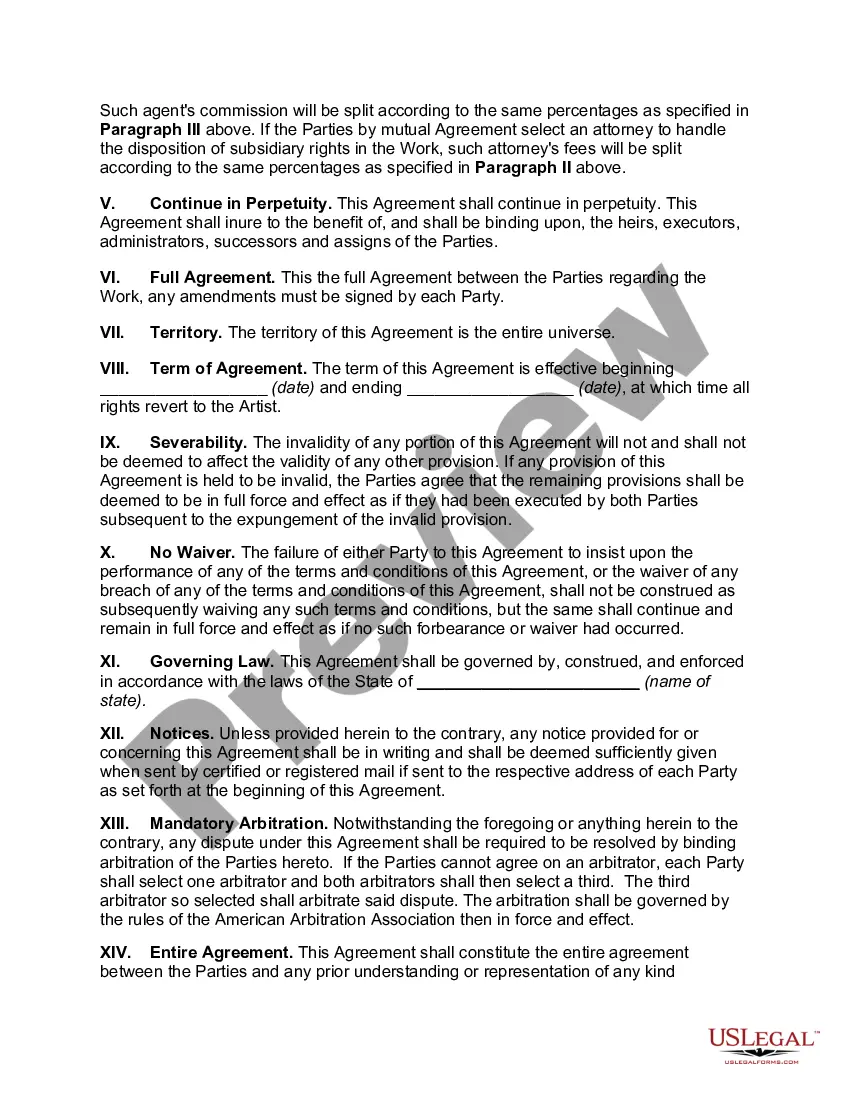
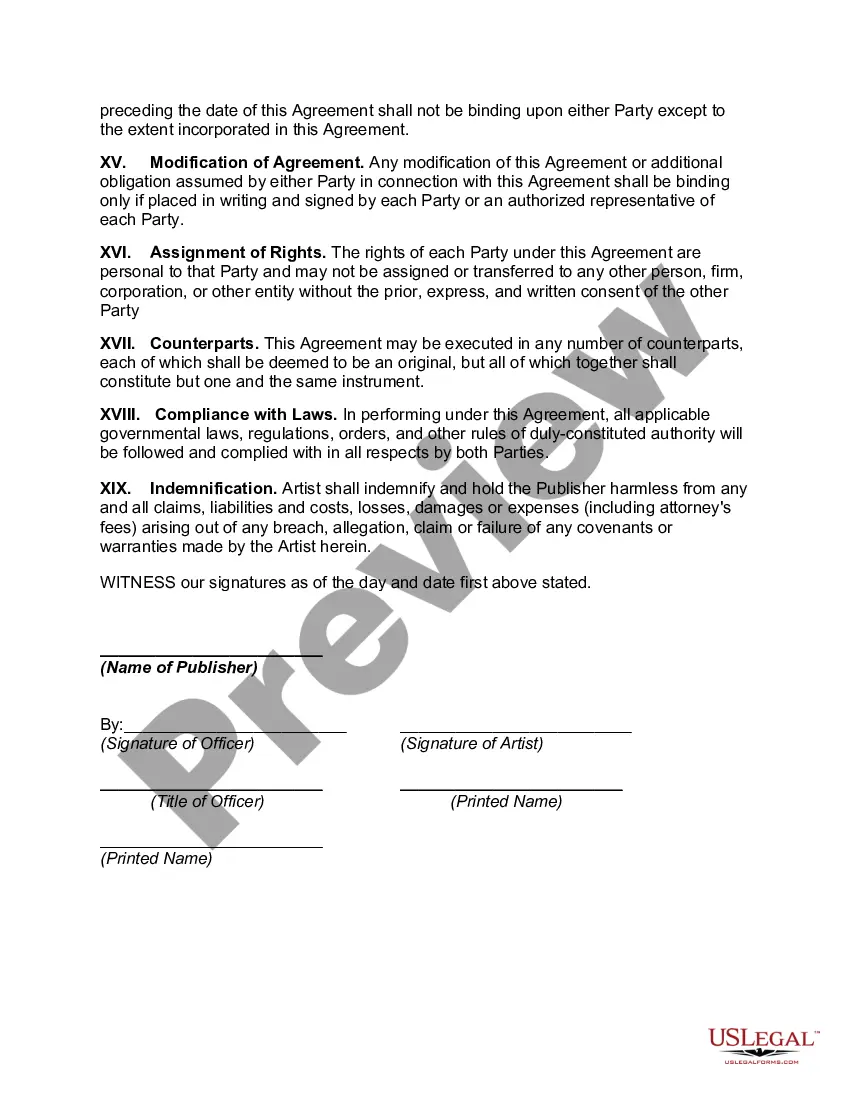
A 50/50 split between an artist and songwriter means that both parties share the royalties equally from a song's earnings. This arrangement is common in the music industry, as it recognizes the essential contributions made by both the artist and songwriter. When entering into a Maryland Royalty Split Agreement, it is vital to establish clear expectations to avoid misunderstandings in the future. Crafting an agreement that outlines these terms can protect your interests and foster a successful partnership.
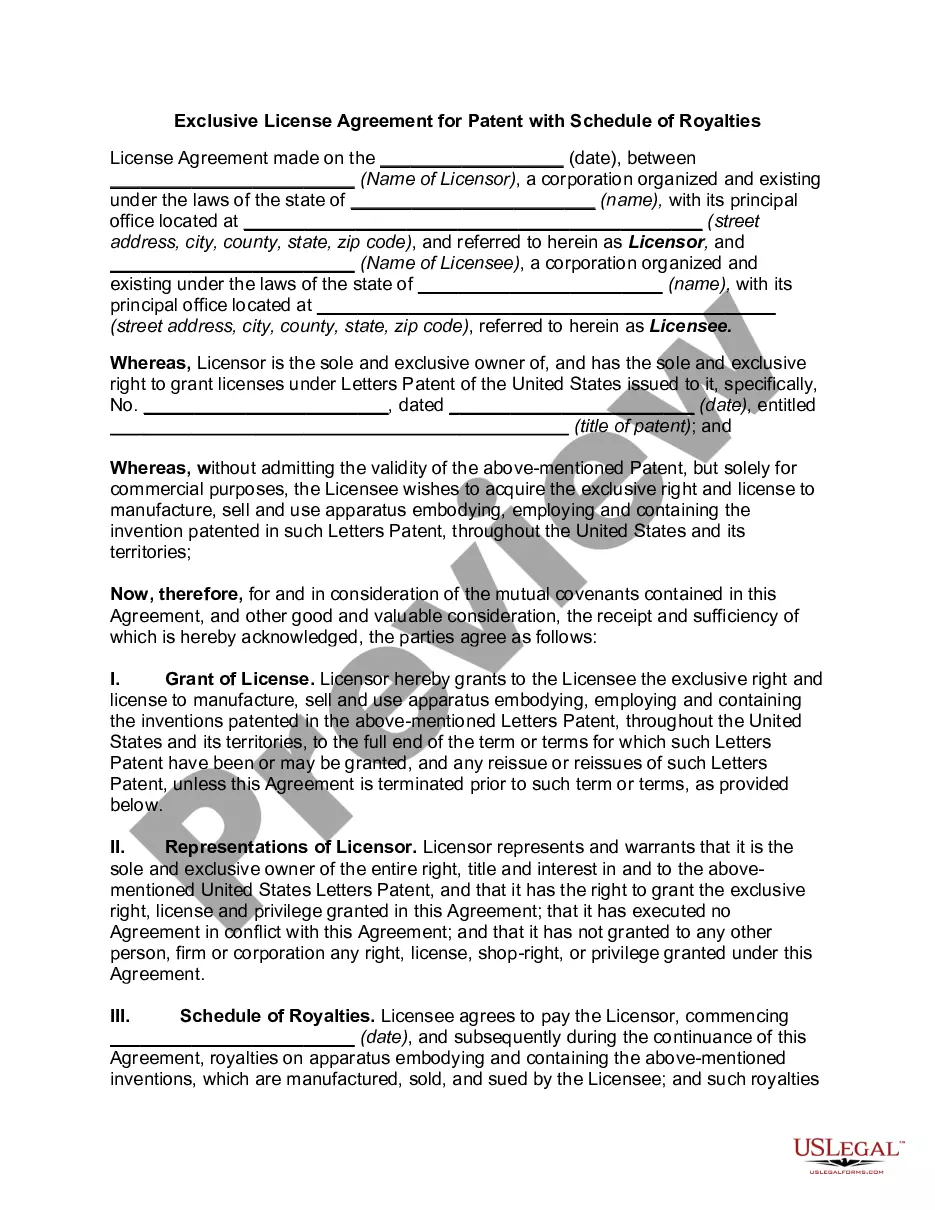
Three common structures of a royalty payment are (1) an ad valorem royalty rate, (2) a per-unit royalty, and (3) a lump-sum royalty. A royalty payment for a license might use a single royalty structure or a combination of these three structures.
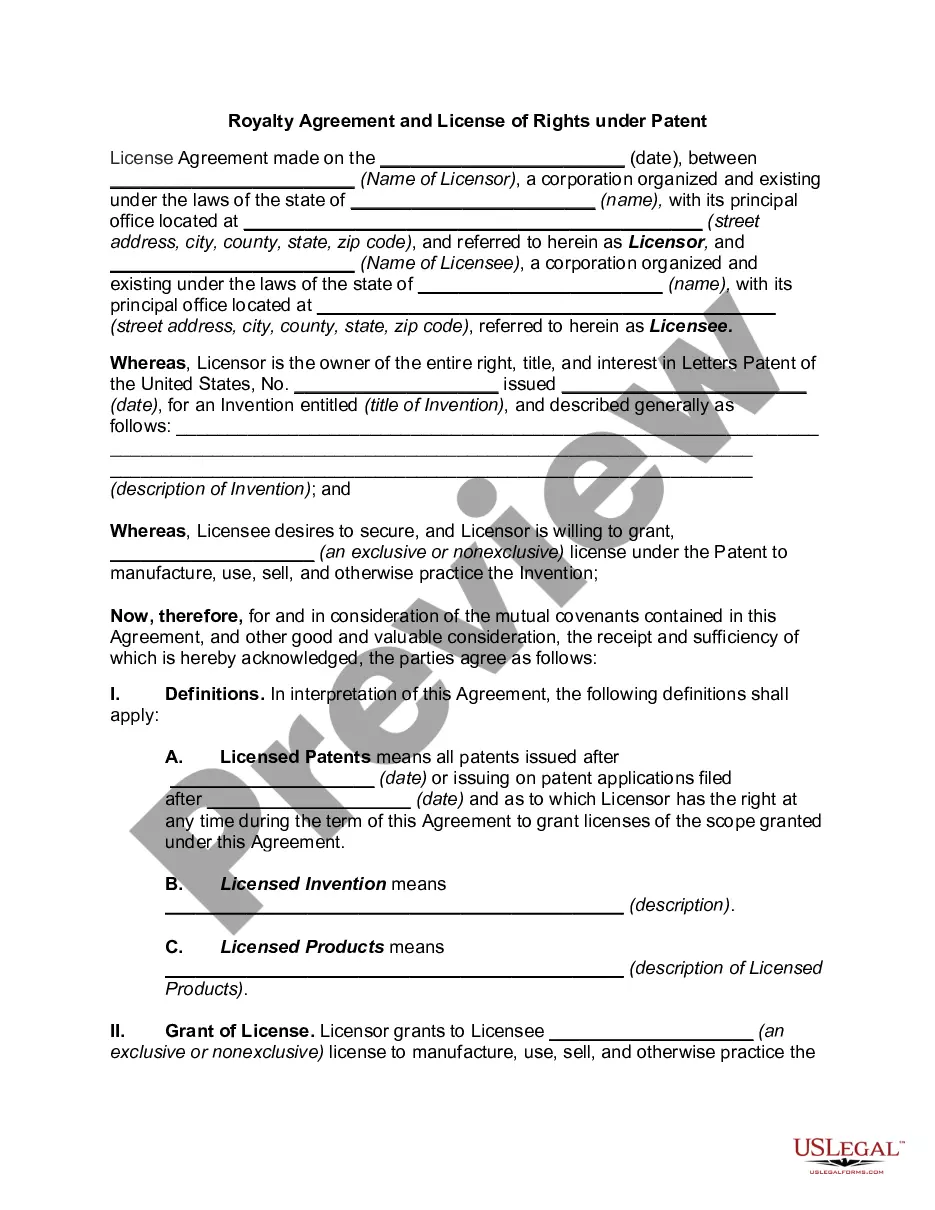
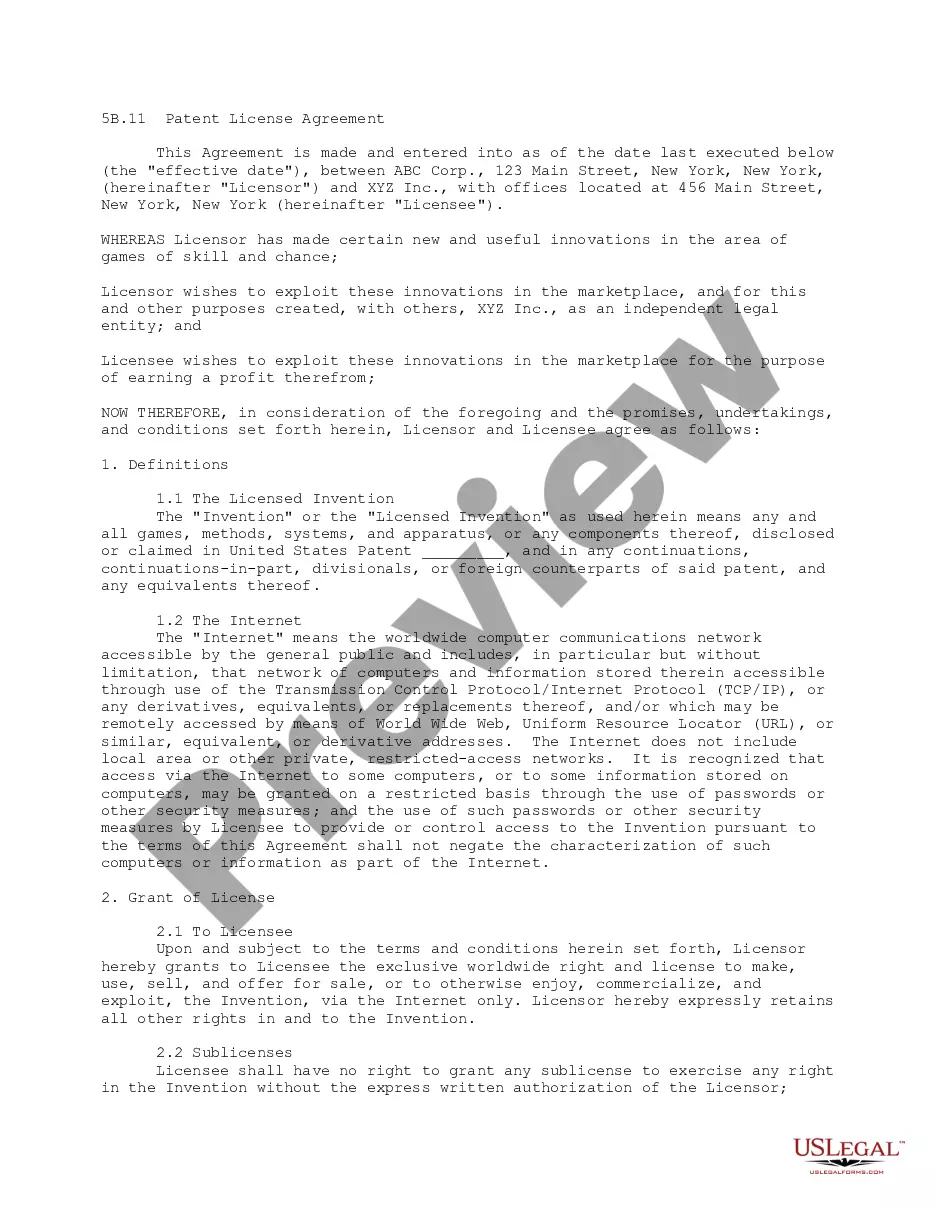
A royalty agreement is a legal contract between a licensor and a licensee. The agreement grants the licensee the right to use the licensor's intellectual property in exchange for royalty payments.
A 'reasonable royalty rate' is an estimation of damages in patent infringement cases. It is often referred to as established royalty that a licensee would pay for the rights to the patented invention in a hypothetical negotiation.
Royalty agreements generally are one of two types. The fixed price per unit agreement pays the licensor a set price for every one of its products sold by the licensee. Often, this type of agreement is used when the licensor's product is one that will be a small part of a larger product produced by the licensee.
The average royalty percentage applied to licensed services varies between 2-15 percent of the total buy, depending on the attractiveness of the property. Another (easier) way to work licensed service deals is to charge an annual fee for the licensee's right to use your intellectual property.
Royalty Rate For Services The average royalty percentage applied to licensed services varies between 2-15 percent of the total buy, depending on the attractiveness of the property. Another (easier) way to work licensed service deals is to charge an annual fee for the licensee's right to use your intellectual property.
The payment is made by the publisher/distributor and corresponds to the agreement (license) between the writer and the publisher/distributor as with other music royalties. The agreement is typically non-exclusive to the publisher and the term may vary from 35 years.
What is a standard royalty contract? Usually, a royalty contract is signed when the licensor (innovator) wants to license the idea's intellectual property rights to a licensee to use the IP. It is a legally binding commitment, and it provides the licensee all such rights to use the licensor's intellectual property.
Royalty payments are negotiated once through a legal agreement and paid on a continuing basis by licensees to owners granting a license to use their intellectual property or assets over the term of the license period. Royalty payments are often structured as a percentage of gross or net revenues.