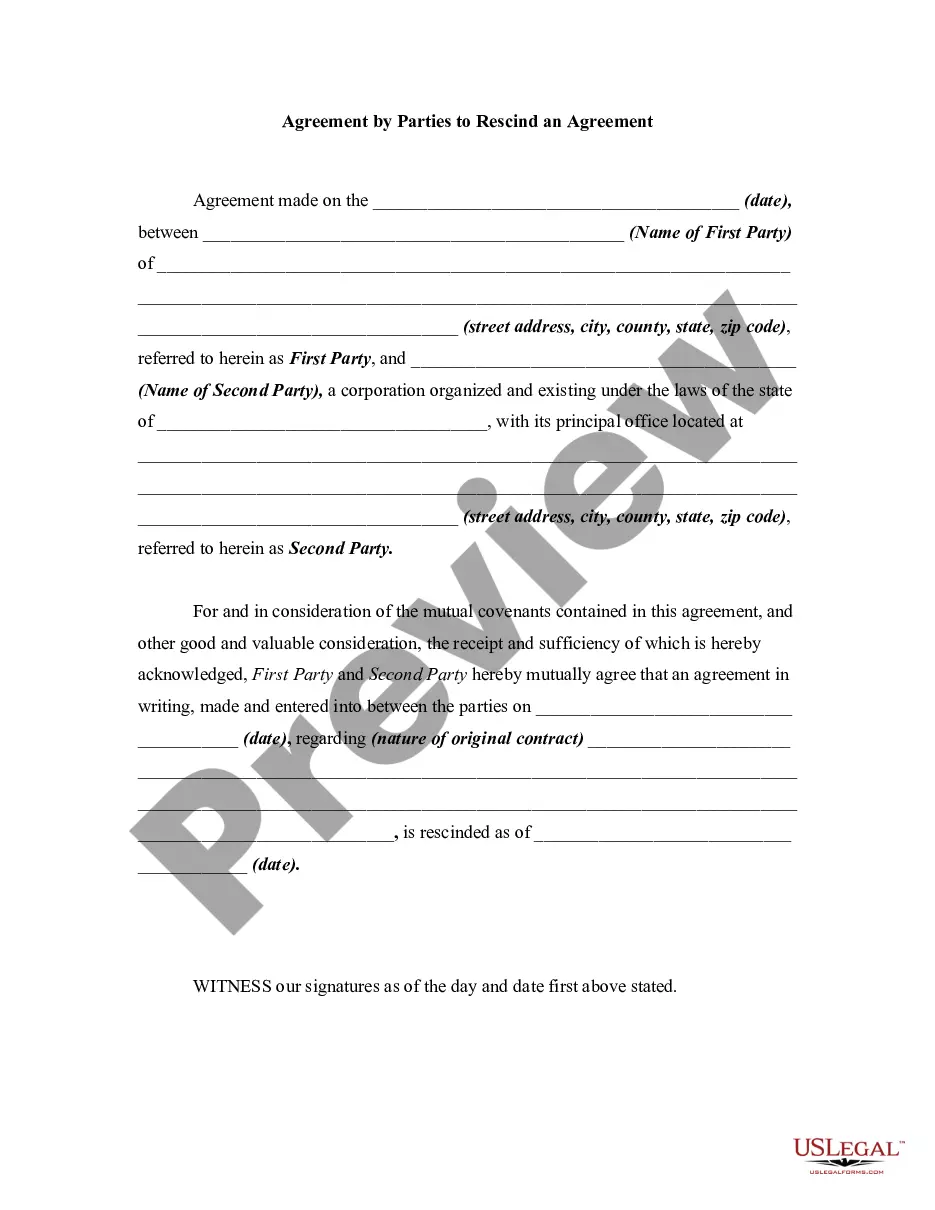
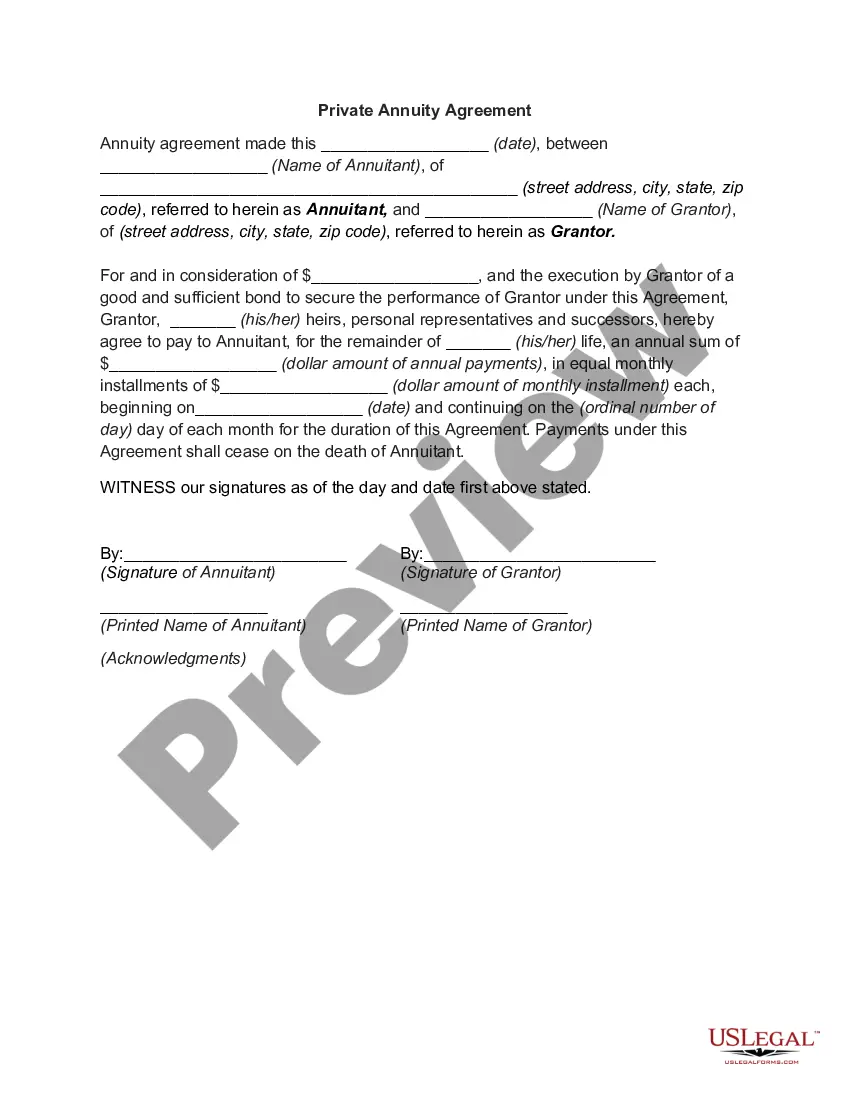
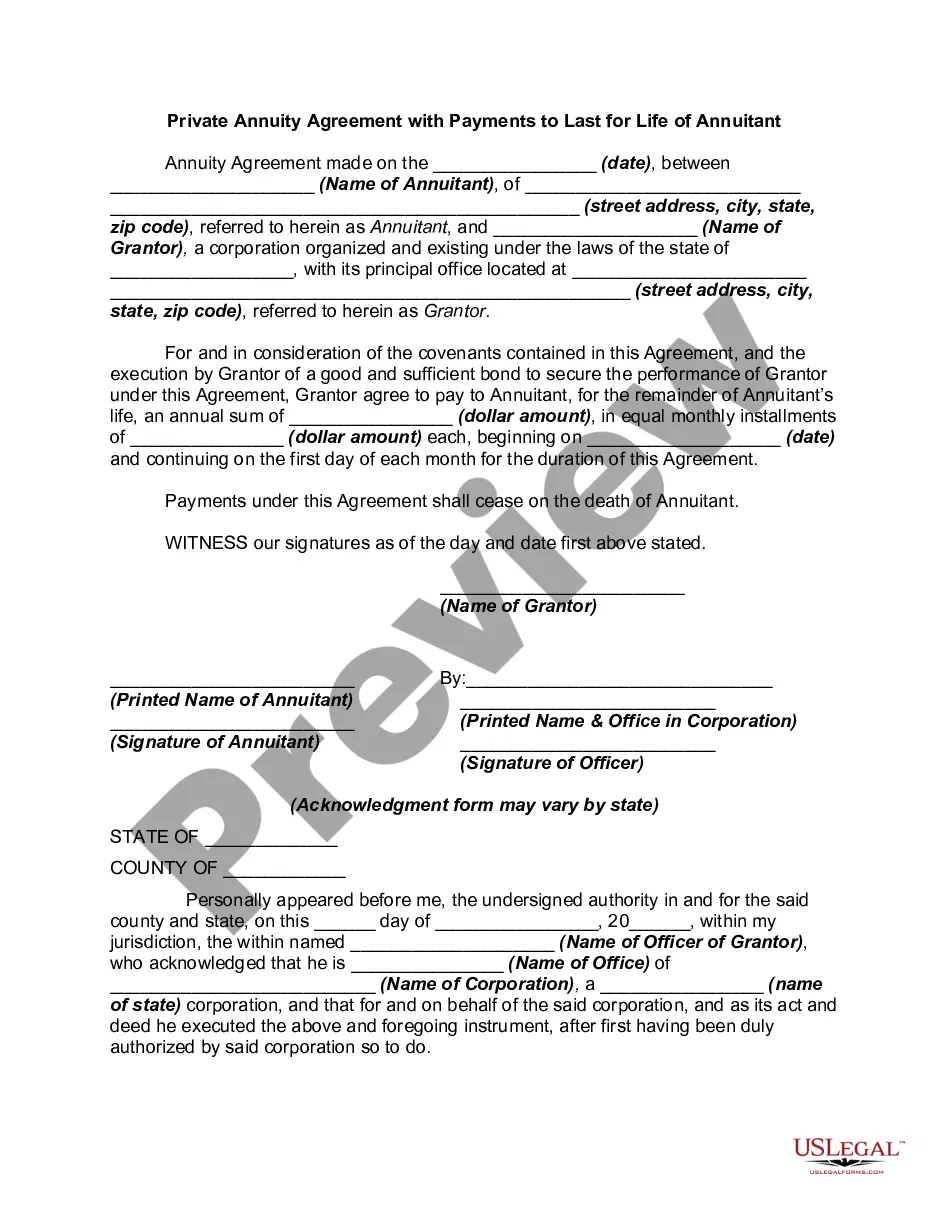
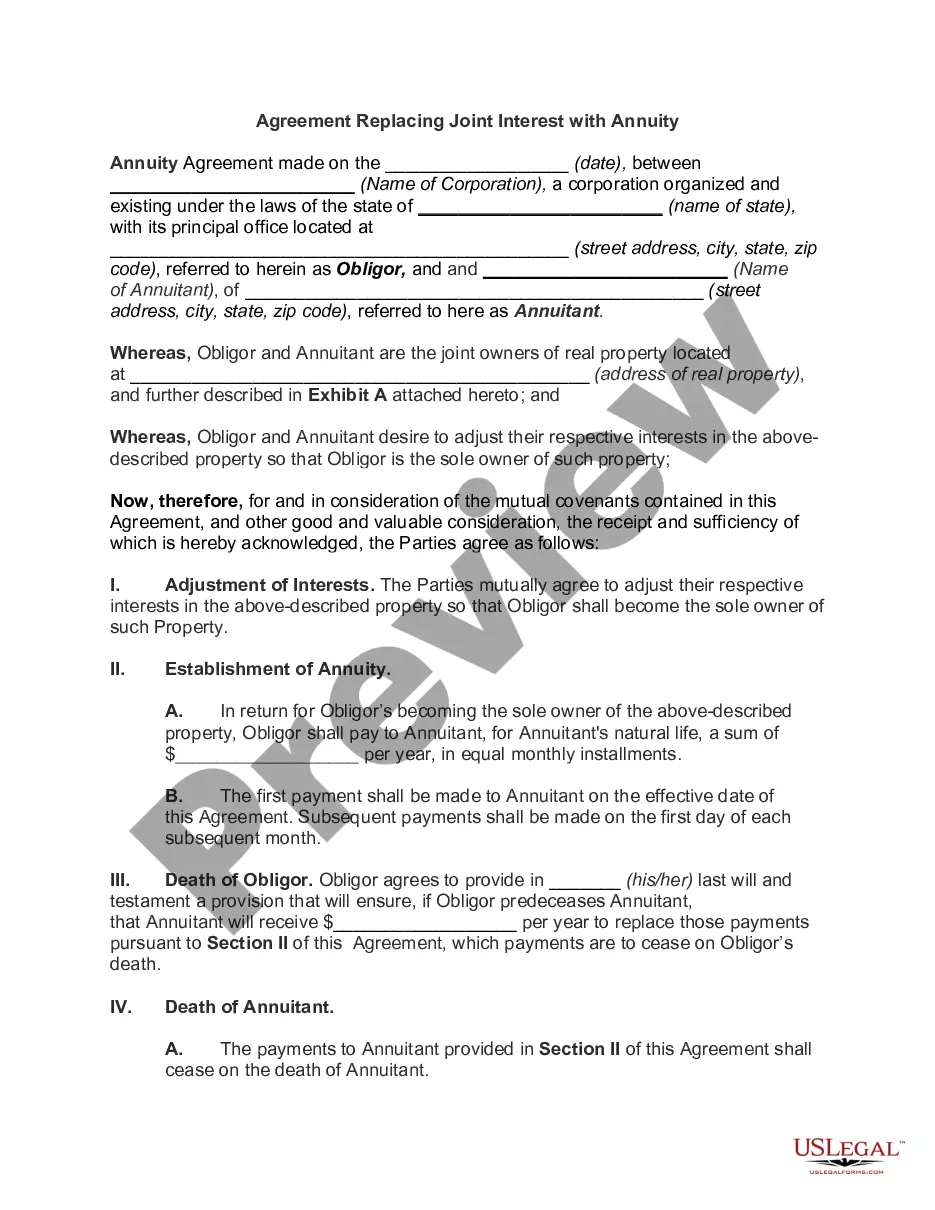
Maryland Private Annuity Agreement
Description
Get your form ready online
Our built-in tools help you complete, sign, share, and store your documents in one place.
Make edits, fill in missing information, and update formatting in US Legal Forms—just like you would in MS Word.
Download a copy, print it, send it by email, or mail it via USPS—whatever works best for your next step.
Sign and collect signatures with our SignNow integration. Send to multiple recipients, set reminders, and more. Go Premium to unlock E-Sign.
If this form requires notarization, complete it online through a secure video call—no need to meet a notary in person or wait for an appointment.
We protect your documents and personal data by following strict security and privacy standards.

Make edits, fill in missing information, and update formatting in US Legal Forms—just like you would in MS Word.

Download a copy, print it, send it by email, or mail it via USPS—whatever works best for your next step.

Sign and collect signatures with our SignNow integration. Send to multiple recipients, set reminders, and more. Go Premium to unlock E-Sign.

If this form requires notarization, complete it online through a secure video call—no need to meet a notary in person or wait for an appointment.

We protect your documents and personal data by following strict security and privacy standards.
Looking for another form?






How to fill out Private Annuity Agreement?
If you require complete, acquire, or print legal document templates, utilize US Legal Forms, the most significant compilation of legal forms, accessible online.
Utilize the site's straightforward and uncomplicated search feature to find the documents you need.
Numerous templates for businesses and individual needs are organized by categories and states, or by keywords.
Every legal document template you obtain is yours indefinitely. You have access to every form you downloaded within your account.
Stay competitive and download, and print the Maryland Private Annuity Agreement with US Legal Forms. There are thousands of professional and state-specific forms available for your business or personal needs.
- Step 1. Ensure you have selected the form for your appropriate area/state.
- Step 2. Use the Review option to examine the form's contents. Remember to check the description.
- Step 3. If you are dissatisfied with the form, use the Lookup section at the top of the screen to find alternative versions of the legal form template.
- Step 4. Once you locate the form you desire, click on the Get now button. Choose the pricing plan you prefer and enter your details to register for an account.
- Step 5. Process the transaction. You can use your credit card or PayPal account to complete the purchase.
- Step 6. Select the format of the legal form and download it to your device.
- Step 7. Complete, modify, and print or sign the Maryland Private Annuity Agreement.
Form popularity
FAQ
The monthly payout for a $100,000 annuity can vary based on factors such as your age, gender, and the type of annuity you select. Generally, a Maryland Private Annuity Agreement could provide predictable monthly income, but exact amounts can differ. It’s essential to evaluate your options and use an annuity calculator to understand the potential benefits.
Insuring the life of the transferee is an available option; however, any connection of the life insurance policy to the private annuity will be deemed as a secured transaction.
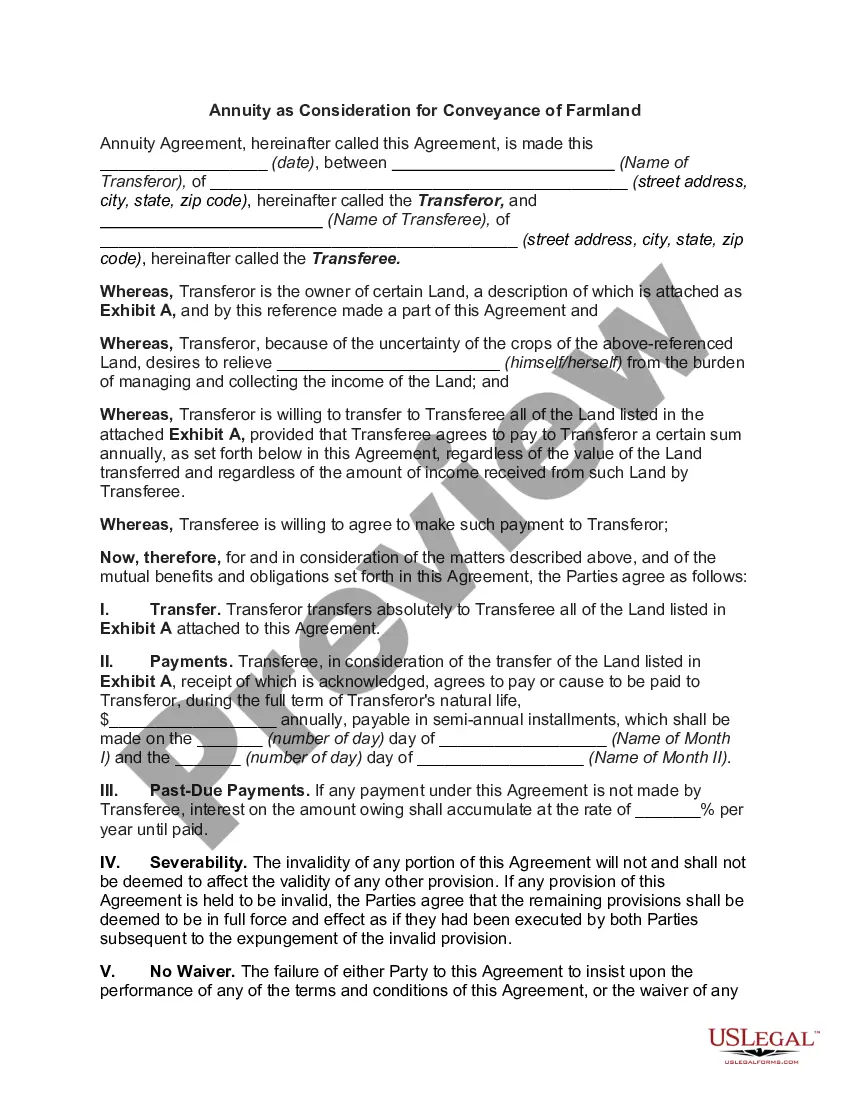
For estate tax purposes, the value of property sold for a private annuity is removed from the Annuitant's gross estate.
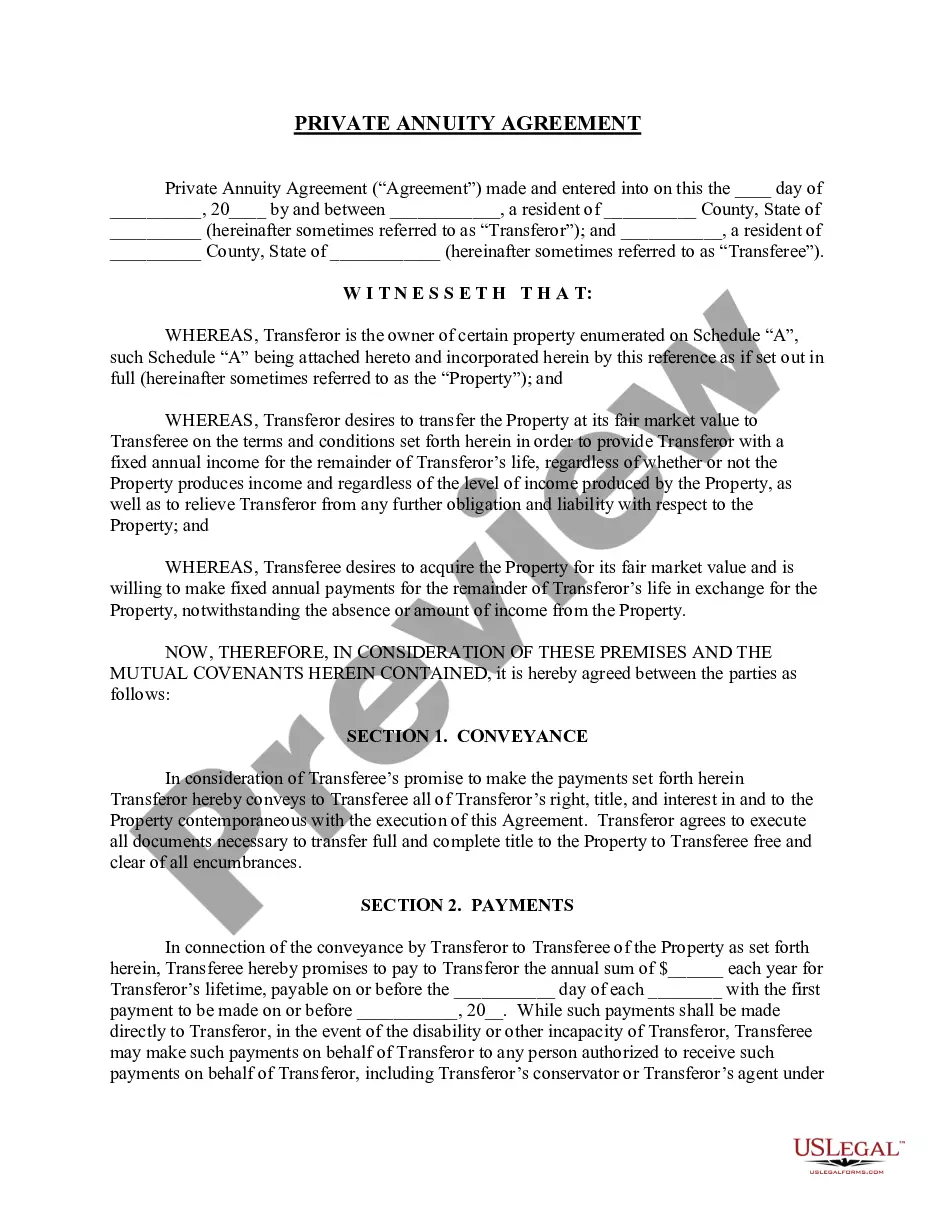
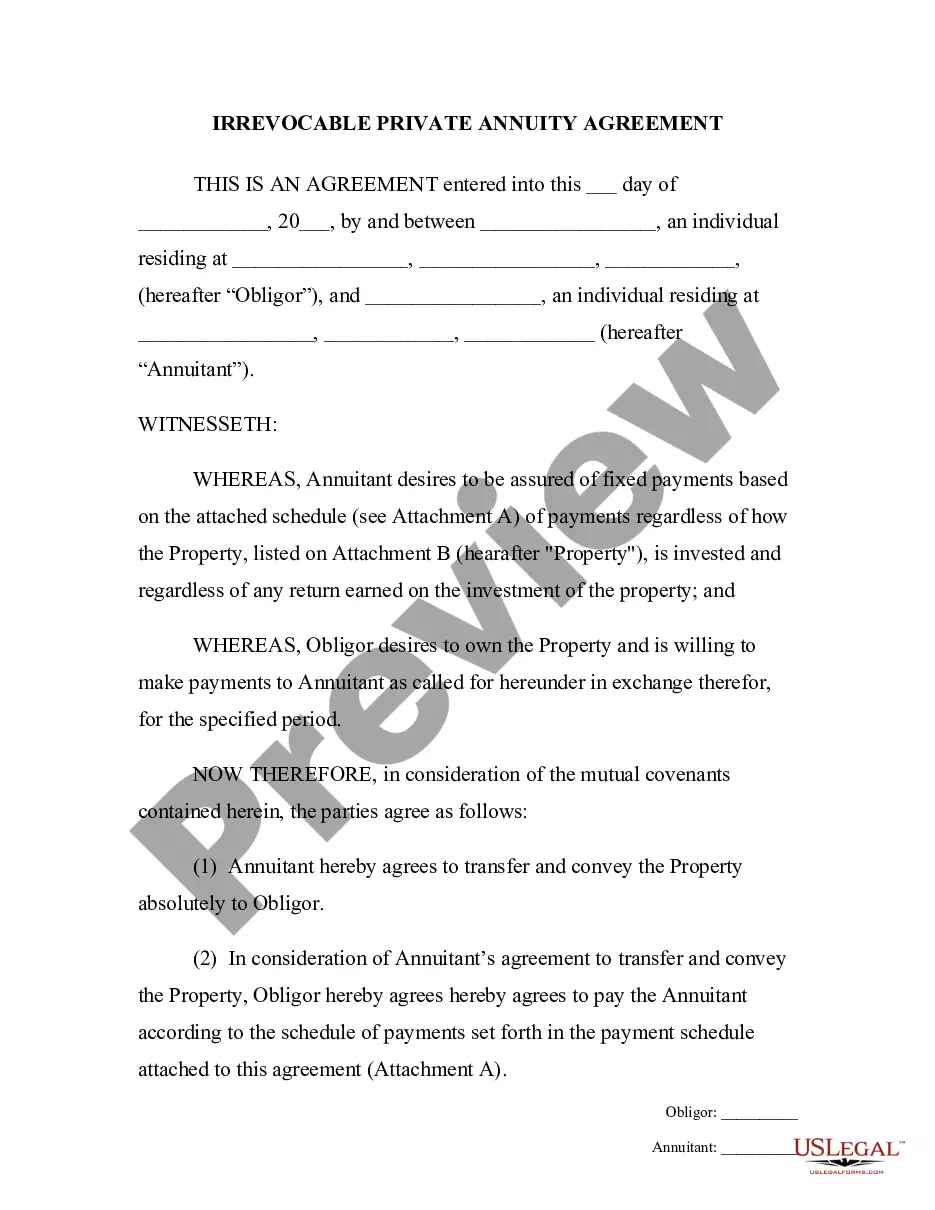
A private annuity is a special agreement in which an individual (annuitant) transfers property to an obligor. The obligor agrees to make payments to the annuitant according to an agreed-upon schedule in exchange for the property transfer.
Each annuity payment is treated as part tax-free return of basis, part capital gain, and part ordinary income until your entire basis is recovered. Once your basis is recovered, the entire annuity is treated as part capital gain and part ordinary income until you have surpassed your life expectancy.
There are four basic types of annuities to meet your needs: immediate fixed, immediate variable, deferred fixed, and deferred variable annuities. These four types are based on two primary factors: when you want to start receiving payments and how you would like your annuity to grow.