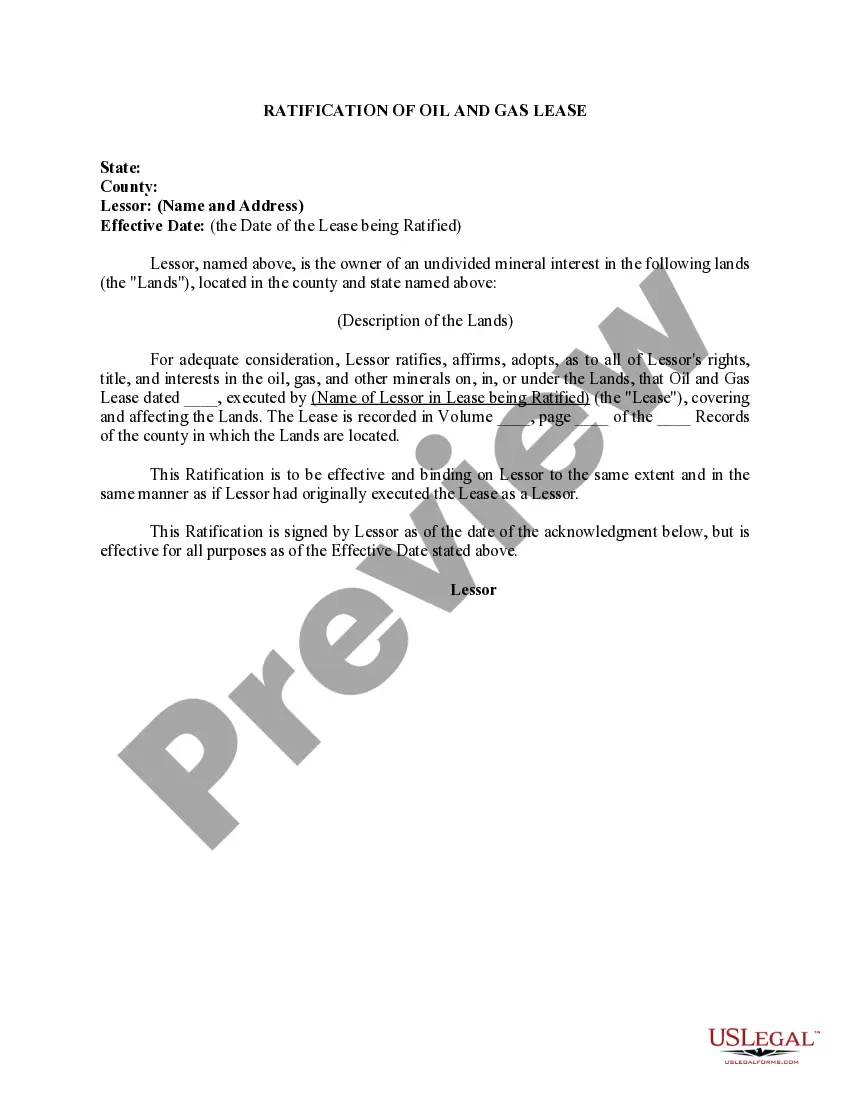
Maryland Agreement between Physicians to Share Offices without Forming Partnership
Description
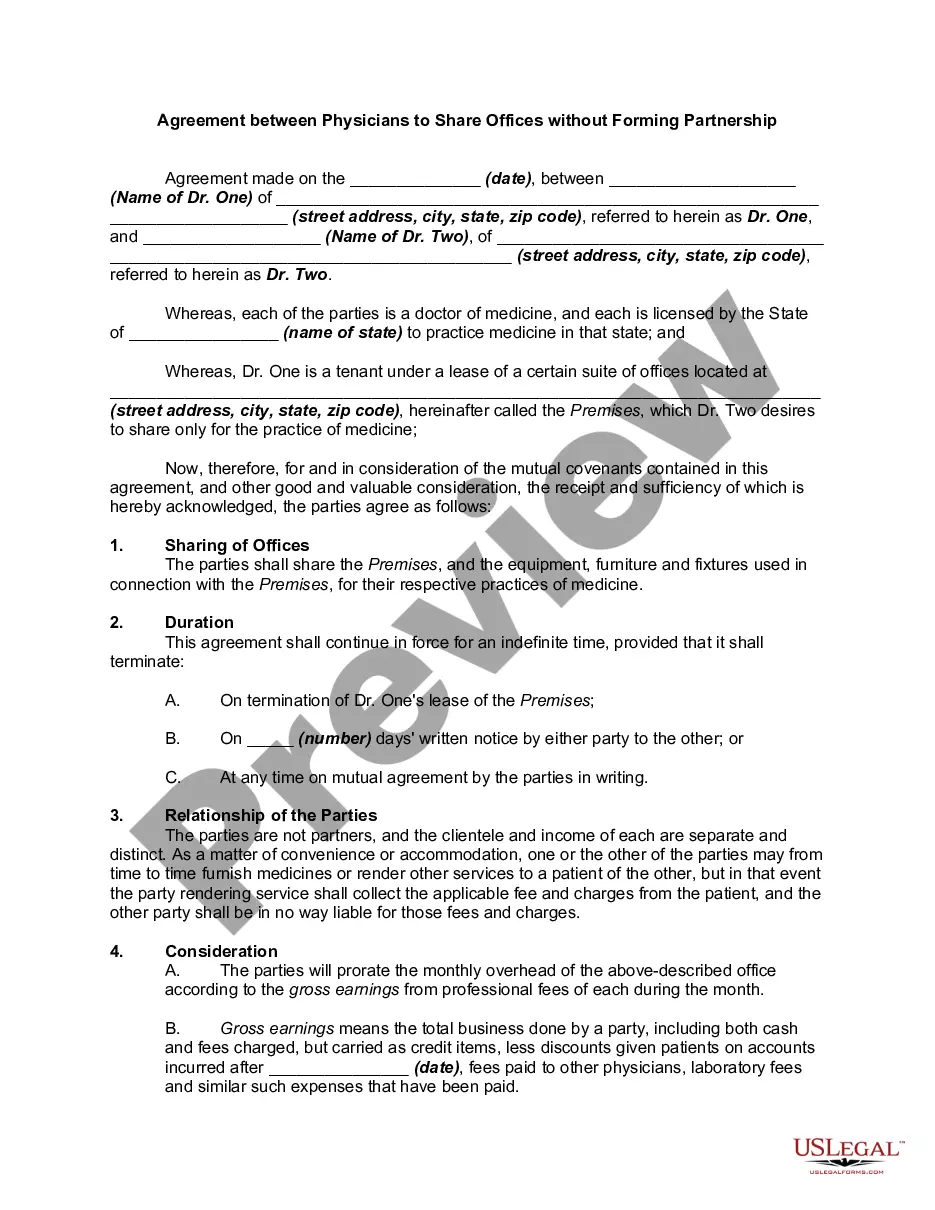
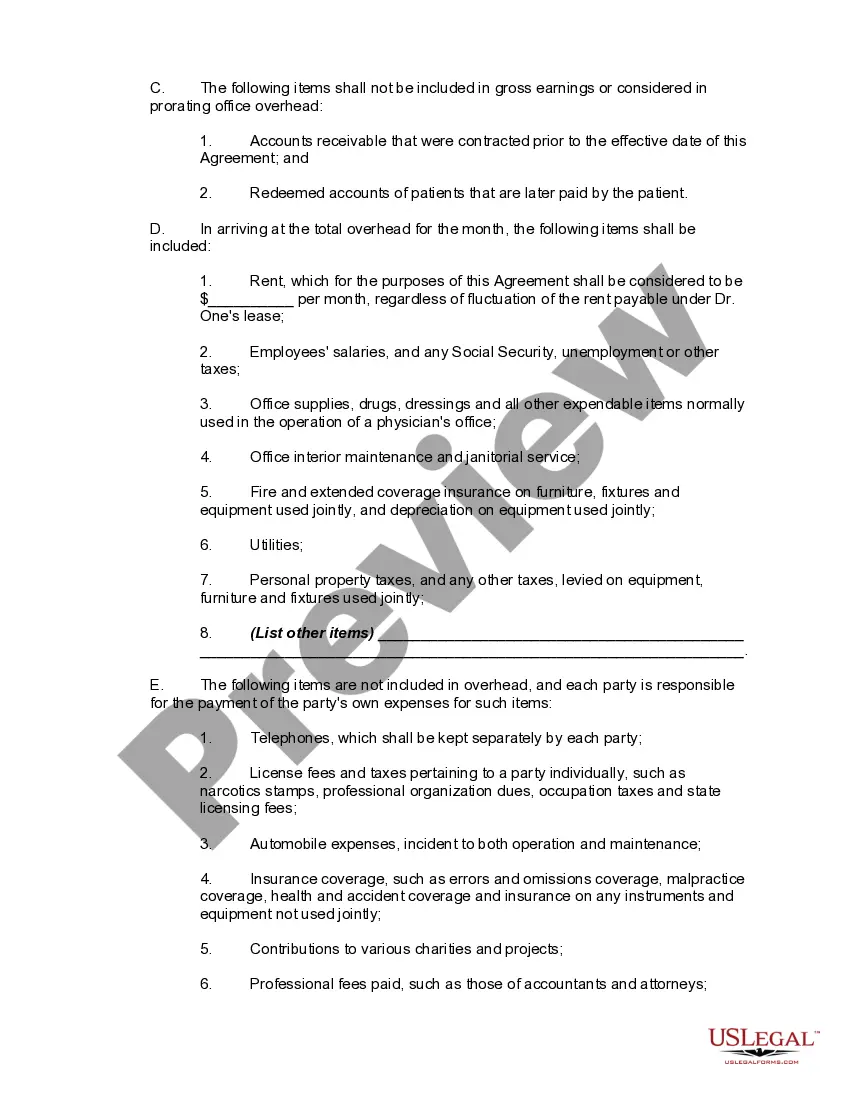
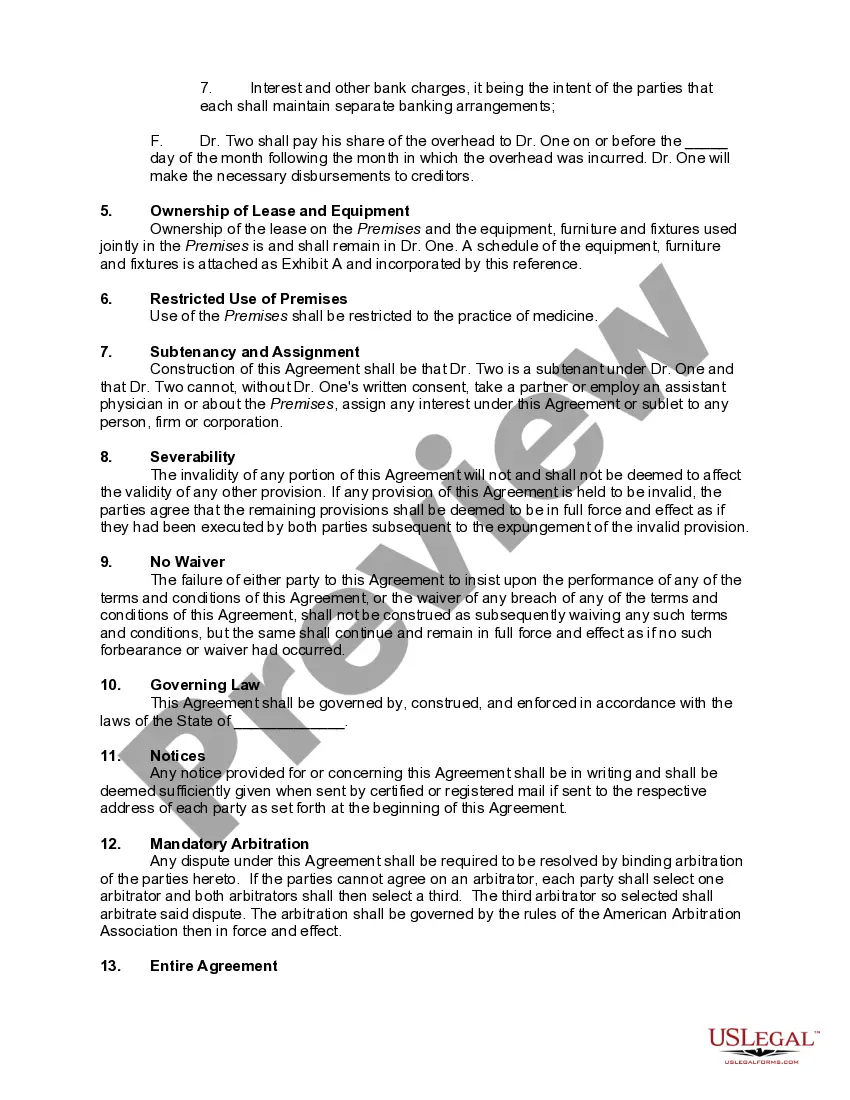
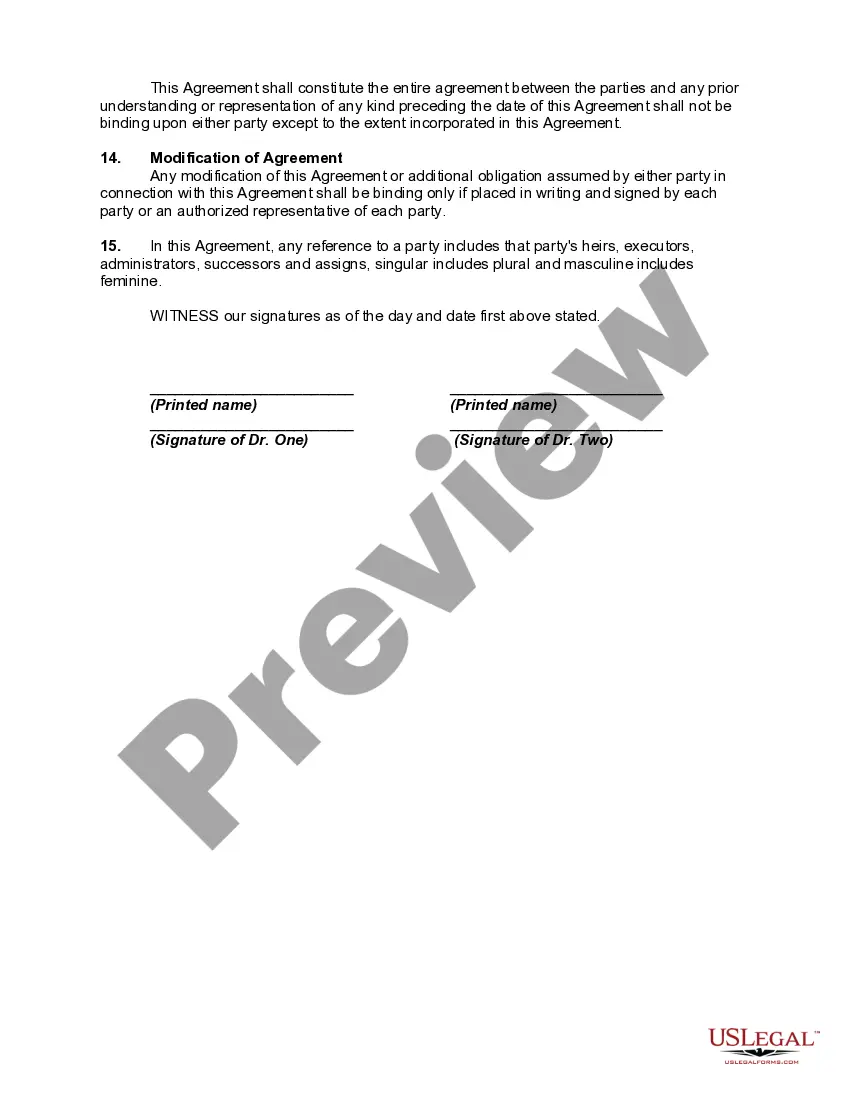
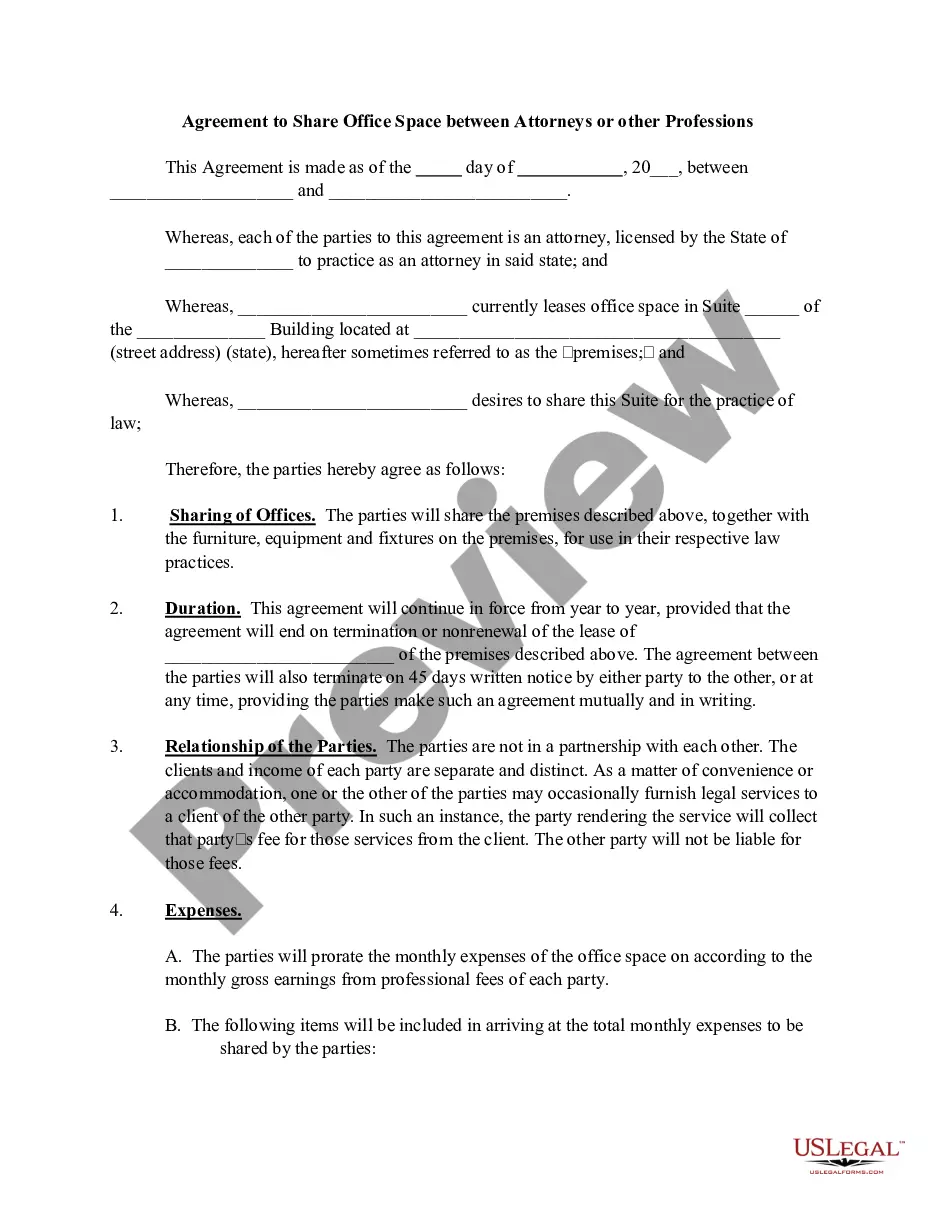

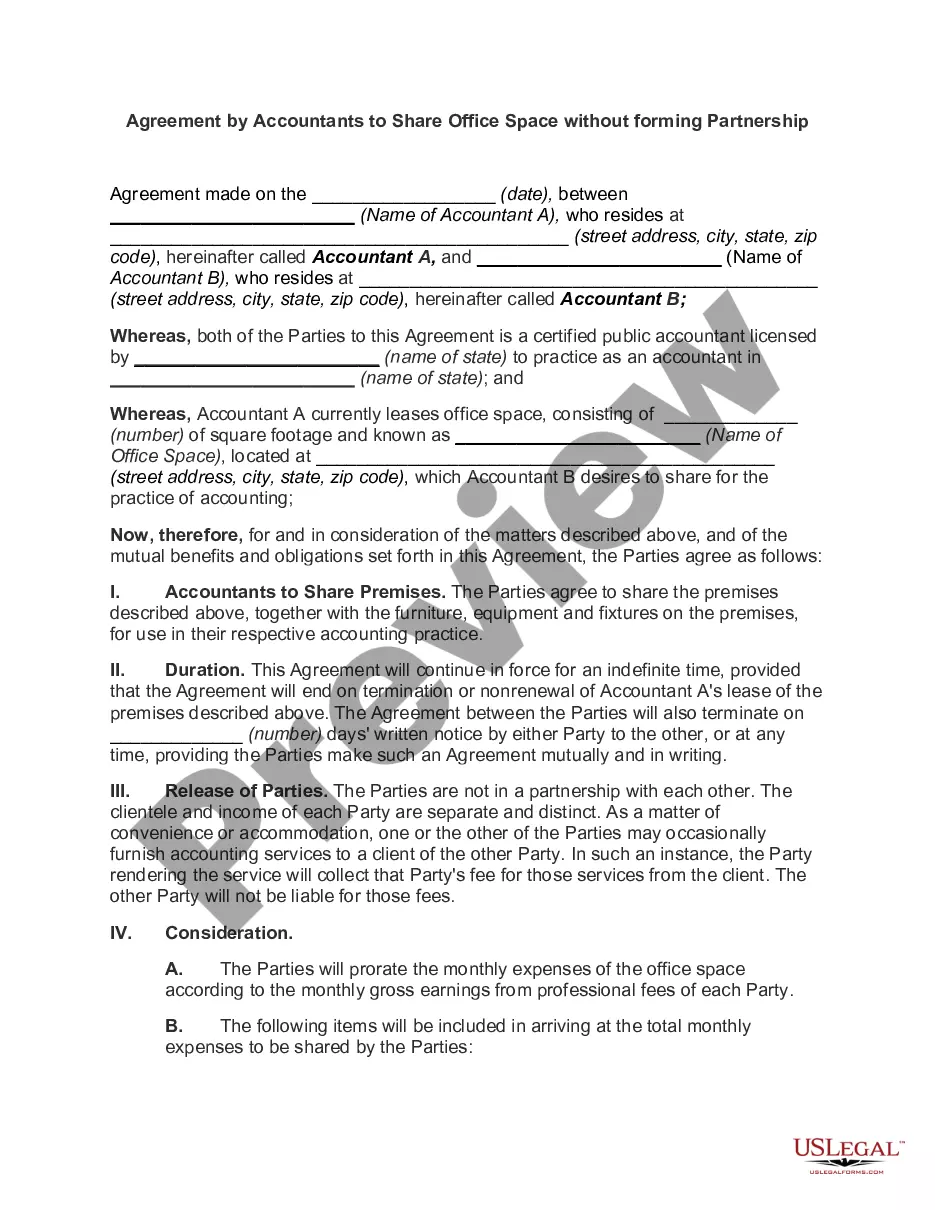
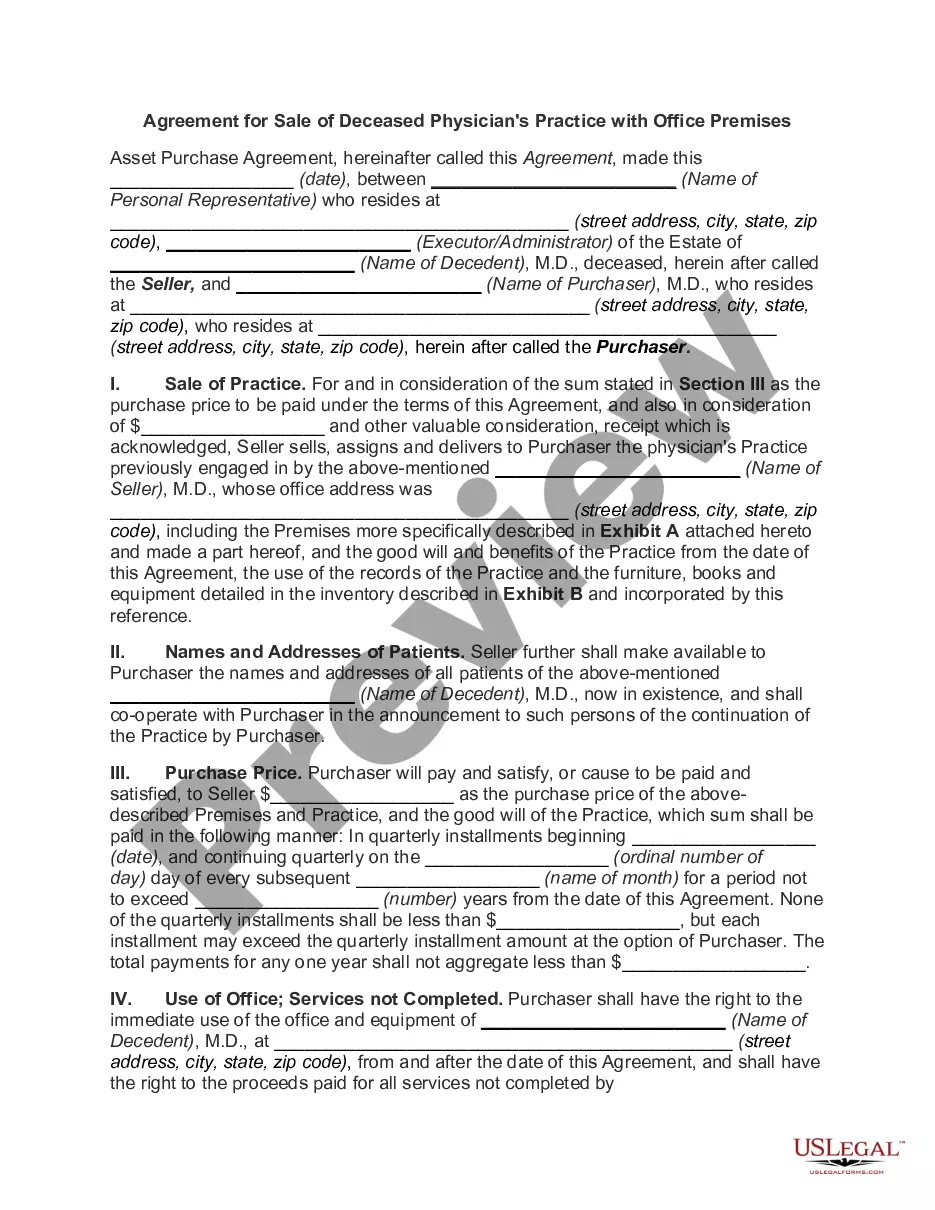
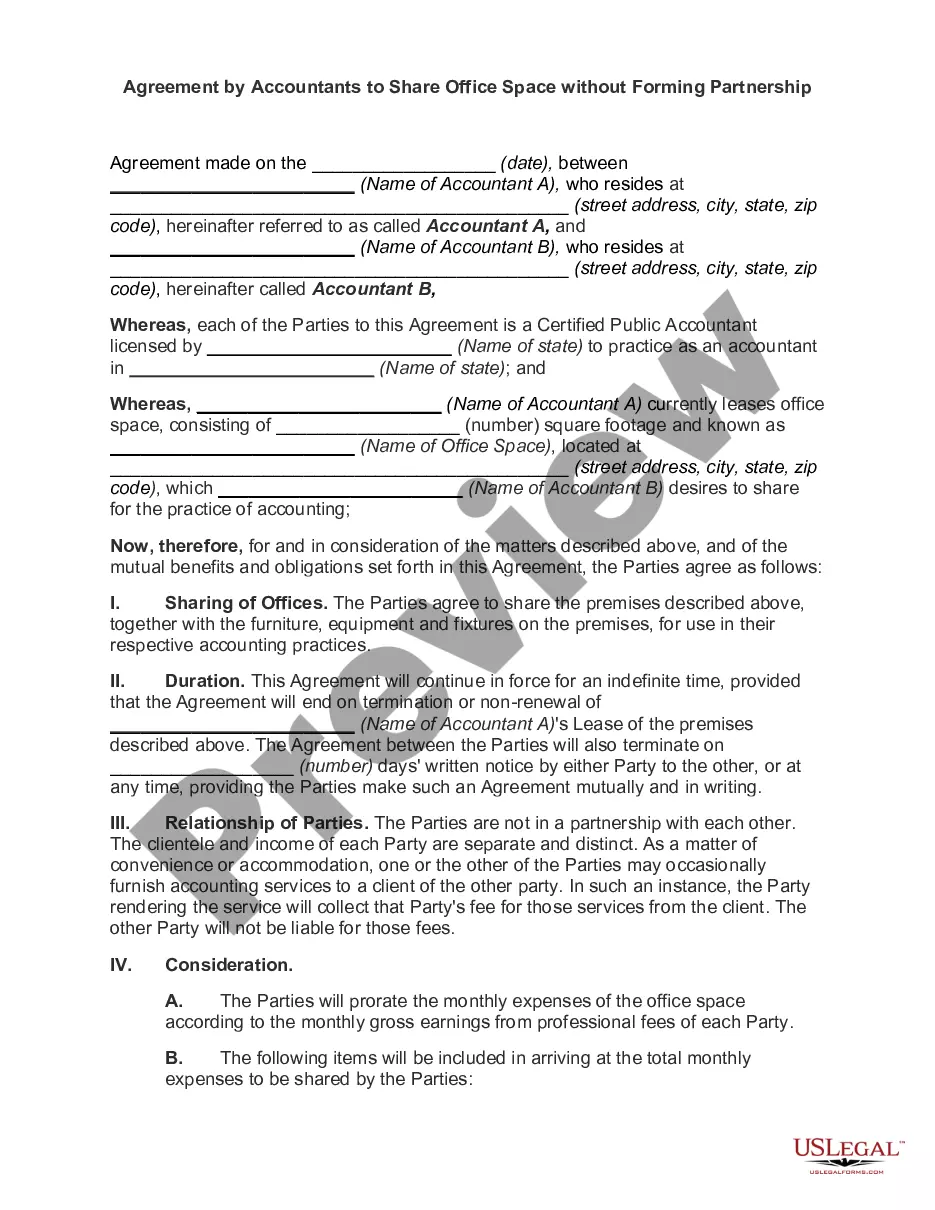


How to fill out Agreement Between Physicians To Share Offices Without Forming Partnership?
Are you presently in a circumstance where you need documents for either professional or personal reasons nearly every day.
There are numerous legal document templates accessible online, but finding reliable ones can be challenging.
US Legal Forms offers a large selection of template types, such as the Maryland Agreement between Physicians to Share Offices without Forming Partnership, which can be designed to meet local and federal requirements.
If you find the appropriate form, click Purchase now.
Choose the pricing plan you prefer, complete the necessary details to create your account, and make a purchase using your PayPal or credit card.
- If you are already familiar with the US Legal Forms website and possess an account, simply Log In.
- After that, you can download the Maryland Agreement between Physicians to Share Offices without Forming Partnership template.
- If you do not have an account and wish to get started with US Legal Forms, follow these steps.
- Locate the form you need and confirm it is for your specific city/county.
- Use the Review button to inspect the form.
- Check the description to ensure you have selected the correct form.
- If the form is not what you’re looking for, utilize the Search field to find the one that meets your needs.
Form popularity
FAQ
A collaborative practice agreement outlines the overall relationship and responsibilities between healthcare providers, while a protocol provides specific guidelines for executing particular tasks or procedures. In the context of the Maryland Agreement between Physicians to Share Offices without Forming Partnership, the collaborative agreement sets the framework for cooperation, and the protocol defines the detailed steps in patient care. Recognizing this distinction ensures clarity in roles and enhances service delivery.
Whether physician assistants can bill independently often depends on state laws and the specifics of their collaborative agreements. In many cases, they are required to bill under the supervising physician's name or need to have specific provisions allowing independent billing. By understanding the nuances of the Maryland Agreement between Physicians to Share Offices without Forming Partnership, providers can effectively navigate these billing practices.
A collaborative practice agreement for a physician assistant is designed to clarify the working relationship between the physician and the assistant. It specifies the responsibilities of each party and outlines how they will collaborate on patient care. This type of agreement is crucial for ensuring compliance with state regulations while maximizing the benefits of the Maryland Agreement between Physicians to Share Offices without Forming Partnership.
Writing a collaborative practice agreement involves clearly defining roles, responsibilities, and protocols for the involved healthcare providers. Start with the scope of practice, outline the mutual goals, and include provisions for patient care and communication. Utilizing the resources available on the UsLegalForms platform can simplify this process, ensuring that your agreement aligns with the Maryland Agreement between Physicians to Share Offices without Forming Partnership.
A collaborative agreement for a physician assistant is a formal document that establishes the working relationship between a physician and a physician assistant. This agreement details the scope of practice, responsibilities, and collaborative roles, ensuring compliance with Maryland regulations. By leveraging the Maryland Agreement between Physicians to Share Offices without Forming Partnership, both parties can share office space and improve patient service without forming a legal partnership.
A collaborative agreement outlines how two or more healthcare providers, such as physicians, can work together while maintaining their individual practices. This is particularly relevant in the context of the Maryland Agreement between Physicians to Share Offices without Forming Partnership, where providers can share resources and space while avoiding partnership complexities. These agreements foster cooperation and can enhance patient care through shared responsibilities.
In Maryland, Physician Assistants (PAs) must have a supervisory agreement with a licensed physician to practice legally. This agreement outlines the delegation of medical tasks, ensuring patient safety and compliance with medical regulations. In light of the Maryland Agreement between Physicians to Share Offices without Forming Partnership, it is crucial for PAs to understand their responsibilities and the scope of their agreements. This ensures that all parties are aligned and aware of their roles within a collaborative office setting.
A physician agreement is a contract that outlines the legal, professional, and financial relationships between physicians. This agreement can include terms about shared responsibilities, office space, and compensation, particularly relevant to a Maryland Agreement between Physicians to Share Offices without Forming Partnership. Such agreements provide clarity and prevent potential disputes over roles and duties. Ensuring every physician understands their role enhances collaboration and patient satisfaction.
The two primary types of contracts between physicians and patients are express contracts and implied contracts. An express contract involves a clear, written agreement about the services and payments, while an implied contract arises through the actions and circumstances of the parties. Understanding these distinctions is crucial when establishing a Maryland Agreement between Physicians to Share Offices without Forming Partnership. Both contract types create expectations and standards for patient care.
A provider agreement is a legal contract between a healthcare provider and an insurance company or another third party. This document outlines reimbursement rates, covered services, and the responsibilities of both parties. In the context of a Maryland Agreement between Physicians to Share Offices without Forming Partnership, such agreements clarify payment processes for shared services. This clarity fosters better financial interactions and patient care outcomes.