Maryland Small Estate Petition for Administration
Description
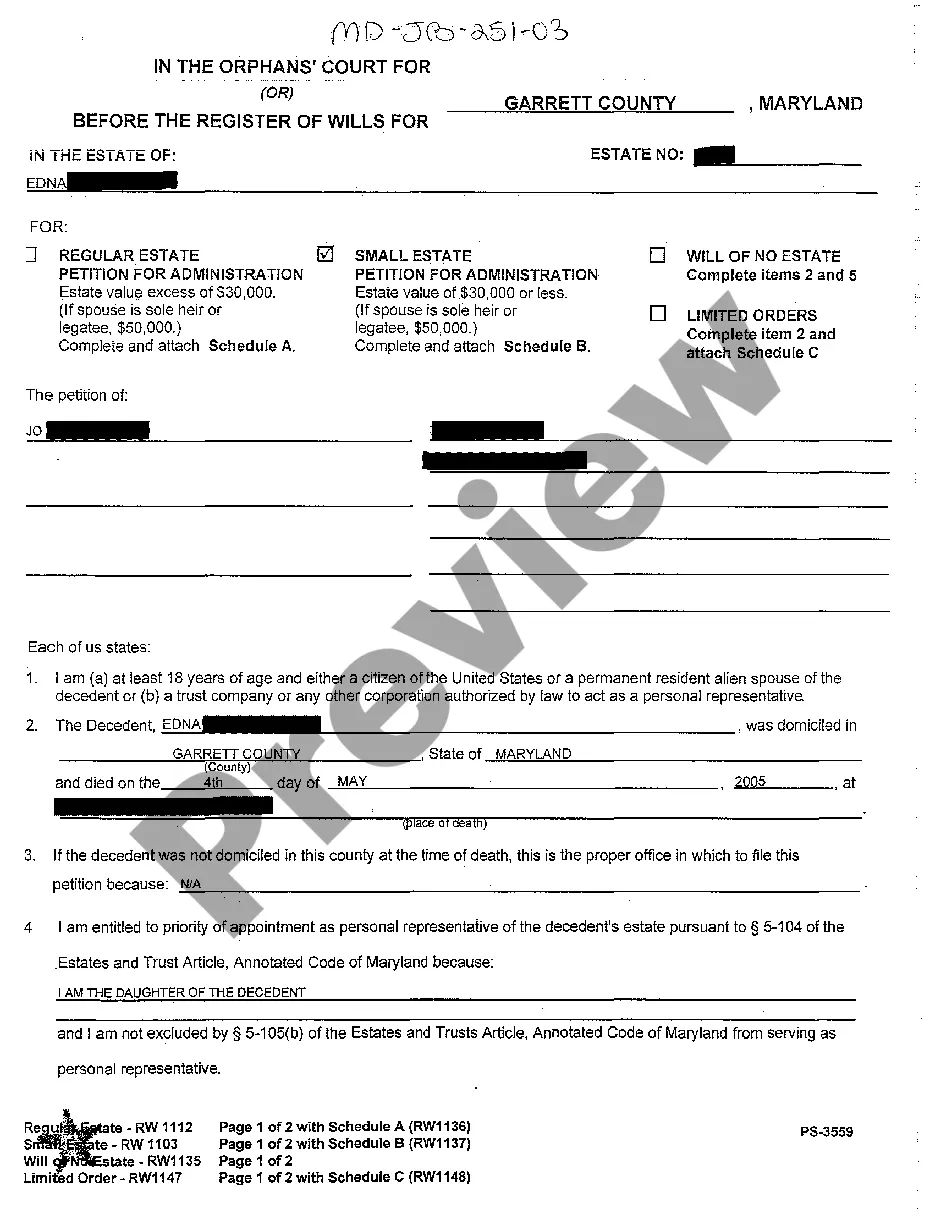
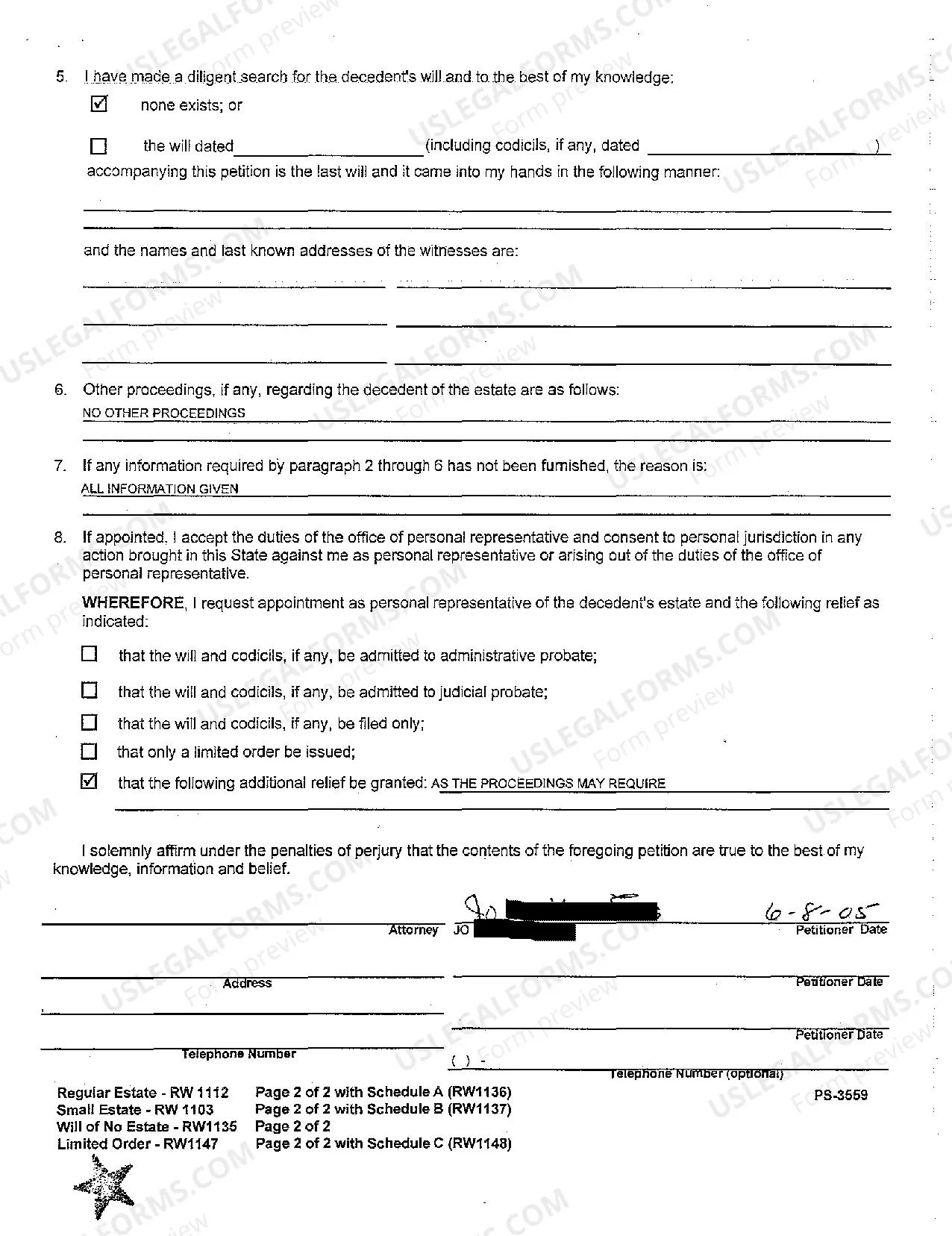

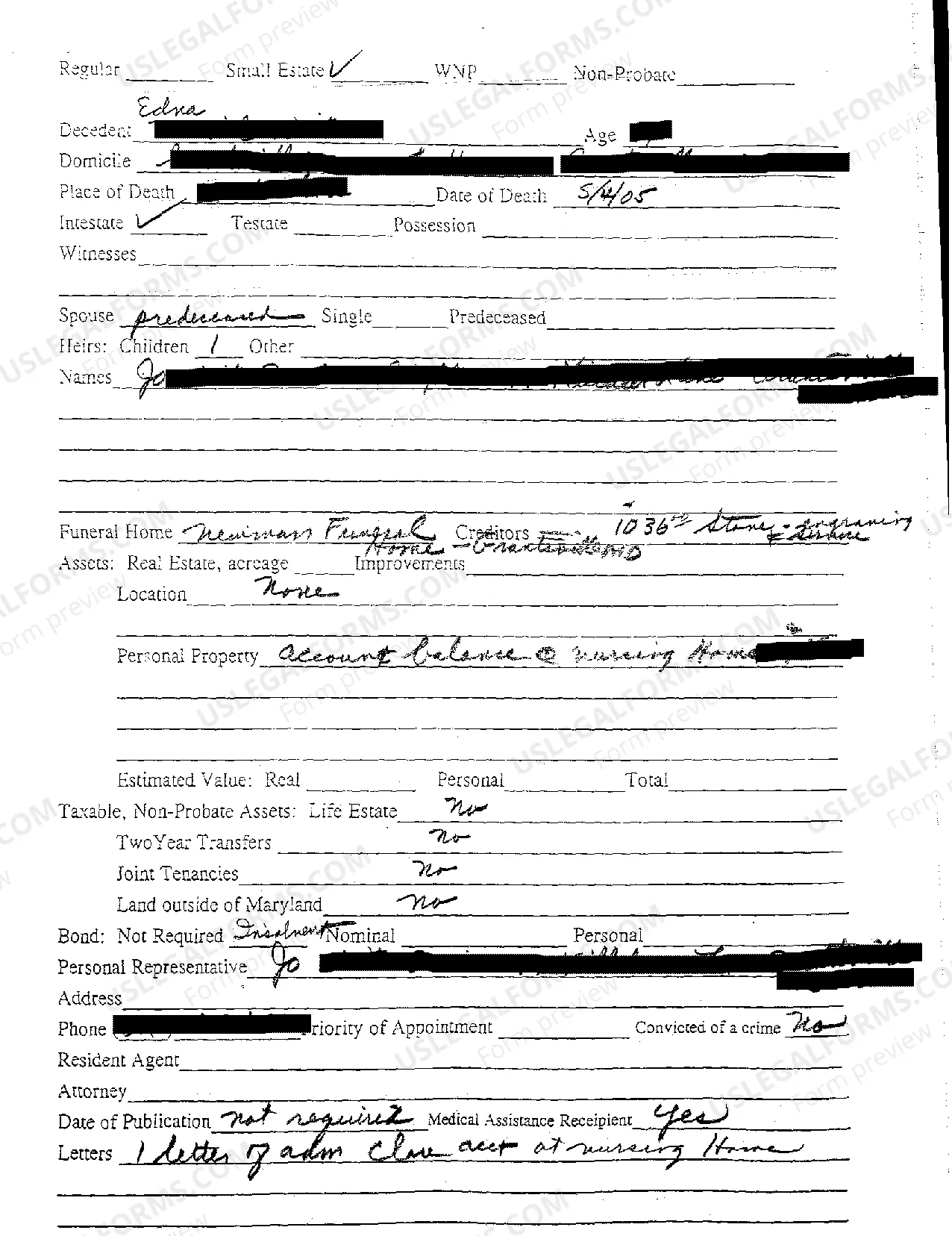
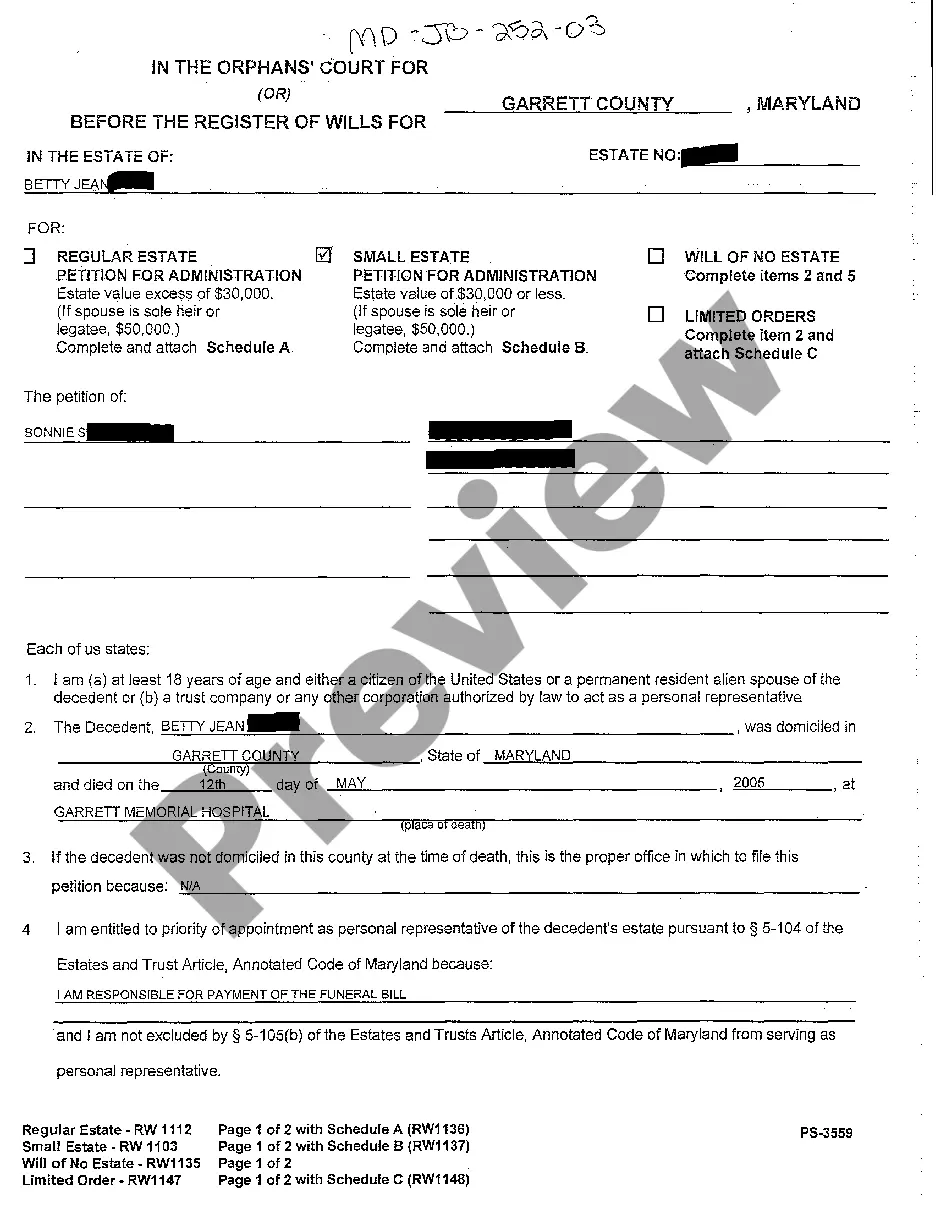
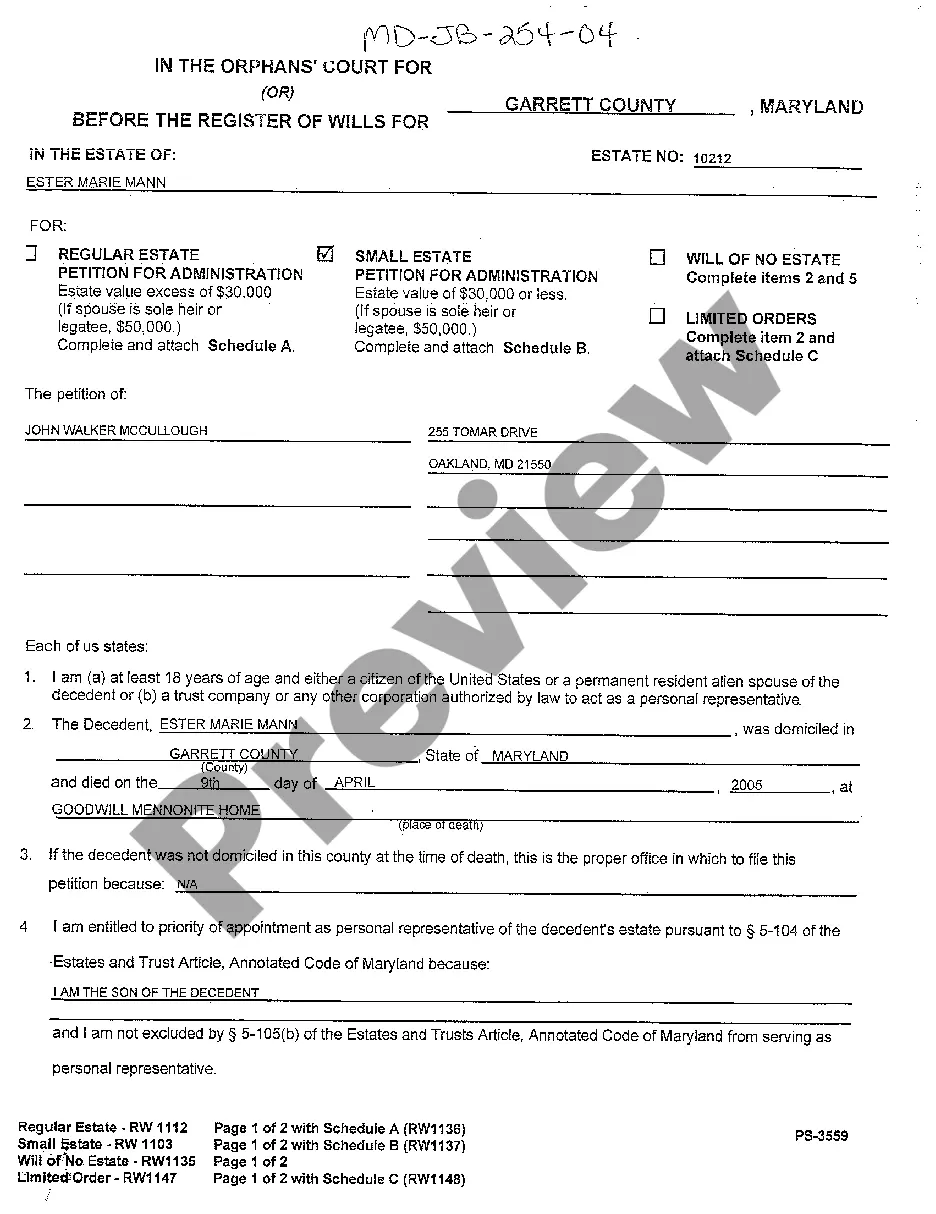
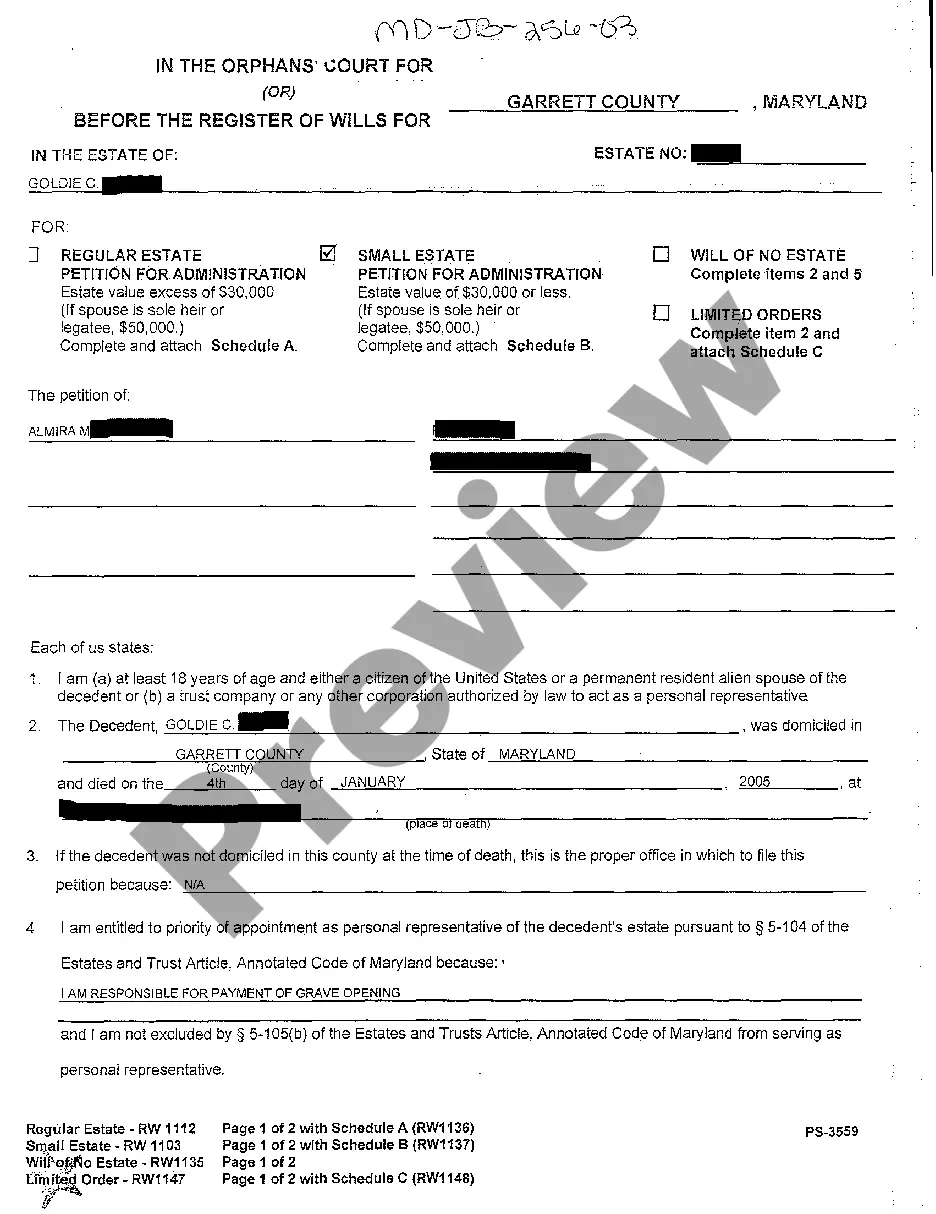
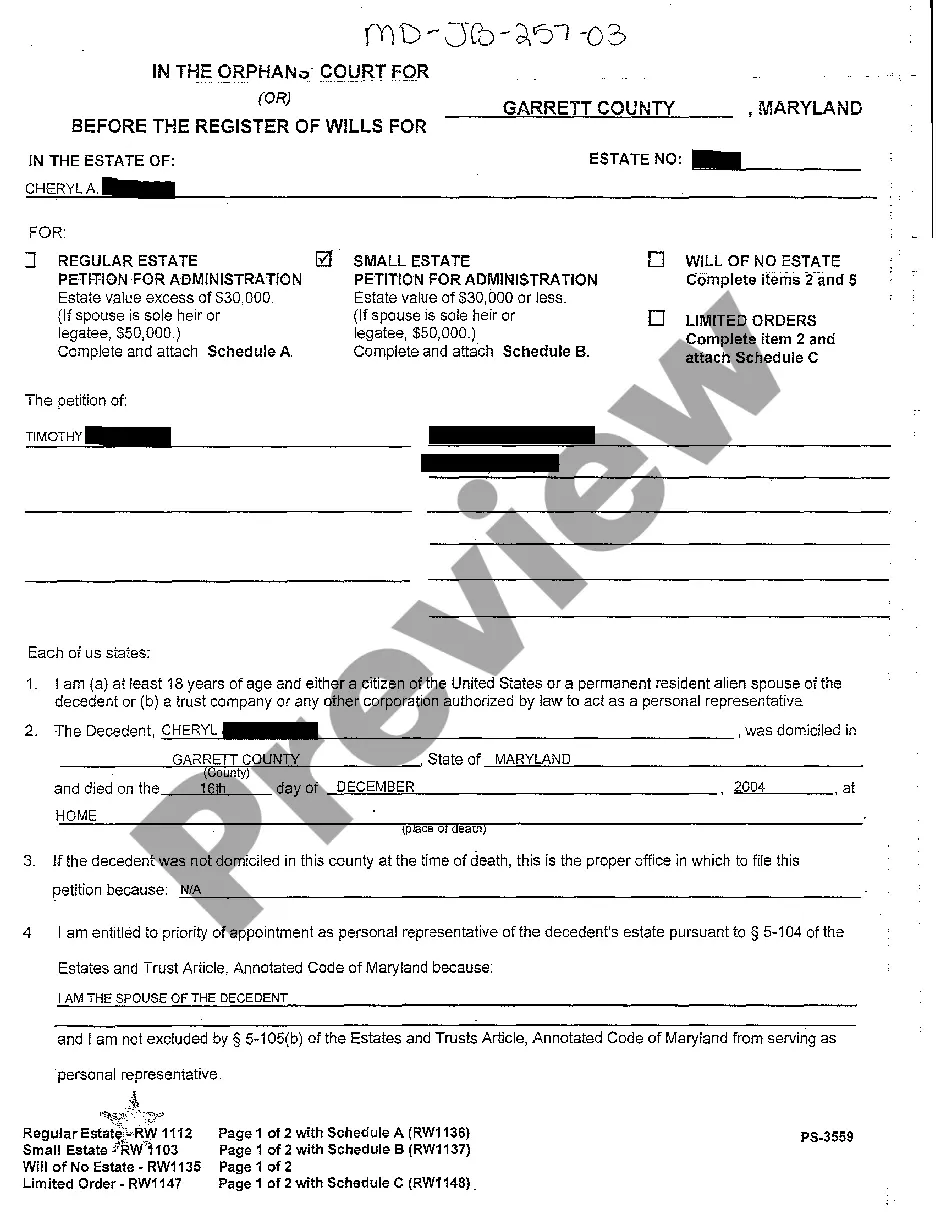

How to fill out Maryland Small Estate Petition For Administration?
You are invited to the largest legal documents repository, US Legal Forms. Here, you can locate any template such as Maryland Small Estate Petition for Administration forms and download them (as many as you desire/need). Prepare official documents in mere hours, rather than days or even weeks, without incurring significant costs on a lawyer or attorney.
Obtain your state-specific form with just a few clicks and feel confident knowing it was crafted by our state-certified legal experts.
If you’re already a subscribed member, simply Log In to your account and select Download next to the Maryland Small Estate Petition for Administration you wish to obtain. Since US Legal Forms is an online service, you’ll always have access to your downloaded files, no matter what device you’re using. View them within the My documents section.
Once you’ve completed the Maryland Small Estate Petition for Administration, forward it to your attorney for verification. It’s an additional step but a crucial one to ensure you’re completely protected. Join US Legal Forms today and gain access to thousands of reusable templates.
- If you don't possess an account yet, what are you waiting for? Check our instructions below to get started.
- If this is a state-specific document, verify its legitimacy in your state.
- Review the description (if available) to determine if it’s the correct template.
- Utilize the Preview feature to see more content.
- If the template meets all your requirements, click Buy Now.
- To create your account, select a pricing plan.
- Use a credit card or PayPal account to register.
- Download the document in the format you need (Word or PDF).
- Print the document and complete it with your/your business’s details.
Form popularity
FAQ
Small Estate: property of the decedent subject to administration in Maryland is established to have a value of $50,000 or less ($100,000 or less if the spouse is the sole heir).
When the register of wills or orphan's court appoints a personal representative, it grants the representative letters of administration. Letters of administration empower the representative to distribute the assets in the estate.The court rules for estate administration are found in Title 6 of the Maryland Rules.
Appointment of Executor or Administrator In the absence of a will, the court appoints an administrator for the estate, typically the next of kin. Completion of the executor or administrator appointment takes about six to eight weeks once the executor files the petition or the court makes a selection.
Do you always need probate or letters of administrationYou usually need probate or letters of administration to deal with an estate if it includes property such as a flat or a house.you discover that the estate is insolvent, that is, there is not enough money in the estate to pay all the debts, taxes and expenses.