Maryland Revocable Living Trust for Husband and Wife with No Children
Understanding this form
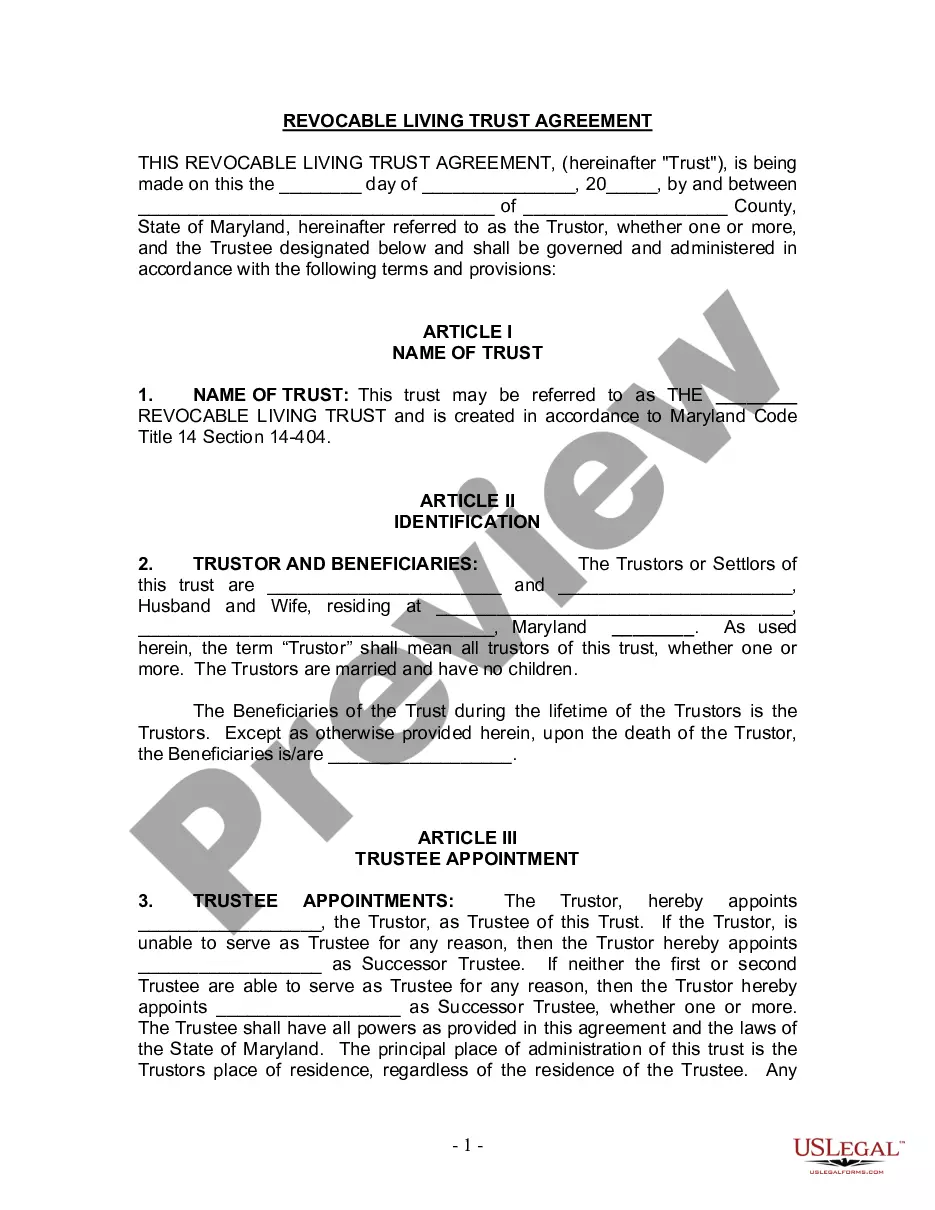
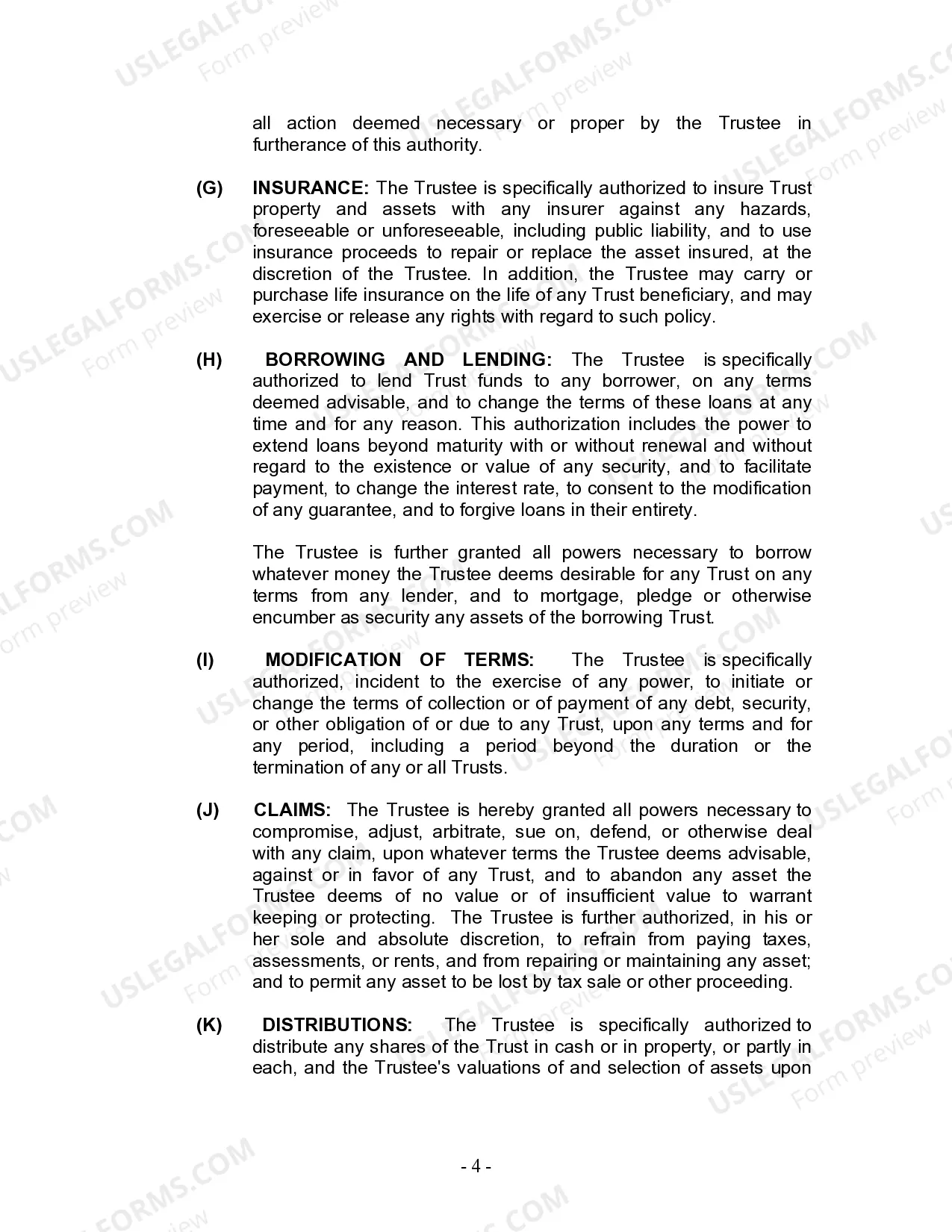
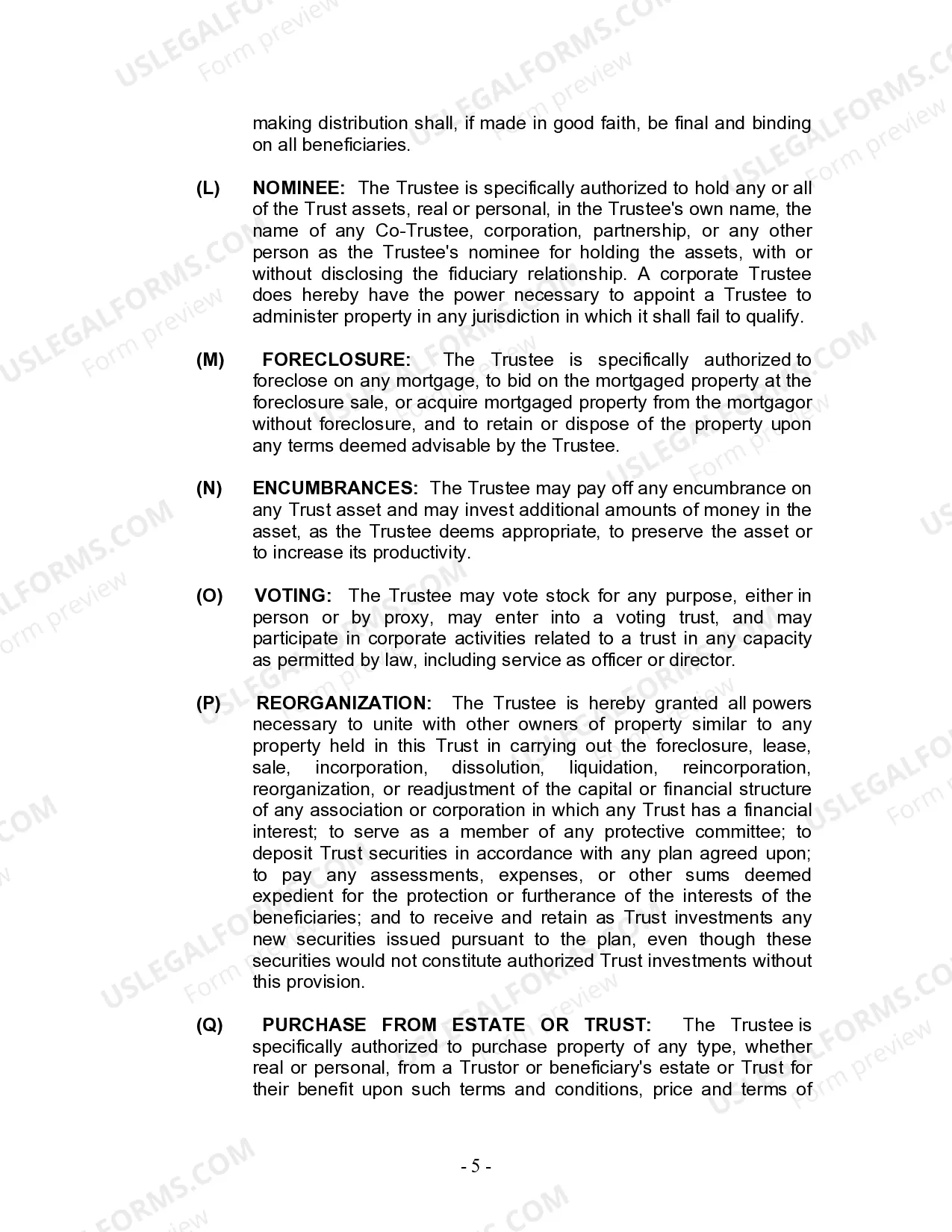
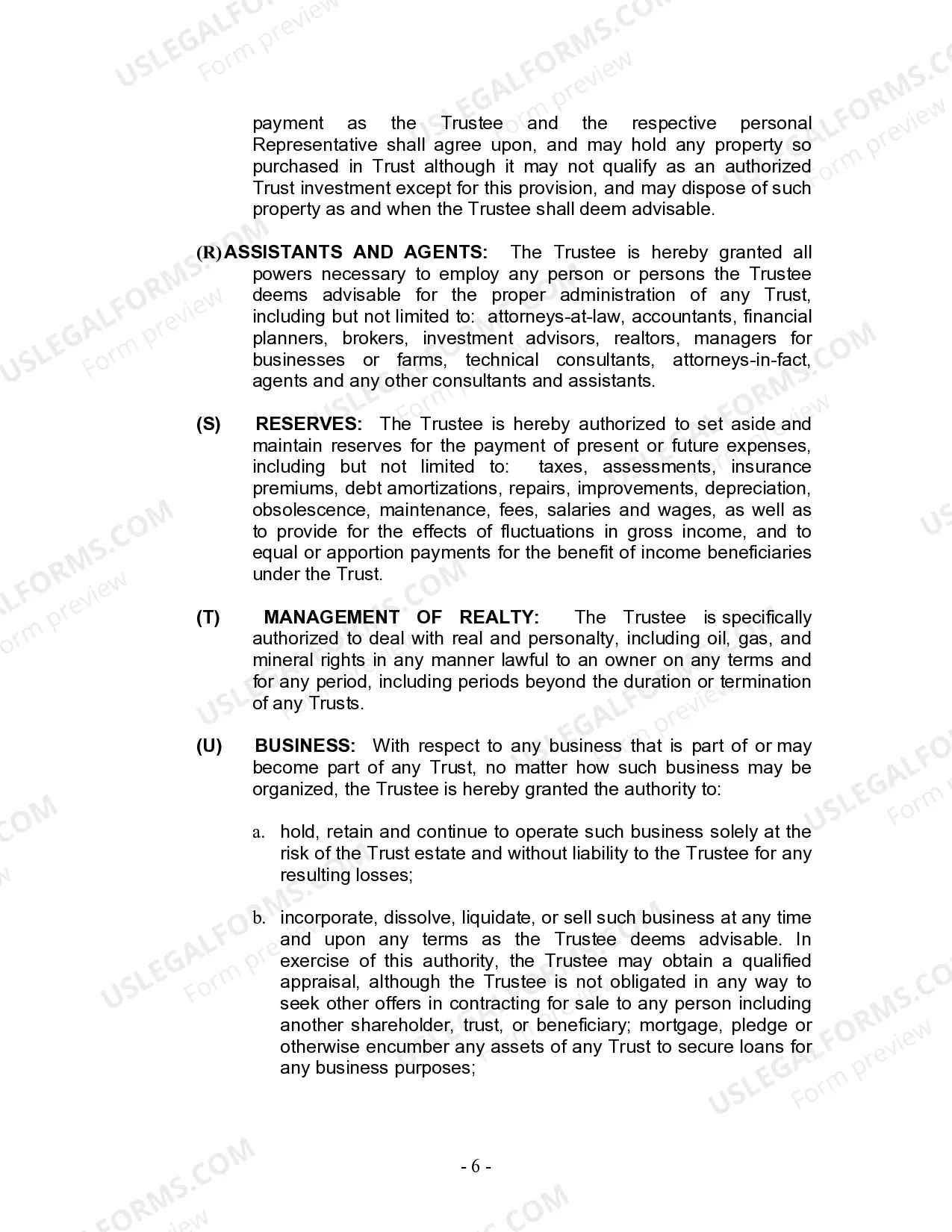
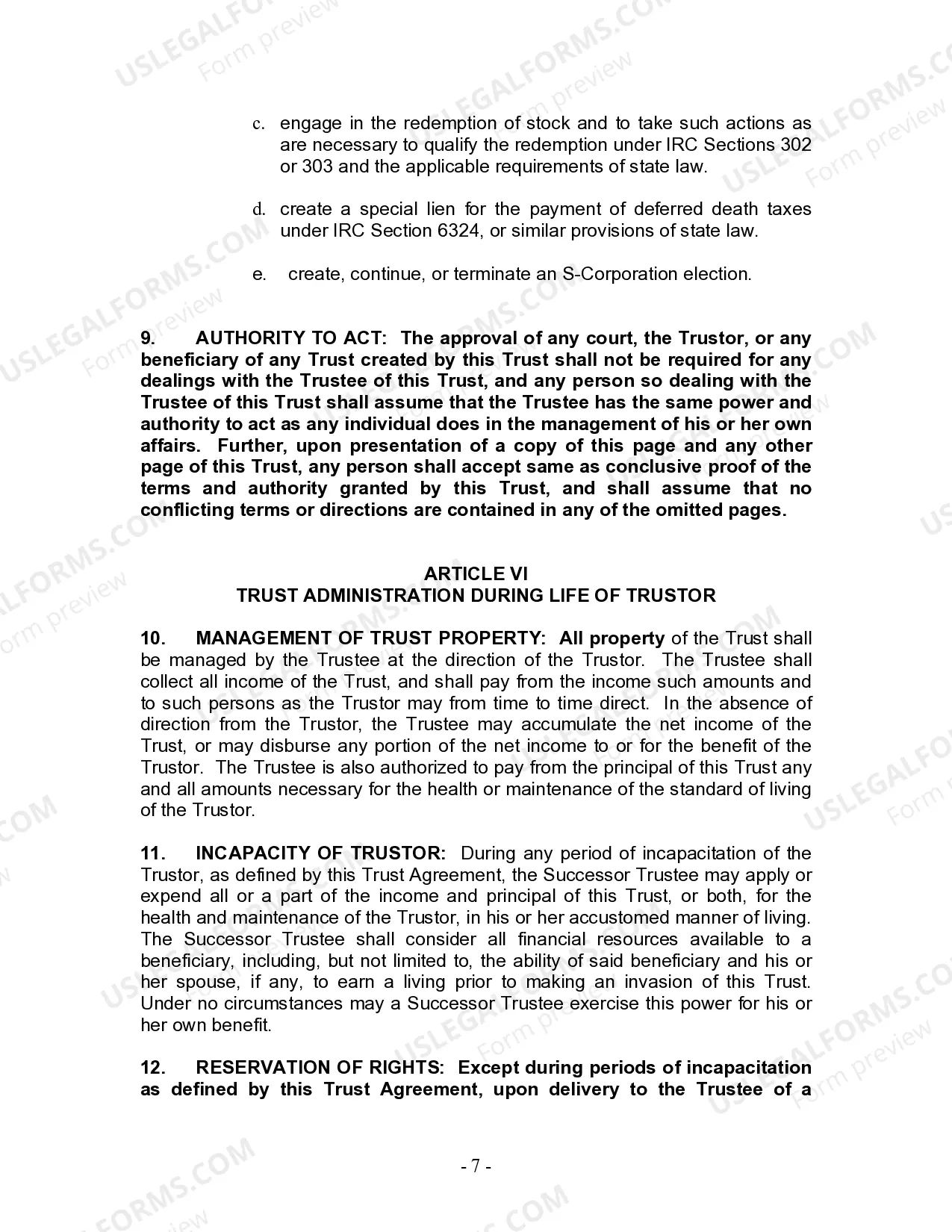
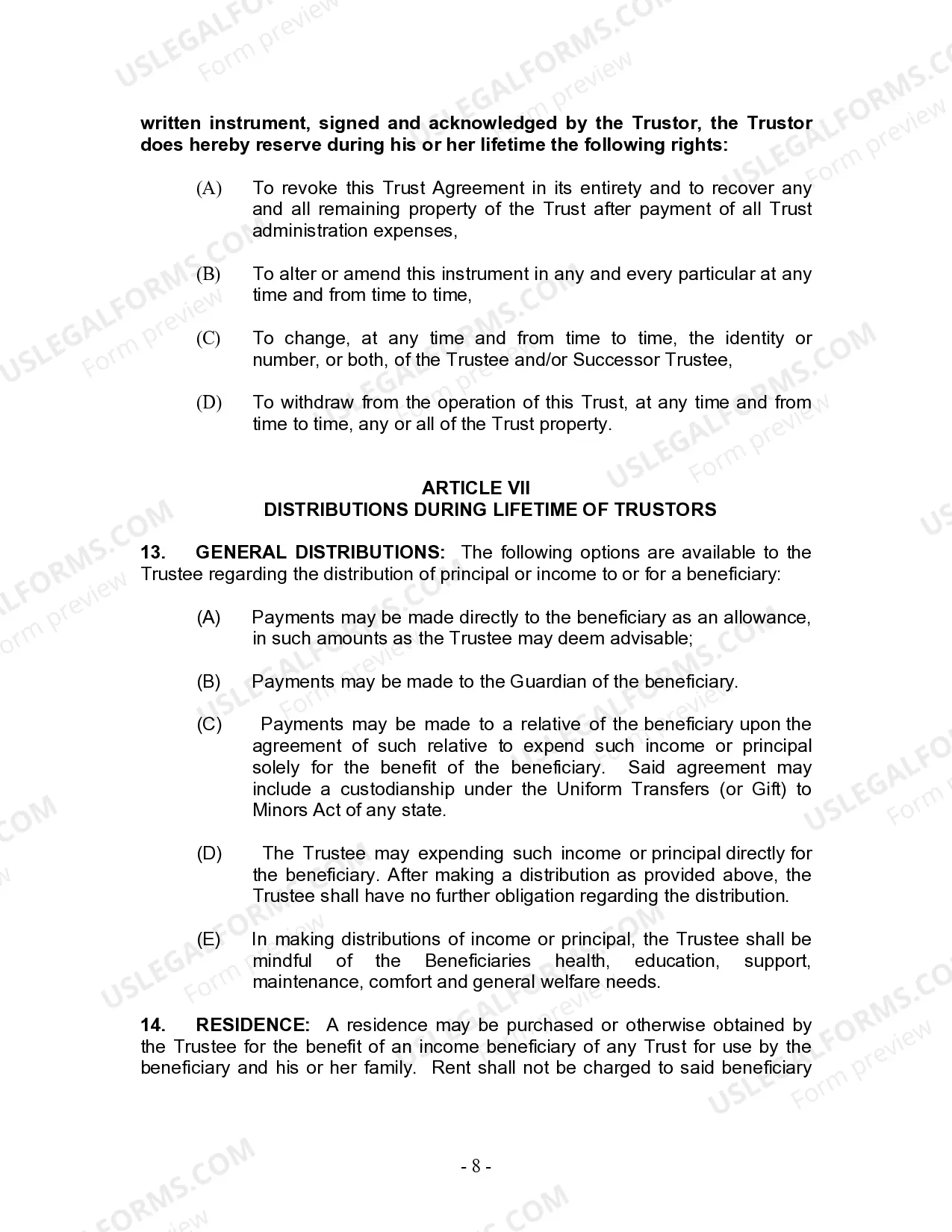
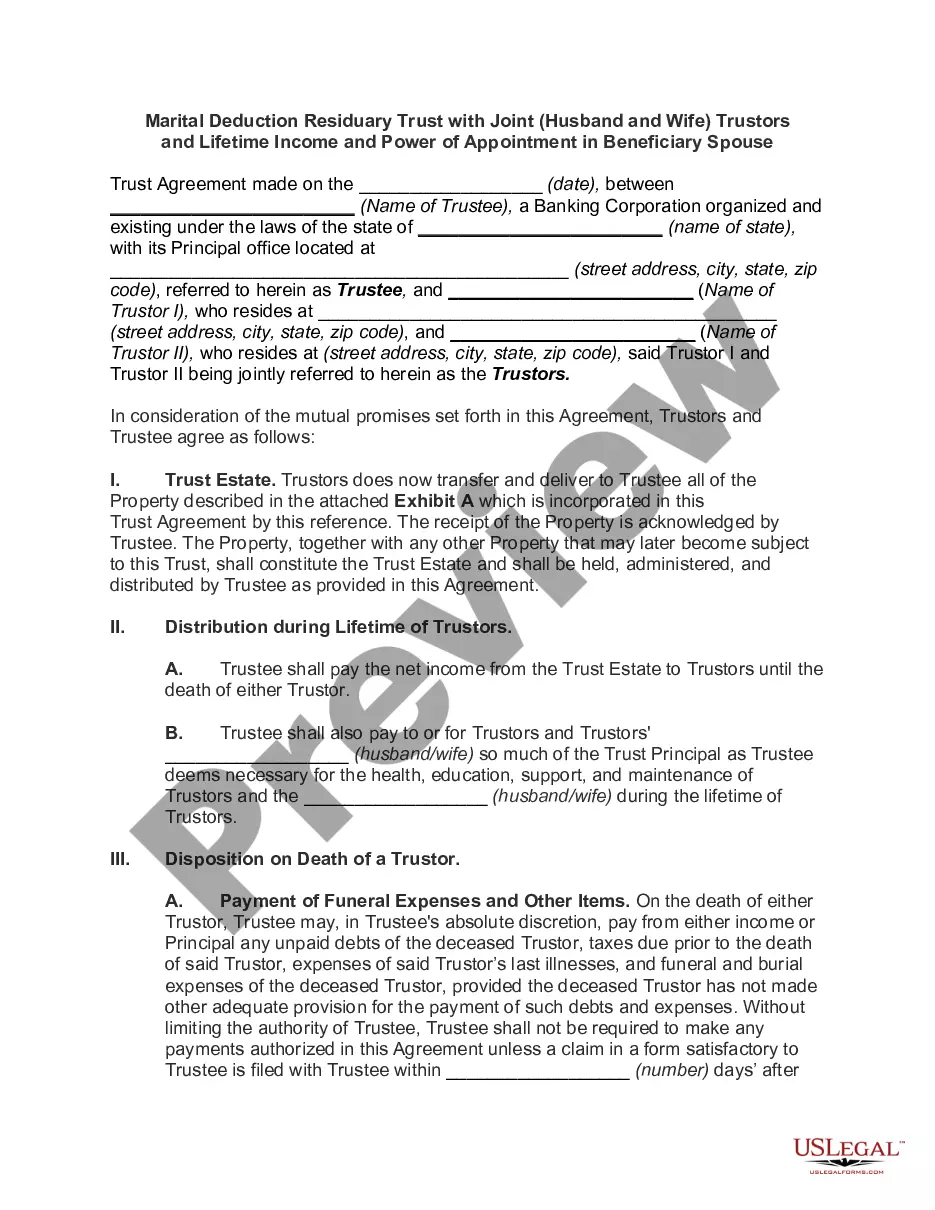
The Revocable Living Trust for Husband and Wife with No Children is a legal document that allows a married couple to manage their assets during their lifetime and arrange for the distribution of their property upon death. This living trust provides a way to bypass probate, ensuring a smoother transfer of assets to the surviving spouse or designated beneficiaries. Unlike a will, a revocable living trust can be altered or revoked by the creators during their lifetime, offering flexibility and control over their estate plan.
Key components of this form
- Identification of the Trustor(s) and Trustee(s).
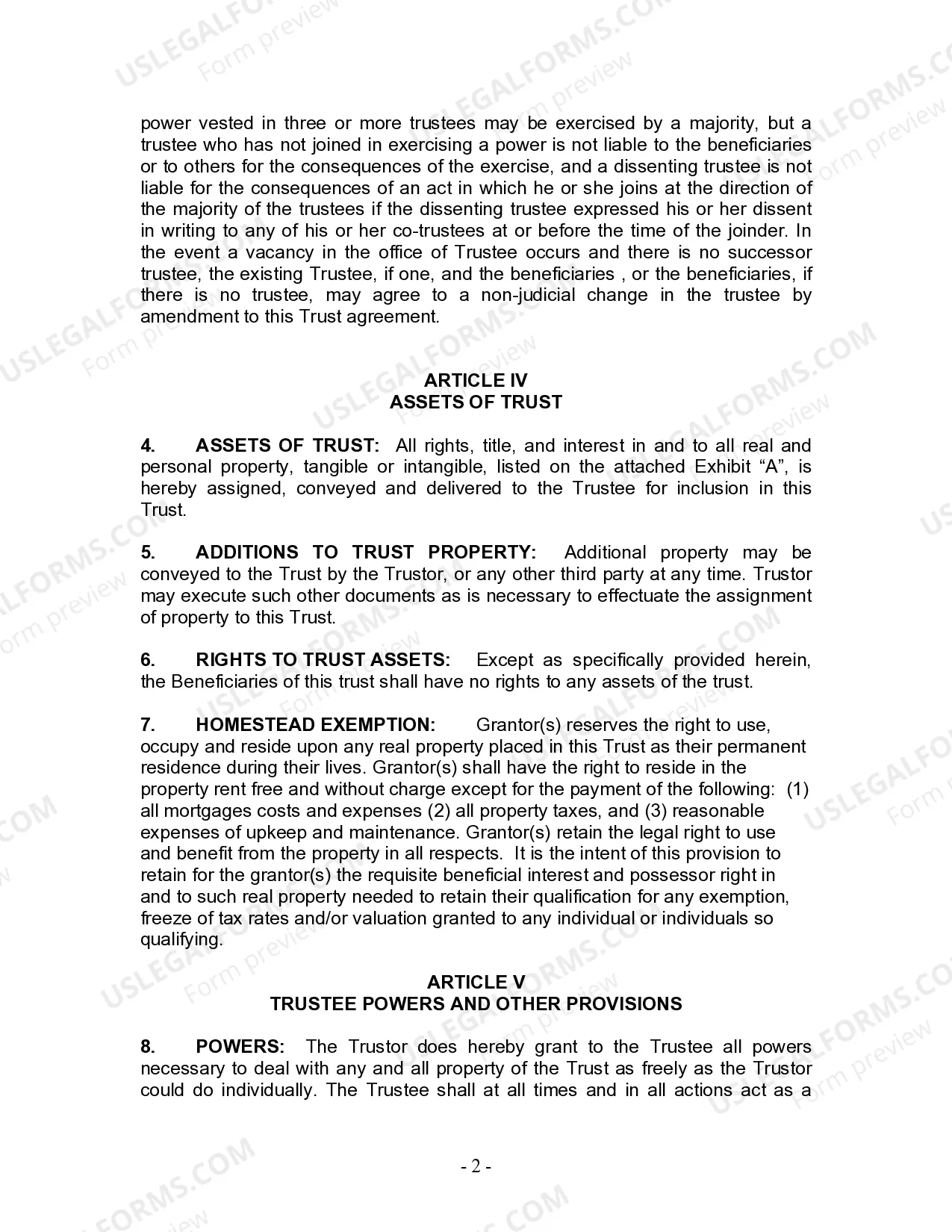
- Specification of assets included in the trust.
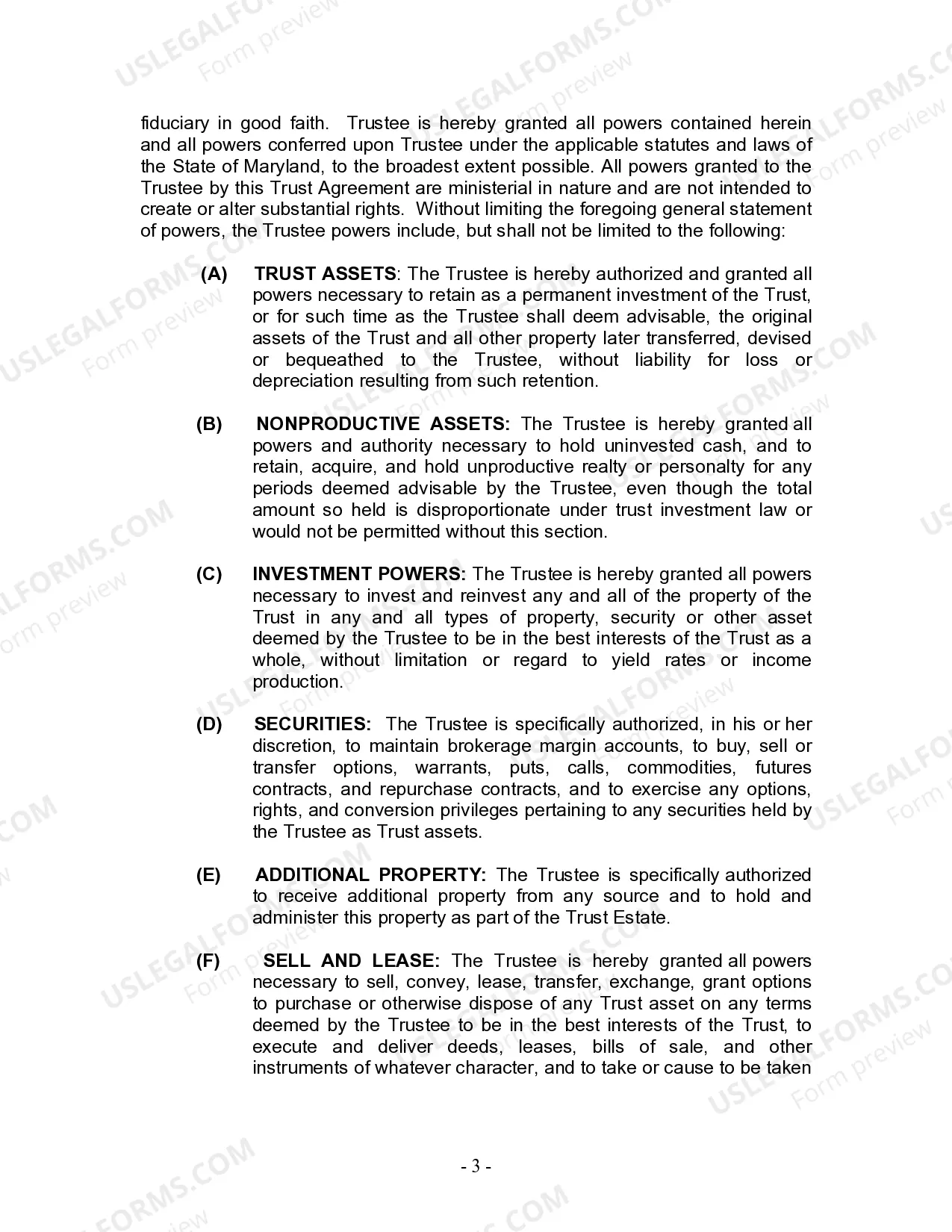
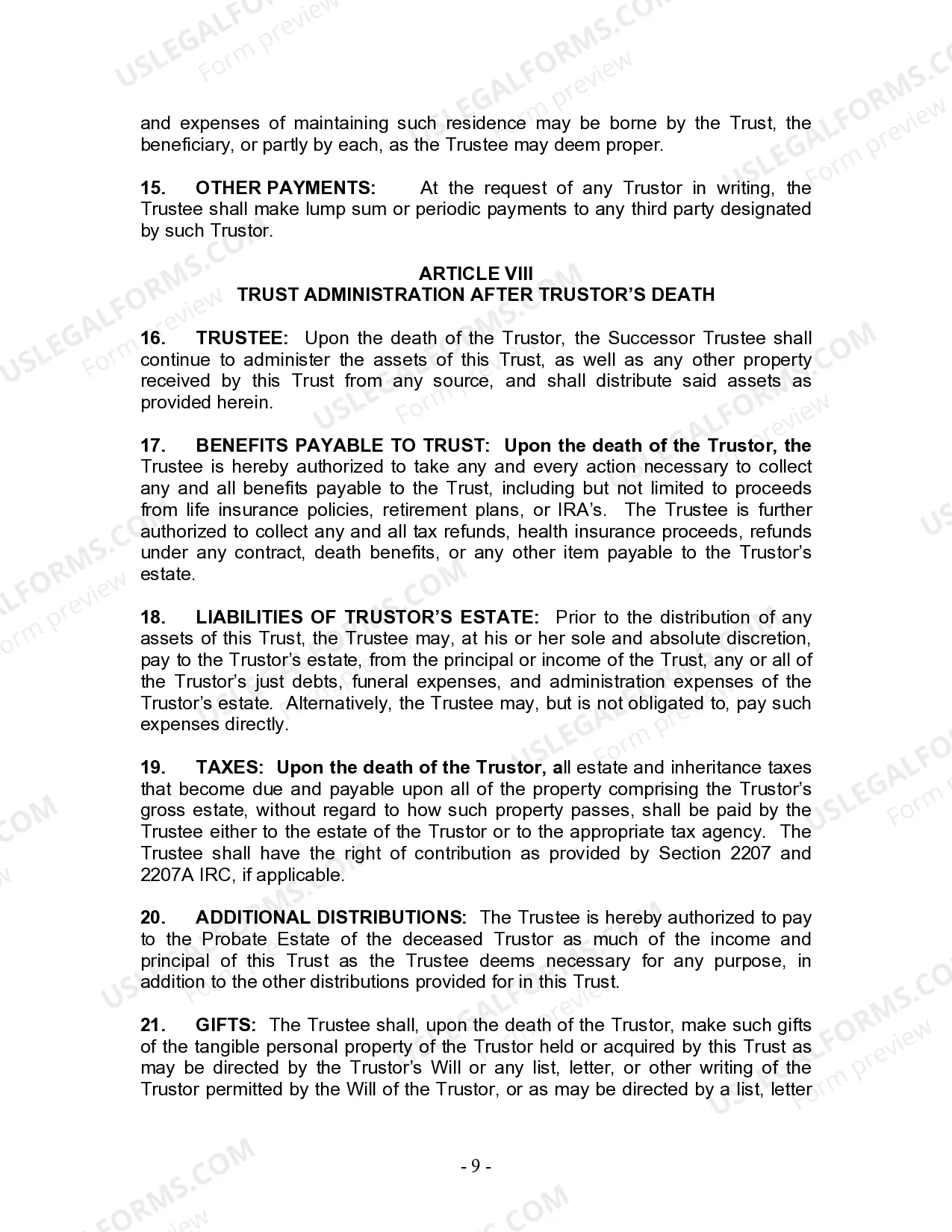
- Trustee powers, including management and distribution of assets.
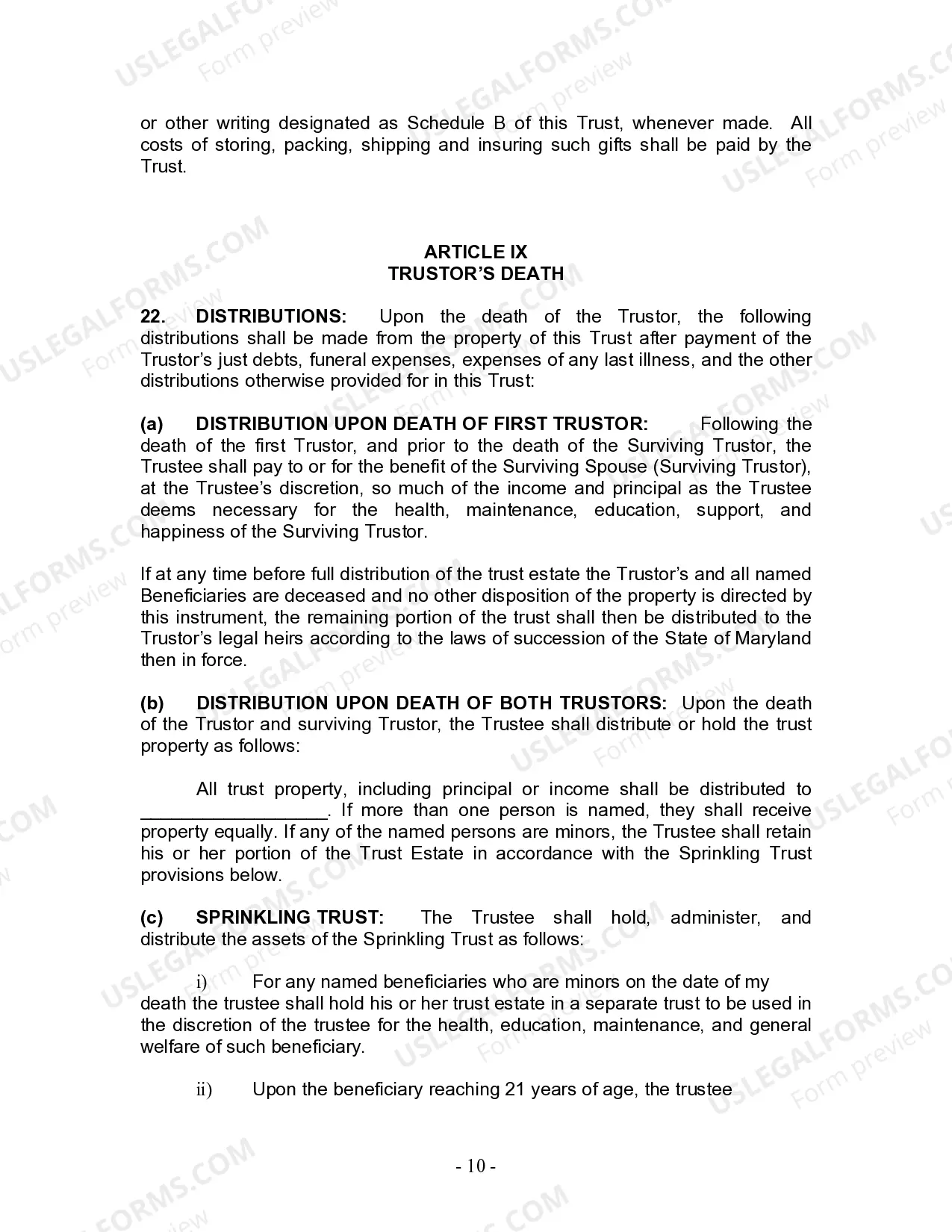
- Instructions for how the trust should be administered upon the death of the Trustor.
- Provisions for modifications and revocation of the trust during the Trustor's lifetime.




When to use this form
This form is used by married couples without children who wish to create an estate plan that provides for the management of their assets while they are alive and specifies how those assets will be distributed after their death. It is particularly useful for couples who want to avoid probate, maintain control over their assets, and provide for one another in the event of one spouse's death.
Who needs this form
- Married couples without children.
- Individuals who want to manage their assets during their lifetime and ensure a seamless transfer upon death.
- Couples looking for a flexible estate planning solution that they can change as needed.
Instructions for completing this form
- Identify the Trustor(s) by entering their full names and county of residence.
- Designate the Trustee who will manage the trust, noting any successor Trustees.
- List the assets that will be included in the trust, attaching an Exhibit A if necessary.
- Specify the terms under which the assets should be managed and distributed after the death of the Trustor.
- Sign the document in the presence of a notary public, if required.
Does this document require notarization?
Yes, this form must be notarized to be legally valid. It's important to have the signatures of the Trustor(s) witnessed by a notary public to ensure authenticity and compliance with Maryland law. US Legal Forms offers integrated online notarization services that are available 24/7 through secure video calls, providing a convenient option with legal equivalence and no need to travel.
Get your form ready online
Our built-in tools help you complete, sign, share, and store your documents in one place.
Make edits, fill in missing information, and update formatting in US Legal Forms—just like you would in MS Word.
Download a copy, print it, send it by email, or mail it via USPS—whatever works best for your next step.
Sign and collect signatures with our SignNow integration. Send to multiple recipients, set reminders, and more. Go Premium to unlock E-Sign.
If this form requires notarization, complete it online through a secure video call—no need to meet a notary in person or wait for an appointment.
We protect your documents and personal data by following strict security and privacy standards.

Make edits, fill in missing information, and update formatting in US Legal Forms—just like you would in MS Word.

Download a copy, print it, send it by email, or mail it via USPS—whatever works best for your next step.

Sign and collect signatures with our SignNow integration. Send to multiple recipients, set reminders, and more. Go Premium to unlock E-Sign.

If this form requires notarization, complete it online through a secure video call—no need to meet a notary in person or wait for an appointment.

We protect your documents and personal data by following strict security and privacy standards.
Common mistakes to avoid
- Failing to list all assets intended for inclusion in the trust.
- Not designating a qualified successor Trustee.
- Leaving out necessary signatures or failing to notarize the document when required.
- Failing to update the trust after significant life changes, such as relocations or changes in financial situations.
Why use this form online
- Convenient download and access, allowing immediate use without waiting for paperwork.
- Editability to customize the trust according to your specific needs and preferences.
- Reliable legal content drafted by licensed attorneys to ensure compliance with state laws.
Quick recap
- A Revocable Living Trust allows married couples without children to manage their assets during life and after death.
- This form helps avoid probate, ensuring quick and efficient distribution of assets.
- It's crucial to specify all intended assets and correctly name the parties involved.
Looking for another form?
Form popularity
FAQ
If someone dies without a will, the money in his or her bank account will still pass to the named beneficiary or POD for the account.The executor has to use the funds in the account to pay any of the estate's creditors and then distributes the money according to local inheritance laws.
It is a customary estate planning practice for each spouse to have his or her own will. While some practitioners may draft a joint will for a married couple, it is not recommended.
If a person owns assets in his or her individual name and dies without a Will, assets remaining after payment of administration expenses, debts and taxes (if any) are distributed to the person's heirs as provided under Maryland Intestacy Laws (the person is said to have died intestate).
Tip 1: You absolutely need a will It's important for couples without kids to have wills because they don't have natural heirs to inherit their wealth. Generally speaking, if you die without a will, your assets will go to your spouse.Then your spouse's will would determine who gets what.
Who Gets What: The Basic Rules of Intestate Succession.Generally, only spouses, registered domestic partners, and blood relatives inherit under intestate succession laws; unmarried partners, friends, and charities get nothing. If the deceased person was married, the surviving spouse usually gets the largest share.
Children - if there is no surviving married or civil partner If there is no surviving partner, the children of a person who has died without leaving a will inherit the whole estate. This applies however much the estate is worth. If there are two or more children, the estate will be divided equally between them.
With a few important exceptions, all the property acquired during a marriage is considered marital property. Marital property normally includes such things as houses, cars, furniture, appliances, stocks, bonds, jewelry, bank accounts, pensions, retirement plans, and IRA's.
In Maryland, you can make a living trust to avoid probate for virtually any asset you ownreal estate, bank accounts, vehicles, and so on. You need to create a trust document (it's similar to a will), naming someone to take over as trustee after your death (called a successor trustee).
Separate trusts provide more flexibility in the event of a death in the marriage. Since the trust property is already divided, separate trusts preserve the surviving spouse's ability to amend or revoke assets held within their own trust, while ensuring that the deceased spouse's trust cannot be amended after death.