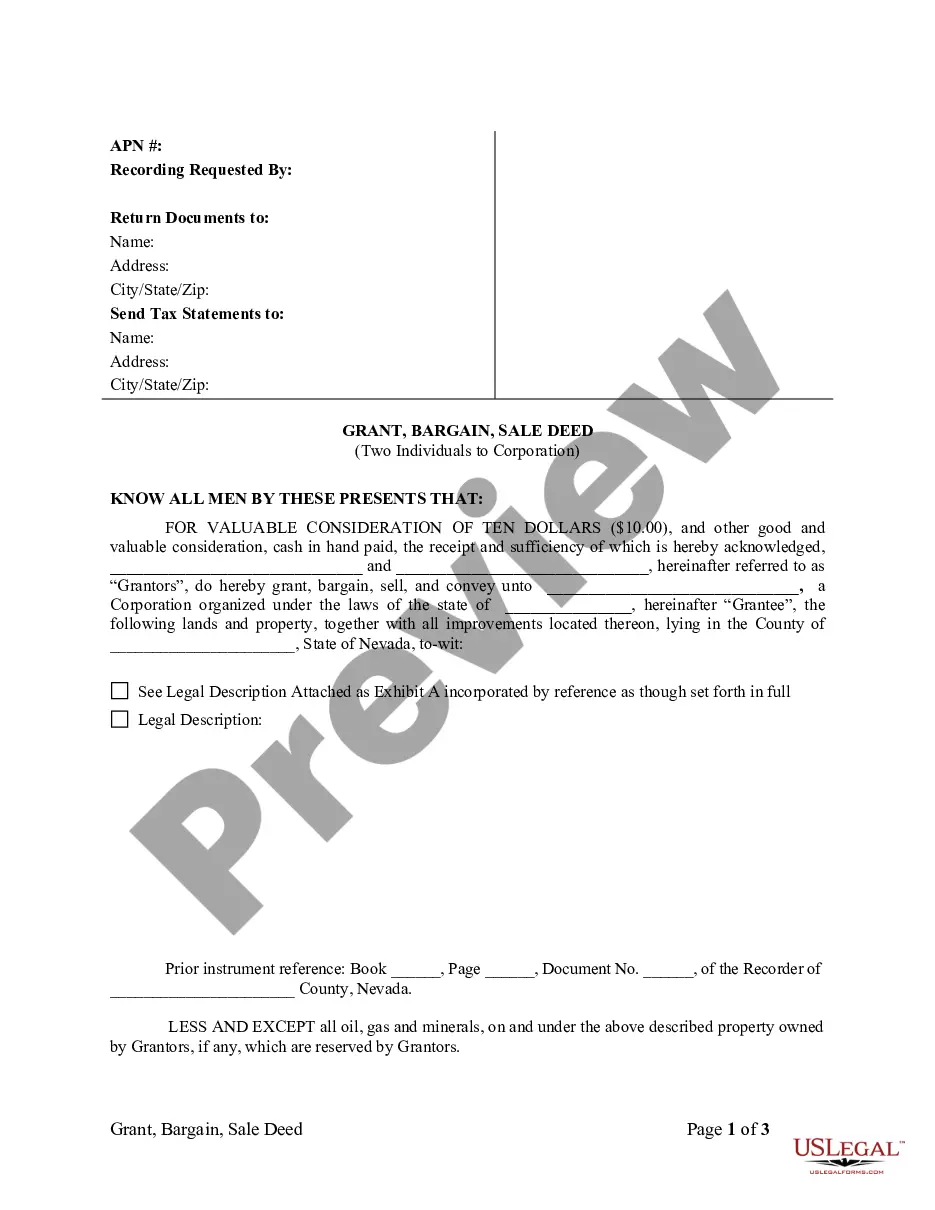
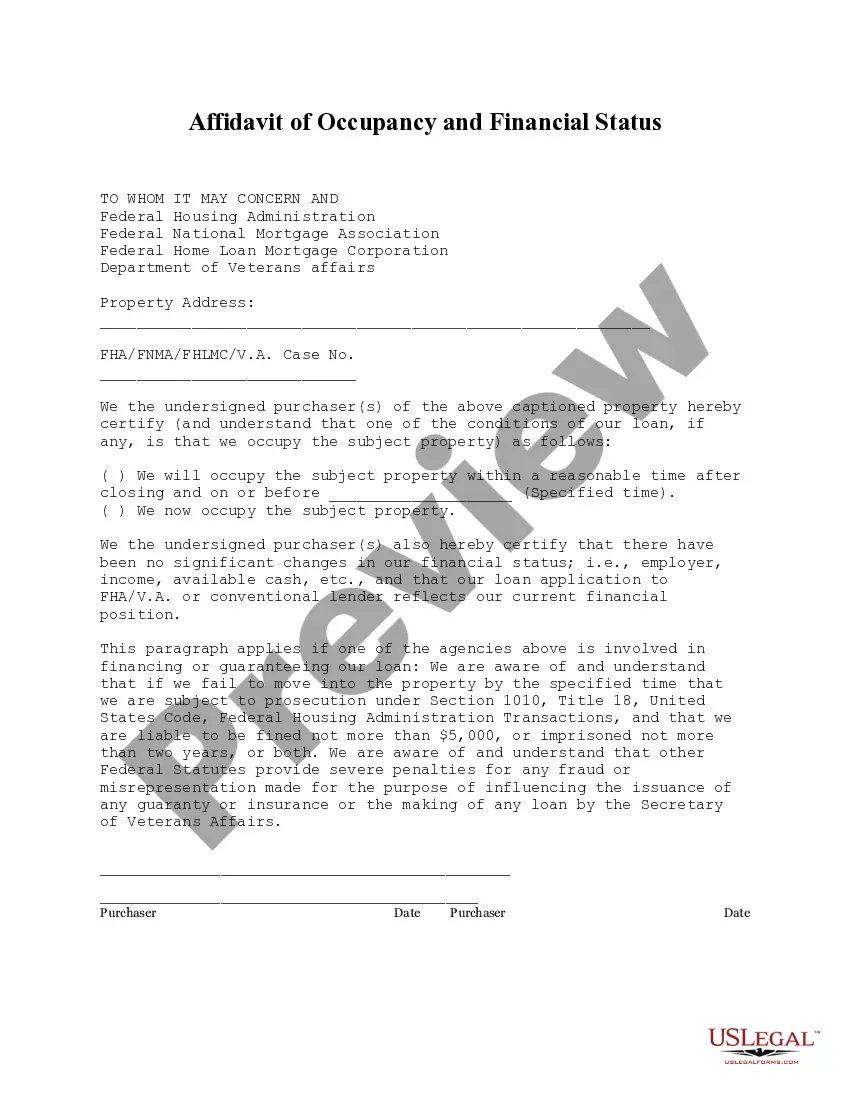
Maryland Affidavit of Occupancy and Financial Status
Understanding this form
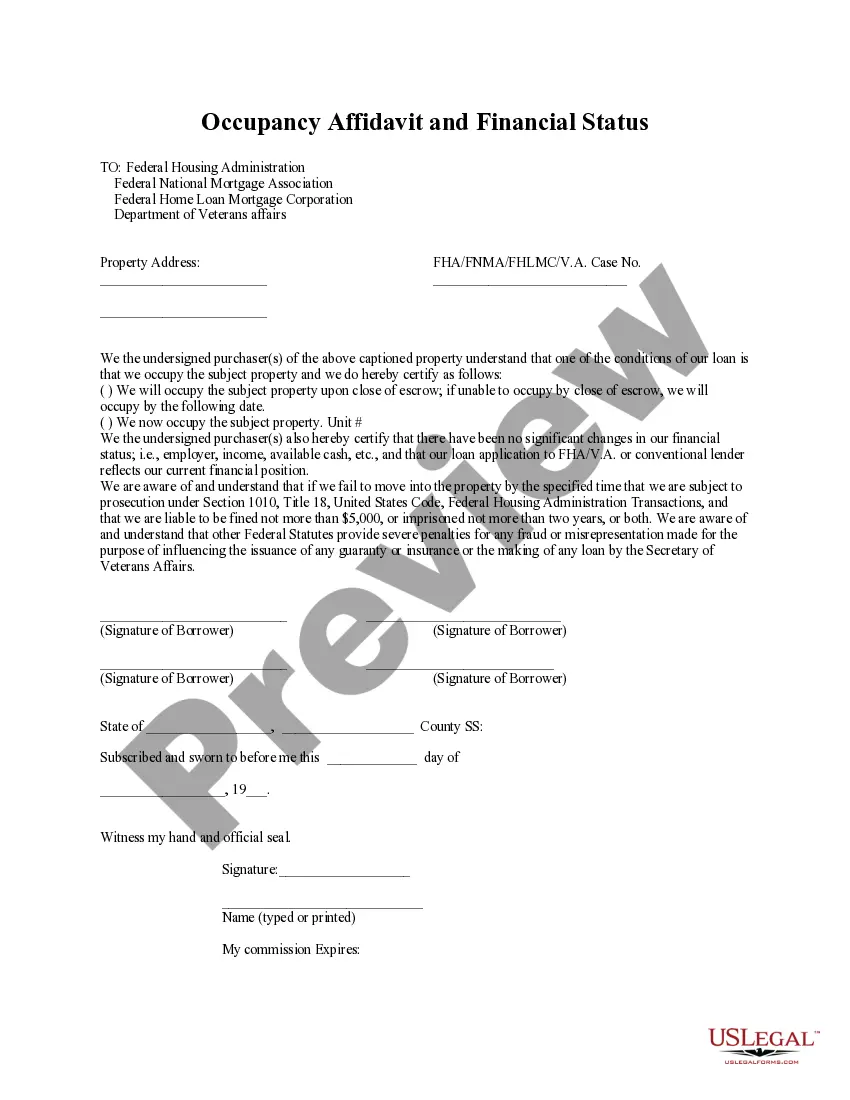
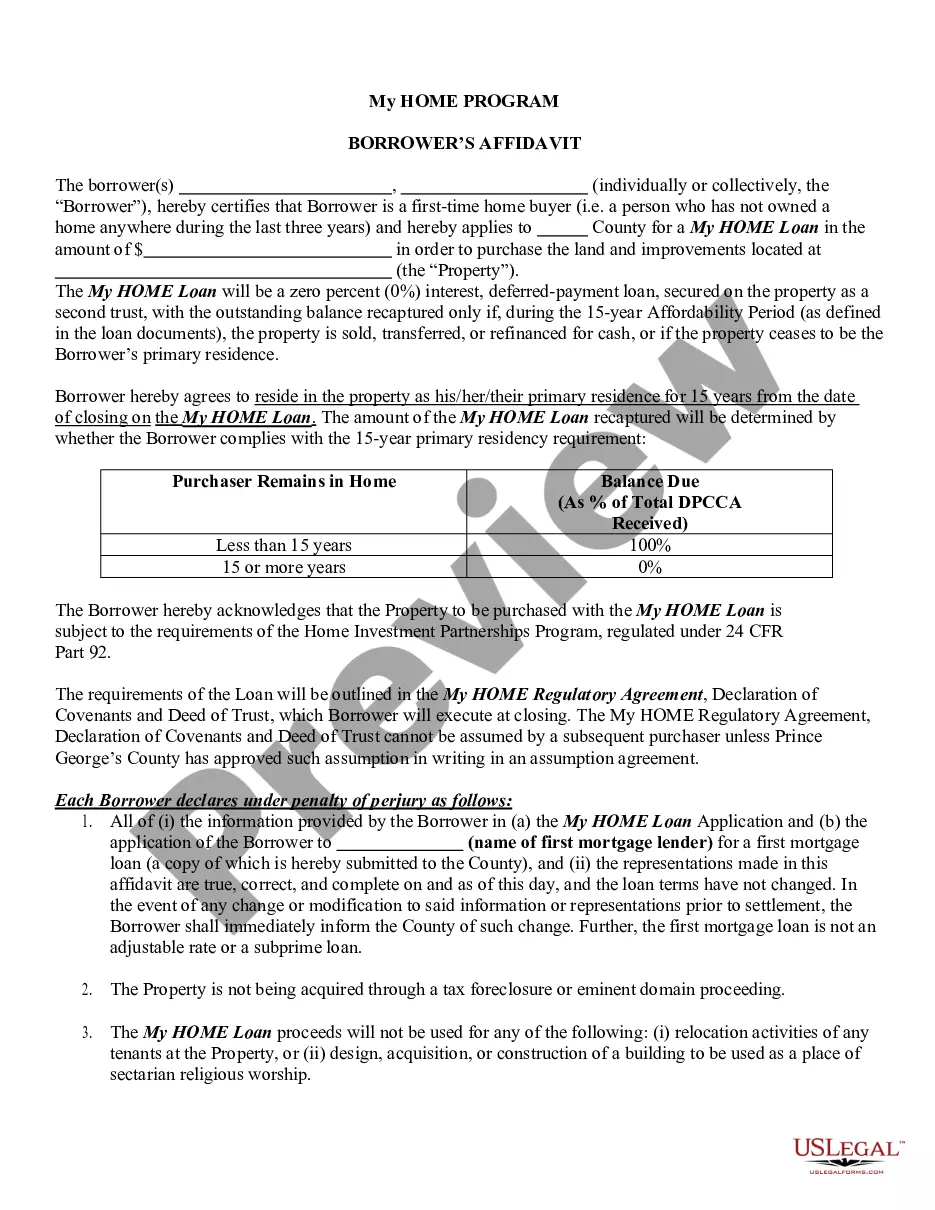
The Affidavit of Occupancy and Financial Status is a legal document that buyers complete at the closing of a property purchase. It certifies that the buyer will use the property as their primary residence and confirms that their financial status remains unchanged since the loan application. This form is critical for meeting lender requirements and is distinct from other affidavits because it specifically addresses both occupancy intentions and financial disclosures.
Main sections of this form
- Identification of the buyer(s) and property address.
- Certification of intent to occupy the property as a primary residence.
- Confirmation of no changes in financial status since the loan application.
- Notices regarding potential penalties for noncompliance.
- Signature and date fields for the buyer(s).

Common use cases
This form is typically needed when a buyer is finalizing the purchase of a property and is required by lenders to verify that the property will serve as their primary residence. It is used during the closing process, especially when obtaining federal loans from agencies like the FHA, VA, FNMA, or FHLMC. Utilize this affidavit to ensure compliance with lender conditions and to protect against potential legal issues related to occupancy misrepresentation.
Intended users of this form
This form is intended for:
- Homebuyers purchasing a home with a mortgage that requires occupancy certification.
- Individuals involved in financing through federally backed loans.
- Real estate professionals facilitating property closings.
How to complete this form
- Enter the property address and relevant case numbers associated with the loan.
- Choose whether you will occupy the property and specify the timeframe if applicable.
- Provide updated financial information, confirming that there have been no significant changes.
- Sign and date the affidavit to validate the statements made.
- Ensure any required documents are attached if stipulated by the lender.
Is notarization required?
To make this form legally binding, it must be notarized. Our online notarization service, powered by Notarize, lets you verify and sign documents remotely through an encrypted video session.
Get your form ready online
Our built-in tools help you complete, sign, share, and store your documents in one place.
Make edits, fill in missing information, and update formatting in US Legal Forms—just like you would in MS Word.
Download a copy, print it, send it by email, or mail it via USPS—whatever works best for your next step.
Sign and collect signatures with our SignNow integration. Send to multiple recipients, set reminders, and more. Go Premium to unlock E-Sign.
If this form requires notarization, complete it online through a secure video call—no need to meet a notary in person or wait for an appointment.
We protect your documents and personal data by following strict security and privacy standards.

Make edits, fill in missing information, and update formatting in US Legal Forms—just like you would in MS Word.

Download a copy, print it, send it by email, or mail it via USPS—whatever works best for your next step.

Sign and collect signatures with our SignNow integration. Send to multiple recipients, set reminders, and more. Go Premium to unlock E-Sign.

If this form requires notarization, complete it online through a secure video call—no need to meet a notary in person or wait for an appointment.

We protect your documents and personal data by following strict security and privacy standards.
Avoid these common issues
- Failing to provide accurate financial information, leading to compliance issues.
- Not specifying the occupancy timeline if the property is not currently occupied.
- Forgetting to sign and date the form, rendering it invalid.
Why complete this form online
- Immediate access to professionally drafted legal forms, reducing time spent on paperwork.
- Ability to fill out and edit the form before finalizing, ensuring accuracy.
- Secure downloading helps protect your personal information and keeps your documents organized.
Legal use & context
- The affidavit serves as a legally binding document confirming the buyer's commitment to occupy the residence.
- Misrepresentation in this affidavit can lead to penalties, including fines or imprisonment.
- This form is important for protecting both the buyer's interests and the lender's financial position.
Main things to remember
- The Affidavit of Occupancy and Financial Status ensures compliance with lender requirements.
- It certifies the buyer's intent and financial stability at the time of closing.
- Thorough and accurate completion is crucial to avoid legal repercussions.
Looking for another form?
Form popularity
FAQ
Lenders and loan officers confirm that they regularly encounter falsehoods about occupancy.Depending on the lender, buyers might be able to save a half to a full percentage point off the interest rate on the loan by calling their purchase a principal residence.
Generally, for a property to be owner-occupied, the owner must move into the residence within 60 days of closing and live there for at least one year.
Basically, the FHA does require your home to be owner-occupied if you use FHA financing. But, as you can see, there are several exceptions to the rule. Before you decide to do anything, always check with your lender.
FHA security instruments require a borrower to establish bona fide occupancy in a home as the borrower's principal residence within 60 days of signing the security instrument, with continued occupancy for at least one year.
Lenders will take a variety of things into account when determining whether you intend to live in a house and take occupancy type into consideration because people are much less likely to default on the mortgage of a house they are living in.
Owner-occupants are residents that own the property that they live at. Some loans are only available to owner-occupants and not absentee owners or investors. To be considered owner-occupied, residents usually must move into the home within 60 days of closing and live there for at least a year.
FHA Occupancy Requirement Mortgagors with FHA-backed loans are required to use their home as a primary residence for at least one full year. The borrower must take possession of the home within 60 days after the mortgage closes, and they must live in the home for the majority of the year.
Lenders usually stipulate that homeowners have 30 days after closing to occupy a primary residence. To verify the person moving in is actually the owner, the lender may call the house and ask to speak to the homeowner.The lender may also drive past the house looking for a rental sign in the yard.