Maryland Authorization To Obtain Medical Treatment For Minor Child - Horse Equine Forms
What this document covers
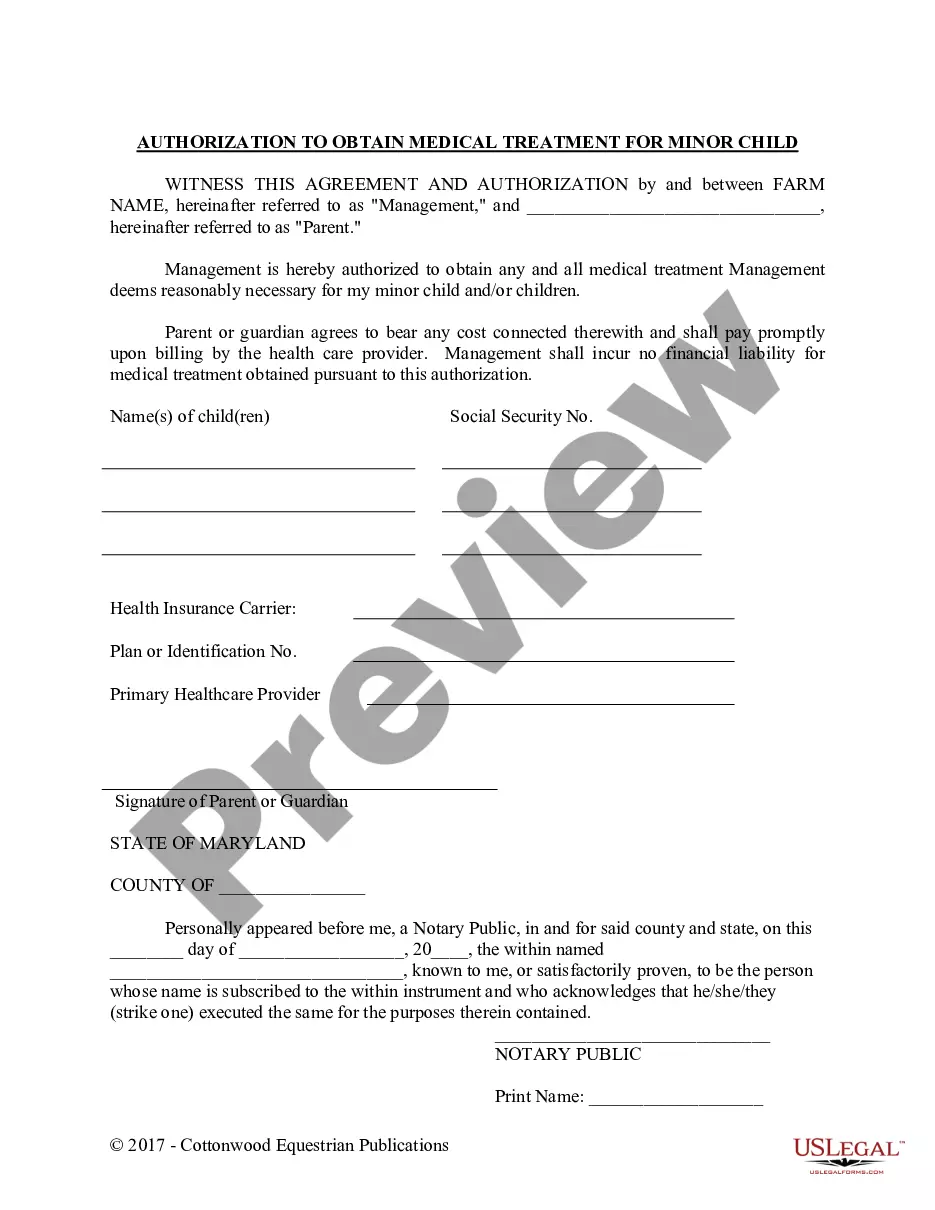
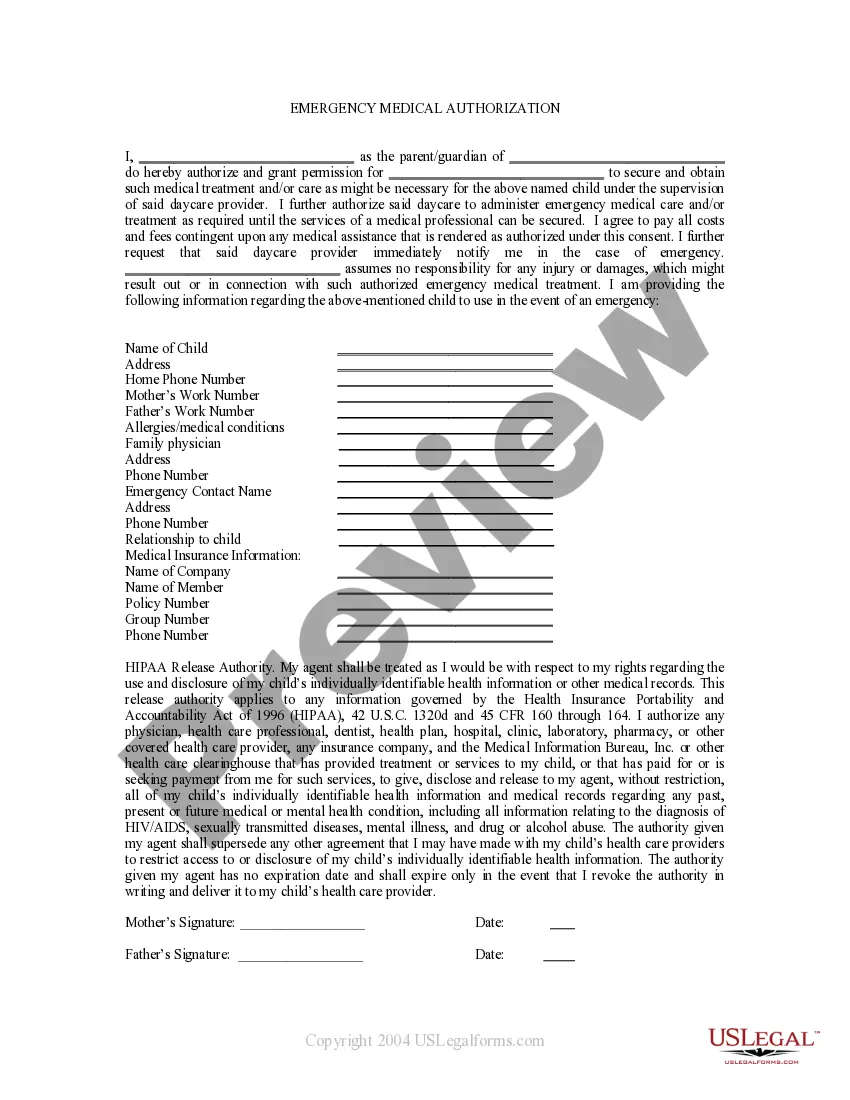
The Authorization To Obtain Medical Treatment For Minor Child - Horse Equine Form is a legal document that allows parents or guardians to authorize farm management to obtain necessary medical treatment for their minor child in the event of an injury during equine activities. This form provides clear instructions on the medical treatment that can be administered while ensuring that parents or guardians bear the financial responsibility for the costs incurred. Unlike other medical authorization forms, it is specifically tailored for equine-related incidents.
Key components of this form
- Identification of the farm management and the parent or guardian.
- Authorization for management to obtain medical treatment deemed necessary.
- Financial responsibility clause for the costs of treatment.
- Details for the minor child or children being covered under the authorization.
- Space for signatures and notarization as required.

When to use this form
This form should be used by parents or guardians when enrolling their minor child in equine activities, such as riding lessons, competitions, or camps. It ensures that, in case of an unexpected injury or medical emergency, the farm management can quickly access medical treatment without delay, adhering to the necessary protocols. This authorization is crucial to prevent delays in care, particularly when immediate medical attention is required.
Who this form is for
- Parents or guardians of minor children participating in horse-related activities.
- Farm management or equestrian centers providing services to children.
- Anyone involved in planning equine events or activities for minors.
Steps to complete this form
- Fill in the name of the farm management and the parent or guardian's details.
- List the names and social security numbers of the children covered under this authorization.
- Provide the name of the health insurance carrier and the insurance plan or identification number.
- Obtain the signature of the parent or guardian to authorize medical treatment.
- Have the form notarized to confirm the authenticity of the signatures, if required.
Is notarization required?
Yes, this form must be notarized to be legally valid. Notarization confirms the identity of the signer and ensures the authenticity of the document. US Legal Forms offers integrated online notarization services, available 24/7 through secure video calls, allowing users to complete this process without needing to travel.
Get your form ready online
Our built-in tools help you complete, sign, share, and store your documents in one place.
Make edits, fill in missing information, and update formatting in US Legal Forms—just like you would in MS Word.
Download a copy, print it, send it by email, or mail it via USPS—whatever works best for your next step.
Sign and collect signatures with our SignNow integration. Send to multiple recipients, set reminders, and more. Go Premium to unlock E-Sign.
If this form requires notarization, complete it online through a secure video call—no need to meet a notary in person or wait for an appointment.
We protect your documents and personal data by following strict security and privacy standards.

Make edits, fill in missing information, and update formatting in US Legal Forms—just like you would in MS Word.

Download a copy, print it, send it by email, or mail it via USPS—whatever works best for your next step.

Sign and collect signatures with our SignNow integration. Send to multiple recipients, set reminders, and more. Go Premium to unlock E-Sign.

If this form requires notarization, complete it online through a secure video call—no need to meet a notary in person or wait for an appointment.

We protect your documents and personal data by following strict security and privacy standards.
Avoid these common issues
- Failing to include the names or details of all children covered.
- Not providing complete insurance information.
- Omitting the signature of a parent or guardian.
- Neglecting to notarize the form when necessary.
Why complete this form online
- Convenient access to necessary legal documents from anywhere.
- Editable templates allow for quick personal customization.
- Reliability of forms drafted by licensed attorneys, ensuring legal validity.
Quick recap
- The Authorization To Obtain Medical Treatment For Minor Child is essential for ensuring prompt medical care for children involved in equine activities.
- Complete all sections accurately, including notarization, to prevent any delays in treatment.
- Using this form helps foster a safer environment for children participating in equine experiences.
Looking for another form?


Form popularity
FAQ
Obtaining informed consent in medicine is process that should include: (1) describing the proposed intervention, (2) emphasizing the patient's role in decision-making, (3) discussing alternatives to the proposed intervention, (4) discussing the risks of the proposed intervention and (5) eliciting the patient's
Step 1 Find a Competent Guardian. Step 2 Inform the Guardian of Child's Medical Issues (if any) Step 3 Inform the Guardian of the Child's Medications. Step 4 Determine an End Date. Step 5 Sign the Document.
Types of consent include implied consent, express consent, informed consent and unanimous consent.
A care provider may perform a routine test or treatment on a minor who is over the age of 14 without parental consent and without accompaniment, on condition that the minor him/herself gives informed consent for the medical procedure.
MINOR MUST BE EMANCIPATED (GENERALLY 14 YEARS OF AGE OR OLDER) LAW/DETAILS MAY/MUST THE HEALTH CARE PROVIDER INFORM A PARENT ABOUT THIS CARE OR DISCLOSE RELATED MEDICAL INFORMATION TO THEM? An emancipated minor may consent to medical, dental and psychiatric care.
The grandparents' medical consent form allows a parent or legal guardian to hand over all responsibility regarding their child's health care decisions to one of the child's grandparents.
Consent can involve a combination of people parent or legal guardian. court (eg for permanent sterilisation procedures) other agencies (eg in NSW the consent of Guardianship Tribunal is required for 'special medical treatment'. Special medical treatment includes sterilisation, vasectomy or tubal occlusion).
Since the 1990s, California law has afforded minors the right to consent to certain types of medical care, such as the diagnosis and treatment of sexually transmitted diseases, without the consent of their parent or guardian.
Once appointed, the Medical Enduring Power of Attorney can give consent on behalf of the person in care. In the case of an emergency, doctors and other healthcare professionals can make authorisations for treatment.