Maryland Discovery Interrogatories from Plaintiff to Defendant with Production Requests
About this form
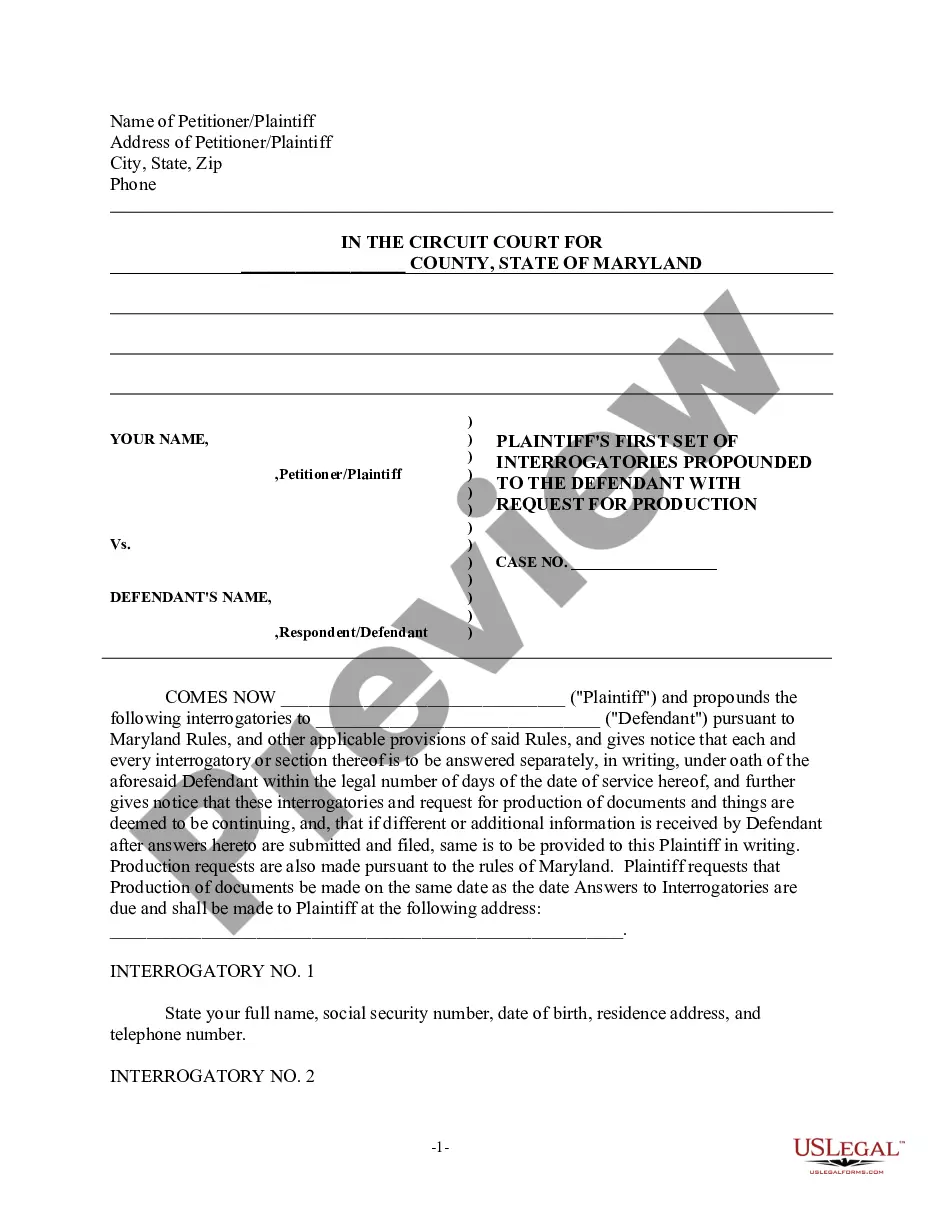
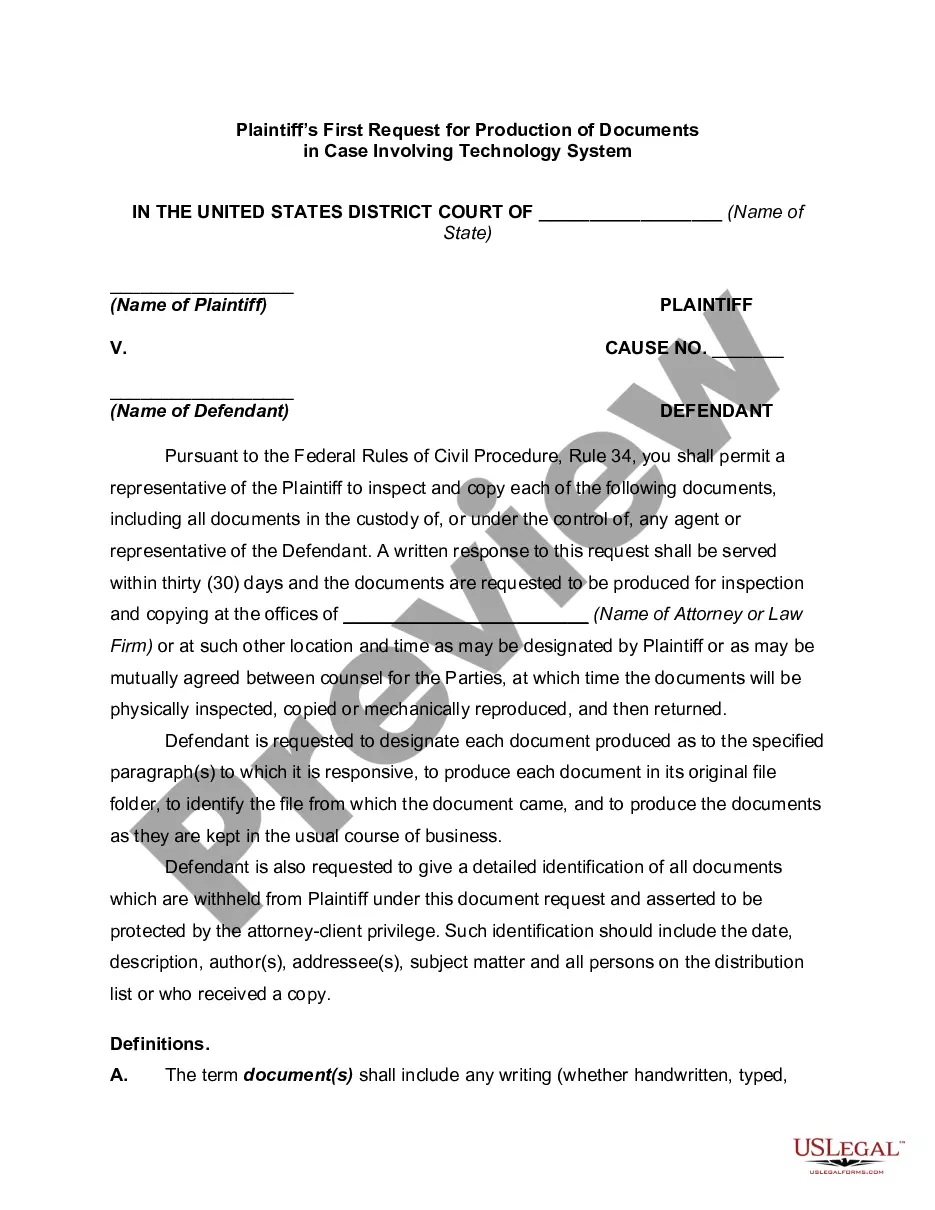
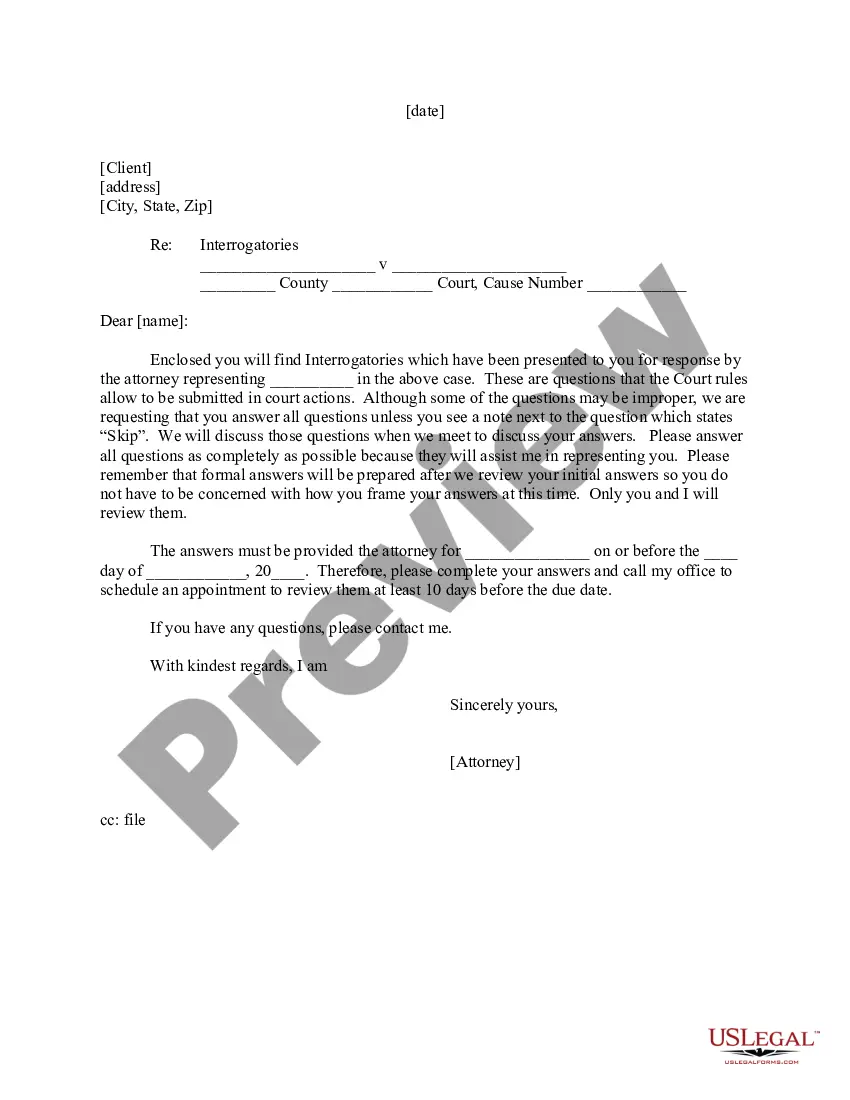
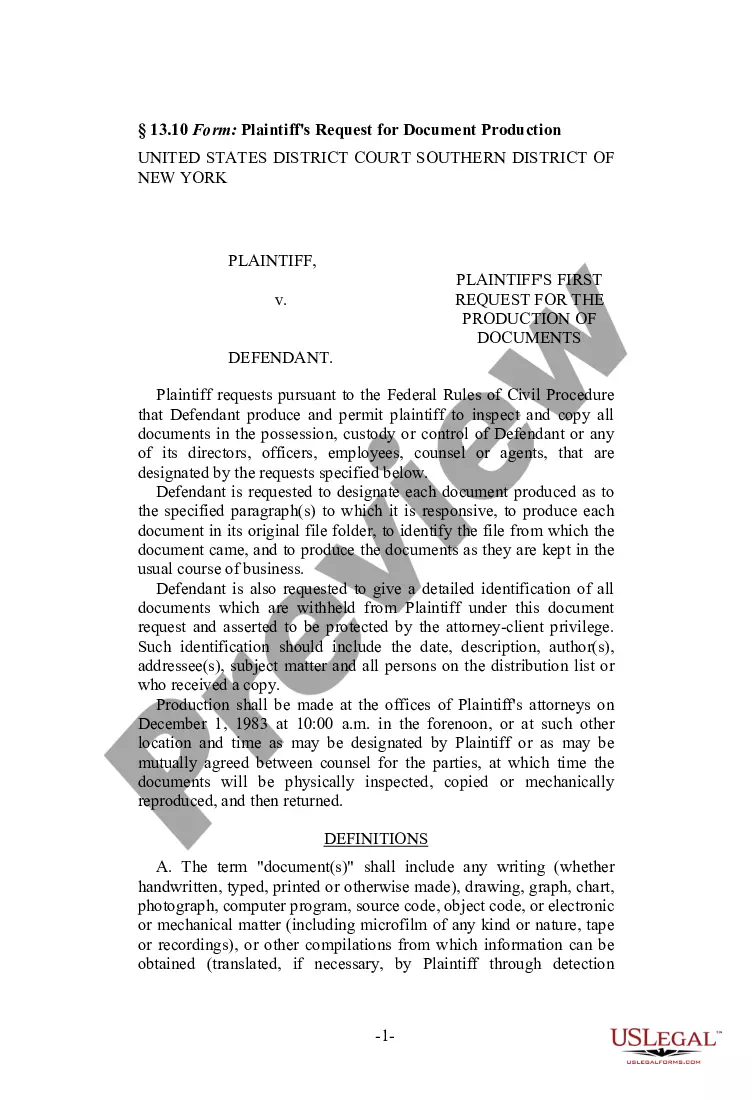
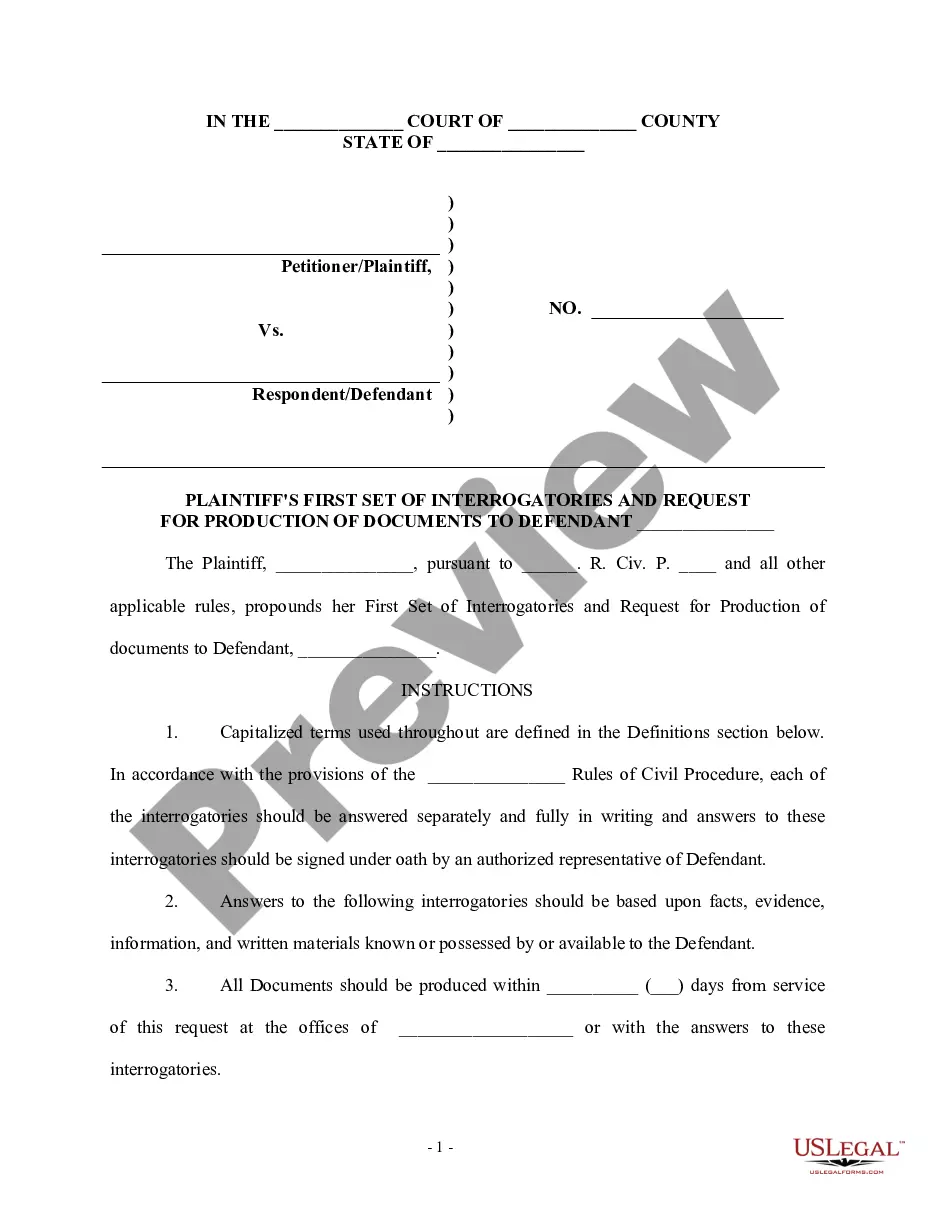
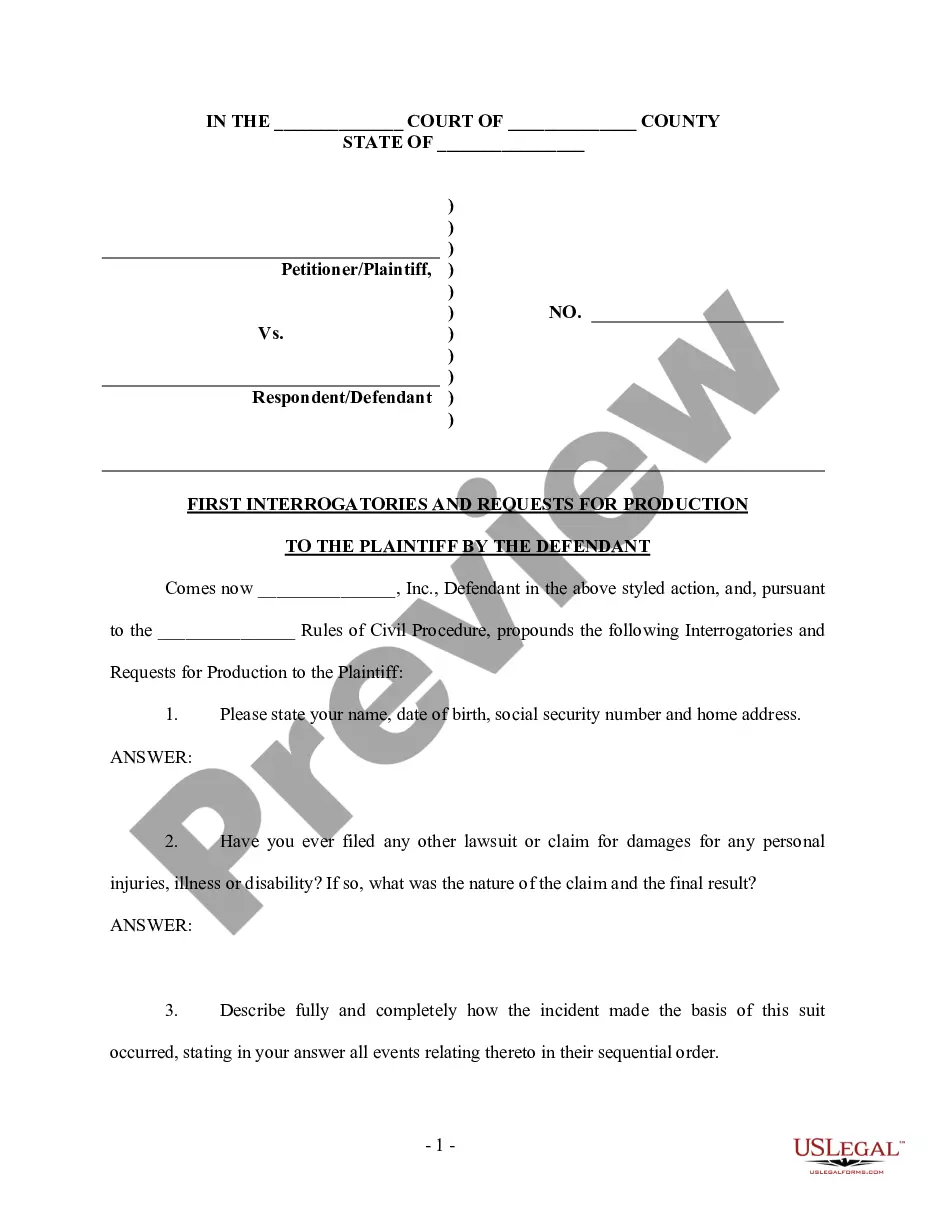
The Discovery Interrogatories from Plaintiff to Defendant with Production Requests is a legal document used in Divorce proceedings. This form allows the Plaintiff to request information and documents from the Defendant through a set of interrogatories. It differs from other legal forms by including both questions and requests for document production, making it a comprehensive tool for information gathering in a divorce case.
Form components explained
- Identification details of the Plaintiff and Defendant, including addresses and contact information.
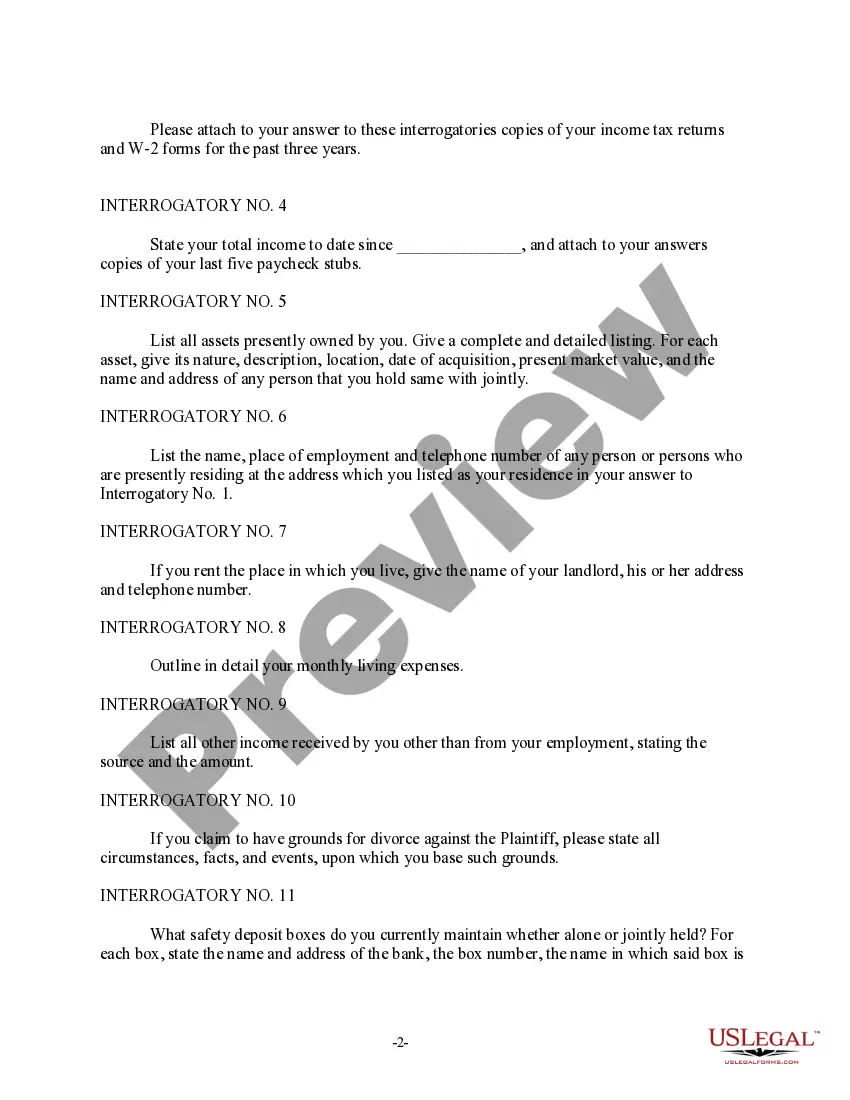
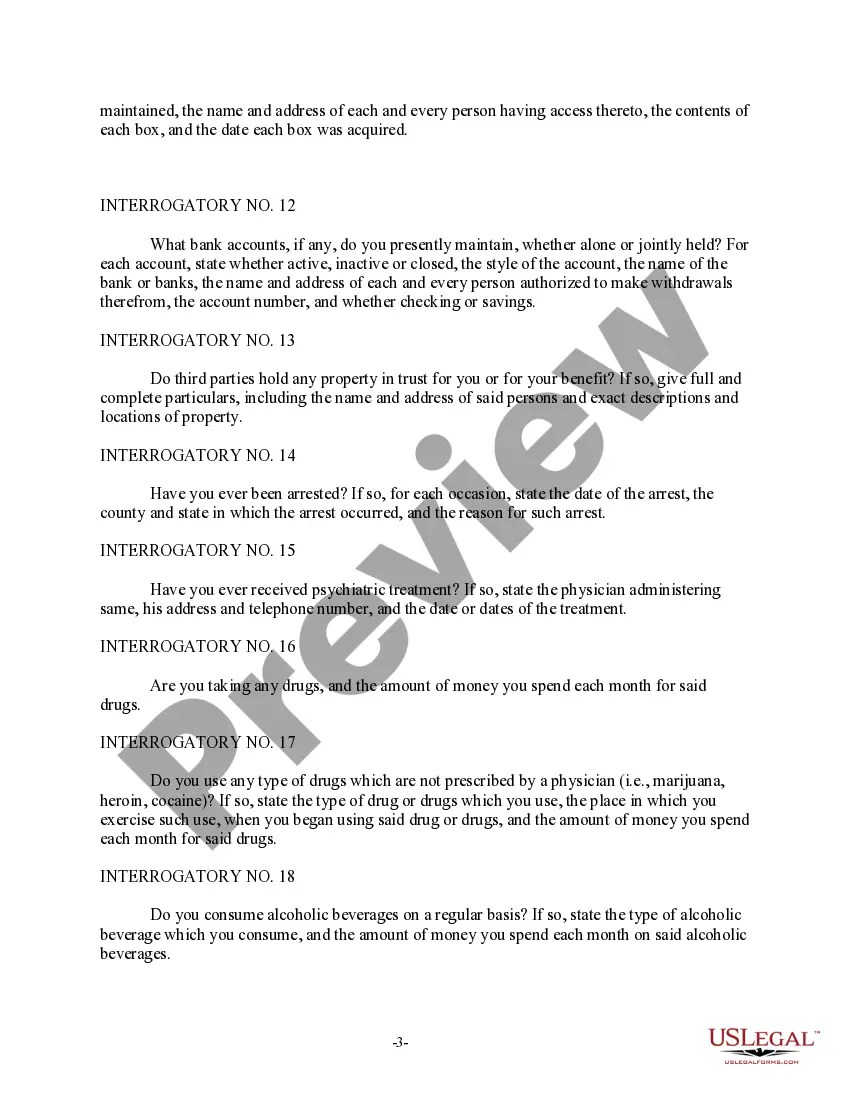
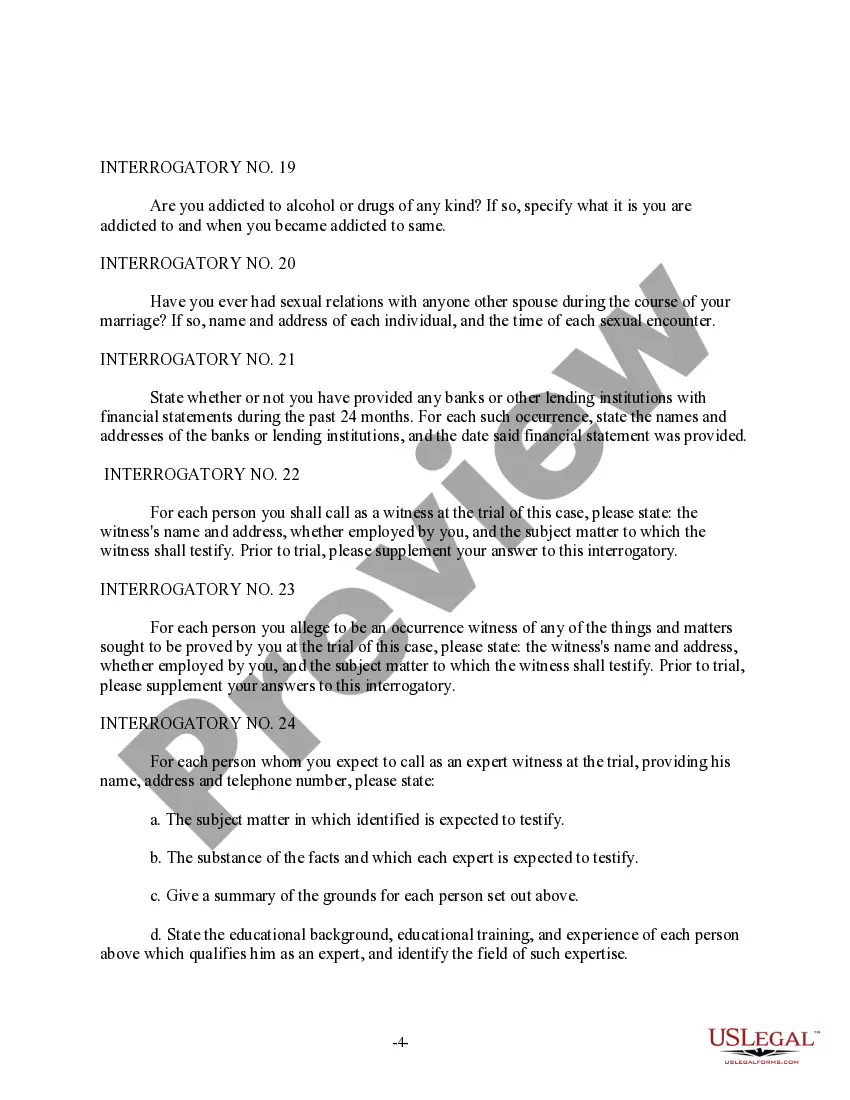
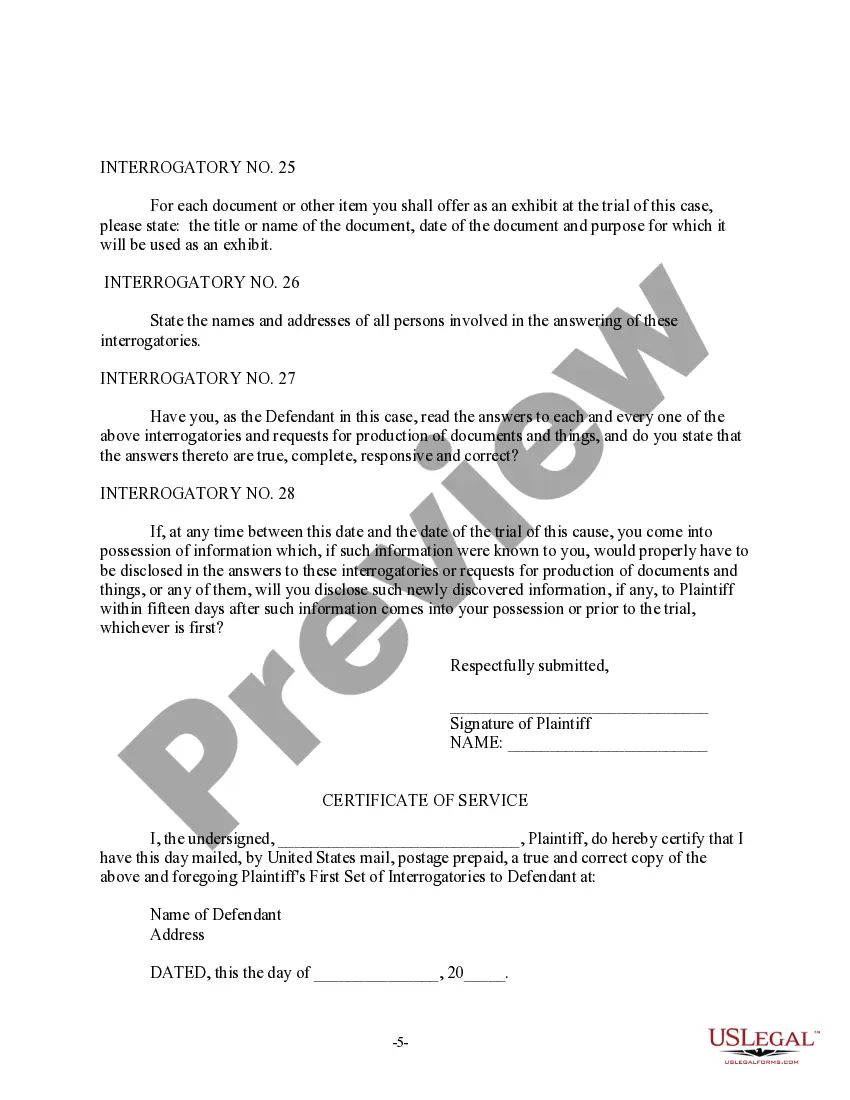
- A series of interrogatories requiring the Defendant to provide specific information about assets, income, and other relevant facts.
- Requests for production of documents, such as tax returns and financial statements.
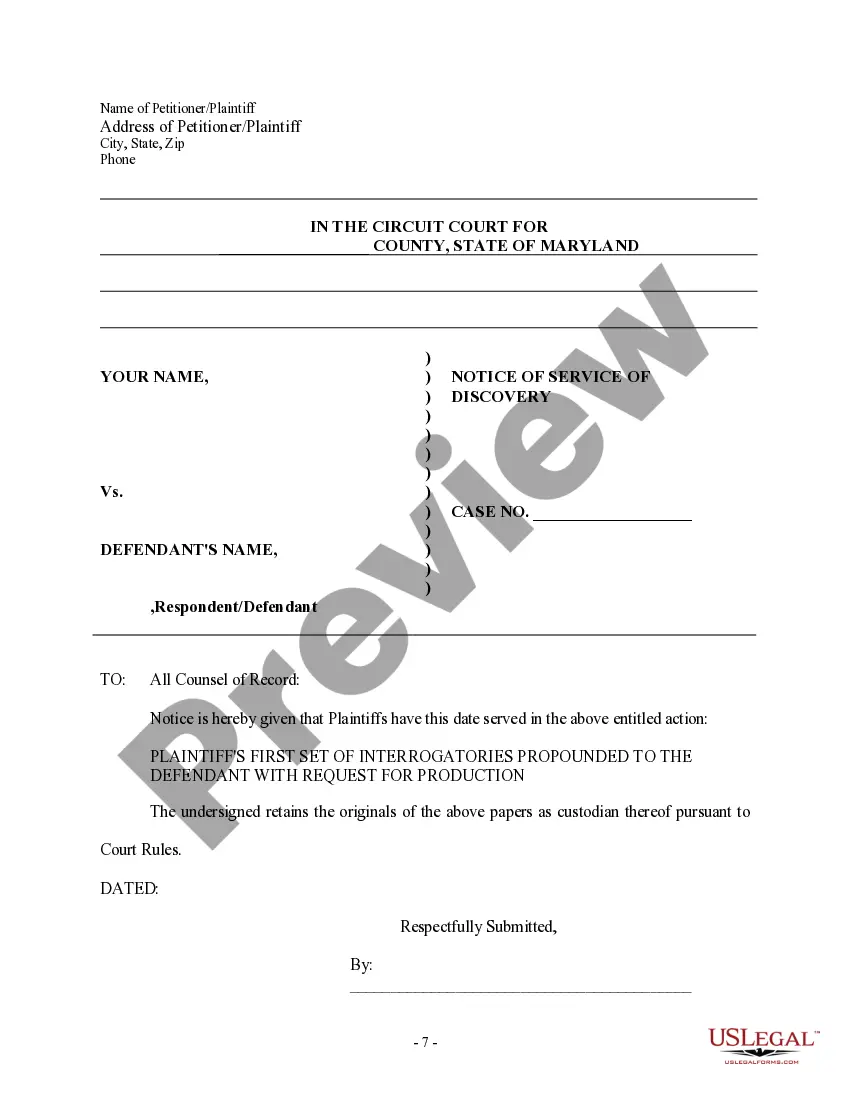
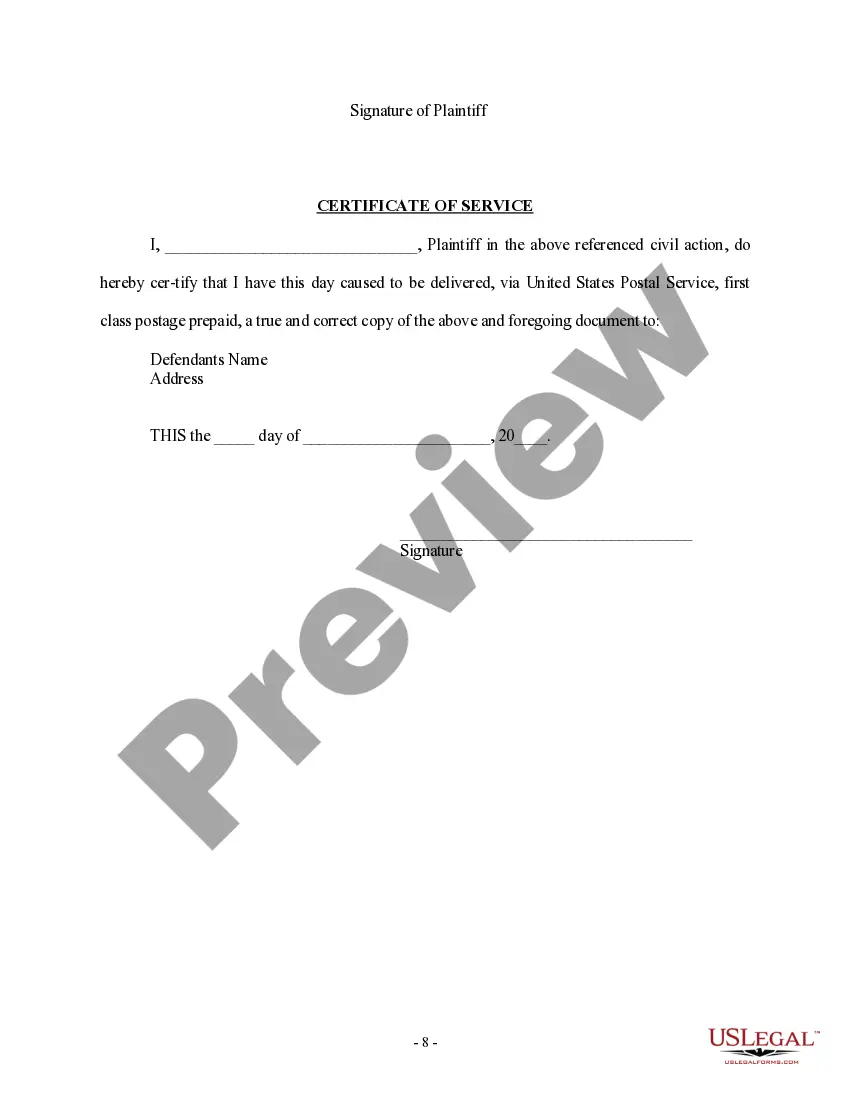
- A notice of service that informs all parties involved that the form has been served.

When this form is needed
This form is typically used during the discovery phase of a divorce case when the Plaintiff needs to gather detailed information from the Defendant. It can help clarify financial situations, identify assets, and uncover any relevant facts that may impact the outcome of the divorce proceedings.
Intended users of this form
- Individuals initiating a divorce who need specific information from their spouse.
- Attorneys representing clients in divorce cases requiring comprehensive discovery.
- Parties involved in divorce mediation seeking to clarify financial and personal facts.
How to prepare this document
- Fill in the address and contact information for both the Plaintiff and Defendant at the top of the form.
- Number each interrogatory and provide clear, concise questions for the Defendant to answer.
- Specify the documents you request the Defendant to produce alongside their answers.
- Include the case number and ensure proper formatting is followed according to Maryland guidelines.
- Sign and date the form, and prepare copies for service to the Defendant and for your attorney, if applicable.
Does this form need to be notarized?
This form does not typically require notarization unless specified by local law. Make sure to check specific state requirements to confirm if notarization is necessary for your submission.
Get your form ready online
Our built-in tools help you complete, sign, share, and store your documents in one place.
Make edits, fill in missing information, and update formatting in US Legal Forms—just like you would in MS Word.
Download a copy, print it, send it by email, or mail it via USPS—whatever works best for your next step.
Sign and collect signatures with our SignNow integration. Send to multiple recipients, set reminders, and more. Go Premium to unlock E-Sign.
If this form requires notarization, complete it online through a secure video call—no need to meet a notary in person or wait for an appointment.
We protect your documents and personal data by following strict security and privacy standards.

Make edits, fill in missing information, and update formatting in US Legal Forms—just like you would in MS Word.

Download a copy, print it, send it by email, or mail it via USPS—whatever works best for your next step.

Sign and collect signatures with our SignNow integration. Send to multiple recipients, set reminders, and more. Go Premium to unlock E-Sign.

If this form requires notarization, complete it online through a secure video call—no need to meet a notary in person or wait for an appointment.

We protect your documents and personal data by following strict security and privacy standards.
Mistakes to watch out for
- Failing to properly number or label each interrogatory, which can lead to confusion.
- Not ensuring the requests for production are specific and relevant to the case.
- Missing signatures on the form from the Plaintiff or legal representatives.
Benefits of completing this form online
- Convenient access to editable templates that can be tailored to specific cases.
- Time-saving digital download options that eliminate the need for physical paperwork.
- Form reliability, ensuring compliance with local legal standards and practices.
Legal use & context
- This form is legally recognized in divorce proceedings in Maryland and is essential for the discovery process.
- Interrogatories must be answered truthfully under oath, and failure to do so can result in legal consequences.
- Compliance with discovery requests is crucial for building a strong case during litigation.
Main things to remember
- The form facilitates the gathering of essential information from the Defendant in divorce cases.
- It includes both interrogatories and requests for document production for comprehensive discovery.
- Utilizing this form correctly can streamline the legal process and enhance case preparation.
Looking for another form?

Form popularity
FAQ
Rule 2-433 outlines the procedures for the discovery of documents and items in Maryland civil cases. This rule allows parties to request production of relevant materials that can support their claims or defenses. By effectively utilizing Maryland Discovery Interrogatories from Plaintiff to Defendant with Production Requests, you can ensure that you obtain all pertinent information to build a stronger case.
Interrogatories ask questions; the responding party provides written answers. A request for production of documents requests the production of documents (or other tangible things); the responding party provides documents.
Unless otherwise stipulated or ordered by the court, a party may serve on any other party no more than 25 written interrogatories, including all discrete subparts. Leave to serve additional interrogatories may be granted to the extent consistent with Rule 26(b)(1) and (2).
Interrogatories, which are written questions about things that are relevant or important to the case. (NRCP 33; JCRCP 33) Requests for production of documents or things, which are written requests that demand the other side provide particular documents or items.
Interrogatories Md. The Maryland Rules of Civil Procedure allow you to serve thirty interrogatories against each party. If you have two opponents, you may serve thirty interrogatories to one opponent and another thirty to the other opponent.
Interrogatories Interrogatories are written questions that are sent by one party to another.Requests for production are the means by which you can ask the other party to make copies of documents, photographs, records, etc. and to request the inspection of property.
That disclosure is accomplished through a methodical process called "discovery." Discovery takes three basic forms: written discovery, document production and depositions.
You must answer each interrogatory separately and fully in writing under oath, unless you object to it. You must explain why you object. You must sign your answers and objections.
There are basically six types of discovery in family court: 1) interrogatories; 2) requests for production of documents and inspection 3) requests for admissions; 4) depositions; 5) subpoenas duces tecum; 6) physical and mental examinations.
The purpose of interrogatories is to learn a great deal of general information about a party in a lawsuit. For example, the defendant in a personal injury lawsuit about a car accident might send you interrogatories asking you to disclose things like: Where you live. Where you work.