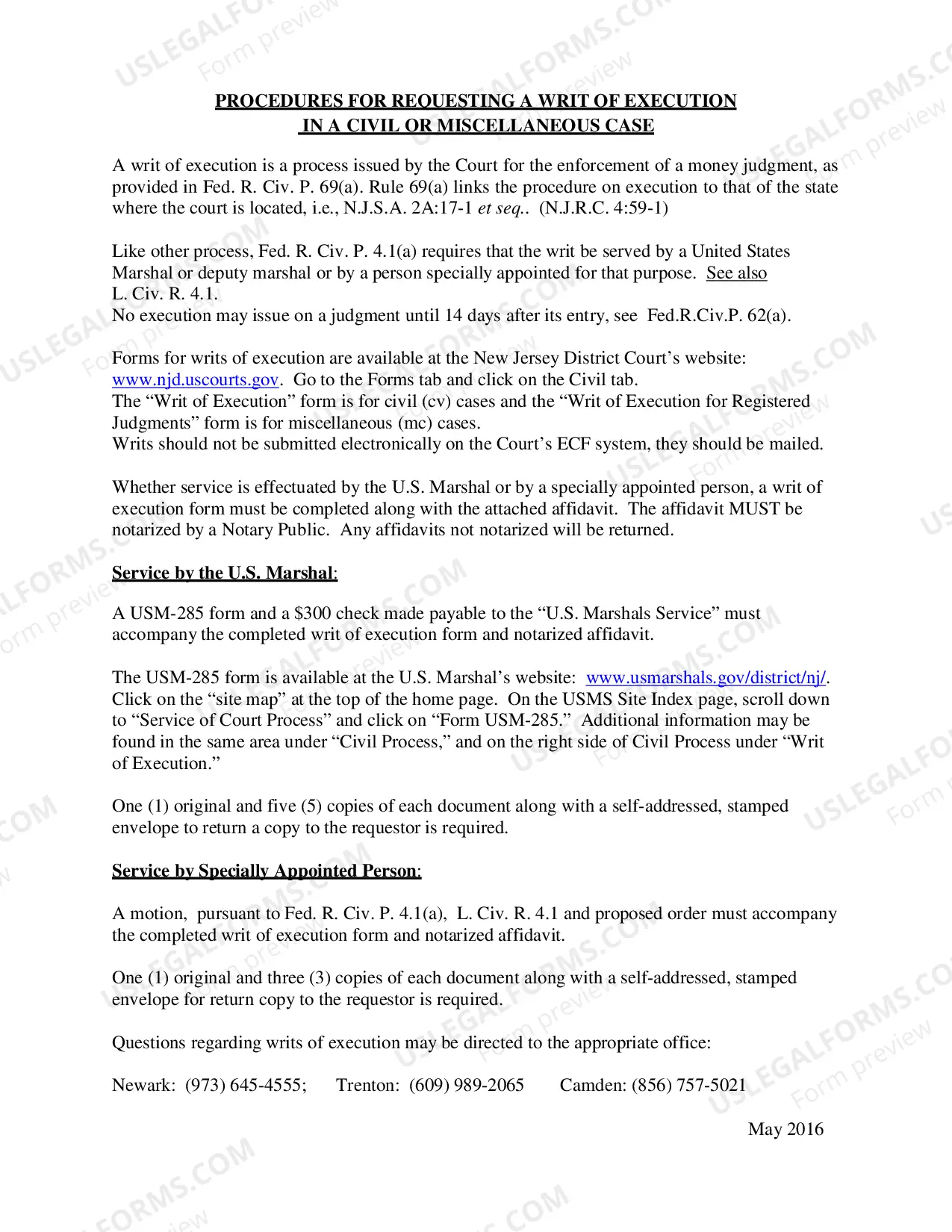
Maryland Affidavit for Service of Process
What is this form?
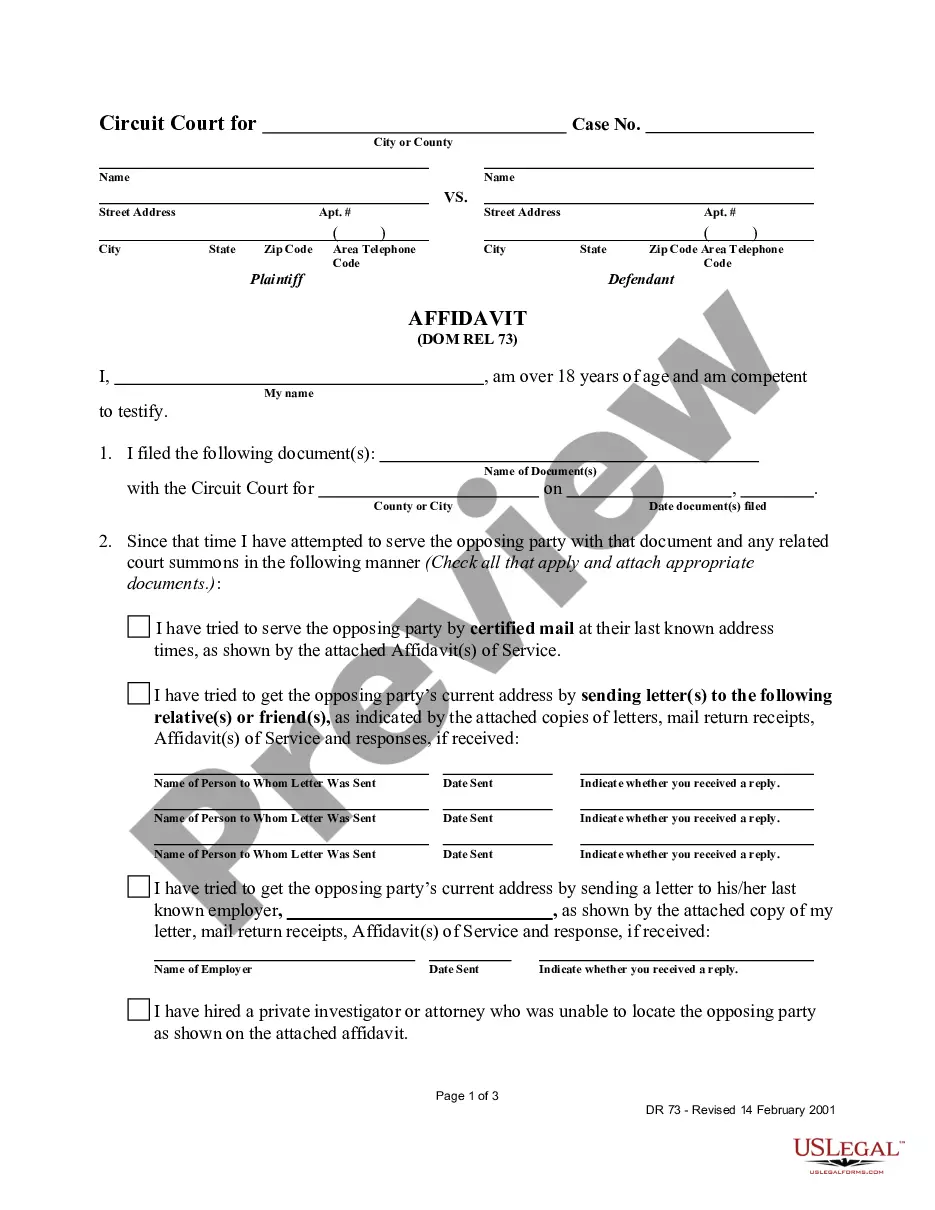
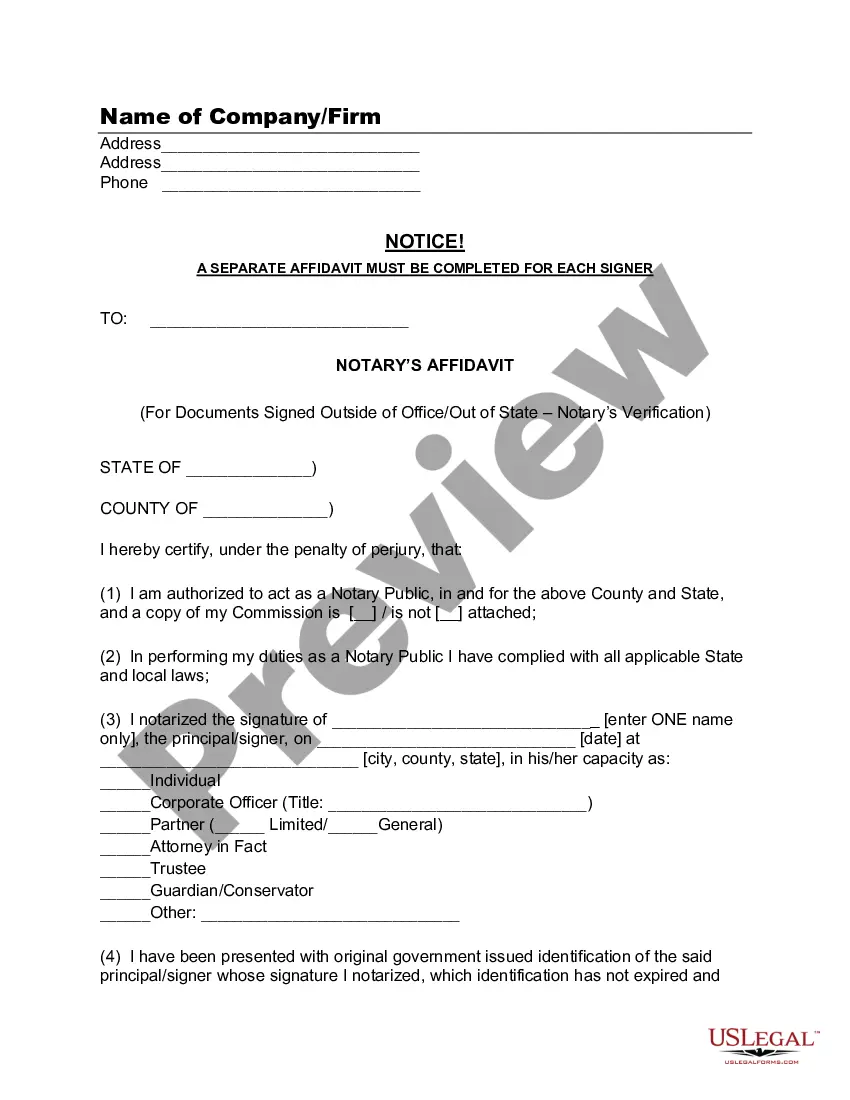
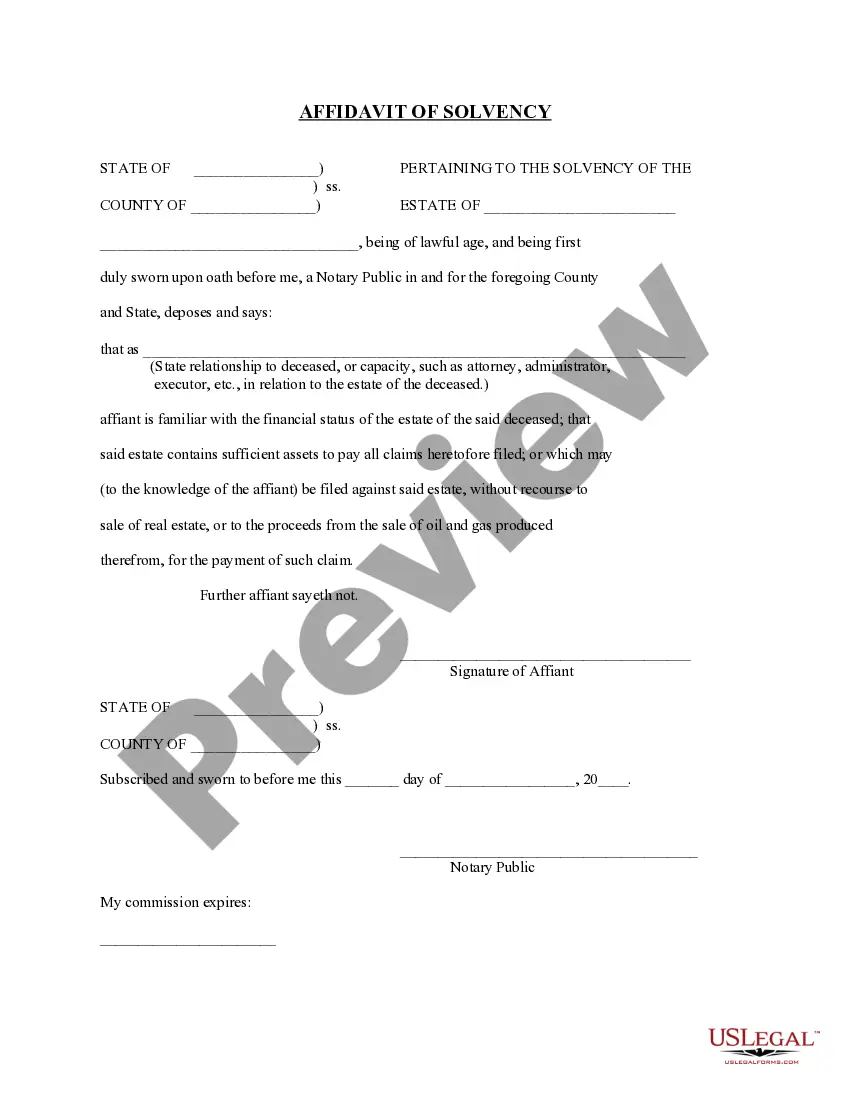
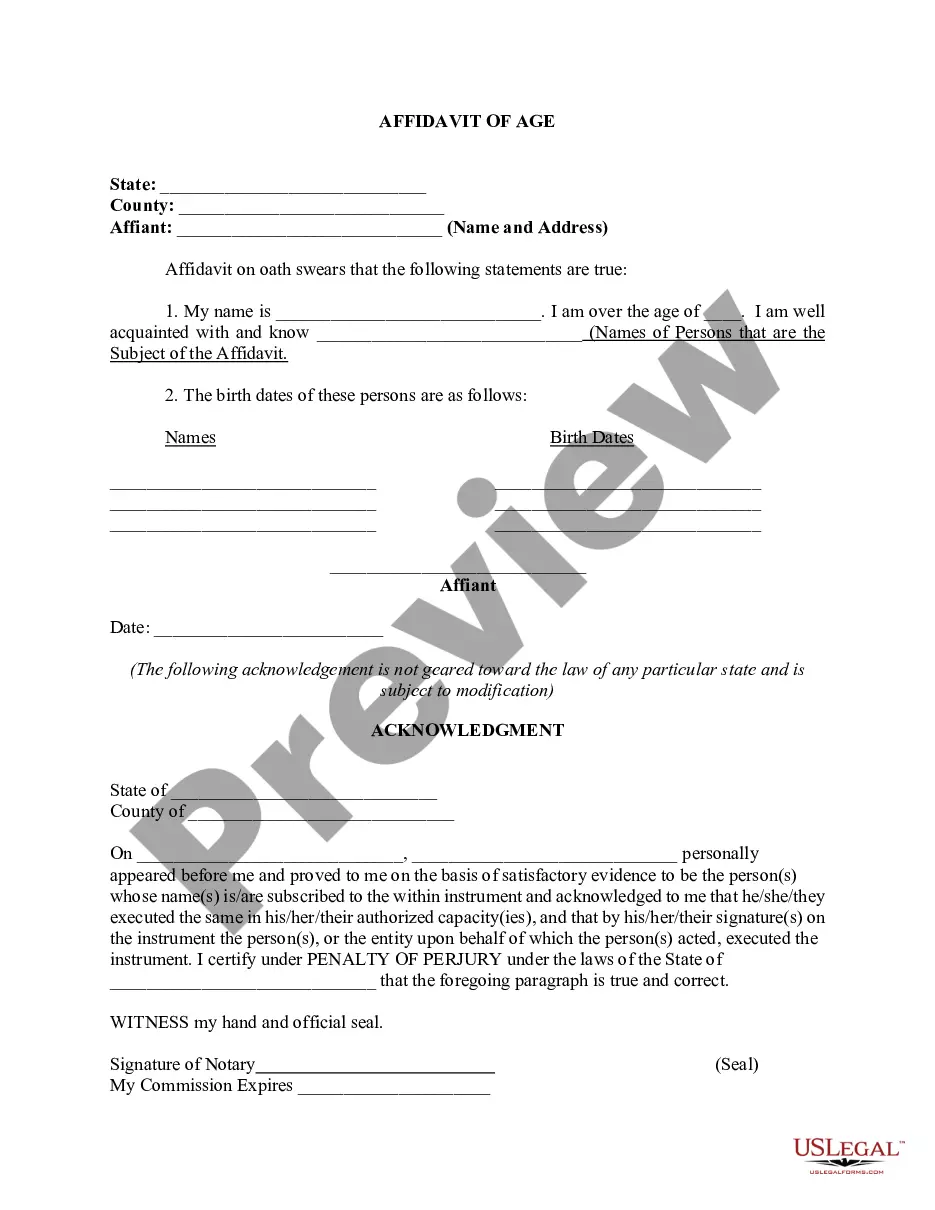
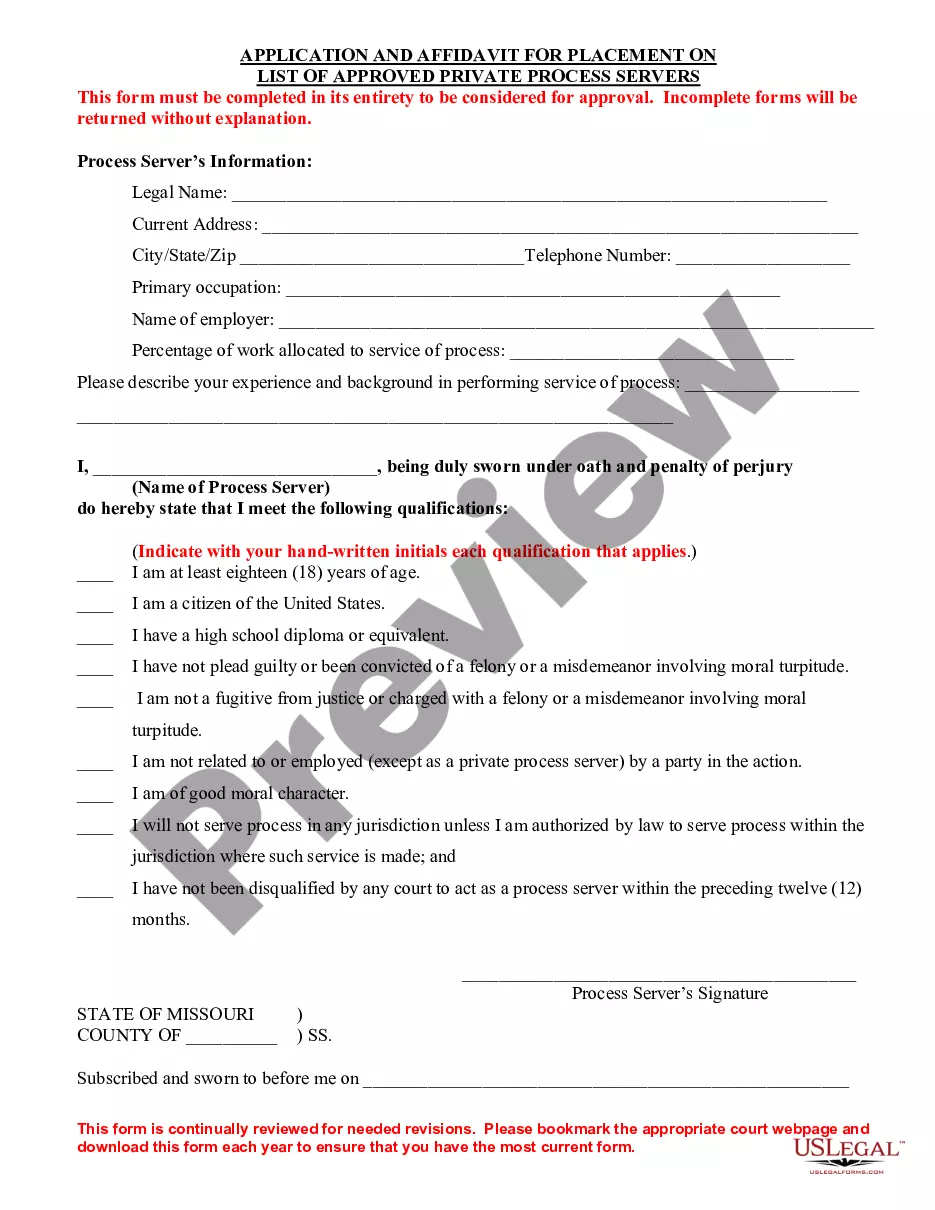
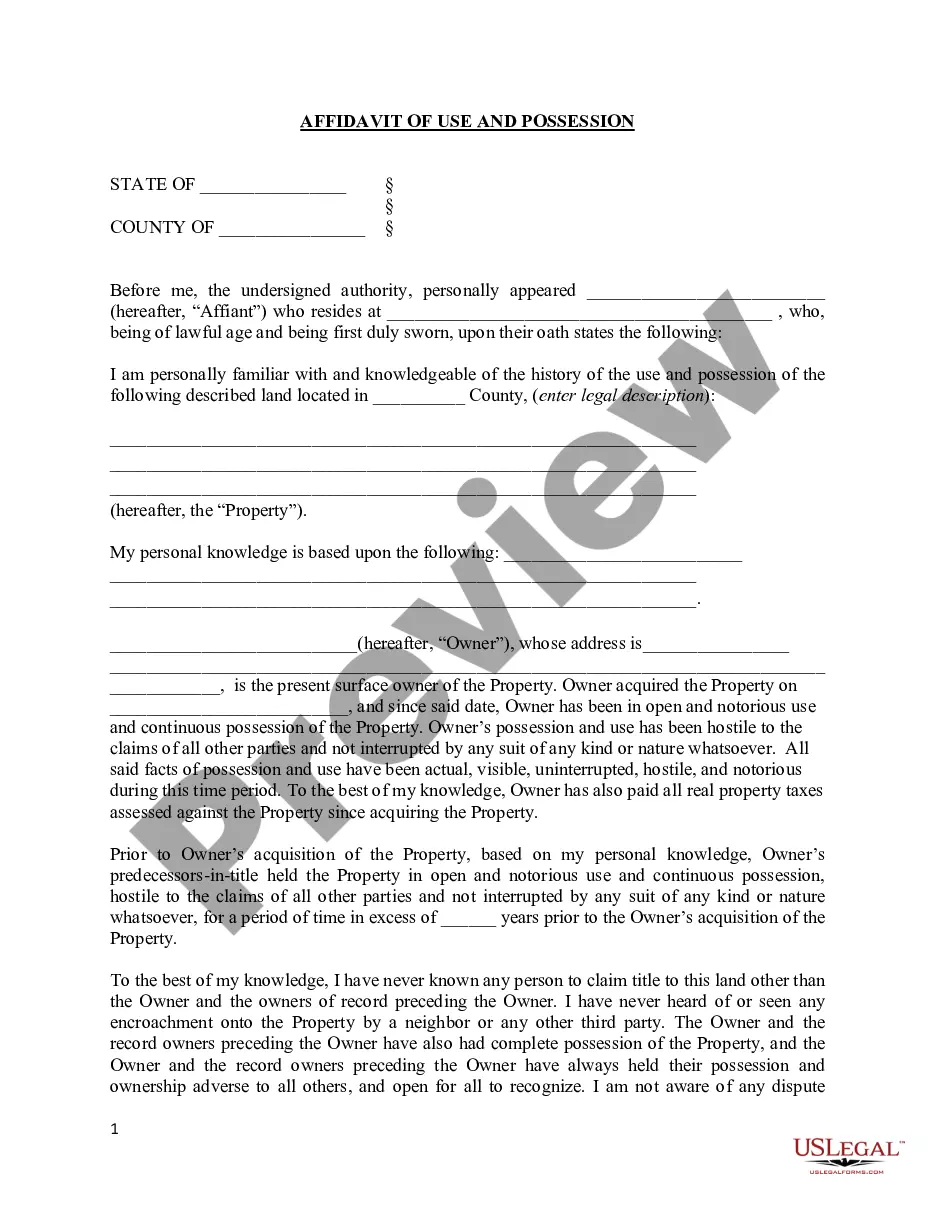
The Affidavit for Service of Process is a legal document used to confirm that a party has properly served legal documents to another party in a legal proceeding. This form is essential for demonstrating compliance with service requirements, which may vary based on jurisdiction. It differs from other affidavits by focusing specifically on the process of notifying the involved parties of legal actions against them.
Main sections of this form
- Affiant's details: The person making the affidavit.
- Description of the documents served: Details about the legal papers provided.
- Date of service: When the service occurred.
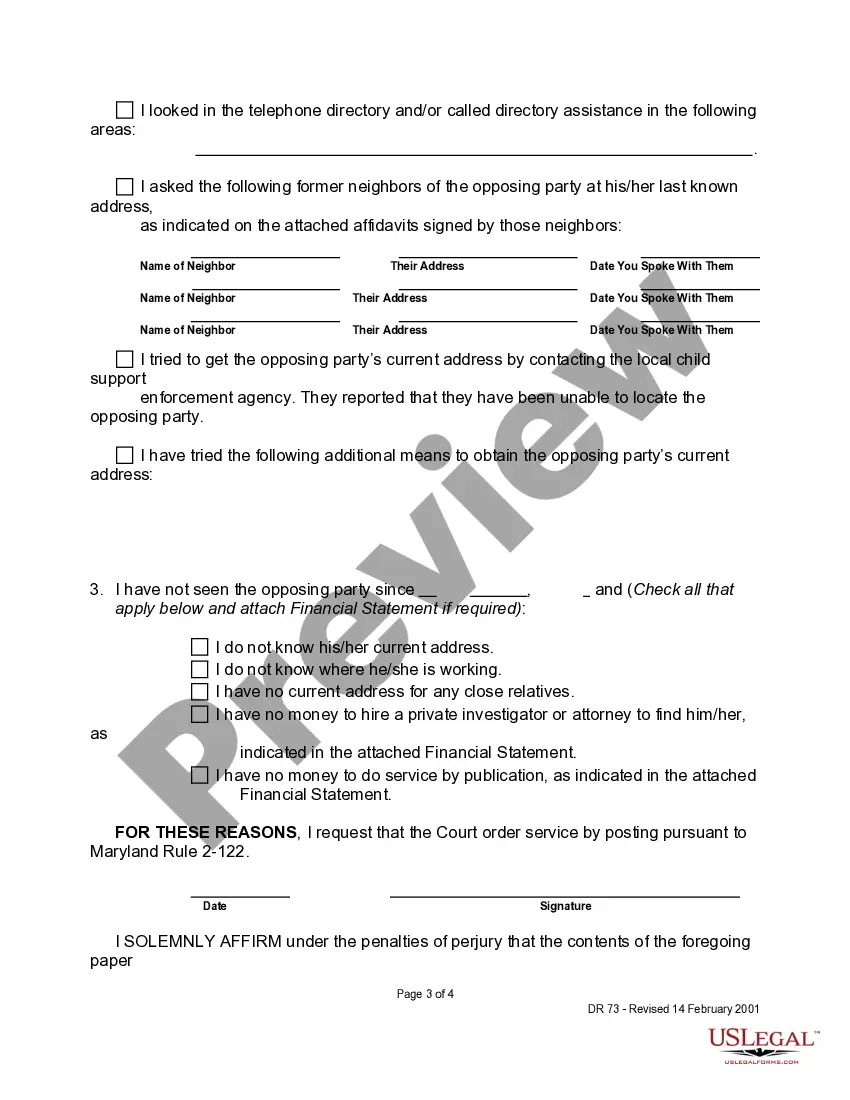
- Method of service: How the documents were delivered (e.g., personal delivery, mail).
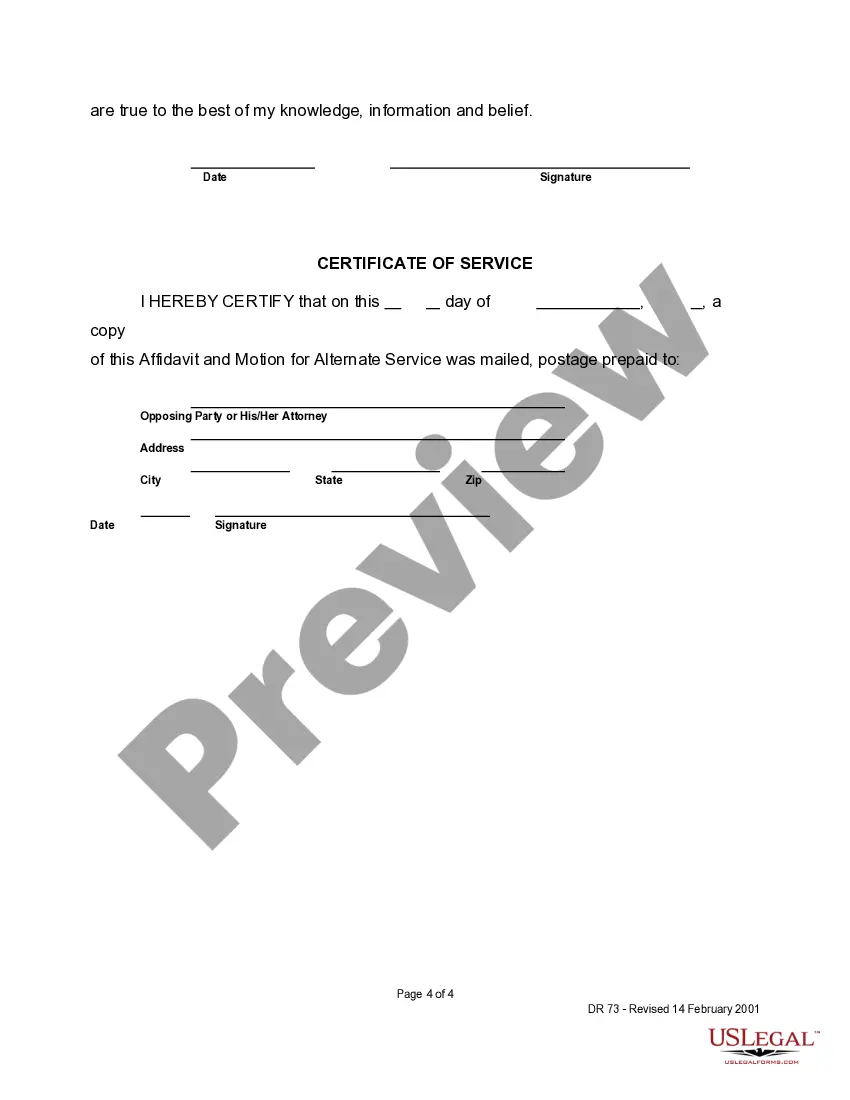
- Signature and notary acknowledgment: Ensures the affidavit is legally binding.

When to use this form
This form should be used when a party needs to formally report the service of legal documents, such as a summons or complaint, to another party involved in the case. It is often required in civil litigation to establish that the defendant has been properly informed of the legal action against them.
Who should use this form
- Litigants in civil court cases.
- Attorneys representing clients in legal proceedings.
- Individuals seeking to document service of process for legal compliance.
Completing this form step by step
- Identify the affiant: Provide the name and information of the person making the affidavit.
- Describe the served documents: Clearly outline what legal papers were delivered.
- Enter the date of service: Specify the exact date the documents were served.
- Note the method of service: Indicate how the documents were delivered to the other party.
- Sign and date the affidavit: The affiant must sign the document in front of a notary public if required.
Is notarization required?
This document requires notarization to meet legal standards. US Legal Forms provides secure online notarization powered by Notarize, allowing you to complete the process through a verified video call, available 24/7.
Get your form ready online
Our built-in tools help you complete, sign, share, and store your documents in one place.
Make edits, fill in missing information, and update formatting in US Legal Forms—just like you would in MS Word.
Download a copy, print it, send it by email, or mail it via USPS—whatever works best for your next step.
Sign and collect signatures with our SignNow integration. Send to multiple recipients, set reminders, and more. Go Premium to unlock E-Sign.
If this form requires notarization, complete it online through a secure video call—no need to meet a notary in person or wait for an appointment.
We protect your documents and personal data by following strict security and privacy standards.

Make edits, fill in missing information, and update formatting in US Legal Forms—just like you would in MS Word.

Download a copy, print it, send it by email, or mail it via USPS—whatever works best for your next step.

Sign and collect signatures with our SignNow integration. Send to multiple recipients, set reminders, and more. Go Premium to unlock E-Sign.

If this form requires notarization, complete it online through a secure video call—no need to meet a notary in person or wait for an appointment.

We protect your documents and personal data by following strict security and privacy standards.
Avoid these common issues
- Failing to include all required details about the service.
- Not providing a clear description of the served documents.
- Omitting the date of service.
- Using an incorrect method of service that doesn't comply with state laws.
- Not signing or notarizing the affidavit where required.
Why use this form online
- Convenient access to professionally drafted forms at any time.
- Easy customization to meet specific legal requirements.
- Quickly downloadable for immediate use in legal proceedings.
- Ensured compliance with legal formatting and language by licensed attorneys.
Quick recap
- The Affidavit for Service of Process verifies proper service of legal documents.
- It is essential for ensuring due process in legal proceedings.
- Always ensure compliance with state-specific rules when completing the form.
Looking for another form?


Form popularity
FAQ
The person serving the document by hand must identify the person being served and provide a copy of the document to the person served. If the person to be served refuses to take a copy of the document, the person serving it may put it down in the presence of the person to be served and tell the person what it is.
Tell the server to: Give the papers to a responsible adult where the Defendant lives, or to someone in charge where the Defendant works. Say, These are court papers. Then, mail (first-class) a copy of the papers to the Defendant at the same address where s/he left the papers.
1Step 1: Complete a Training Program. You need to follow state and federal laws to become a process server.2Step 2: Gain Certification. You may also need to gain a certification or pass a licensure exam to become a process server.3Step 3: Gain Experience.
There are three ways to serve someone: by certified mail, sheriff, and private process. Select how you wish to have the Defendant served by checking the box on your Complaint form. The clerk creates a summons and mails it to the defendant. The clerk will collect a fee for this service.
Process servers will call you, but they won't threaten you over the phone. A process server is always paid by the party hiring them to deliver legal documents. Whether it's a divorce, child support, or debt collection case, the party being served will never pay the server directly.
Generally speaking, any person of "suitable age" can be served if they are at the residence of the individual for whom the Summons or legal documents are intended. Also, a defendant/respondent generally has twenty (20) days to file an Answer assuming that they are in-state.
A legal process server delivers (serves) court documents to the defendant or individual listed on the legal document being served.Once a process server delivers the documents, an Affidavit of Service, also called a Proof of Service, is notarized and given to the party who requested the service.
In most jurisdictions, an affidavit is used when a private, third party serves the documents, whereas a certificate of service is used by official process servers when serving any document and for attorney's and parties under Rule 5 after the original summons and complaint are served and filed.
Tell the server to: Give the papers to a responsible adult where the Defendant lives, or to someone in charge where the Defendant works. Say, These are court papers. Then, mail (first-class) a copy of the papers to the Defendant at the same address where s/he left the papers.