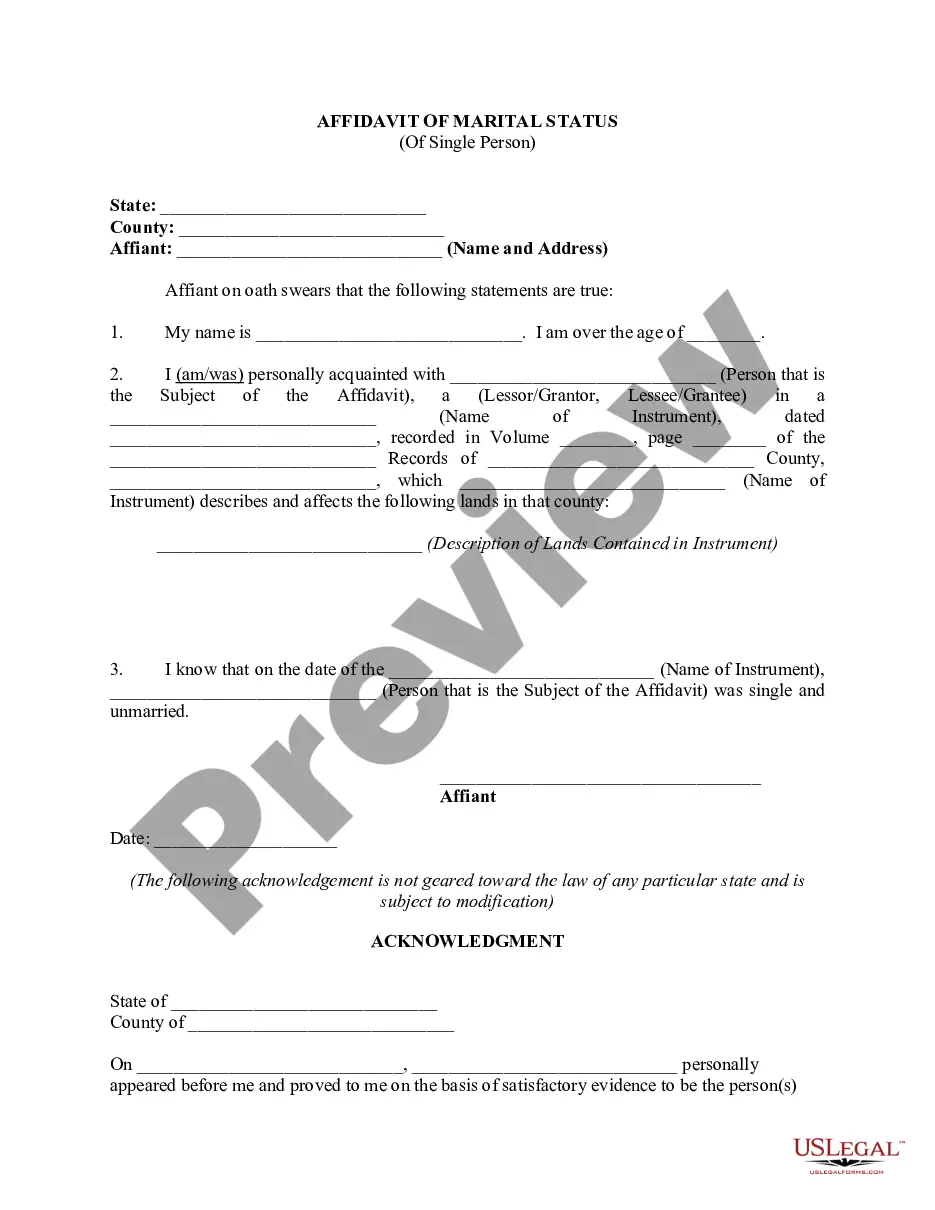
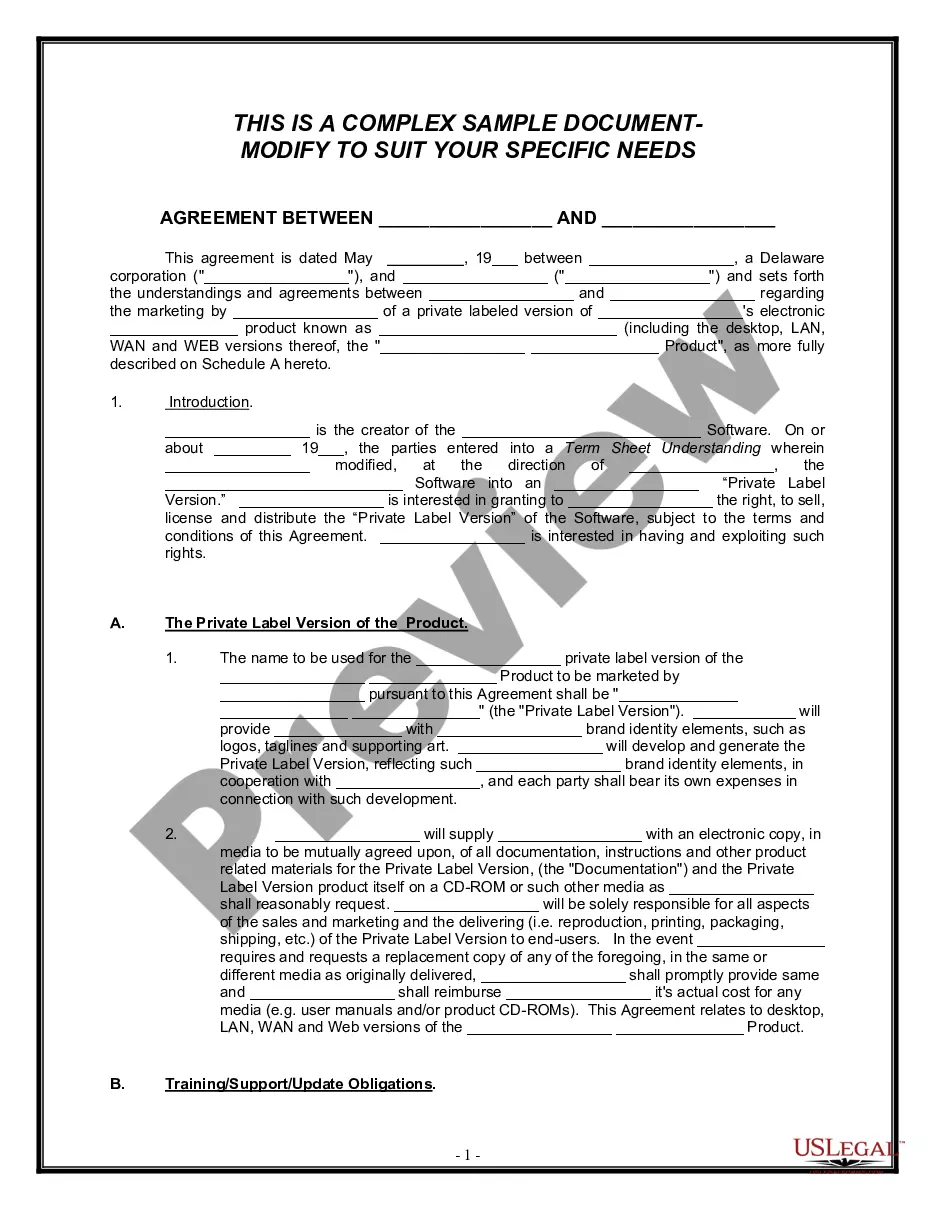
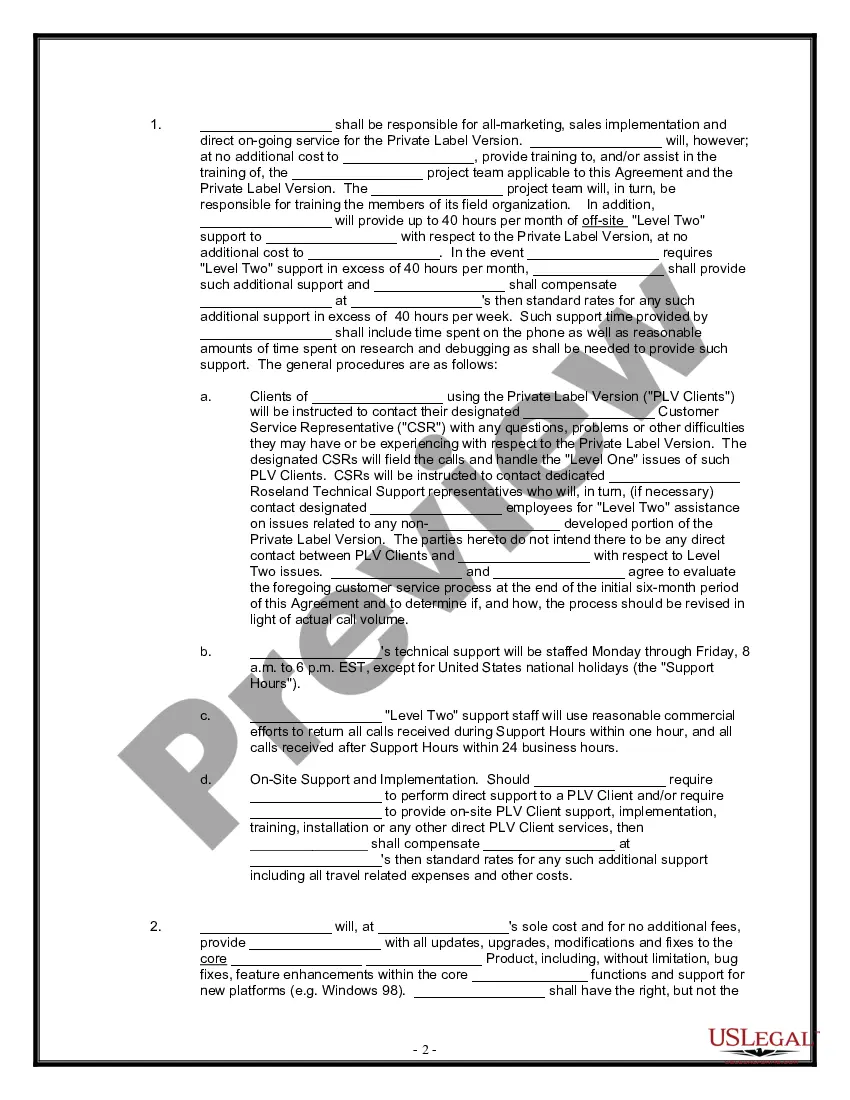
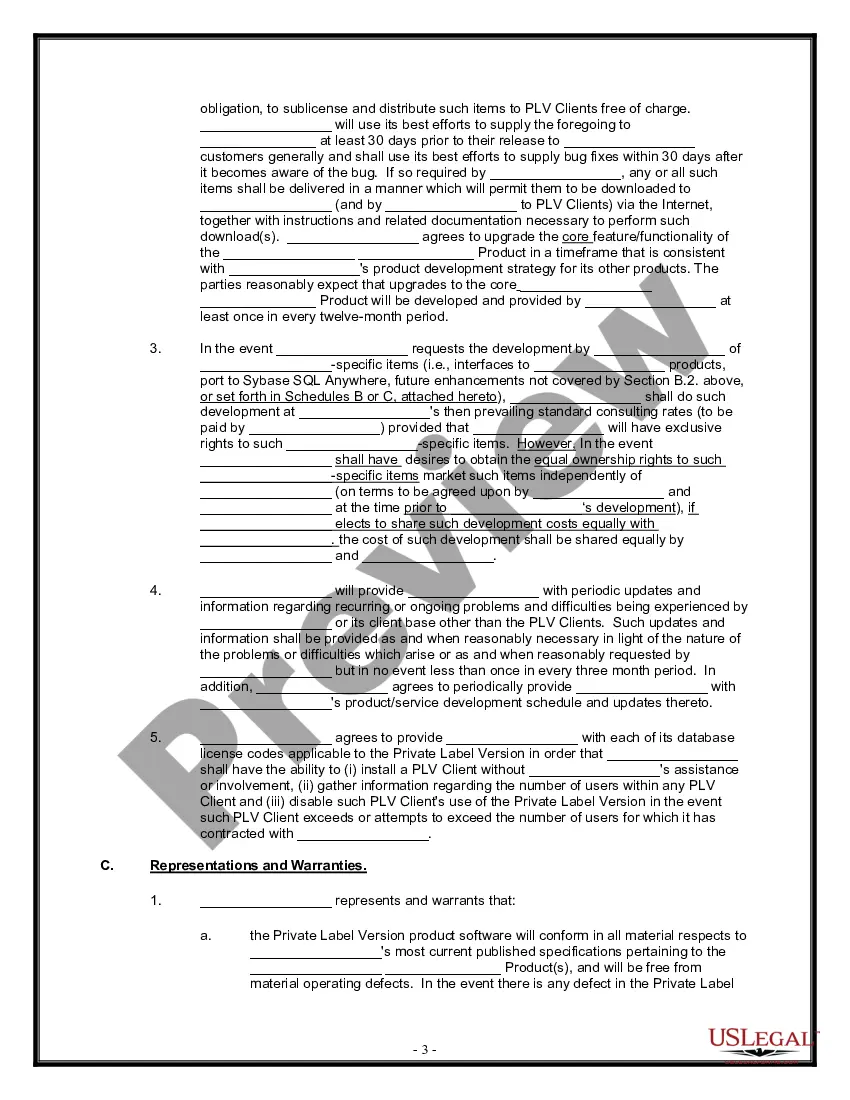
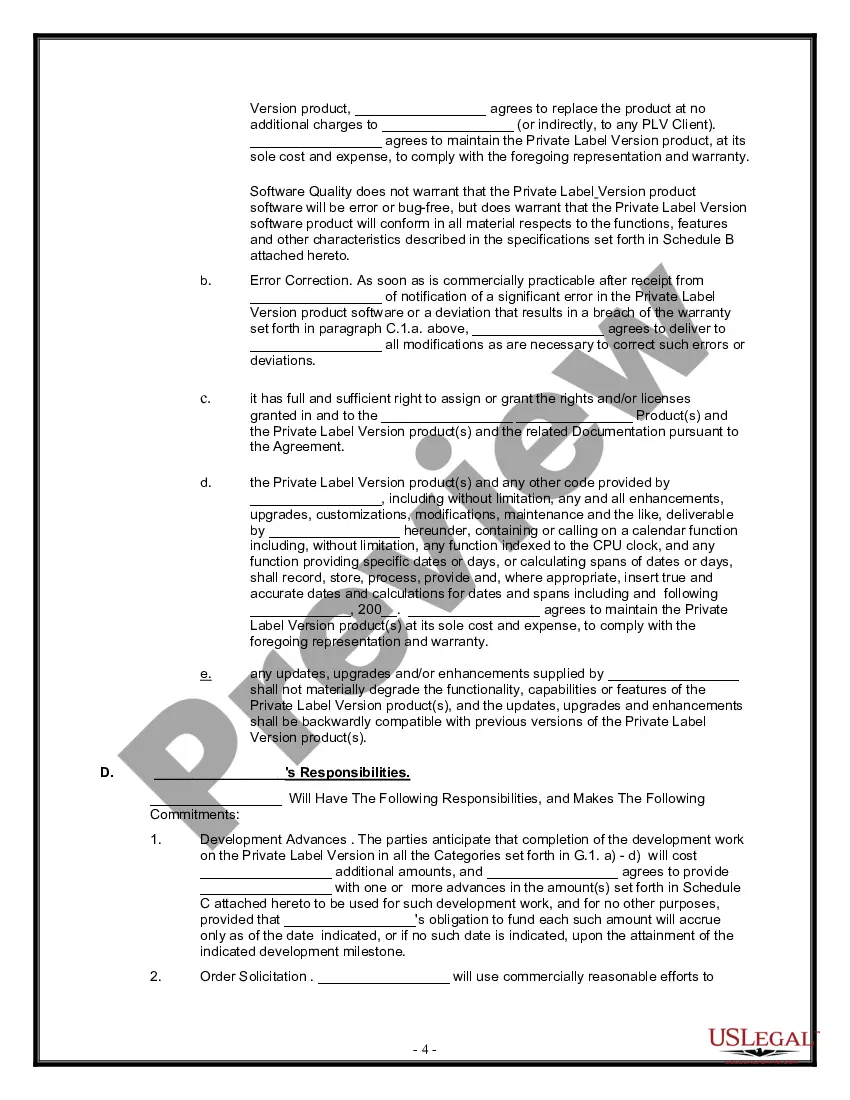
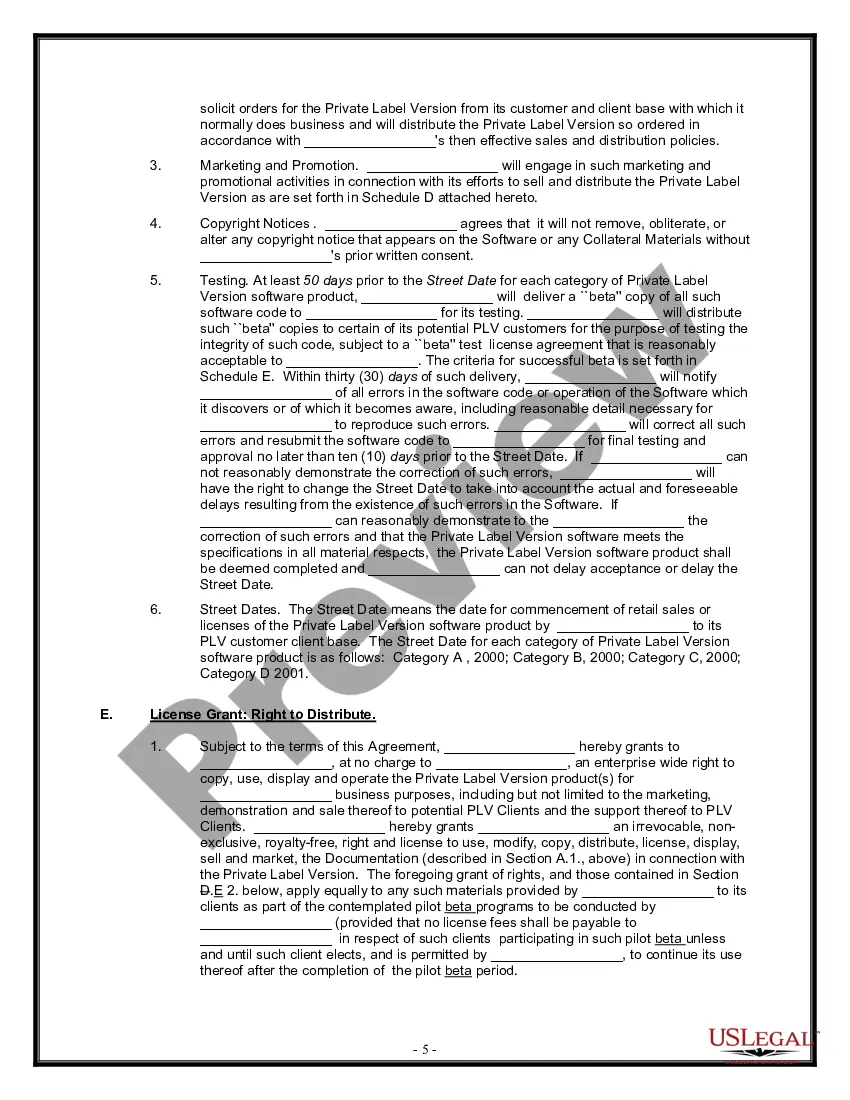
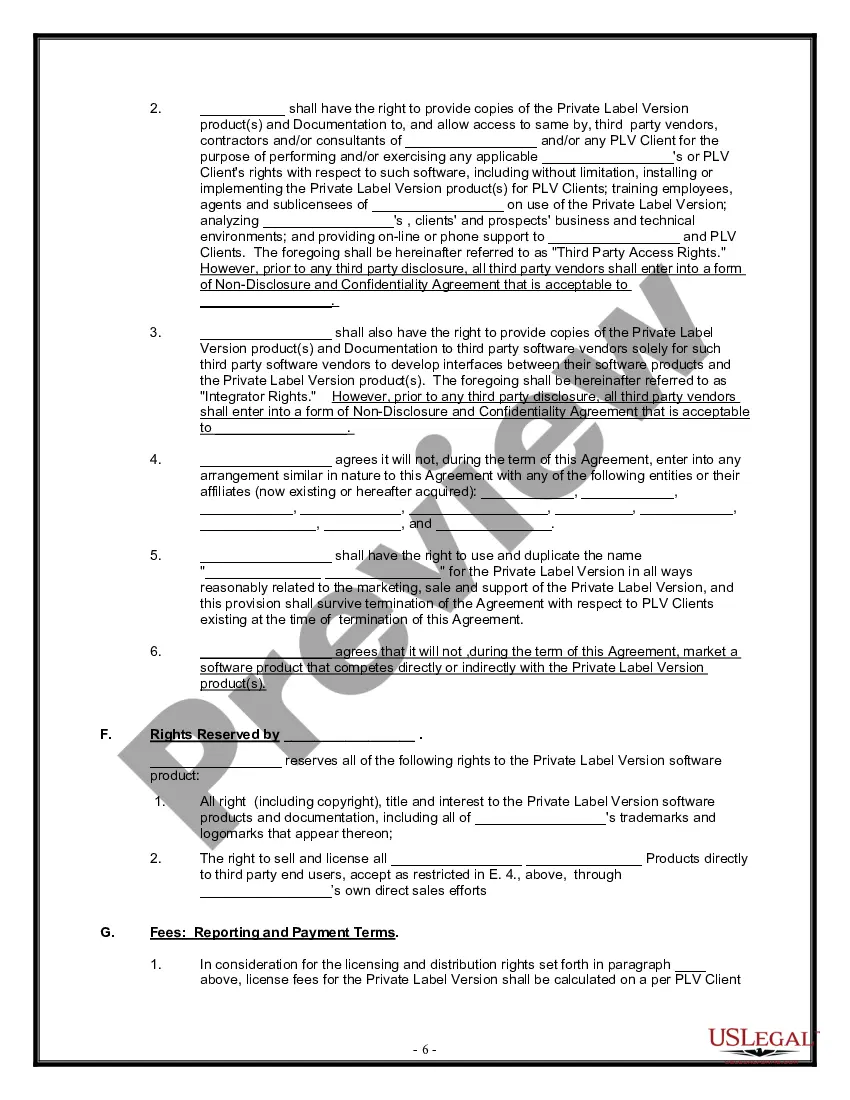
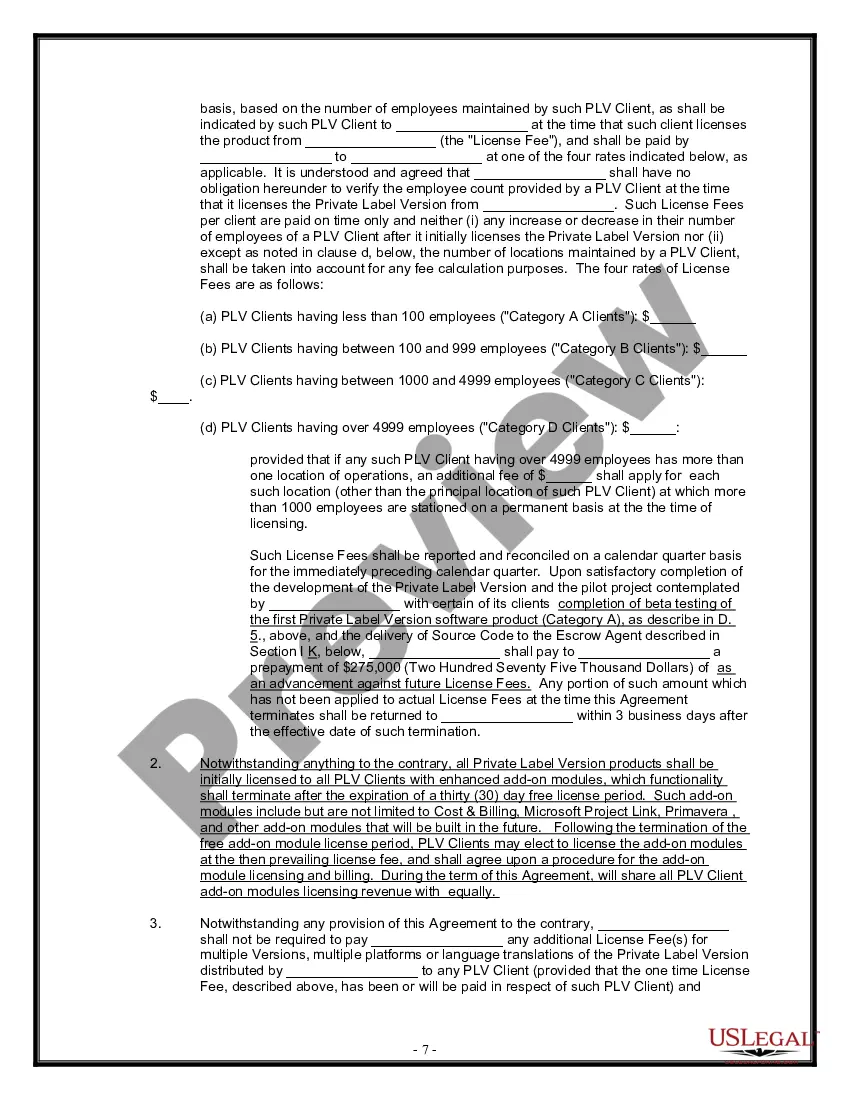
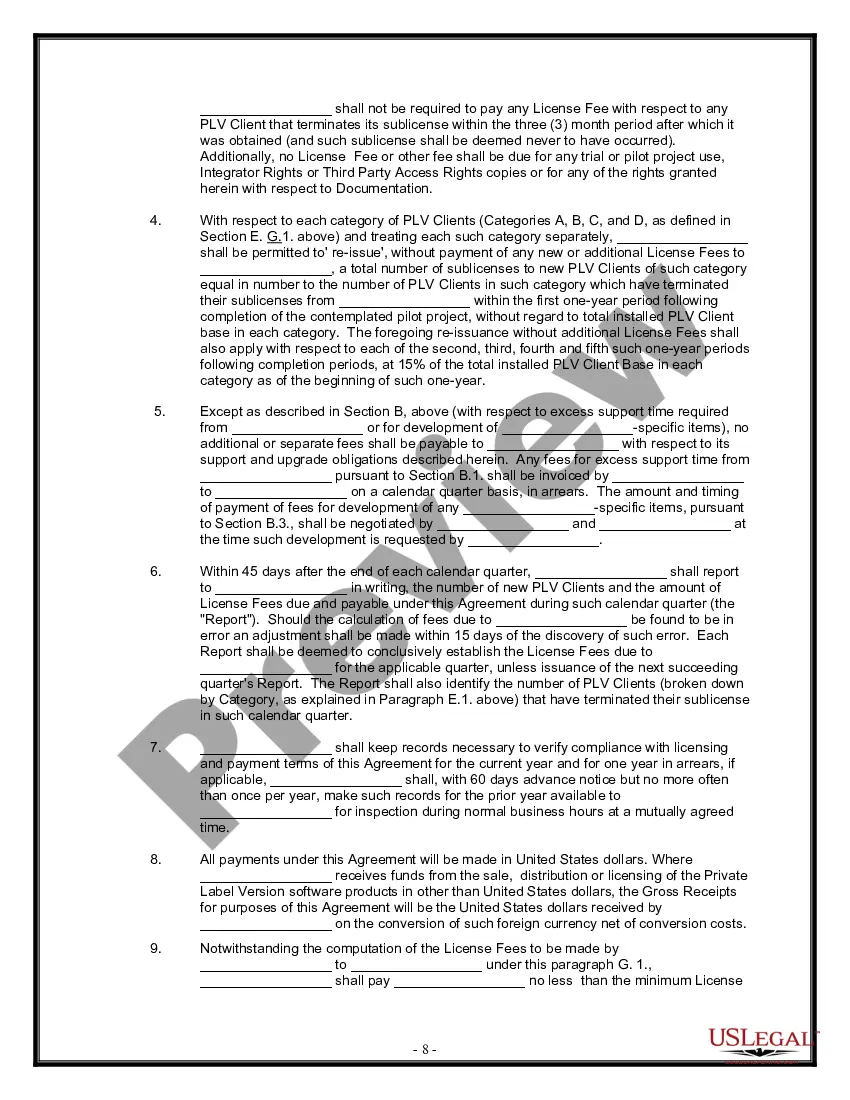
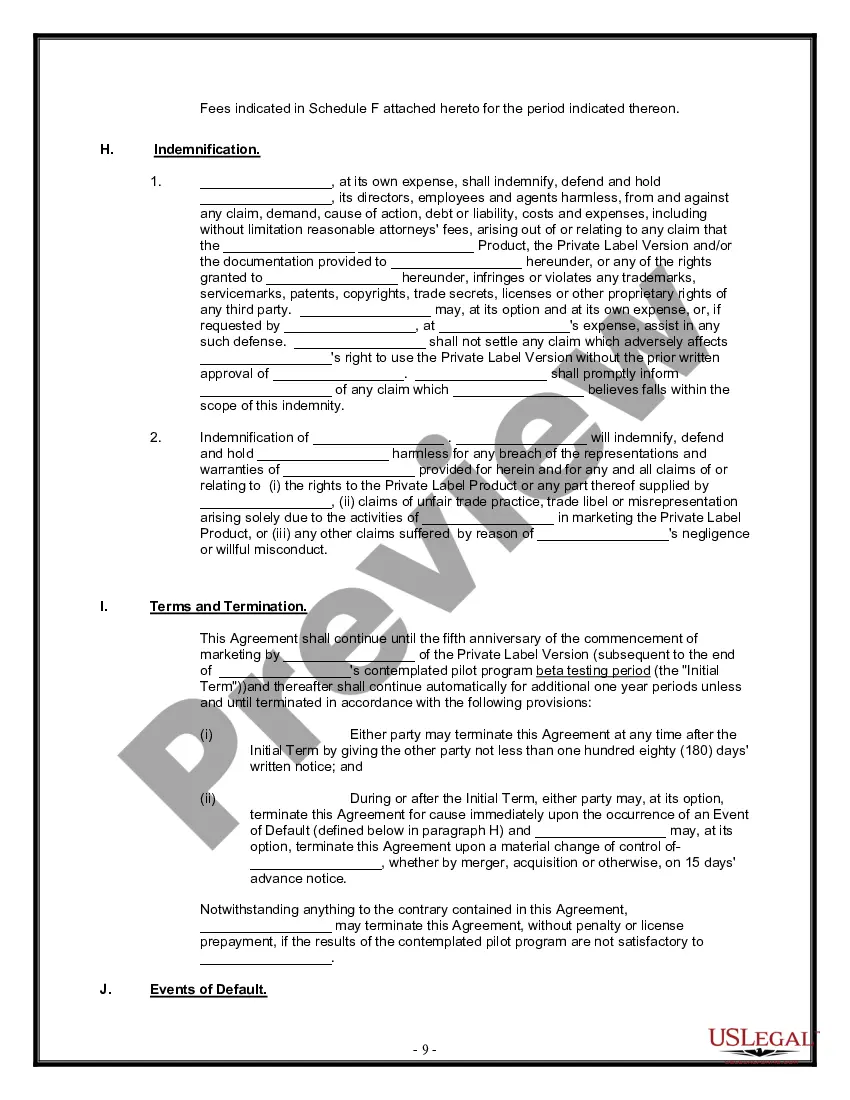
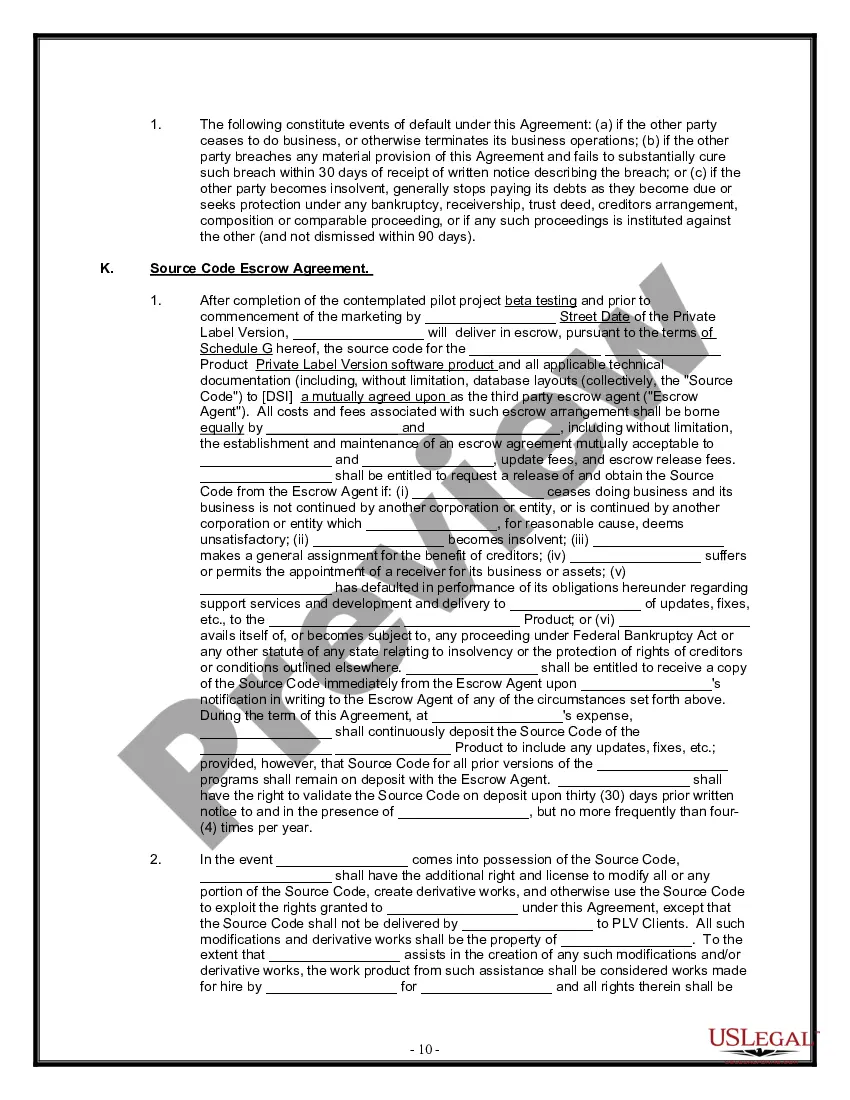
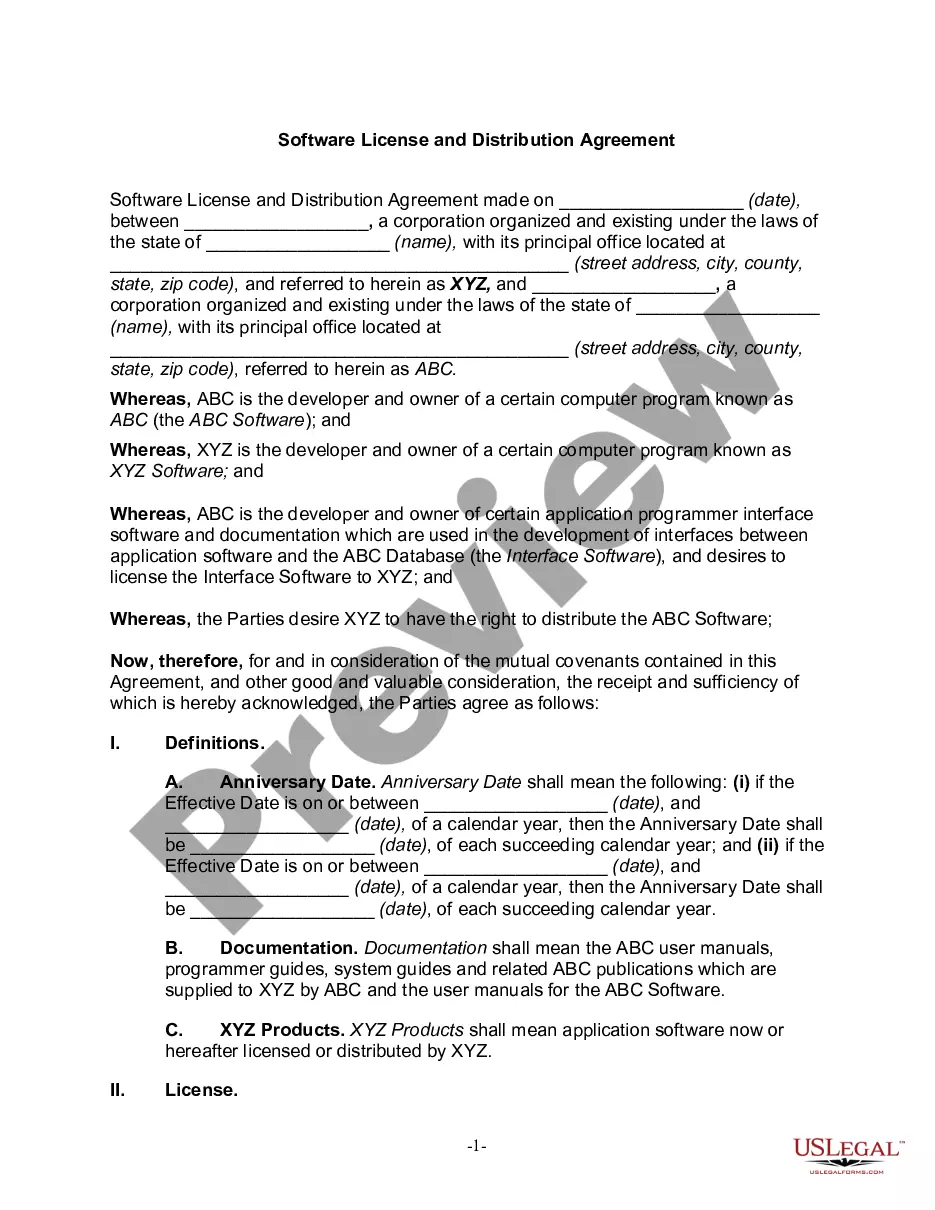
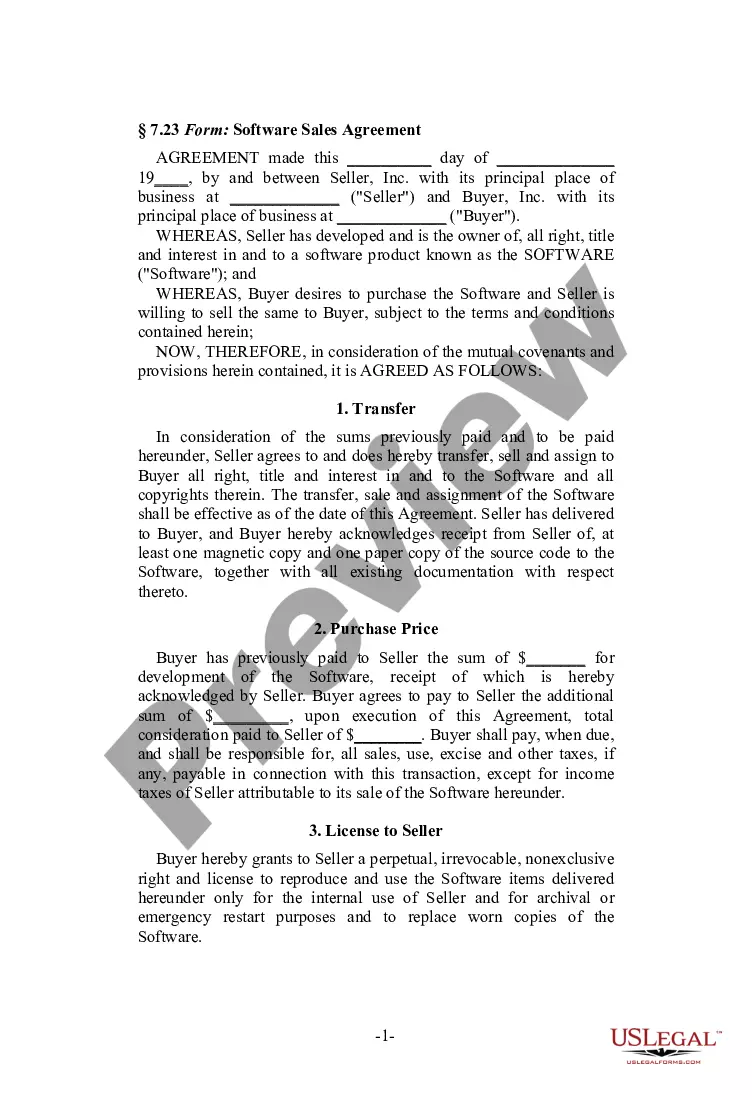
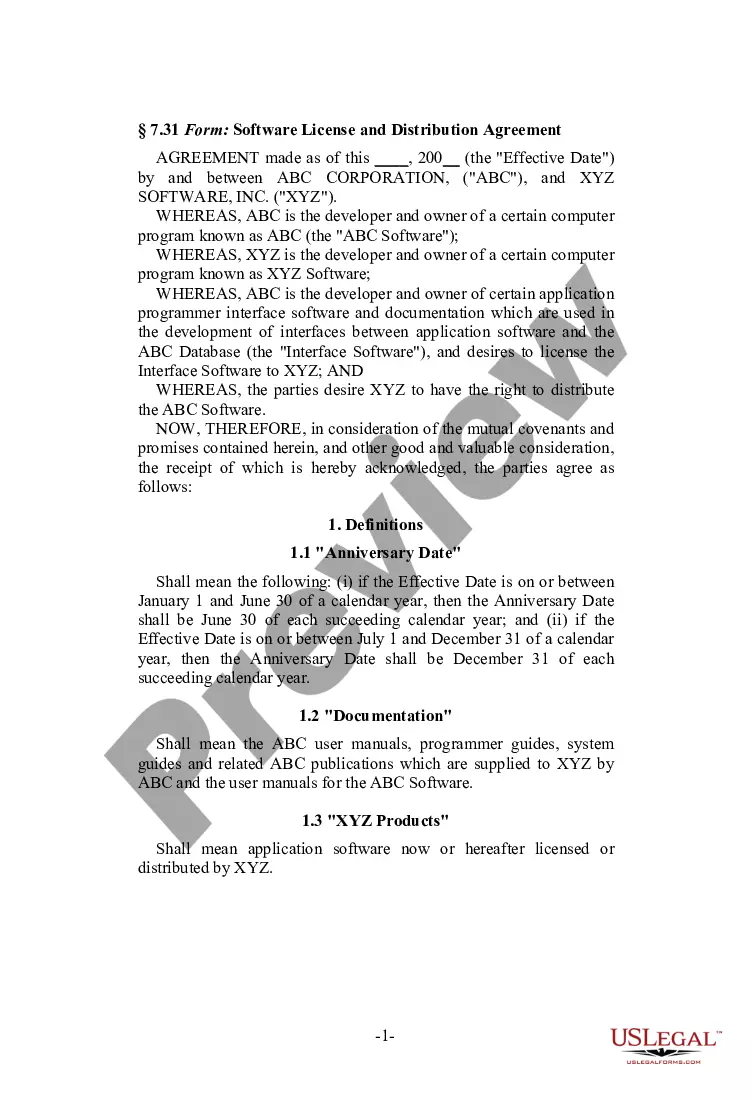
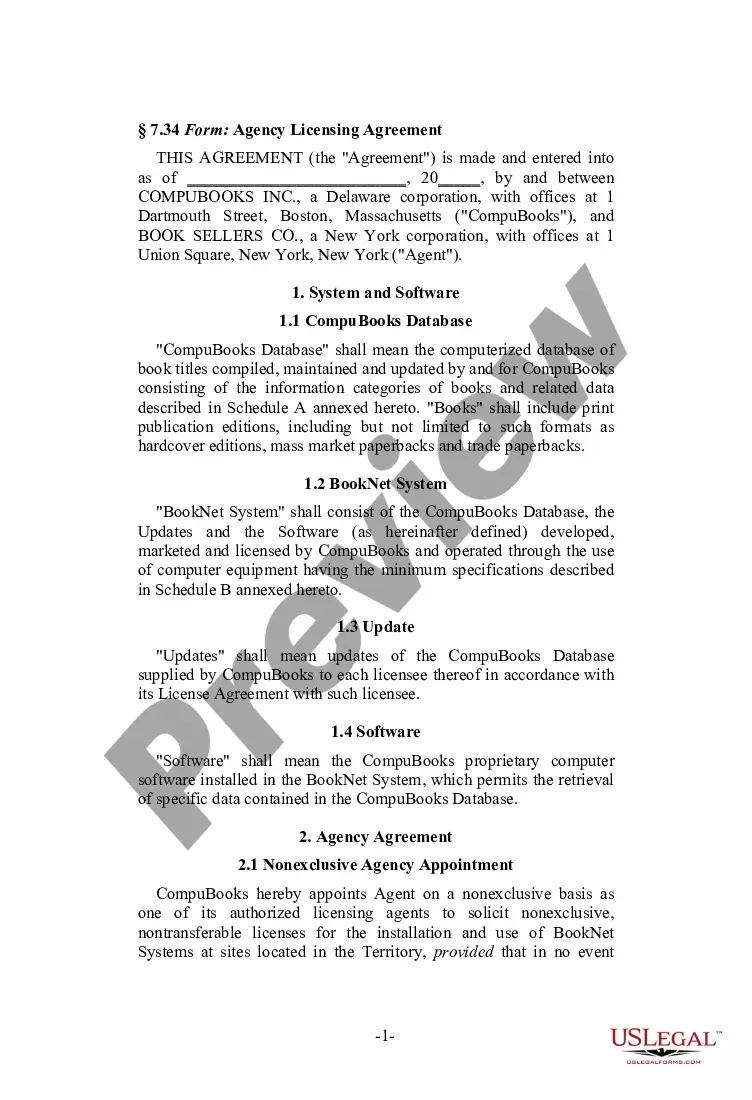
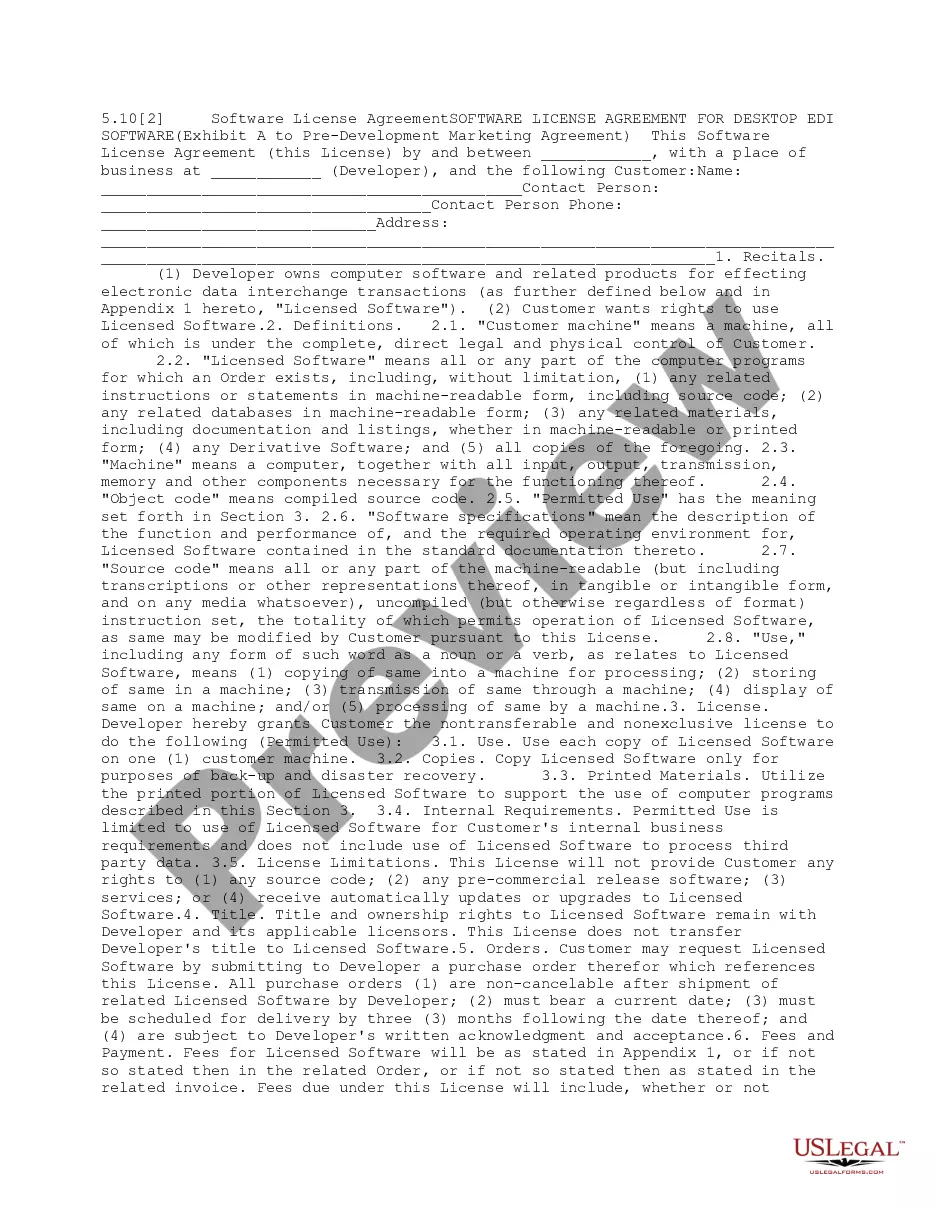
This form is a Software Marketing and Licensing Agreement under Private Label. This form includes, but is not limited to, the following sections: Private Label Version of the Product, Training/Support/Update Obligations, and Representations and Warranties. The document supercedes all proposals, oral or written, all negotiations, conversations, or discussions between the parties relating to the subject of the agreement.
Massachusetts Software Marketing and Licensing Agreement under Private Label
Instant download
Description
Free preview

Get your form ready online
Our built-in tools help you complete, sign, share, and store your documents in one place.
Built-in online Word editor
Make edits, fill in missing information, and update formatting in US Legal Forms—just like you would in MS Word.
Export easily
Download a copy, print it, send it by email, or mail it via USPS—whatever works best for your next step.
E-sign your document
Sign and collect signatures with our SignNow integration. Send to multiple recipients, set reminders, and more. Go Premium to unlock E-Sign.
Notarize online 24/7
If this form requires notarization, complete it online through a secure video call—no need to meet a notary in person or wait for an appointment.
Store your document securely
We protect your documents and personal data by following strict security and privacy standards.

Make edits, fill in missing information, and update formatting in US Legal Forms—just like you would in MS Word.

Download a copy, print it, send it by email, or mail it via USPS—whatever works best for your next step.

Sign and collect signatures with our SignNow integration. Send to multiple recipients, set reminders, and more. Go Premium to unlock E-Sign.

If this form requires notarization, complete it online through a secure video call—no need to meet a notary in person or wait for an appointment.

We protect your documents and personal data by following strict security and privacy standards.
Looking for another form?





How to fill out Software Marketing And Licensing Agreement Under Private Label?
If you desire to total, obtain, or create authentic document templates, utilize US Legal Forms, the largest collection of legal forms, which are accessible online.
Employ the site's straightforward and user-friendly search feature to locate the documents you require. Numerous templates for business and personal purposes are categorized by types and states, or keywords.
Use US Legal Forms to discover the Massachusetts Software Marketing and Licensing Agreement under Private Label with just a few clicks.
Every legal document template you acquire is yours forever. You can access every form you downloaded in your account. Go to the My documents section and choose a form to print or download again.
Stay competitive and obtain, and print the Massachusetts Software Marketing and Licensing Agreement under Private Label with US Legal Forms. There are millions of professional and state-specific forms available for your business or personal needs.
- If you are already a US Legal Forms user, Log In to your account and click on the Acquire button to find the Massachusetts Software Marketing and Licensing Agreement under Private Label.
- You can also access forms you previously downloaded in the My documents tab of your account.
- If you are using US Legal Forms for the first time, follow the instructions below.
- Ensure you have selected the form for your specific city/region.
- Utilize the Preview option to review the form's content. Don't forget to read through the description.
- If you are dissatisfied with the form, use the Search field at the top of the screen to find other variations of the legal form template.
- Once you have found the form you need, click on the Purchase now button. Choose the pricing plan you prefer and enter your credentials to sign up for an account.
- Process the transaction. You can use your credit card or PayPal account to complete the transaction.
- Select the format of the legal form and download it to your device.
- Complete, modify, and print or sign the Massachusetts Software Marketing and Licensing Agreement under Private Label.
Form popularity
FAQ
Software licenses are primarily regarded as services due to their nature of granting usage rights rather than ownership. They provide access to software functionalities while protecting the rights of the creator. When entering into a Massachusetts Software Marketing and Licensing Agreement under Private Label, it is crucial to clarify this distinction to ensure proper legal compliance and enforceability.
A software license is best classified as a service. It grants the user permission to use the software under specific conditions, rather than transferring ownership of a physical product. This distinction is important when drafting a Massachusetts Software Marketing and Licensing Agreement under Private Label, as it influences the terms of use and responsibilities of both parties involved.
Licensing agreements can vary widely, but common examples include software licenses, music licenses, and franchise agreements. In the software realm, a Massachusetts Software Marketing and Licensing Agreement under Private Label might allow a company to rebrand software and market it as their own. Each agreement serves to protect the rights of the licensor while granting specific usage rights to the licensee.
Software is typically viewed as a service when it comes to licensing agreements. The user receives access to the software for a specific purpose, which aligns with service characteristics. However, the software itself can be seen as a good since it is a tangible product that users can own rights to. To navigate this complexity, a Massachusetts Software Marketing and Licensing Agreement under Private Label can provide clear terms and conditions.
Software licenses can be classified as both goods and services. They represent a legal right to use a piece of software, which can be seen as a service. However, since they relate to the ownership and use of software products, they also embody characteristics of goods. If you are exploring a Massachusetts Software Marketing and Licensing Agreement under Private Label, understanding this classification can help clarify your legal obligations.
A licensing agreement is a contract between two parties (the licensor and licensee) in which the licensor grants the licensee the right to use the brand name, trademark, patented technology, or ability to produce and sell goods owned by the licensor.
Precisely identifying which intellectual property will be the subject of the license is necessary to ensure both parties are on the same page and not exceeding their rights.Scope of the Grant.Exclusivity.Territory.Term.Compensation.Termination.Conclusion.
Examples of Licensing Agreement Violations:Licensee fails to pay royalties as agreed.Licensed material is used after the license expires.Licensed material is used in an unauthorized manner.The licensor fails to honor exclusive terms of the agreement.More items...?
Practitioners and licensing executives often refer to three basic types of voluntary licenses: non-exclusive, sole, and exclusive. A non-exclusive licence allows the licensor to retain the right to use the licensed property and the right to grant additional licenses to third parties.
Types of licensing agreement The unique feature of this type of agreement is that even the licensor is excluded to use or exploit the licensed property during the term of the agreement. Copyright, trademark and patent licenses are the best examples of an exclusive license agreement.