Massachusetts Firm Offer
Description
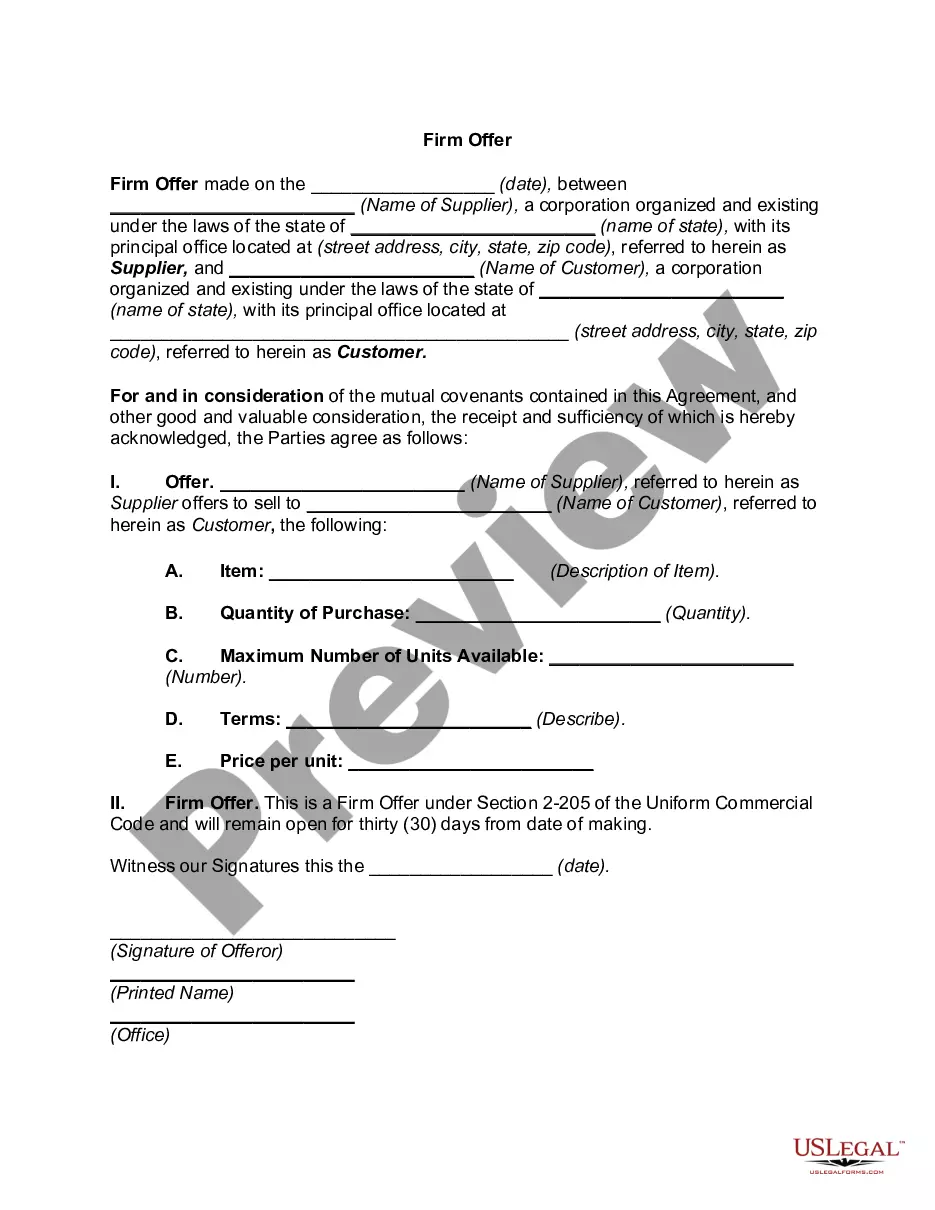
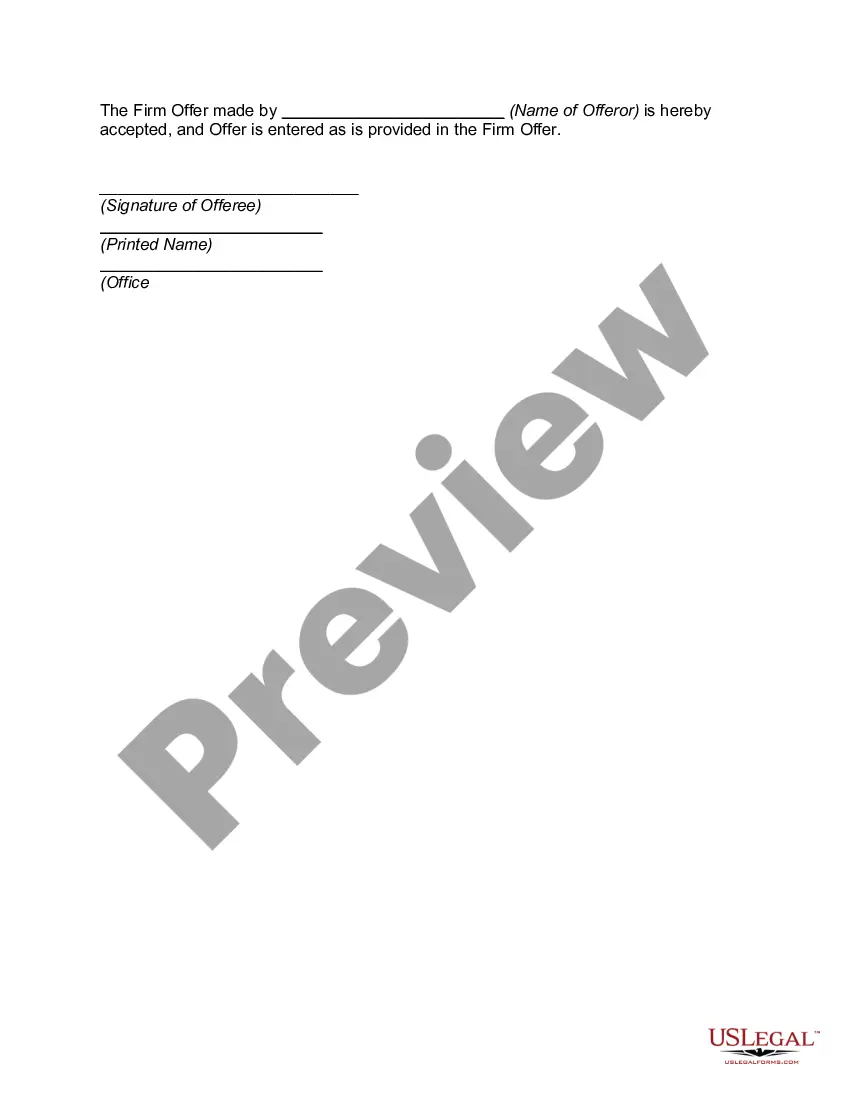
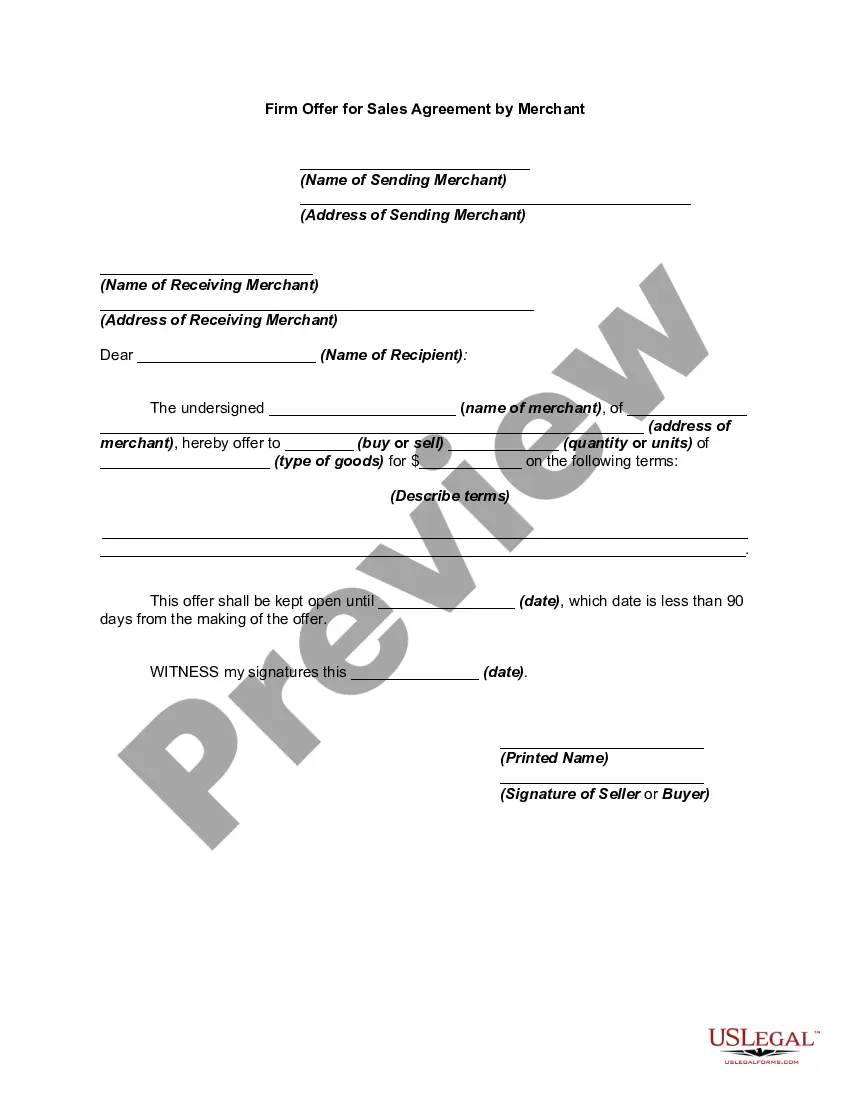
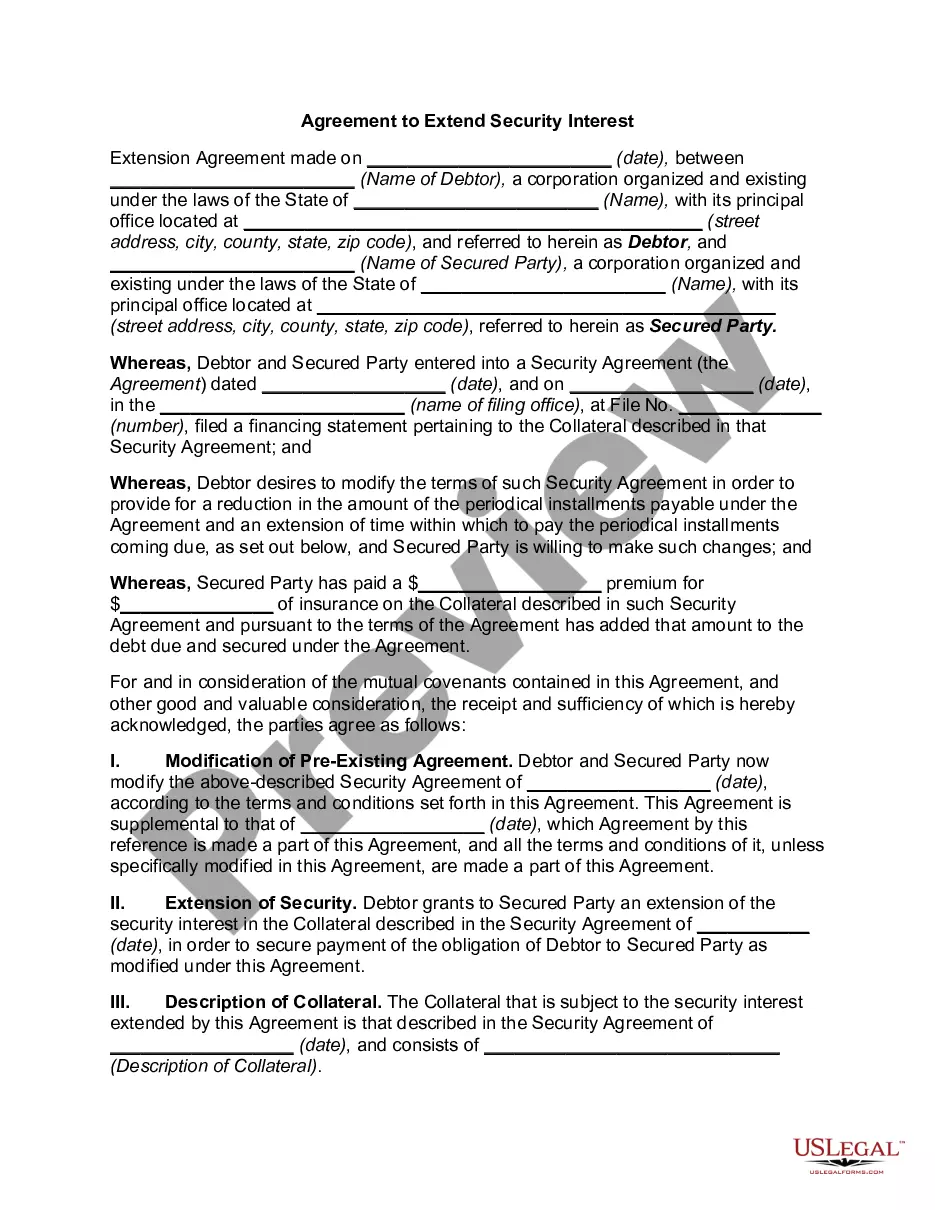
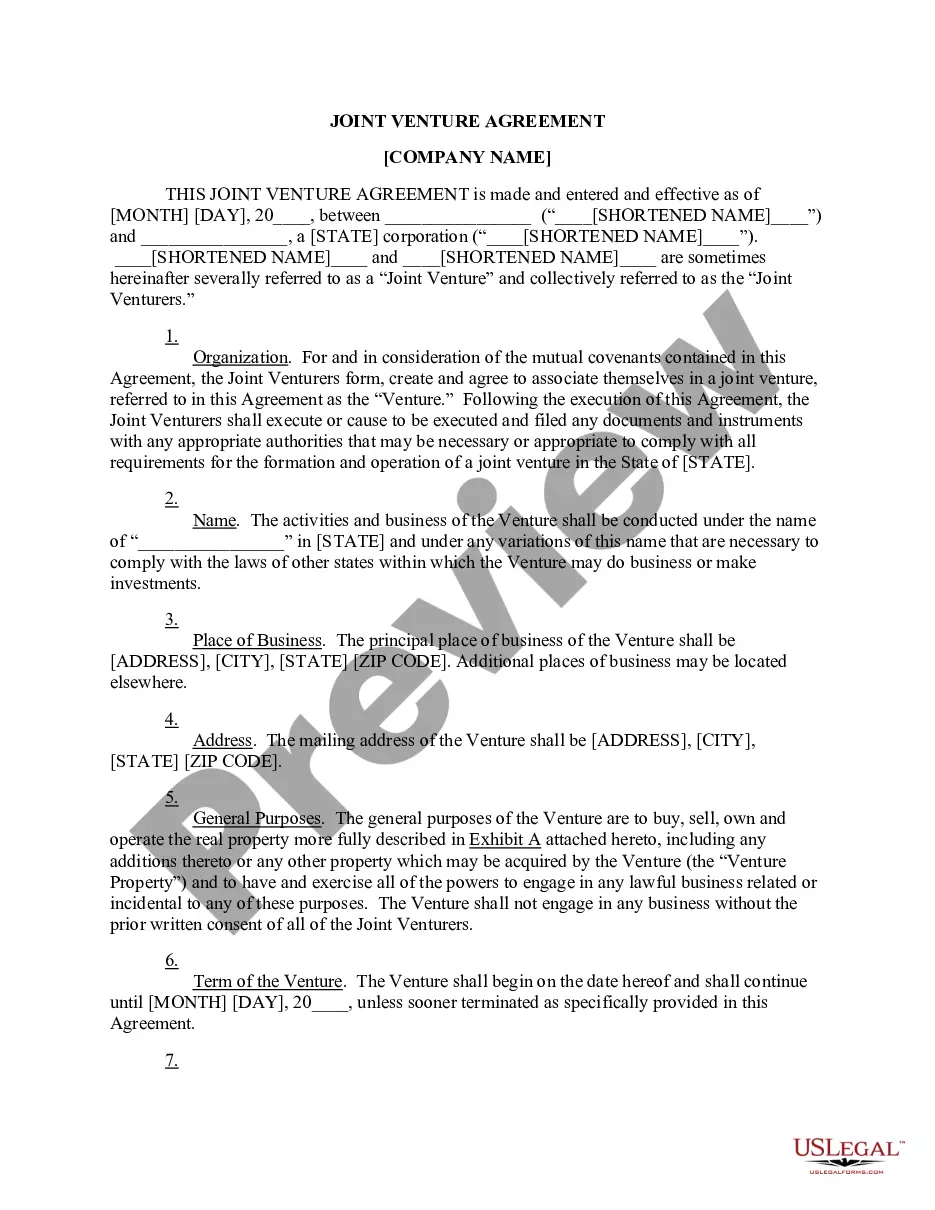
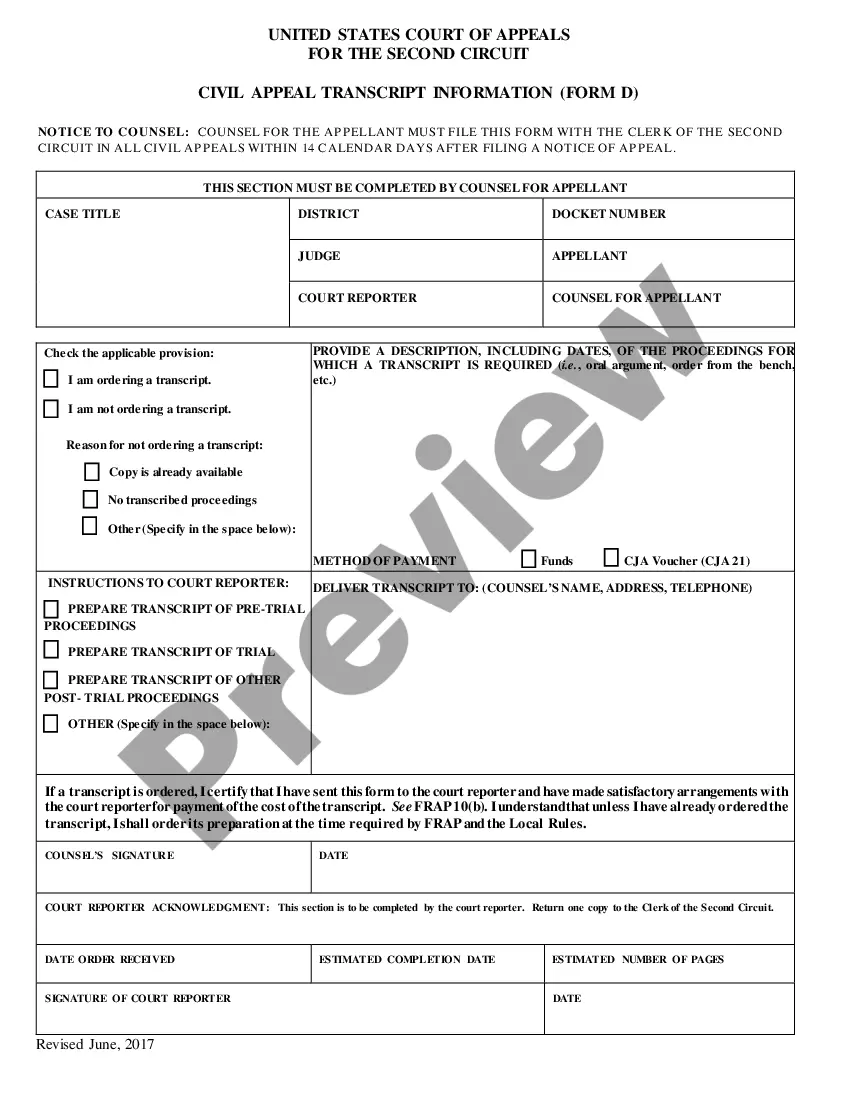
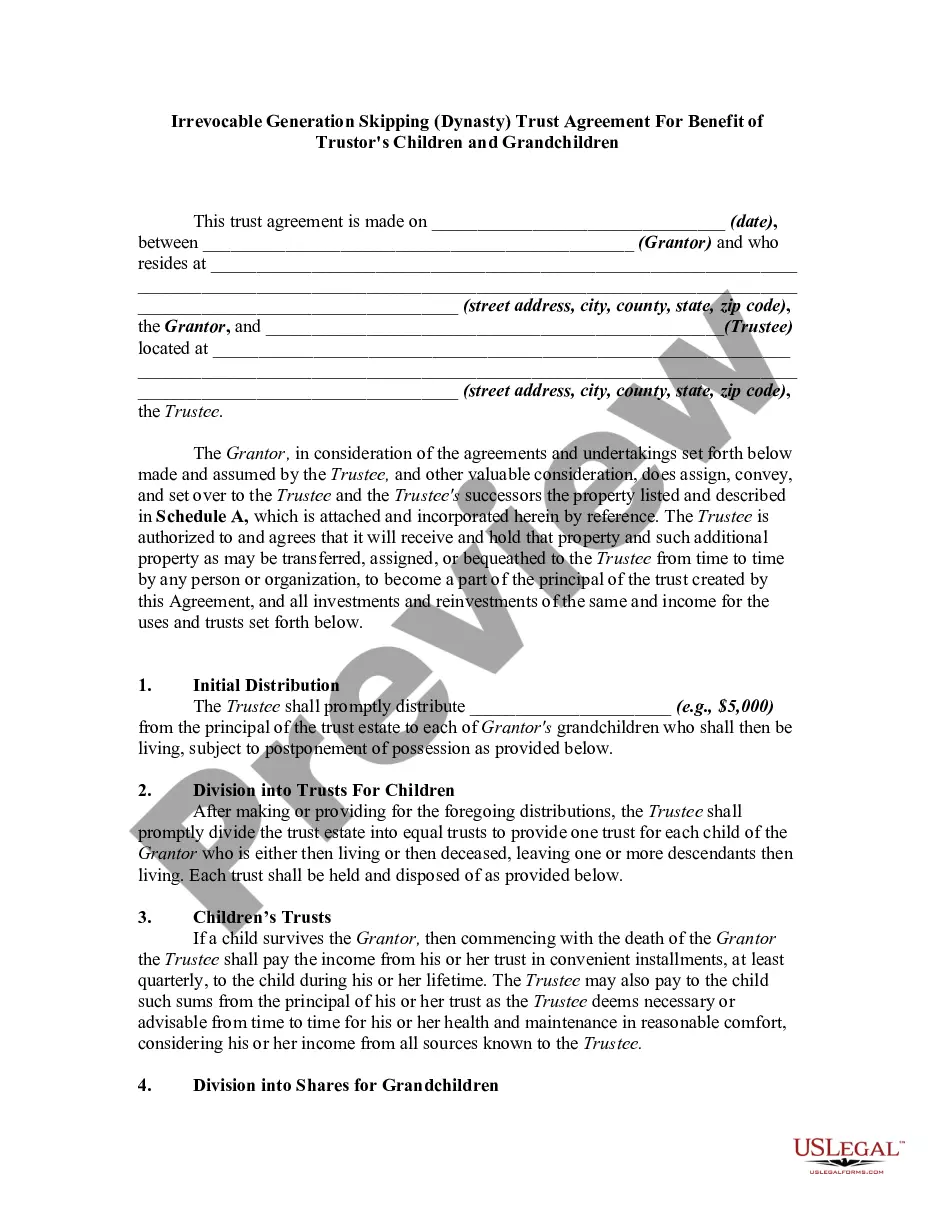

How to fill out Firm Offer?
US Legal Forms - one of the premier collections of legal documents in America - offers a broad selection of legal template files available for download or creation.
By using the site, you can locate thousands of forms for both business and personal purposes, organized by categories, states, or keywords. You will find the latest editions of forms such as the Massachusetts Firm Offer in moments.
If you have a monthly membership, Log In and download the Massachusetts Firm Offer from the US Legal Forms library. The Acquire button will be visible on every form you view. You have access to all previously saved forms within the My documents section of your account.
Process the payment. Use a credit card or PayPal account to finish the transaction.
Select the format and download the form onto your device. Make modifications. Complete, edit, and print and sign the saved Massachusetts Firm Offer. Each template you add to your account has no expiration date and is yours indefinitely. Therefore, if you wish to download or print another version, simply go to the My documents section and click on the form you need. Access the Massachusetts Firm Offer with US Legal Forms, the most extensive collection of legal document templates. Utilize thousands of professional and state-specific templates that meet your business or personal needs.
- Make sure you have selected the appropriate form for your city/state.
- Click the Review button to verify the details of the form.
- Examine the form description to confirm that you have selected the correct form.
- If the form does not meet your requirements, utilize the Search box at the top of the page to find one that does.
- If you are satisfied with the form, validate your selection by clicking the Acquire now button.
- Then, select your preferred pricing plan and provide your information to register for the account.
Form popularity
FAQ
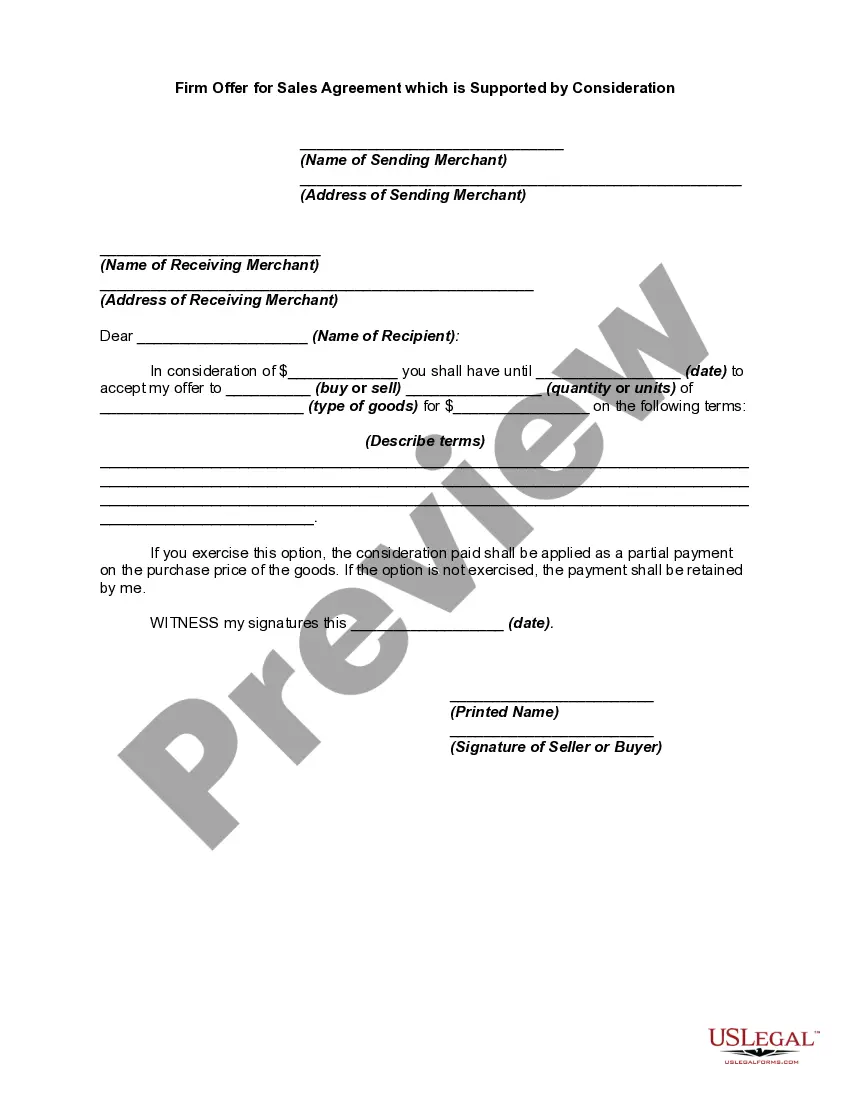
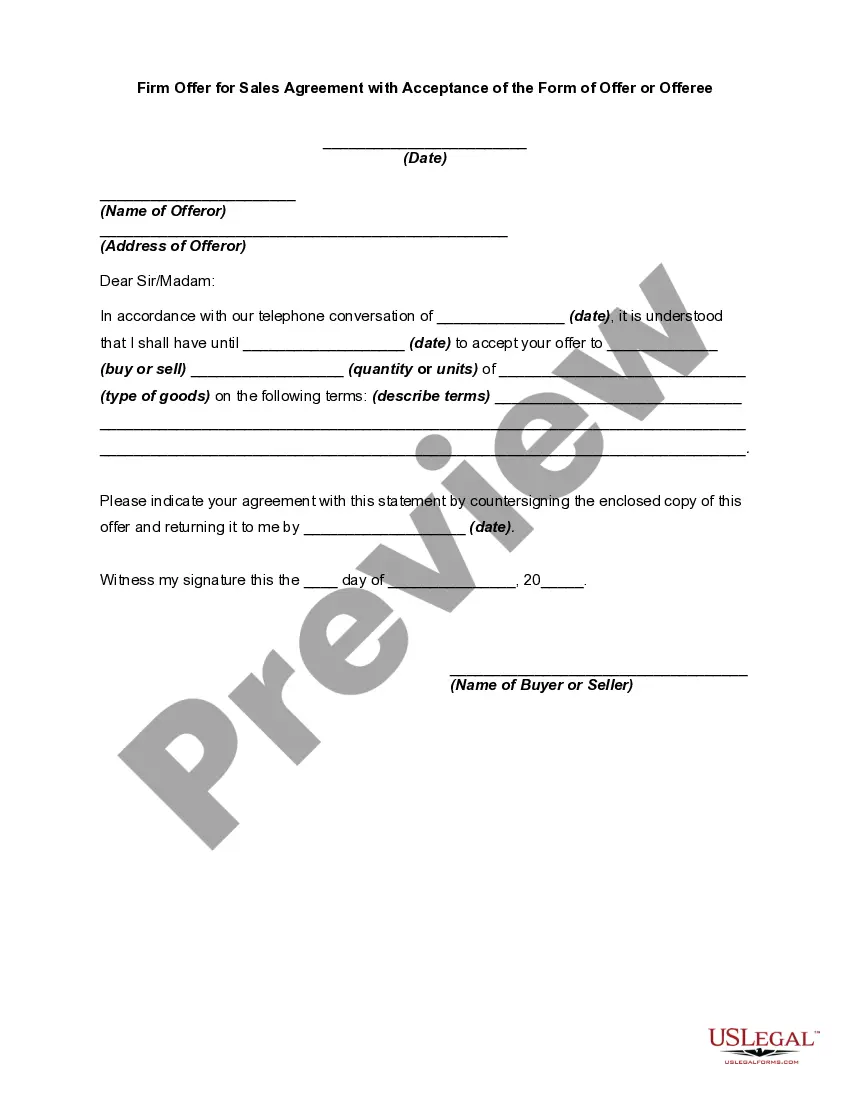
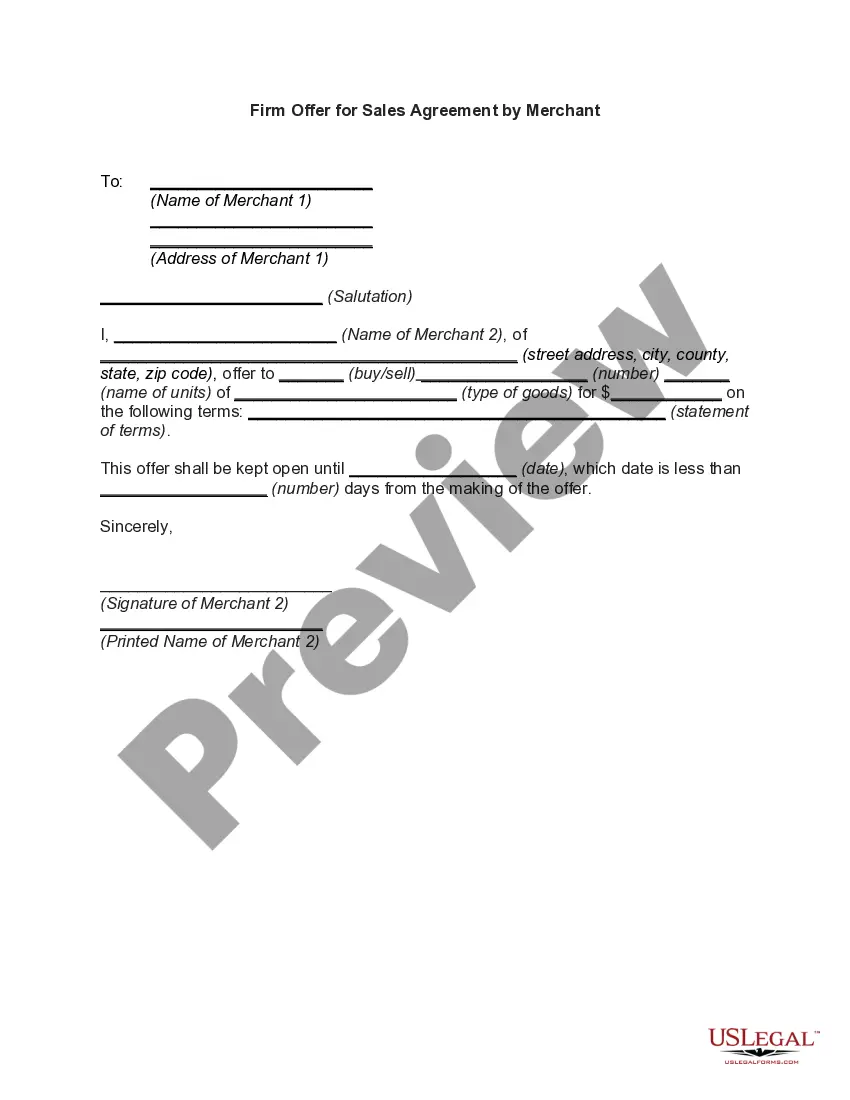
A firm offer refers to a proposal that remains open for acceptance for a specified period, without the fear of withdrawal. In Massachusetts, a firm offer must clearly state its terms and served as a guarantee that the offeror will abide by it for the duration indicated. Essentially, it provides security to the offeree, allowing them time to consider the proposal without pressure.
To get on a Massachusetts state contract, you should first register as a vendor with the Commonwealth. Follow the procurement process outlined on the state’s procurement website, which includes responding to Requests for Proposals (RFPs) and meeting eligibility criteria. Building relationships with state agencies can also improve your chances. Having a clear Massachusetts Firm Offer will strengthen your proposal and establish your commitment.
Yes, an out-of-state contractor can work in Massachusetts, but they must comply with state licensing and registration requirements. This may include obtaining a Massachusetts contractor’s registration and adhering to local regulations. Furthermore, a proper Massachusetts Firm Offer can help outline the contractual obligations between you and your clients, ensuring clarity and compliance with state laws.
The seller has received a higher offer after they signed a contract. Legally, a seller cannot back out of a contract because they have received a better offer after executing a contract. This becomes really tricky for a seller when they receive a backup offer they know is higher than the agreed-upon contract.
In Massachusetts, a signed standard offer to purchase real estate is a binding and enforceable contract to sell real estateeven if the offer to purchase form is subject to the signing of the purchase and sale agreement.
The firm offer will only last for the period of time stated in the offer. If no time period for the offer to remain open is stated, it will stay open for a maximum of three months.
When the offer is considered a firm offer, it has only gone one way and has not yet been accepted. For an offer to remain open for more than three months an agreement would have to be made with a promise of payment; the consideration.
Again the answer is of course. A buyer can back out of a real estate transaction before or at closing. Technically they can back out all the way up to money being disbursed. In Massachusetts a sale is not complete and monies and keys are not distributed until the deed is recorded.
An offer by a merchant to buy or sell goods in a signed writing which by its terms gives assurance that it will be held open is not revocable, for lack of consideration, during the time stated or if no time is stated for a reasonable time, but in no event may such period of irrevocability exceed three months; but any
There are always consequences for breaking a contract. For a seller, the consequences are far greater than for a buyer if you try to back out of a sale. The buyer can, in fact, sue for performance. The buyer, however, is typically held to the liability of no more than their escrow deposit.