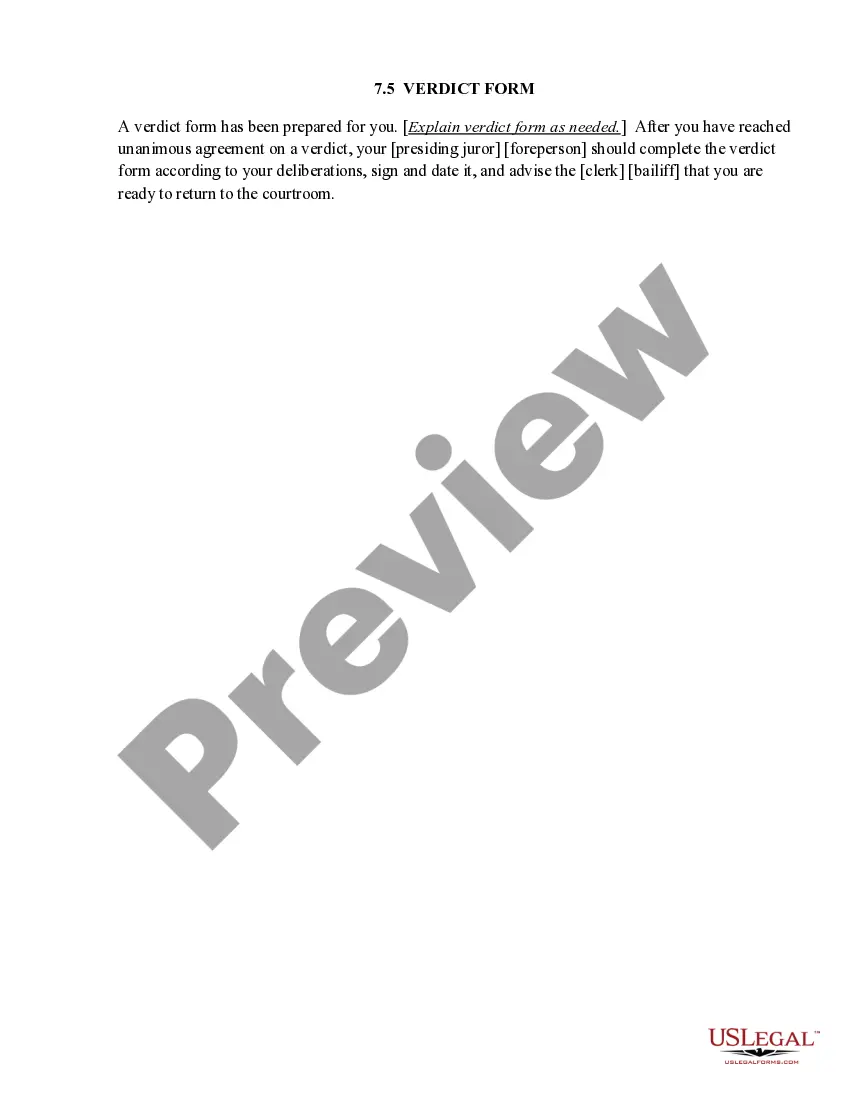
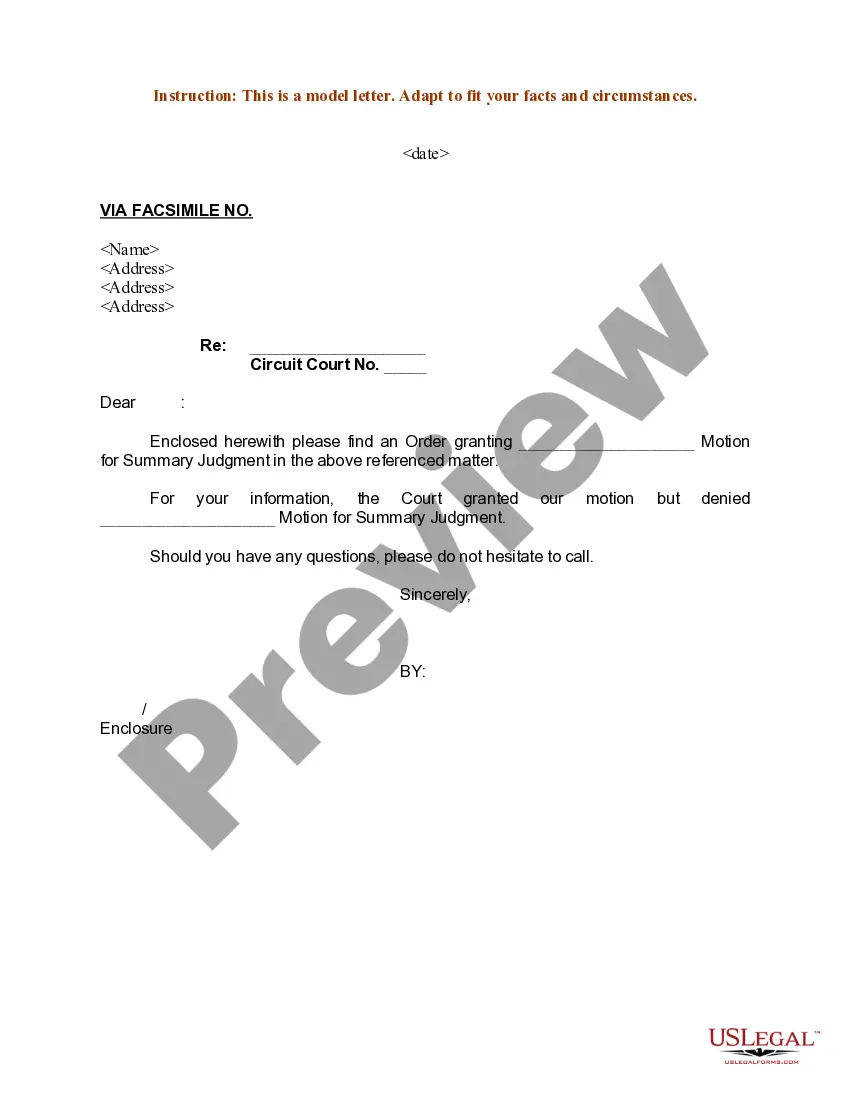
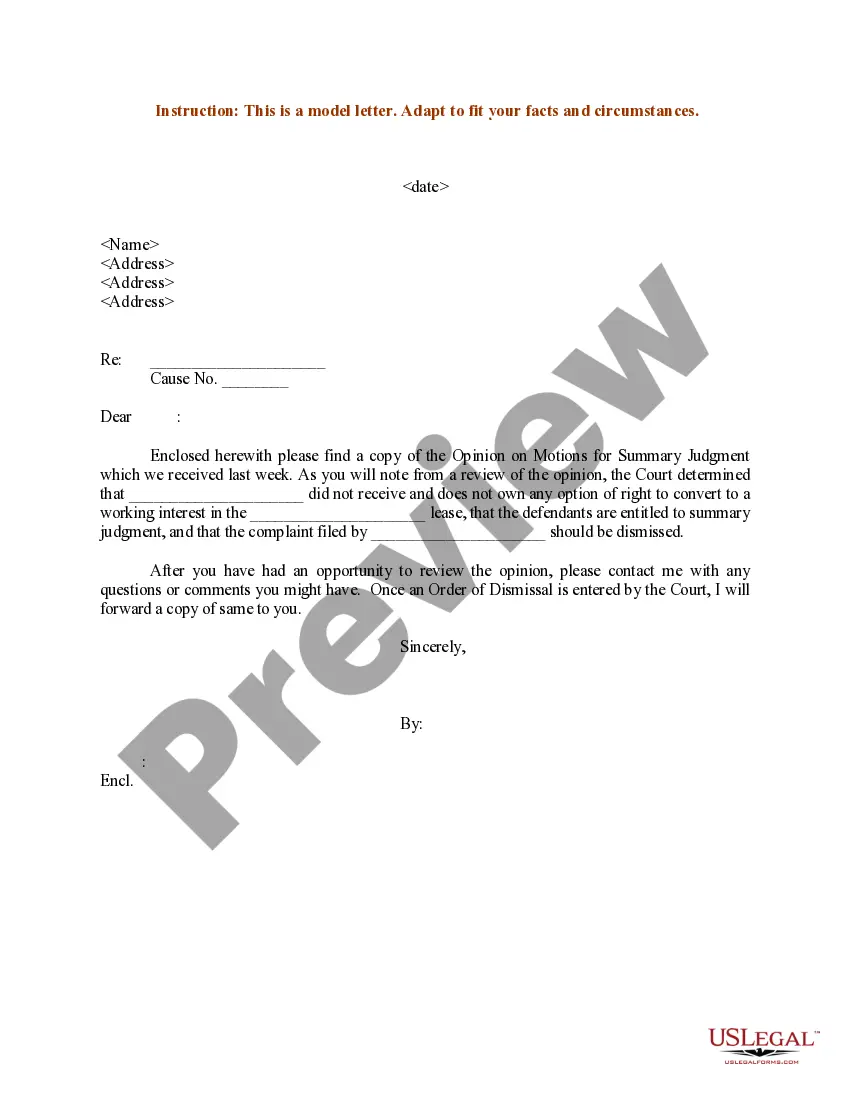
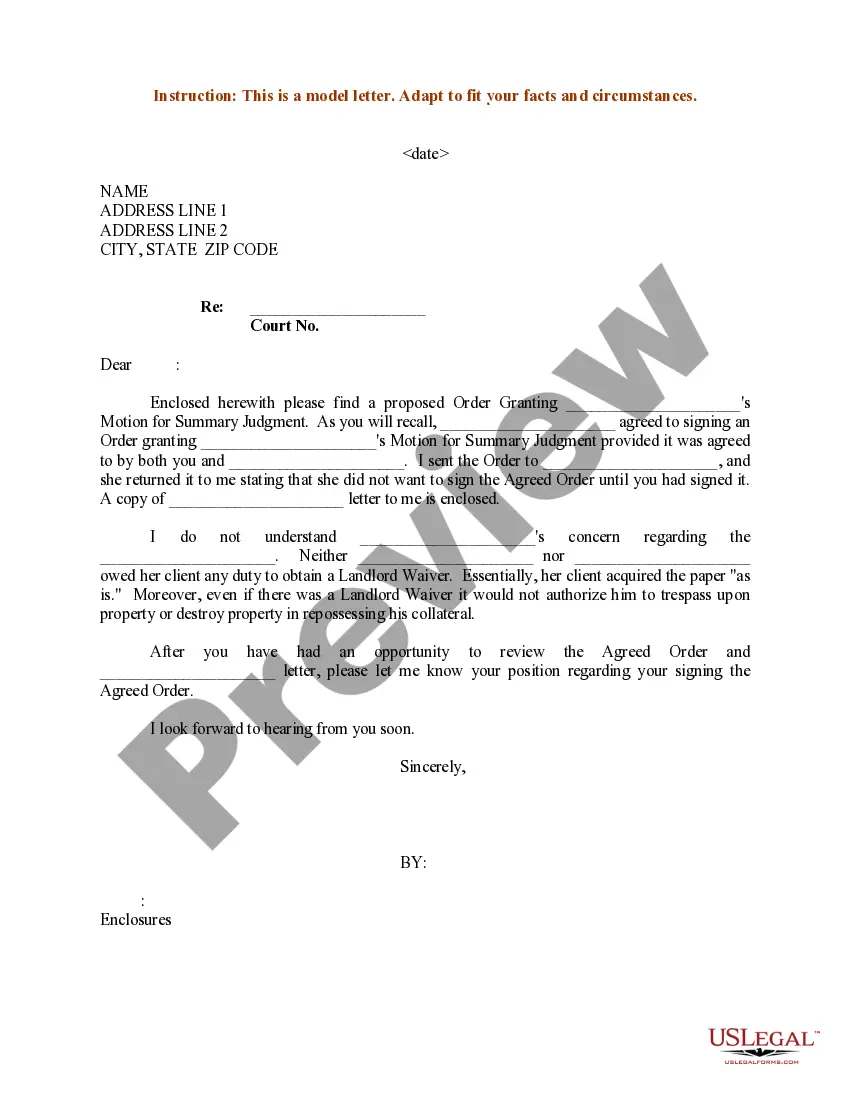
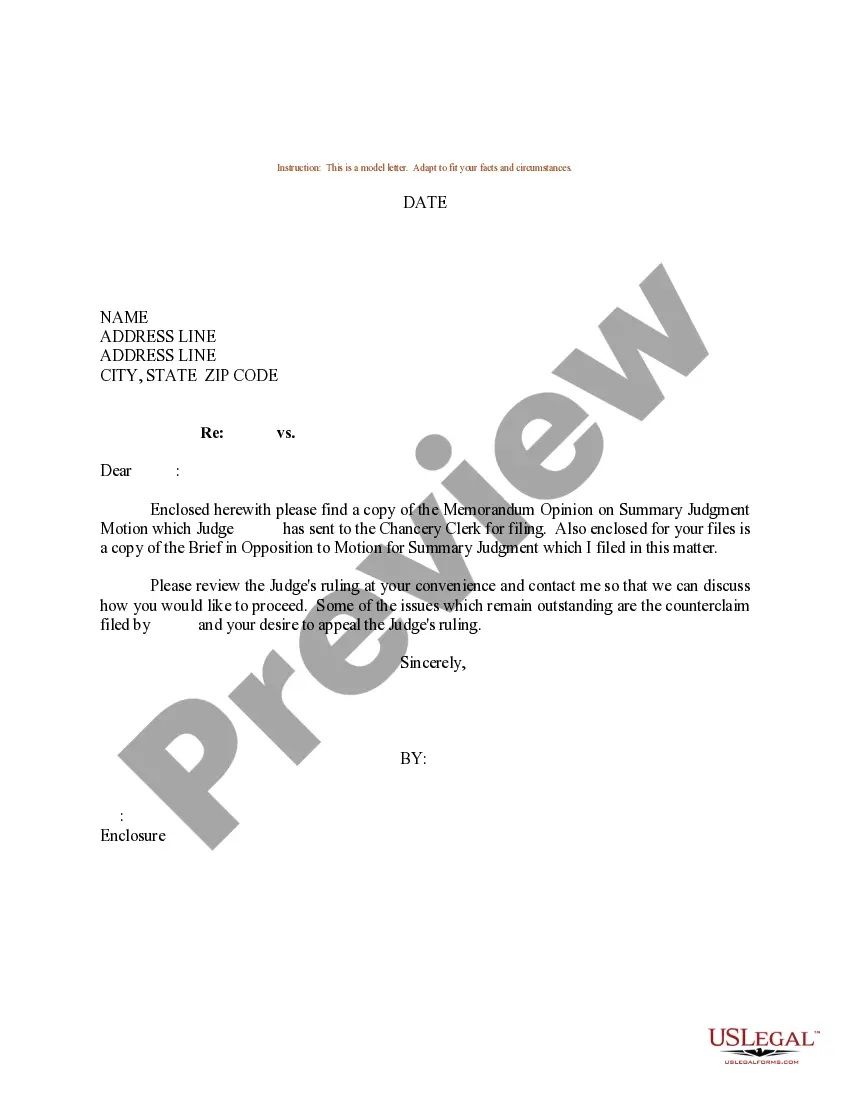
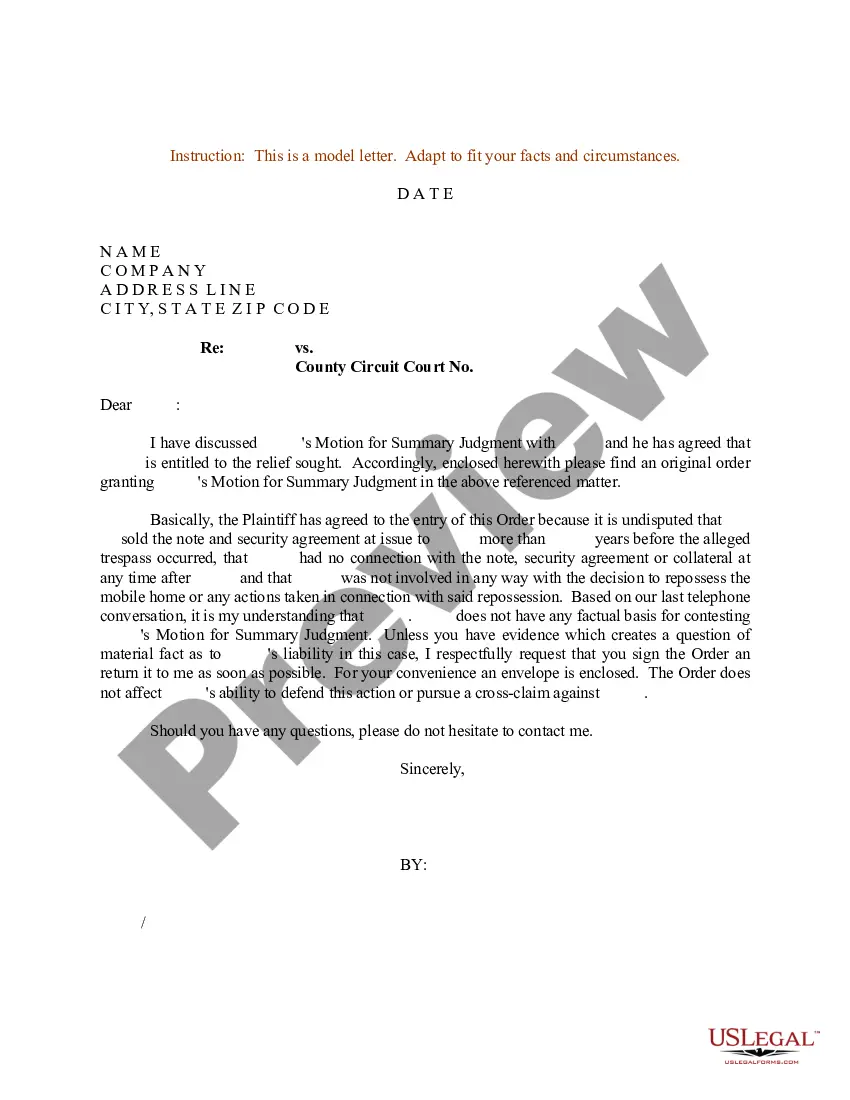
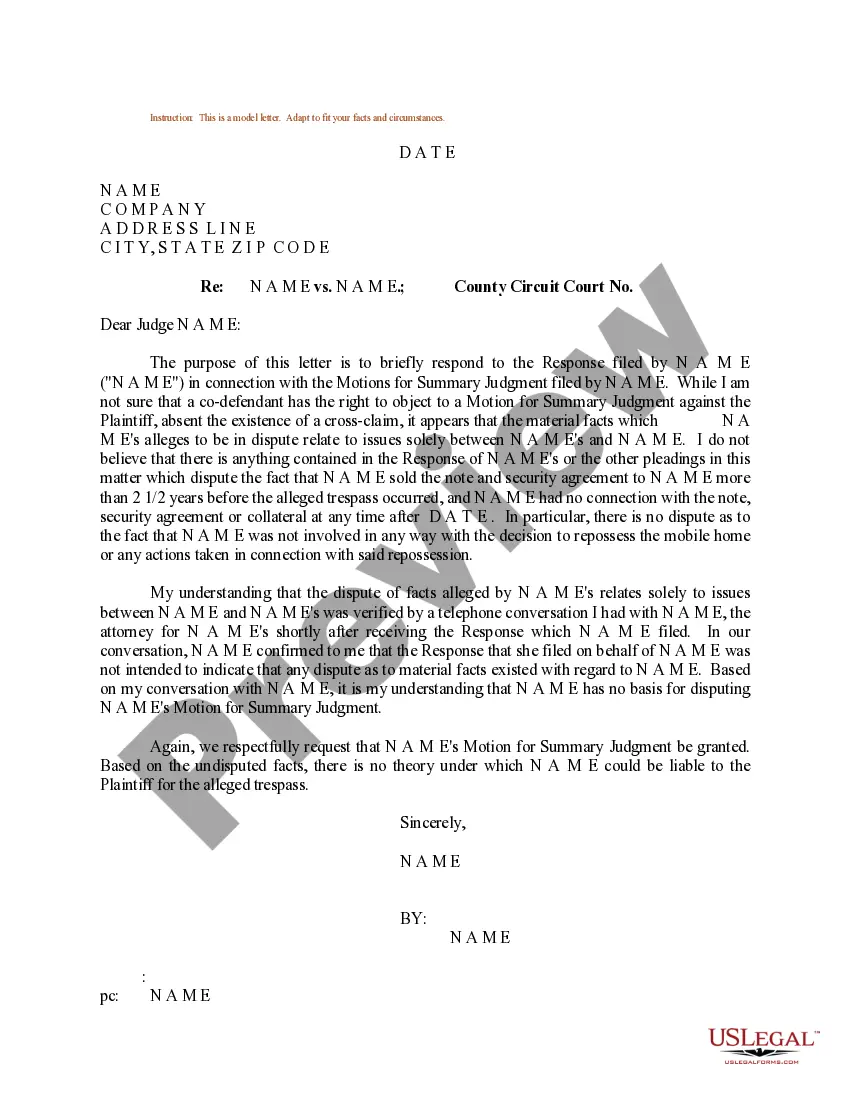
Massachusetts Sample Letter for Order Granting Motion for Summary Judgment
Description
Get your form ready online
Our built-in tools help you complete, sign, share, and store your documents in one place.
Make edits, fill in missing information, and update formatting in US Legal Forms—just like you would in MS Word.
Download a copy, print it, send it by email, or mail it via USPS—whatever works best for your next step.
Sign and collect signatures with our SignNow integration. Send to multiple recipients, set reminders, and more. Go Premium to unlock E-Sign.
If this form requires notarization, complete it online through a secure video call—no need to meet a notary in person or wait for an appointment.
We protect your documents and personal data by following strict security and privacy standards.

Make edits, fill in missing information, and update formatting in US Legal Forms—just like you would in MS Word.

Download a copy, print it, send it by email, or mail it via USPS—whatever works best for your next step.

Sign and collect signatures with our SignNow integration. Send to multiple recipients, set reminders, and more. Go Premium to unlock E-Sign.

If this form requires notarization, complete it online through a secure video call—no need to meet a notary in person or wait for an appointment.

We protect your documents and personal data by following strict security and privacy standards.
Looking for another form?



How to fill out Sample Letter For Order Granting Motion For Summary Judgment?
If you need to complete, acquire, or print authorized document templates, utilize US Legal Forms, the largest collection of legal forms available online.
Take advantage of the site's straightforward and convenient search to locate the documents you require.
Numerous templates for business and personal use are categorized by categories and states, or keywords. Use US Legal Forms to find the Massachusetts Sample Letter for Order Granting Motion for Summary Judgment with just a few clicks.
Step 5. Complete the purchase. You can use your credit card or PayPal account to finalize the transaction.
Step 6. Select the format of the legal form and download it to your device. Step 7. Complete, edit, and print or sign the Massachusetts Sample Letter for Order Granting Motion for Summary Judgment. Each legal document template you obtain is yours permanently. You have access to every form you purchased within your account. Click on the My documents section and choose a form to print or download again. Be proactive and obtain, and print the Massachusetts Sample Letter for Order Granting Motion for Summary Judgment with US Legal Forms. There are millions of professional and state-specific forms available for your business or personal needs.
- If you are already a US Legal Forms customer, Log In to your account and click on the Download button to retrieve the Massachusetts Sample Letter for Order Granting Motion for Summary Judgment.
- You can also access forms you have previously obtained in the My documents tab of your account.
- If you are using US Legal Forms for the first time, follow the steps below.
- Step 1. Ensure you have selected the form for the correct area/region.
- Step 2. Use the Preview option to review the form's content. Don't forget to read the details.
- Step 3. If you are not satisfied with the form, use the Search field at the top of the screen to find other versions of the legal form template.
- Step 4. Once you have found the form you want, click on the Purchase now button. Choose the pricing plan you prefer and enter your information to register for an account.
Form popularity
FAQ
What Is a Summary Judgment Motion? A motion for summary judgment is when a litigant in a case, either the plaintiff or the defendant, asks the court to end the case without holding a trial.
A motion for summary judgment must be accompanied by a statement of the material facts as to which the moving party contends there is no genuine issue to be tried, set forth in consecutively numbered paragraphs, with page or paragraph references to supporting pleadings, depositions, answers to interrogatories, ...
A party may move for summary judgment at any time after the expiration of 20 days from the commencement of the action or after service of a motion for summary judgment by the adverse party. The movant must serve the motion for summary judgment at least 40 days before the time fixed for the hearing.
Rule 56(c)(4) provides that a formal affidavit or a written unsworn declaration that complies with 28 U.S.C. § 1746 can be used to support or oppose a motion for summary judgment.
The court shall grant summary judgment if the movant shows that there is no genuine dispute as to any material fact and the movant is entitled to judgment as a matter of law. The court shall state on the record the reasons for granting or denying the motion.
When a motion for summary judgment is denied, the nonmoving party achieves a form of premium that enables a case to settle for an additional amount. Put simply, the settlement value of a case increases when a motion for summary judgment is denied. Thus, denials of summary judgment up the ante in the litigation game.