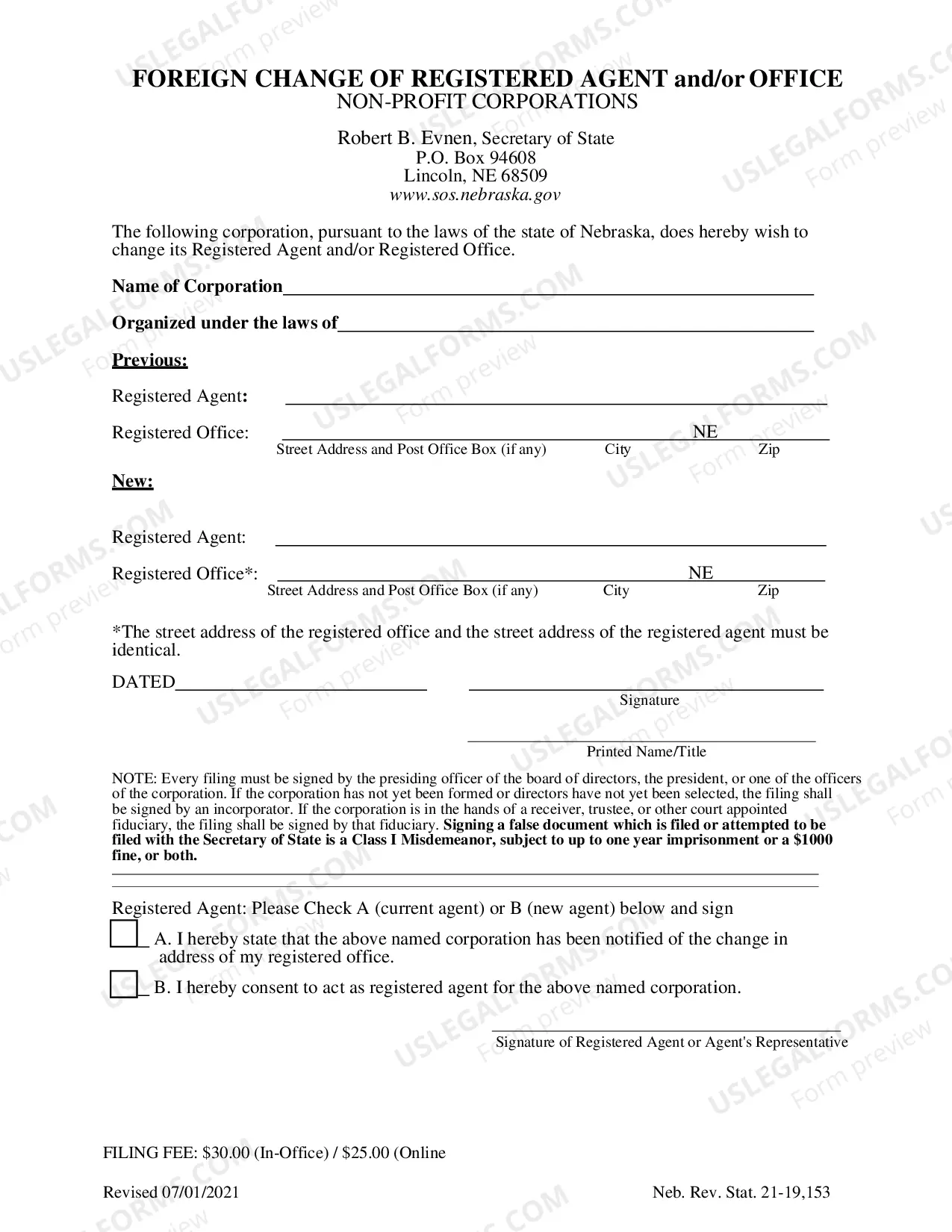
Massachusetts Loan Modification Agreement (Fixed Interest Rate)
Understanding this form
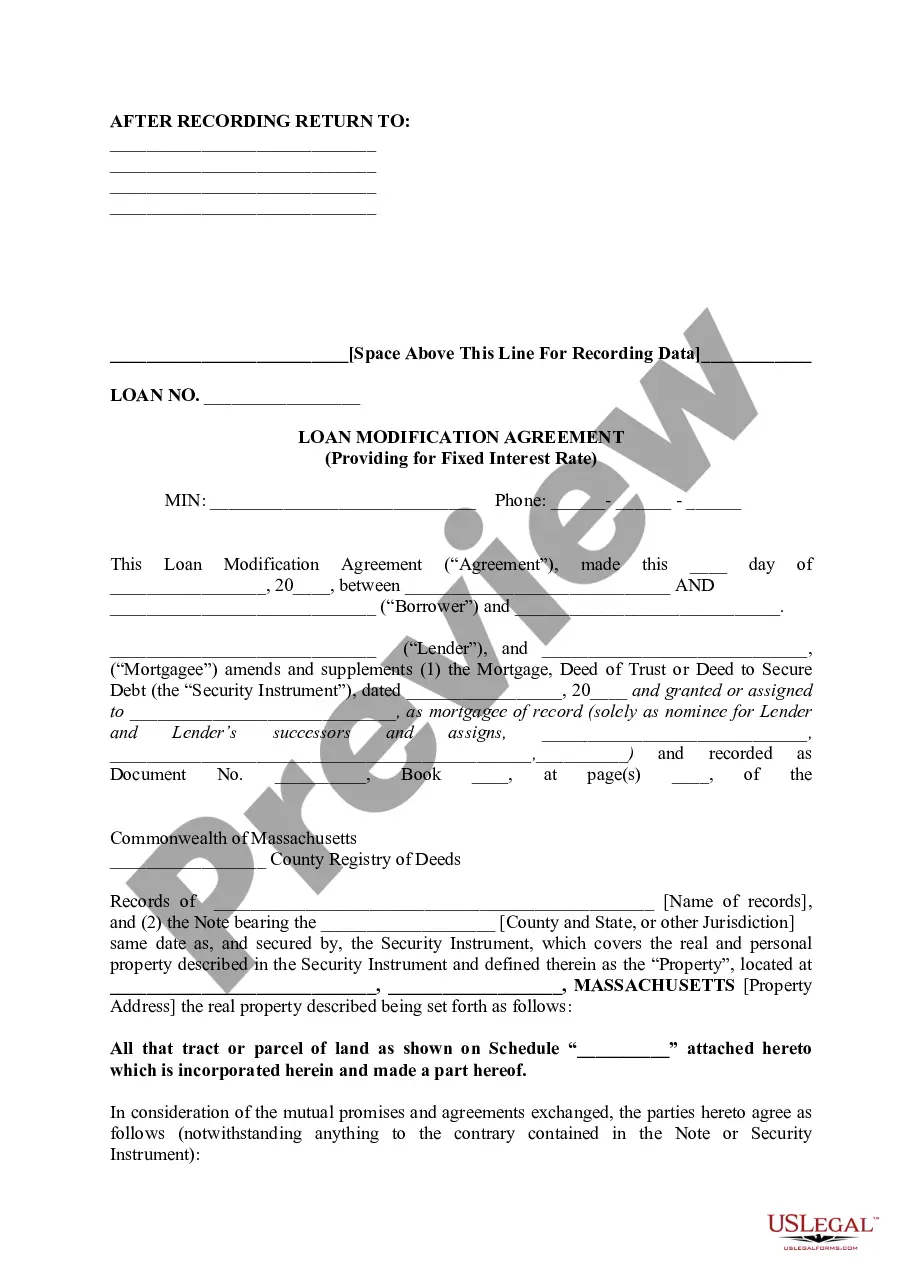
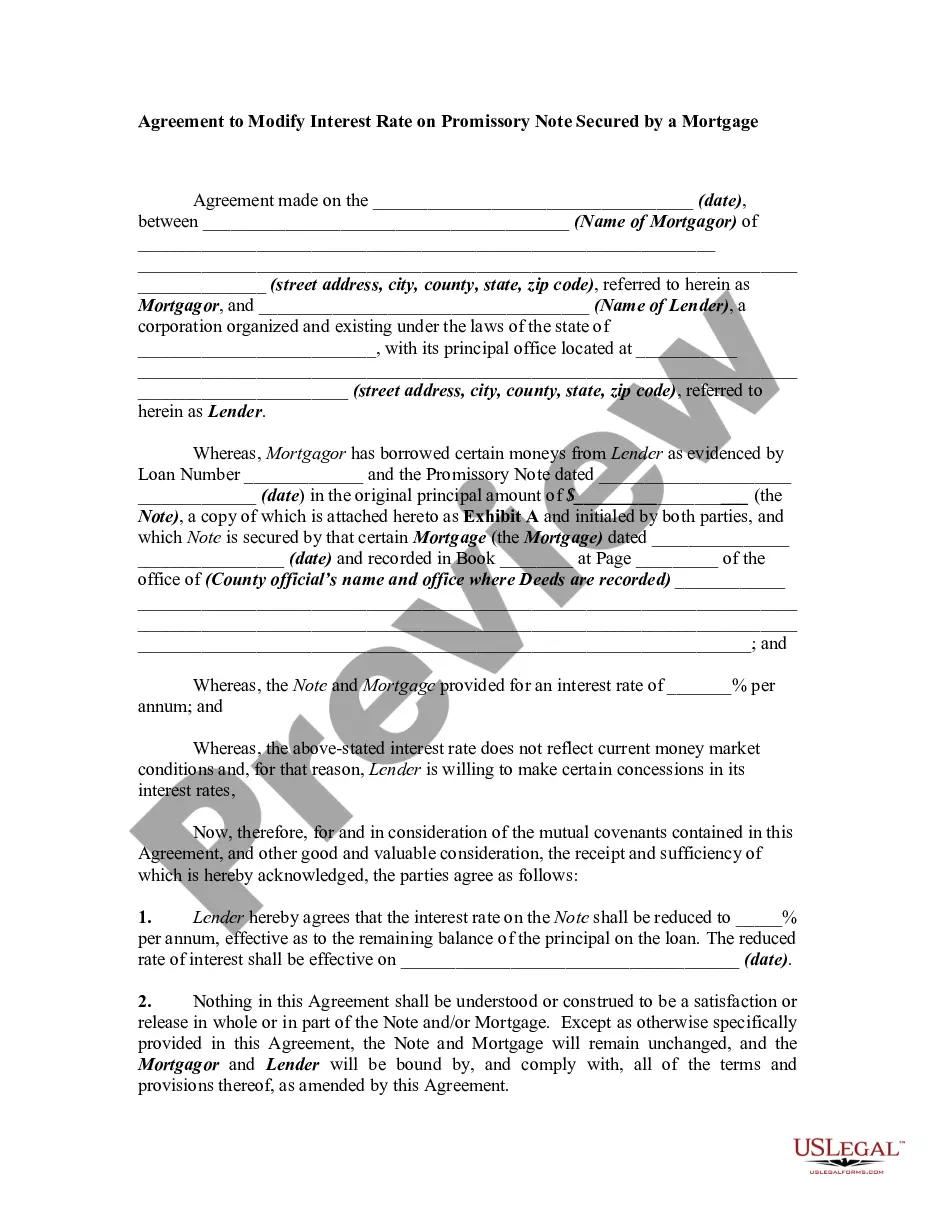
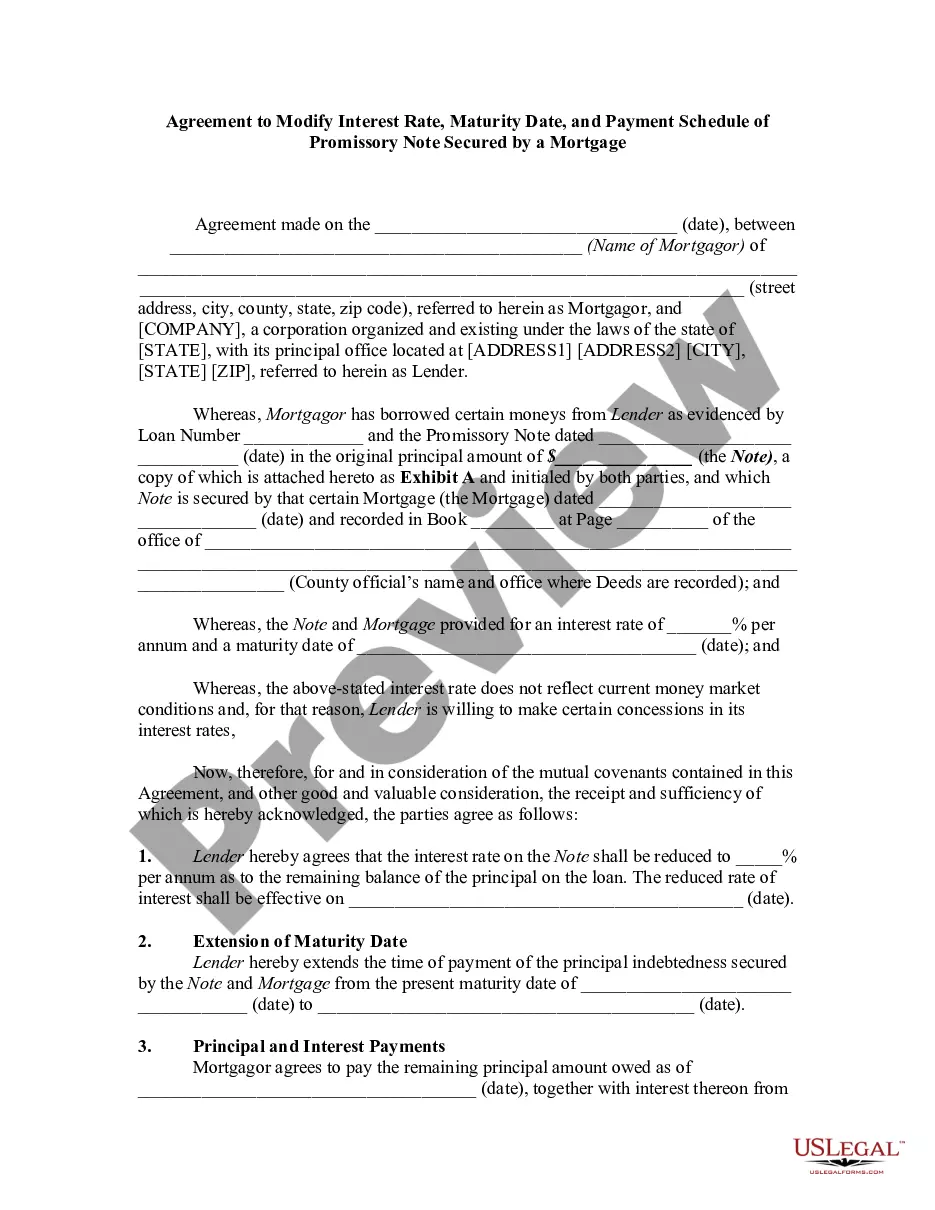
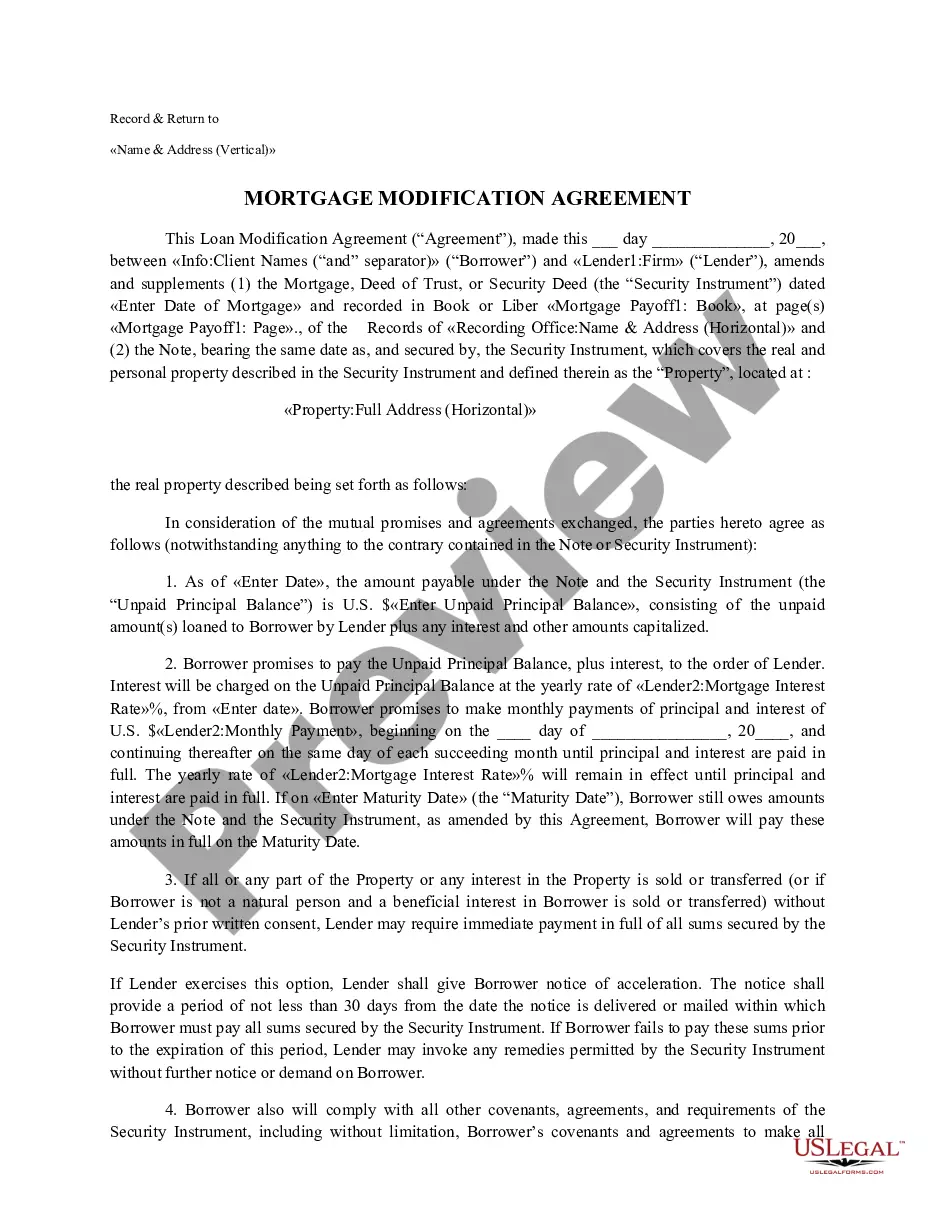
The Loan Modification Agreement (Fixed Interest Rate) is a legal document that formalizes a change to the terms of an existing loan. Unlike typical loan agreements, this modification specifically sets a fixed interest rate, detailing the new payment terms, outstanding balance, and timelines. This agreement ensures that both the borrower and lender are clear about the revised terms, making it legally binding and enforceable.
Form components explained
- Loan number: Identifies the specific loan being modified.
- Parties involved: Details the lender, borrower, and any mortgagee involved in the agreement.
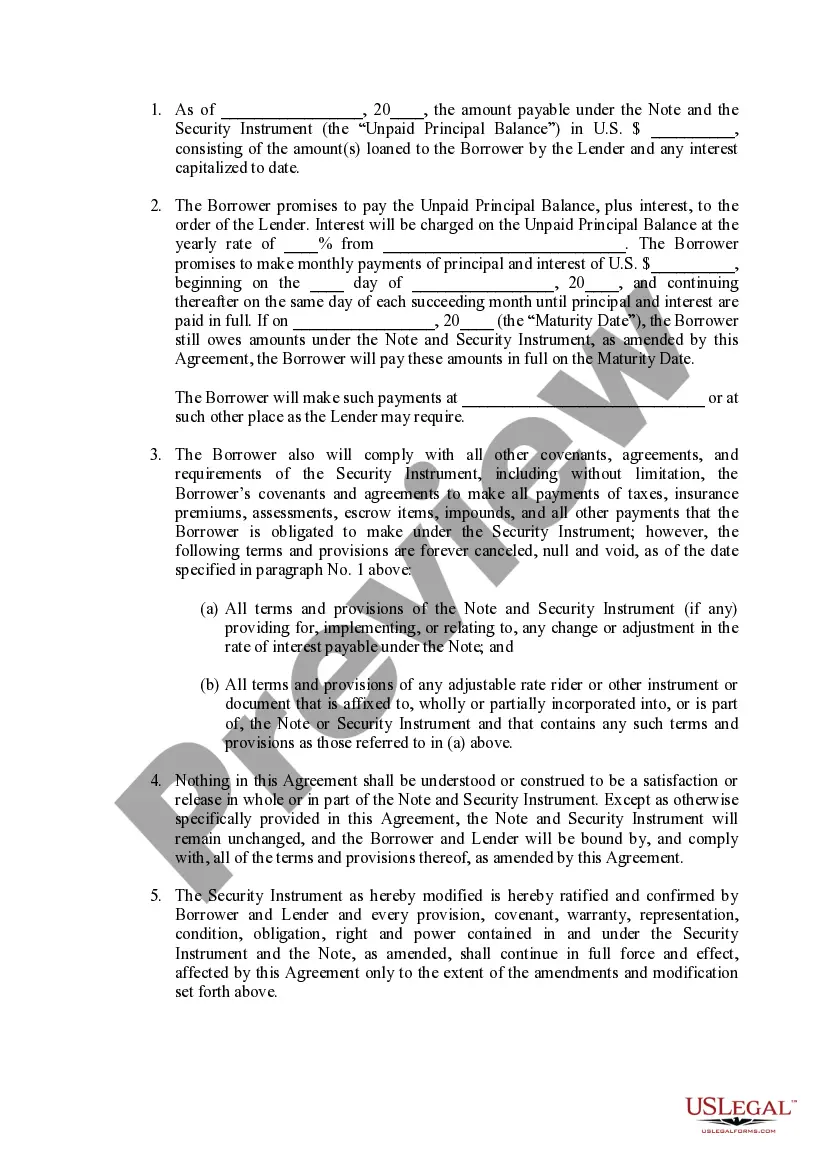
- Unpaid principal balance: States the current amount owed by the borrower.
- Interest rate: Specifies the new fixed interest rate applicable to the loan.
- Payment terms: Outlines the schedule for monthly payments and maturity date.
- Compliance with security instrument: Ensures continued obligations under the original loan terms.

Situations where this form applies
This agreement is useful in several scenarios, such as when a borrower is struggling to meet payment obligations and negotiates revised loan terms with the lender. It's common during financial hardships, interest rate changes, or when refinancing is not an option. Using this form can help clarify new obligations and stabilize the borrowerâs financial situation.
Who can use this document
This form is intended for:
- Borrowers looking to modify their existing loan with a lender.
- Lenders who need to formalize changes to loan agreements.
- Mortgagees involved in the loan modification process.
How to complete this form
- Identify the loan number, including all parties involved in the agreement.
- Specify the unpaid principal balance and the new fixed interest rate.
- Detail the payment terms, including the start date and monthly payment amount.
- Ensure compliance with the original security instrument obligations.
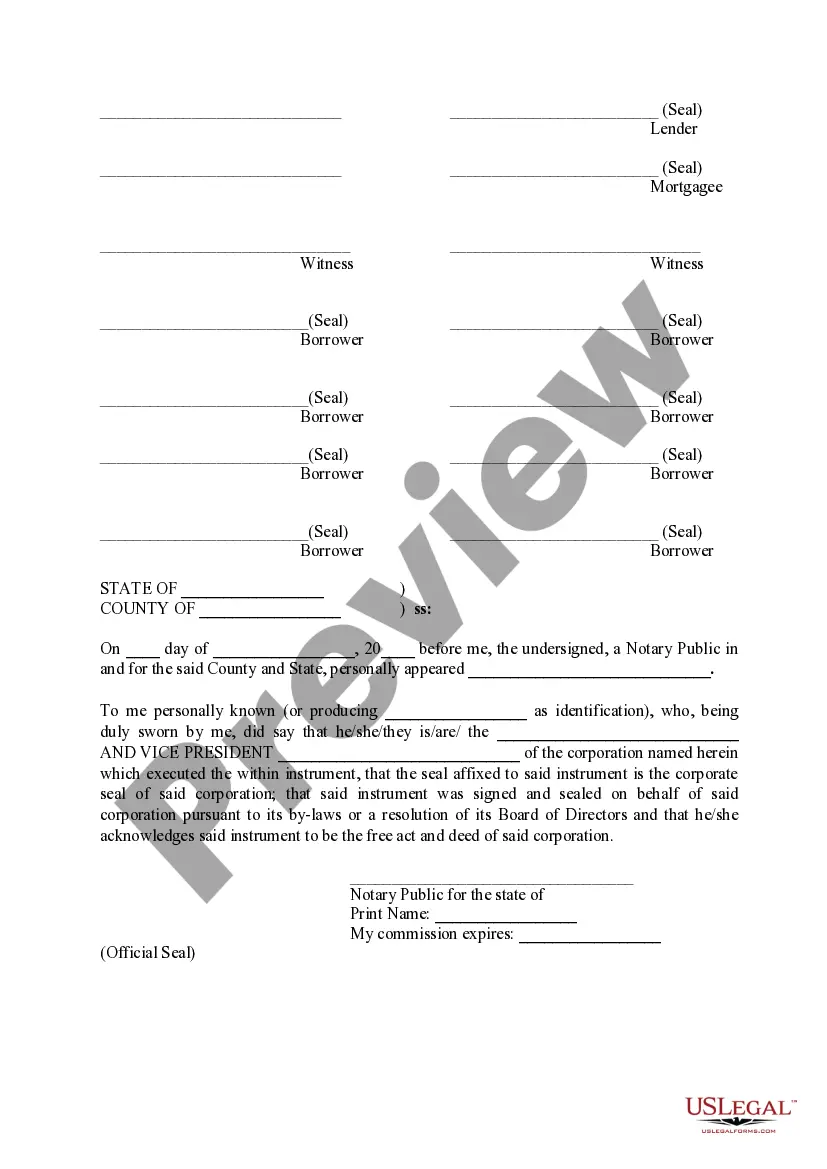
- Sign and date the document, and include any necessary notarizations.
Notarization requirements for this form
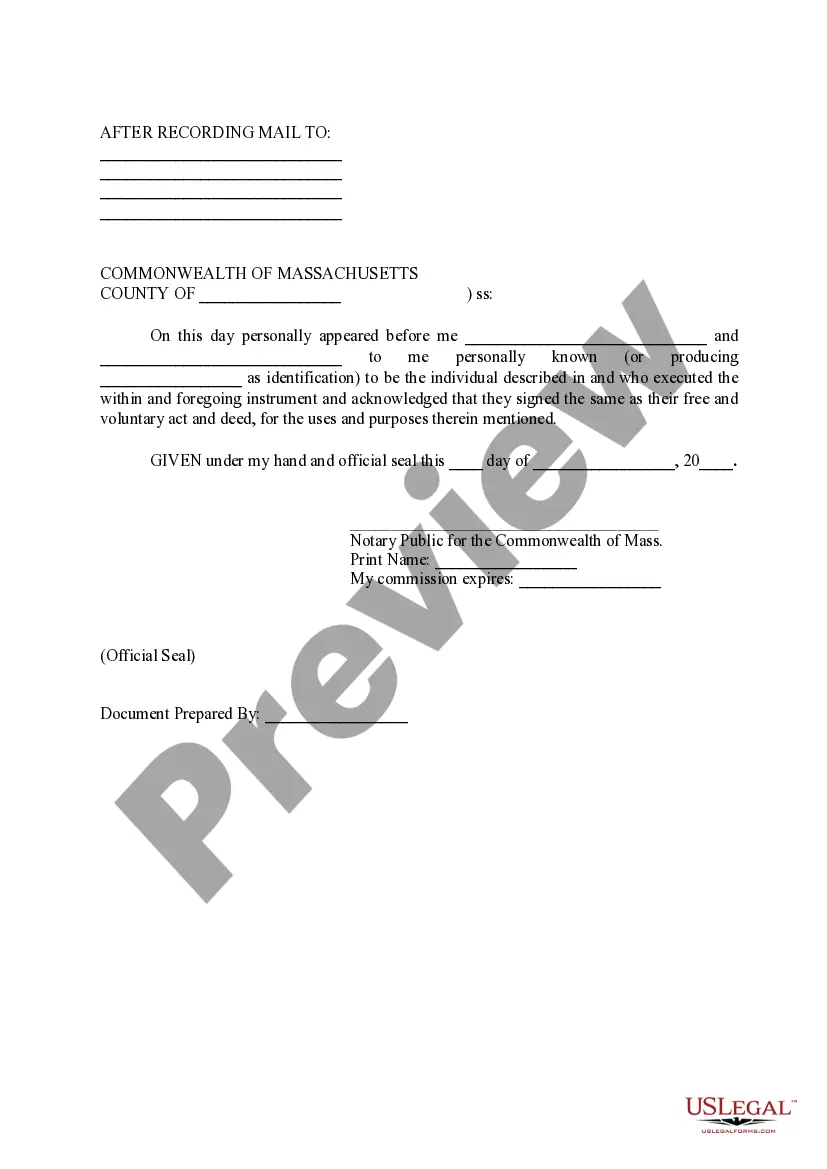
Yes, this form must be notarized to be legally valid. Notarization helps verify the identities of the parties involved and their understanding of the document. You can utilize US Legal Forms' integrated online notarization service, available 24/7, ensuring a secure process without the need for travel.
Get your form ready online
Our built-in tools help you complete, sign, share, and store your documents in one place.
Make edits, fill in missing information, and update formatting in US Legal Forms—just like you would in MS Word.
Download a copy, print it, send it by email, or mail it via USPS—whatever works best for your next step.
Sign and collect signatures with our SignNow integration. Send to multiple recipients, set reminders, and more. Go Premium to unlock E-Sign.
If this form requires notarization, complete it online through a secure video call—no need to meet a notary in person or wait for an appointment.
We protect your documents and personal data by following strict security and privacy standards.

Make edits, fill in missing information, and update formatting in US Legal Forms—just like you would in MS Word.

Download a copy, print it, send it by email, or mail it via USPS—whatever works best for your next step.

Sign and collect signatures with our SignNow integration. Send to multiple recipients, set reminders, and more. Go Premium to unlock E-Sign.

If this form requires notarization, complete it online through a secure video call—no need to meet a notary in person or wait for an appointment.

We protect your documents and personal data by following strict security and privacy standards.
Common mistakes
- Not including all necessary parties in the agreement.
- Forgetting to fill in the new payment terms and interest rate.
- Neglecting to specify the maturity date for the modified loan.
- Failing to have the document notarized where required.
Advantages of online completion
- Convenient access to the form from anywhere with an internet connection.
- Editable fields allow customization for individual loan terms.
- Ensures up-to-date legal language as drafted by licensed attorneys.
- Quick download eliminates the need for physical paperwork.
Looking for another form?
Form popularity
FAQ
The rules for loan modification can vary, but several key points apply in Massachusetts. A Massachusetts Loan Modification Agreement (Fixed Interest Rate) typically must comply with state and federal laws to be valid. Factors such as borrower eligibility, documentation requirements, and process timelines are crucial. Utilizing platforms like US Legal Forms can help you access the necessary templates and guidance for meeting all legal obligations effectively.
Yes, a loan modification generally needs to be recorded to ensure it is legally recognized. When you enter a Massachusetts Loan Modification Agreement (Fixed Interest Rate), documenting the changes helps protect you and any future buyers or lenders. Recording the modification provides a clear record of current terms, preventing potential future disputes. It's advisable to consult with a professional to navigate this process effectively.
In Massachusetts, the maximum interest rate for a loan largely depends on the type of loan and the lender. Typically, for a Massachusetts Loan Modification Agreement (Fixed Interest Rate), the rate is subject to limits defined by state law. It's essential to review your specific agreement, as rates can significantly impact your financial obligations. Ensuring compliance with these regulations can lead to more manageable payments.
Yes, a mortgage loan modification can change your interest rate. For example, a Massachusetts Loan Modification Agreement (Fixed Interest Rate) typically allows you to secure a fixed interest rate, potentially lower than your original rate. This change can stabilize your monthly payments and provide long-term security. Before proceeding, consider the impact on your overall financial situation.
The 10 percent test for loan modification refers to the standard by which a lender reviews whether the modification will change the payment terms by at least 10%. This metric helps ensure that changes create long-term benefits for both parties. A Massachusetts Loan Modification Agreement (Fixed Interest Rate) that meets this criterion can offer significant advantages, making the payments more feasible and preventing future financial challenges.
The 2% rule for refinancing suggests that you should consider refinancing if the new interest rate is at least 2% lower than your existing rate. Applying this rule can help you save significantly over the loan term. However, when you choose a Massachusetts Loan Modification Agreement (Fixed Interest Rate), you may still achieve a more favorable rate without incurring refinancing costs. This approach allows for financial flexibility while maintaining a manageable payment plan.
Loan modifications are documented through a formal agreement between you and your lender. This documentation outlines the new terms and conditions, ensuring both parties are clear on the revised arrangement. When executing a Massachusetts Loan Modification Agreement (Fixed Interest Rate), it is crucial to retain copies of all documents for your records. This practice protects your interests and provides clarity moving forward.
When you pursue a loan modification, your lender reviews your financial situation. This assessment determines new terms, which may include a reduced interest rate or adjusted payment schedule. A Massachusetts Loan Modification Agreement (Fixed Interest Rate) allows you to settle on a fixed rate that can stabilize your monthly expenses. It's a step towards regaining financial control.
A mortgage loan modification often involves altering the terms of your existing loan to make payments more manageable. For instance, a Massachusetts Loan Modification Agreement (Fixed Interest Rate) may lower your monthly payments or extend the loan term. This change can provide financial relief and help you avoid foreclosure while keeping your home. Overall, it makes your loan more sustainable.
The maximum interest rate allowed by law in Massachusetts can vary based on the type of loan and the borrower's situation. For most consumer loans, Massachusetts law caps the interest rate at 20%. If you are considering a Massachusetts Loan Modification Agreement (Fixed Interest Rate), be sure to discuss interest terms with your lender to ensure compliance with state regulations. This ensures that you remain informed and protected.