Massachusetts Flood Zone Statement and Authorization
What this document covers
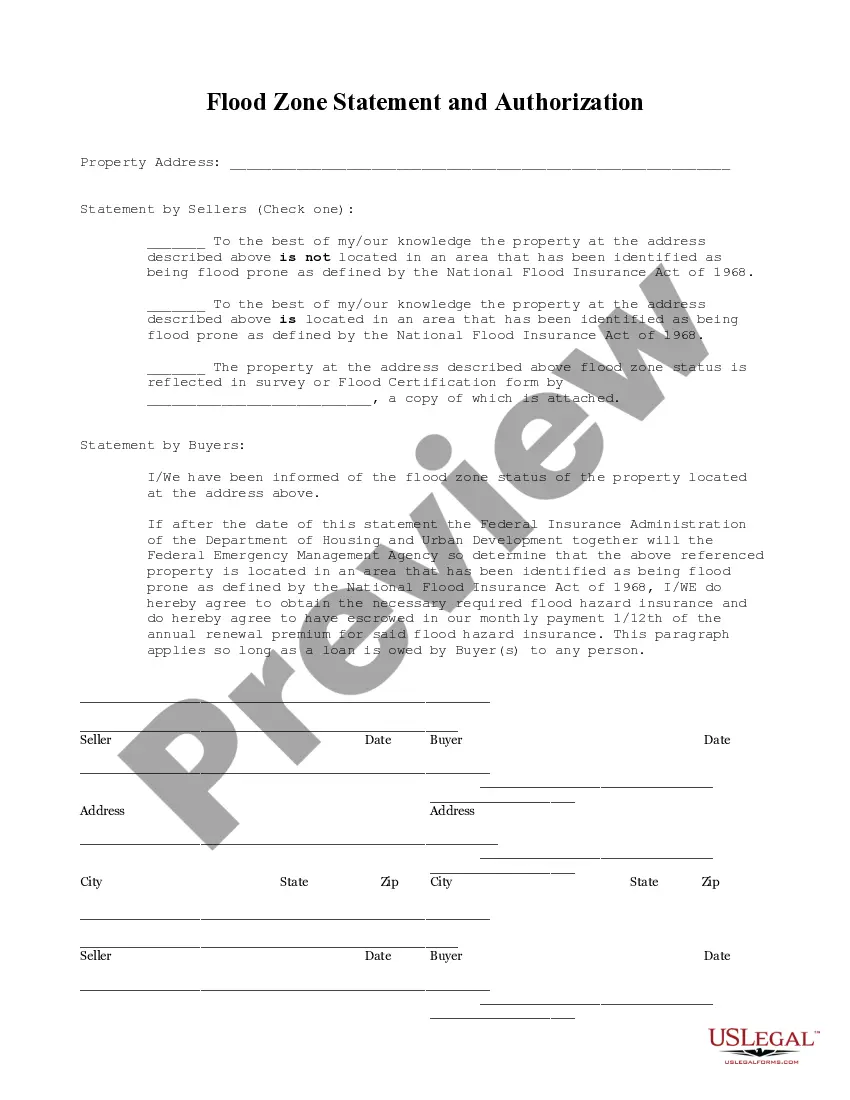
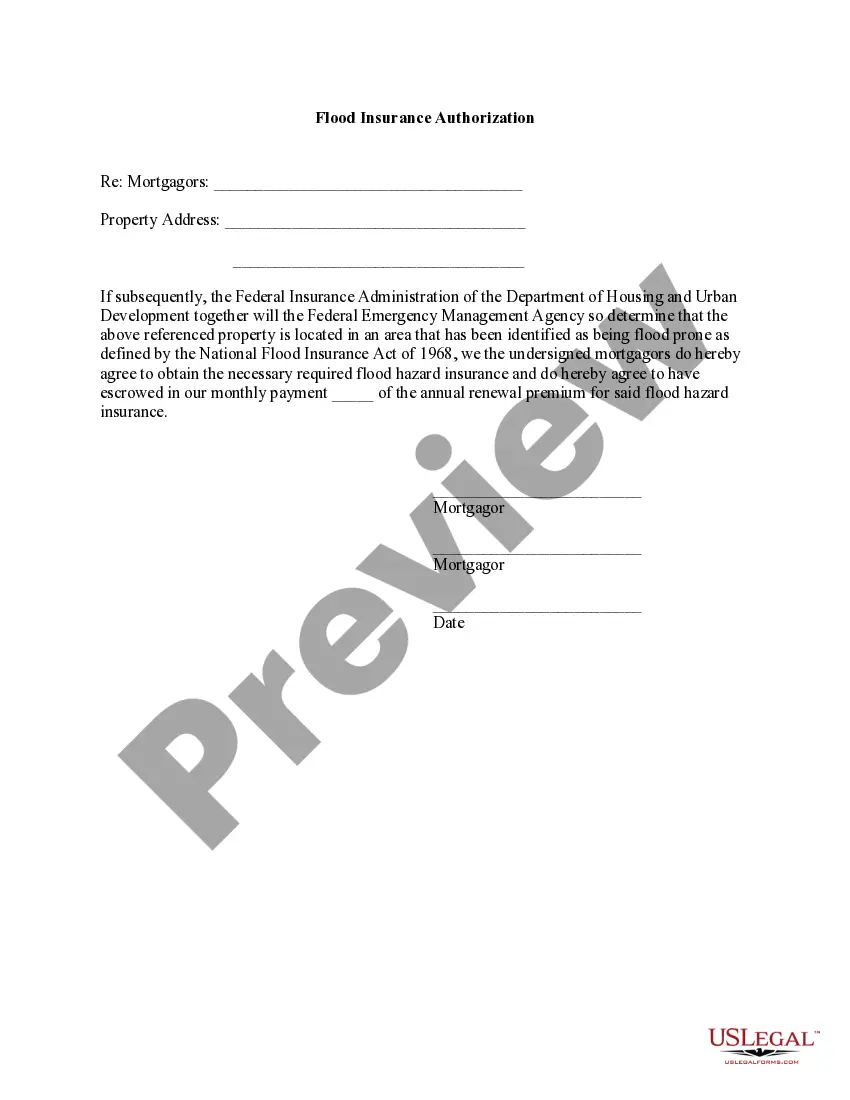
The Flood Zone Statement and Authorization is a legal document used during real estate transactions. It allows sellers to disclose the flood zone status of the property while providing buyers with crucial information regarding potential flood risks. This form is unique because it not only addresses the seller's knowledge of the propertyâs flood status but also requires buyers to acknowledge their responsibility to obtain flood insurance should the property be determined to be in a flood zone in the future. This differs from general property disclosure forms, focusing specifically on flood risk and insurance obligations.
Main sections of this form
- Property address: Clearly specifies the location of the real estate in question.
- Sellers' statement: Sellers disclose whether they believe the property is in a flood-prone area.
- Buyers' acknowledgment: Buyers confirm they understand the flood zone status and agree to secure flood insurance if necessary.
- Signature fields: Spaces for signatures and dates for both sellers and buyers, ensuring legal validity.
- Flood certification attachment: Optional but provides additional verification of the flood zone status.
When this form is needed
This form is necessary in real estate transactions when a property is located in an area where flood risks may be a concern. It is particularly relevant if the property is being sold or purchased in regions prone to flooding. Using this form can help clarify responsibilities regarding flood insurance, protecting both buyers and sellers from future liabilities relating to flood damage.
Who needs this form
- Sellers of real estate: Individuals or entities selling a property located in a flood-prone area.
- Buyers of real estate: Individuals or entities purchasing property who need to understand potential flood liabilities.
- Real estate agents: Professionals facilitating the sale or purchase of property who need to ensure proper disclosure.
How to complete this form
- Identify the property: Enter the complete address of the property being sold.
- Check the seller's statement: Indicate whether the property is believed to be in a flood-prone area.
- Include flood certification details: If applicable, attach any flood certification documents.
- Buyers acknowledge the flood risk: Buyers must confirm they understand their obligations regarding flood insurance.
- Sign and date the form: Both sellers and buyers need to sign and date the document in the designated areas.
Does this form need to be notarized?
This form does not typically require notarization unless specified by local law. However, it is advisable to verify any specific requirements based on the jurisdiction where the property is located.
Get your form ready online
Our built-in tools help you complete, sign, share, and store your documents in one place.
Make edits, fill in missing information, and update formatting in US Legal Forms—just like you would in MS Word.
Download a copy, print it, send it by email, or mail it via USPS—whatever works best for your next step.
Sign and collect signatures with our SignNow integration. Send to multiple recipients, set reminders, and more. Go Premium to unlock E-Sign.
If this form requires notarization, complete it online through a secure video call—no need to meet a notary in person or wait for an appointment.
We protect your documents and personal data by following strict security and privacy standards.

Make edits, fill in missing information, and update formatting in US Legal Forms—just like you would in MS Word.

Download a copy, print it, send it by email, or mail it via USPS—whatever works best for your next step.

Sign and collect signatures with our SignNow integration. Send to multiple recipients, set reminders, and more. Go Premium to unlock E-Sign.

If this form requires notarization, complete it online through a secure video call—no need to meet a notary in person or wait for an appointment.

We protect your documents and personal data by following strict security and privacy standards.
Common mistakes
- Failing to disclose accurate flood zone information, which can lead to legal disputes.
- Not obtaining flood insurance when required, exposing buyers to financial risk.
- Skipping the signature or date fields, rendering the form invalid.
Why complete this form online
- Convenience: Easily download and complete the form from anywhere at any time.
- Editability: Modify the form as needed to fit specific property details.
- Reliability: Access forms drafted by licensed attorneys, ensuring legal compliance.
Legal use & context
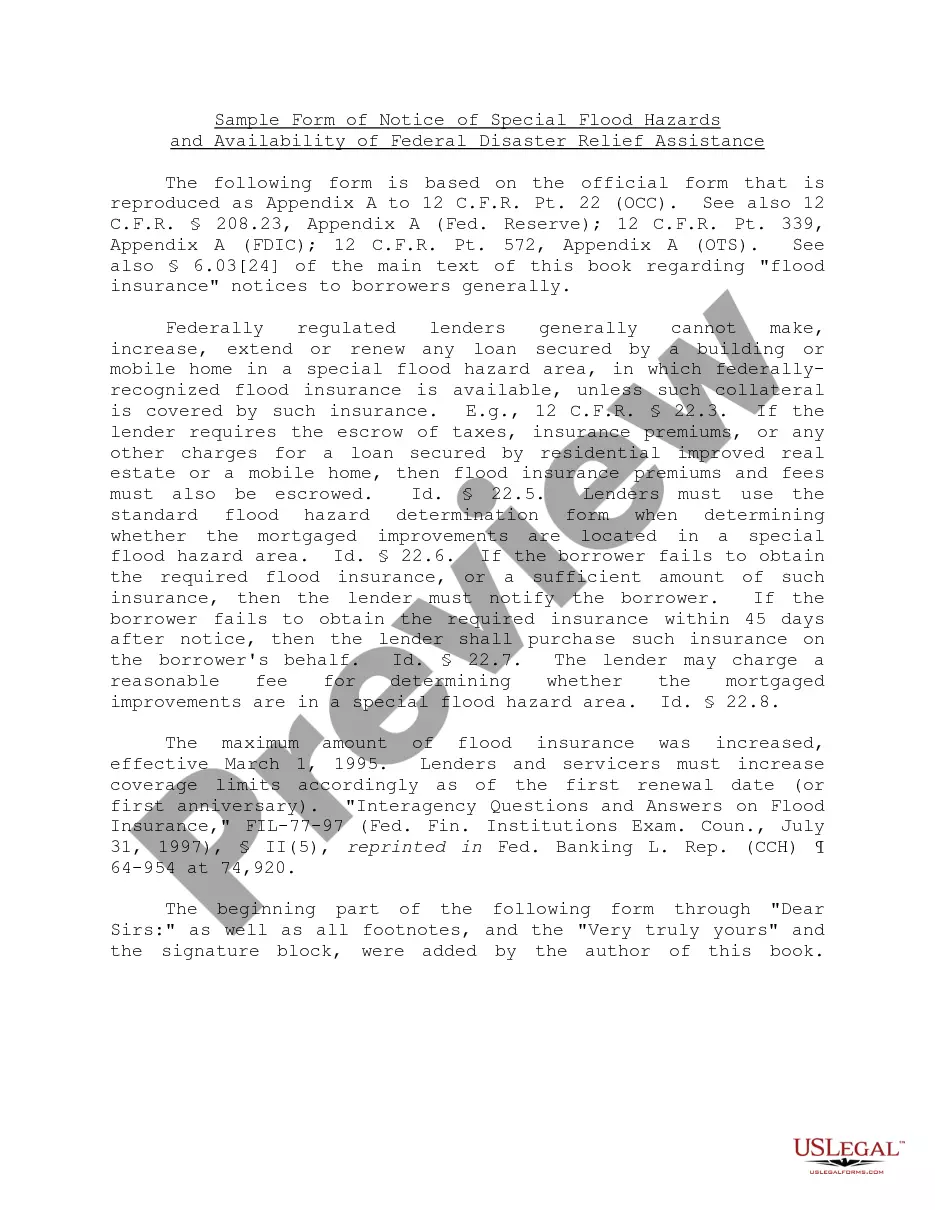
- This form serves as a legal declaration of flood zone status, which is important for mortgage lenders.
- Failure to disclose flood zone information can lead to legal disputes and financial liabilities.
- The form ensures that buyers are informed about potential risks and can make educated decisions regarding insurance.
Quick recap
- The Flood Zone Statement and Authorization form is essential for transparent real estate transactions.
- Both sellers and buyers have specific responsibilities outlined in the form.
- Understanding flood zone implications can avoid future financial risks related to insurance.
Looking for another form?

Form popularity
FAQ
If your home is in an area that's considered high risk of flooding, you'll probably need to provide your elevation certificate to your insurance agent to get a flood insurance quote. Remember, not every property needs an elevation certificate.
1Your local floodplain manager: Your local floodplain manager may already have a certificate on file.2The seller of your property: If you're buying a property, the sellers may already have the certificate, and you can ask them for it before purchasing.What Is An Elevation Certificate for Flood Insurance? - ValuePenguin\nwww.valuepenguin.com > elevation-certificate-flood-insurance
Zone A. Zone A is the flood insurance rate zone that corresponds to the I-percent annual chance floodplains that are determined in the Flood Insurance Study by approximate methods of analysis.
Evidence of flood insurance Completed and executed NFIP Flood Insurance Application PLUS a copy of the Borrower's premium check or agent's paid receipt.
The CLOMR does not revise an effective FIRM; rather, it indicates whether the project, if completed as proposed, would be eligible for a LOMR.The letter also includes instructions detailing how to follow up with a LOMR request after the proposed project has been completed.
Use the Comments area of Section D, on the back of the certificate, to provide datum, elevation, or other relevant information not specified on the front. Complete Section E if the building is located in Zone AO or Zone A (without BFE). Otherwise, complete Section C instead.
A flood elevation certificate documents your home's elevation, relative to the base flood elevation of the area you live in.Typically, the higher your home's elevation above the base flood elevation, the less risk you'll have of flooding and therefore, the lower your flood insurance premium.
An elevation certificate is a document that measures your property's susceptibility to flood damage and is one component used by your insurance agent to calculate your flood insurance premium.Location and flood zone: The NFIP has different zones designating your property's level of flood risk.
How long does it take to get an elevation certificate? The amount of time varies with each surveyor. If you work with a licensed surveyor, and he or she is able to fit you in and knows your area well, you should expect a completed elevation certificate within five business days.