Massachusetts Foundation Contract for Contractor
What this document covers
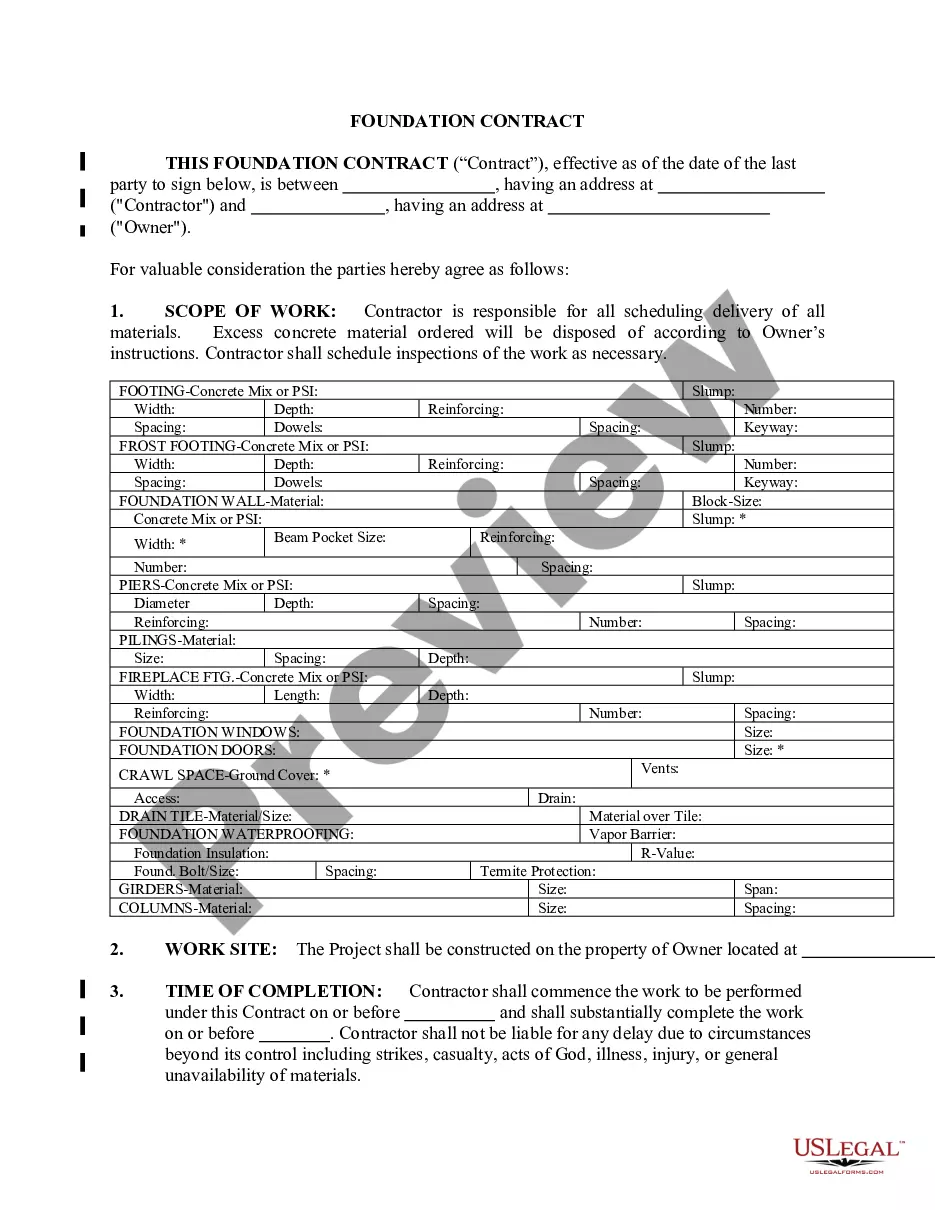
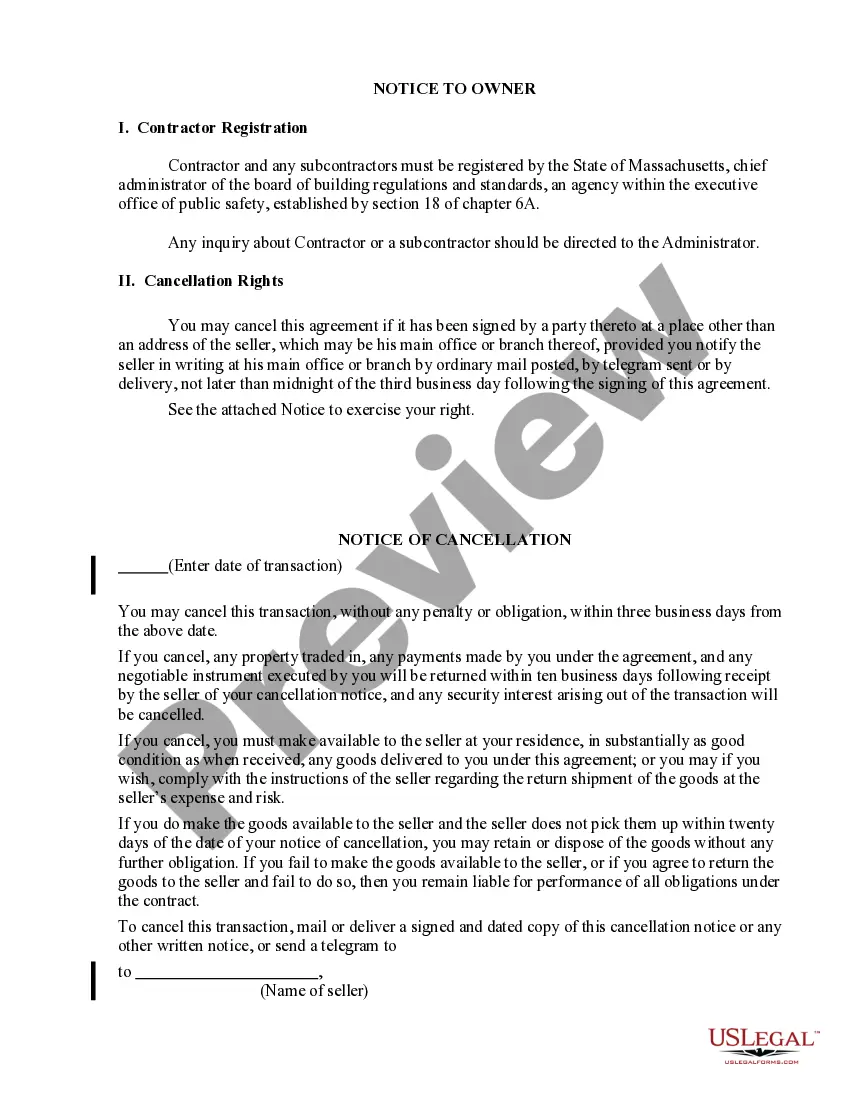
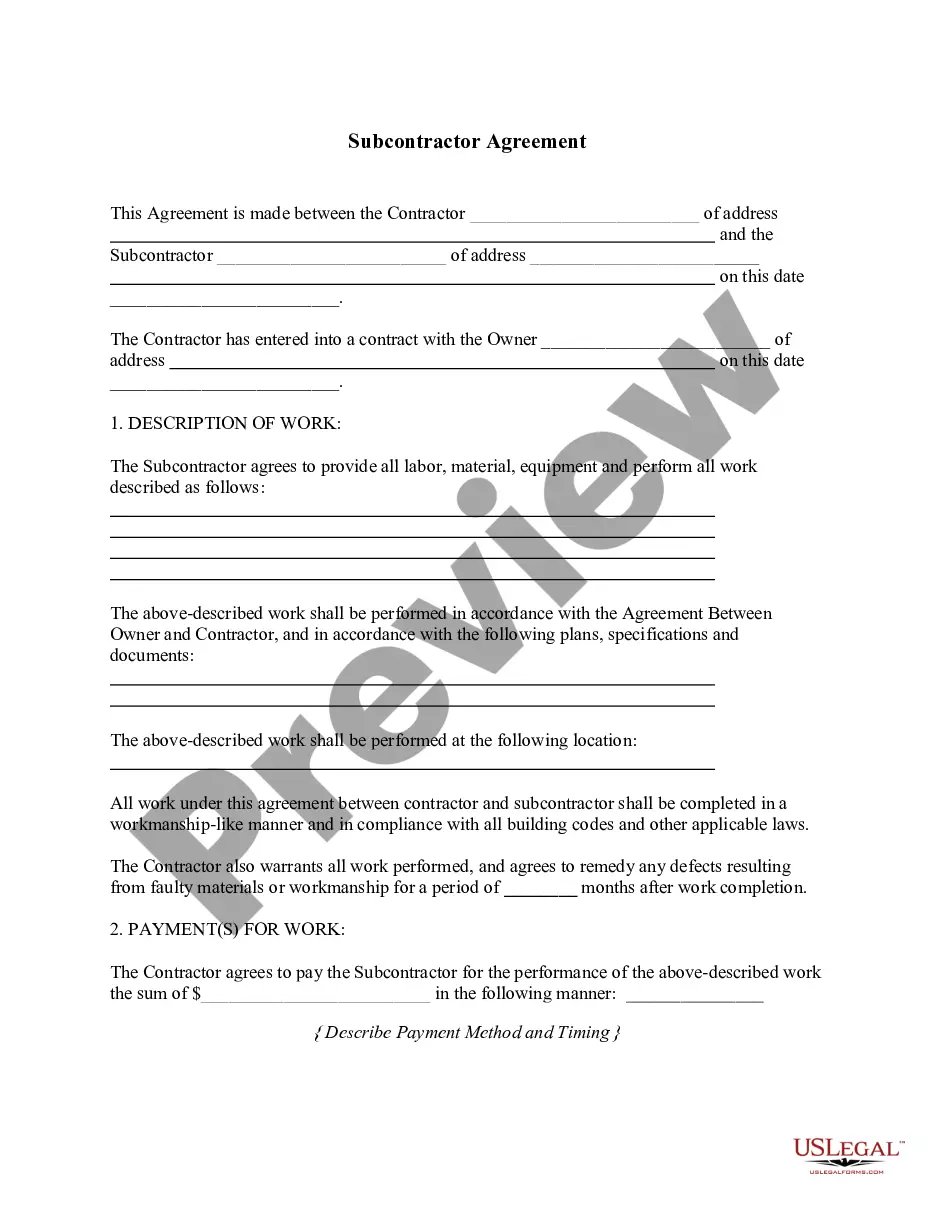
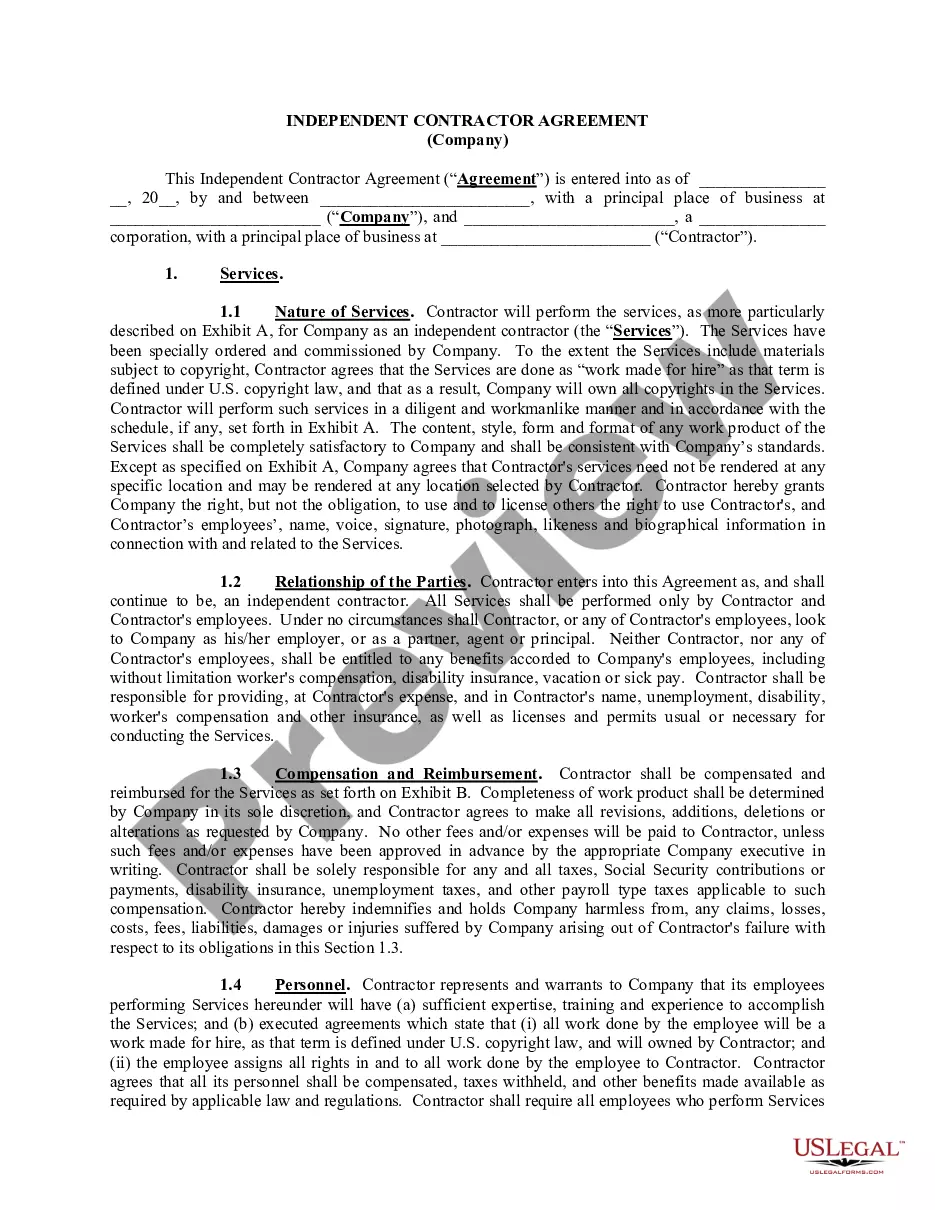
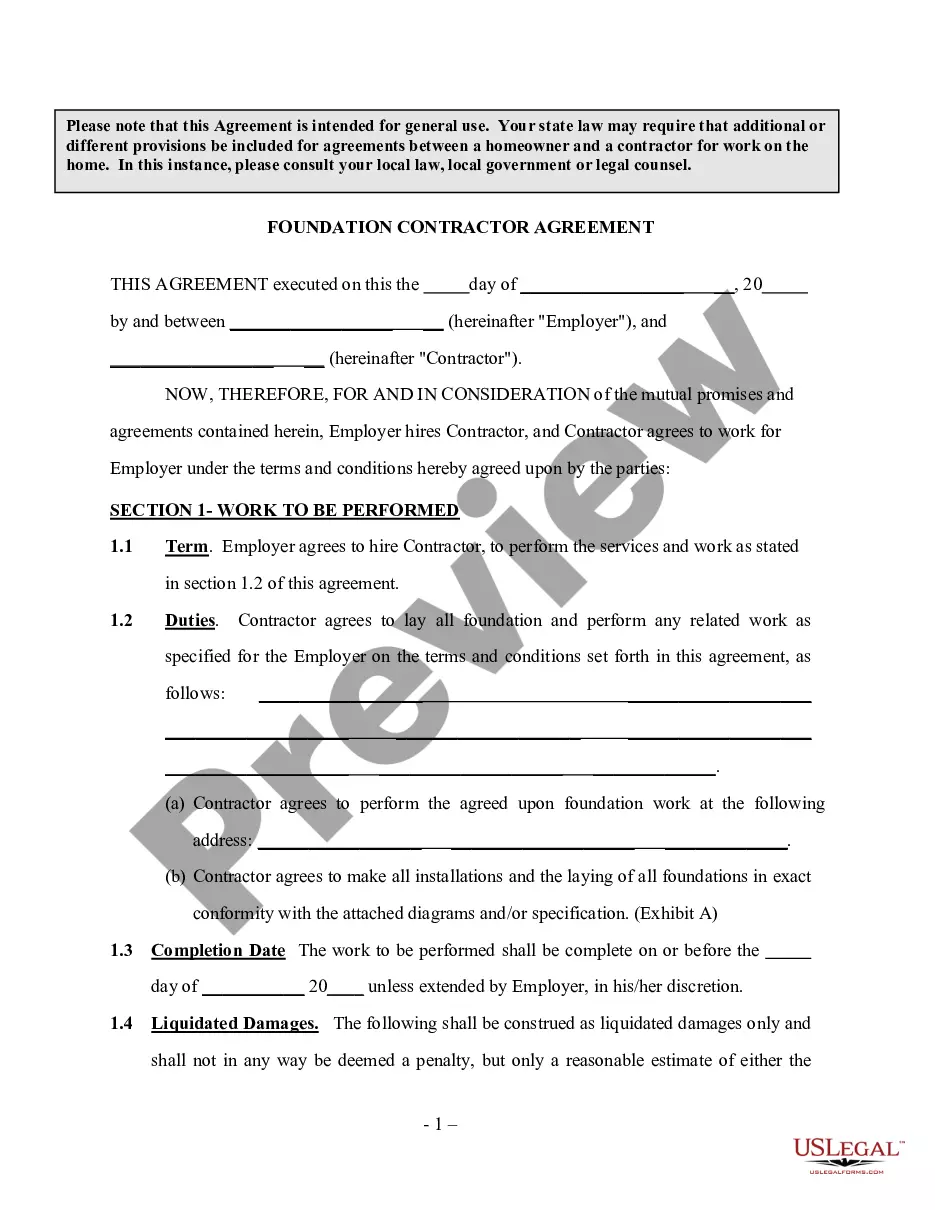
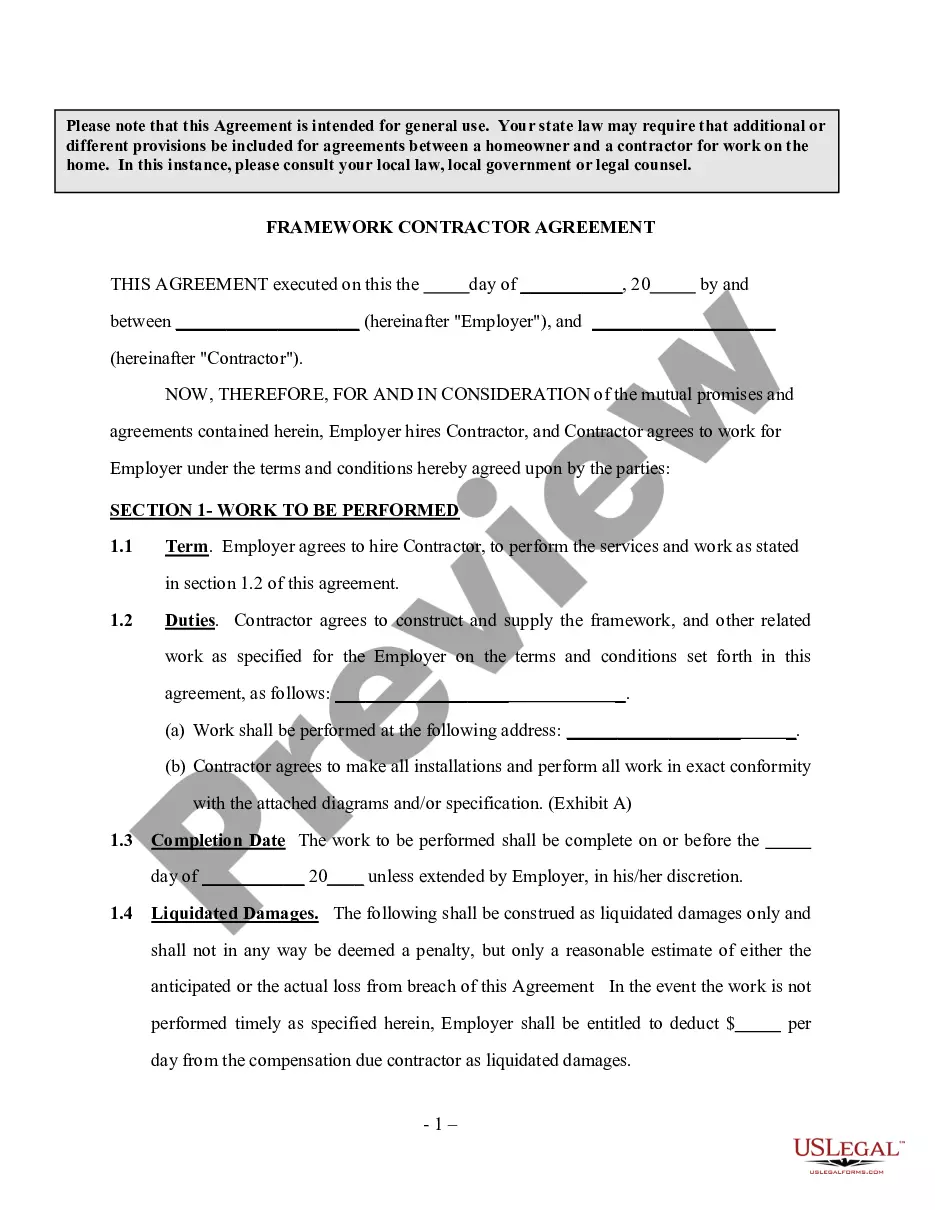
The Foundation Contract for Contractor is a legal document used to define the relationship between foundation contractors and property owners. This contract specifies the terms of payment, work scope, and responsibilities of each party, adapting to either a cost plus or fixed fee arrangement. Unlike generic contracts, this specialized form ensures compliance with Massachusetts state laws, providing clarity and protection for both parties involved in foundation work.
Key components of this form
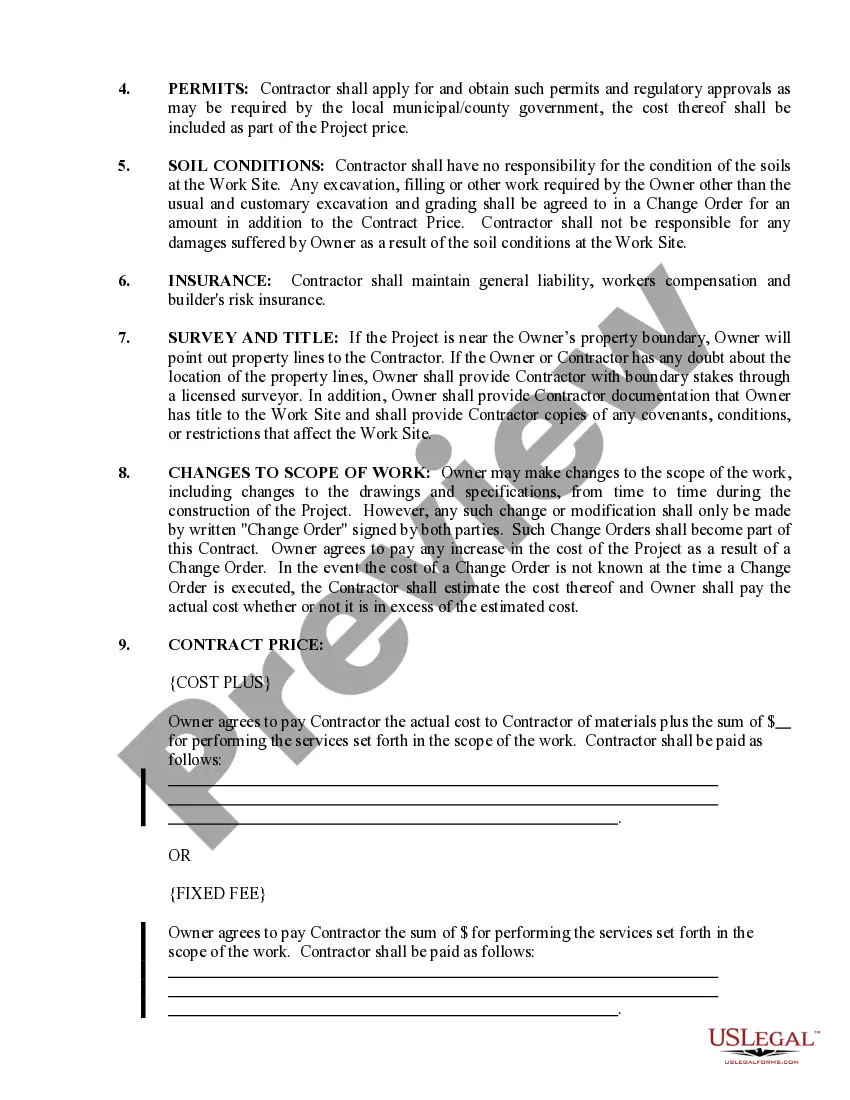
- Permits: Contractor is responsible for obtaining necessary permits and approvals.
- Soil Conditions: Clarifies that the contractor is not liable for soil condition issues.
- Insurance: Requires the contractor to maintain specific insurance coverage.
- Changes to Scope of Work: Allows for modifications via written change orders.
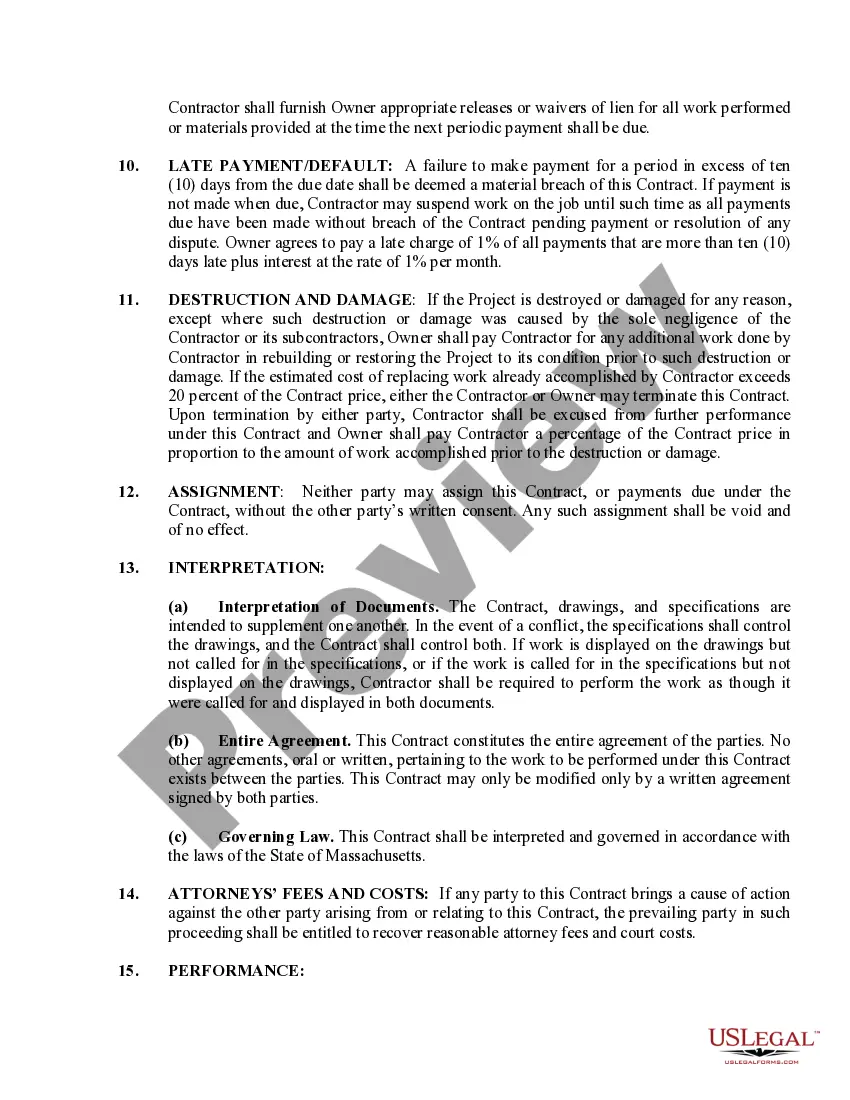
- Late Payment/Default: Outlines consequences for delayed payments.
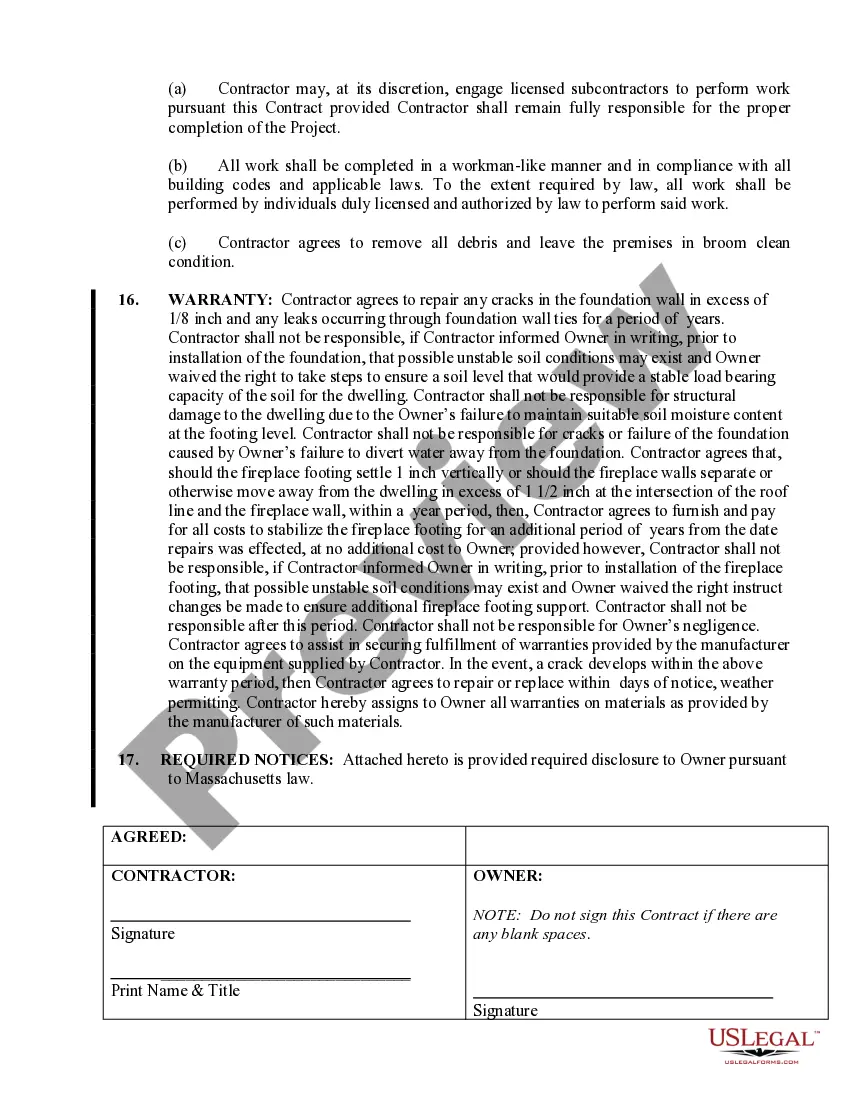
- Destruction and Damage: Details payment responsibilities in case of project damage.

Common use cases
This form should be used when a property owner hires a foundation contractor for construction or renovation projects. It is essential in situations where clarity around project scope, payment terms, and responsibilities is needed, especially when soil conditions may affect construction or when there is a possibility of changes during the project.
Who needs this form
- Foundation contractors looking for a legally binding contract.
- Property owners engaging contractors for building foundation work.
- Parties involved in construction projects within the State of Massachusetts.
Instructions for completing this form
- Identify the parties involved, including the contractor and property owner.
- Specify the location and description of the work site in detail.
- Enter the agreed-upon payment terms, whether cost plus or fixed fee.
- List any permits and regulatory approvals necessary for the project.
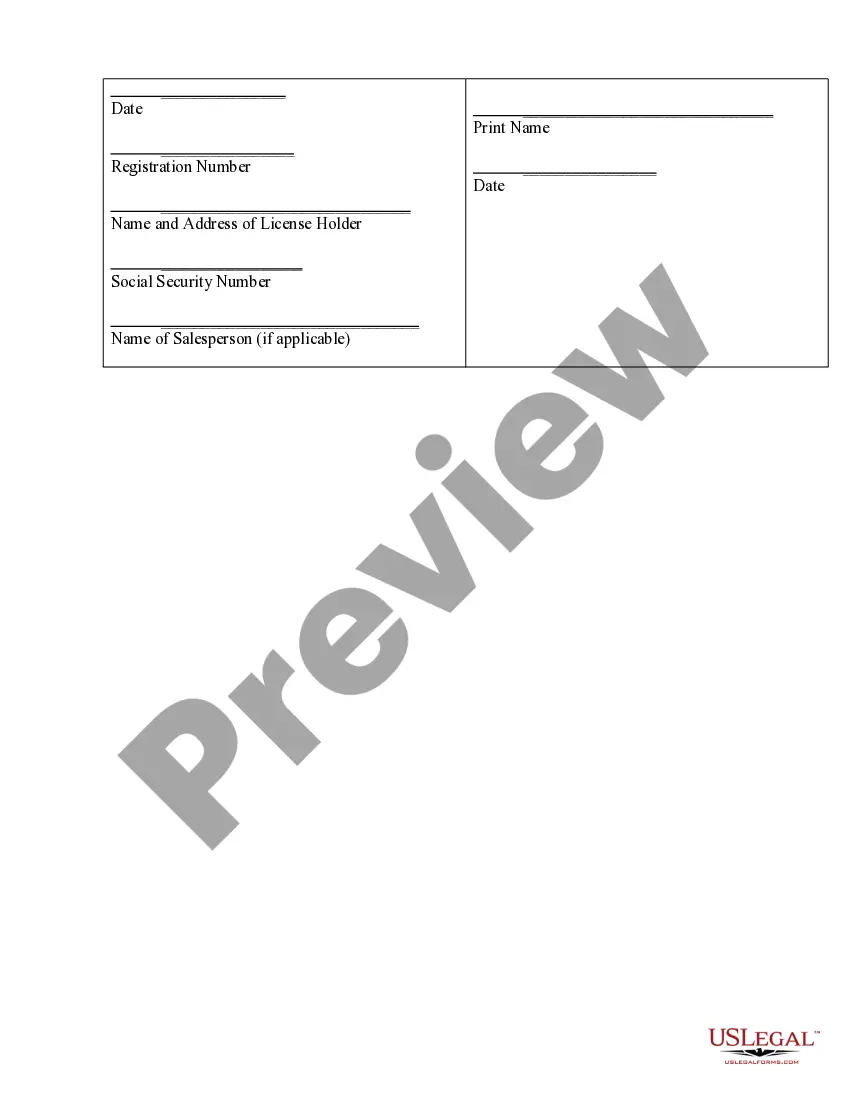
- Ensure signatories include both parties to validate the contract.
Does this document require notarization?
This form does not typically require notarization unless specified by local law. However, parties may choose to have it notarized for added legal assurance.
Get your form ready online
Our built-in tools help you complete, sign, share, and store your documents in one place.
Make edits, fill in missing information, and update formatting in US Legal Forms—just like you would in MS Word.
Download a copy, print it, send it by email, or mail it via USPS—whatever works best for your next step.
Sign and collect signatures with our SignNow integration. Send to multiple recipients, set reminders, and more. Go Premium to unlock E-Sign.
If this form requires notarization, complete it online through a secure video call—no need to meet a notary in person or wait for an appointment.
We protect your documents and personal data by following strict security and privacy standards.

Make edits, fill in missing information, and update formatting in US Legal Forms—just like you would in MS Word.

Download a copy, print it, send it by email, or mail it via USPS—whatever works best for your next step.

Sign and collect signatures with our SignNow integration. Send to multiple recipients, set reminders, and more. Go Premium to unlock E-Sign.

If this form requires notarization, complete it online through a secure video call—no need to meet a notary in person or wait for an appointment.

We protect your documents and personal data by following strict security and privacy standards.
Mistakes to watch out for
- Failing to clearly define the scope of work, leading to disputes.
- Not specifying conditions related to soil issues, which can cause liability issues.
- Neglecting to obtain necessary permits before commencing work.
Advantages of online completion
- Easy access to professionally drafted templates tailored for Massachusetts law.
- Editable format allows customization to meet specific project needs.
- Quick download ensures that you can start your project without delays.
Legal use & context
- This contract provides a legally binding agreement between the contractor and property owner.
- It ensures both parties understand their rights and responsibilities regarding the project.
- The contract must be executed according to Massachusetts law to be enforceable.
Key takeaways
- The Foundation Contract for Contractor establishes clear terms for foundation projects.
- It addresses critical aspects such as payment, change orders, and insurance.
- Using this form helps protect both the contractor's and owner's interests.
Looking for another form?
Form popularity
FAQ
Massachusetts law prohibits a contractor requiring an initial deposit of over 33% of the total contract price unless special materials are ordered. Any contractor demanding over a 33% deposit should raise a huge red flag .
Payment Schedule In Your ContractBefore any work begins, a contractor will ask a homeowner to secure the job with a down payment. It shouldn't be more than 10-20 percent of the total cost of the job. Homeowners should never pay a contractor more than 10-20% before they've even stepped foot in their home.
Breach. You must show that the party you plan to sue failed to meet his or her contractual obligations ("breach of contract" in legalese). This is usually the heart of the case -- you'll need to prove that the contractor failed to do agreed-on work or did work of unacceptably poor quality. Damages.
A: It's not uncommon for contractors to ask for a down payment up front to secure your spot on their schedule or purchase some of the job materials in advance. Asking for more than half of the project cost up front, though, is a big red flag.I recommend tying payments to progress made during the job.
To file a complaint against a home improvement contractor, you must fill out this form completely and submit it to the Office of Consumer Affairs and Business Regulation (OCABR). OCABR will review all complaints. The submission of a complaint will not automatically result in a hearing against a contractor.
Identifying/Contact Information. Title and Description of the Project. Projected Timeline and Completion Date. Cost Estimate and Payment Schedule. Stop Work Clause and Stop Payment Clause. Act of God Clause. Change Order Agreement. Warranty.
You shouldn't pay more than 10 percent of the estimated contract price upfront, according to the Contractors State License Board.
If the contractor requests a large sum of money before work has begun, Mozen says you should ask specifically what types of work or materials those payments are covering.Contractors sometimes have other motives, other than purchasing materials, when they ask for large amounts of money in advance, Fowler says.
Both parties should sign the contract, and both should be bound by the terms and conditions spelled out in the agreement. In general that means the contractor will be obliged to provide specified materials and to perform certain services for you. In turn, you will be required to pay for those goods and that labor.