Massachusetts Renovation Contract for Contractor
What this document covers
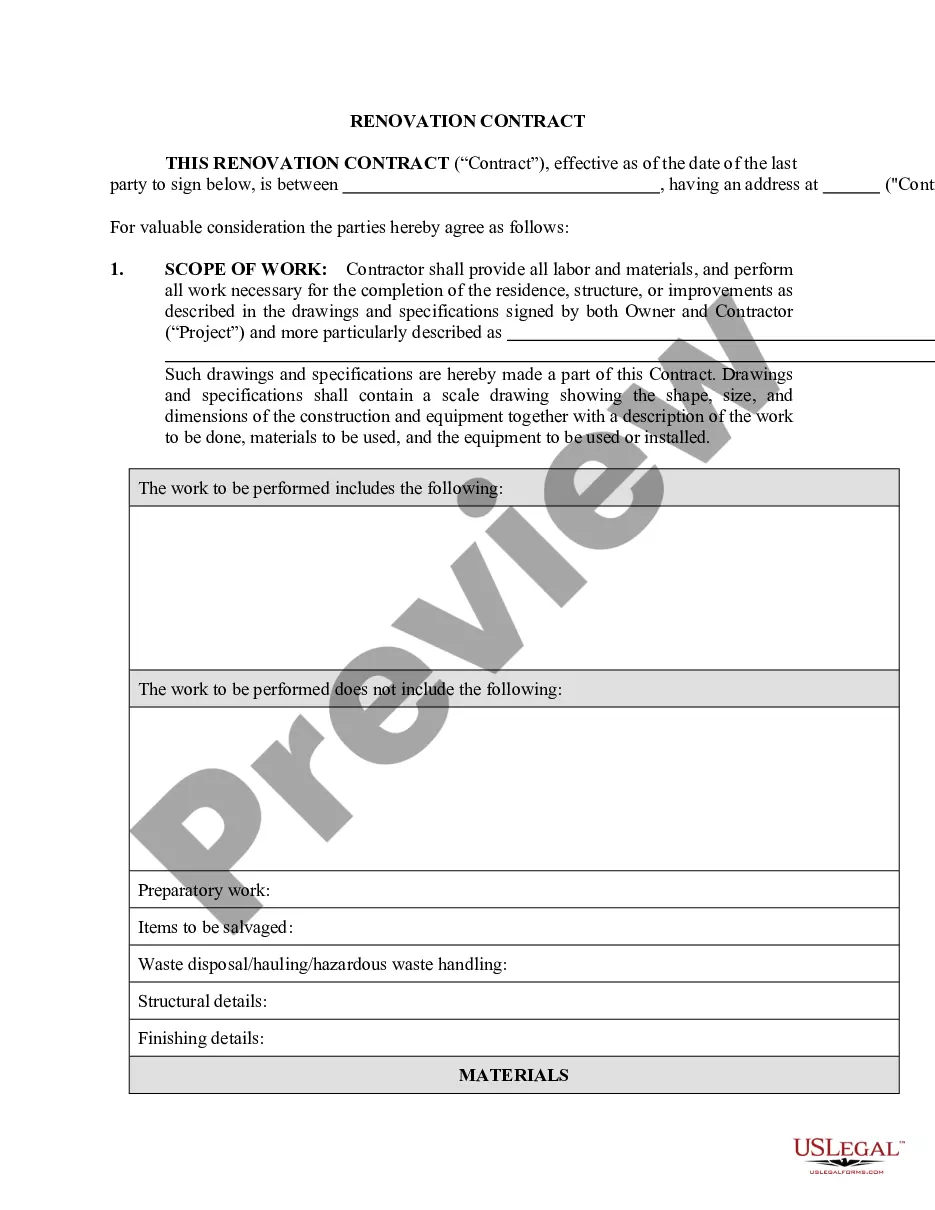
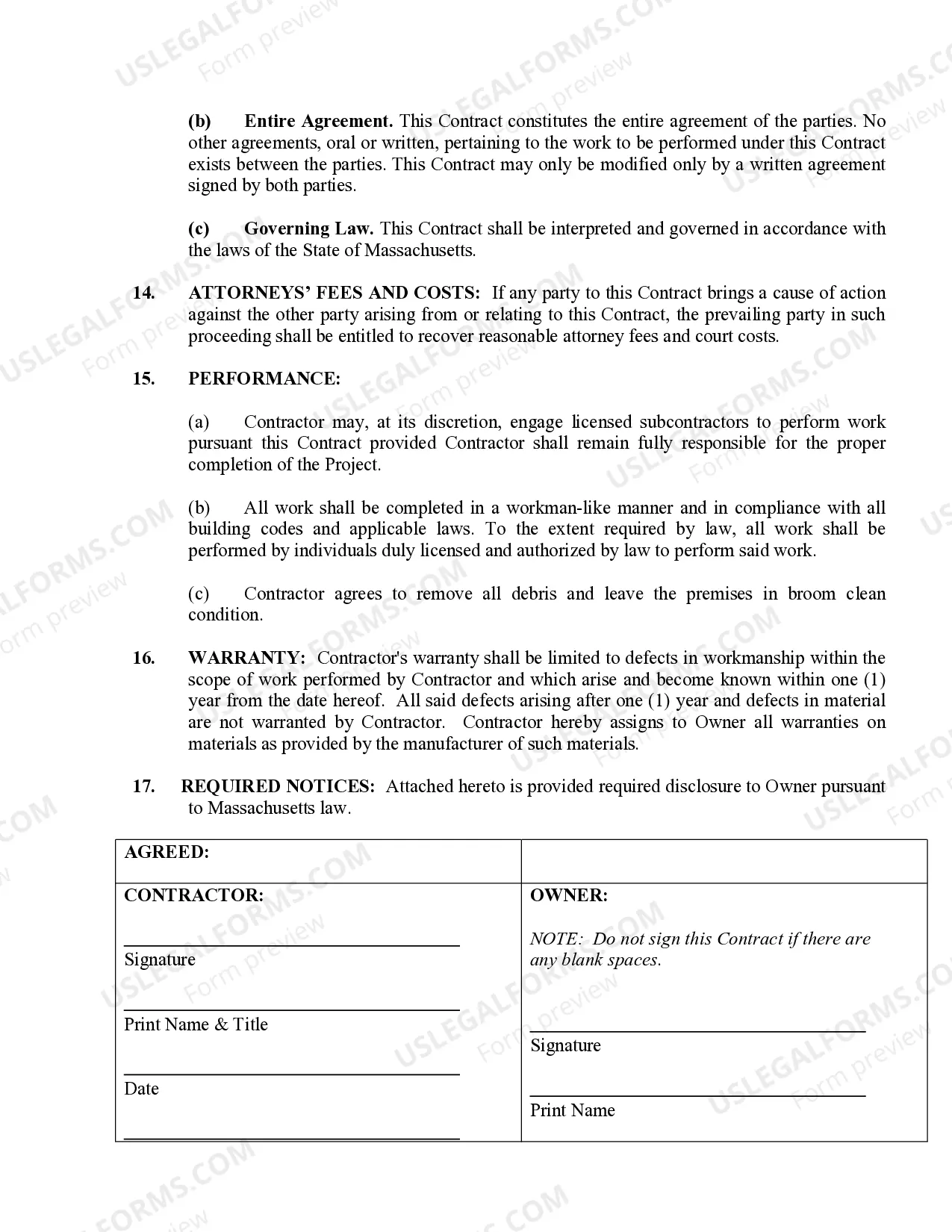
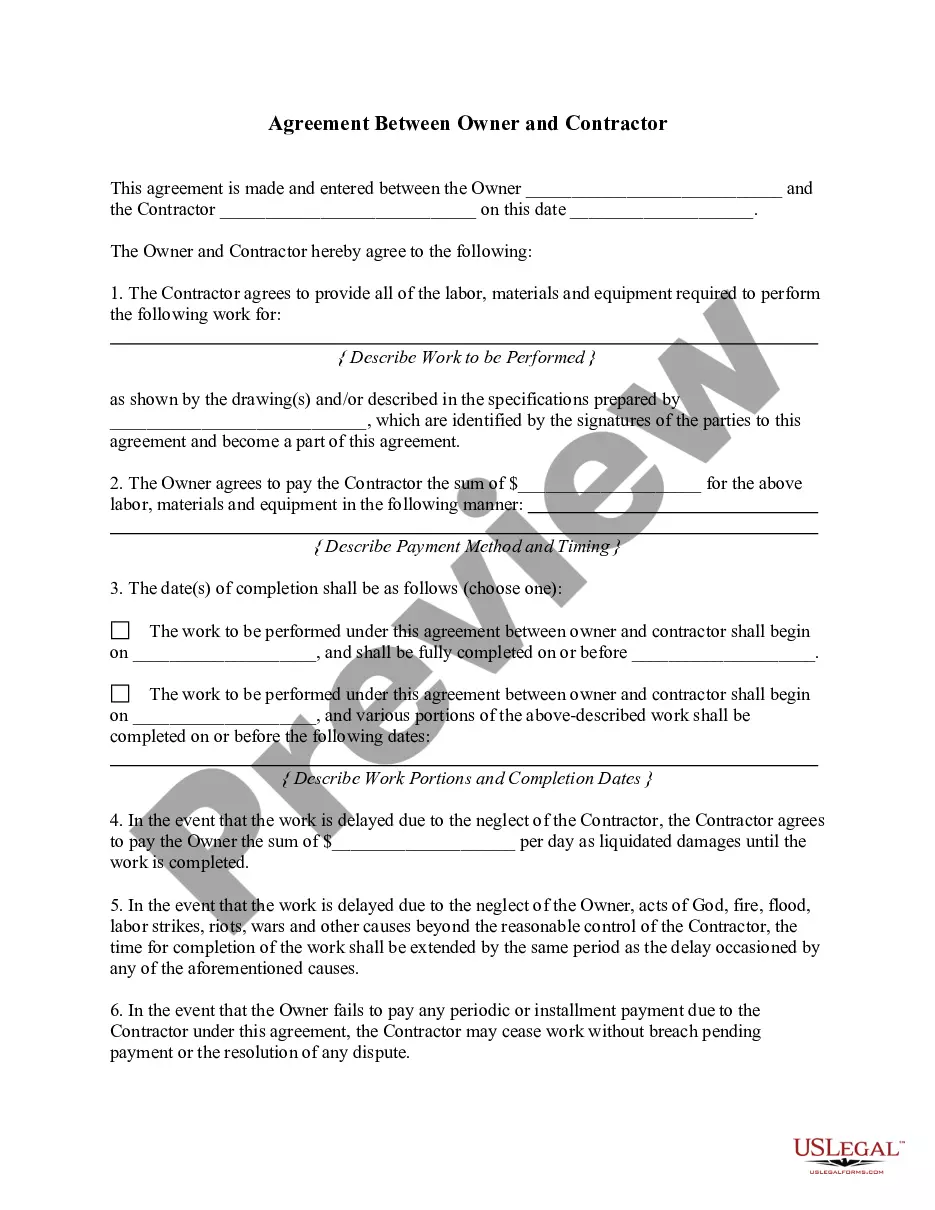
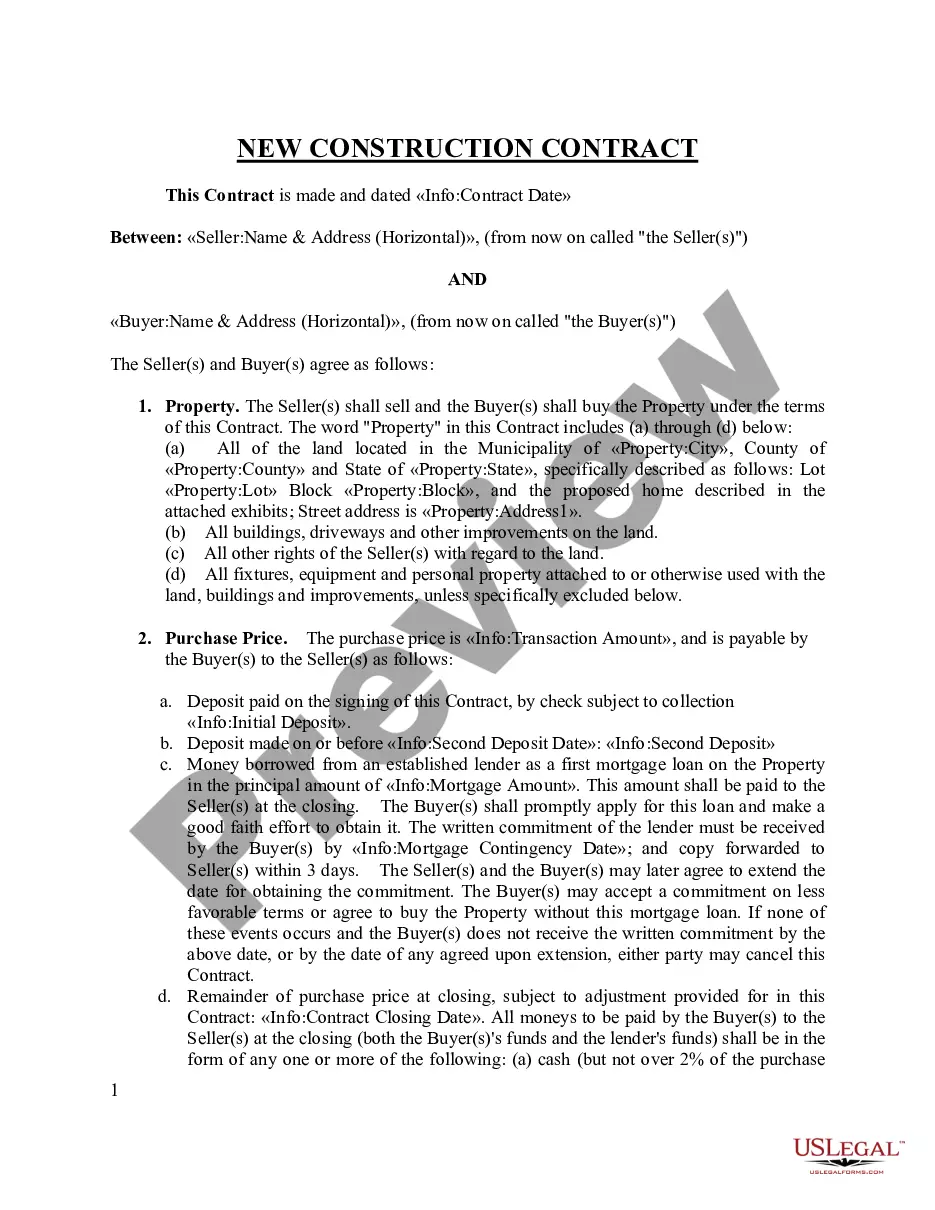
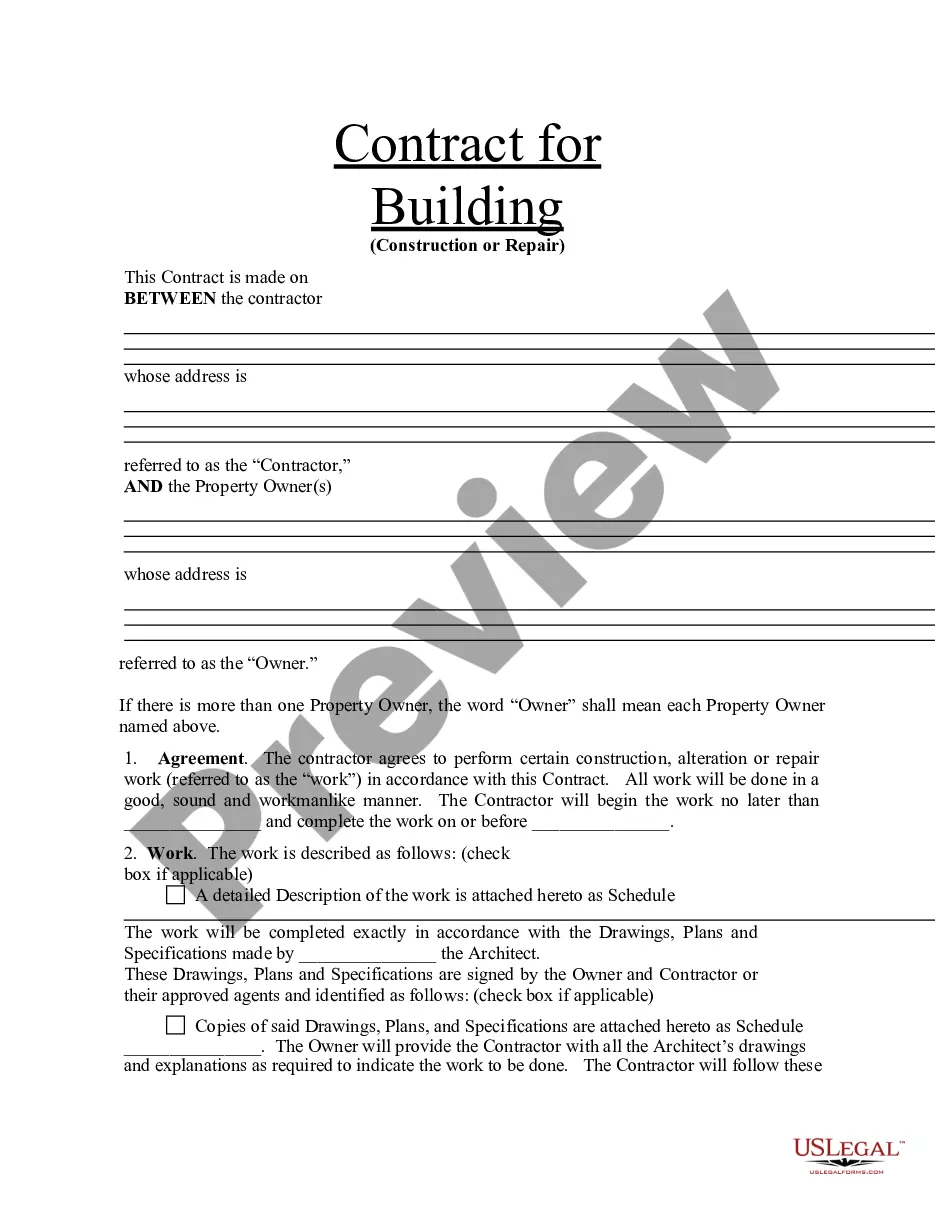
The Renovation Contract for Contractor is a legal document designed for use between renovation contractors and property owners in Massachusetts. This form establishes clear obligations regarding payment arrangements, whether cost-plus or fixed fee, and it outlines critical aspects such as change orders, warranties, and insurance requirements. By using this contract, both parties can ensure compliance with state laws, providing a clear framework for their renovation project.
What’s included in this form
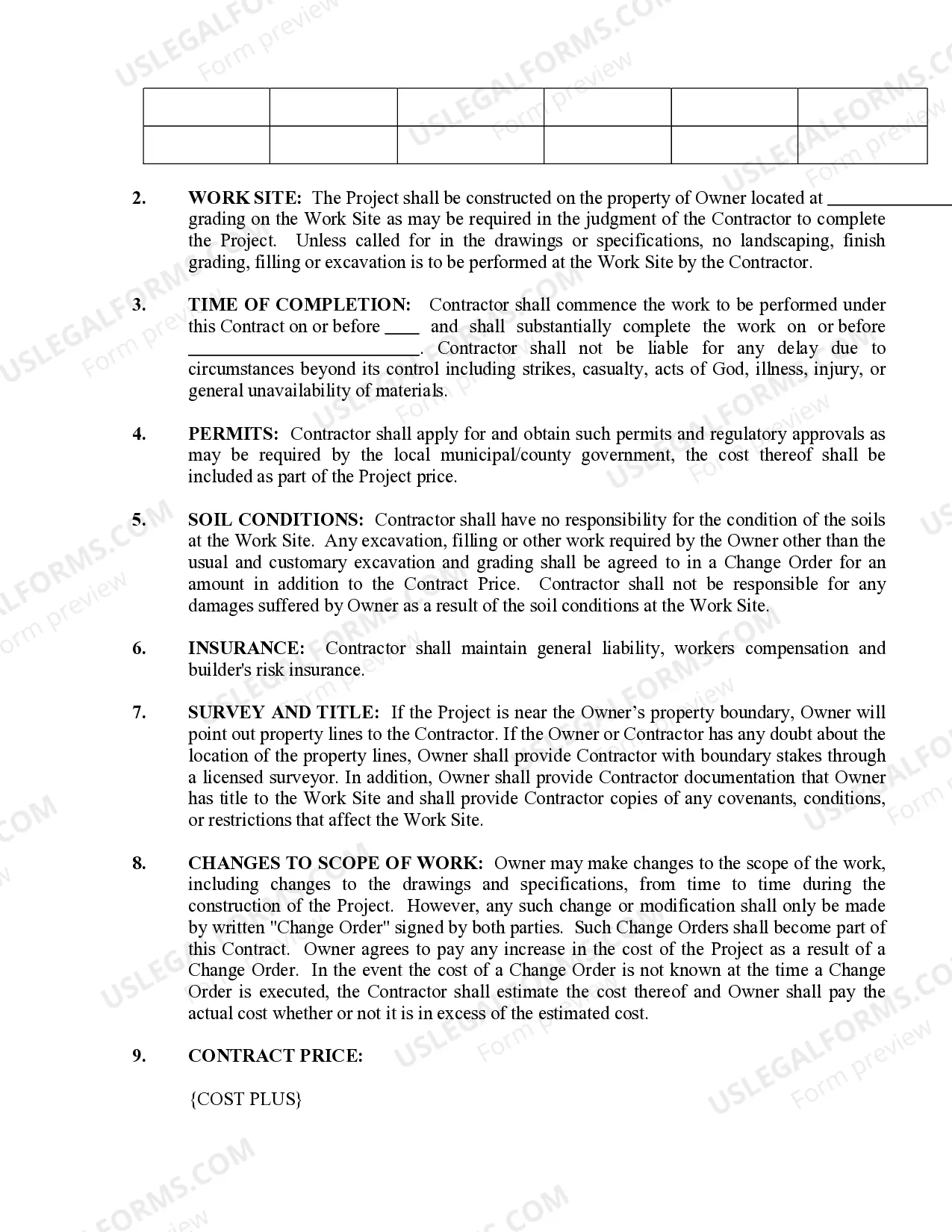
- Permits: Outlines the contractor's obligation to obtain necessary permits as part of the project price.
- Soil conditions: Specifies that the contractor is not responsible for unforeseen soil conditions at the work site.
- Insurance requirements: Stipulates that the contractor must maintain general liability, workersâ compensation, and builders risk insurance.
- Changes to scope of work: Details procedures for modifying the project, requiring a signed change order.
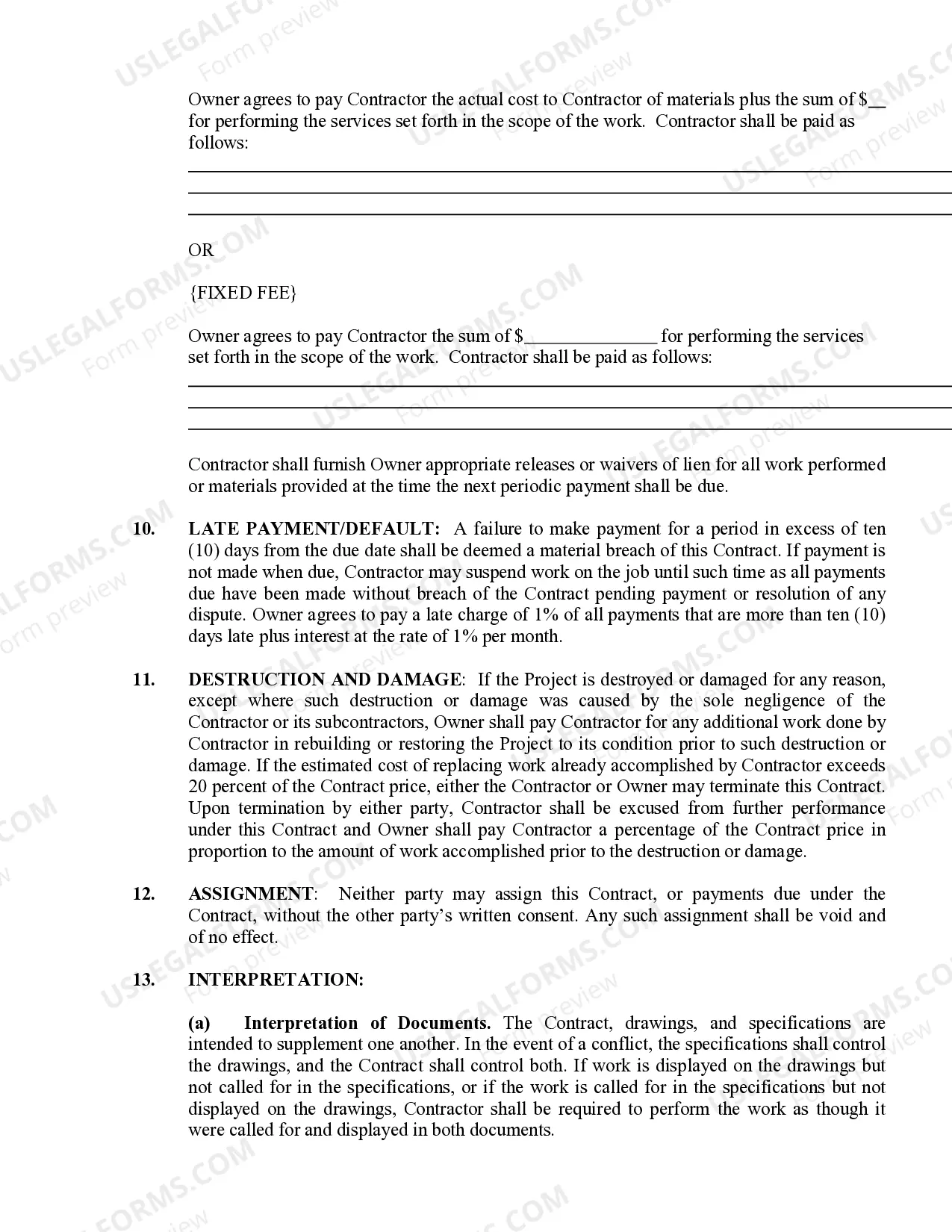
- Contract price: Defines the payment structure, including provisions for late payments and associated penalties.
- Destruction and damage: Addresses responsibilities in the event of project damage, allowing for potential contract termination.

When to use this document
This form should be utilized when a property owner hires a contractor for renovation work. It is essential for clearly outlining the terms of the agreement, especially when the project may involve complex changes, additional costs, or legally required permits. Using this form helps avoid misunderstandings and establishes a clear process for modifications and payments throughout the project.
Who this form is for
- Property owners looking to renovate or redesign their property.
- Renovation contractors seeking to formalize their relationship with property owners.
- Individuals involved in commercial or residential renovations within Massachusetts.
How to prepare this document
- Identify the parties: Clearly name the contractor and the property owner.
- Specify the work location: Provide the address of the site where renovations will occur.
- Outline payment terms: Indicate whether the work will be done on a cost-plus or fixed fee basis.
- Detail permits and approvals: Ensure that the contractor understands their responsibility for securing required permits.
- Include terms for change orders: Discuss how changes to the project will be implemented and documented.
Notarization guidance
This form does not typically require notarization unless specified by local law. However, it is always advisable to check local regulations to ensure compliance.
Get your form ready online
Our built-in tools help you complete, sign, share, and store your documents in one place.
Make edits, fill in missing information, and update formatting in US Legal Forms—just like you would in MS Word.
Download a copy, print it, send it by email, or mail it via USPS—whatever works best for your next step.
Sign and collect signatures with our SignNow integration. Send to multiple recipients, set reminders, and more. Go Premium to unlock E-Sign.
If this form requires notarization, complete it online through a secure video call—no need to meet a notary in person or wait for an appointment.
We protect your documents and personal data by following strict security and privacy standards.

Make edits, fill in missing information, and update formatting in US Legal Forms—just like you would in MS Word.

Download a copy, print it, send it by email, or mail it via USPS—whatever works best for your next step.

Sign and collect signatures with our SignNow integration. Send to multiple recipients, set reminders, and more. Go Premium to unlock E-Sign.

If this form requires notarization, complete it online through a secure video call—no need to meet a notary in person or wait for an appointment.

We protect your documents and personal data by following strict security and privacy standards.
Typical mistakes to avoid
- Failing to specify the details of the scope of work, leading to disputes later.
- Not including clear payment terms, which can result in misunderstandings regarding compensation.
- Neglecting to address soil conditions, which may lead to unexpected costs.
Benefits of using this form online
- Convenience of downloading and editing the form to fit specific needs.
- Access to legally vetted templates that comply with state laws.
- Saving time by avoiding the need to draft a contract from scratch.
Legal use & context
- Enforceable in Massachusetts, ensuring that all contractual obligations and rights are protected under local law.
- Provides recourse in case of disputes related to work completion, payment issues, or damages.
Quick recap
- The Renovation Contract for Contractor should clearly outline all project details and responsibilities.
- It's crucial for both parties to understand the payment structure and terms.
- This form adheres to Massachusetts laws, making it suitable for renovations within the state.
Looking for another form?



Form popularity
FAQ
Scope of Work, Selection Sheet and Drawings. License Number and Insurance. Description of Change Orders. Warranty information. Subcontractor Agreements. Payment schedule. Completion Schedule / Timeline. Clauses Required by Law.
Begin with the Date and the Address of the Other Party. Start with the Basic Details of the Planned Work. Include Special Stipulations. State Whether There Will be a Further Agreement. Create an Area for Signatures. Sign and Date the Contract Letter.
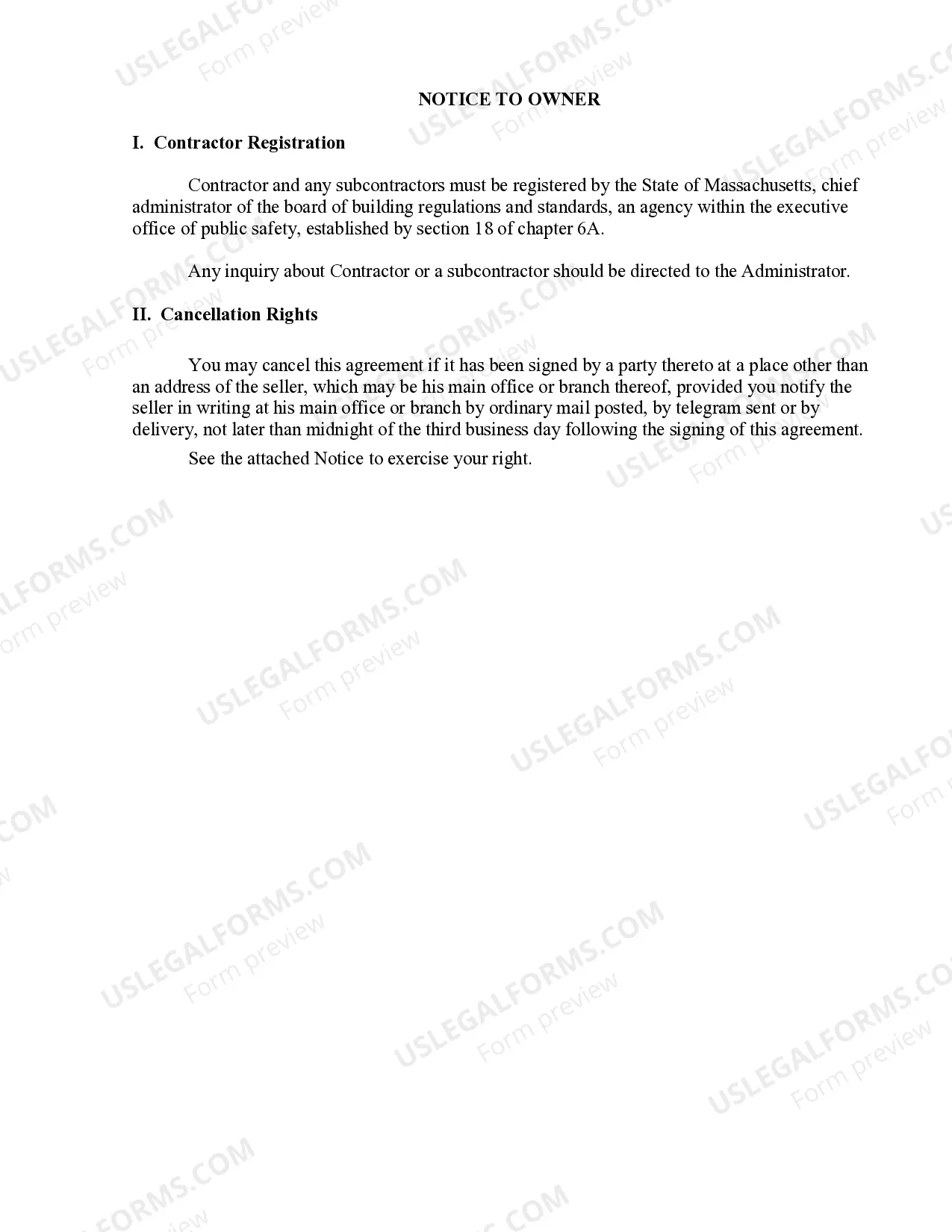
Detailed Description of the Job. How Payments Will Be Made. Start and End Dates of the Project. How Changes to the Project Will Be Dealt With. Lien Waivers. Written Notice of Your Right to Cancel Without Penalty. Warranty. Signatures.
A general contractor provides a strong background in framing and carpentry along with many other skills. Because remodeling jobs typically involve several specialty areas, the general contractor serves as a project manager who coordinates the entire job.
Define and describe the project in detail. Include what materials must be used; be as specific as possible. Include weight, brand name and other identifying features. Specify the work being performed and all equipment being used or installed.
Identifying/Contact Information. Title and Description of the Project. Projected Timeline and Completion Date. Cost Estimate and Payment Schedule. Stop Work Clause and Stop Payment Clause. Act of God Clause. Change Order Agreement. Warranty.
Massachusetts law prohibits a contractor requiring an initial deposit of over 33% of the total contract price unless special materials are ordered. Any contractor demanding over a 33% deposit should raise a huge red flag .
Check Contract Basics. The basic job of a contractor agreement is to spell out the scope of the project's work. Set a Payment Schedule. Schedule Start and End Dates. Specify Change Orders. Research Your Arbitration Options. Turn Down the Contractor's Warranty.