Louisiana Order Modifying Trust
Overview of this form
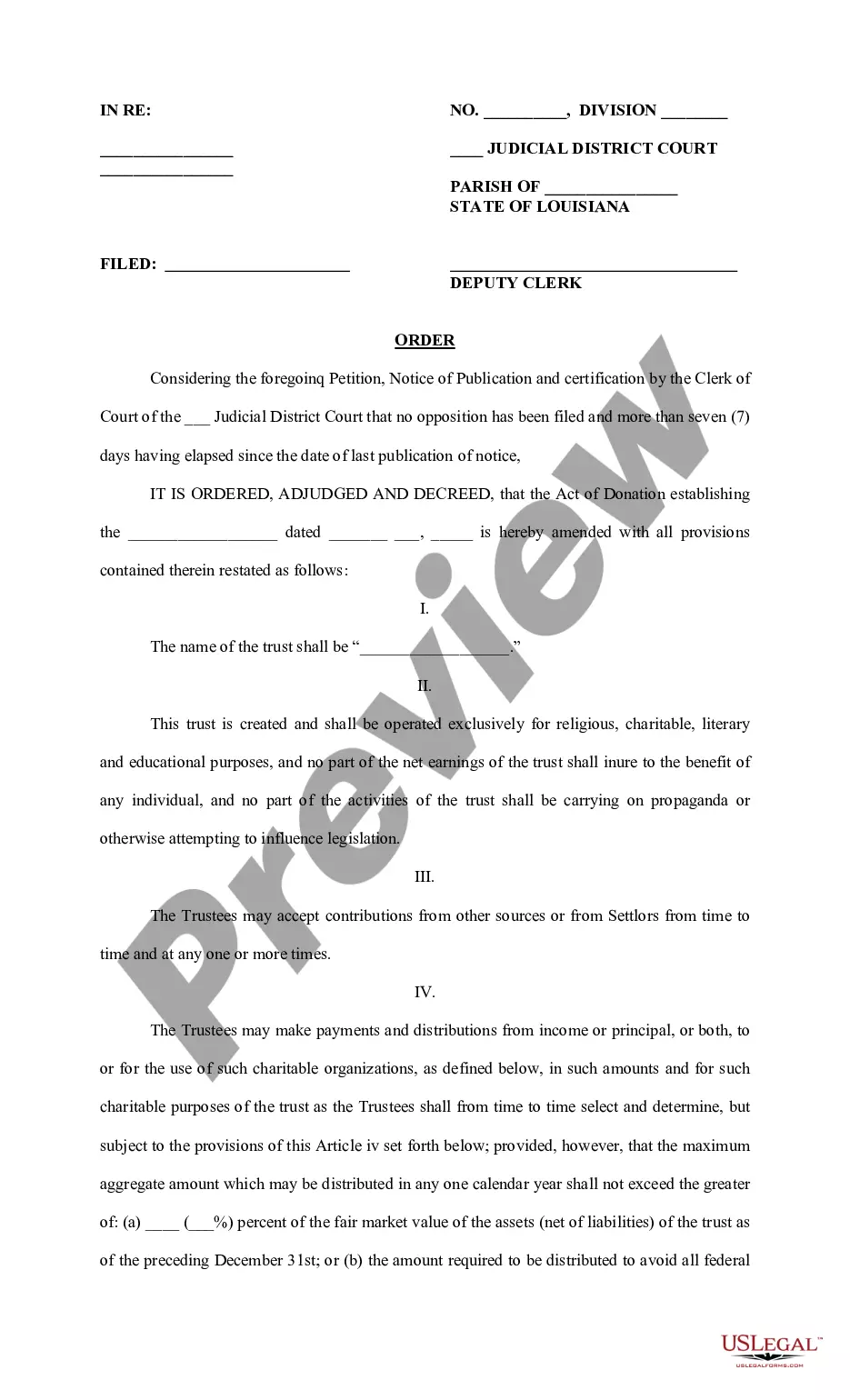
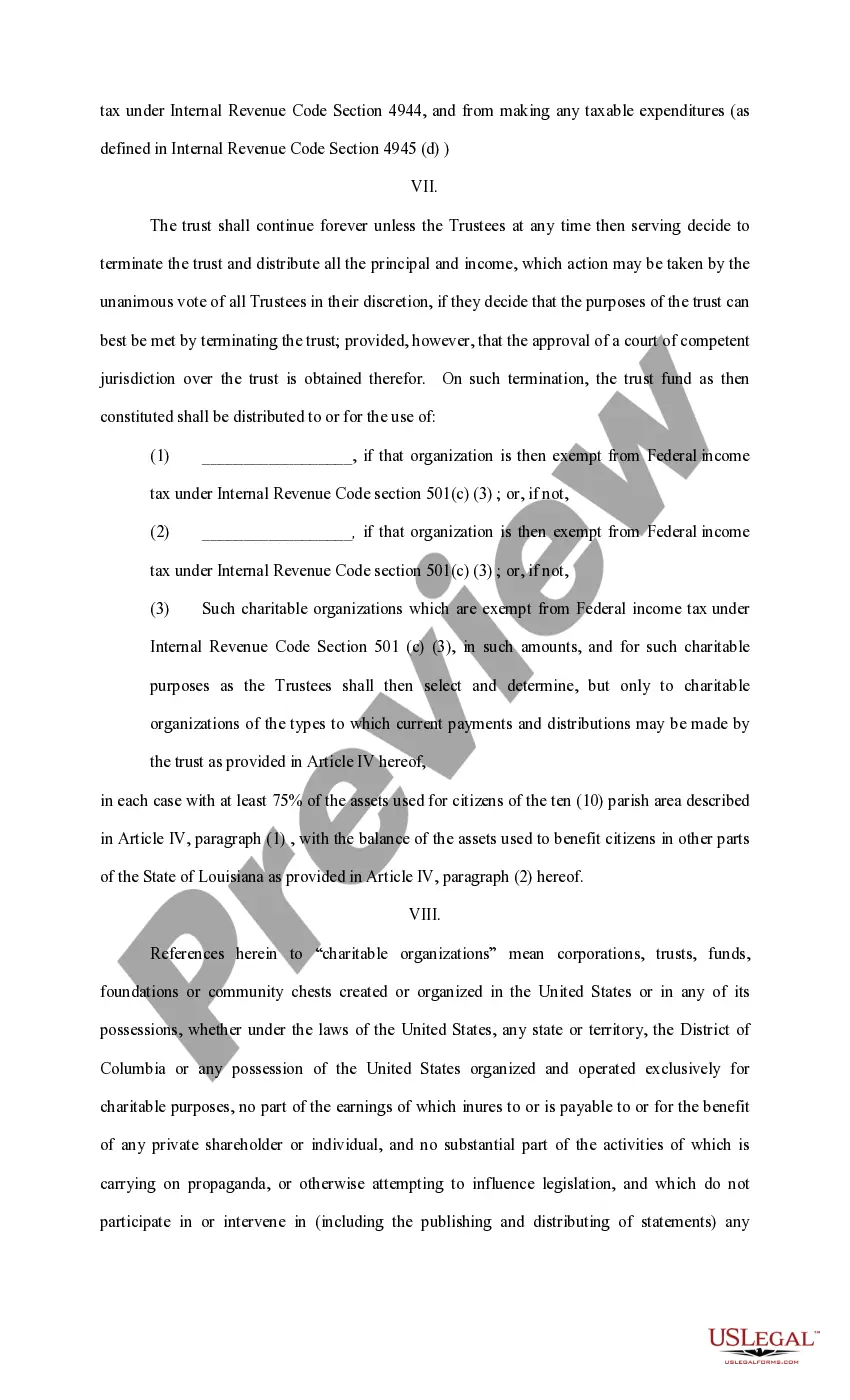
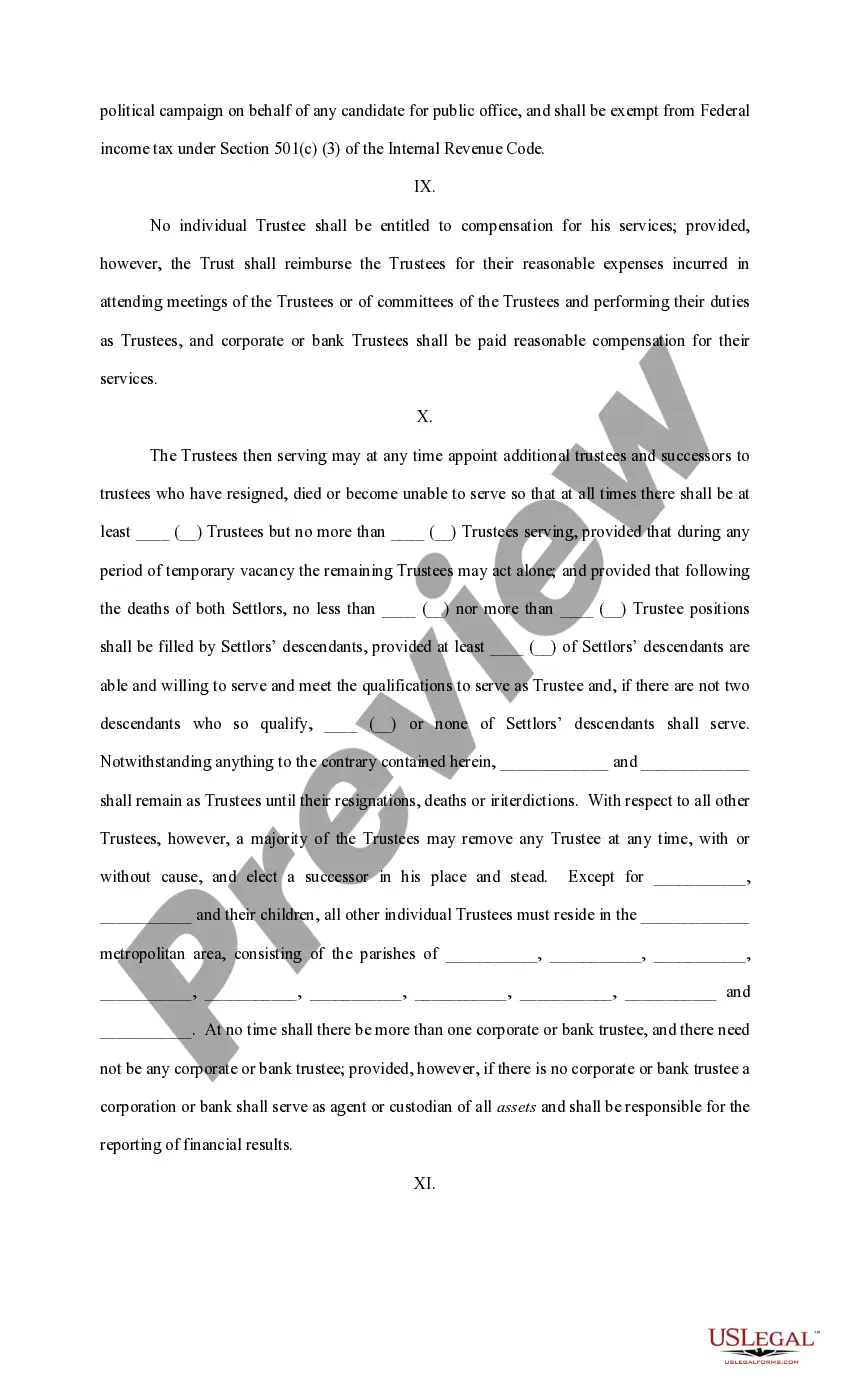
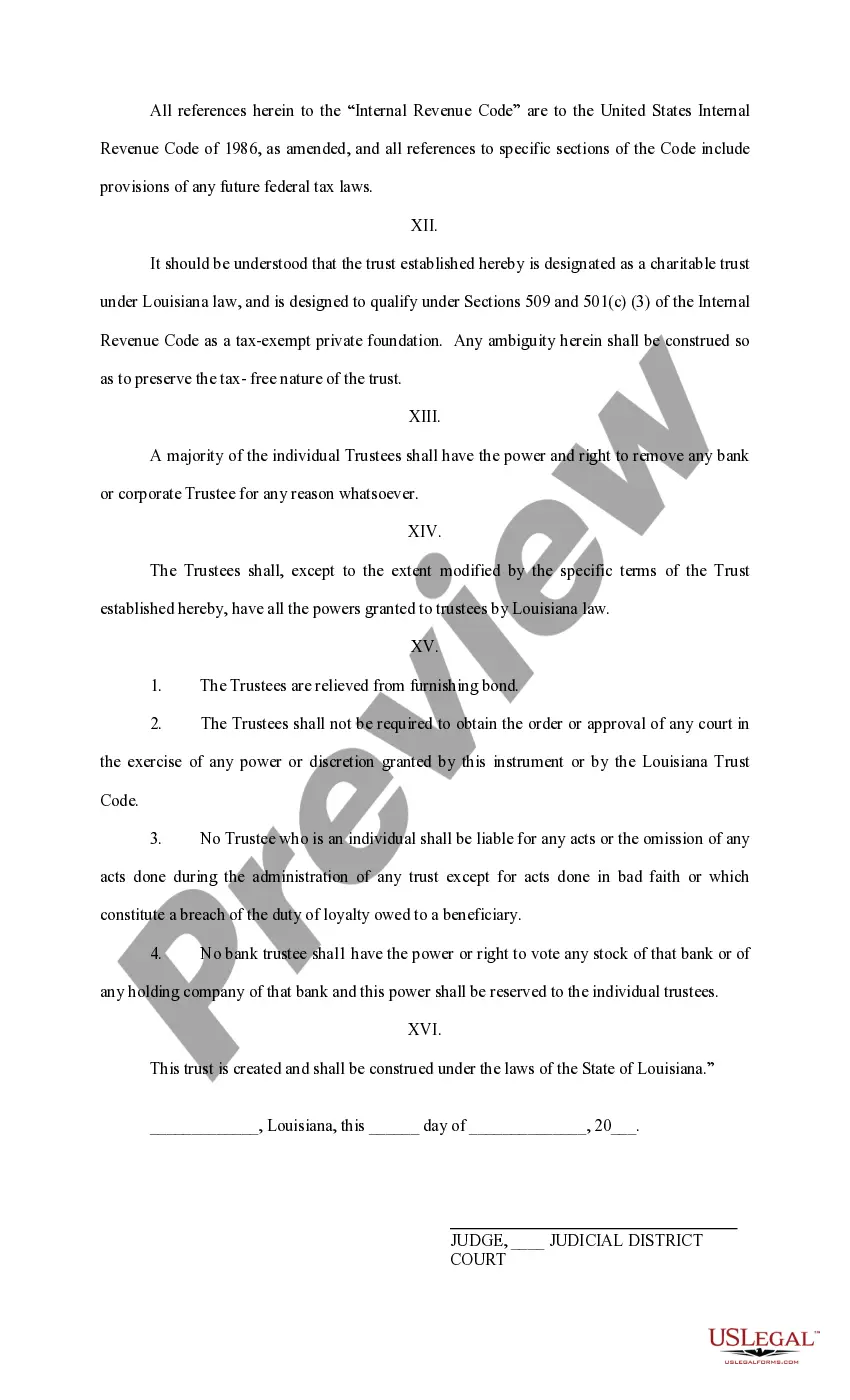
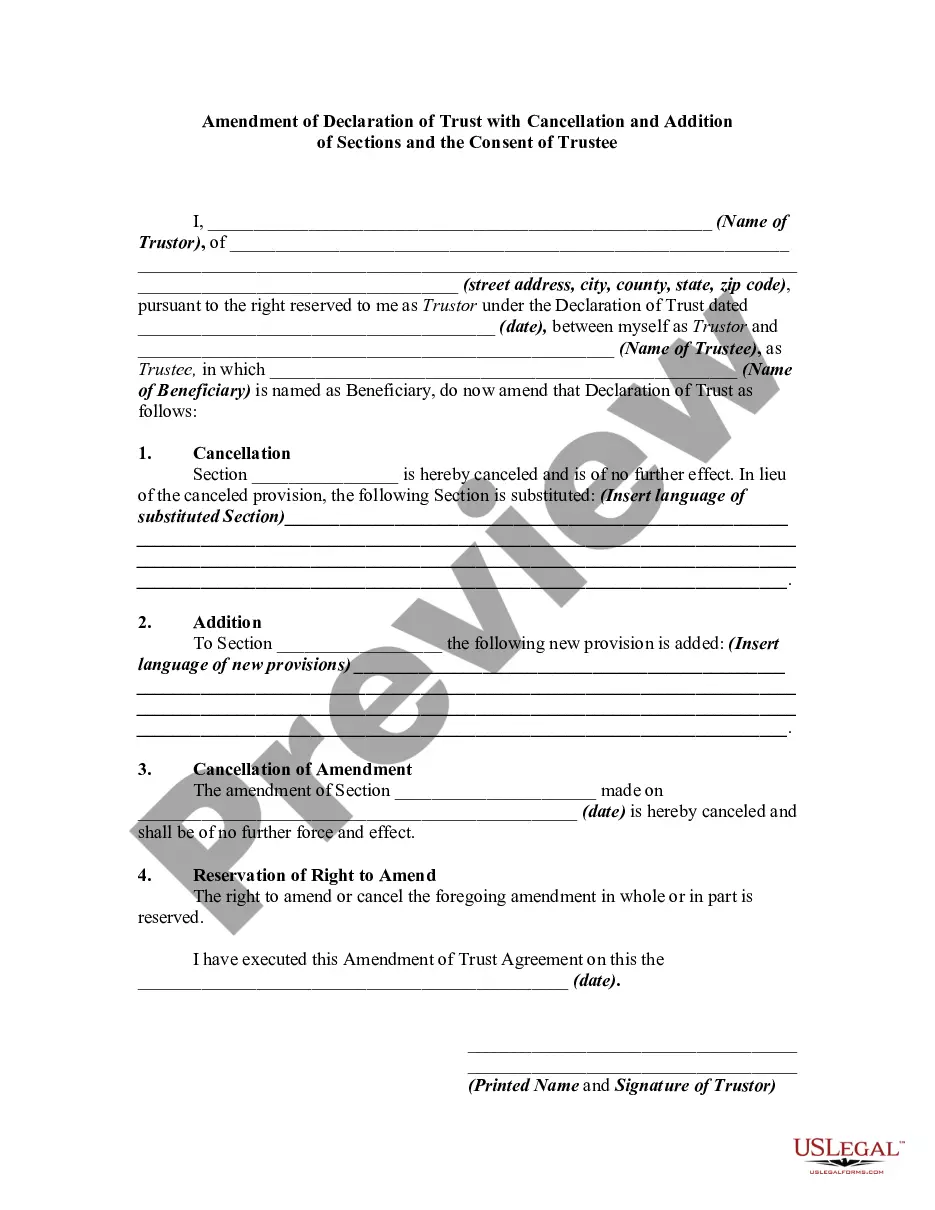
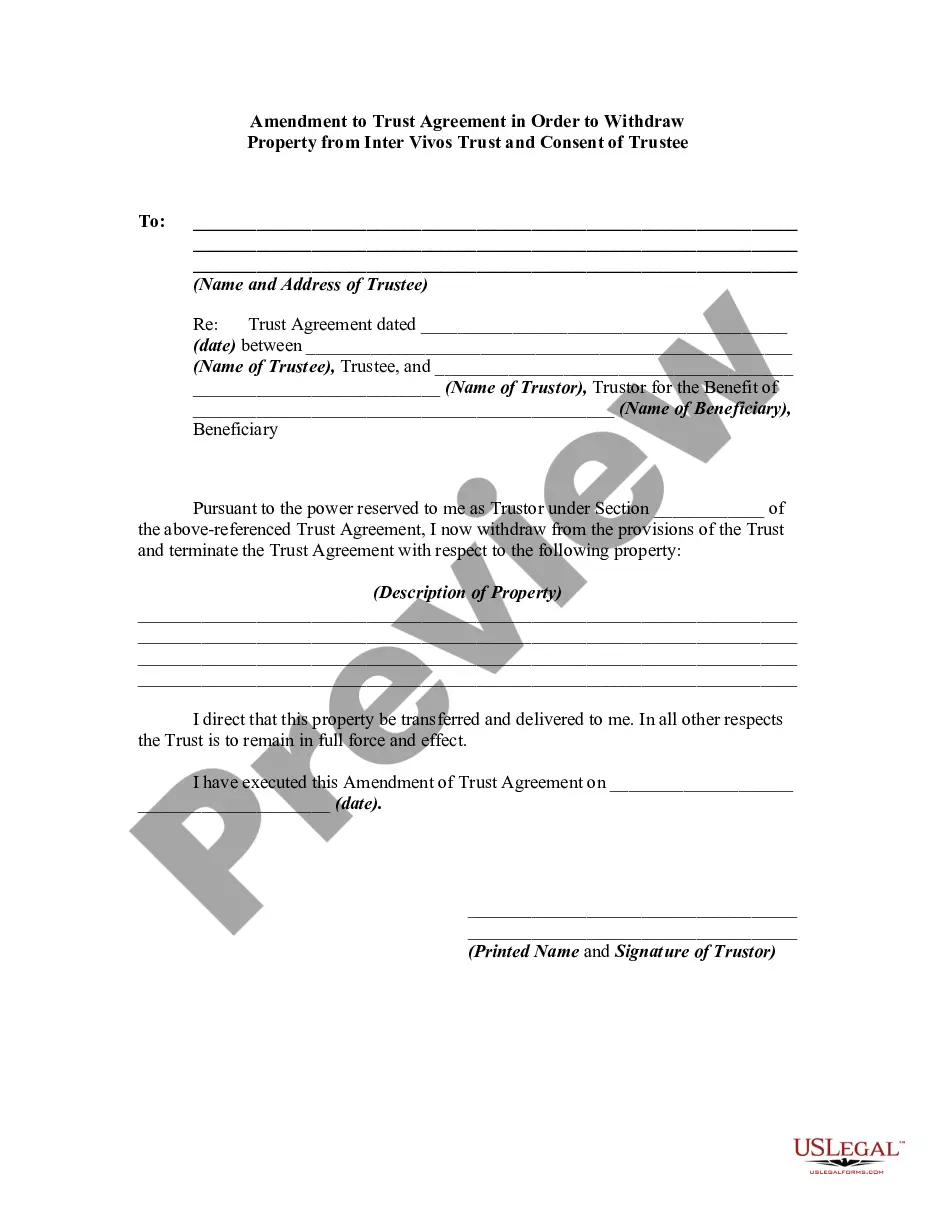
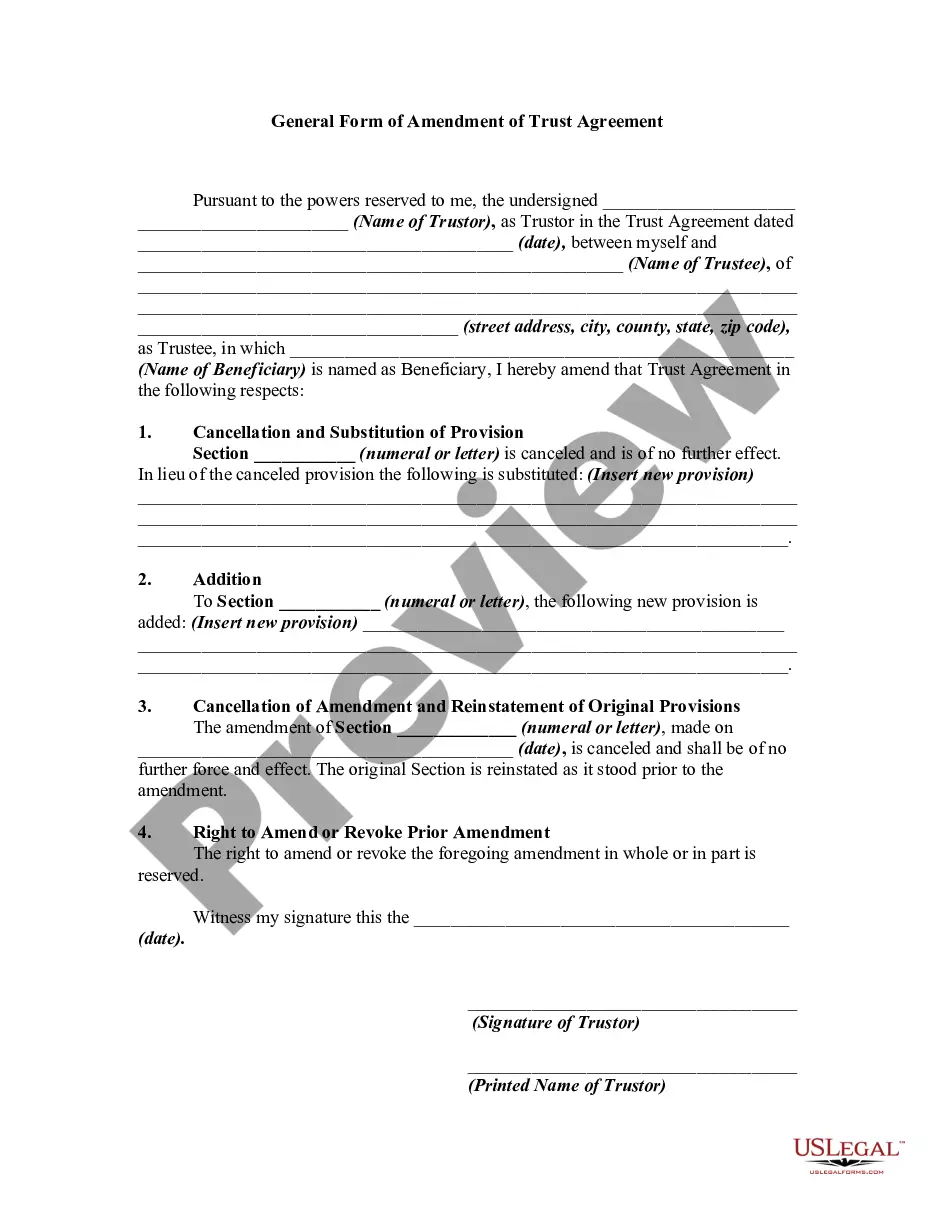
The Order Modifying Trust is a legal document that allows for the modification of a charitable trust, specifically for religious, charitable, literary, and educational purposes. This form is essential for making changes to an existing trust while ensuring compliance with legal requirements. By using this form, trustees can amend the trust's terms while maintaining its tax-exempt status under the Internal Revenue Code.
What’s included in this form
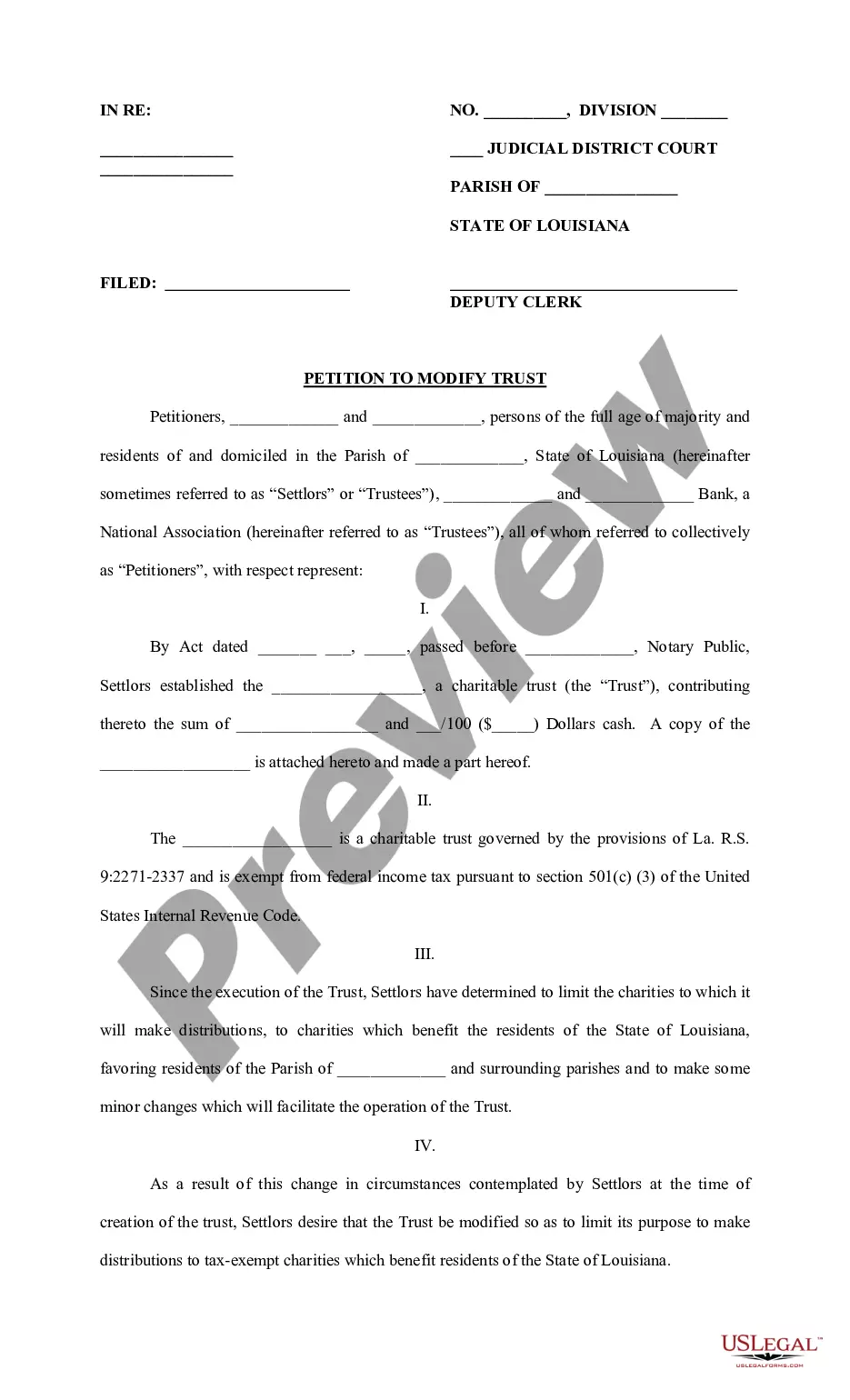
- Judicial district court and parish identification.
- Details of the original charitable trust being amended.
- Purpose and goals of the modified trust.
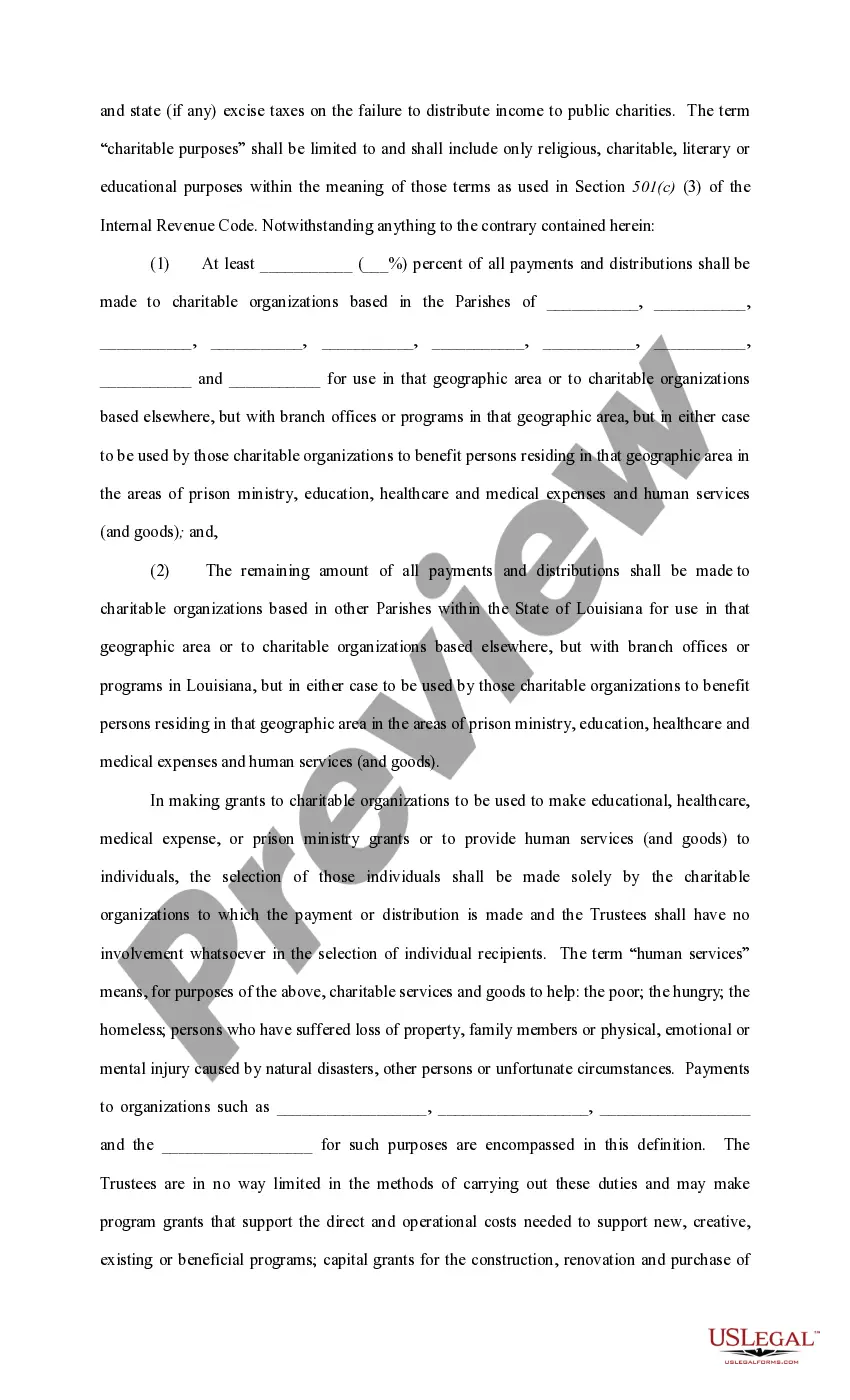
- Guidelines for contributions, distributions, and charitable organizations.
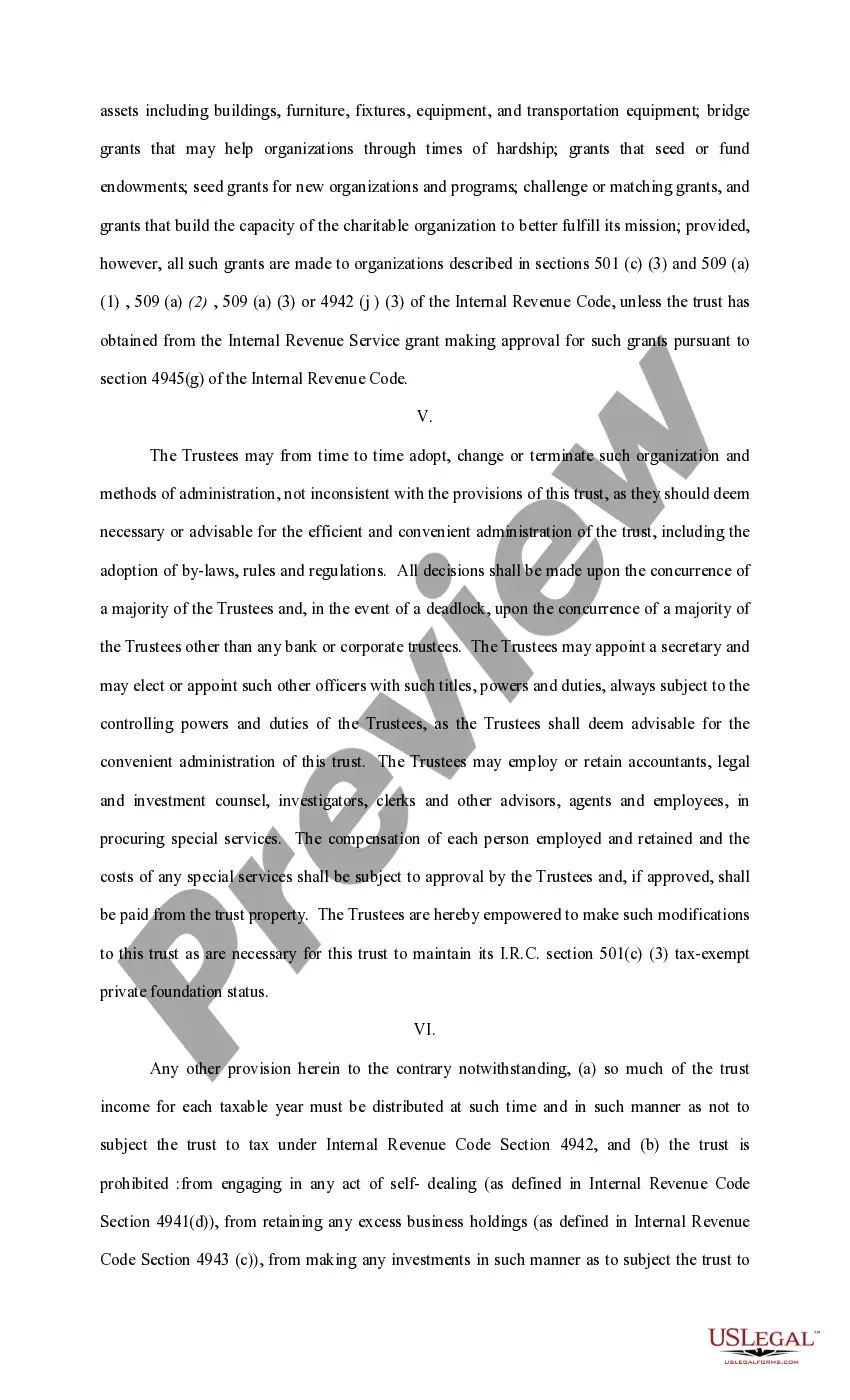
- Trustee powers and responsibilities, including appointment and removal.
- Conditions for modifying or terminating the trust.

When to use this document
This form should be used when a charitable trust needs to be modified due to changes in its purpose, trustee roles, or distribution policies. Scenarios may include altering the trust to respond to new charitable needs, adjusting the trustee's distribution authority, or updating provisions to ensure tax compliance.
Who this form is for
- Current trustees of a charitable trust seeking to amend its provisions.
- Settlors of a trust wanting to change its operational structure.
- Legal professionals assisting clients with trust modifications.
Instructions for completing this form
- Enter the name and details of the original charitable trust to be modified.
- Specify the new purposes and any changes to the trustee's distribution authority.
- List the geographic areas and types of charitable organizations supported by the trust.
- Complete the identification of current trustees and any modifications to their roles.
- Provide signatures and date to finalize the form.
Does this document require notarization?
This form does not typically require notarization unless specified by local law. It is recommended to check specific requirements based on the location of the trust.
Get your form ready online
Our built-in tools help you complete, sign, share, and store your documents in one place.
Make edits, fill in missing information, and update formatting in US Legal Forms—just like you would in MS Word.
Download a copy, print it, send it by email, or mail it via USPS—whatever works best for your next step.
Sign and collect signatures with our SignNow integration. Send to multiple recipients, set reminders, and more. Go Premium to unlock E-Sign.
If this form requires notarization, complete it online through a secure video call—no need to meet a notary in person or wait for an appointment.
We protect your documents and personal data by following strict security and privacy standards.

Make edits, fill in missing information, and update formatting in US Legal Forms—just like you would in MS Word.

Download a copy, print it, send it by email, or mail it via USPS—whatever works best for your next step.

Sign and collect signatures with our SignNow integration. Send to multiple recipients, set reminders, and more. Go Premium to unlock E-Sign.

If this form requires notarization, complete it online through a secure video call—no need to meet a notary in person or wait for an appointment.

We protect your documents and personal data by following strict security and privacy standards.
Common mistakes to avoid
- Failing to include required details about the original trust.
- Not specifying the new purposes clearly, leading to potential misunderstandings.
- Incorrectly identifying trustees or not updating their roles appropriately.
Why use this form online
- Convenient access to a professionally drafted legal document.
- Edit and customize the form to fit specific trust requirements easily.
- Reliable resources ensure compliance with current legal standards.
Looking for another form?




Form popularity
FAQ
A court can, when given reasons for a good cause, amend the terms of irrevocable trust when a trustee and/or a beneficiary petitions the court for a modification.Such modification provisions are common with charitable trusts, to allow modifications when federal tax law changes.
Find living trust forms online. Be as clear as possible. Include specific language. Have the amendment notarized. Keep your trust document and amendment together in a safe place. Alternatively, do what is called a restatement of the trust. Revoke your trust.
Trustees can be easily changed on revocable Trust since the trust instrument's grantor is still alive and in charge, and changing the trustee is as simple as adding an amendment to an existing trust. You can write a new Trust and nullify the old Trust.
You can make changes to your trust in one of three ways.Sign a complete trust restatement that's valid under your applicable state law. Sign a complete revocation of the original trust agreement and any amendments, then transfer the assets held in the revoked trust back into your own name.
Physical Relocation. The noncustodial parent can reach out to the court to modify custody if the custodial parent moves.One Parent Refuses to Follow the Custody Terms.The Child's Needs Have Changed.A Parent's Situation Has Changed.The Child Is in Danger.9 Secrets the Insurance Adjuster Doesn't Want You to Know.
You can change an existing court order or consent order. You can also ask a court to enforce an order if your ex-partner is not following it. If you ask the court to change or enforce an order, you'll probably have to go to a court hearing. You can usually avoid this if you get help outside of court instead.
A Suit Affecting the Parent-Child Relationship, or SAPCR, is essentially a legal request for a visitation, child custody, child support, or any other order which will impact the interests of a child.
Modified order means an order issued by the Board to abrogate, change, or modify an original order after consideration of facts not originally considered.
Physical Relocation. The noncustodial parent can reach out to the court to modify custody if the custodial parent moves. One Parent Refuses to Follow the Custody Terms. The Child's Needs Have Changed. A Parent's Situation Has Changed. The Child Is in Danger. 9 Secrets the Insurance Adjuster Doesn't Want You to Know.