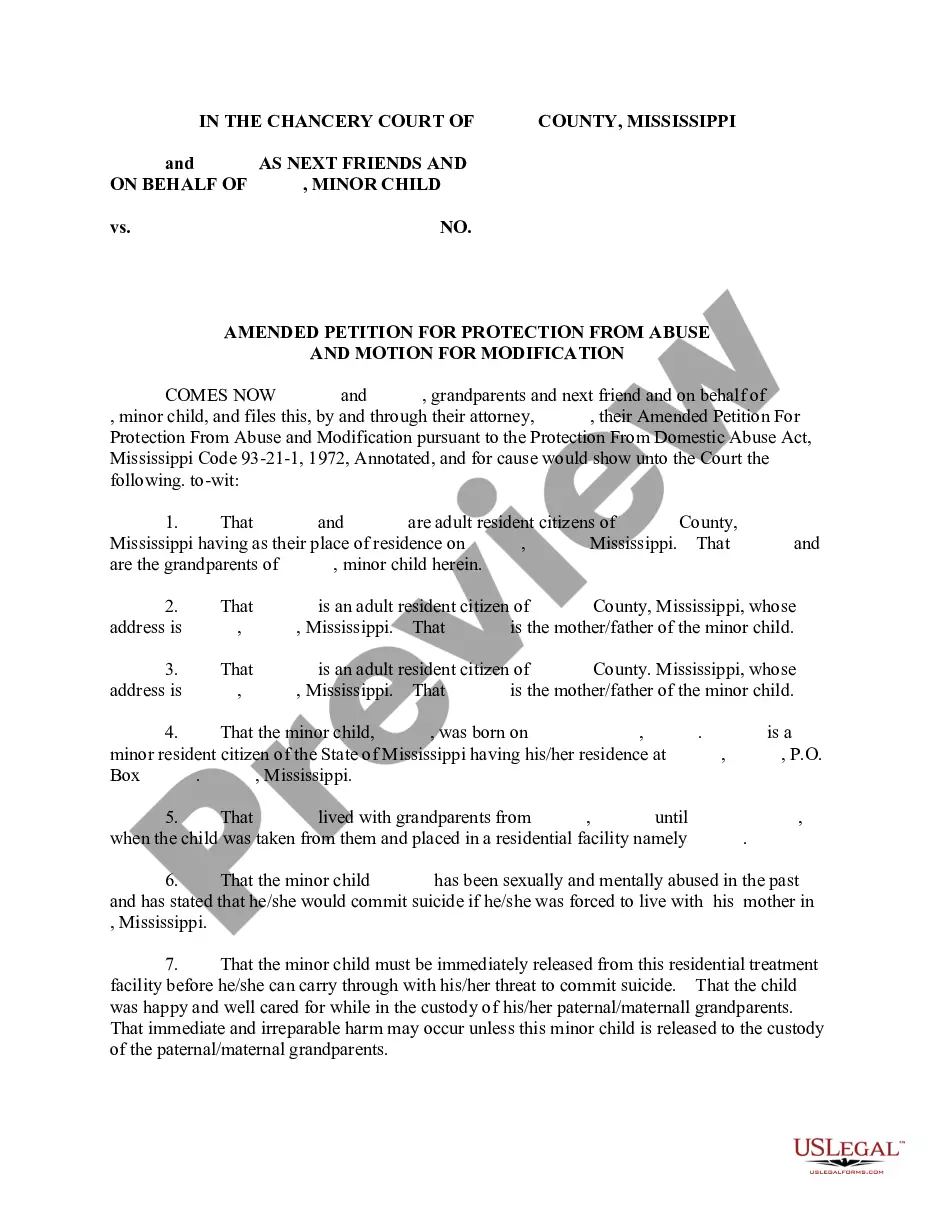
Louisiana Possessory Collateral Security Agreement
About this form
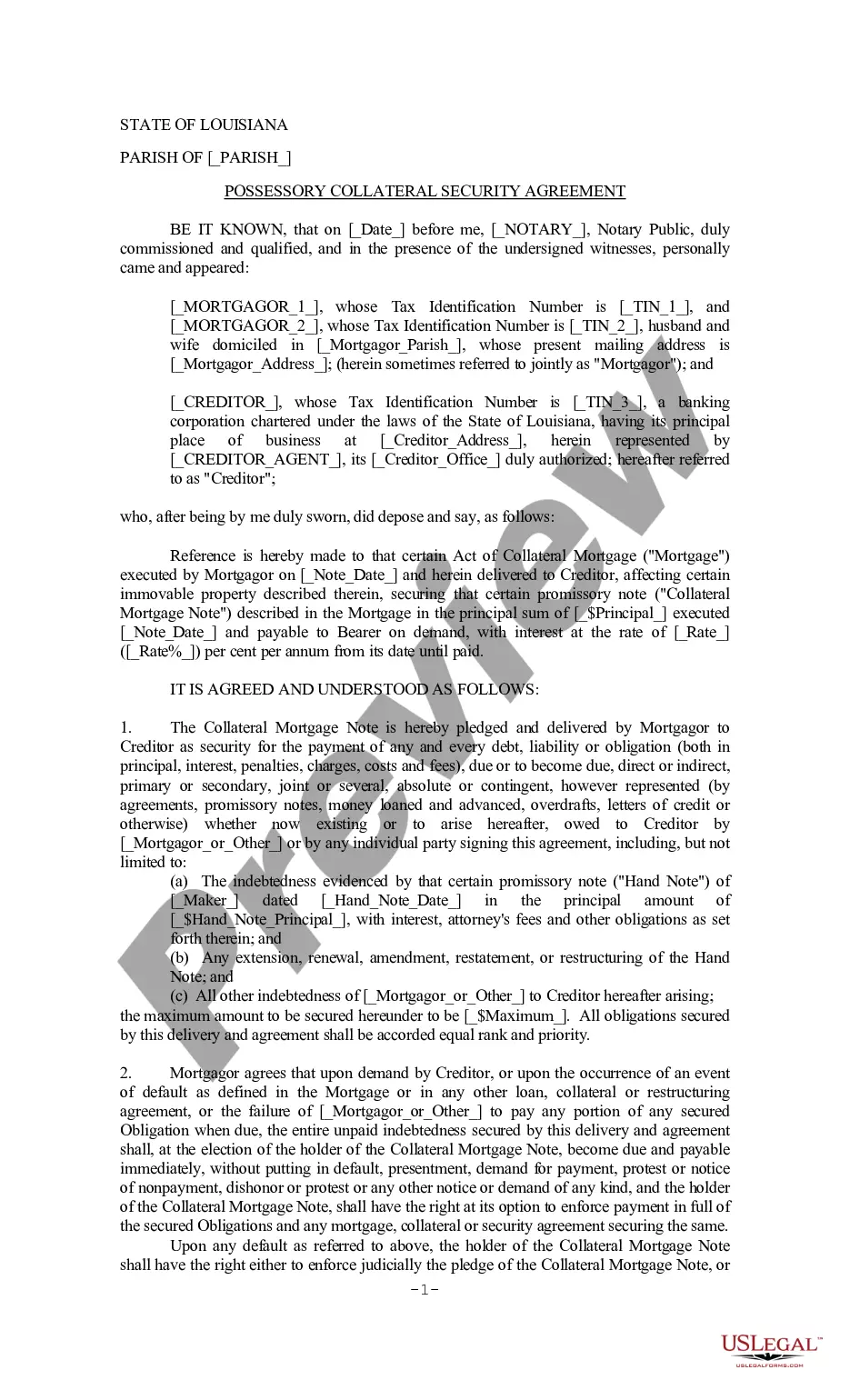
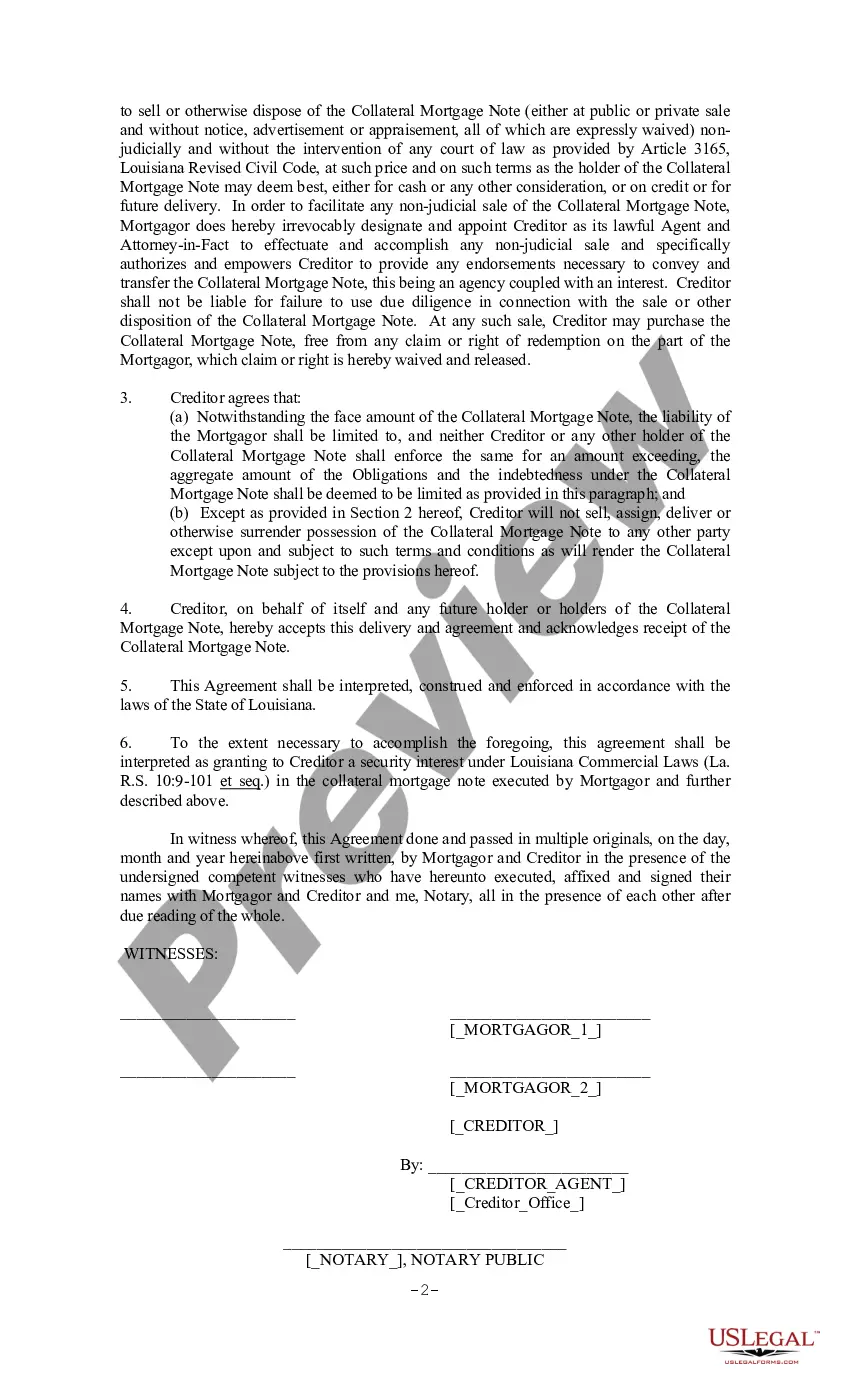
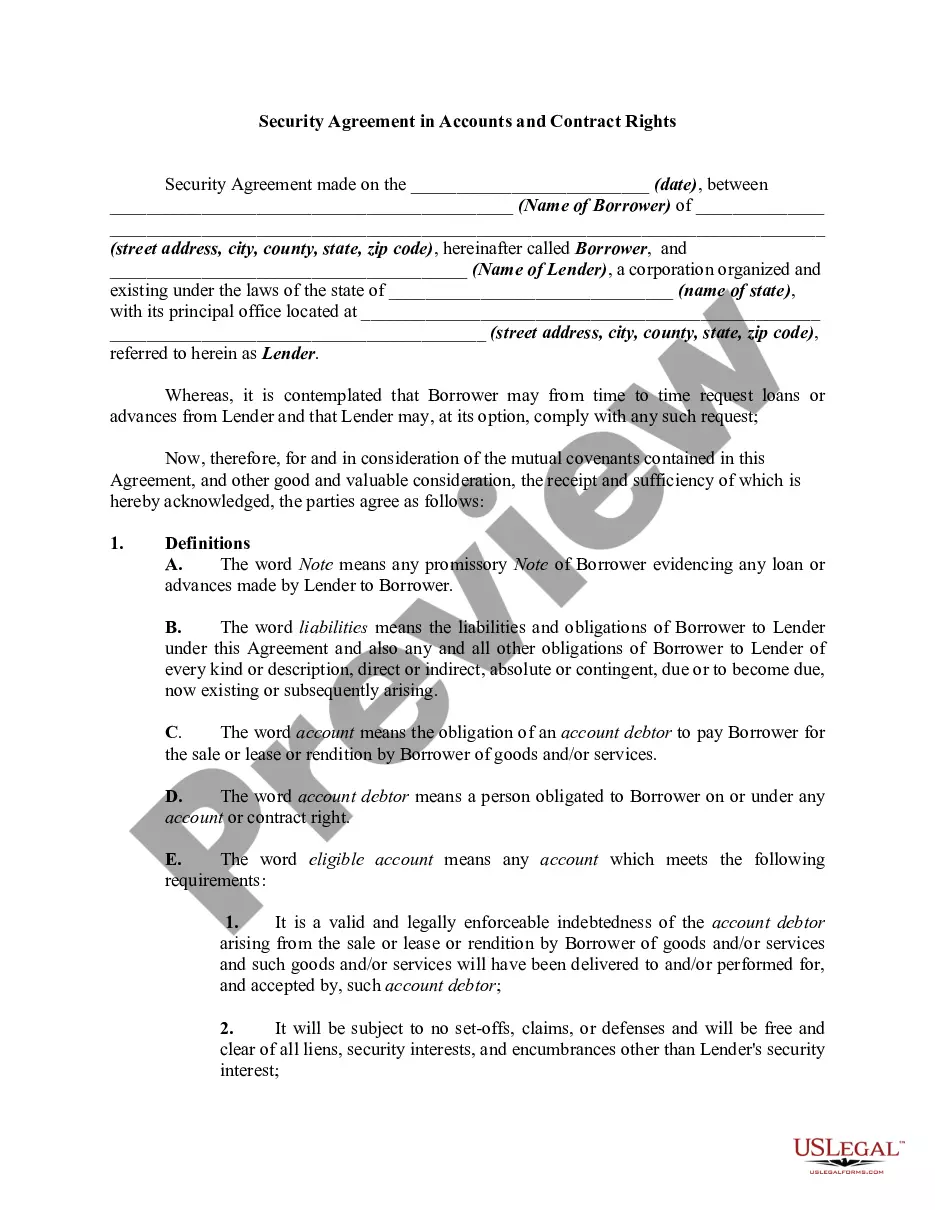
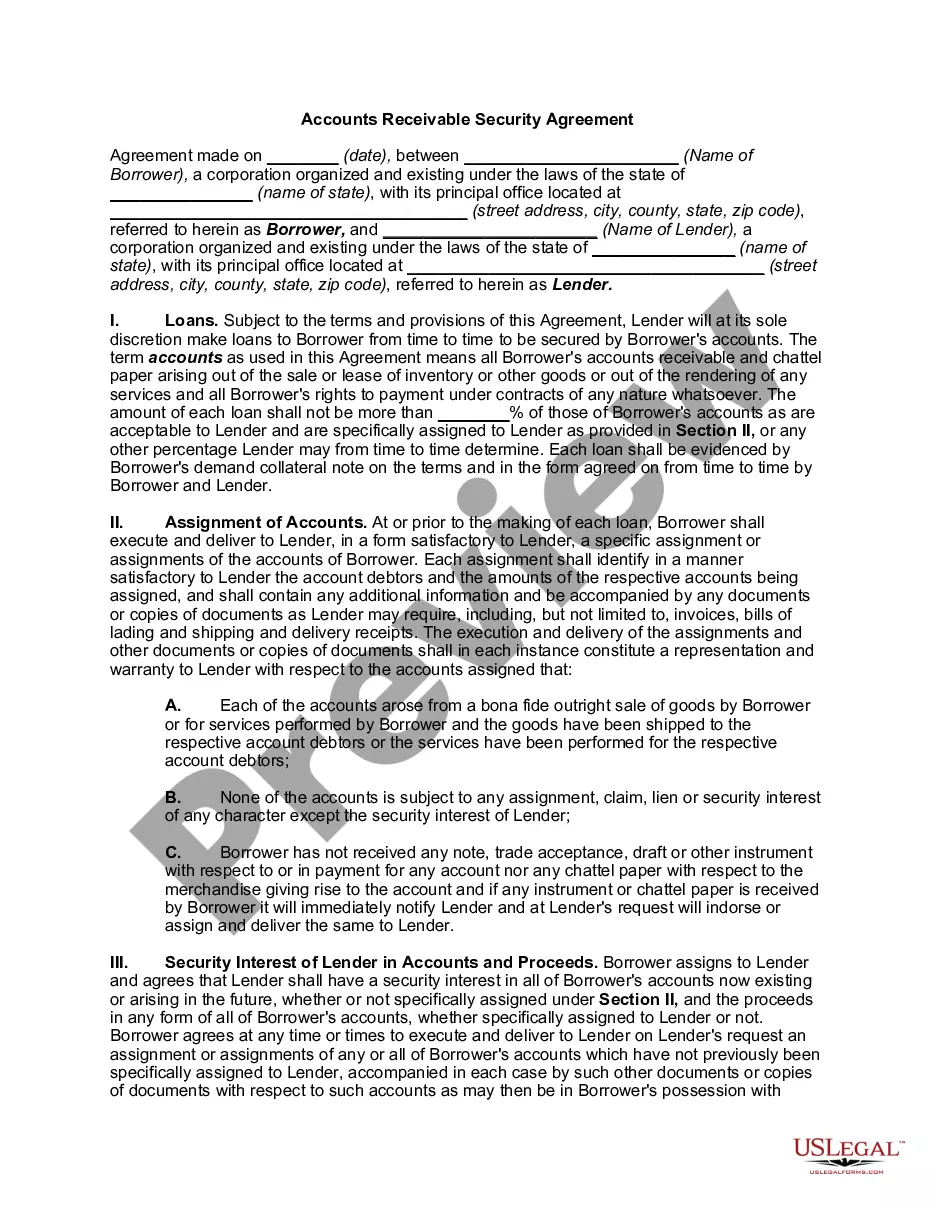
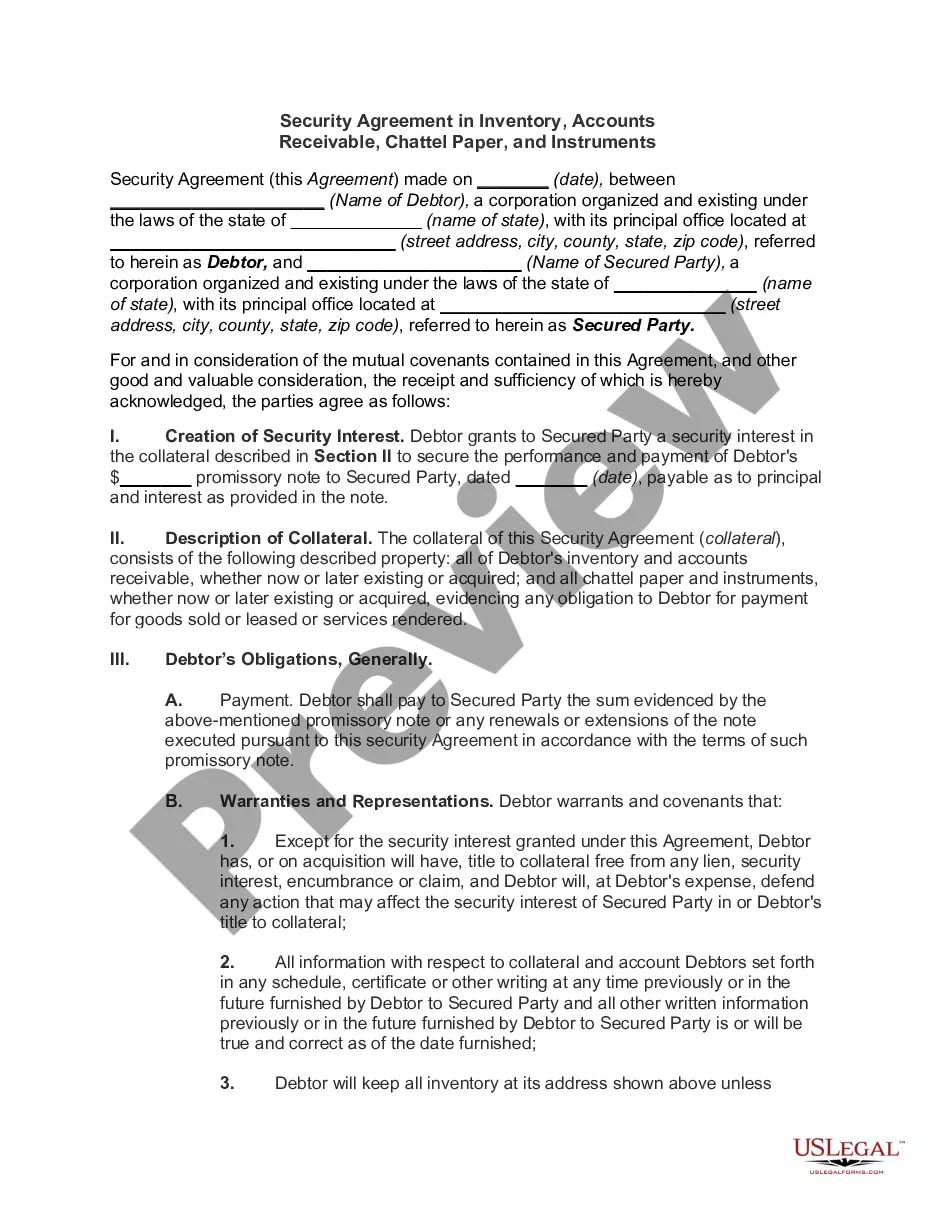
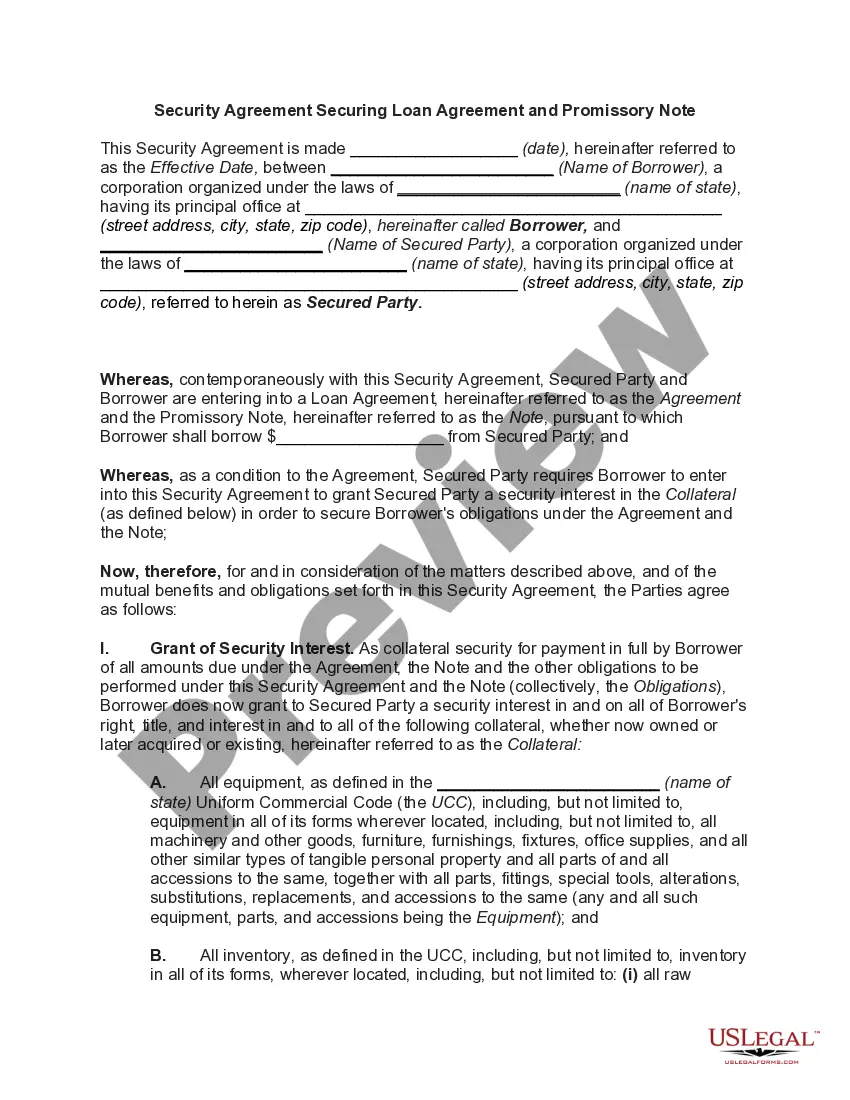
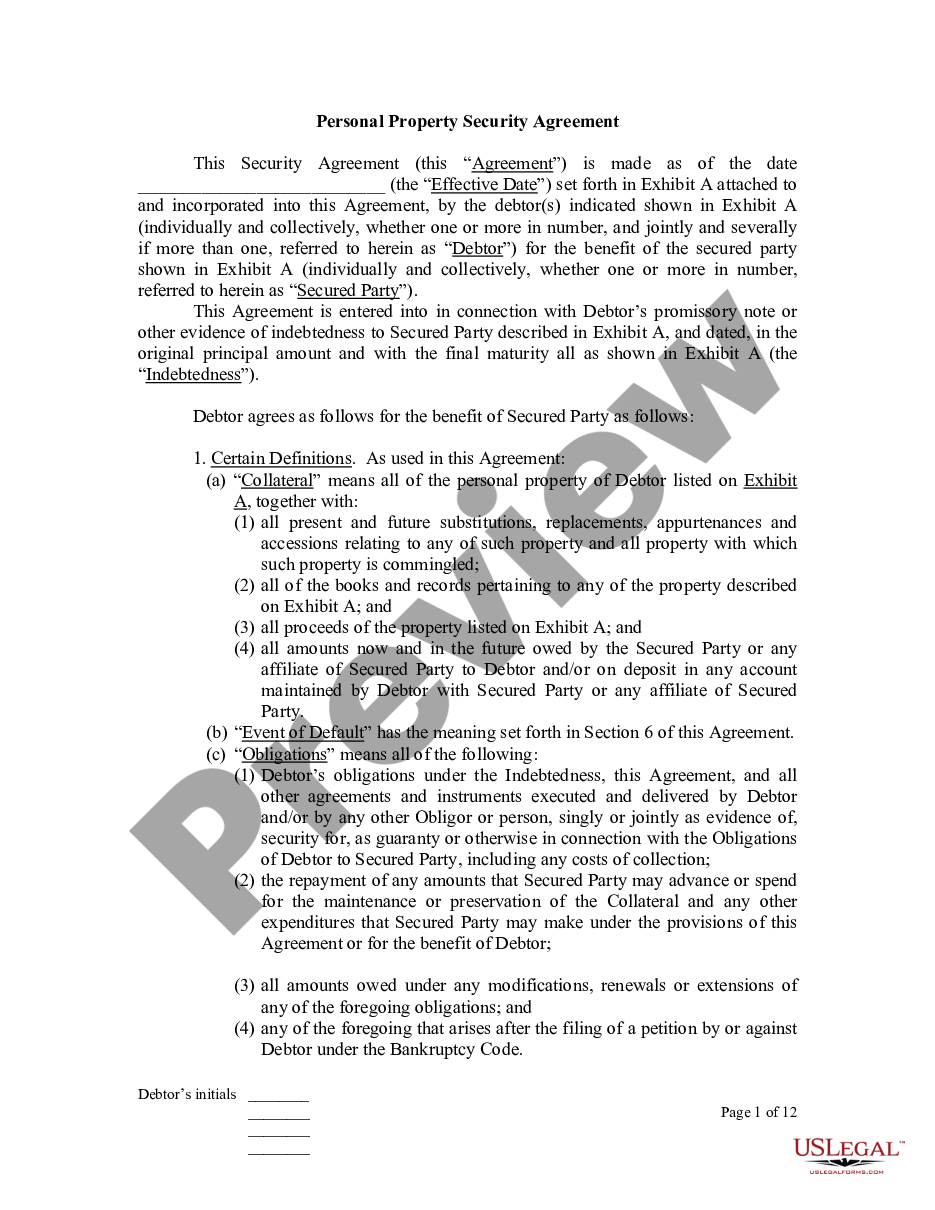
The Possessory Collateral Security Agreement is a legal document that secures a collateral mortgage note as collateral for existing obligations. It serves to protect the creditor by outlining remedies in case of default by the mortgagor. Unlike other forms of security agreements, this document specifically addresses the pledge of a mortgage note and the associated rights of the creditor in Louisiana's legal context.
Form components explained
- Parties Involved: Identification of the mortgagor (the party delivering the collateral) and the creditor.
- Collateral Description: Details of the collateral mortgage note being pledged.
- Obligations Secured: Specification of the debts and obligations intended to be secured by this agreement.
- Events of Default: Conditions under which the creditor can take action in case of default.
- Legal Framework: Governing laws of the State of Louisiana and acknowledgment of security interest.
When to use this document
This form should be used when a mortgagor wants to pledge a collateral mortgage note as security for loans or financial obligations. It is typically utilized in situations where an existing obligation needs additional collateral, particularly in real estate transactions. This form is essential during refinancing or restructuring agreements where a mortgage note is involved.
Intended users of this form
- Individuals or couples (mortgagors) seeking to secure loans with a collateral mortgage note.
- Financial institutions or creditors requiring additional security for loans.
- Real estate professionals involved in transactions that include secured debt.
- Attorneys or legal advisors assisting clients with securing obligations.
Completing this form step by step
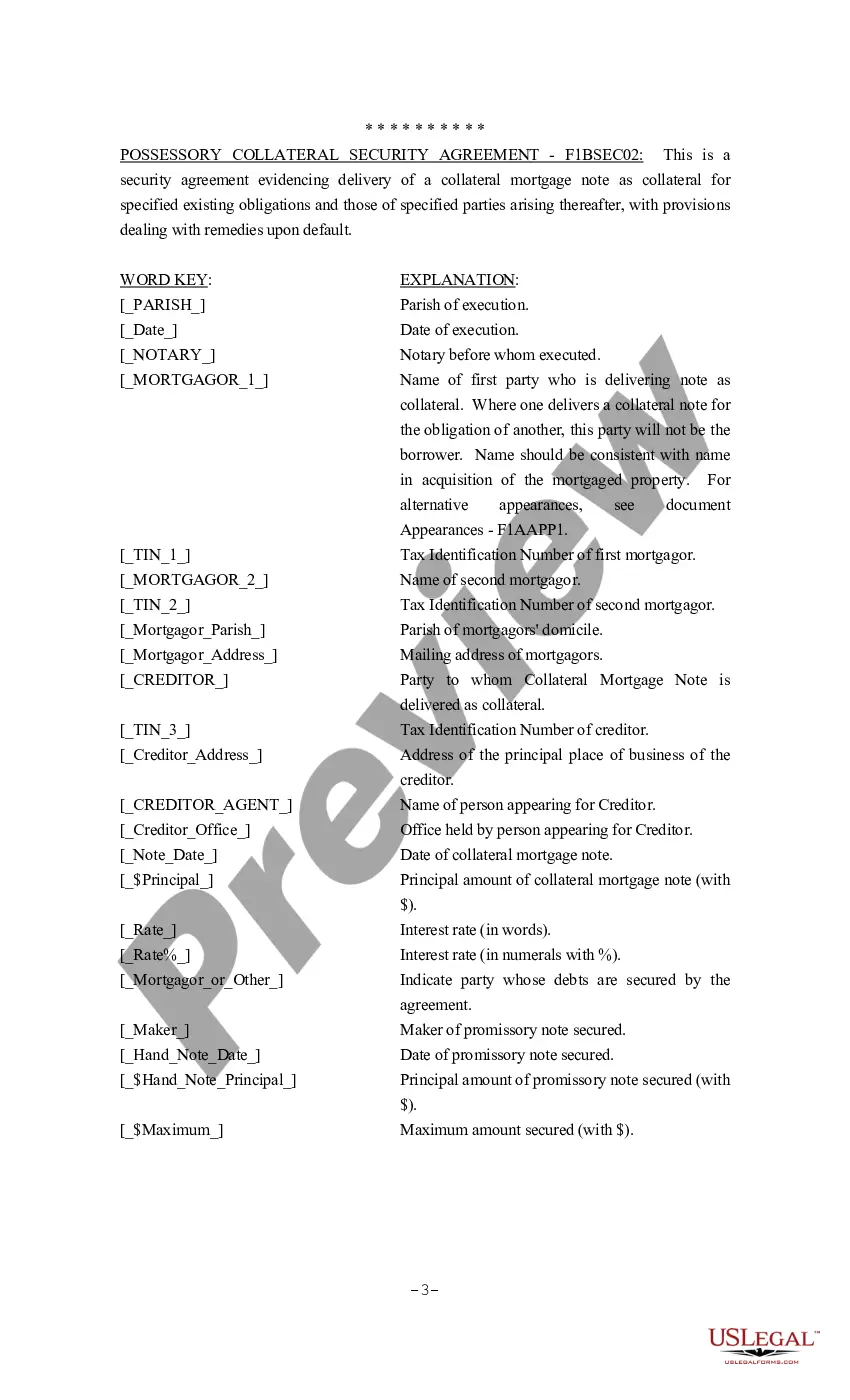
- Identify all parties involved: clearly state the names and addresses of the mortgagors and the creditor.
- Provide details regarding the collateral mortgage note: include the date, principal amount, and interest rate.
- Define the obligations secured by the collateral, specifying existing debts and any that may arise in the future.
- Review the events of default and remedies provided in the agreement to ensure understanding.
- Have all parties sign the document in the presence of a notary public and witnesses.
Does this document require notarization?
Yes, this form must be notarized to be legally valid. US Legal Forms offers integrated online notarization, allowing you to complete the process via a secure video call at any time, ensuring your document is properly witnessed and compliant with legal requirements.
Get your form ready online
Our built-in tools help you complete, sign, share, and store your documents in one place.
Make edits, fill in missing information, and update formatting in US Legal Forms—just like you would in MS Word.
Download a copy, print it, send it by email, or mail it via USPS—whatever works best for your next step.
Sign and collect signatures with our SignNow integration. Send to multiple recipients, set reminders, and more. Go Premium to unlock E-Sign.
If this form requires notarization, complete it online through a secure video call—no need to meet a notary in person or wait for an appointment.
We protect your documents and personal data by following strict security and privacy standards.

Make edits, fill in missing information, and update formatting in US Legal Forms—just like you would in MS Word.

Download a copy, print it, send it by email, or mail it via USPS—whatever works best for your next step.

Sign and collect signatures with our SignNow integration. Send to multiple recipients, set reminders, and more. Go Premium to unlock E-Sign.

If this form requires notarization, complete it online through a secure video call—no need to meet a notary in person or wait for an appointment.

We protect your documents and personal data by following strict security and privacy standards.
Typical mistakes to avoid
- Failing to accurately identify all parties involved, leading to potential legal disputes.
- Not providing a complete and correct description of the collateral mortgage note.
- Omitting the definition of secured obligations, which may create ambiguity concerning the agreement's scope.
- Neglecting to ensure proper signatures and notarization, which could render the document invalid.
Benefits of completing this form online
- Convenience to download and fill out the form at your own pace.
- Editable fields ensure you can input the necessary information easily.
- Access to professionally drafted terms by licensed attorneys enhances reliability.
- Immediate access allows for swift handling of urgent legal matters.
Looking for another form?

Form popularity
FAQ
It should be noted that UCC financing statements filed now generally do not contain a grant of the security interest and generally are not signed or otherwise authenticated by the Debtor and therefore would not satisfy the requirement of a security agreement.
Three things must be present in order for the secured party to obtain a protected security interest in the collateral: 1) the secured party must pay for or give something of value in exchange for receiving the security interest, 2) the debtor must own the collateral or have proper authority over the collateral in order
The UCC specifies what must be contained in a financing statement: the name of the debtor. the name of the secured party; and. an indication of the collateral.
Updated Jun 1, 2020. A UCC-Uniform Commercial Code-1 statement is a legal notice filed by creditors as a way to publicly declare their rights to potentially obtain the personal properties of debtors who default on business loans they extend.
UCC-1 Financing Statements do not have to be signed by either the Debtor or Secured Party; however, they must be authorized.Although the UCC-1 Financing Statement does not require signatures, any attachment such as the legal description or special terms and conditions may require the signature of the Debtor.
If a secured party to a conditional sale does not record or file the agreement, however, he may lose the security if the buyer sells the goods to a third party.If a security interest has not been perfected, the secured party's claim to the collateral property may be subordinate to any number of creditors.
Overview: The debtor typically represents and warrants to the secured party that: the debtor has suf- ficient rights in, or power to transfer rights in, the collateral for the secured party's security interest to attach (§9-203(b)(2)); the collateral is either not encumbered or, if encumbered, the encumbrances are
A security agreement is a document that provides a lender a security interest in a specified asset or property that is pledged as collateral. Security agreements often contain covenants that outline provisions for the advancement of funds, a repayment schedule, or insurance requirements.
Unperfected Security Interests: When one secured party has a perfected security interest in collateral and another secured party has an unperfected security interest in the same collateral, the perfected interest prevails.