Louisiana Motion to Quash due to improper extradition
Understanding this form
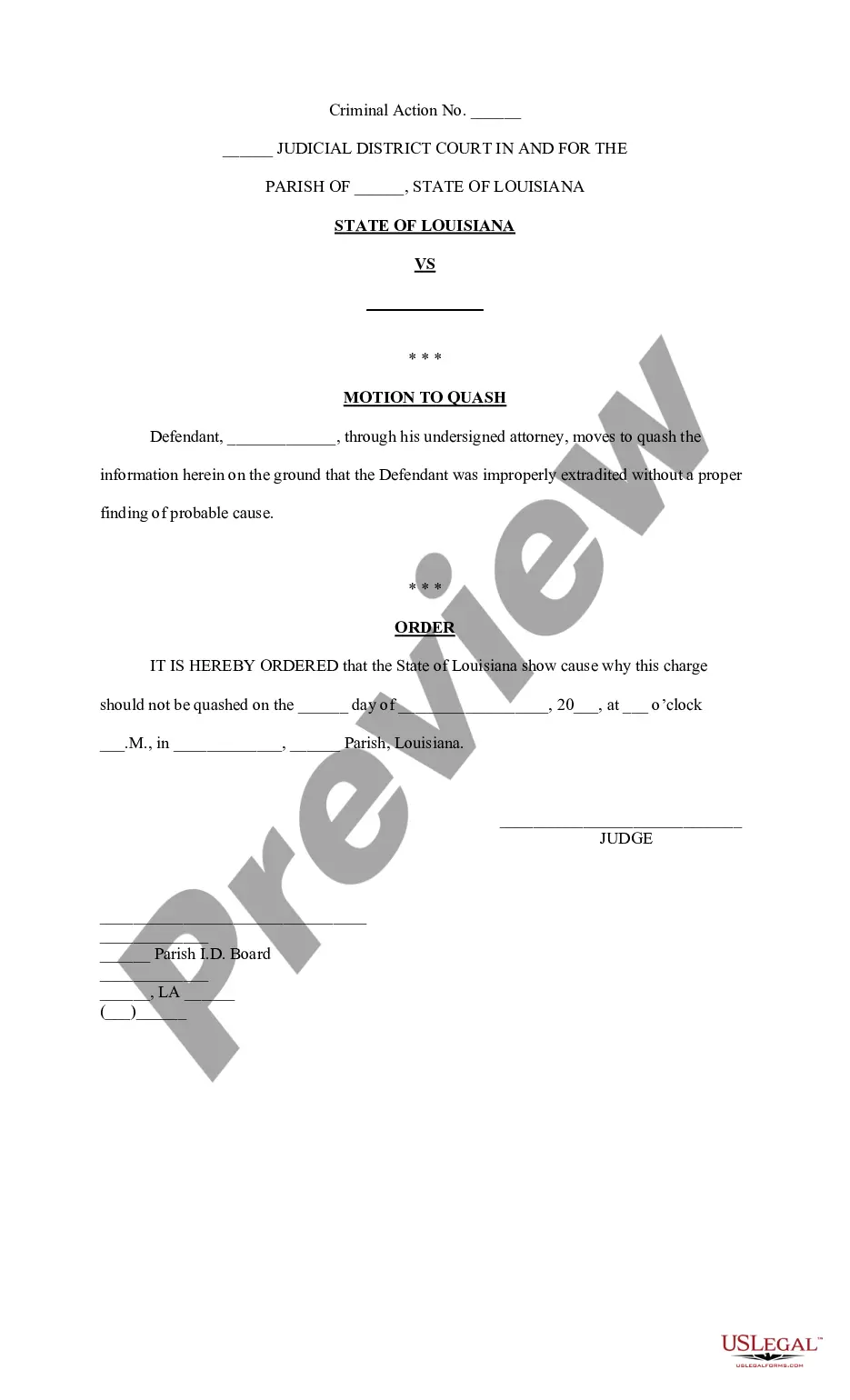
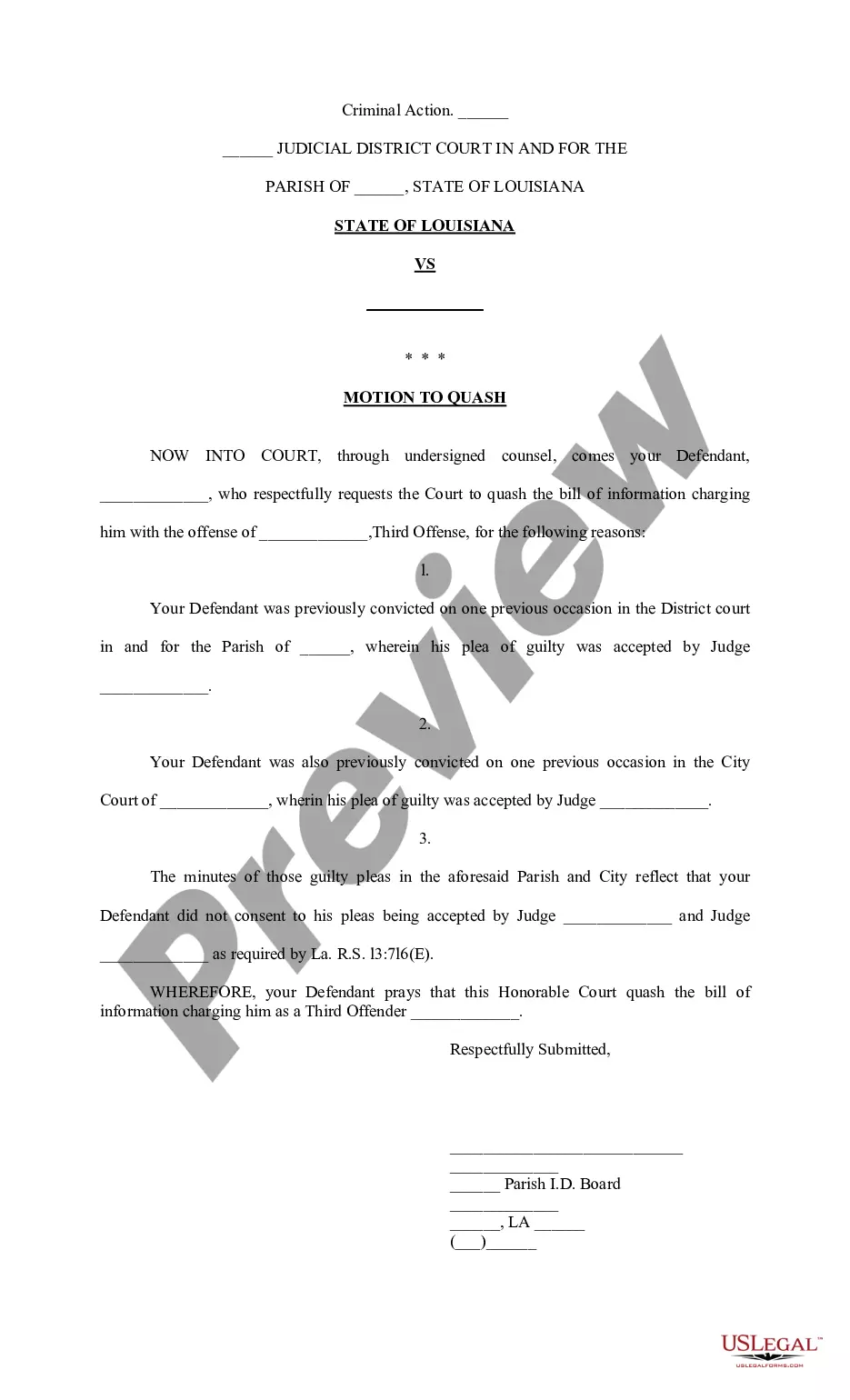
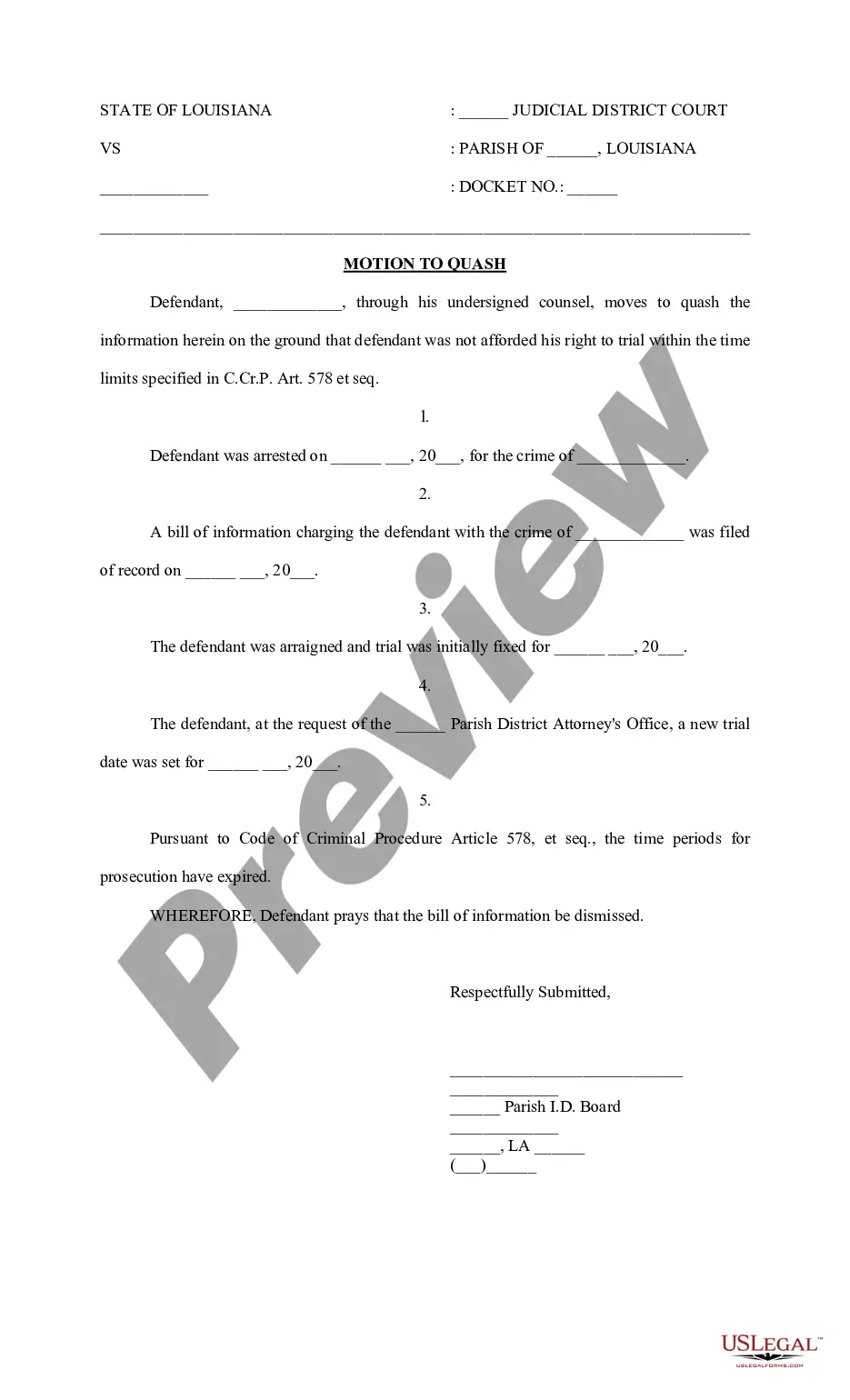
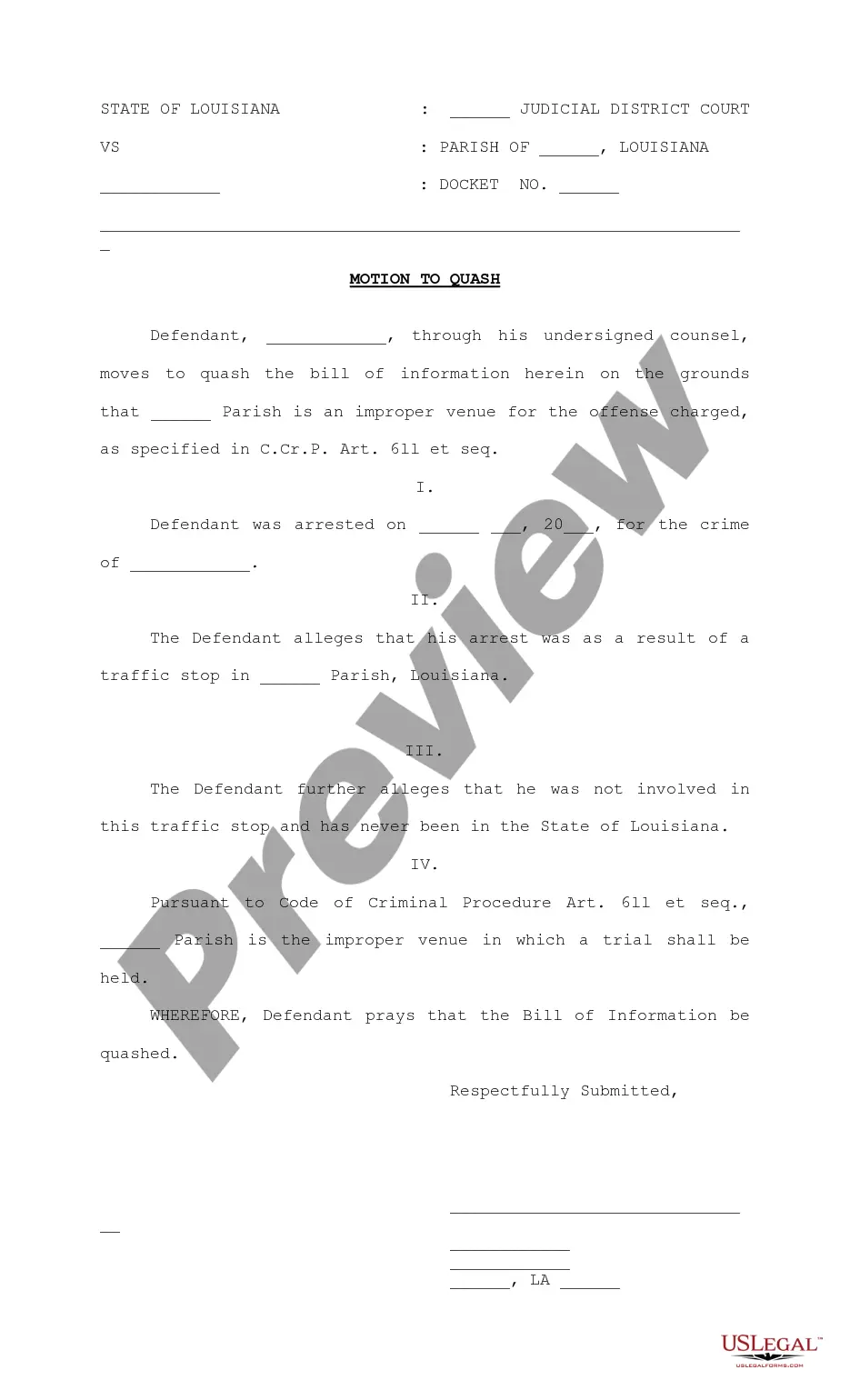
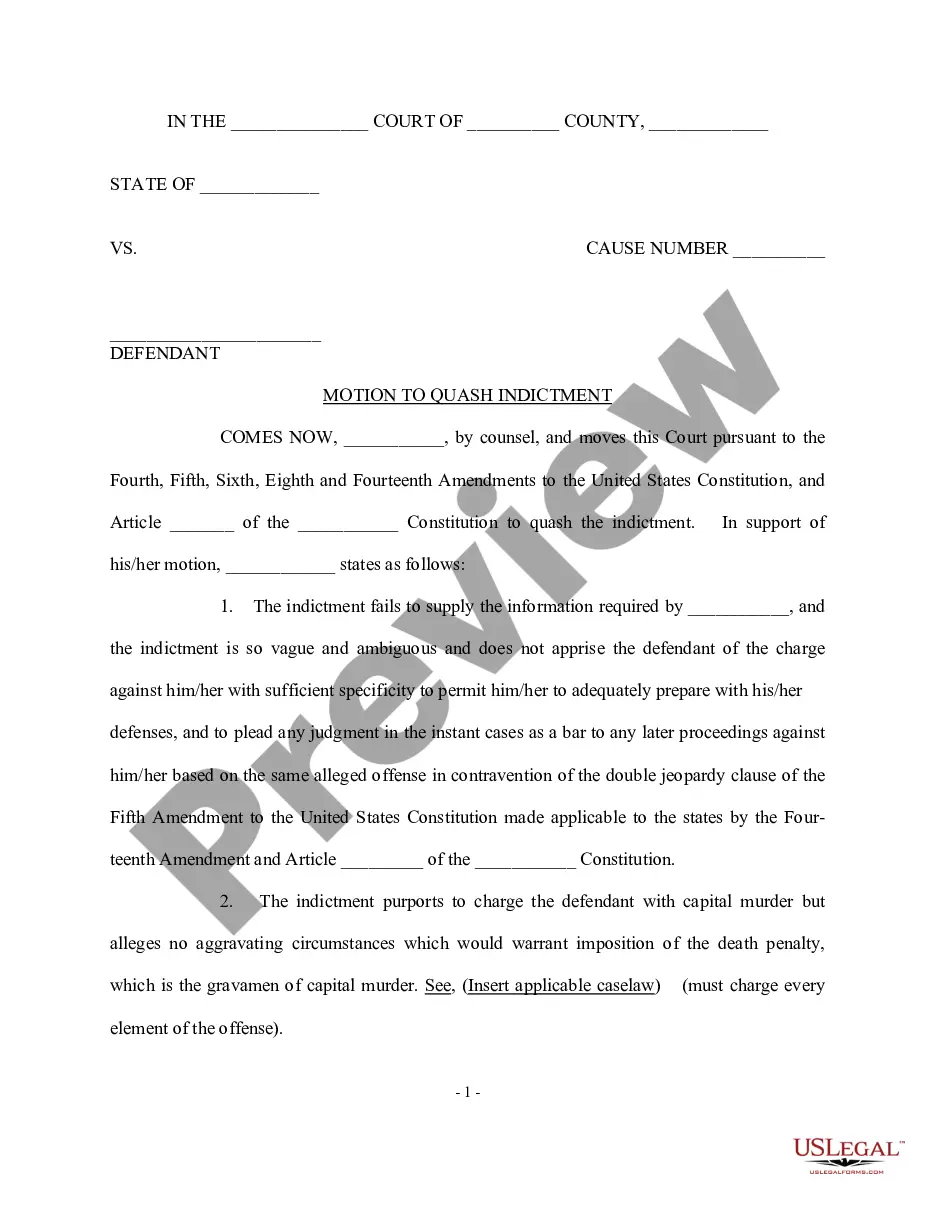
The Motion to Quash due to improper extradition is a legal document used by defense counsel in criminal cases. This motion requests the court to dismiss the charges against a defendant on the basis that they were extradited without a proper showing of probable cause. This form specifically addresses challenges related to extradition processes, distinguishing itself from other motions that may not focus on this particular legal concern.
What’s included in this form
- Heading specifying the judicial district and the state
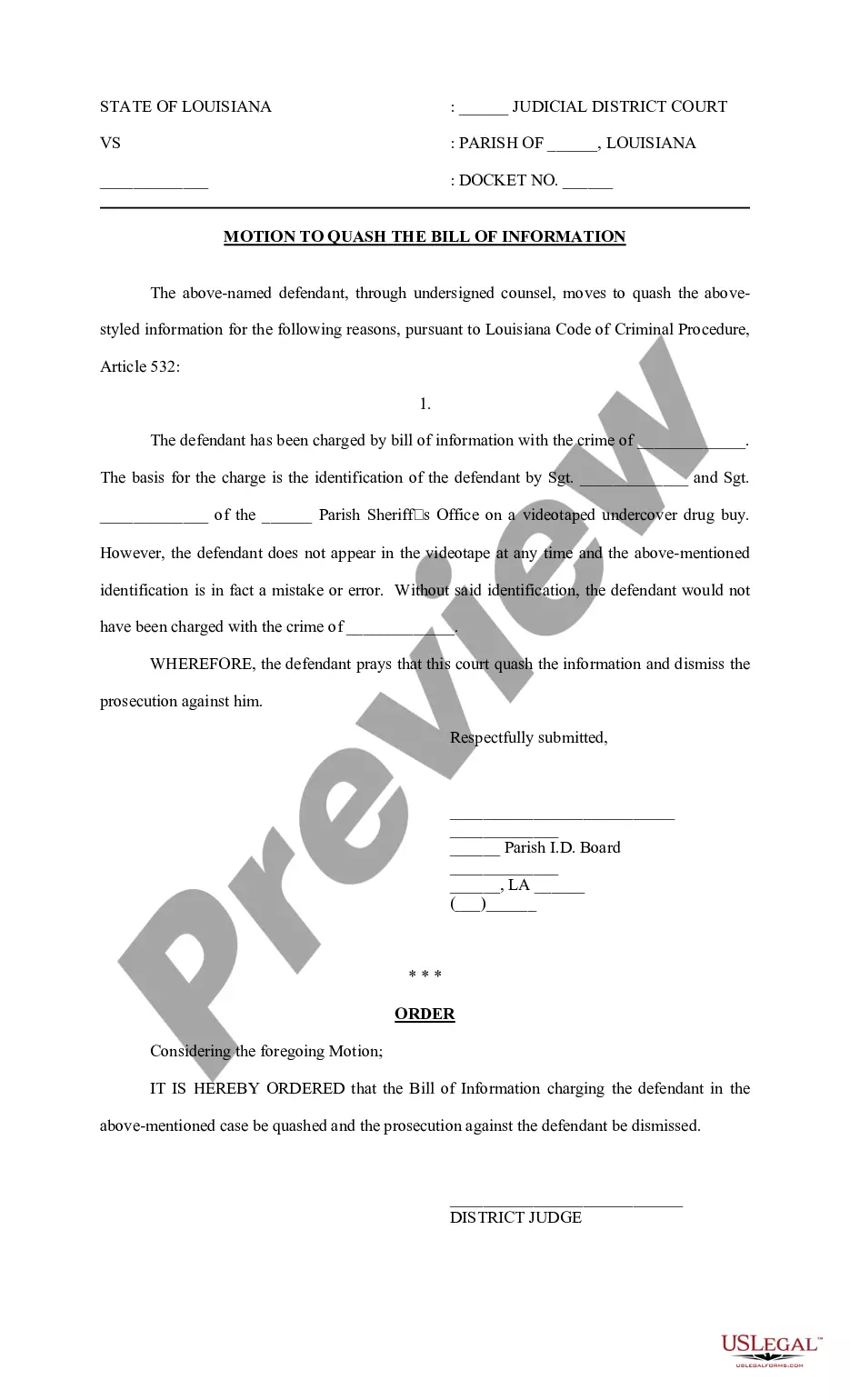
- Statement of the motion to quash the information
- Grounds for the motion related to improper extradition
- Order for the state to show cause why the charge should not be quashed
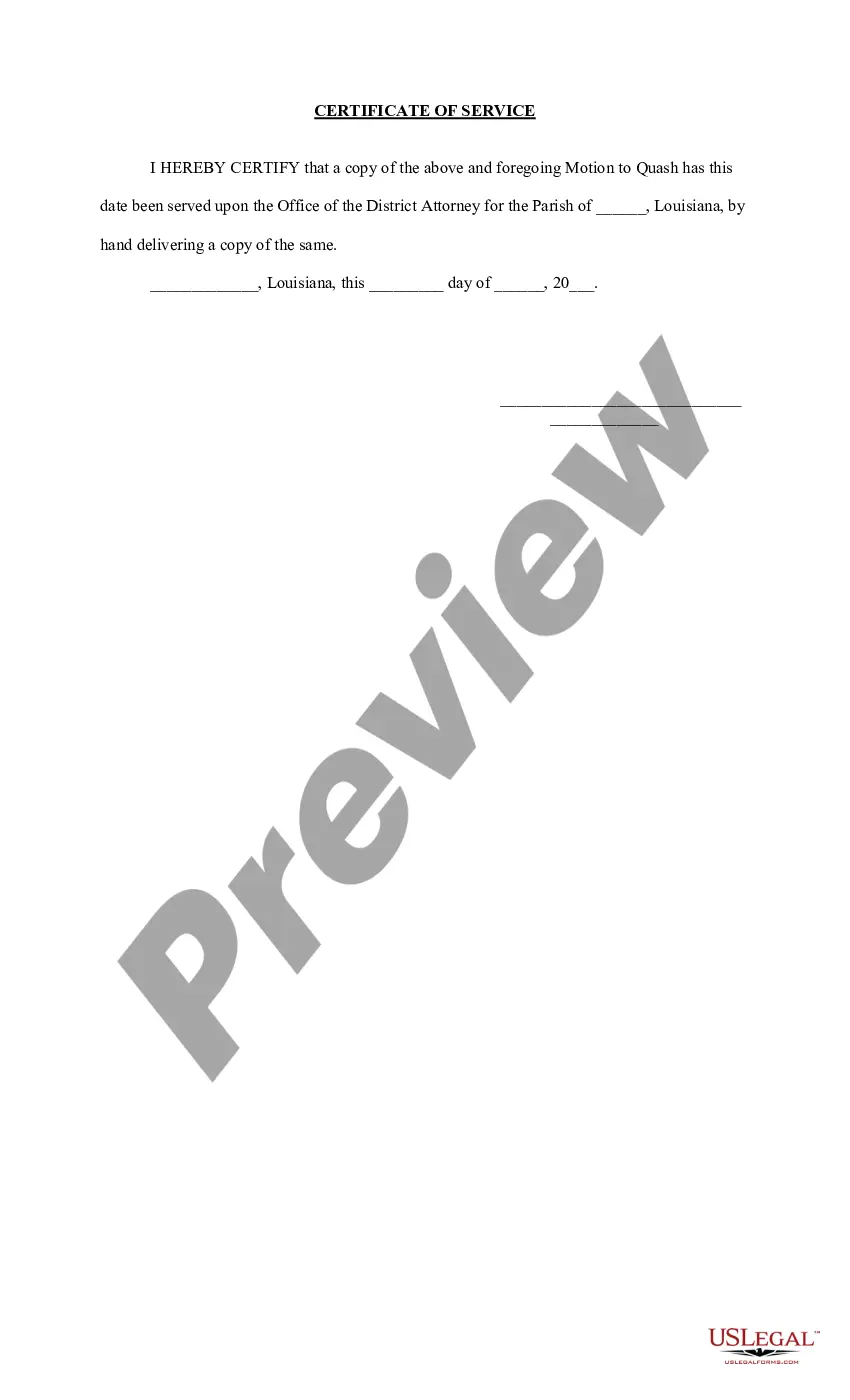
- Certificate of service indicating the motion has been served to the district attorney
Common use cases
This form should be used when a defendant challenges the legality of their extradition. It is appropriate in situations where the defense believes that extradition was conducted without following required legal procedures, such as the need for a probable cause determination. If you are facing criminal charges and suspect that your extradition did not meet legal standards, this motion can be a vital tool in your legal strategy.
Who should use this form
- Defendants facing criminal charges after extradition
- Defense attorneys representing clients in similar cases
- Individuals seeking to challenge the legality of their extradition in court
How to complete this form
- Enter the judicial district and parish where the case is filed.
- Provide the name of the defendant and their representation details.
- Clearly state the grounds for the motion regarding improper extradition.
- Fill in the date and time for the show cause hearing.
- Complete the certificate of service section to confirm delivery to the district attorney.
Does this document require notarization?
This form does not typically require notarization to be legally valid. However, some jurisdictions or document types may still require it. US Legal Forms provides secure online notarization powered by Notarize, available 24/7 for added convenience.
Get your form ready online
Our built-in tools help you complete, sign, share, and store your documents in one place.
Make edits, fill in missing information, and update formatting in US Legal Forms—just like you would in MS Word.
Download a copy, print it, send it by email, or mail it via USPS—whatever works best for your next step.
Sign and collect signatures with our SignNow integration. Send to multiple recipients, set reminders, and more. Go Premium to unlock E-Sign.
If this form requires notarization, complete it online through a secure video call—no need to meet a notary in person or wait for an appointment.
We protect your documents and personal data by following strict security and privacy standards.

Make edits, fill in missing information, and update formatting in US Legal Forms—just like you would in MS Word.

Download a copy, print it, send it by email, or mail it via USPS—whatever works best for your next step.

Sign and collect signatures with our SignNow integration. Send to multiple recipients, set reminders, and more. Go Premium to unlock E-Sign.

If this form requires notarization, complete it online through a secure video call—no need to meet a notary in person or wait for an appointment.

We protect your documents and personal data by following strict security and privacy standards.
Common mistakes to avoid
- Failing to include specific grounds for the motion.
- Not serving the motion properly to the district attorney.
- Missing the deadline for filing the motion.
- Leaving the hearing date and time blank or incorrectly filled.
Benefits of using this form online
- Convenient access for immediate download and use.
- Editable templates allow for customization to meet specific needs.
- Drafted by licensed attorneys to ensure legal reliability.
Looking for another form?


Form popularity
FAQ
The state has to bring you to trial with 120 days if you are accused of a felony and 30 days if you are accused of a misdemeanor and are still being held in custody. If you have bonded out, the State has 180 days to bring you to trial on a felony charge and 60 days to bring you to trial on a misdemeanor charge.
With regard to state felony warrants, it is up to the charging state to process the extradition, and it is generally understood that this can take about 30 days.
An agent of the executive of the state demanding extradition must appear to receive the prisoner, which must occur within 30 days from time of arrest, or the prisoner may be released. Some states allow longer waiting periods, of up to 90 days.
Extradition is a legal process that sends a person in custody from one legal jurisdiction to another.Most states follow the Uniform Criminal Extradition Act. (Louisiana, Mississippi and South Carolina do not.) Extradition is a Constitutional matter, so Federal law can also be used to regulate the extradition process.
A fugitive warrant is an arrest warrant issued in one jurisdiction for a person who is wanted in another jurisdiction. Such a warrant authorizes law enforcement officials to take into custody a fugitive who has fled to another jurisdiction.
Some crimes which may be subject to extradition include murder, kidnapping, drug trafficking, terrorism, rape, sexual assault, burglary, embezzlement, arson, or espionage.
An arraignment in Louisiana is the first court appearance in criminal court in Louisiana. Prior to the arraignment, the prosecutor either filed a bill of information, which is the formal charge, or the grand jury returned a true bill indictinhg the defendant. The arraignment is then set.
30 days. If a felony the may get him.
(1) A motion by the defendant for a speedy trial, in order to be valid, must be accompanied by an affidavit by defendant's counsel certifying that the defendant and his counsel are prepared to proceed to trial within the delays set forth in this Article.