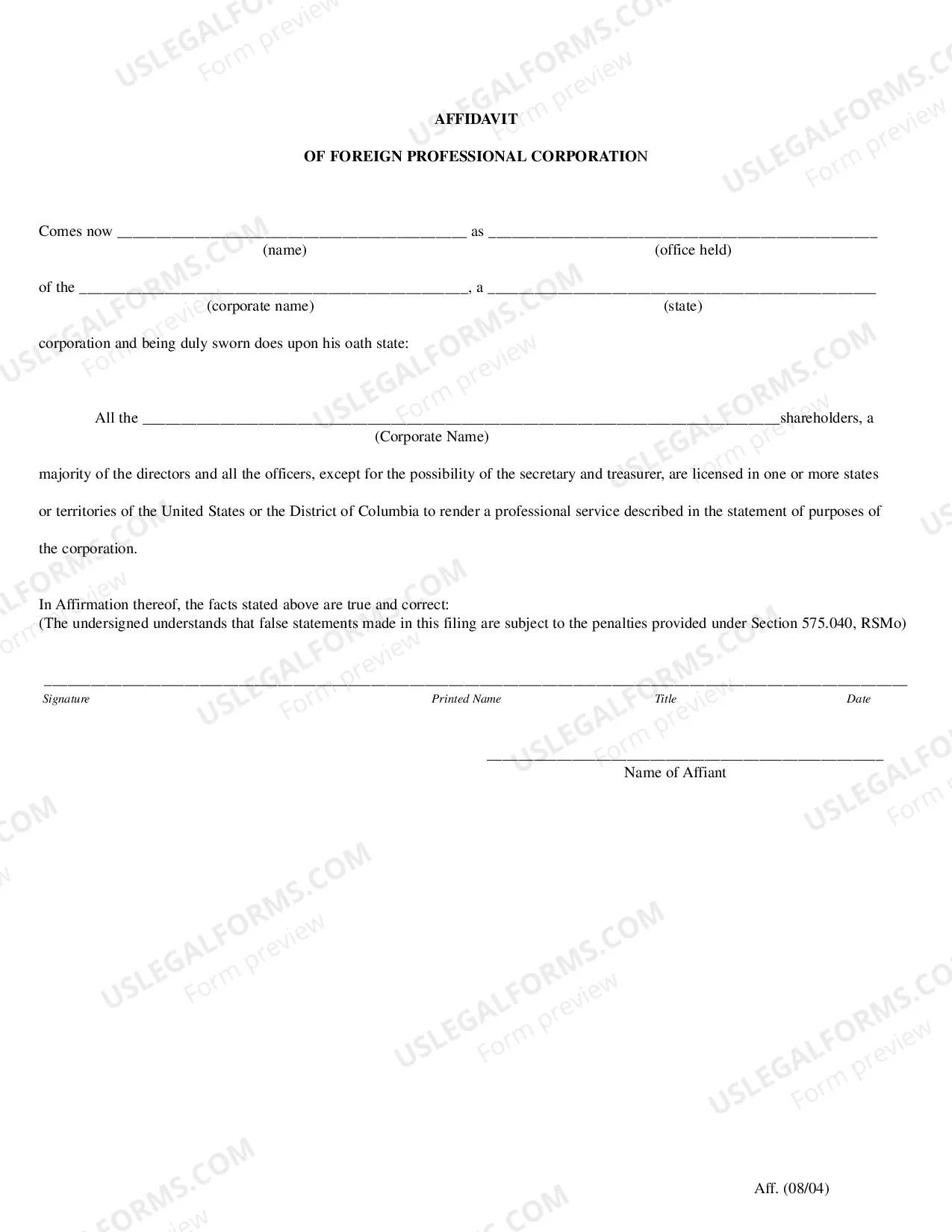
Louisiana Motion to Correct Minutes
Overview of this form
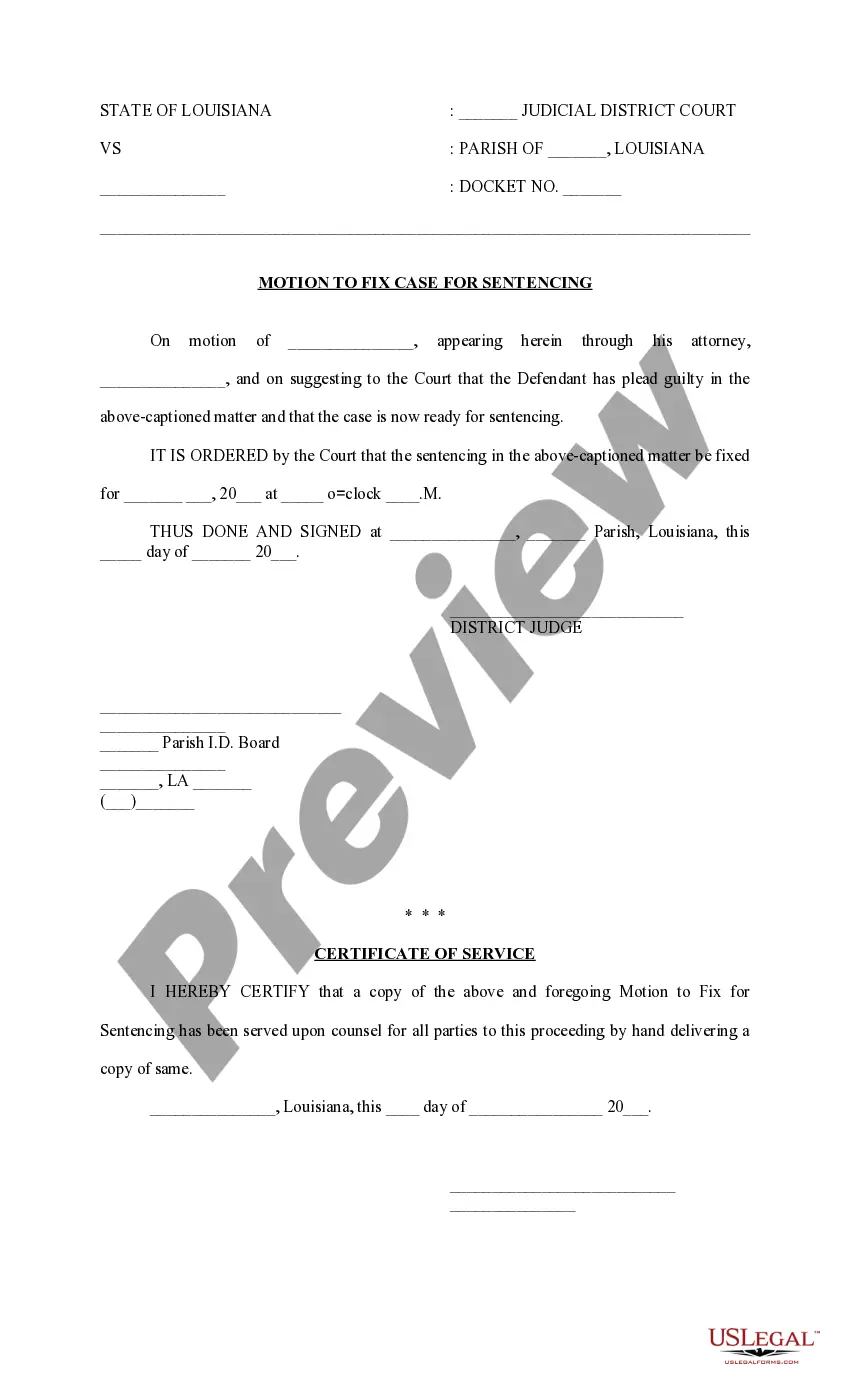
The Motion to Correct Minutes is a legal document used to request changes to the recorded minutes of a court hearing. This motion is specific to criminal cases where a party seeks to clarify or correct something noted in the sentencing, such as adding "with credit for time served" to the sentencing language. This form helps ensure that the official court record accurately reflects the court's decisions, which can be crucial for future legal proceedings.
Key parts of this document
- Title: Identifies the form as a Motion to Correct Minutes.
- Caption: Includes the court name, parish, and docket number.
- Introduction: Details the request for correction and identifies the moving party.
- Corrective Language: Specifies the changes to be made to the original minutes.
- Order Section: Provides a place for the judge's order to correct the minutes.
- Certificate of Service: Confirms that all parties have been notified of the motion.

When to use this form
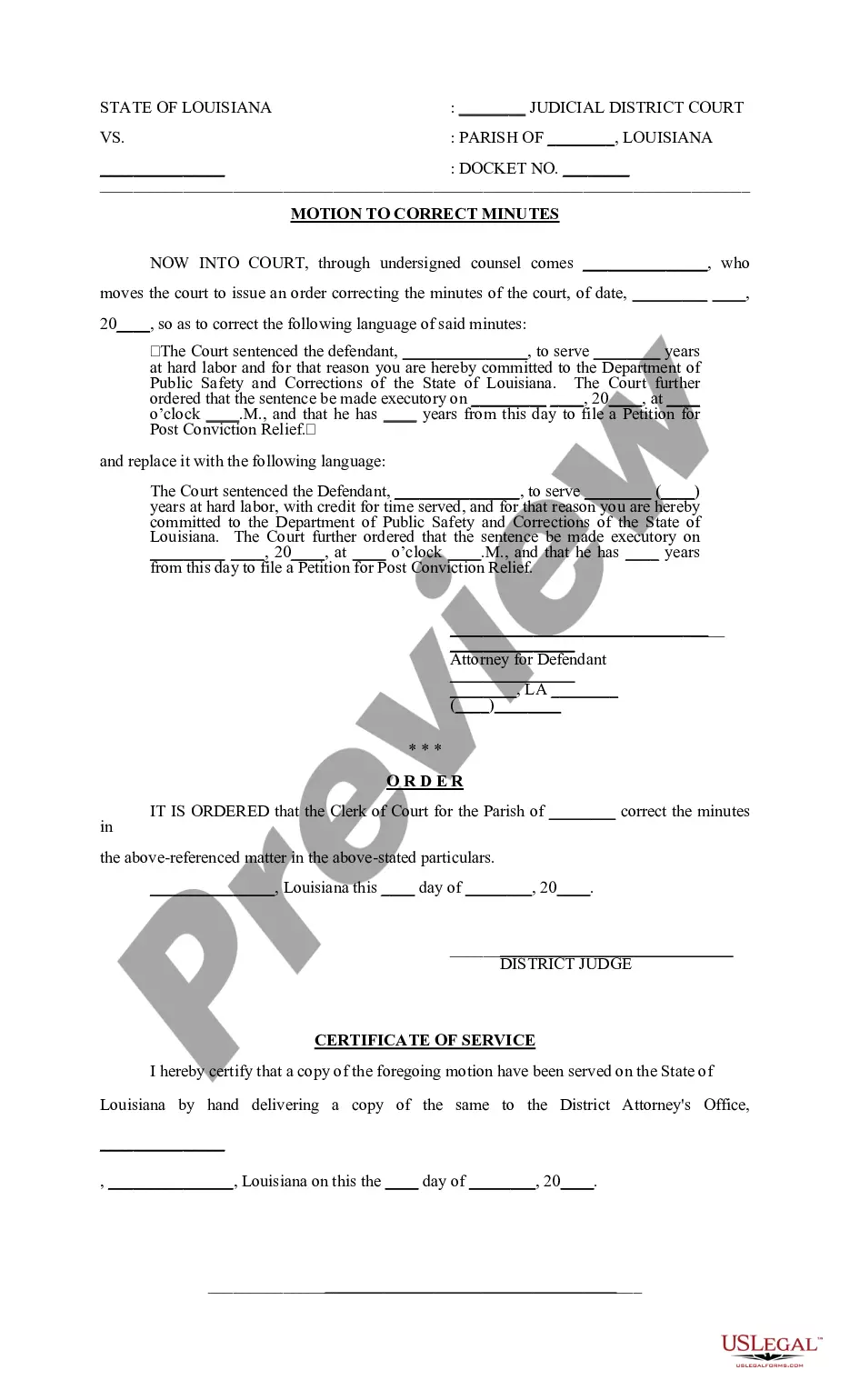
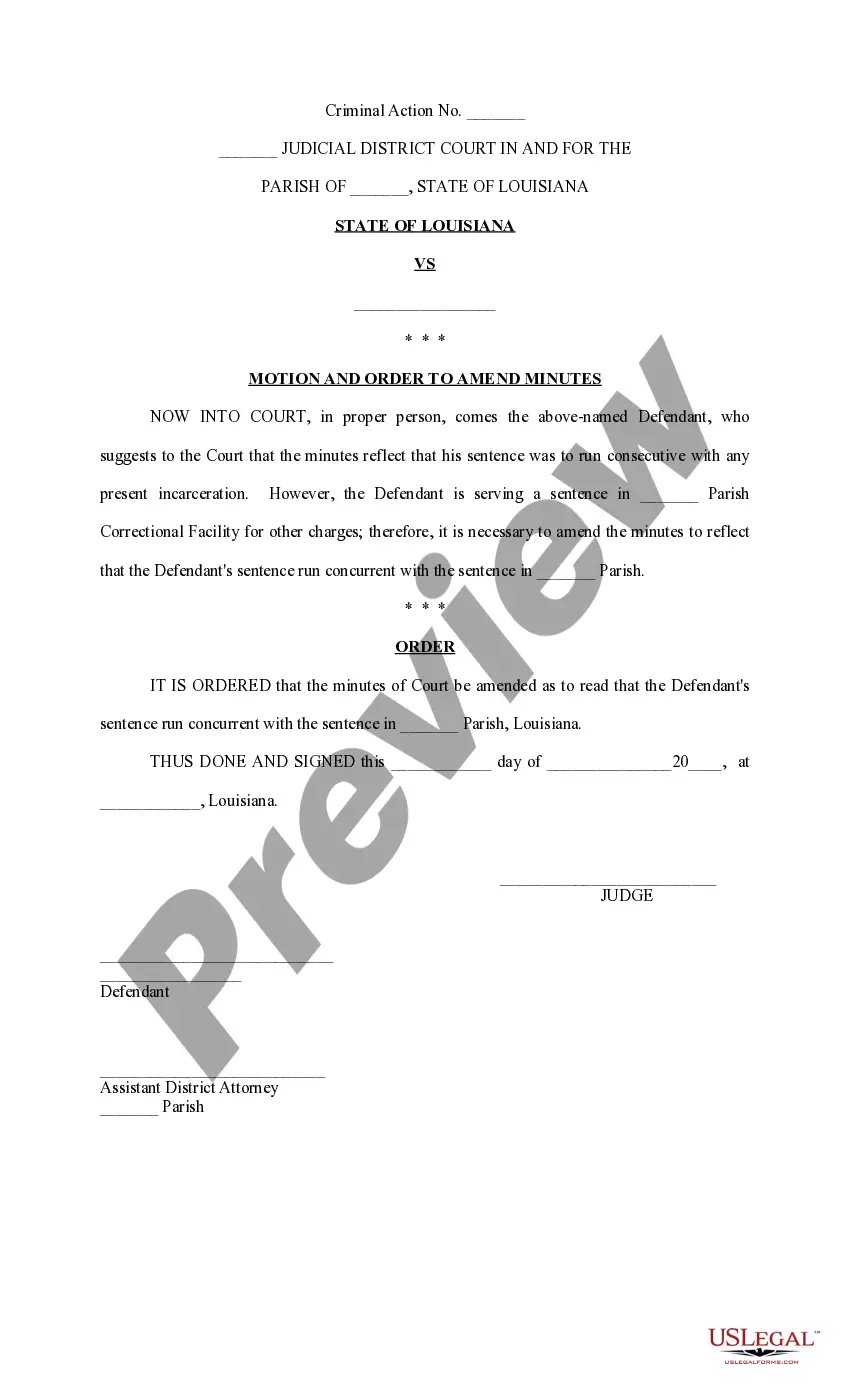
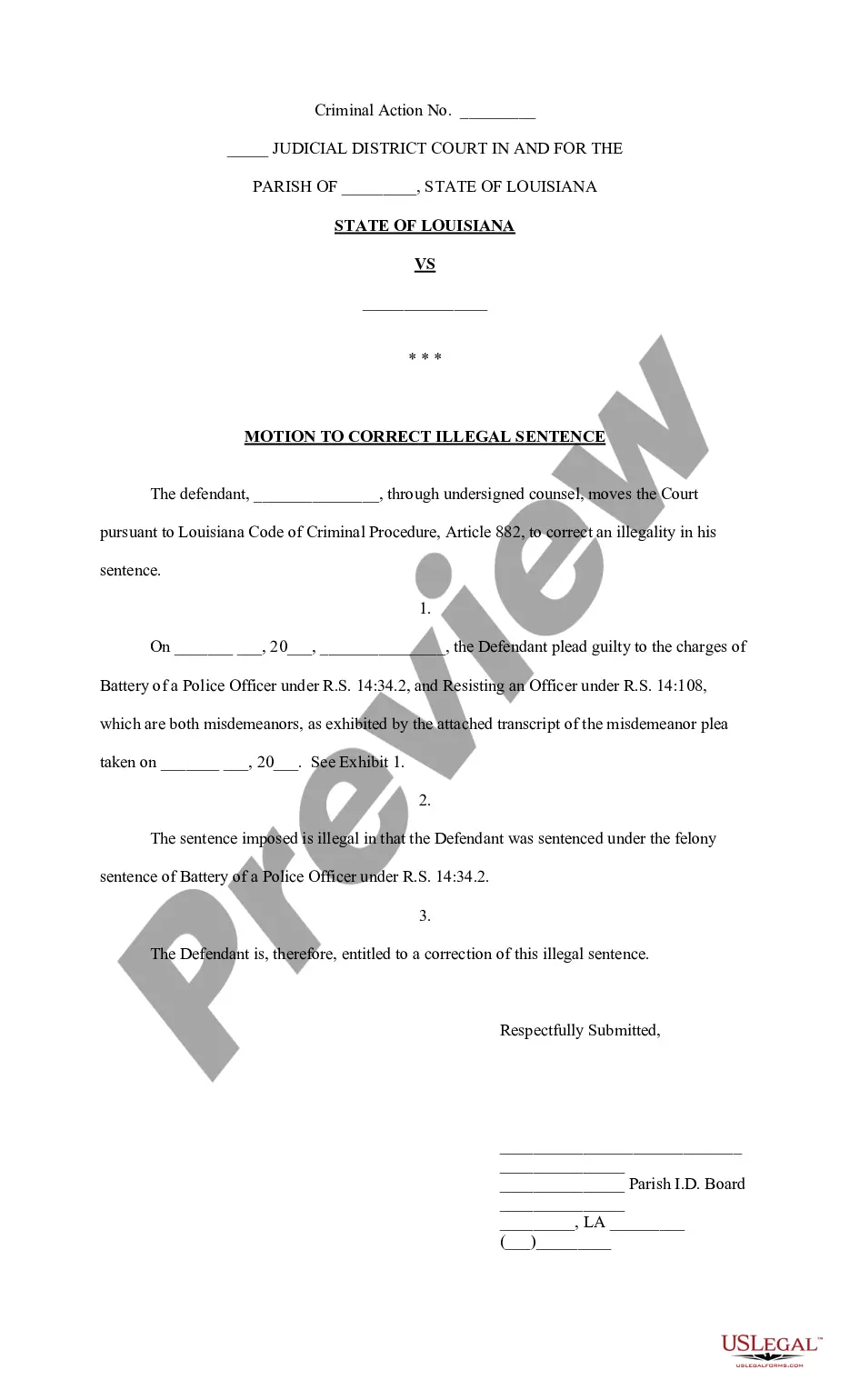
This form should be used in situations where a party involved in a criminal case discovers inaccuracies in the court minutes regarding their sentencing. It is particularly relevant when the record fails to include details such as time served, which may affect a defendant's legal standing or rights to appeal. Filing this motion promptly helps rectify the official record to prevent future discrepancies.
Who can use this document
- Defendants in criminal matters who have reason to believe the court minutes are inaccurate.
- Attorneys representing defendants in criminal cases.
- Other legal professionals involved in post-conviction matters.
Steps to complete this form
- Identify the court and docket number at the top of the form.
- Fill in the correct date of the original court sentencing.
- Clearly state the language that needs to be corrected in the minutes.
- Complete the order section where the judge will sign.
- Provide your name, attorney information, and proper signatures where indicated.
Does this form need to be notarized?
In most cases, this form does not require notarization. However, some jurisdictions or signing circumstances might. US Legal Forms offers online notarization powered by Notarize, accessible 24/7 for a quick, remote process.
Get your form ready online
Our built-in tools help you complete, sign, share, and store your documents in one place.
Make edits, fill in missing information, and update formatting in US Legal Forms—just like you would in MS Word.
Download a copy, print it, send it by email, or mail it via USPS—whatever works best for your next step.
Sign and collect signatures with our SignNow integration. Send to multiple recipients, set reminders, and more. Go Premium to unlock E-Sign.
If this form requires notarization, complete it online through a secure video call—no need to meet a notary in person or wait for an appointment.
We protect your documents and personal data by following strict security and privacy standards.

Make edits, fill in missing information, and update formatting in US Legal Forms—just like you would in MS Word.

Download a copy, print it, send it by email, or mail it via USPS—whatever works best for your next step.

Sign and collect signatures with our SignNow integration. Send to multiple recipients, set reminders, and more. Go Premium to unlock E-Sign.

If this form requires notarization, complete it online through a secure video call—no need to meet a notary in person or wait for an appointment.

We protect your documents and personal data by following strict security and privacy standards.
Mistakes to watch out for
- Failing to clearly specify the exact language to be corrected may lead to confusion.
- Not including the correct court or docket number can delay processing.
- Neglecting to sign and date the form correctly may invalidate the request.
Benefits of completing this form online
- Convenience of downloading and completing the form at your own pace.
- Editability allows you to customize the form to meet your specific needs.
- Access to reliable templates created by licensed attorneys ensures compliance with legal standards.
Looking for another form?
Form popularity
FAQ
Article 1423 discusses the procedures for obtaining a default judgment in civil cases. This article describes how plaintiffs can proceed when defendants fail to respond. Familiarizing yourself with Article 1423 is beneficial, especially when managing cases involving the Louisiana Motion to Correct Minutes, as accurate records support your legal position.
Amend something previously adopted - is a change motion that can be made only if no action has been taken on the original motion. It is used to strike out only a part of the text or make a change to the wording. It must be seconded, is debatable and requires 2/3 of the members to vote in the affirmative to pass.
A member obtains the floor and makes a motion. Another member seconds the motion. The chair states the motion. Members debate the motion. The chair puts the motion to a vote. The chair announces the results of the vote and what happens with the motion.
Only one amendment to an amendment is permissible. Sometimes a main motion is worded poorly, and several amendments may be presented to improve the wording.
To Amend a Motion. Raise your hand and make the following motion: I move to amend the motion on the floor. This also requires a second. After the motion to amend is seconded, a majority vote is needed to decide whether the amendment is accepted. Then a vote is taken on the amended motion.
By striking out words, sentences, or paragraphs. By striking out and inserting words (with the words inserted replacing the words struck out) By amending by substitution (a form of strike out and insert applied to paragraphs or entire motions)
Two amendments may be on the floor at one time: the first amendment modifies the main motion, and the second amendment must relate to the first amendment. When an amendment is on the floor, only the amendment may be debated.
To Amend a Motion. Raise your hand and make the following motion: I move to amend the motion on the floor. This also requires a second. After the motion to amend is seconded, a majority vote is needed to decide whether the amendment is accepted. Then a vote is taken on the amended motion.