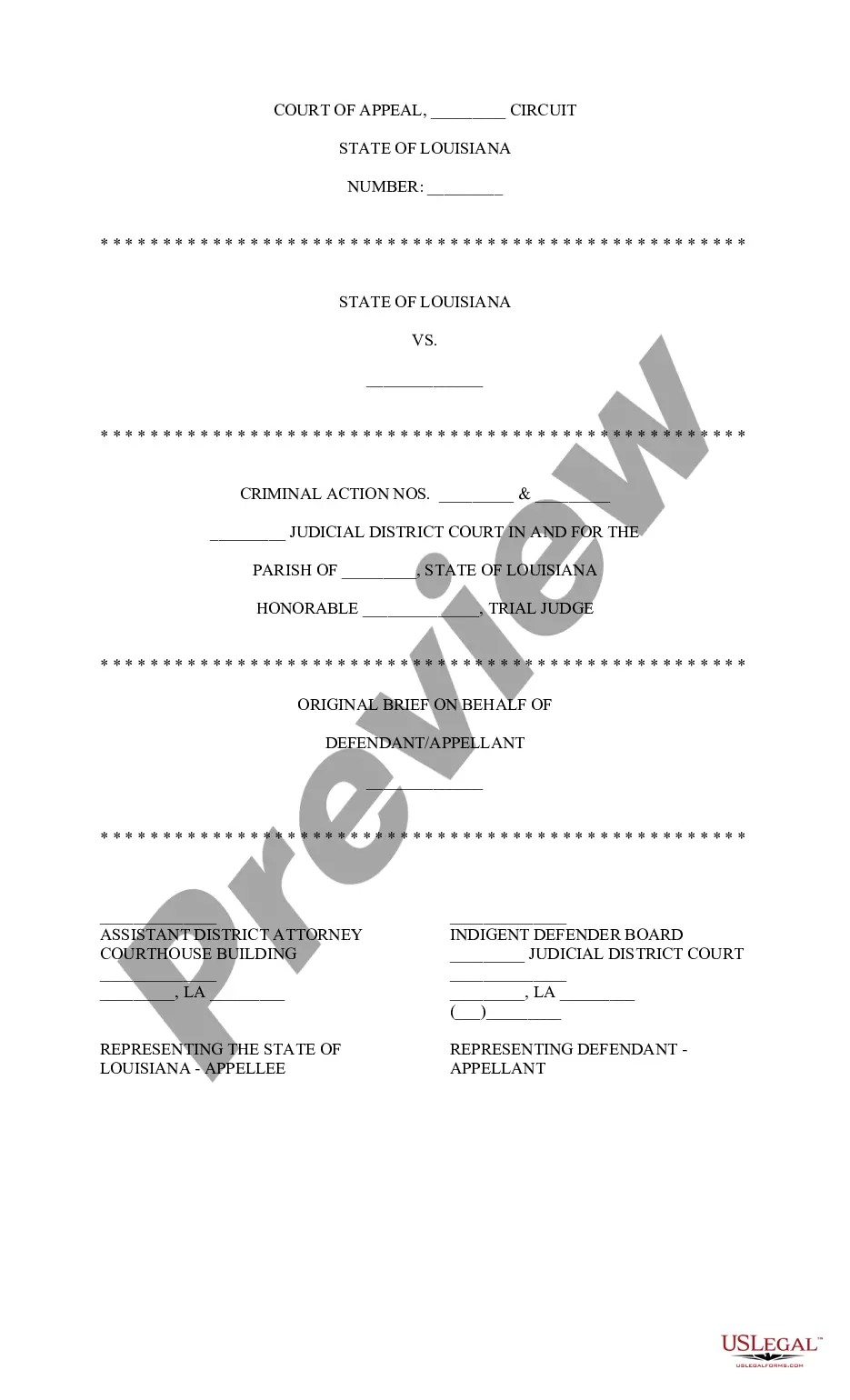
Louisiana Original Brief on Behalf of Defendant Appellant
What this document covers
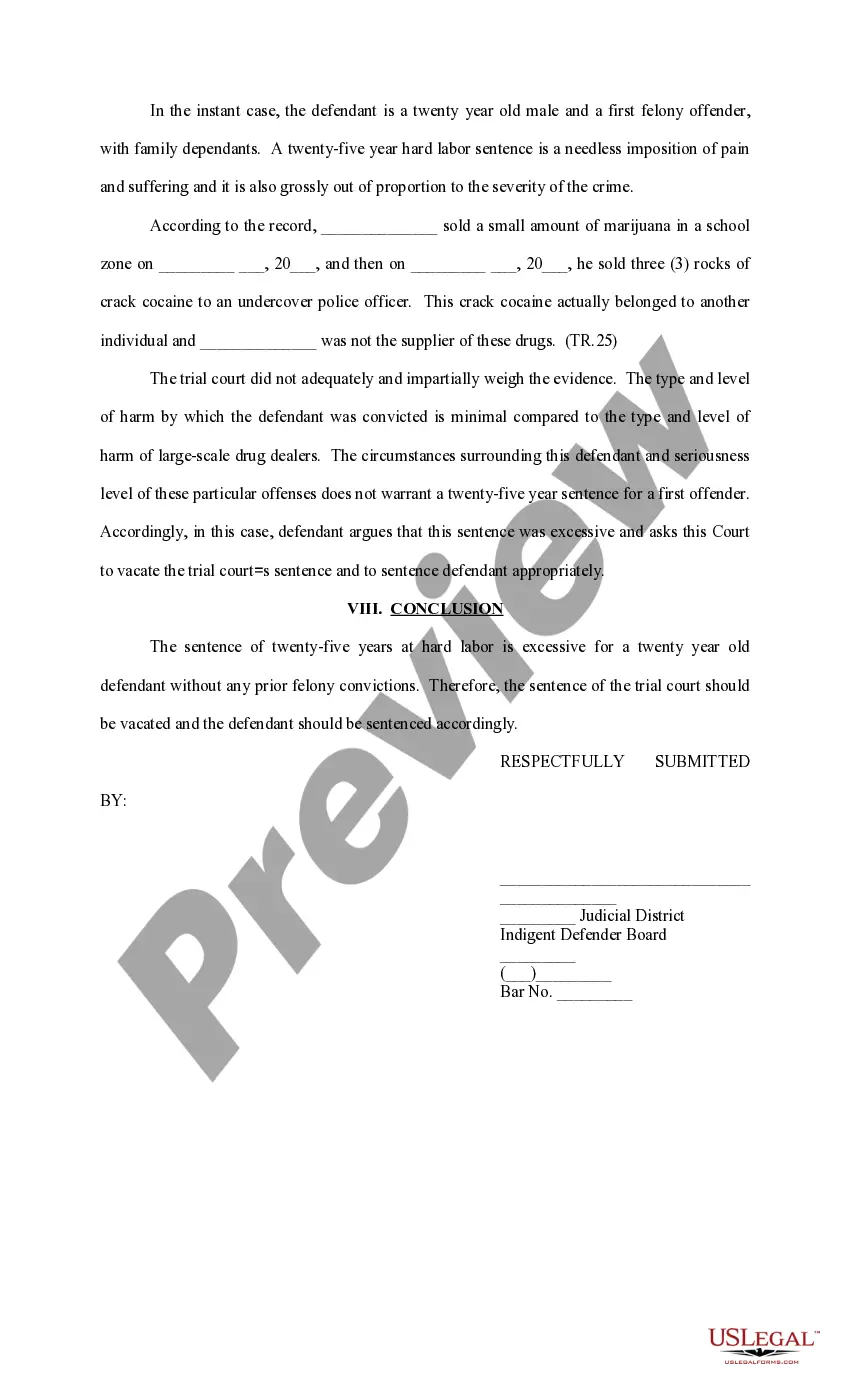
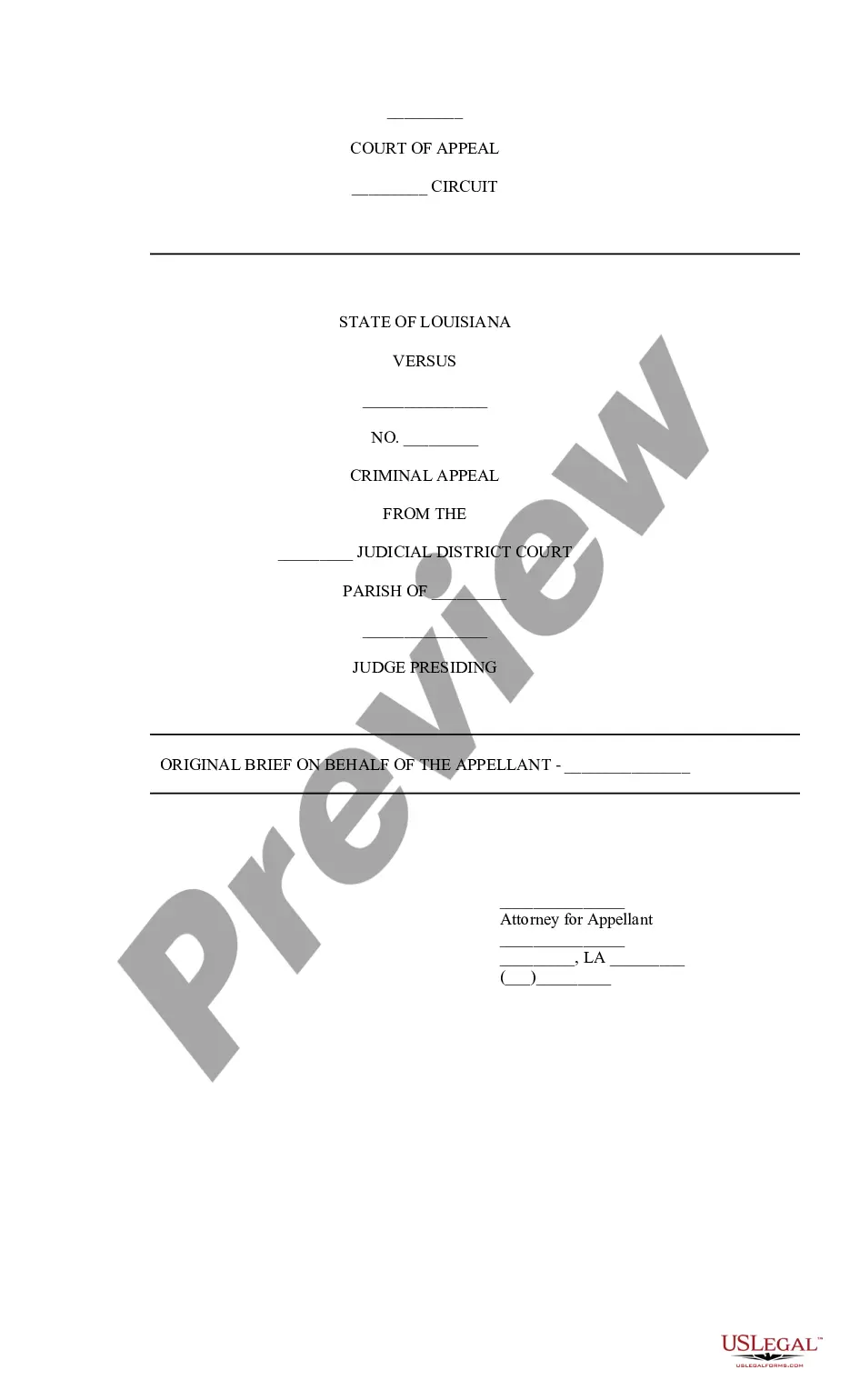
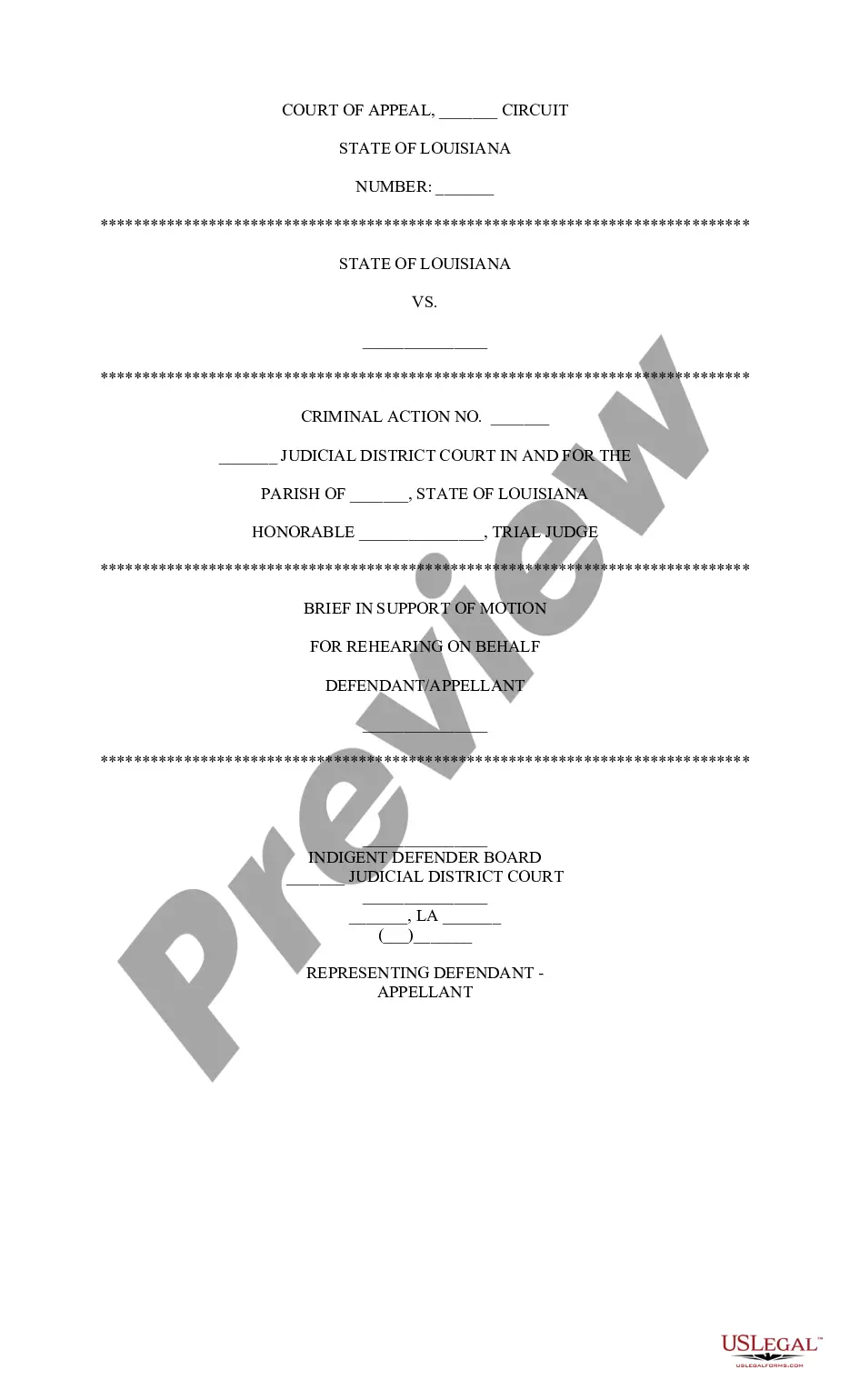
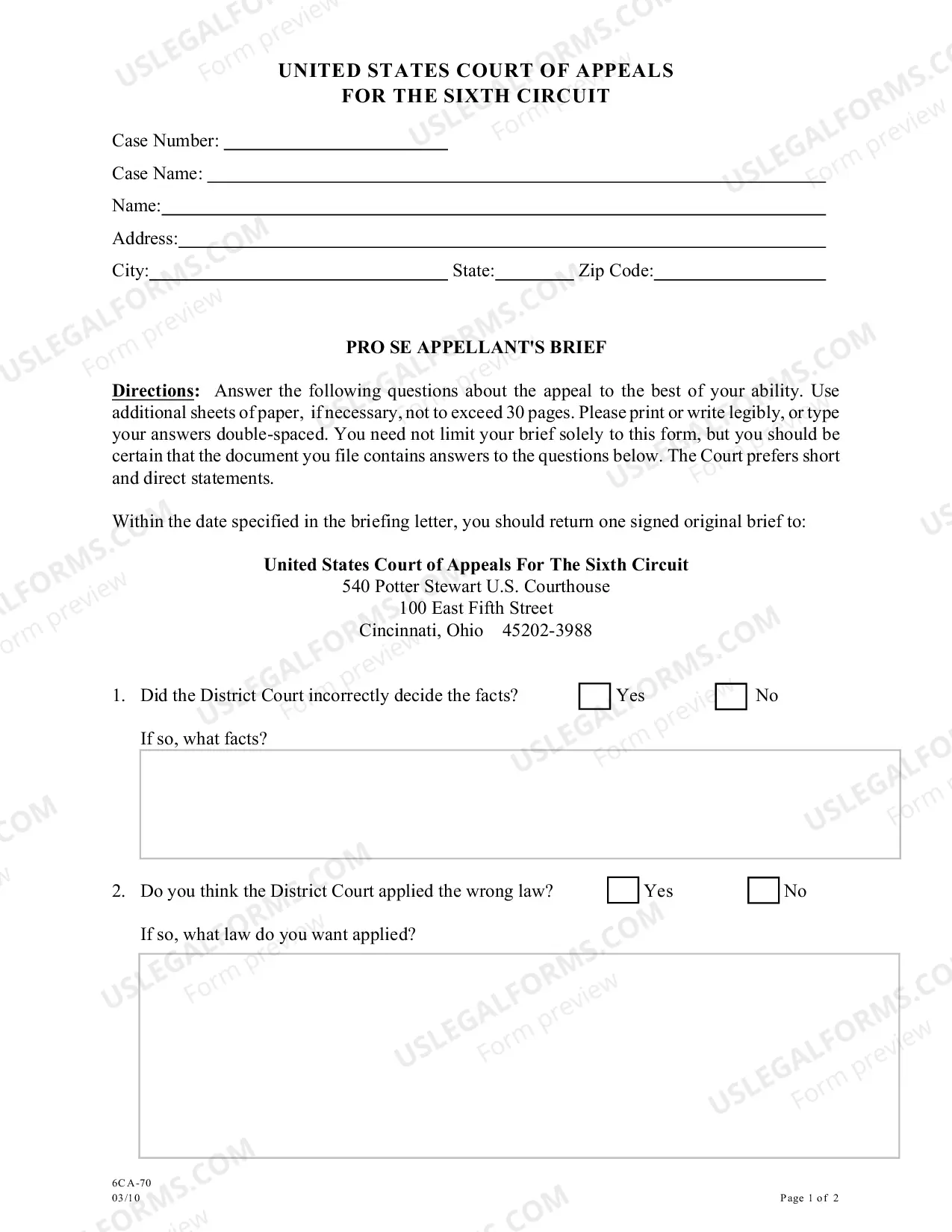
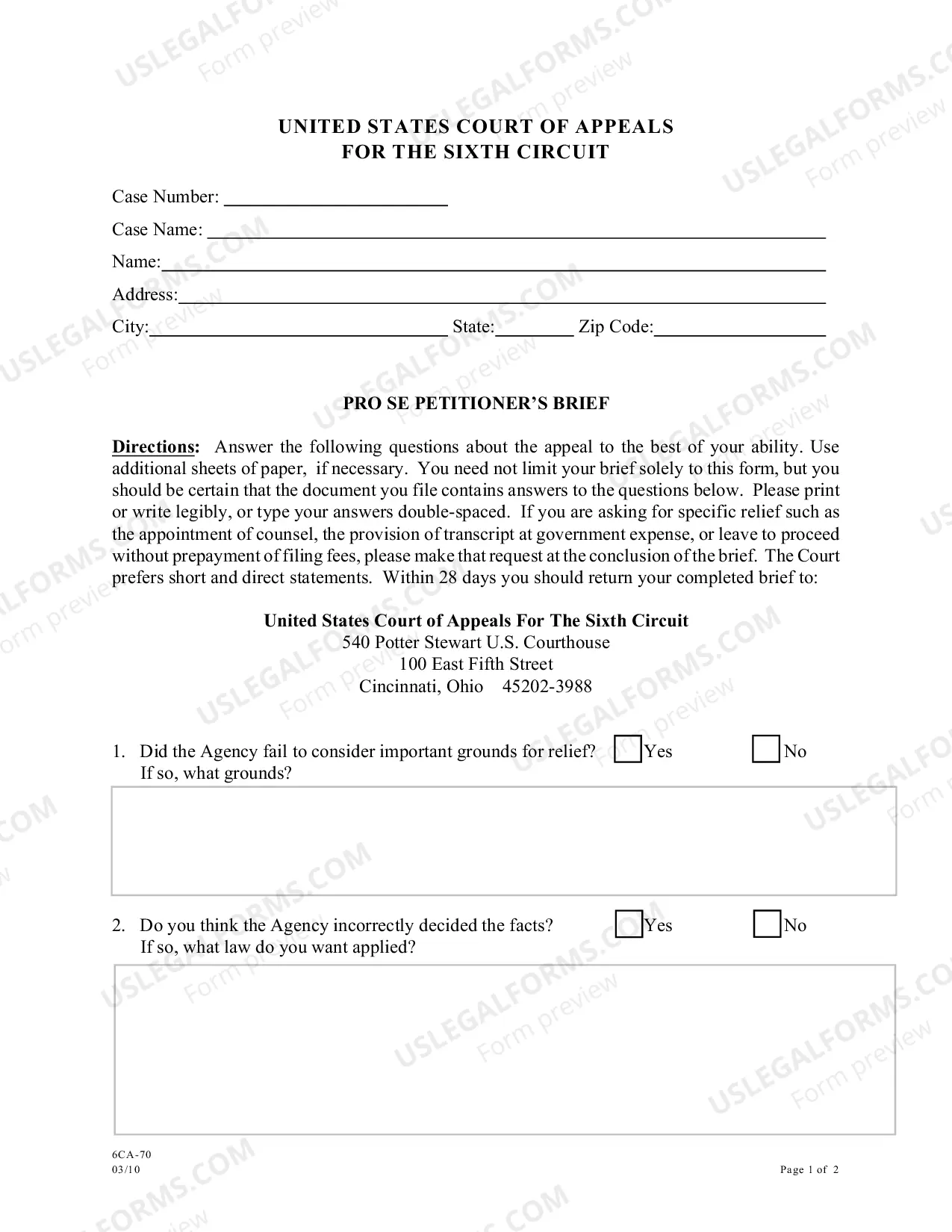
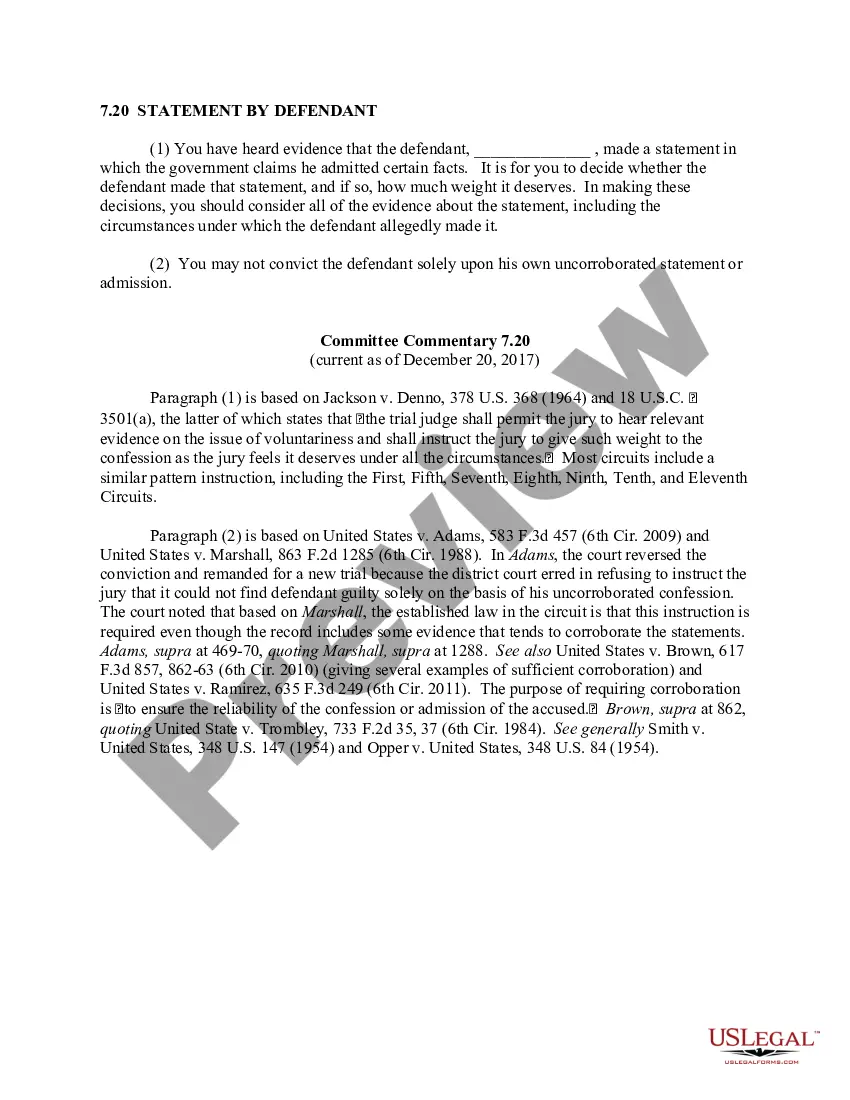
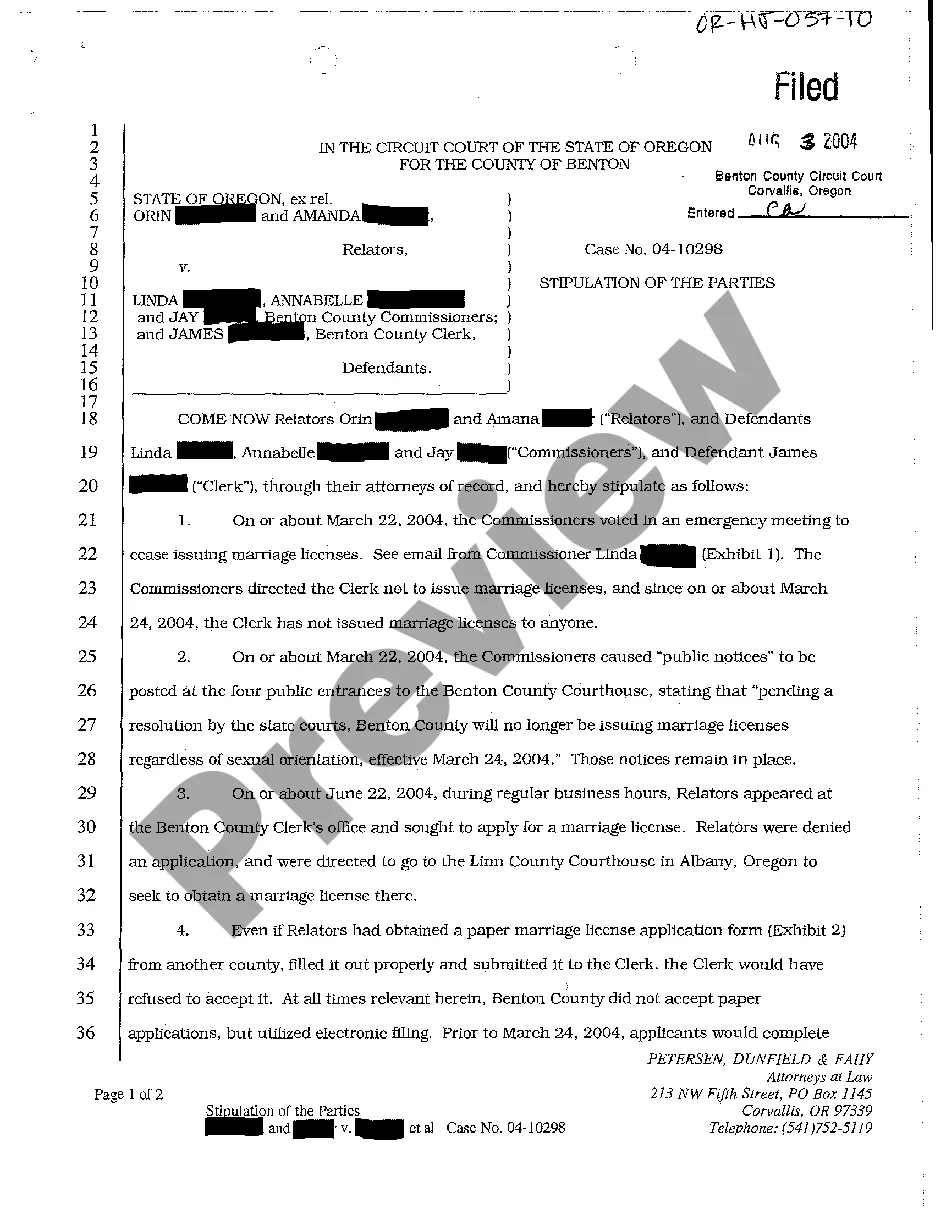
The Original Brief on Behalf of Defendant Appellant is a legal document used in criminal appeals. It allows a defendant who has been convicted, particularly in felony cases, to argue that their sentence is excessive or unconstitutional. This form is specifically tailored for cases where the defendant is a young offender with no prior convictions and seeks to have their sentence reviewed and potentially reduced. Unlike other legal briefs, this document addresses specific jurisdictional and legal standards relevant to sentencing in Louisiana.
Form components explained
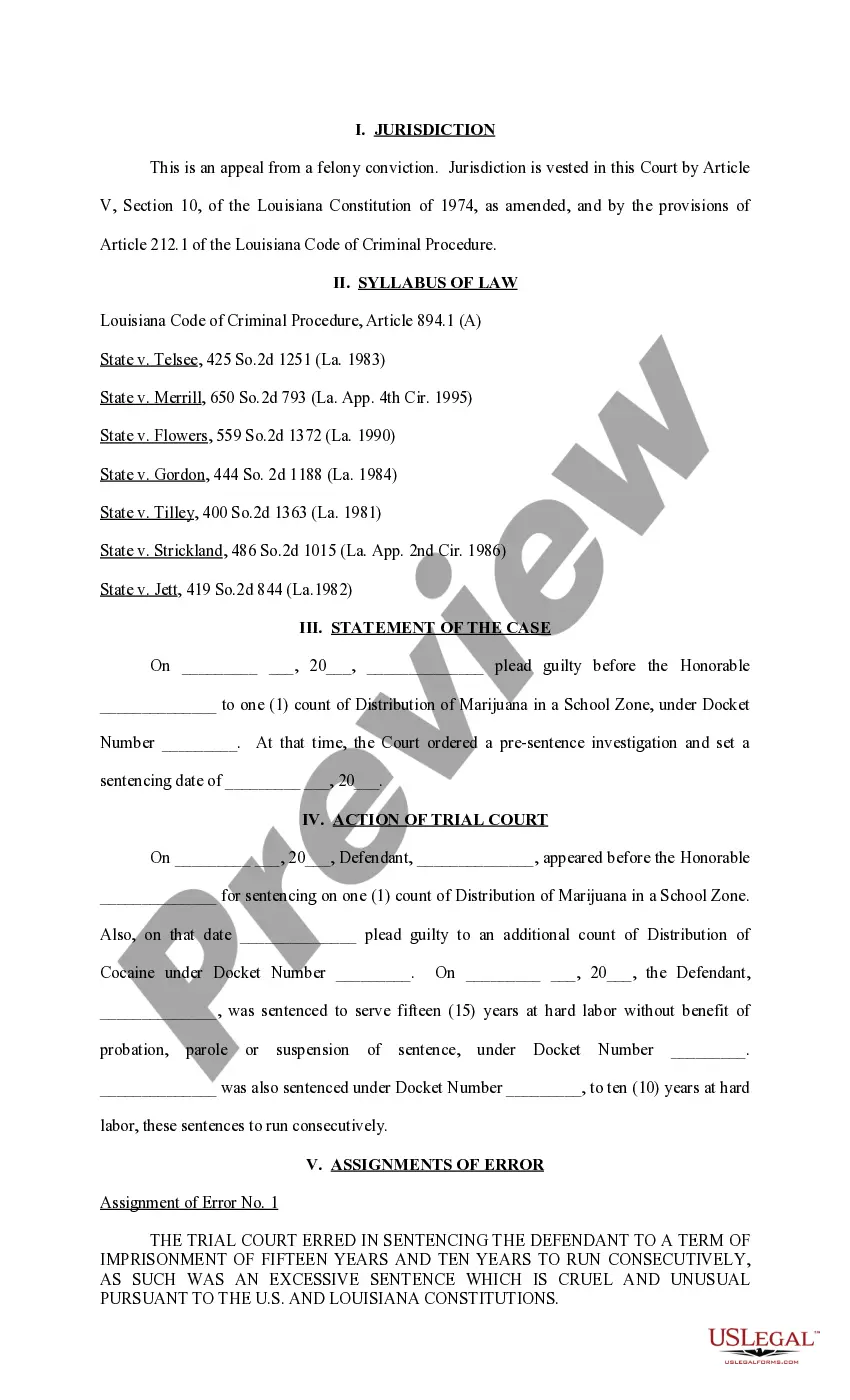
- Jurisdiction: Details the court's authority to handle the appeal based on Louisiana law.
- Syllabus of Law: Summarizes relevant legal precedents that support the appellant's argument.
- Statement of the Case: Provides factual background related to the original conviction and sentencing.
- Action of Trial Court: Outlines the sentencing decision made by the trial court.
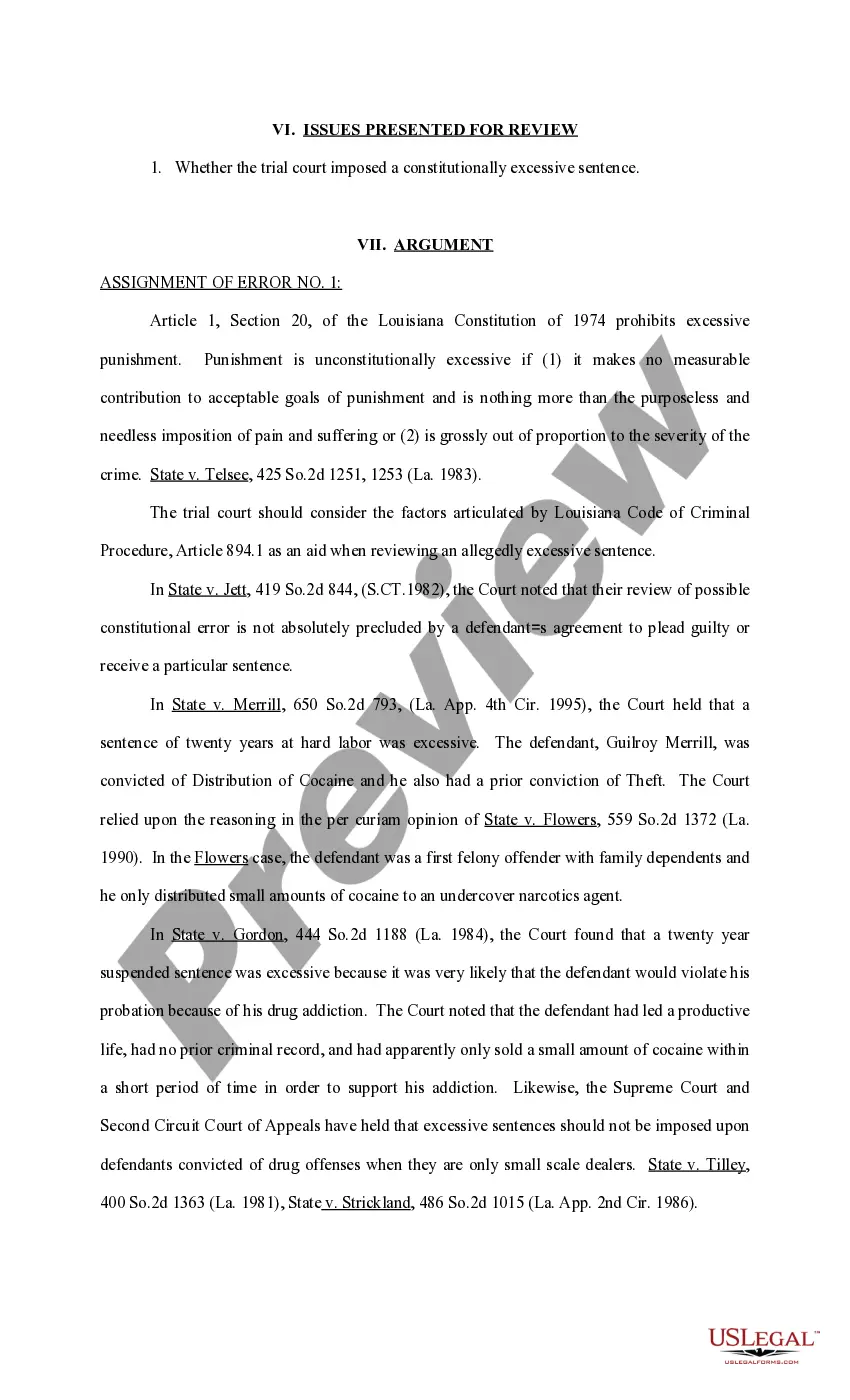
- Assignments of Error: Highlights specific legal mistakes made during the original trial.
- Conclusion: Requests the appellate court to vacate the original sentence.
Situations where this form applies
Who can use this document
- Defendants convicted of a felony in Louisiana who are appealing their sentence.
- Legal representatives or attorneys representing a defendant-appellant in an appeal.
- Individuals seeking to argue against an excessive sentence in a drug-related case.
Completing this form step by step
- Identify the parties involved, including the defendant, the trial judge, and the state.
- Fill in the relevant case numbers and dates for the conviction and sentencing.
- Reference the applicable legal statutes and precedents that support your appeal.
- Outline the specific assignments of error, clearly stating why the sentence is excessive.
- Conclude with a request for the appellate court to vacate the previous sentence and provide a suitable alternative.
Is notarization required?
Notarization is not commonly needed for this form. However, certain documents or local rules may make it necessary. Our notarization service, powered by Notarize, allows you to finalize it securely online anytime, day or night.
Get your form ready online
Our built-in tools help you complete, sign, share, and store your documents in one place.
Make edits, fill in missing information, and update formatting in US Legal Forms—just like you would in MS Word.
Download a copy, print it, send it by email, or mail it via USPS—whatever works best for your next step.
Sign and collect signatures with our SignNow integration. Send to multiple recipients, set reminders, and more. Go Premium to unlock E-Sign.
If this form requires notarization, complete it online through a secure video call—no need to meet a notary in person or wait for an appointment.
We protect your documents and personal data by following strict security and privacy standards.

Make edits, fill in missing information, and update formatting in US Legal Forms—just like you would in MS Word.

Download a copy, print it, send it by email, or mail it via USPS—whatever works best for your next step.

Sign and collect signatures with our SignNow integration. Send to multiple recipients, set reminders, and more. Go Premium to unlock E-Sign.

If this form requires notarization, complete it online through a secure video call—no need to meet a notary in person or wait for an appointment.

We protect your documents and personal data by following strict security and privacy standards.
Mistakes to watch out for
- Failing to follow specific formatting guidelines required by the appellate court.
- Not citing relevant statutes or legal precedents to support the appeal.
- Misrepresenting facts in the Statement of the Case, which can undermine credibility.
Benefits of completing this form online
- Convenient access to a properly formatted legal document.
- Edit and customize the form easily to fit the specific details of your case.
- Reliable templates created by licensed attorneys, ensuring legal compliance.
Legal use & context
- This form is legally recognized in Louisiana's criminal appeals process.
- It is essential for preserving the defendant's rights during the appeal.
- Utilizing this form increases the chances of a successful appeal based on legal precedent.
Looking for another form?
Form popularity
FAQ
The party that appeals a ruling (regardless of whether it's the plaintiff or defendant) is called the appellant. The other party responding to the appeal is called the appellee. Counterclaims. If a defendant is sued by a plaintiff, the defendant can turn around and assert a claim against the plaintiff.
The first written brief is the opening brief. It is the case for appeal prepared by the appellant. The opening brief argues why the trial court made a legal mistake, how the mistake impacted the decision, what could be corrected or reversed in the judgment, and why the judgment should be reversed.
It is filed by the appellant who filed the appeal. The appellant's initial brief is due within 70 days after filing the notice of appeal. An appellant who needs extra time to file the initial brief should file a motion for an extension of time in the appellate court before the deadline for the brief.
Your appeal begins when you file a notice of appeal or a petition for review from a final decision of a district court or agency. It will be assigned a court of appeals docket number by the Court of Appeals Clerk's Office. Any correspondence from you should indicate this number.
I suggest the following as a basic starting point (it can be varied) for the framework of each issue: (1) Explain how the world works without discussing your particular facts (i.e., explain what legal principles control the issue generally); (2) consider whether illustrating a case enhances the judge's understanding
In law, the standard of review is the amount of deference given by one court (or some other appellate tribunal) in reviewing a decision of a lower court or tribunal.
The technical legal word for the people who are part of a court case and have a right to ask the court to make a decision on a dispute. At the trial level, the parties are typically called the plaintiff or petitioner and the defendant or respondent. On appeal, parties are called the appellant and appellee.
Once the appellate court files the record on appeal, you will have to prepare your brief. A "brief" is a party's written description of the facts in the case, the law that applies, and the party's argument about the issues on appeal. The briefs are the single most important part of the appellate process.
Frame the issue to maximize the persuasiveness of your argument. Simplify the issue and argument. Have an outstanding introduction. Tell a story. Don't argue the facts (unless absolutely necessary) Know the standard of review. Be honest and acknowledge unfavorable law and facts. Only present strong legal arguments.