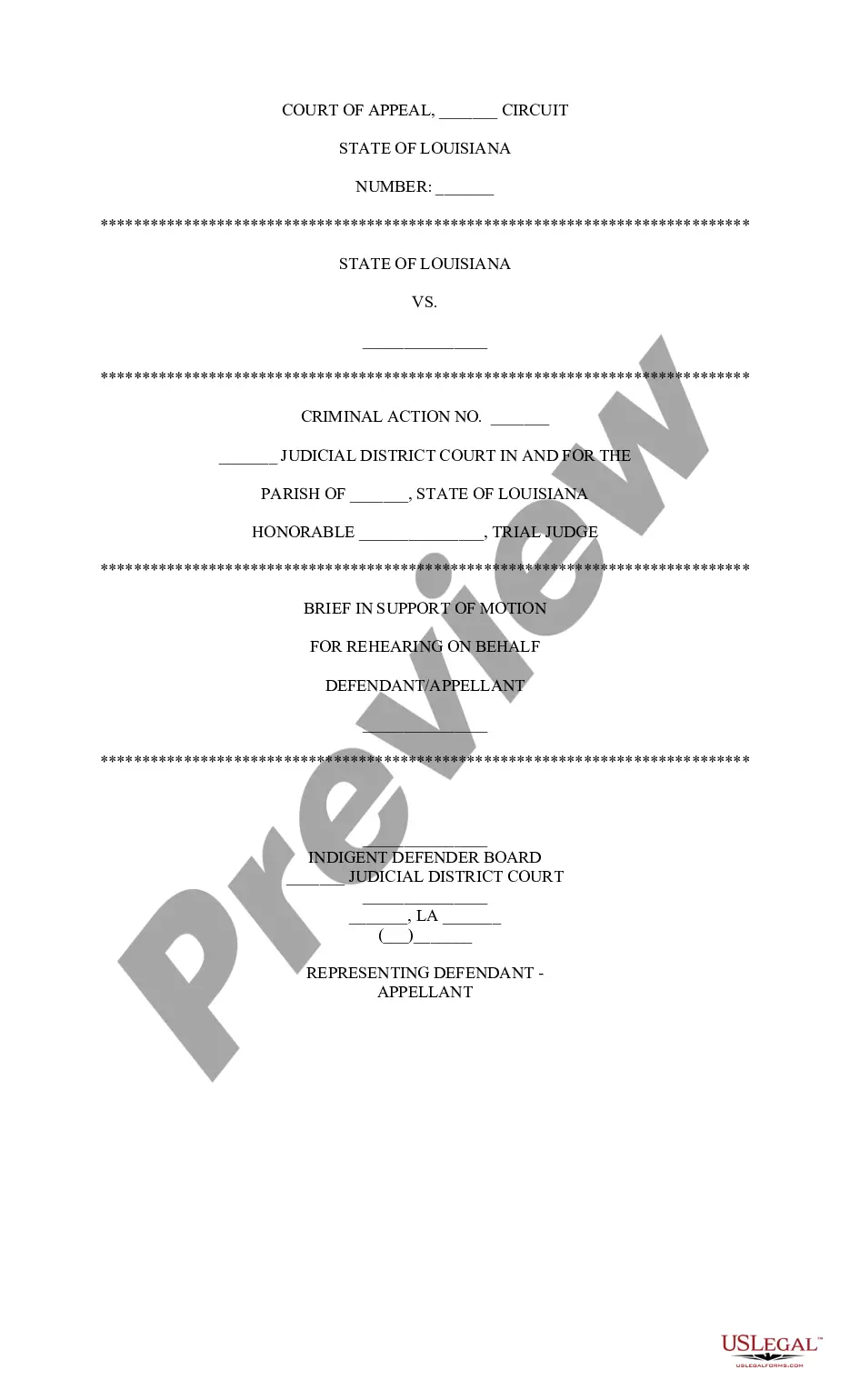
Louisiana Brief in Support of Motion for Rehearing on Behalf of Defendant Appellant
What is this form?
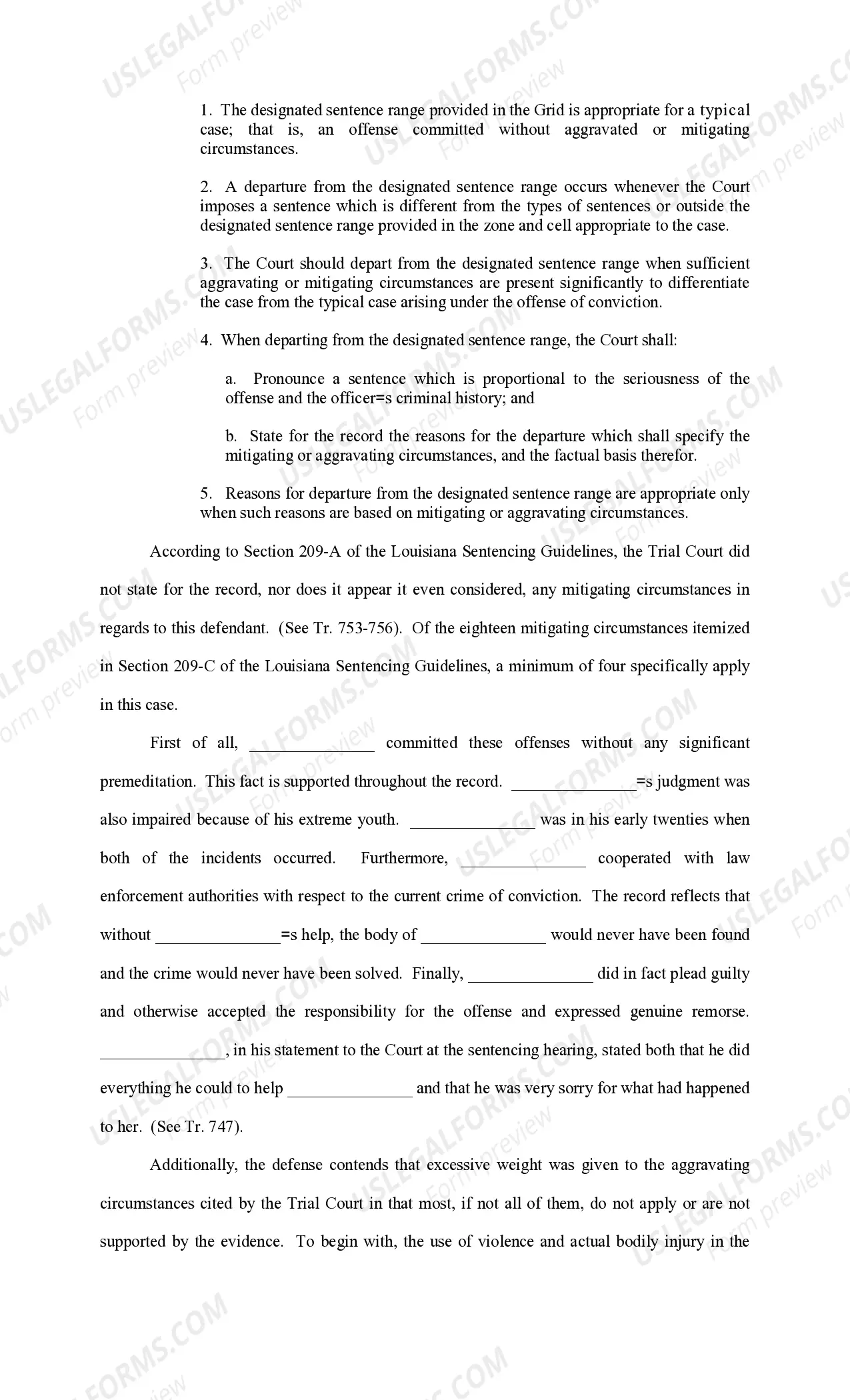
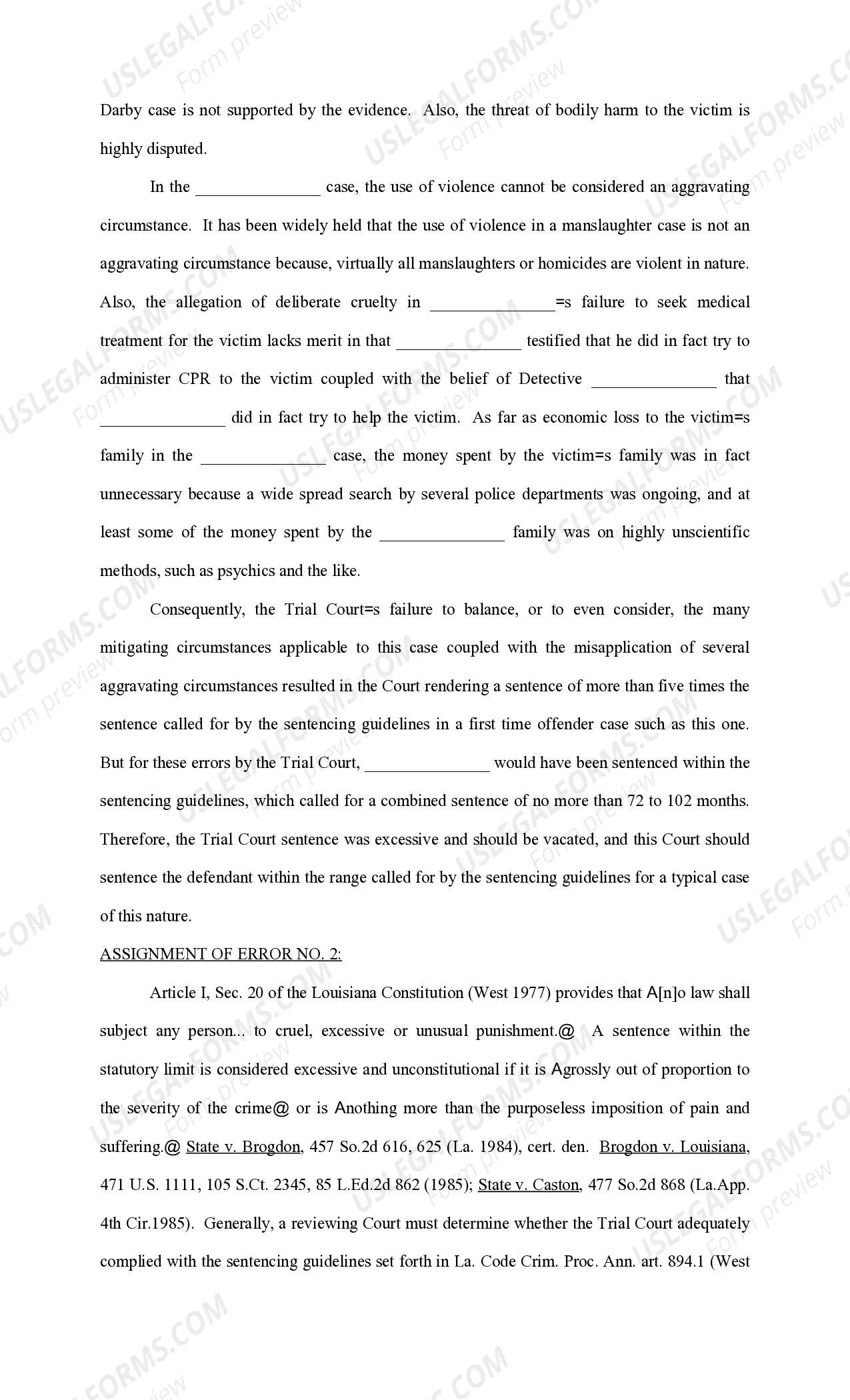
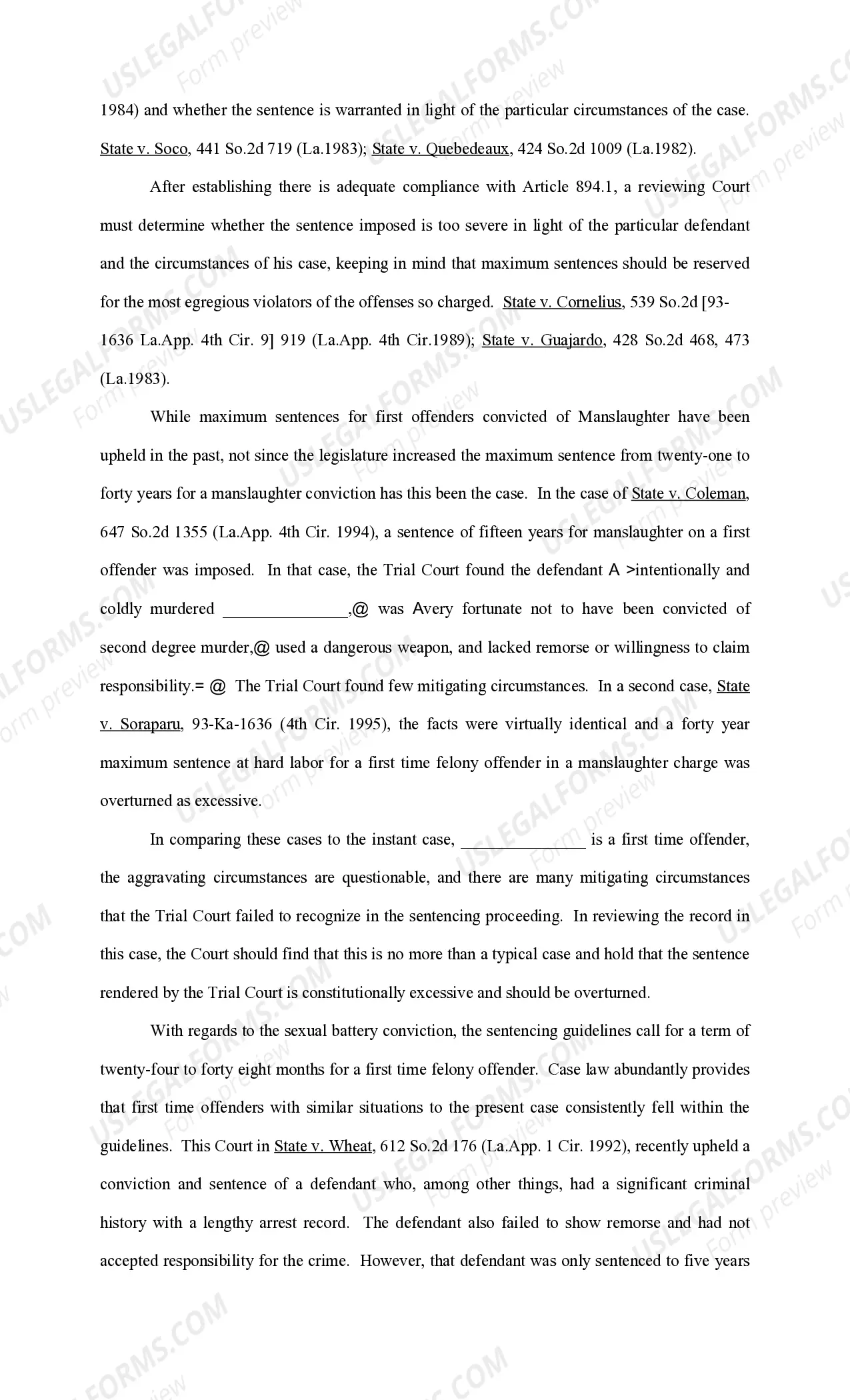
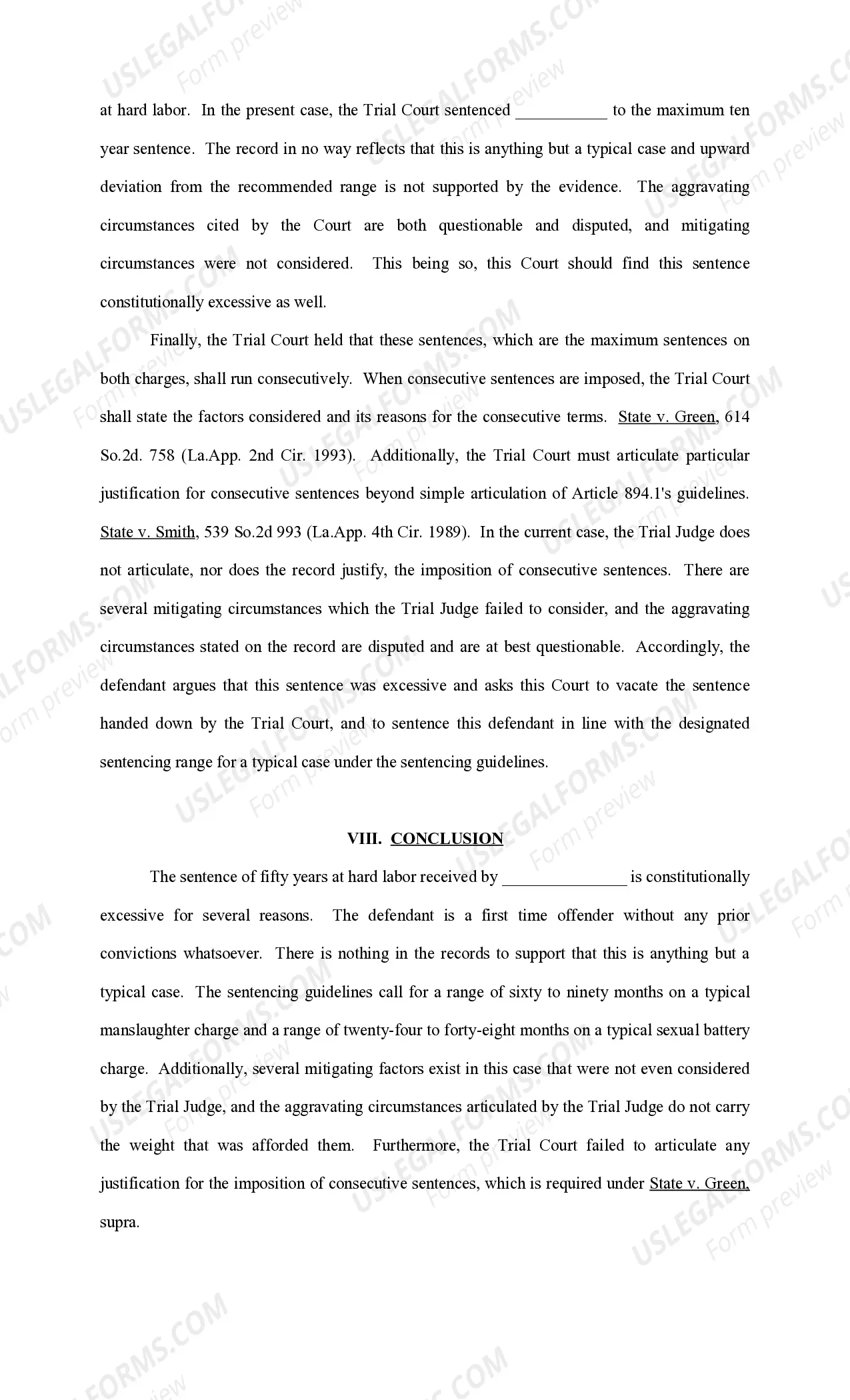
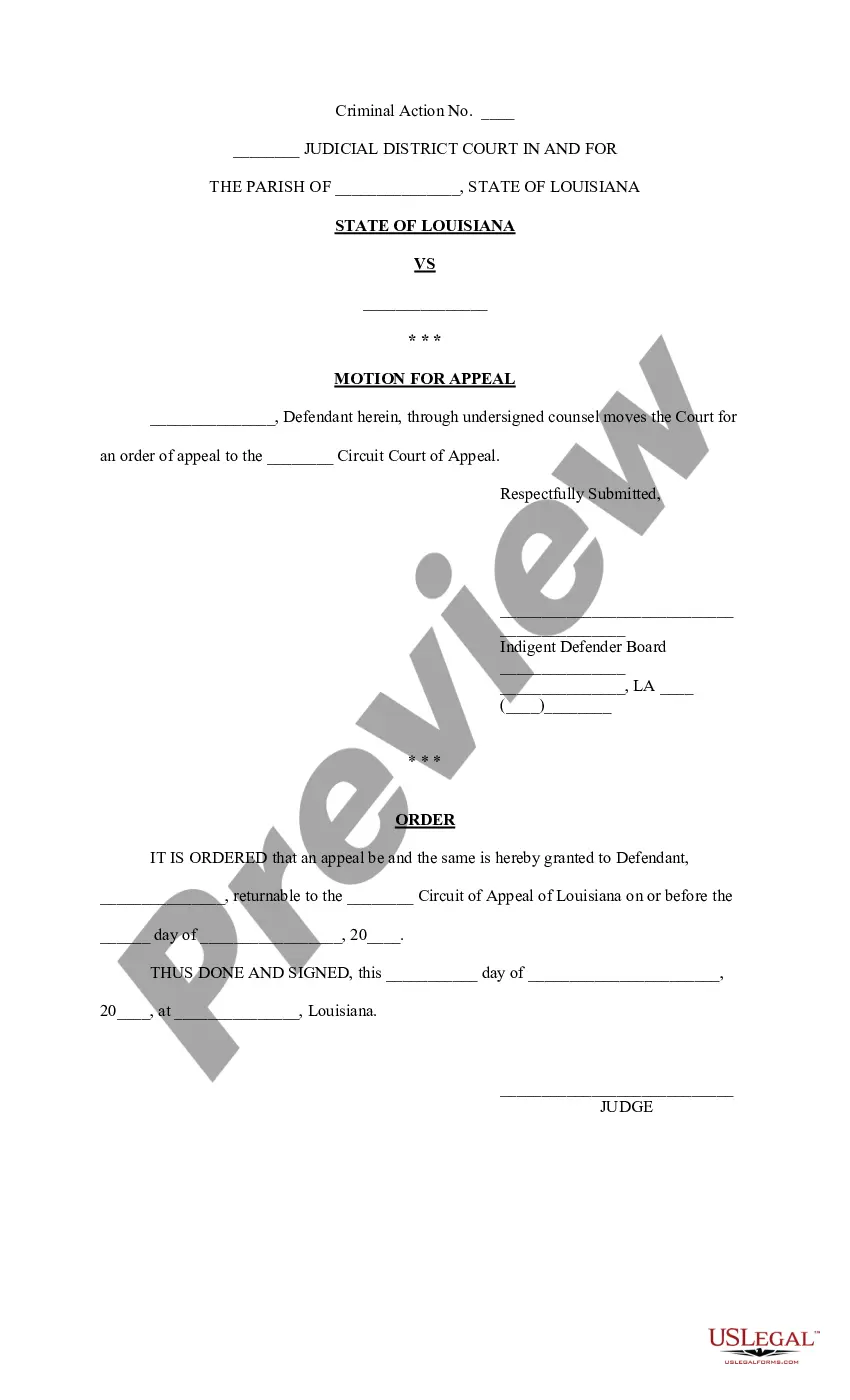
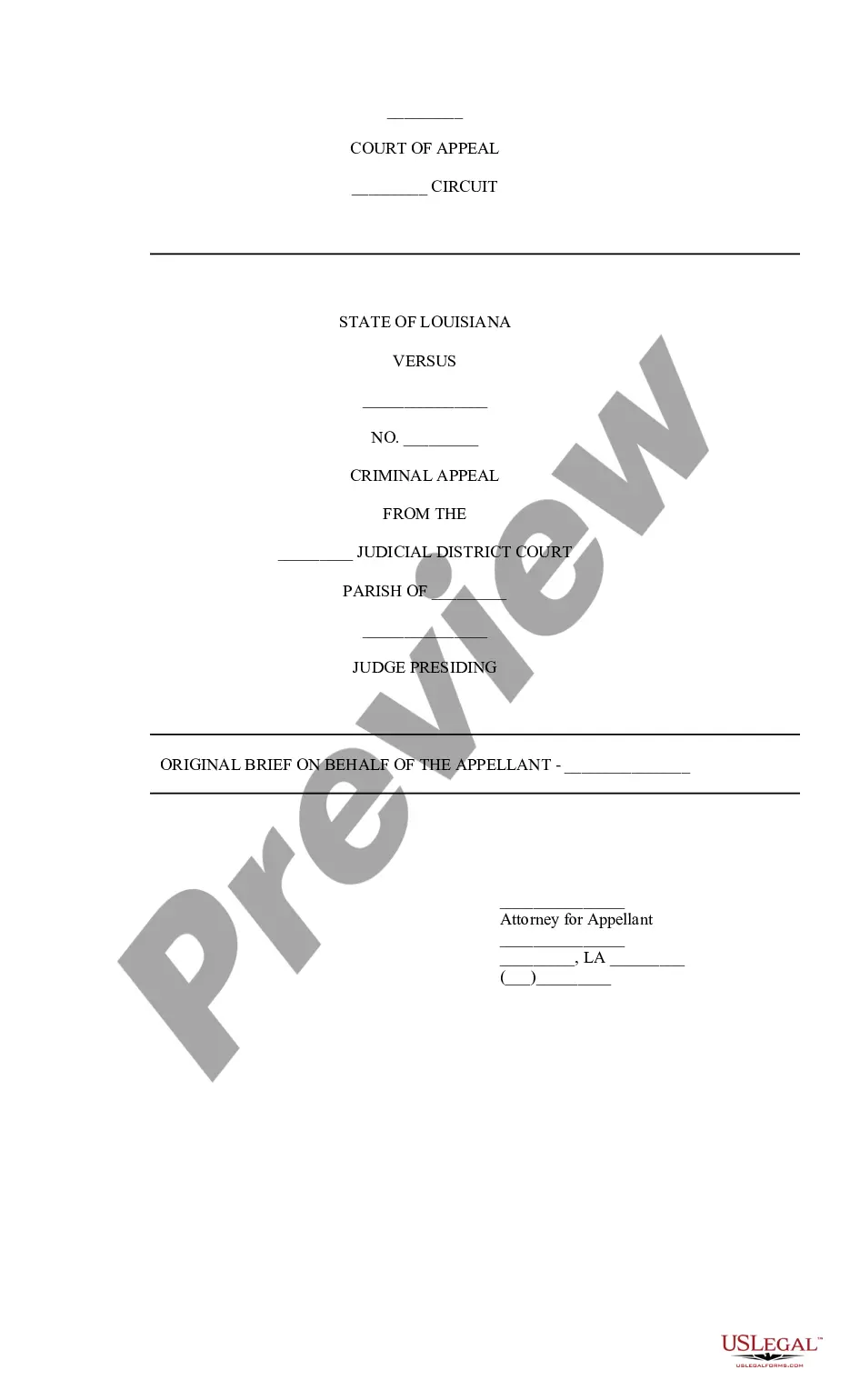
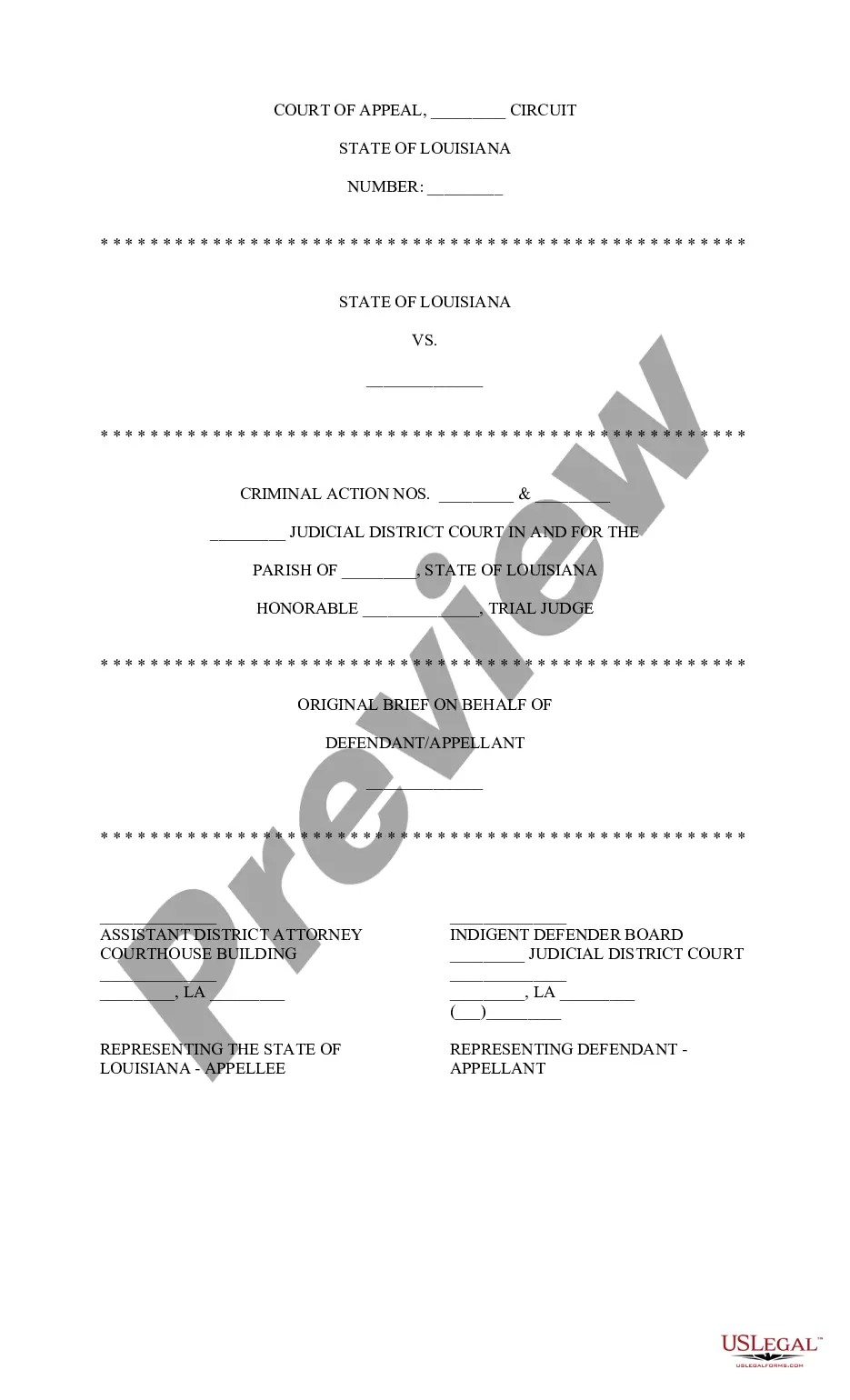
The "Brief in Support of Motion for Rehearing on Behalf of Defendant Appellant" is a crucial legal document that presents arguments and pertinent facts to a higher court regarding a defendant's appeal. This form specifically advocates for reconsideration of an excessive sentence imposed by a trial court. It requests the appellate court to vacate the previous ruling and enforce a more appropriate sentence based on the established sentencing guidelines.
What’s included in this form
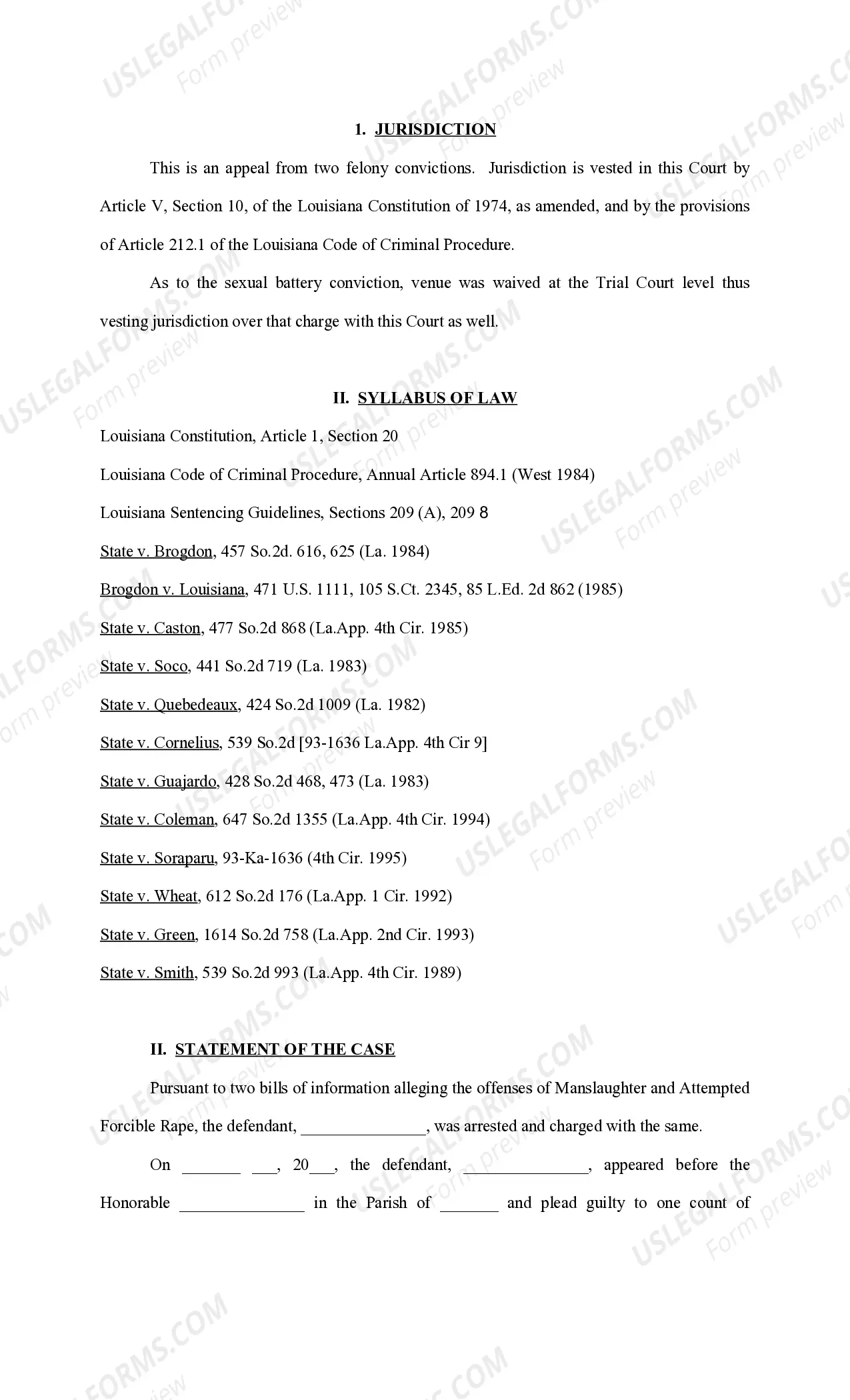
- Jurisdictional statement outlining the appellate court's authority.
- Summary of relevant laws and legal precedents applicable to the case.
- Statement of the case detailing the charges and prior convictions.
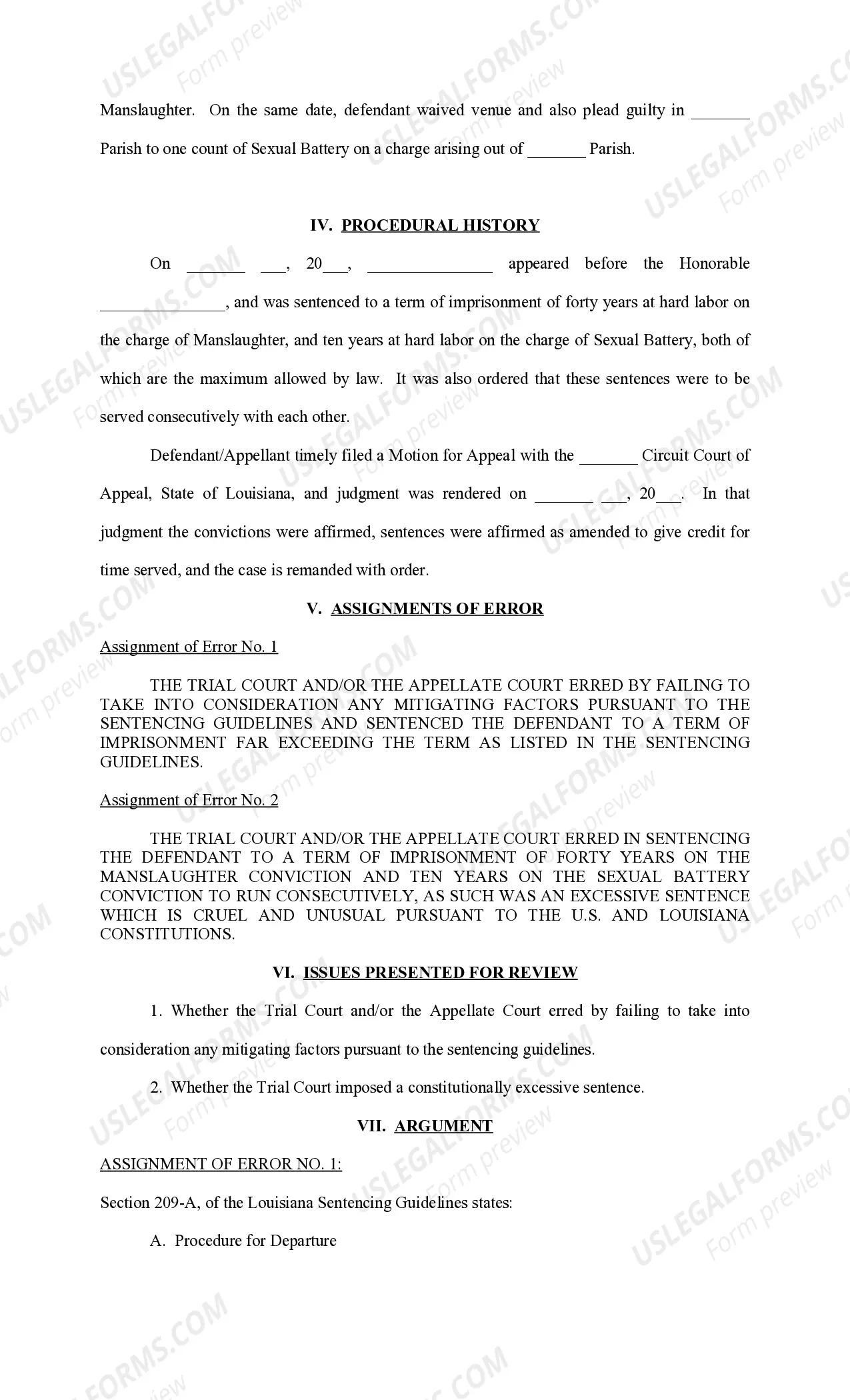
- Procedural history highlighting significant court rulings and decisions.
- Assignments of error specifying the trial court's mistakes in sentencing.
- Arguments that address the mitigation of circumstances related to the defendant.
- Conclusion requesting the appellate court to grant a rehearing.


When to use this form
This form should be used when a defendant wishes to appeal a sentence that they believe is excessive or unjust. It is appropriate in situations where mitigating factors were not considered during the original sentencing, or when procedural errors occurred in the trial court that may have influenced the sentencing outcome. If the defendant has received a sentence that significantly deviates from the established guidelines, this brief serves as a formal request for the court to rehear and reassess the case.
Who needs this form
- Defendants who have been convicted and received an excessive sentence.
- Legal representatives or attorneys acting on behalf of a defendant.
- Individuals or parties involved in criminal appeals within the jurisdiction of Louisiana.
How to complete this form
- Identify the parties involved, including the name of the defendant and the court.
- Clearly state the grounds for the appeal, including specific errors made by the trial court.
- Summarize the case history and sentencing details concisely.
- List mitigating factors that support the request for a rehearing.
- Conclude with a formal request for the appellate court to reconsider the case.
Does this form need to be notarized?
In most cases, this form does not require notarization. However, some jurisdictions or signing circumstances might. US Legal Forms offers online notarization powered by Notarize, accessible 24/7 for a quick, remote process.
Get your form ready online
Our built-in tools help you complete, sign, share, and store your documents in one place.
Make edits, fill in missing information, and update formatting in US Legal Forms—just like you would in MS Word.
Download a copy, print it, send it by email, or mail it via USPS—whatever works best for your next step.
Sign and collect signatures with our SignNow integration. Send to multiple recipients, set reminders, and more. Go Premium to unlock E-Sign.
If this form requires notarization, complete it online through a secure video call—no need to meet a notary in person or wait for an appointment.
We protect your documents and personal data by following strict security and privacy standards.

Make edits, fill in missing information, and update formatting in US Legal Forms—just like you would in MS Word.

Download a copy, print it, send it by email, or mail it via USPS—whatever works best for your next step.

Sign and collect signatures with our SignNow integration. Send to multiple recipients, set reminders, and more. Go Premium to unlock E-Sign.

If this form requires notarization, complete it online through a secure video call—no need to meet a notary in person or wait for an appointment.

We protect your documents and personal data by following strict security and privacy standards.
Common mistakes to avoid
- Failing to specify the exact errors made by the trial court.
- Neglecting to include relevant legal precedents that support the argument.
- Using overly complex legal jargon that may confuse the court.
- Omitting important mitigating factors that could influence the outcome.
- Submitting the brief without proper formatting or adherence to court rules.
Why complete this form online
- Convenient access to legal templates drafted by licensed attorneys.
- Editability allows for personalization to suit specific cases.
- Quick download and easy submission processes streamline court interactions.
- Regular updates ensure compliance with the latest legal standards and practices.
Legal use & context
- This form is used within appellate legal proceedings to contest sentencing decisions.
- It serves to advocate for defendants who believe their rights may have been violated during sentencing.
- Understanding local laws and appellate procedure is crucial for effective use of this form.
Looking for another form?

Form popularity
FAQ
Legal Definition of rehearing : a reconsideration of a cause (as an appeal) after final decision or dismissal usually by the same tribunal that is usually granted due to some error in the original hearing and that may encompass new matters (as evidence or issues)
1st DCA 1987). So, it is clear that as long as there is no substantive difference between the order granting summary judgment and the final judgment, in both the First and the Third District Courts of Appeal, motions for rehearing directed toward the orders granting summary judgment will toll the time to appeal.
But there are exceptions to the statement that filing a motion for rehearing of a non-final order does not toll the time to appeal, and motions for rehearing directed toward orders granting summary judgments may be one of them.
Any party may file a response to a motion; Rule 27(a)(2) governs its contents. The response must be filed within 10 days after service of the motion unless the court shortens or extends the time.
1887), the phrase a motion for rehearing shall state with particularity the points of law or fact that the court has overlooked or misapprehended in its order or decision has been interpreted not to permit the rehearing movant to argue within the motion but merely to point out to the appellate court, without argument
Definition from Nolo's Plain-English Law Dictionary Conducting a hearing again based on the motion of one of the parties to a lawsuit, petition, or criminal prosecution, usually by the court or agency which originally heard the matter.
An order granting rehearing vacates the decision and sets the case at large in the Court of Appeal. (CRC 8.268(d).) In theory, the court might ask for new briefing and hear argument again before issuing a new decision. But in practice, it will simply study the issues presented and then issue a new decision.
Just as with your motion to stay, begin your motion for reconsideration by stating who you are, what you are asking of the judge, and which rule gives you permission to ask. From there on out, use the rule itself as a general outline for your motion.