Louisiana Affidavit Concerning Facts and Denial of Knowledge of Criminal Activity - Cocaine
Understanding this form
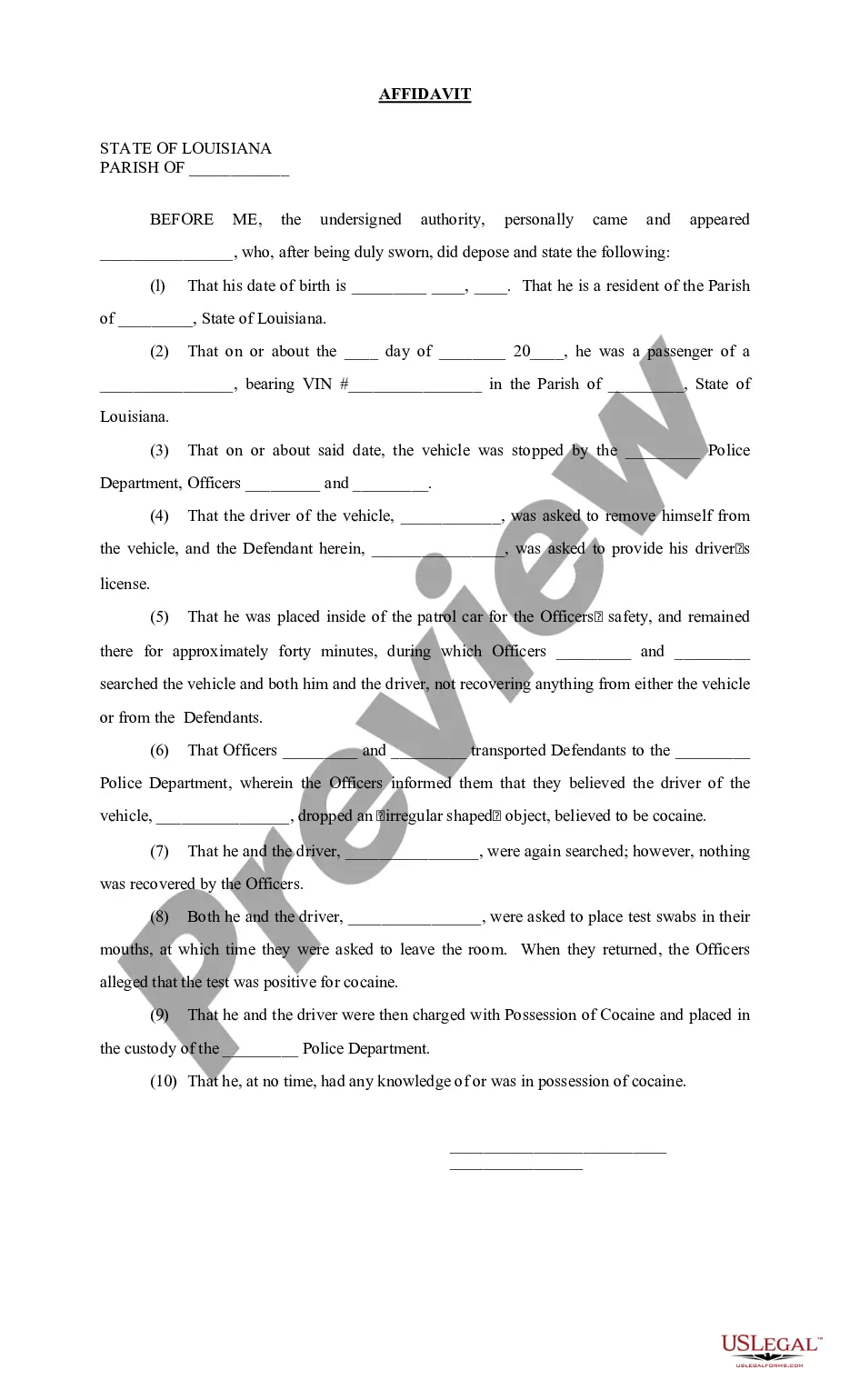
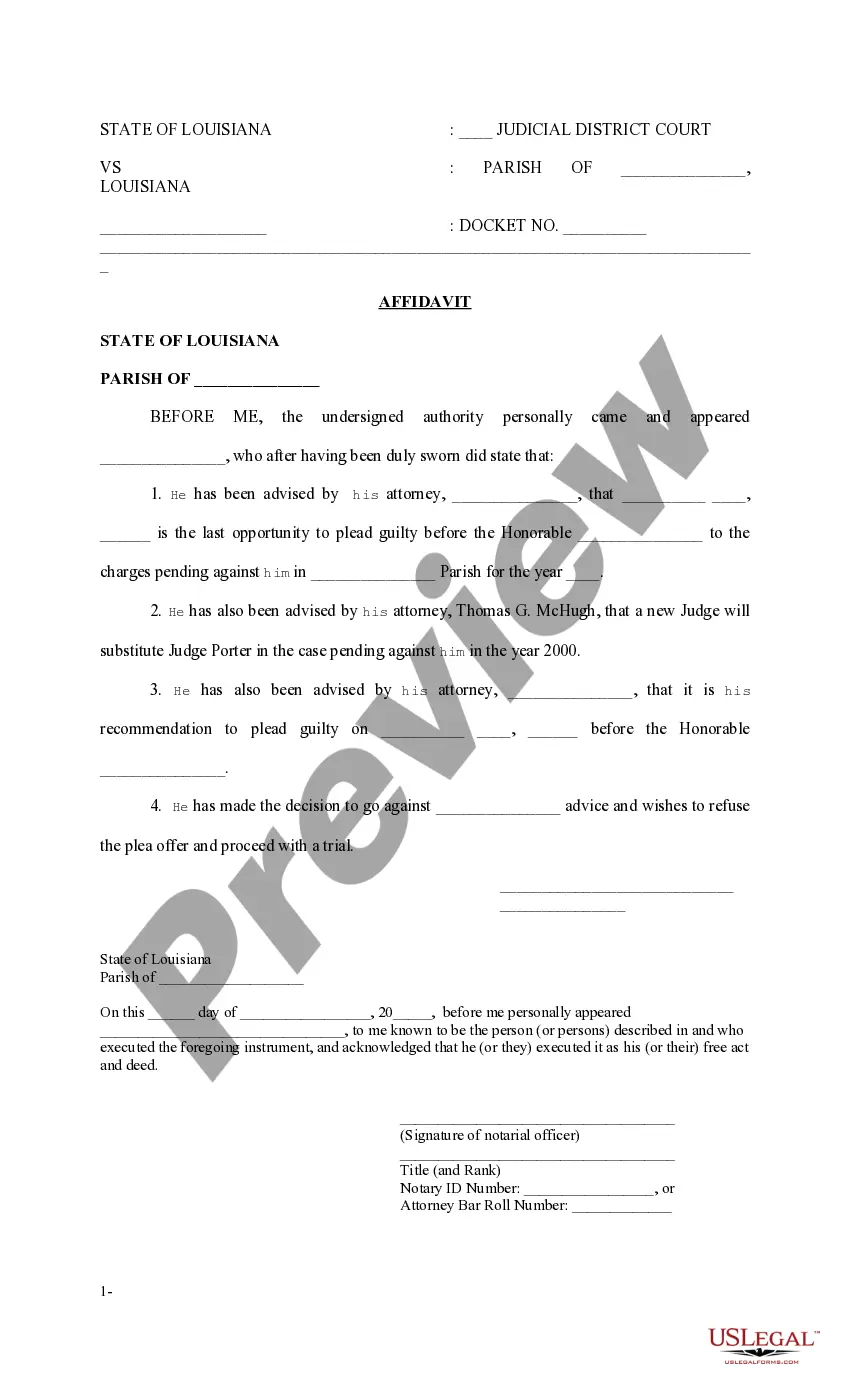
The Affidavit Concerning Facts and Denial of Knowledge of Criminal Activity is a legal document created by a defendant in a criminal case involving cocaine possession. This affidavit provides a sworn statement outlining the defendant's account of the events surrounding the incident, distinguishing it from other legal documents by focusing specifically on the lack of knowledge concerning the alleged illegal activity.
Key components of this form
- Defendant's personal information, including name, date of birth, and residence.
- Details of the incident, including the date, vehicle description, and police involvement.
- Statements regarding the circumstances of the vehicle search and interactions with law enforcement.
- Declaration of the defendant's lack of knowledge regarding the cocaine.
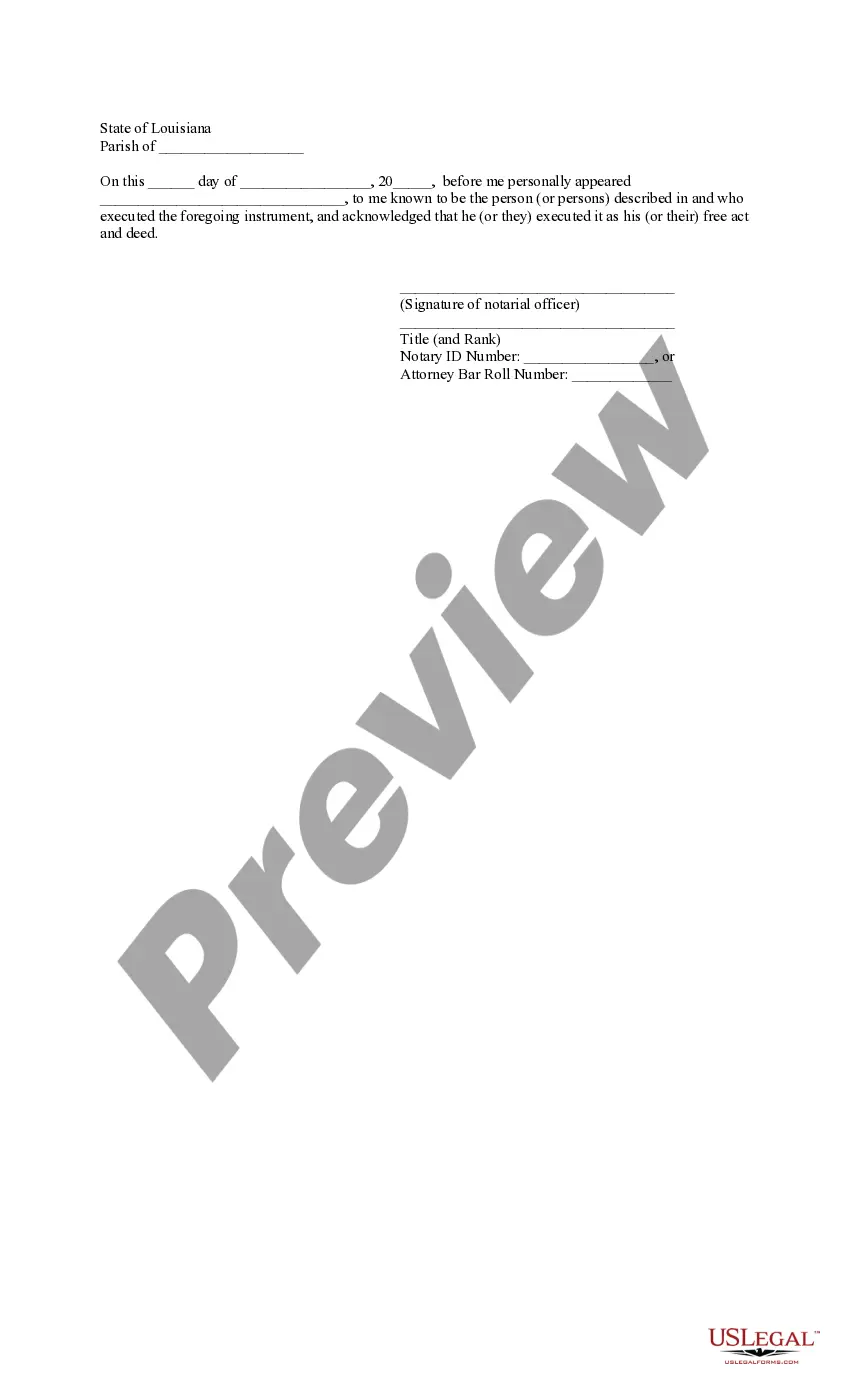
- Signature of the defendant and notary public for validation.

When to use this form
This form should be used when a defendant in a cocaine possession case wishes to formally declare their version of events, emphasizing their lack of knowledge about the substance found. It can help establish a defense by articulating the facts as perceived by the defendant, potentially influencing the case's outcome.
Who needs this form
- Defendants charged with cocaine possession who want to assert their innocence.
- Individuals looking to document their account of an incident involving law enforcement and an alleged drug search.
- Anyone needing to provide a formal statement for legal proceedings related to a drug-related charge.
How to prepare this document
- Identify and enter the defendant's full name, date of birth, and residence.
- Provide details regarding the date of the incident and vehicle information.
- Document interactions with law enforcement, including the names of officers involved and any searches conducted.
- Clearly state the lack of knowledge about the cocaine possession.
- Sign the affidavit in the presence of a notary public to validate the document.
Does this document require notarization?
Yes, this form must be notarized to be legally valid. The affidavit requires a notary public to witness the signing and verify the identity of the signer. US Legal Forms offers integrated online notarization service, providing secure video calls with licensed notaries available 24/7, ensuring reliability without the need to travel.
Get your form ready online
Our built-in tools help you complete, sign, share, and store your documents in one place.
Make edits, fill in missing information, and update formatting in US Legal Forms—just like you would in MS Word.
Download a copy, print it, send it by email, or mail it via USPS—whatever works best for your next step.
Sign and collect signatures with our SignNow integration. Send to multiple recipients, set reminders, and more. Go Premium to unlock E-Sign.
If this form requires notarization, complete it online through a secure video call—no need to meet a notary in person or wait for an appointment.
We protect your documents and personal data by following strict security and privacy standards.

Make edits, fill in missing information, and update formatting in US Legal Forms—just like you would in MS Word.

Download a copy, print it, send it by email, or mail it via USPS—whatever works best for your next step.

Sign and collect signatures with our SignNow integration. Send to multiple recipients, set reminders, and more. Go Premium to unlock E-Sign.

If this form requires notarization, complete it online through a secure video call—no need to meet a notary in person or wait for an appointment.

We protect your documents and personal data by following strict security and privacy standards.
Common mistakes
- Failing to provide accurate personal information.
- Leaving out essential details regarding the incident.
- Not having the document notarized, which could affect its validity.
- Using unclear language that might lead to misunderstandings of the intended statements.
Benefits of completing this form online
- Convenient access to legal form templates that can be downloaded and completed at any time.
- Editable formats allow for easy customization to reflect personal circumstances.
- Guidance from licensed attorneys ensures the forms meet legal requirements.
Looking for another form?
Form popularity
FAQ
Article 683 pertains to the processes for executing a judgment in civil cases in Louisiana. It governs how a plaintiff can enforce a court order to ensure the defendant fulfills their legal obligations. While this may seem unrelated, it ties into affidavits because an individual may need to succeed through various legal routes, including a Louisiana Affidavit Concerning Facts and Denial of Knowledge of Criminal Activity - Cocaine.
An affidavit is used for the purpose of proving in court that a claim is true, and is typically used in conjunction with witness statements and other corroborating evidence. Through an affidavit, an individual swears that the information contained within is true to the best of their knowledge.
Title the affidavit. First, you'll need to title your affidavit. Craft a statement of identity. The very next section of your affidavit is what's known as a statement of identity. Write a statement of truth. State the facts. Reiterate your statement of truth. Sign and notarize.
In the sentence, the person writing the statement must state that he or she is stating that the information is accurate. (Example: I, Jane Doe, solemnly swear that the contents of this document are true and correct, and that I agree to abide by the terms in this affidavit.)
Step 2: Write the purpose of the Affidavit or the Heading. Step 3: Write the name of the parties in case of an affidavit being filled in Court or Write the name of the Deponent in case of other affidavits. Step 4: Write the complete address of the deponent.
Although affidavits are considered legal documents, anyone can draft one. As long as it is signed, witnessed, and notarized correctly, it will be valid. That means that you do not have to use a lawyer to create an affidavit.
An affidavit, by itself, is inadmissible. One cannot cross examine a piece of paper. It is hearsay without the person who signed it present in court and ready to testify about it as well as authenticate it if necessary. So, an affidavit by itself does not stand up in a court of law.
In a nutshell, an affidavit is a sworn statement that is in writing. Affidavits are usually used in a court or in negotiations. They are common in family law cases and bankruptcy cases. They are also used in civil and criminal cases, though not as often as family or bankruptcy law cases.
Affidavits are mainly used in Court proceedings. They are a written alternative to a person attending Court to give oral evidence in the witness box. Affidavits can be used to evidence, or prove, a number of things. For example, they are often used for people to tell their 'story' to the Court.