Louisiana Notice of Default in Payment of Rent as Warning Prior to Demand to Pay or Terminate for Nonresidential or Commercial Property
Description
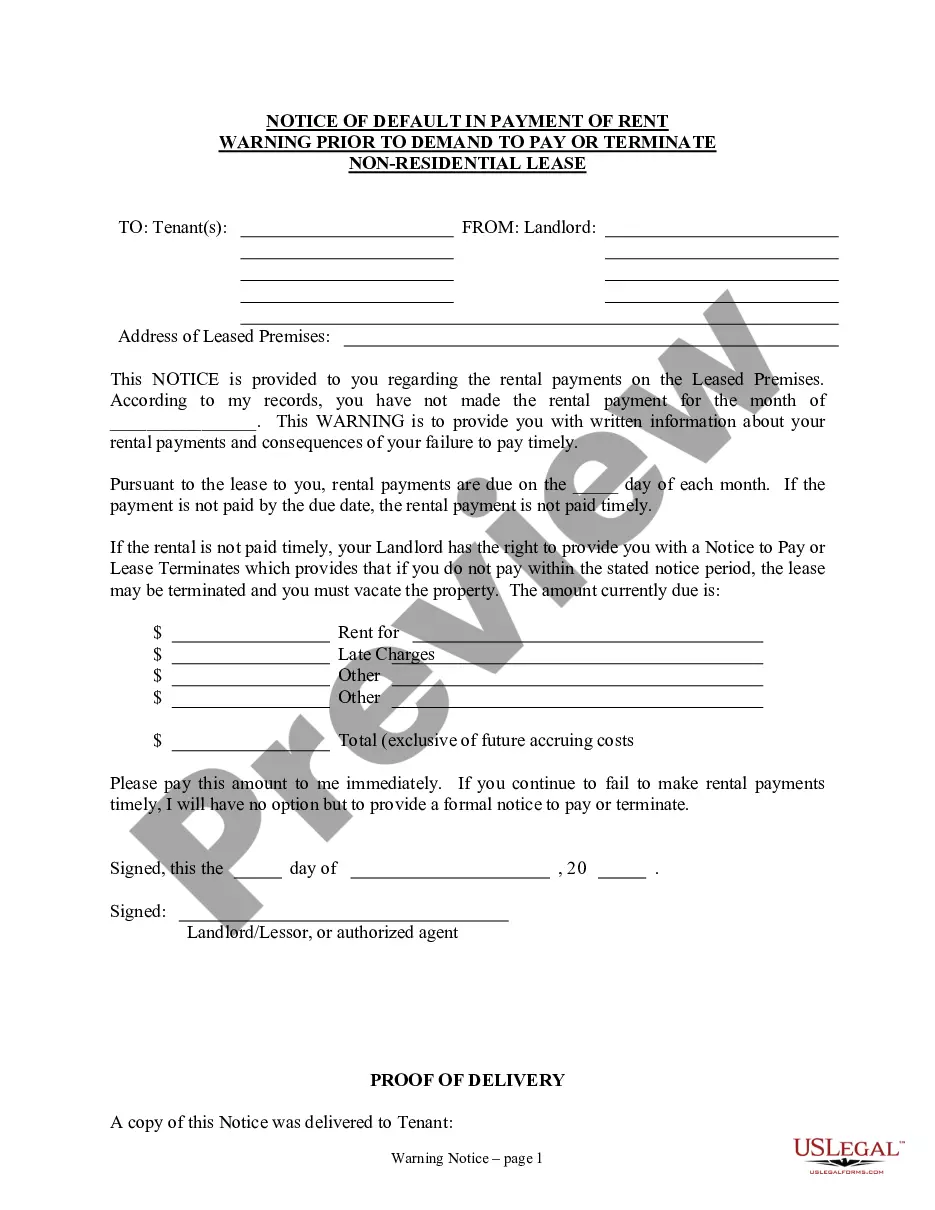
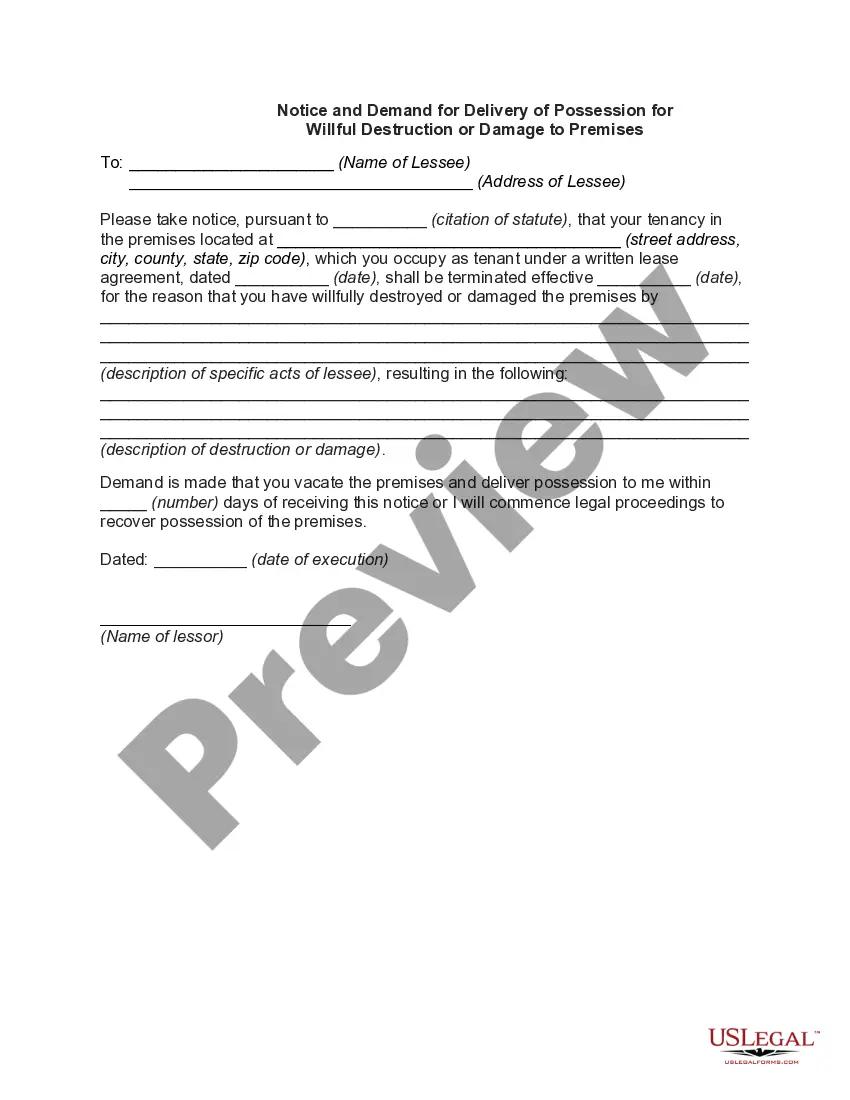
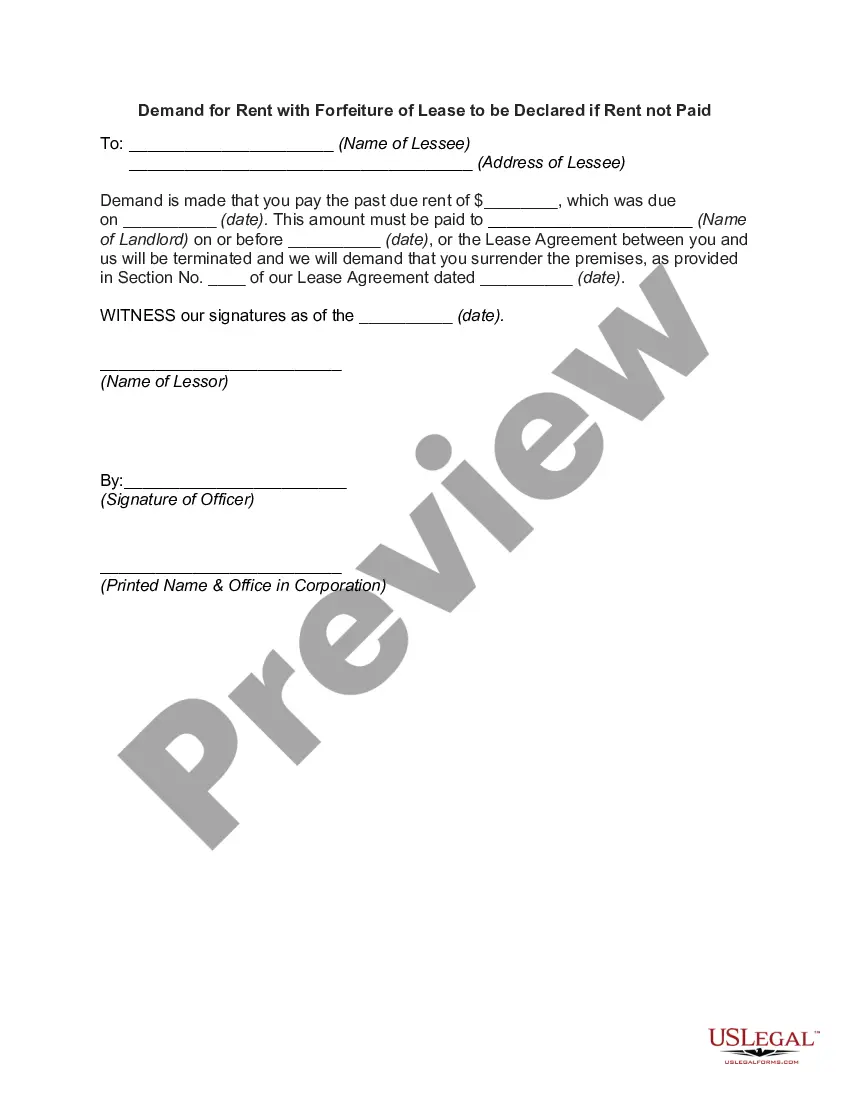
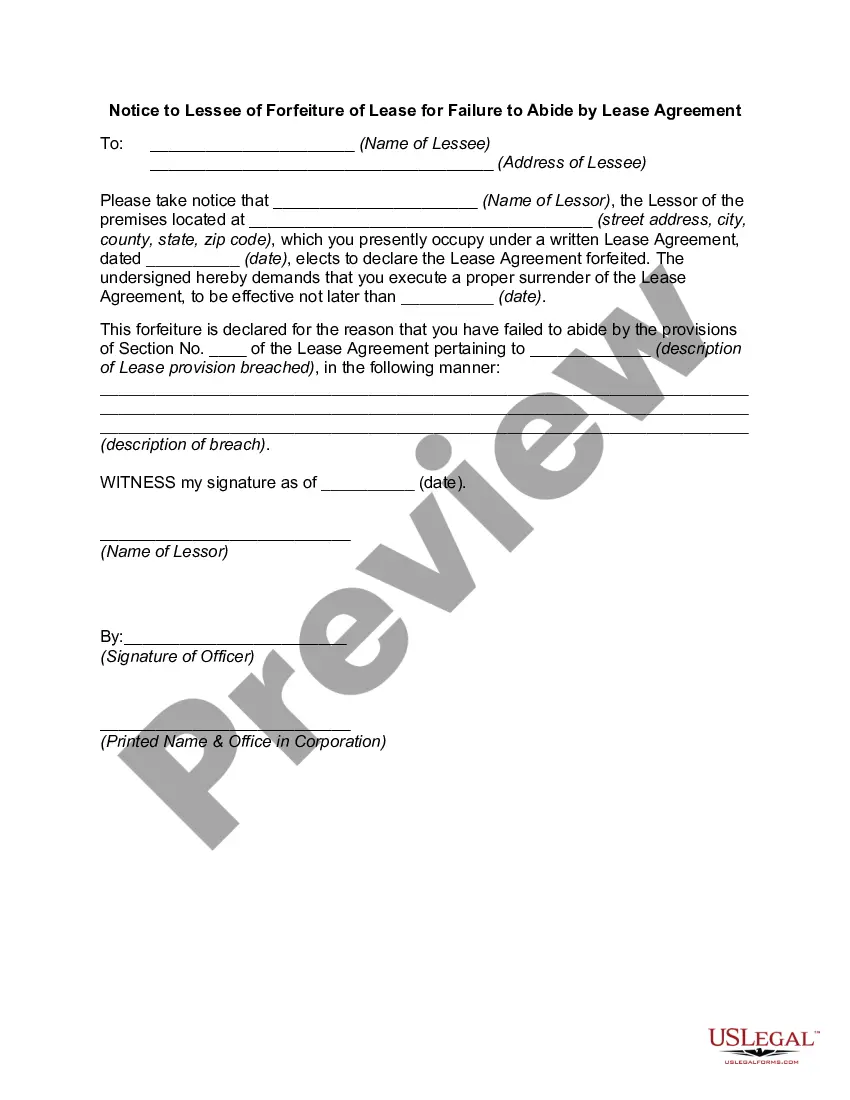
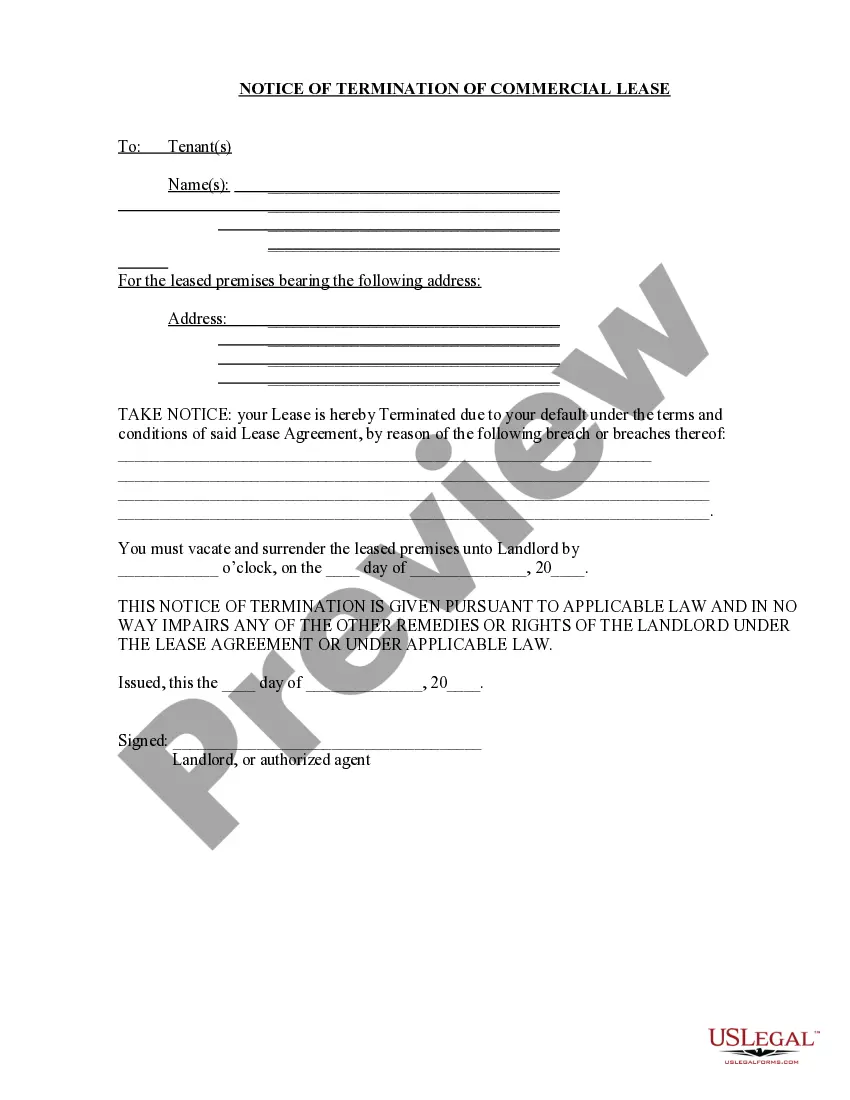
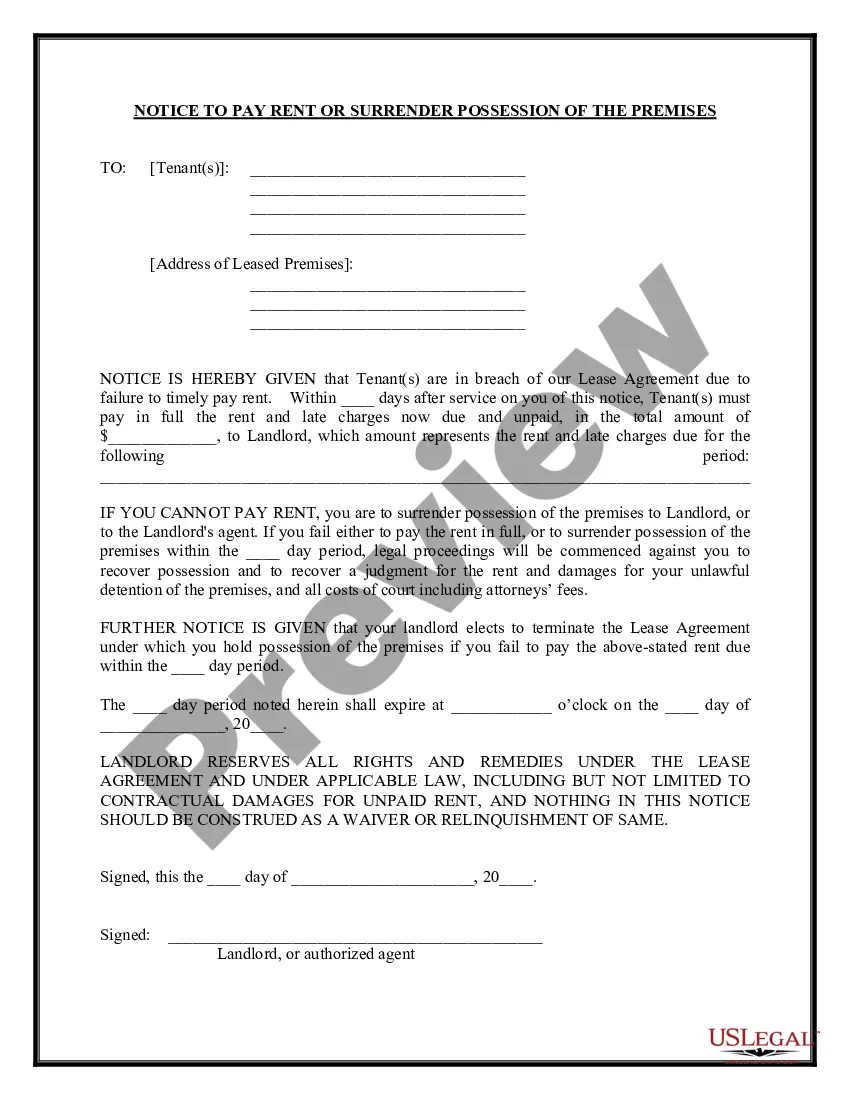


How to fill out Louisiana Notice Of Default In Payment Of Rent As Warning Prior To Demand To Pay Or Terminate For Nonresidential Or Commercial Property?
Searching for Louisiana Notice of Default in Rent Payment as Notification Before Demand to Pay or Terminate for Nonresidential or Commercial Property example and completing them can be difficult.
To conserve significant time, expenses, and effort, utilize US Legal Forms and select the appropriate template tailored for your state within just a few clicks.
Our lawyers prepare all documents, so you only need to complete them. It’s really that straightforward.
Choose your plan on the pricing page and create an account. Select your payment method via credit card or PayPal. Save the form in your desired format. You can now print the Louisiana Notice of Default in Payment of Rent as Notification Before Demand to Pay or Terminate for Nonresidential or Commercial Property template or complete it using any online editor. There’s no need to worry about typos since your form can be utilized and submitted, and printed as often as you need. Experience US Legal Forms and gain access to approximately 85,000 state-specific legal and tax documents.
- Log in to your account and revisit the form's page to download the sample.
- All of your downloaded templates are stored in My documents and are accessible at any time for future use.
- If you haven’t subscribed yet, you should register.
- Review our detailed instructions on how to obtain your Louisiana Notice of Default in Payment of Rent as Notification Before Demand to Pay or Terminate for Nonresidential or Commercial Property form in just a few minutes.
- To acquire a qualified example, check its applicability for your state.
- Examine the sample using the Preview feature (if available).
- If there’s a description, read it to understand the specifics.
- Click Buy Now if you found what you’re looking for.
Form popularity
FAQ
The 5 day notice to quit is a formal notification that landlords may provide to tenants who have failed to pay rent. In this context, it acts as a Louisiana Notice of Default in Payment of Rent as Warning Prior to Demand to Pay or Terminate for Nonresidential or Commercial Property, informing tenants that they have five days to settle the overdue amount before facing eviction proceedings. Understanding this notice can help tenants respond appropriately to avoid eviction.
To file an eviction notice in Louisiana, you need to draft a Louisiana Notice of Default in Payment of Rent as Warning Prior to Demand to Pay or Terminate for Nonresidential or Commercial Property, making sure it adheres to state laws. Once the notice is correctly formatted and signed, serve it to the tenant through the proper legal channels. After waiting the appropriate response period, you can file for eviction in court if the tenant fails to pay or respond.
Evicting a tenant in Louisiana can take several weeks, depending on various factors, including court schedules and responses from the tenant. After serving a Louisiana Notice of Default in Payment of Rent as Warning Prior to Demand to Pay or Terminate for Nonresidential or Commercial Property, landlords can file for eviction if the tenant does not pay within the specified time. Overall, the eviction timeline will depend on the clarity of the lease, court processing times, and tenant actions.
A rent arrears warning notice serves as an official communication from the landlord to the tenant indicating that the rent is overdue. In Louisiana, this is often communicated through a Louisiana Notice of Default in Payment of Rent as Warning Prior to Demand to Pay or Terminate for Nonresidential or Commercial Property. This notice typically outlines the amount owed, the due date, and the potential consequences of not paying.
While eviction timelines can vary, a landlord in Louisiana cannot simply evict you in five days without following the required legal process. After serving a Louisiana Notice of Default in Payment of Rent as Warning Prior to Demand to Pay or Terminate for Nonresidential or Commercial Property, landlords must wait a specified number of days before initiating the eviction process. This ensures that tenants have a fair chance to respond and settle their rent.
In Louisiana, tenants typically have a grace period outlined in their lease agreement, after which landlords may start the eviction process if the rent remains unpaid. Generally, the landlord can issue a Louisiana Notice of Default in Payment of Rent as Warning Prior to Demand to Pay or Terminate for Nonresidential or Commercial Property after a few days of missed payment. However, it is essential to review your lease and communicate with your landlord to understand specific terms.
To write an effective rent reminder notice, start by clearly stating the purpose of the notice. Include essential details such as the amount due, the due date, and the consequence of non-payment. Mentioning the 'Louisiana Notice of Default in Payment of Rent as Warning Prior to Demand to Pay or Terminate for Nonresidential or Commercial Property' can emphasize the legal importance of timely payments. You can use US Legal Forms to find templates that simplify this process and ensure compliance with the relevant laws.
The timeline for eviction in Louisiana can vary, but typically, after the Louisiana Notice of Default in Payment of Rent as Warning Prior to Demand to Pay or Terminate for Nonresidential or Commercial Property is issued, a landlord can proceed to file for eviction within a week. Once filed, the court process may take an additional few weeks, depending on scheduling and legal procedures. This process emphasizes the importance of prompt communication and payment to resolve any rent issues swiftly.
In Louisiana, landlords generally begin the eviction process after a tenant is at least five days late on rent. However, before an eviction can occur, they must issue a Louisiana Notice of Default in Payment of Rent as Warning Prior to Demand to Pay or Terminate for Nonresidential or Commercial Property. This notice informs the tenant of their overdue payments and provides them time to settle the outstanding rent. It is important to address these notifications promptly to avoid further complications.