Louisiana Motion and Order to Recognize Foreign Judgments and to Rescind Previously Issued Orders
About this form
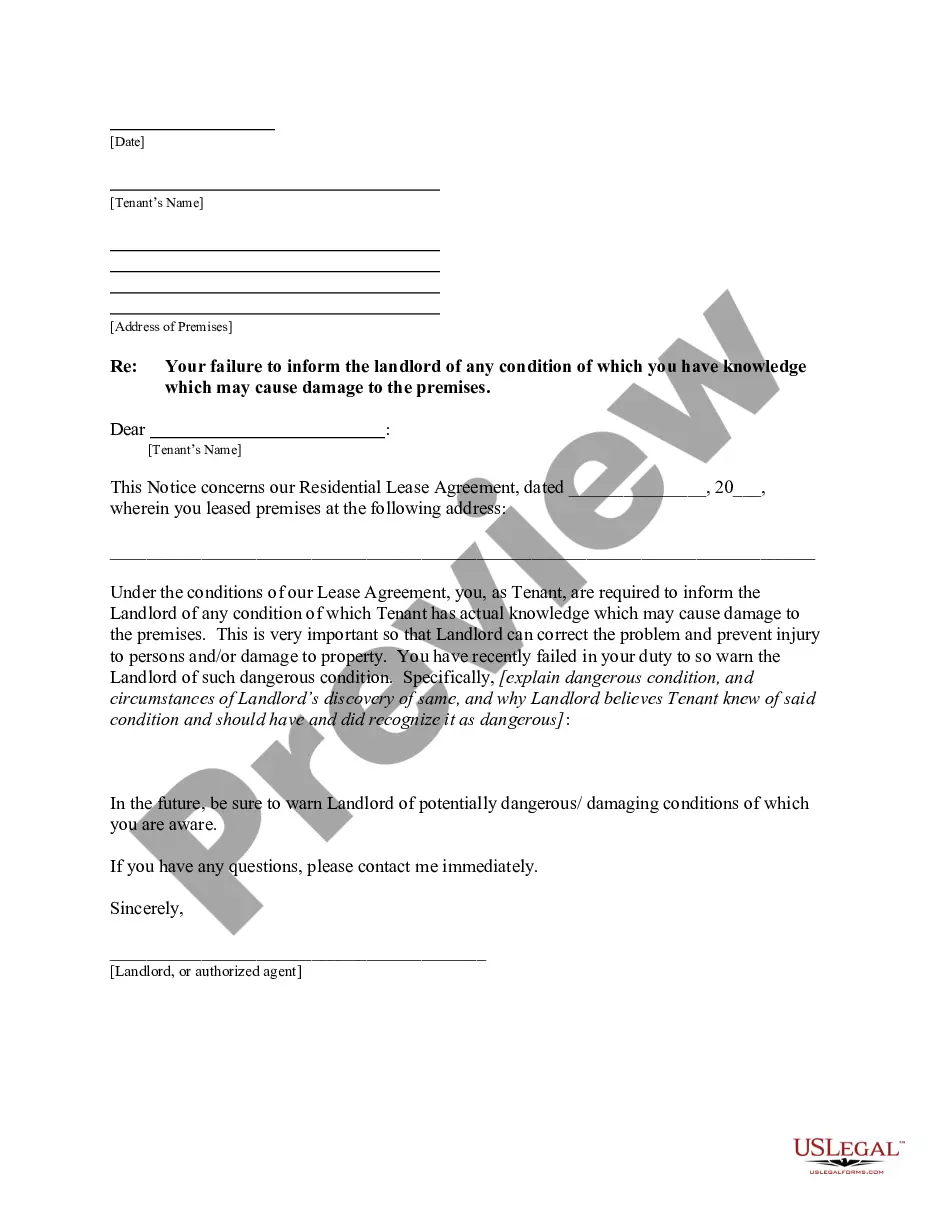
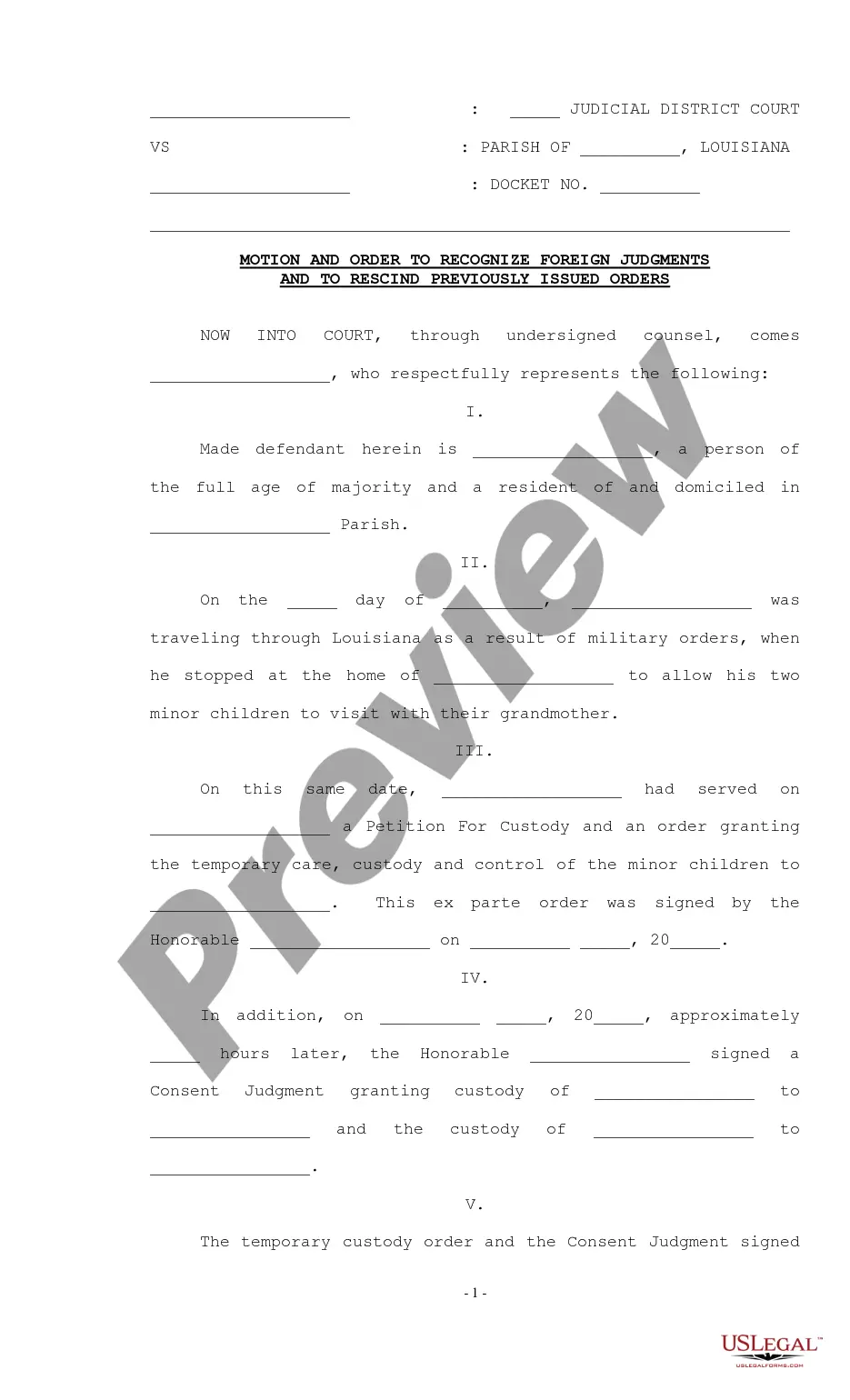
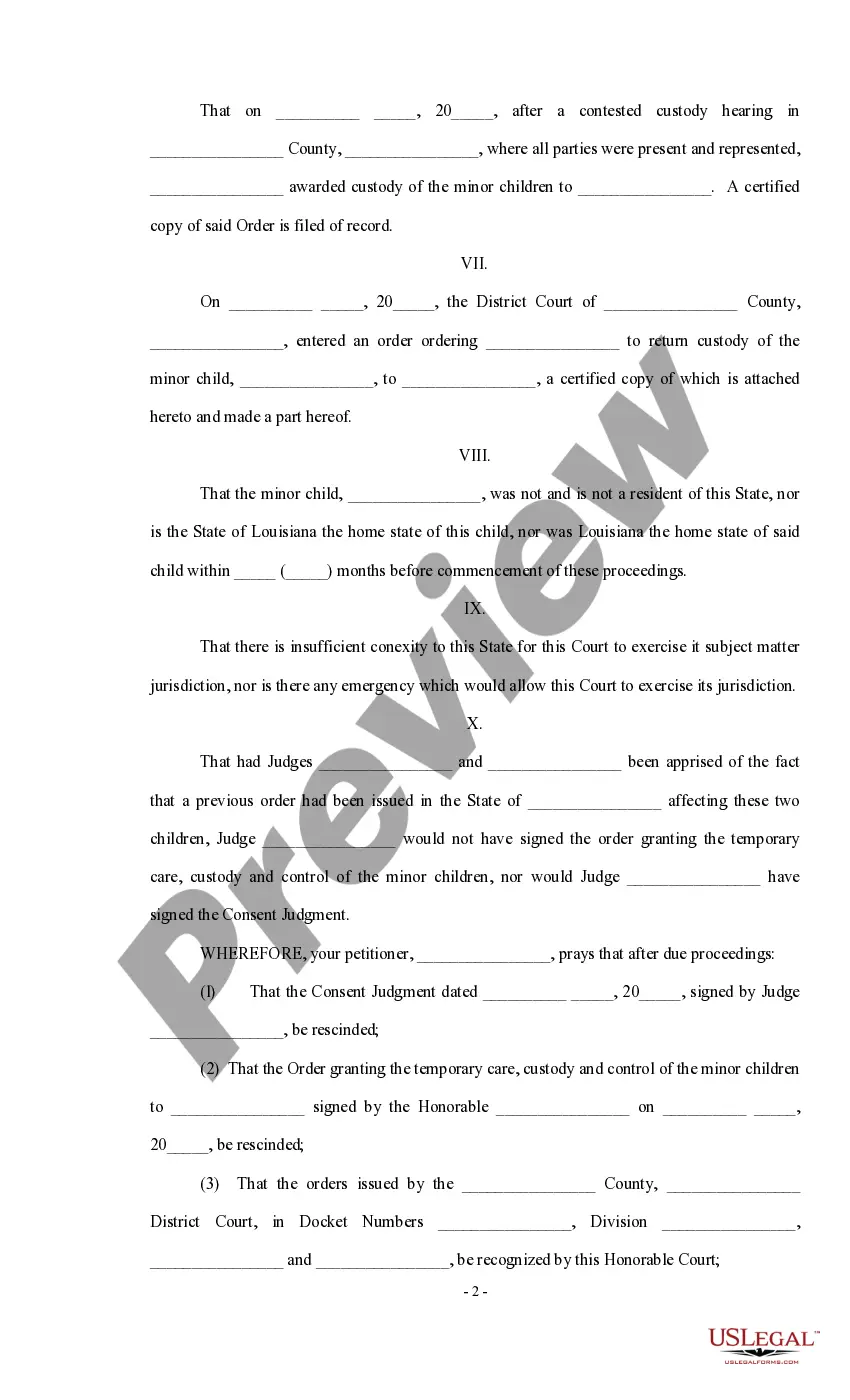
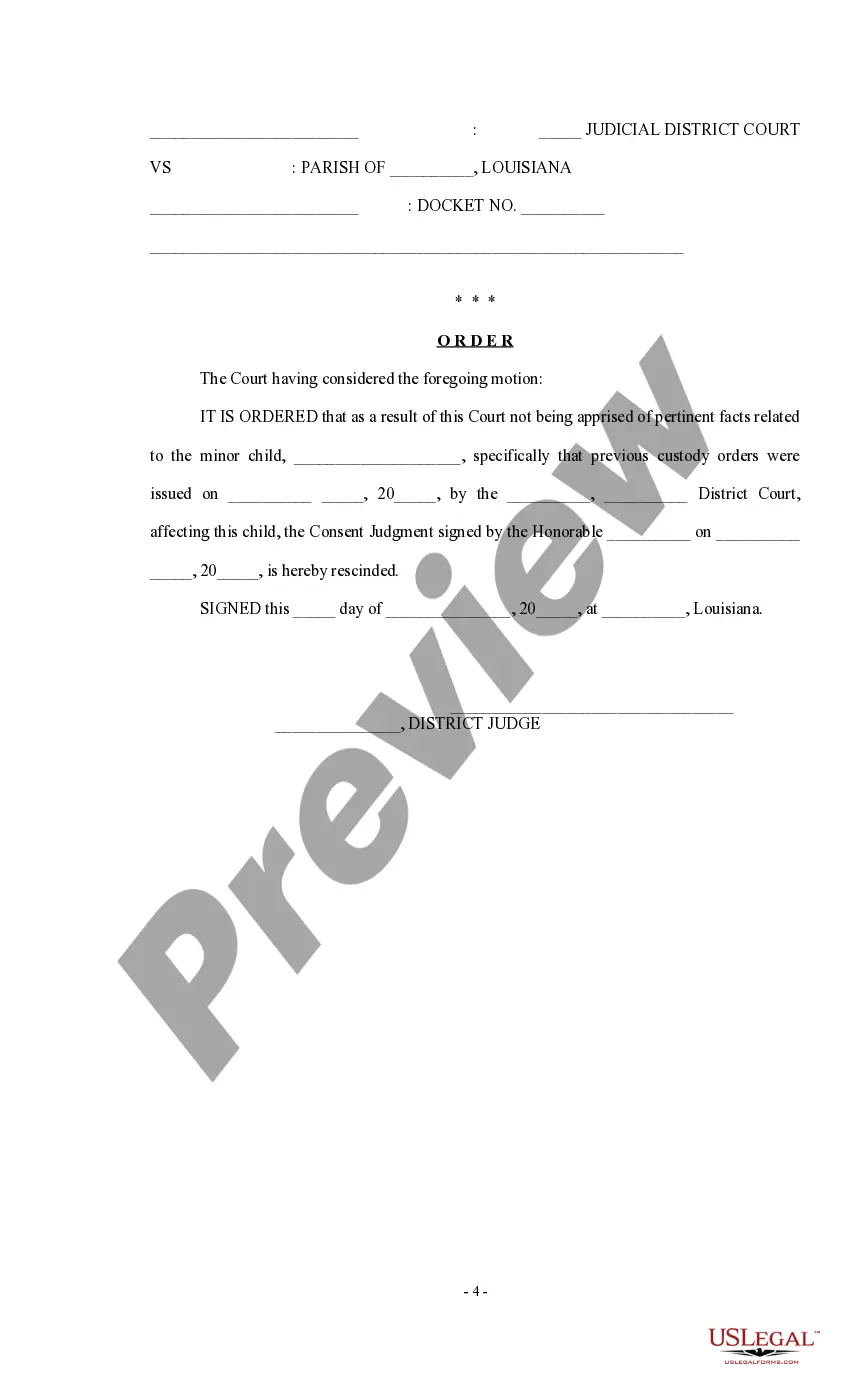
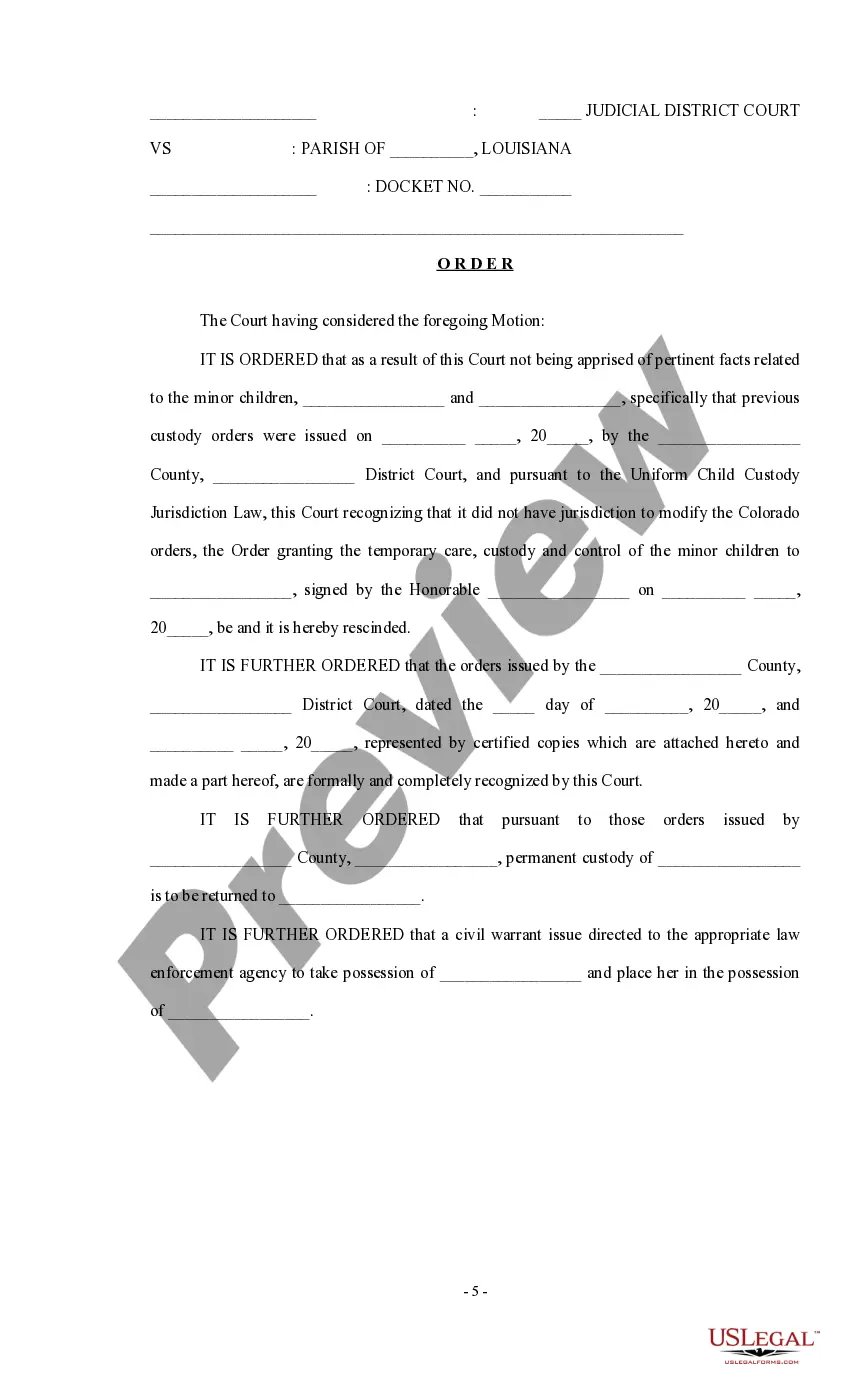
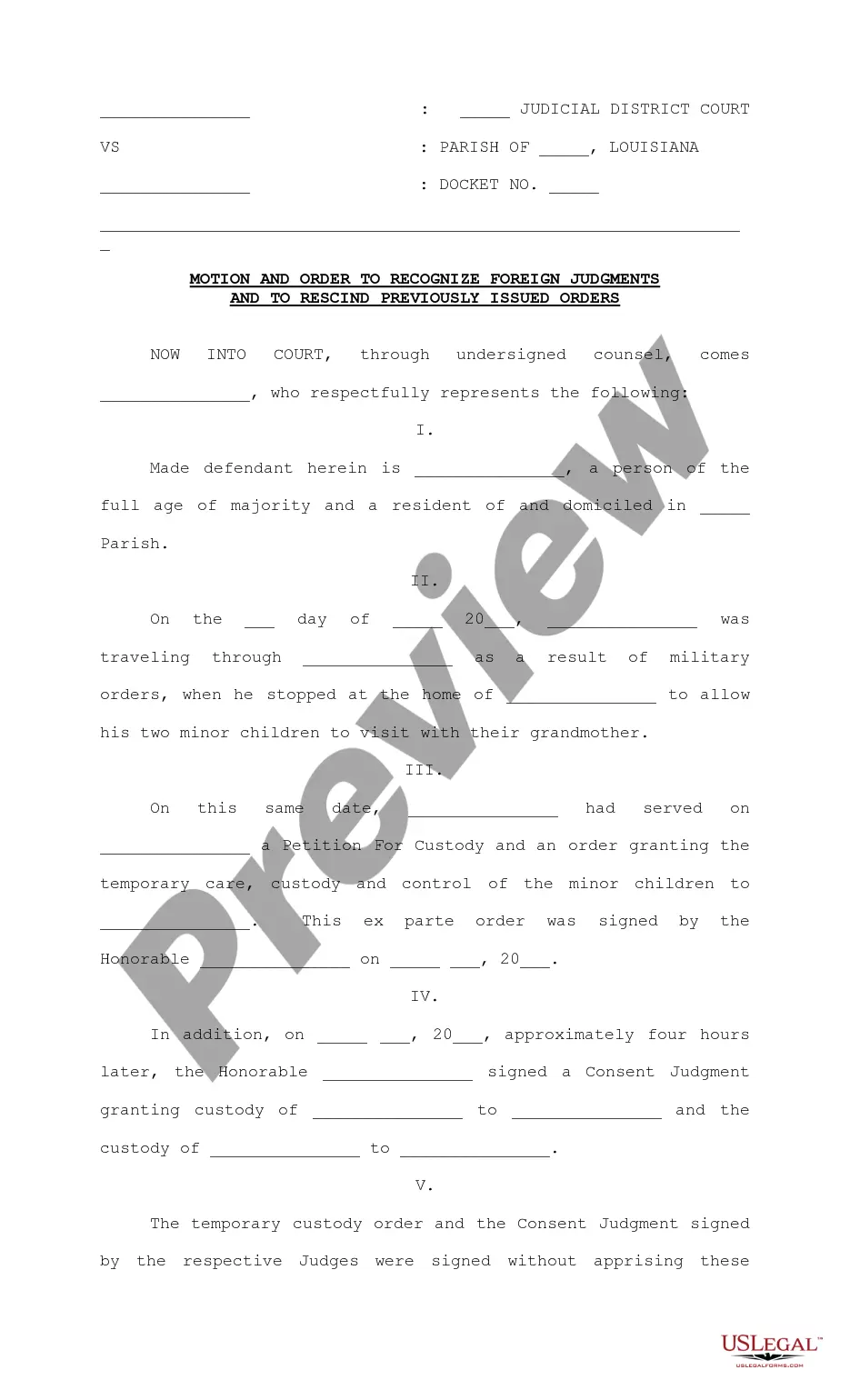
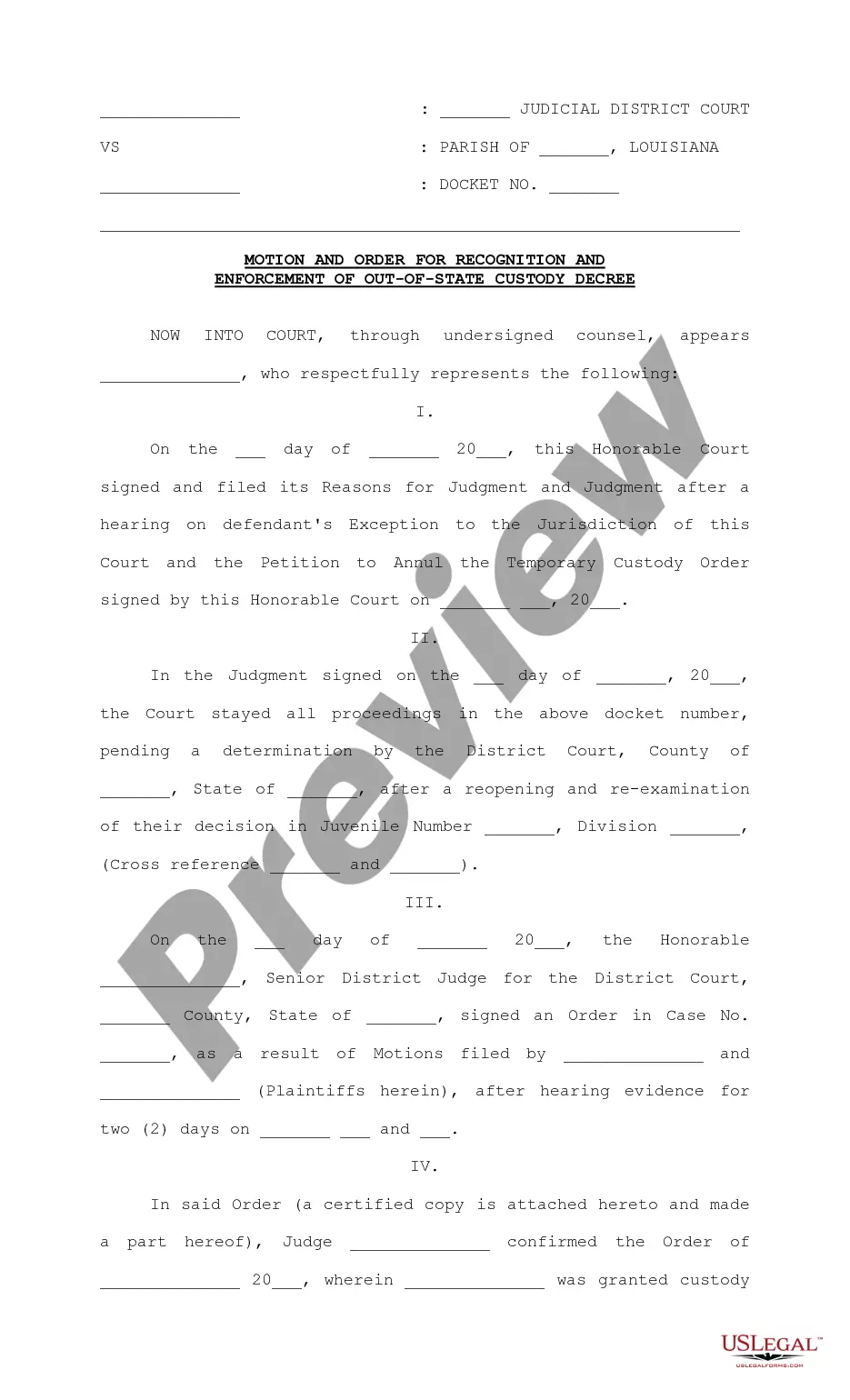
The Motion and Order to Recognize Foreign Judgments and to Rescind Previously Issued Orders is a legal document used in custody proceedings. This form addresses situations where a custody judgment from another jurisdiction conflicts with existing custody orders in Louisiana. By utilizing this form, a party can seek recognition of the foreign judgment and rescind prior orders that were made without all relevant facts regarding the children involved.
Key components of this form
- Petitioner's representation and background information.
- Details of custody orders issued in Louisiana and another jurisdiction.
- Request for recognition of foreign custody orders.
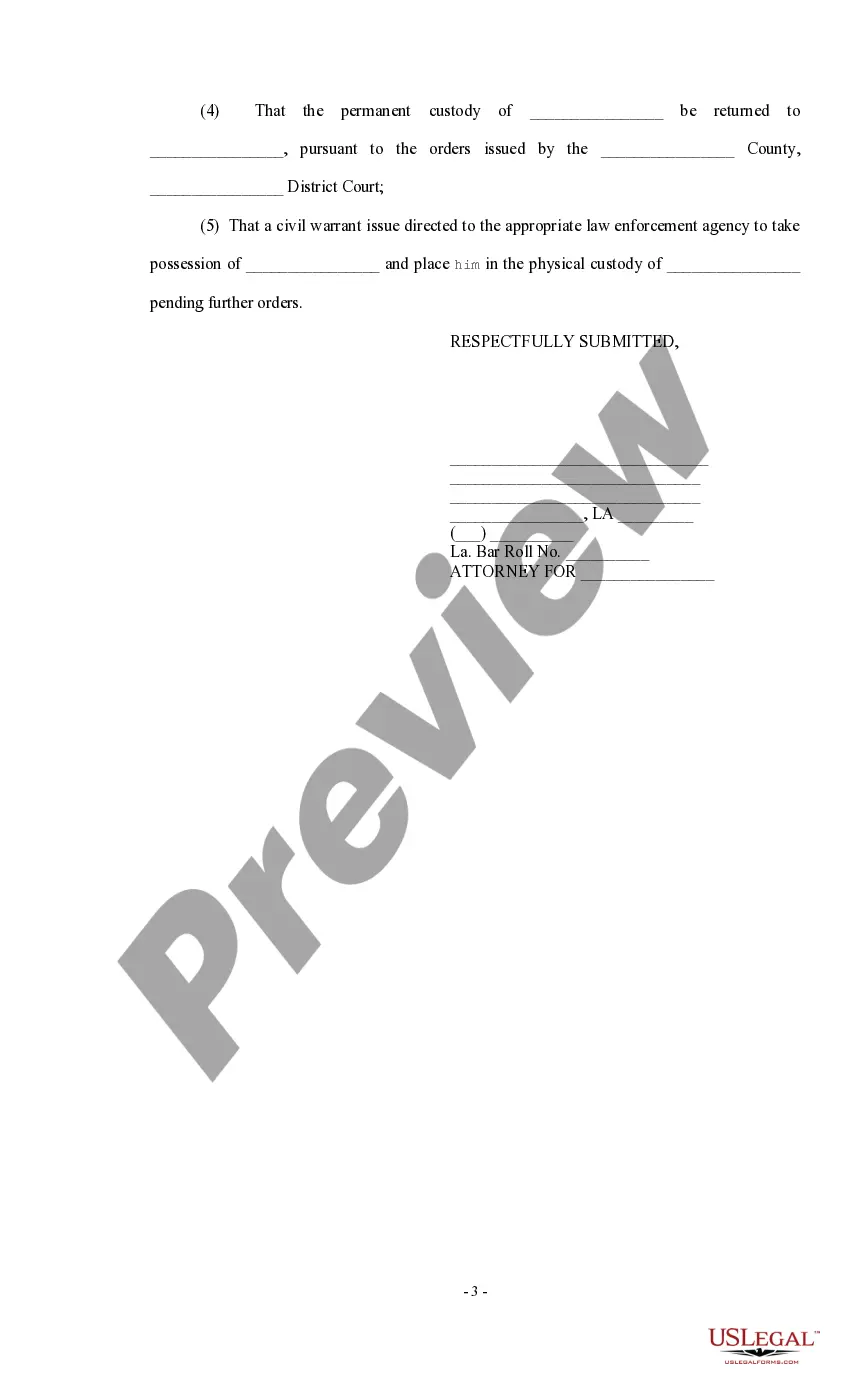
- Motion to rescind previous custody orders issued by Louisiana courts.
- Signature lines for the attorney and the court.
Common use cases
This form should be used when there is a custody judgment from another state or country that conflicts with an existing Louisiana custody order. It is particularly applicable when a party believes that the Louisiana court was not fully informed about previous custody rulings affecting the children.
Who needs this form
This form is intended for:
- Parents or guardians involved in custody disputes where a foreign judgment exists.
- Individuals seeking to rectify custody orders issued without complete information.
- Legal representatives acting on behalf of custodial or non-custodial parents.
Steps to complete this form
- Identify the parties involved and their relationship to the minor children.
- Detail the relevant dates and judges associated with previous custody orders.
- Include copies of foreign custody judgments and any relevant orders from Louisiana courts.
- Clearly state the reasons the court should rescind the previous orders based on jurisdictional grounds.
- Ensure the form is signed by the attorney and dated appropriately.
Does this form need to be notarized?
In most cases, this form does not require notarization. However, some jurisdictions or signing circumstances might. US Legal Forms offers online notarization powered by Notarize, accessible 24/7 for a quick, remote process.
Get your form ready online
Our built-in tools help you complete, sign, share, and store your documents in one place.
Make edits, fill in missing information, and update formatting in US Legal Forms—just like you would in MS Word.
Download a copy, print it, send it by email, or mail it via USPS—whatever works best for your next step.
Sign and collect signatures with our SignNow integration. Send to multiple recipients, set reminders, and more. Go Premium to unlock E-Sign.
If this form requires notarization, complete it online through a secure video call—no need to meet a notary in person or wait for an appointment.
We protect your documents and personal data by following strict security and privacy standards.

Make edits, fill in missing information, and update formatting in US Legal Forms—just like you would in MS Word.

Download a copy, print it, send it by email, or mail it via USPS—whatever works best for your next step.

Sign and collect signatures with our SignNow integration. Send to multiple recipients, set reminders, and more. Go Premium to unlock E-Sign.

If this form requires notarization, complete it online through a secure video call—no need to meet a notary in person or wait for an appointment.

We protect your documents and personal data by following strict security and privacy standards.
Common mistakes to avoid
- Failing to provide accurate and complete details about the existing custody orders.
- Not including certified copies of the foreign judgment or orders from other jurisdictions.
- Neglecting to check jurisdictional requirements before filing the motion.
- Leaving out crucial information about the children's residency that may affect jurisdiction.
Why use this form online
- Convenience of completing the form at your own pace, anytime.
- Editable templates that save time and reduce errors.
- Access to forms that are drafted by licensed attorneys, ensuring legal compliance.
- Immediate download allows for quick submission to the court.
Looking for another form?





Form popularity
FAQ
Rule 9.9 in Louisiana pertains to the procedure for handling the filing of motions relating to recusal and related matters. This rule ensures that there is a clear process in place for addressing any potential issues that could affect the impartiality of a judge. When dealing with a Louisiana Motion and Order to Recognize Foreign Judgments and to Rescind Previously Issued Orders, being aware of Rule 9.9 can help you navigate the court’s procedures effectively and maintain the integrity of your legal actions.
To enforce a foreign judgment in the US, you will need to file the appropriate documents in the court of the state where you wish to enforce it. Using a Louisiana Motion and Order to Recognize Foreign Judgments and to Rescind Previously Issued Orders makes this task easier, as it can facilitate the recognition process. It’s vital to follow specific rules and requirements, which can be found on platforms such as USLegalForms, to ensure compliance with local laws and increase the likelihood of successful enforcement.
Being judgmental isn't all bad. When our inner Judge is balanced, we are able to make clear decisions and avoid potentially dangerous situations. Being critical also helps us to be creative, innovative, and insightful about other people's problems (think of the therapist who must judge his or her patient to help them).
Analytic judgements have no descriptive content. Synthetic judgements have just descriptive content. Evaluative judgements go beyond descriptive content.
In order to vacate a judgment in California, You must file a motion with the court asking the judge to vacate or set aside the judgment. Among other things, you must tell the judge why you did not respond to the lawsuit (this can be done by written declaration).
In criminal law, a judgment is enforced by the government. The judgment in a criminal matter often results in the imposition of a jail sentence or other penalty, which government authorities will themselves enforce.Enforcement of a civil judgment arises when a money judgment or order for support is not paid.
Judgments can have harmful and negative consequences. They can get in the way of fixing problems, hurt other people's feelings when you don't need or mean to, and they can harm your own self-esteem and happiness.
If a judgment is entered against you, a debt collector will have stronger tools, like garnishment, to collect the debt. A judgment is an official result of a lawsuit in court. In debt collection lawsuits, the judge may award the creditor or debt collector a judgment against you.
If you fail to attend Court in accordance with the Examination Order you will be in contempt of Court and a warrant for your arrest can be issued. A judgment creditor can issue a Garnishee Order on the basis of the information the judgment creditor has obtained about your financial situation.
Judgment can also be spelled "judgement," and usage experts have long disagreed over which spelling is the preferred one. Henry Fowler asserted, "The OED Oxford English Dictionary prefers the older and more reasonable spelling.