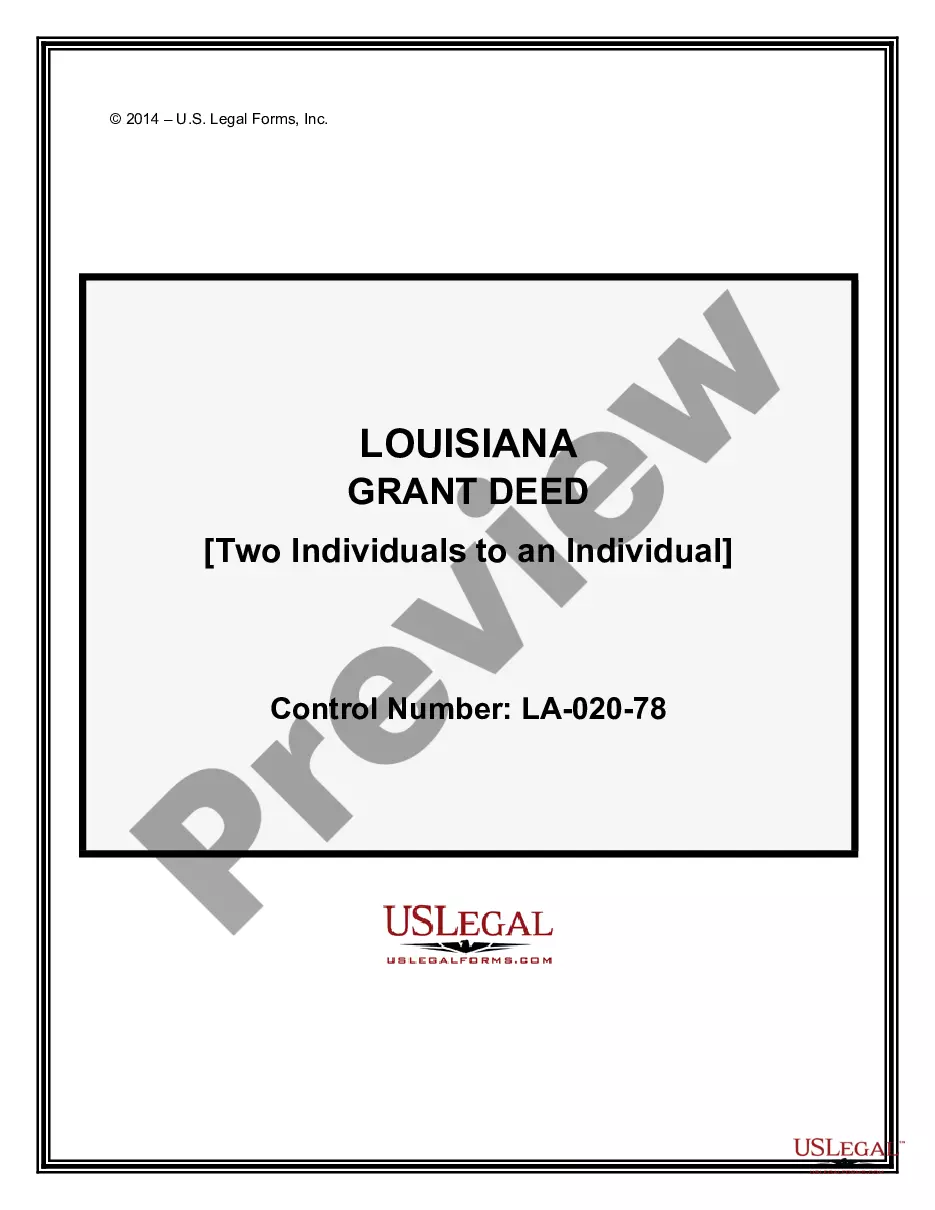
Louisiana Grant Deed from Two Individuals to an Individual
What this document covers
This form is a Grant Deed from two individuals to an individual, which transfers ownership of real property. It is distinct from other deeds, such as a warranty deed, because it typically does not include warranties against legal claims on the property. This Grant Deed complies with state statutory laws, ensuring its legality and use in transferring property rights effectively.
Key parts of this document
- Grantors: The two individuals transferring the property.
- Grantee: The individual receiving the property.
- Property Description: A detailed description of the property being conveyed.
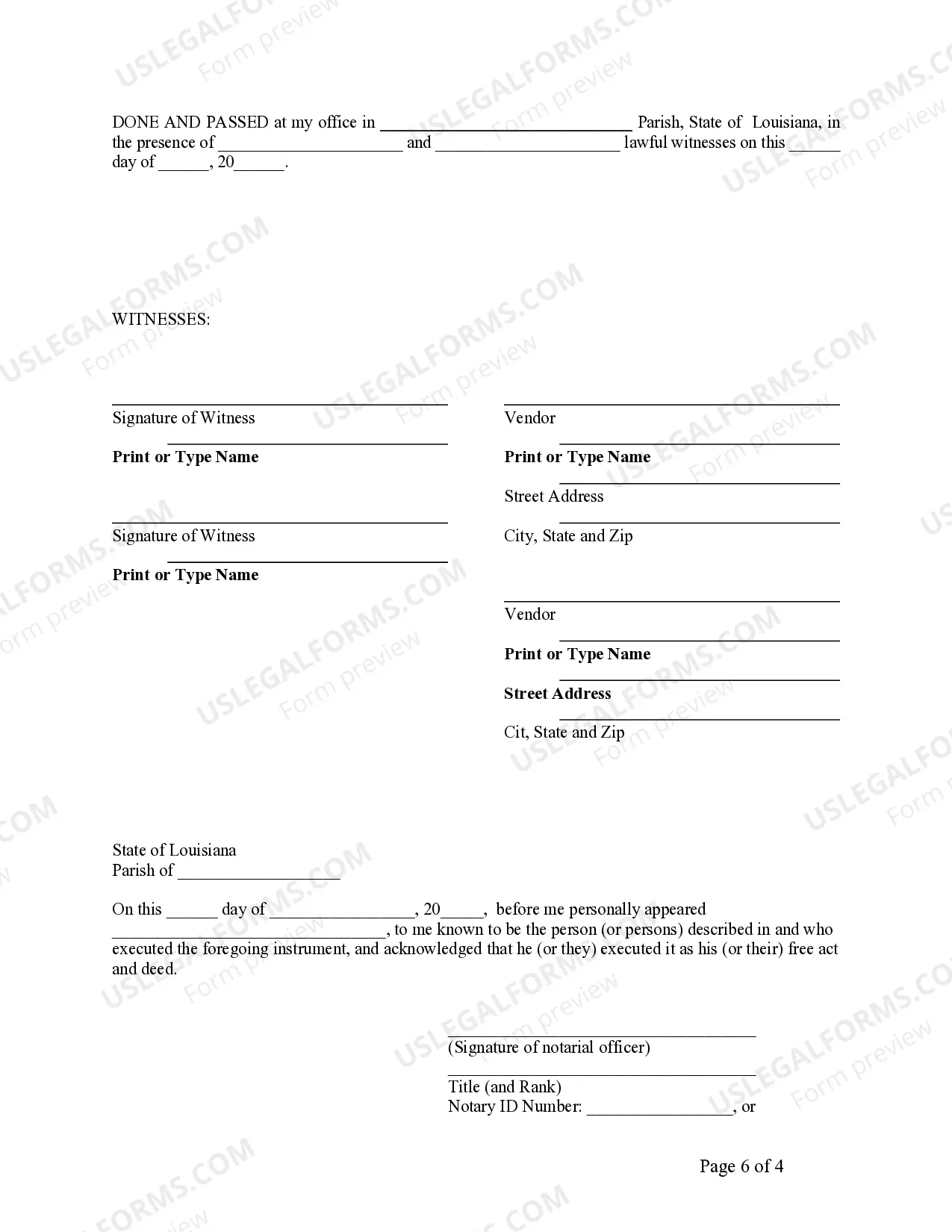
- Signatures: Required signatures of both grantors and witnesses.
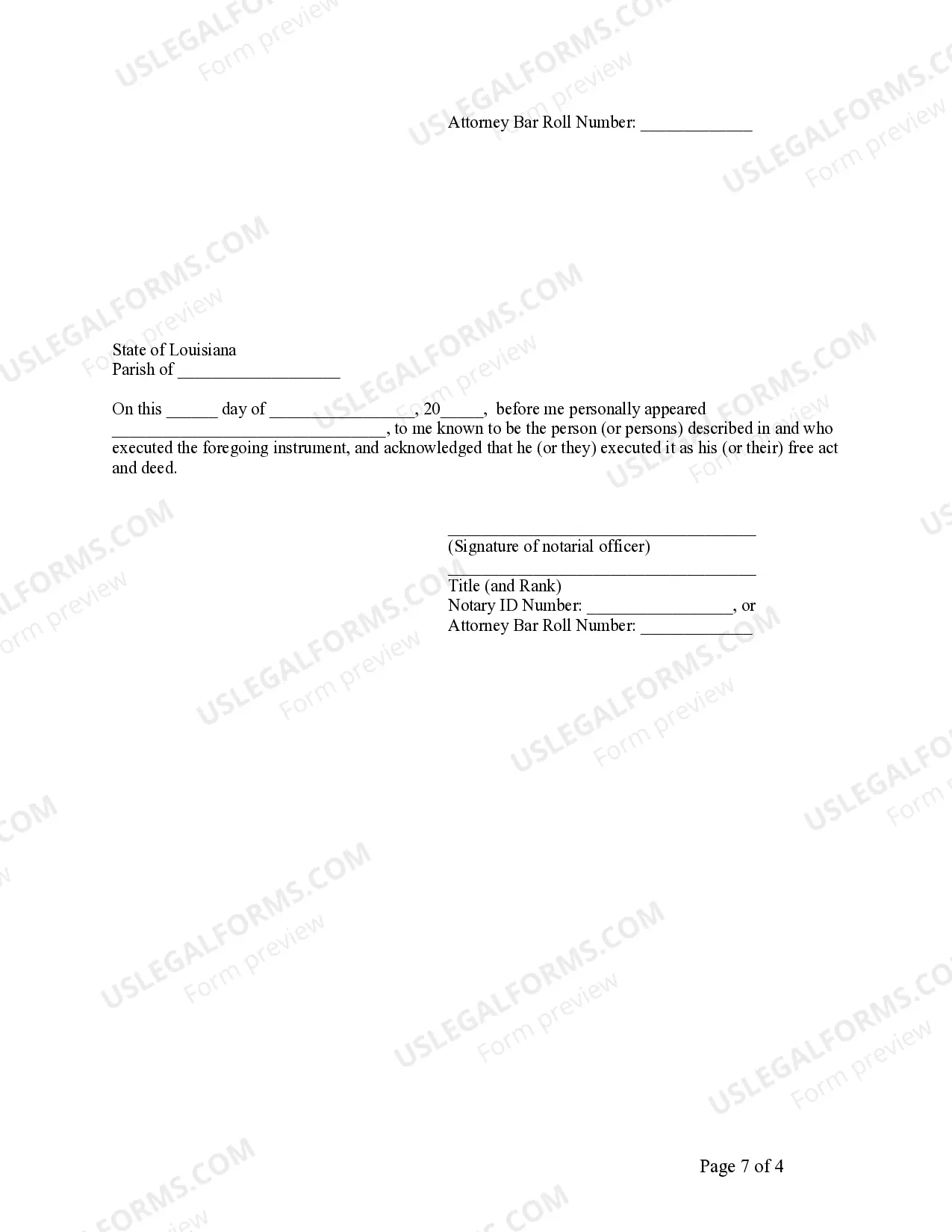
- Notarization: Typically required for the deed to be legally valid.
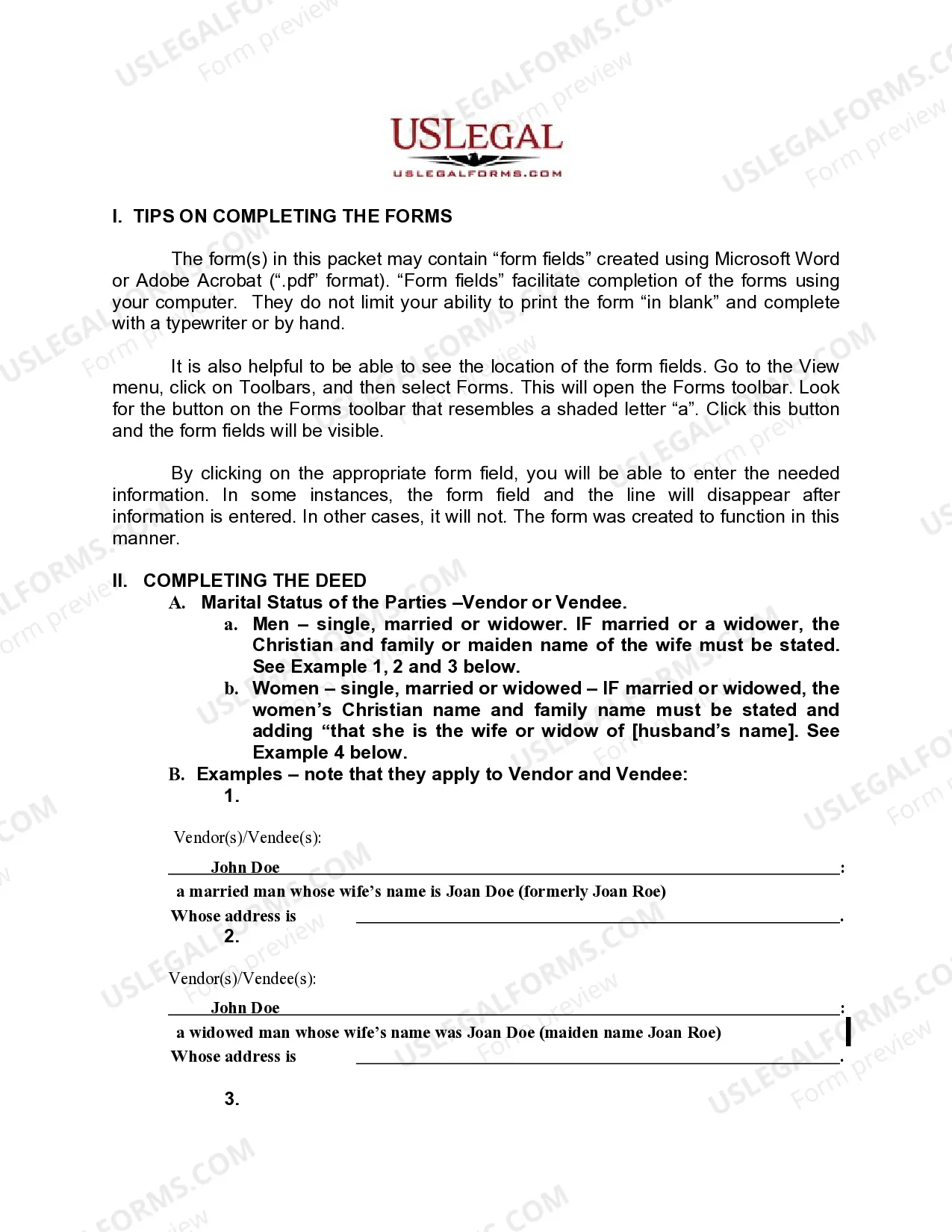
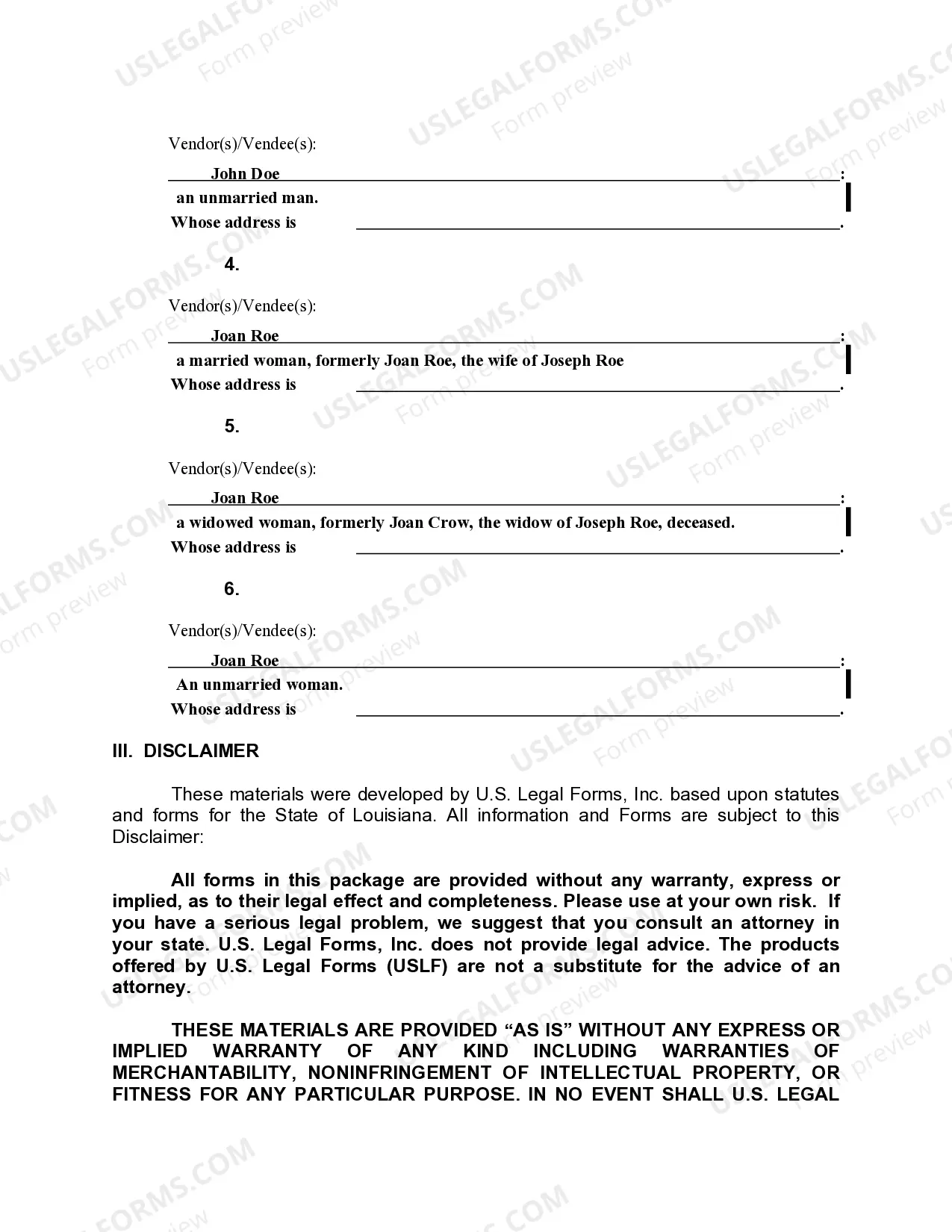
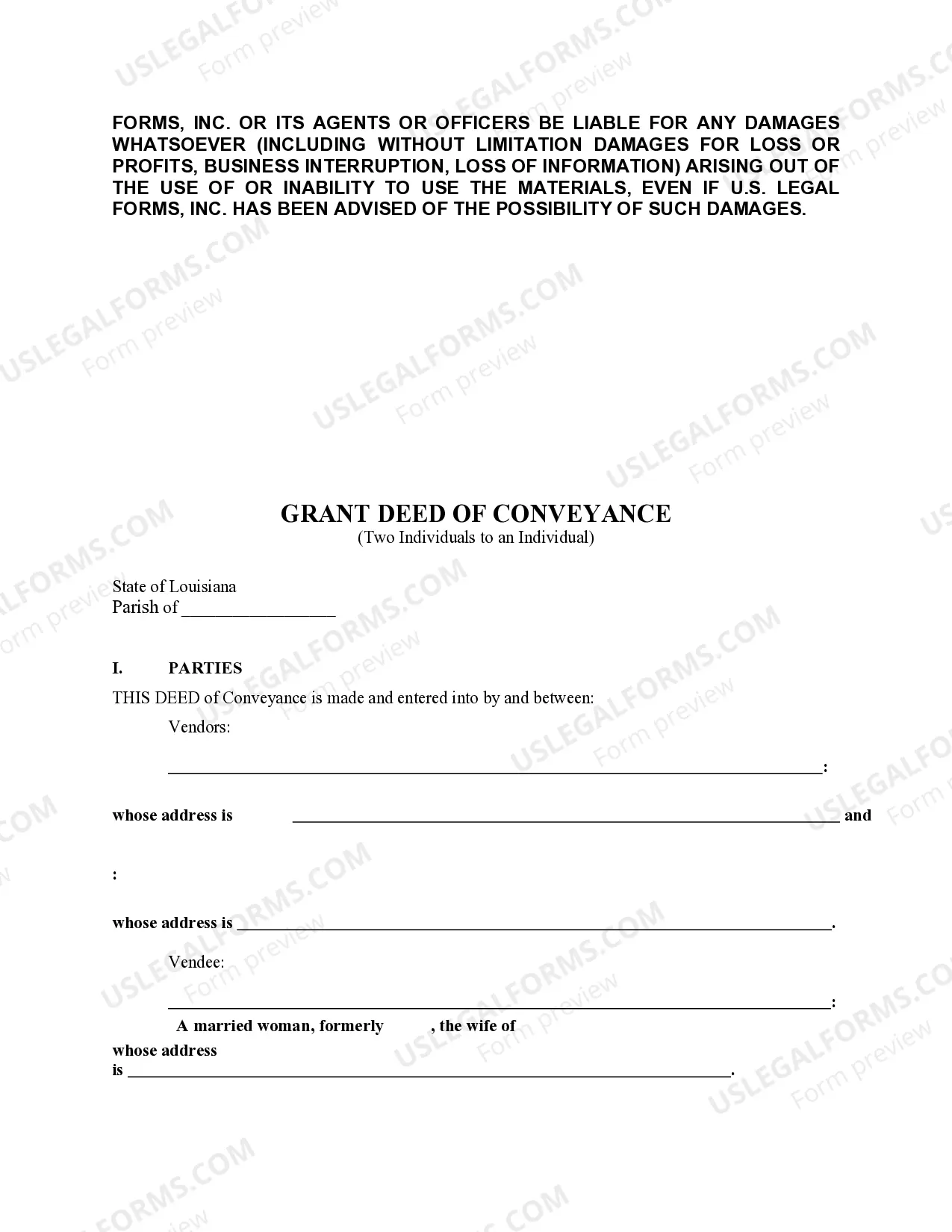
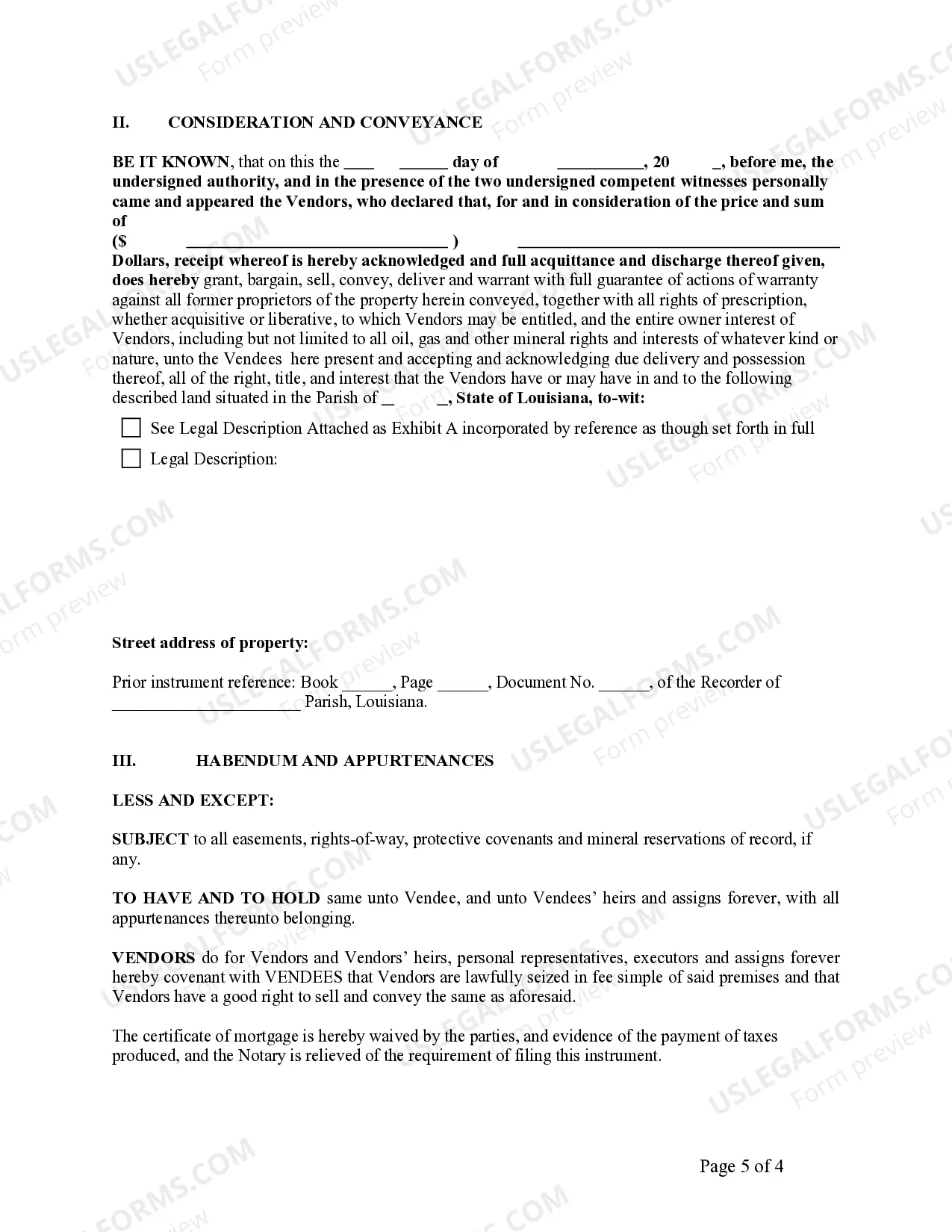





When this form is needed
This form should be used when two individuals wish to transfer ownership of property to another individual. Common scenarios include family members transferring property among themselves, or co-owners deciding to pass their interests to one individual. Use this form when you need a clear legal document to formally recognize the transfer of property rights.
Who can use this document
This form is intended for:
- Individuals seeking to transfer real estate ownership.
- Co-owners of a property who wish to consolidate ownership.
- Family members wishing to pass property to one individual.
How to prepare this document
Follow these steps to complete the Grant Deed form:
- Identify the parties involved: the two grantors (sellers) and the grantee (buyer).
- Provide the complete legal description of the property being transferred.
- Specify the marital status of the grantors and include any necessary name details.
- Sign the document in the presence of witnesses as required.
- Ensure the form is notarized to validate the transfer.
Notarization guidance
Yes, this form must be notarized to be legally valid. Notarization helps verify the identities of the grantors and witnesses, adding a layer of authenticity to the deed. US Legal Forms offers integrated online notarization services that are available 24/7 through secure video calls, providing a seamless experience without the need for travel.
Get your form ready online
Our built-in tools help you complete, sign, share, and store your documents in one place.
Make edits, fill in missing information, and update formatting in US Legal Forms—just like you would in MS Word.
Download a copy, print it, send it by email, or mail it via USPS—whatever works best for your next step.
Sign and collect signatures with our SignNow integration. Send to multiple recipients, set reminders, and more. Go Premium to unlock E-Sign.
If this form requires notarization, complete it online through a secure video call—no need to meet a notary in person or wait for an appointment.
We protect your documents and personal data by following strict security and privacy standards.

Make edits, fill in missing information, and update formatting in US Legal Forms—just like you would in MS Word.

Download a copy, print it, send it by email, or mail it via USPS—whatever works best for your next step.

Sign and collect signatures with our SignNow integration. Send to multiple recipients, set reminders, and more. Go Premium to unlock E-Sign.

If this form requires notarization, complete it online through a secure video call—no need to meet a notary in person or wait for an appointment.

We protect your documents and personal data by following strict security and privacy standards.
Common mistakes to avoid
- Failing to provide an accurate legal description of the property.
- Not having the document notarized, if required.
- Forgetting to include both grantors' signatures.
- Leaving out witness signatures, if specified by state law.
Benefits of completing this form online
- Convenience of filling out the form online.
- Editability allows for easy correction of errors before printing.
- Downloaded forms are drafted by licensed attorneys, ensuring legality.
- Access to forms anytime and from anywhere without needing to visit a lawyer.
Legal use & context
- A Grant Deed is legally binding and grants the Grantee full ownership rights once executed.
- Ensures that there are no undisclosed liens or claims against the property.
- Proper completion and filing of this deed are essential for legal recognition of ownership transfer.
Summary of main points
- This Grant Deed facilitates the transfer of property from two individuals to one individual.
- It is vital to complete the form accurately and obtain necessary signatures.
- State-specific rules may apply; always verify the requirements for your jurisdiction.
- Using this form online can save time and ensure compliance with legal standards.
Looking for another form?


Form popularity
FAQ
Retrieve your original deed. Get the appropriate deed form. Draft the deed. Sign the deed before a notary. Record the deed with the county recorder. Obtain the new original deed.
The mortgage company usually prepares this deed as part of the loan package and delivers it to the title company for you to sign at closing. The title company is commonly the trustee to the deed and holds legal title to the property until the loan gets fully repaid.
To sign over property ownership to another person, you'll use one of two deeds: a quitclaim deed or a warranty deed.
Print a grant deed from an online source. Sign the document in the presence of a notary public. Take the deed to the recorder's office in the county where the property is located.
Grantor's name. Grantee's name and address. Description of grantee (ex: unmarried man, husband and wife, joint tenants) Person who requested grant deed. Address of real estate that is being transferred. Legal description of property (lot number) Original title order number for property.
Contrary to normal expectations, the Deed DOES NOT have to be recorded to be effective or to show delivery, and because of that, the Deed DOES NOT have to be signed in front of a Notary Public. However, if you plan to record it, then it does have to be notarized as that is a County Recorder requirement.
The seller or the seller's broker will hire an attorney to prepare the real estate deed to ensure that all of the requirements in the creation of a valid deed are met before the seller conveys title to the property. All real estate deeds must be in writing.
A grant deed is the instrument used to transfer title to an interest in real property from one owner to someone else.A deed of trust is the security instrument given to a lender to secure a loan or other obligation. Bare naked title is deeded to the trustee, who holds the power of sale or the power to re-convey.
Property ownership in Louisiana is voluntarily transferred by a contract through the owner and the transferee. A transfer of real (immovable) property can be made by authentic act or by an act under private signature duly acknowledged (CC1839 Art. 1839).