FAQs concerning the Educational Records of Students with Disabilities in Kentucky
Understanding this form
The "FAQs concerning the Educational Records of Students with Disabilities in Kentucky" provides a detailed guide regarding the rights and regulations related to students with disabilities in Kentucky. This form is specially designed to address frequently asked questions about educational records, privacy laws, and access to these records, offering clarity on how educational institutions must handle sensitive information. It differs from similar documents by focusing specifically on the unique rights and privacy issues that pertain to students with disabilities under Kentucky law and federal regulations.
Main sections of this form
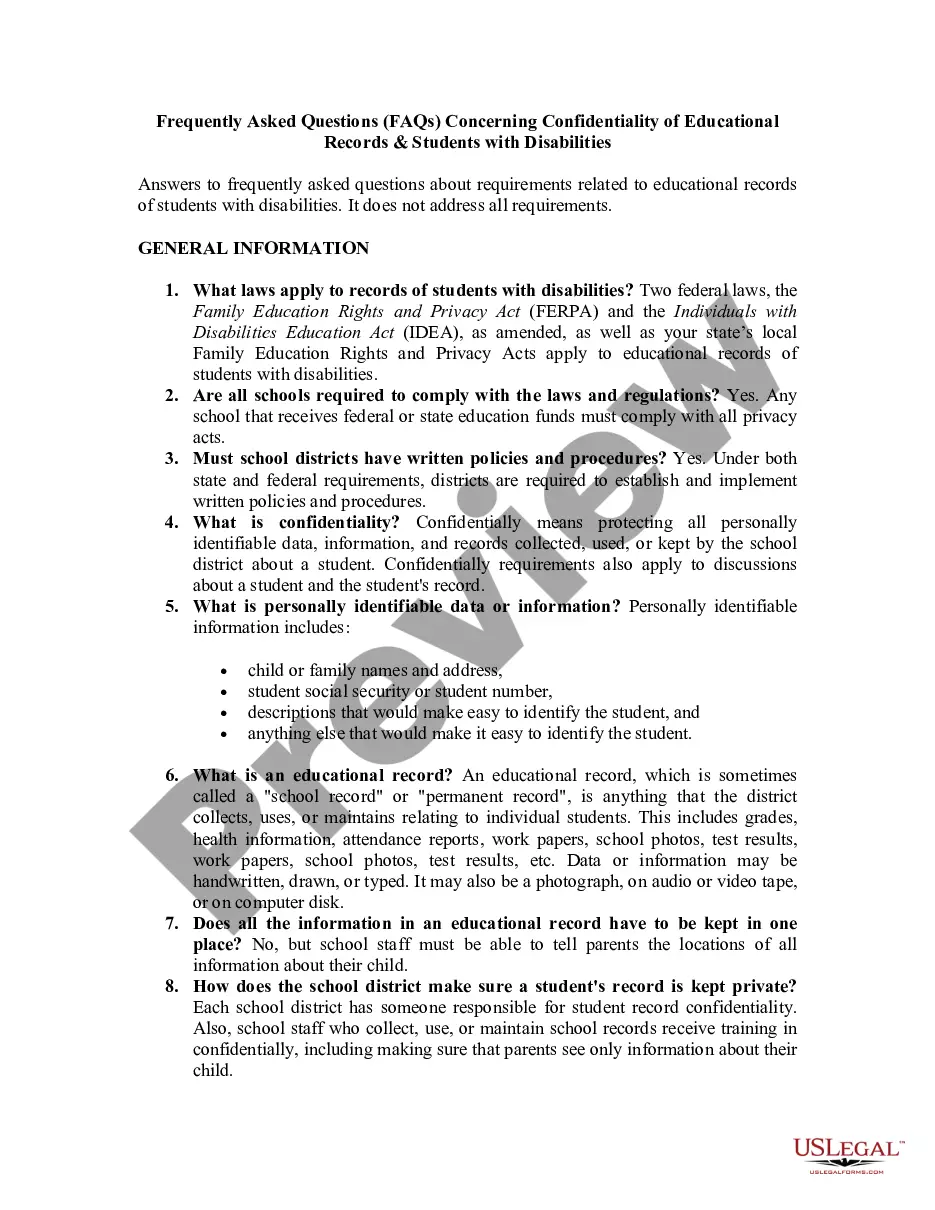
- Overview of federal and state laws impacting educational records of students with disabilities.
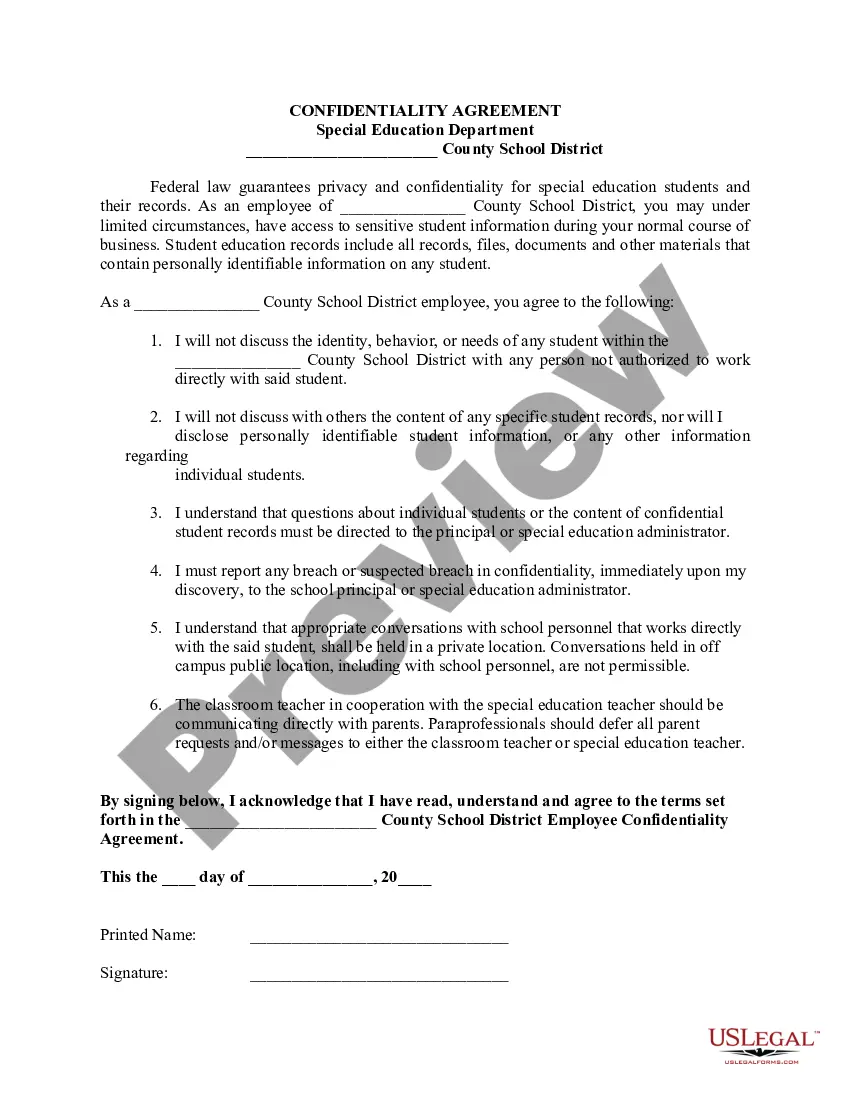
- Details on the obligation of schools to maintain confidentiality and establish written policies.
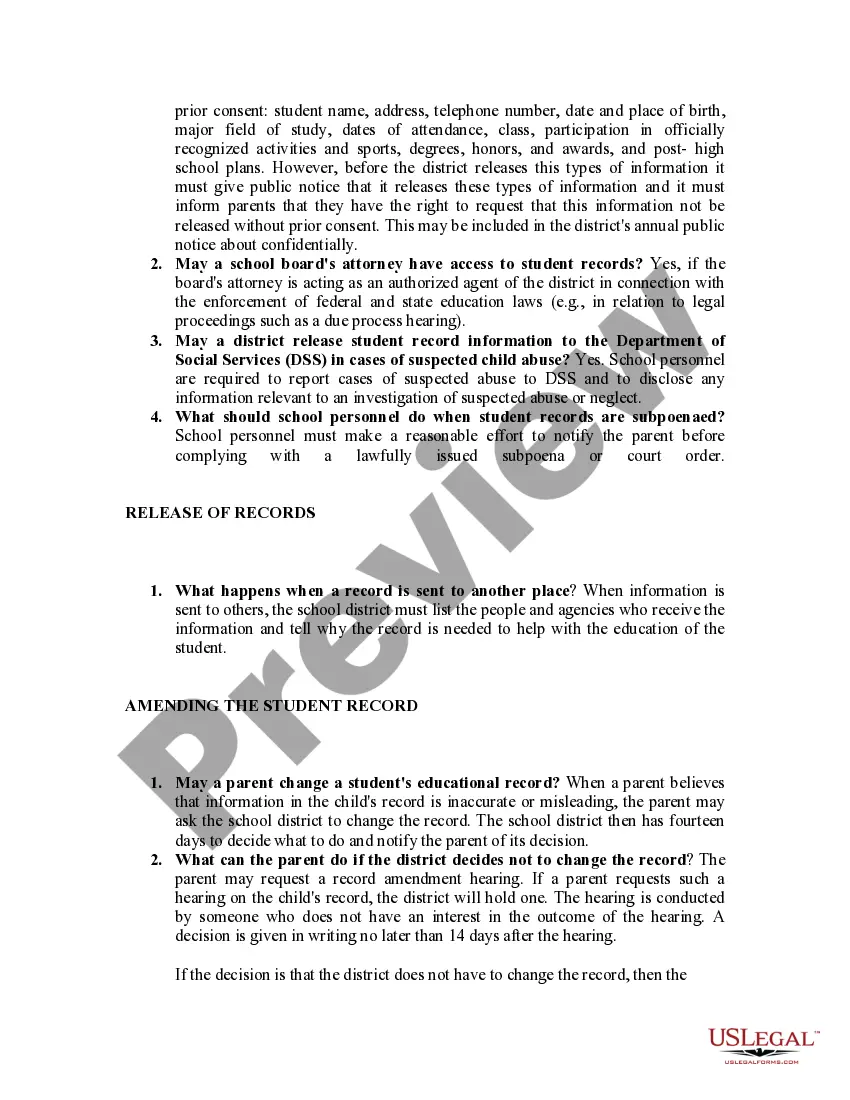
- Explanation of who can access student records and under what circumstances.
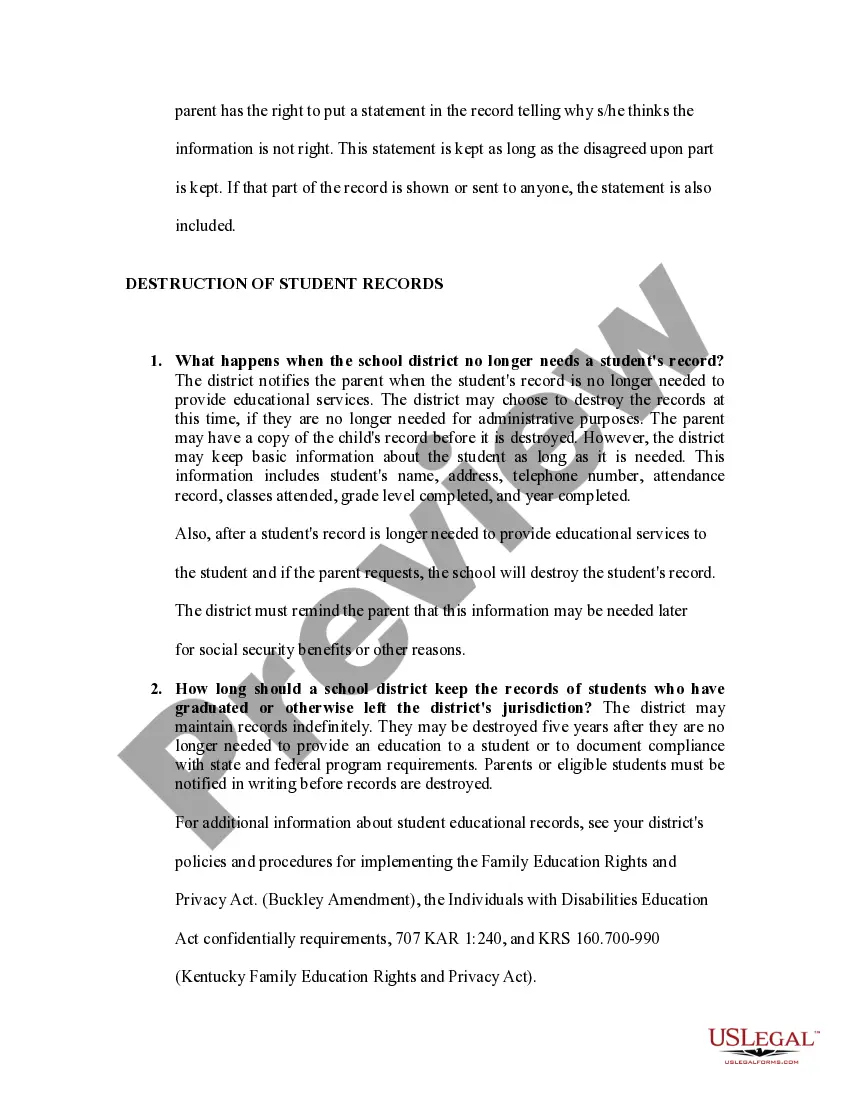
- Guidance on parents' rights to amend student records and the process involved.
- Information on the destruction and retention of educational records.

Situations where this form applies
This form is essential for parents, guardians, and educators who need to understand their rights and responsibilities regarding the educational records of students with disabilities in Kentucky. Use this form when you have questions about:
- Accessing a studentâs educational records.
- Understanding privacy rights and how student information can be shared.
- How to request amendments to incorrect information within student records.
- The duration for which educational records are retained or destroyed.
Who needs this form
- Parents of students with disabilities in Kentucky.
- Guardians and surrogate parents of students with disabilities.
- Educators and school staff who handle educational records.
- Legal representatives involved in educational cases.
- Advocacy groups supporting students with disabilities.
How to prepare this document
- Identify your relationship to the student and your legal right to access their records.
- Gather necessary personal information of the student, such as name and student ID number.
- Formulate specific questions or requests regarding the student's educational records.
- Contact the school districtâs designated official for student records.
- Follow up with a written request if necessary, citing relevant laws and rights.
Notarization guidance
This form usually doesn’t need to be notarized. However, local laws or specific transactions may require it. Our online notarization service, powered by Notarize, lets you complete it remotely through a secure video session, available 24/7.
Get your form ready online
Our built-in tools help you complete, sign, share, and store your documents in one place.
Make edits, fill in missing information, and update formatting in US Legal Forms—just like you would in MS Word.
Download a copy, print it, send it by email, or mail it via USPS—whatever works best for your next step.
Sign and collect signatures with our SignNow integration. Send to multiple recipients, set reminders, and more. Go Premium to unlock E-Sign.
If this form requires notarization, complete it online through a secure video call—no need to meet a notary in person or wait for an appointment.
We protect your documents and personal data by following strict security and privacy standards.

Make edits, fill in missing information, and update formatting in US Legal Forms—just like you would in MS Word.

Download a copy, print it, send it by email, or mail it via USPS—whatever works best for your next step.

Sign and collect signatures with our SignNow integration. Send to multiple recipients, set reminders, and more. Go Premium to unlock E-Sign.

If this form requires notarization, complete it online through a secure video call—no need to meet a notary in person or wait for an appointment.

We protect your documents and personal data by following strict security and privacy standards.
Common mistakes
- Failing to state the legal basis for accessing records.
- Neglecting to include required personal information about the student.
- Assuming consent is not needed when applicable laws require it.
- Ignoring deadlines for submitting requests to amend records.
Benefits of completing this form online
- Convenience of accessing legal information from anywhere.
- Ability to download and print forms as needed.
- Information is readily available without needing legal expertise.
Legal use & context
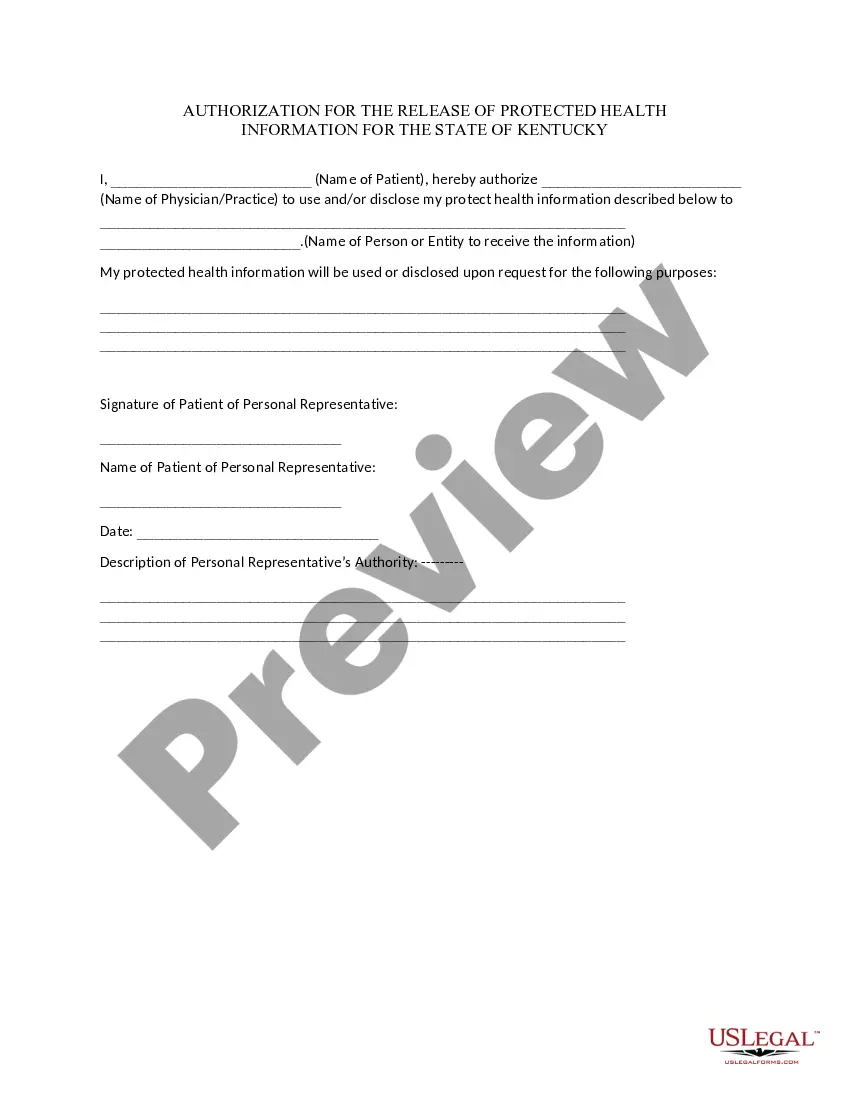
- This form facilitates compliance with federal and state privacy laws regarding educational records.
- Understanding the guidelines provided in this form protects student rights and informs parents about federal and state obligations.
Key takeaways
- This form outlines the rights of students with disabilities concerning their educational records.
- Parents and guardians have specific rights under state and federal laws to access and amend these records.
- Schools are required to maintain confidentiality and have written policies governing student record accessibility.
Looking for another form?

Form popularity
FAQ
Parent information is not considered an educational record and therefore not covered under FERPA.
These records include but are not limited to grades, transcripts, class lists, student course schedules, health records (at the K-12 level), student financial information (at the postsecondary level), and student discipline files.
The Individuals with Disabilities Education Act (IDEA) is a law that makes available a free appropriate public education to eligible children with disabilities throughout the nation and ensures special education and related services to those children.
The Family Educational Rights and Privacy Act (FERPA) is a federal law enacted in 1974 that protects the privacy of student education records.
Law Enforcement Units and Law Enforcement Unit Records ?Law enforcement unit records? (i.e., records created by the law enforcement unit, created for a law enforcement purpose, and maintained by the law enforcement unit) are not ?education records? subject to the privacy protections of FERPA.
To be considered an ?education record,? information must be maintained in the student's cumulative or permanent folder. The terms ?cumulative folder? and ?permanent folder? do not appear in FERPA.
FERPA Defines an Education Record Date and place of birth, parent(s) and/or guardian addresses, and where parents can be contacted in emergencies; Grades, test scores, courses taken, academic specializations and activities, and official letters regarding a student's status in school; Special education records;
The term "education records" does not include the following: Records of instructional, supervisory, administrative, and certain educational information that is in the sole possession of the maker thereof, and are not accessible or revealed to any other individual.