Kentucky Framing Contract for Contractor
Understanding this form
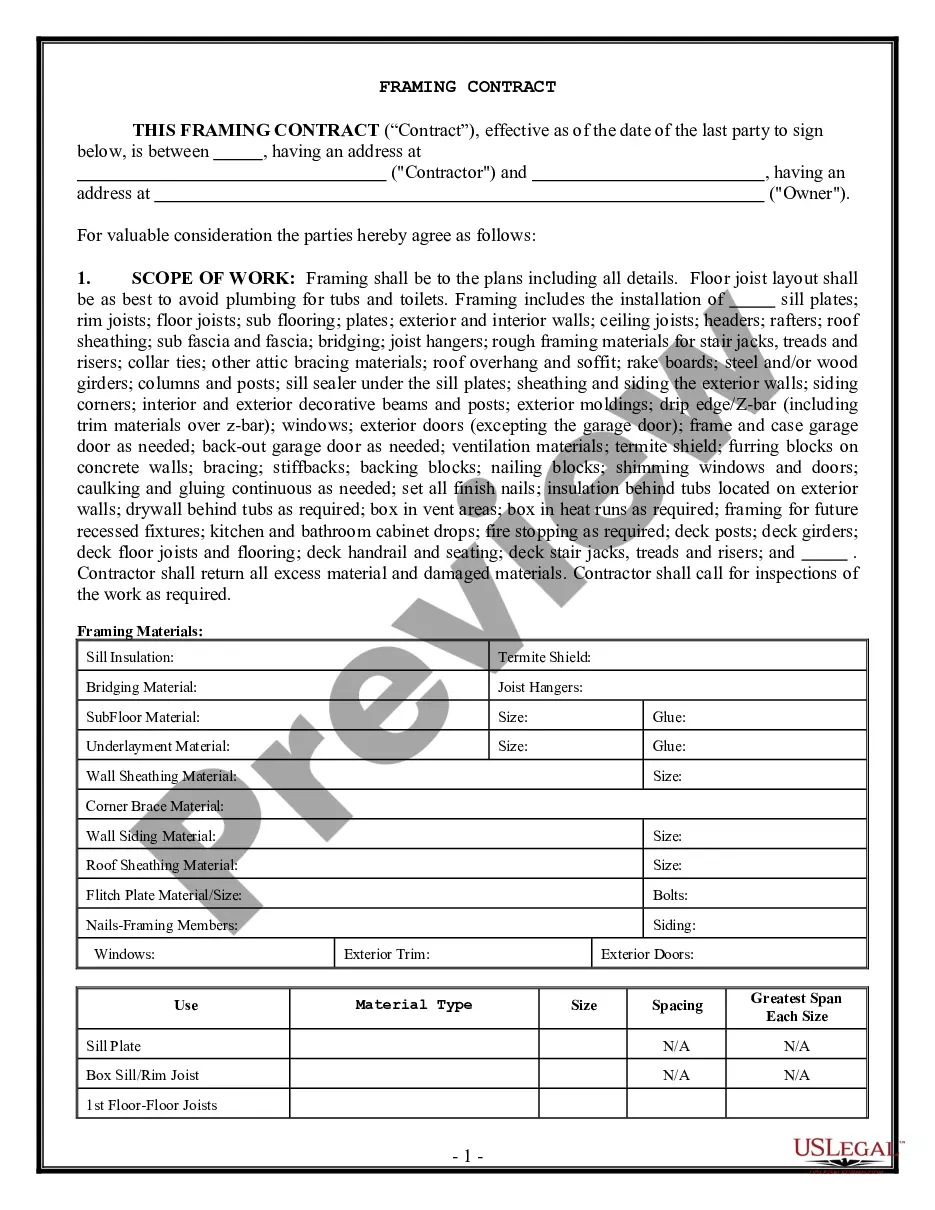
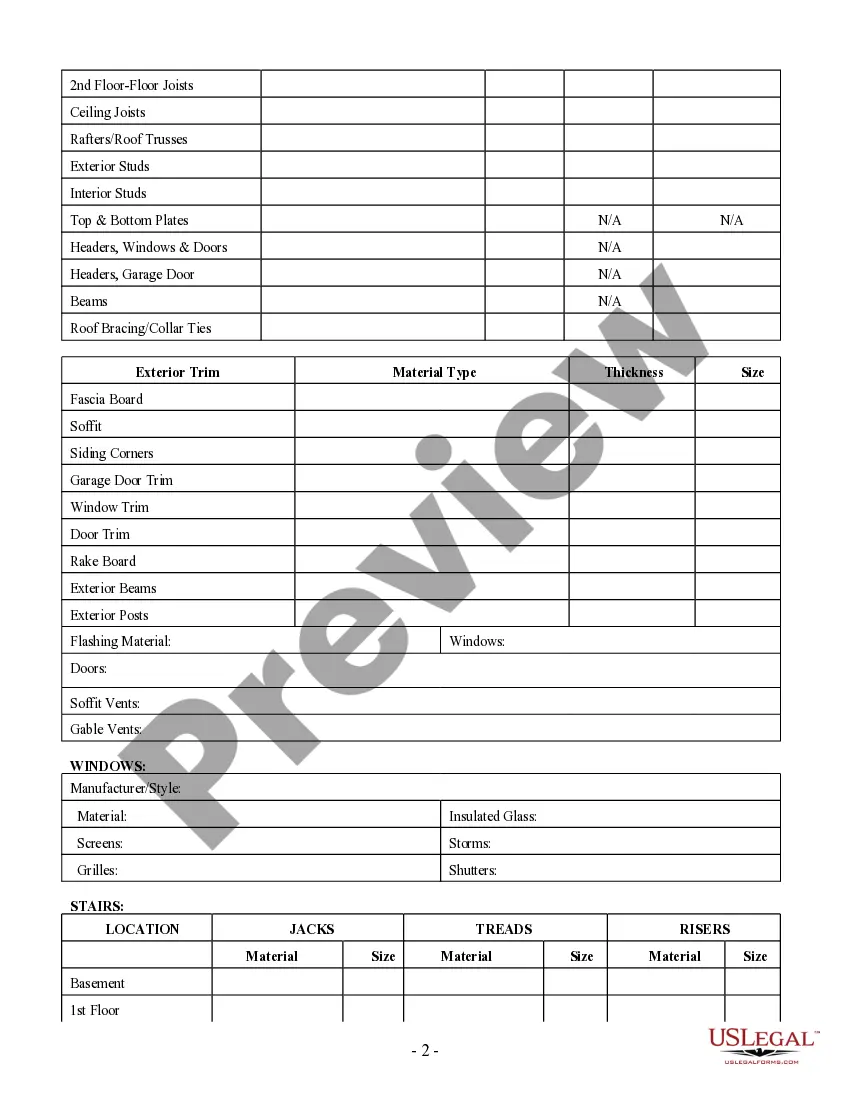
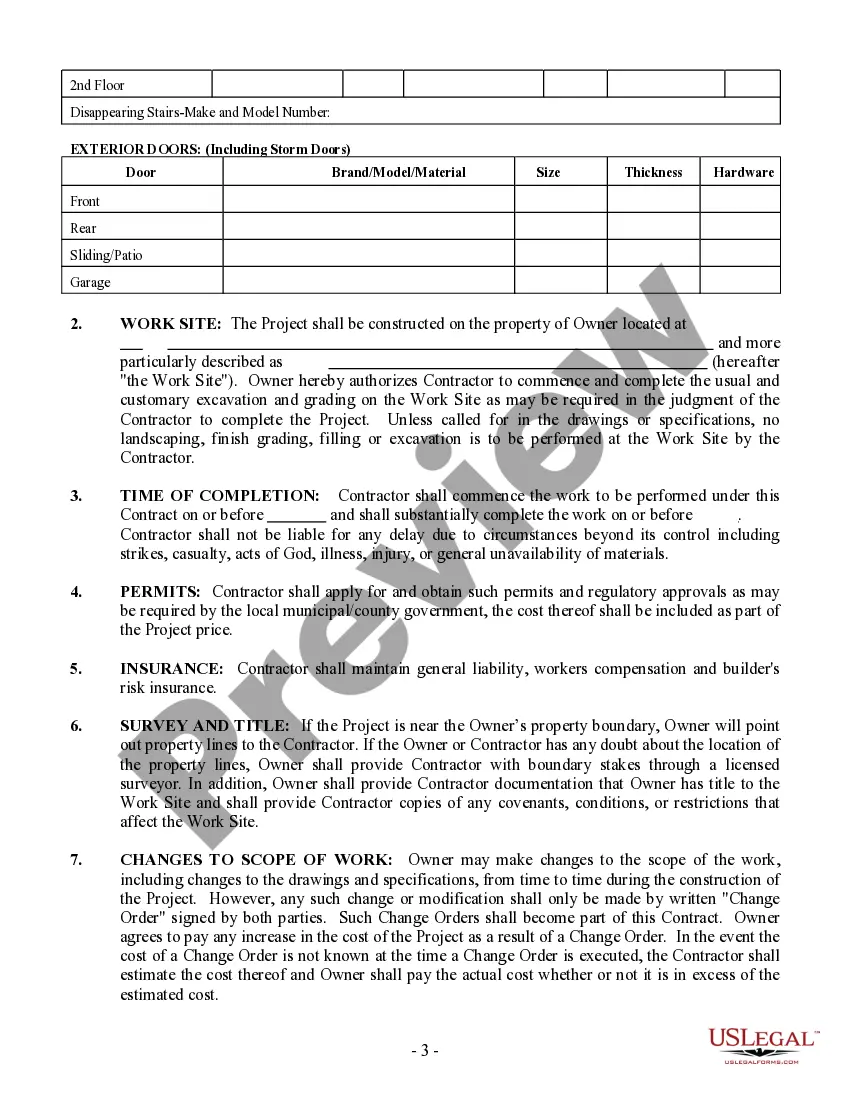
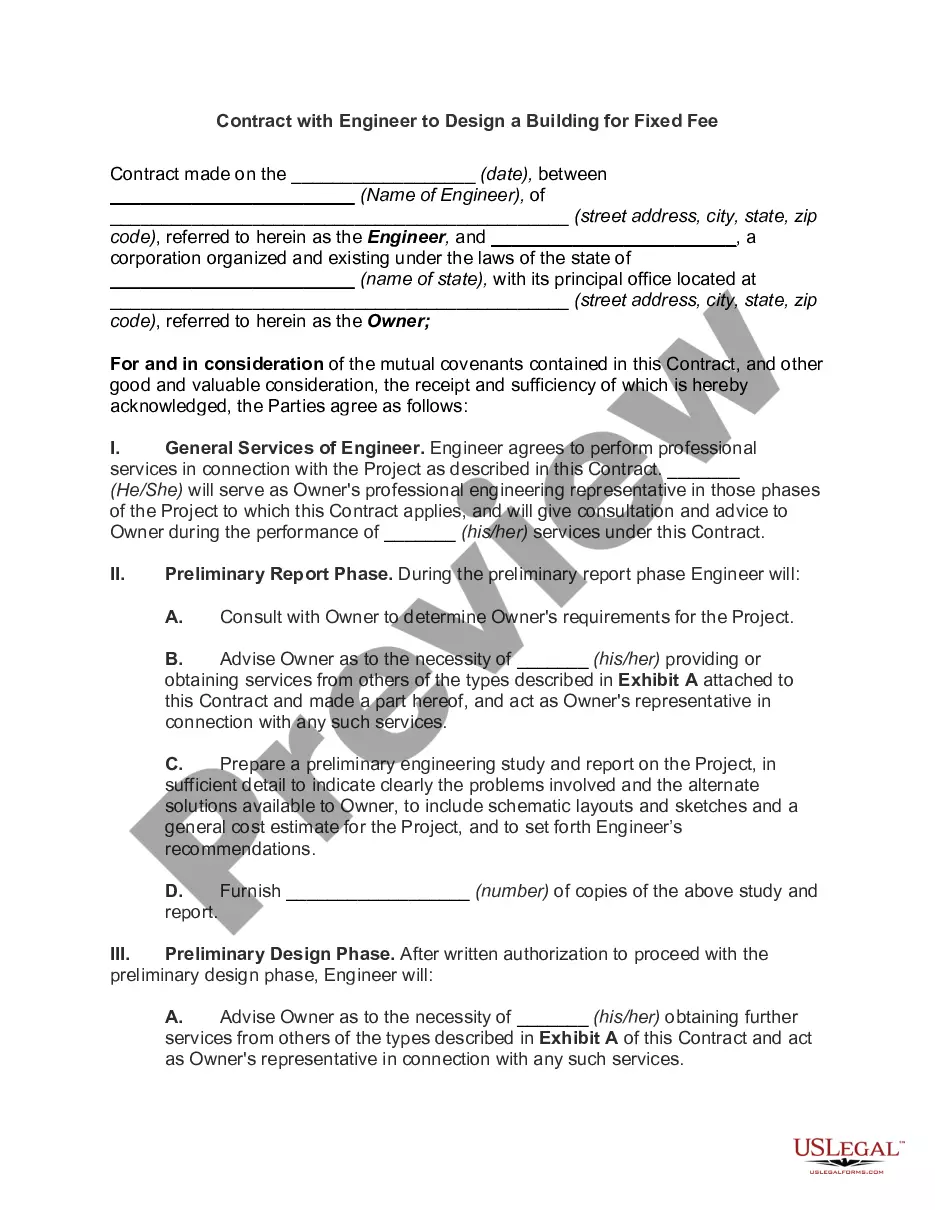
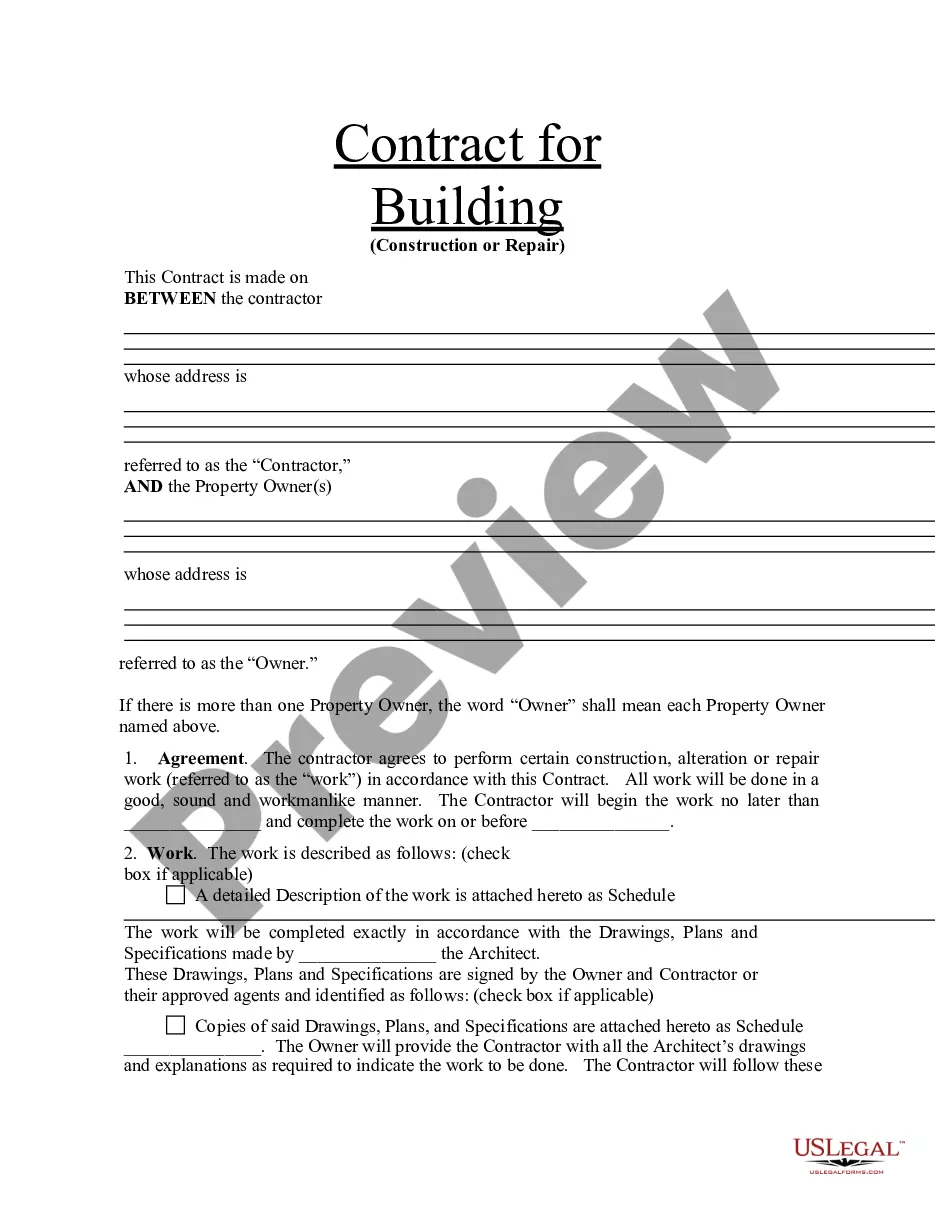
The Framing Contract for Contractor is a legal document used to outline the terms and conditions between a framing contractor and a property owner. This contract can be tailored to a cost-plus or fixed fee payment arrangement, ensuring clarity in financial responsibilities. It emphasizes key aspects such as change orders, work site details, warranties, and insurance. This form is specifically drafted to meet Kentucky's legal standards, differentiating it from generic contractor agreements by incorporating state-specific requirements and protections for both parties.
Key parts of this document
- Permits: Outlines the contractorâs responsibility to obtain necessary permits from local authorities.
- Insurance: Specifies the required insurance types the contractor must maintain, including liability and workers compensation.
- Changes to scope of work: Details how changes can be made through written change orders, including cost implications.
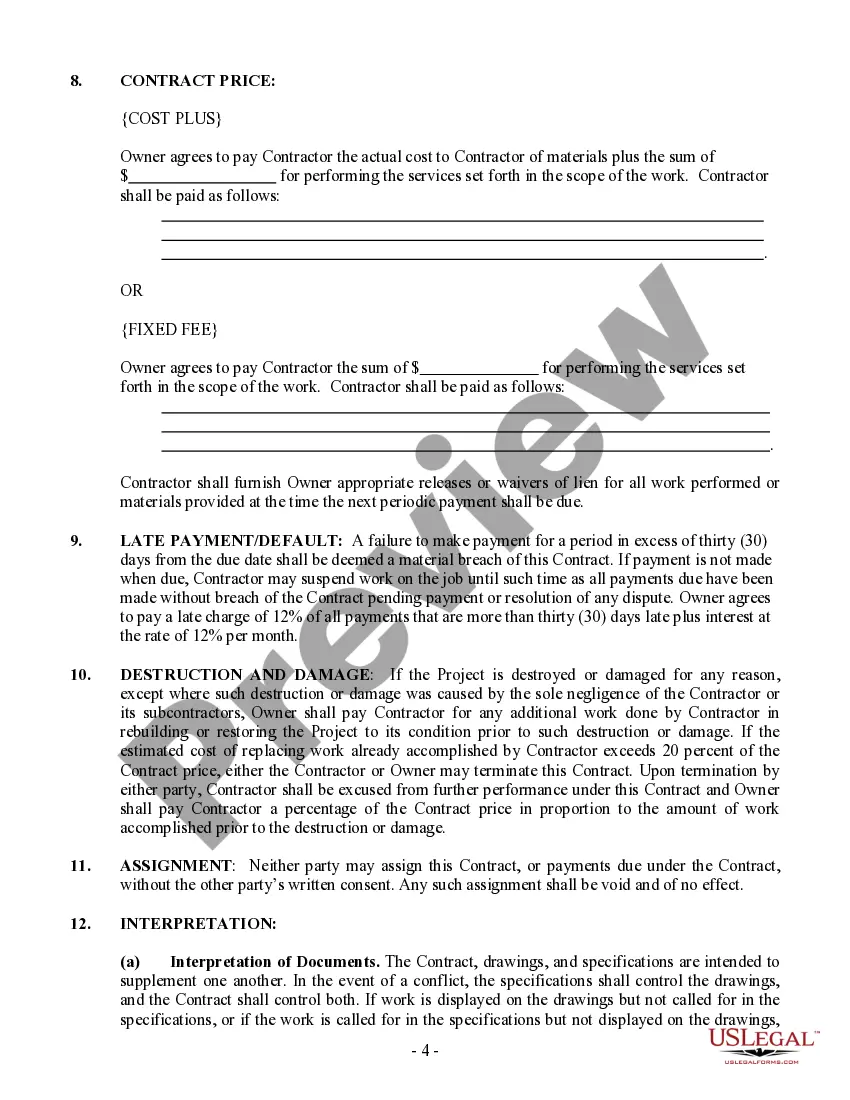
- Destruction and damage: Explains the consequences of project damage and the financial responsibilities involved.
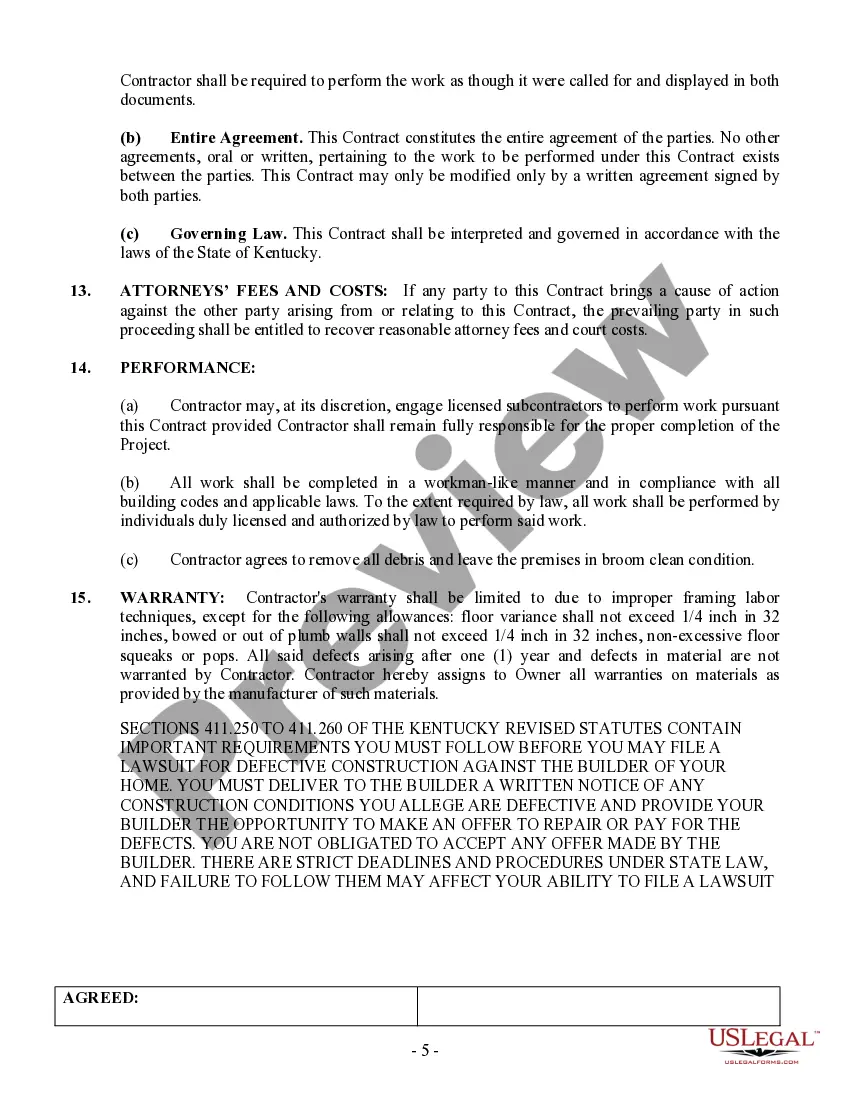
- Warranty: Defines the contractor's warranty limitations concerning framing work and materials used.
- Governing law: Indicates that the contract will be governed by Kentucky laws.


Common use cases
This form should be used when a property owner wants to hire a framing contractor for construction or renovation projects. It is particularly relevant when there is a need to clarify payment arrangements, project specifications, and legal obligations. Use this contract whenever changes to the project are anticipated or when specific insurance and warranty conditions need to be established.
Who should use this form
- Property owners seeking framing services for new construction or renovations.
- Framing contractors looking to formalize project agreements with property owners.
- Both parties wanting clear terms and protections surrounding their business relationship.
How to complete this form
- Identify the parties: Clearly state the names and addresses of both the contractor and the property owner.
- Specify project details: Provide a description of the work to be performed, including any specific requirements.
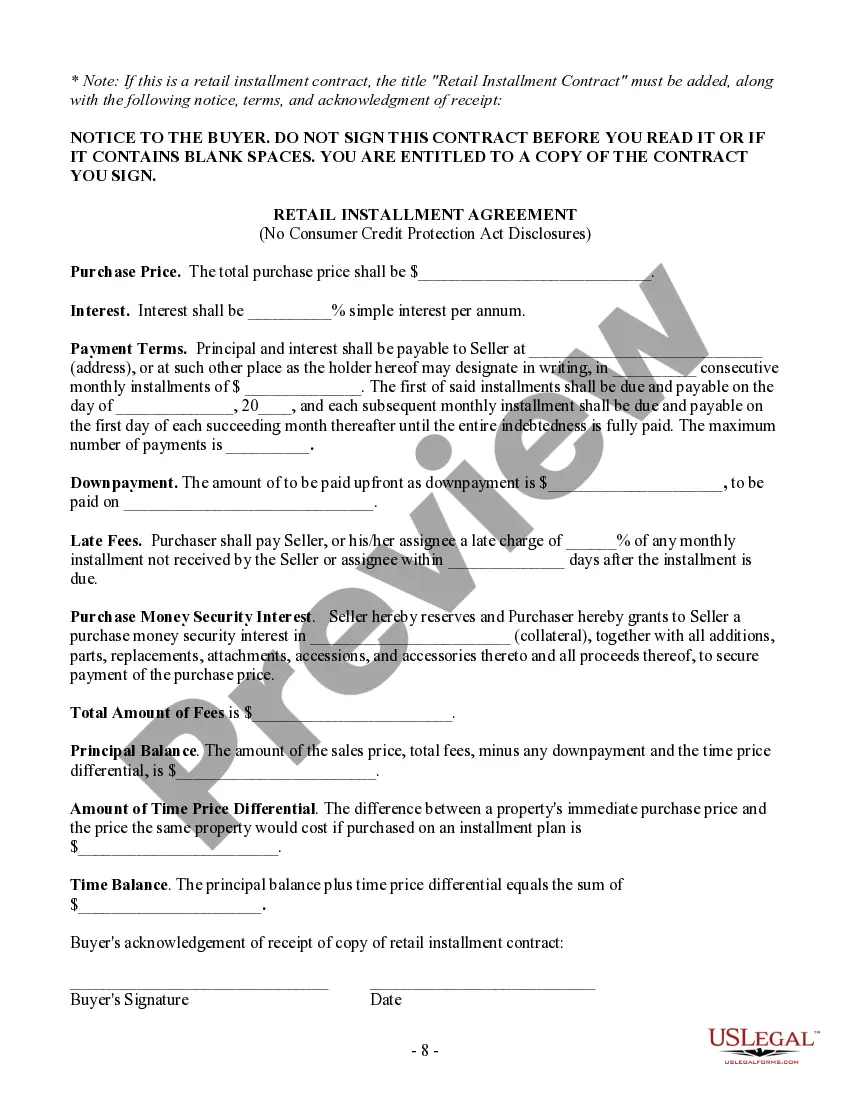
- Define payment terms: Indicate whether the agreement is a cost-plus or fixed fee arrangement and detail payment expectations.
- Include permits: Ensure that the contractor agrees to obtain necessary permits and regulatory approvals.
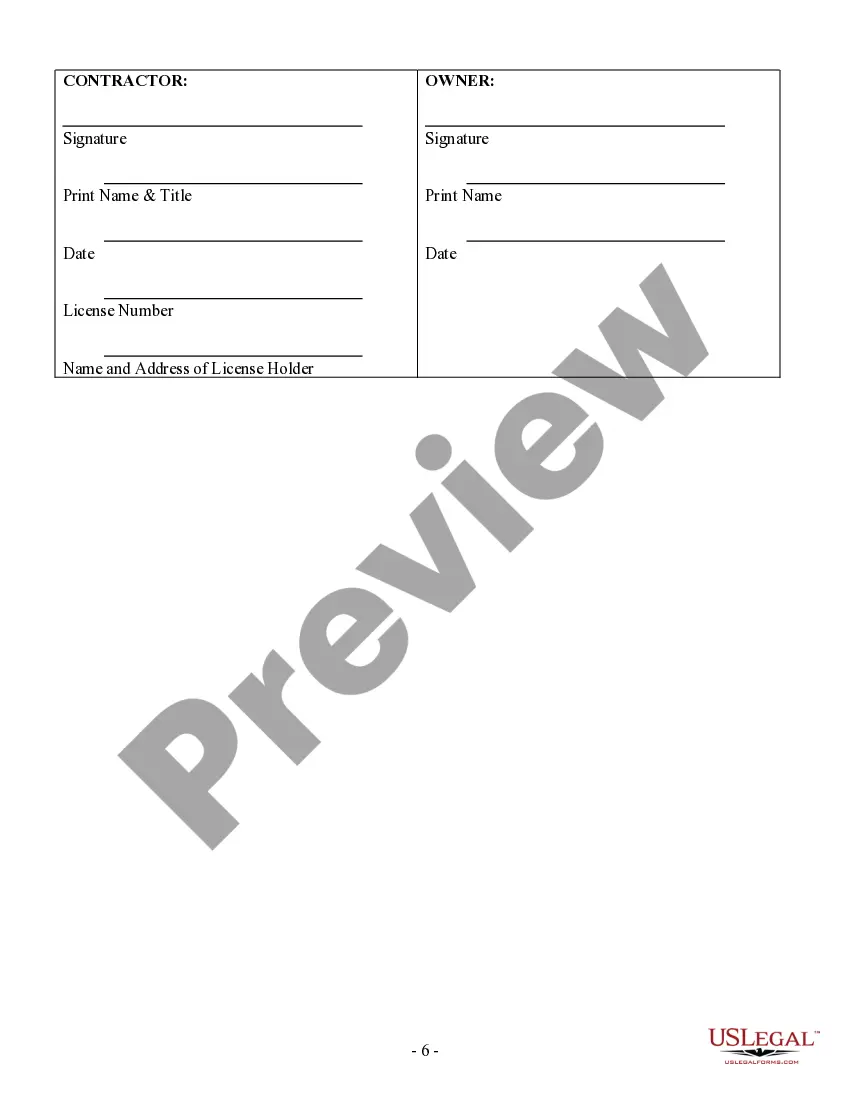
- Sign and date: Both parties should sign and date the contract to make it legally binding.
Is notarization required?
This form does not typically require notarization unless specified by local law. However, it is recommended to check specific local requirements to ensure compliance.
Get your form ready online
Our built-in tools help you complete, sign, share, and store your documents in one place.
Make edits, fill in missing information, and update formatting in US Legal Forms—just like you would in MS Word.
Download a copy, print it, send it by email, or mail it via USPS—whatever works best for your next step.
Sign and collect signatures with our SignNow integration. Send to multiple recipients, set reminders, and more. Go Premium to unlock E-Sign.
If this form requires notarization, complete it online through a secure video call—no need to meet a notary in person or wait for an appointment.
We protect your documents and personal data by following strict security and privacy standards.

Make edits, fill in missing information, and update formatting in US Legal Forms—just like you would in MS Word.

Download a copy, print it, send it by email, or mail it via USPS—whatever works best for your next step.

Sign and collect signatures with our SignNow integration. Send to multiple recipients, set reminders, and more. Go Premium to unlock E-Sign.

If this form requires notarization, complete it online through a secure video call—no need to meet a notary in person or wait for an appointment.

We protect your documents and personal data by following strict security and privacy standards.
Typical mistakes to avoid
- Not specifying the payment terms clearly, leading to potential disputes over costs.
- Failing to obtain necessary permits, resulting in fines or project delays.
- Not documenting changes to the scope of work with signed change orders.
- Overlooking the importance of insurance coverage, which could expose parties to liability.
Why complete this form online
- Convenience: Download and complete the form from anywhere at any time.
- Editability: Easily modify the template to suit specific project needs.
- Reliability: Access professionally drafted documents that comply with legal standards.
Legal use & context
- The contract serves as a legally binding agreement between the contractor and the property owner.
- Properly executed change orders become an integral part of the contract, affecting costs and scope.
- Parties are encouraged to review Kentucky law regarding constructionâparticularly regarding lawsuits for defective construction.
Main things to remember
- The Framing Contract for Contractor is essential for defining the relationship between framing contractors and property owners.
- Clearly outline payment arrangements and project changes to avoid future conflicts.
- Ensure all provisions comply with Kentucky state law for enforceability.
Looking for another form?
Form popularity
FAQ
A contractor or subcontractor can abandon a contract upon breach by the owner or general contractor, but cannot terminate the contract.Termination for convenience allows the owner/general contractor to stop the work for just about any reason without having to pay for anticipated profit or unperformed work.
Contract Types Overview. Express and Implied Contracts. Unilateral and Bilateral Contracts. Unconscionable Contracts. Adhesion Contracts. Aleatory Contracts. Option Contracts. Fixed Price Contracts.
#1: Review Your Bid. #2: Review Complete Plans. #3: Review All Specifications. #4: Visit the Job Site. #5: Review the Job Schedule. #6: Complete a Project Checklist. #7: Verify Project Funding. #8: Read Complete Contract.
In order to cancel the transaction, the consumer must send the notice of cancellation form, or some other written statement indicating the intent to cancel the contract, to the creditor at the address stated on the notice. This notice need only state the consumer's intention to cancel the transaction.
Both parties should sign the contract, and both should be bound by the terms and conditions spelled out in the agreement. In general that means the contractor will be obliged to provide specified materials and to perform certain services for you. In turn, you will be required to pay for those goods and that labor.
Identifying/Contact Information. Title and Description of the Project. Projected Timeline and Completion Date. Cost Estimate and Payment Schedule. Stop Work Clause and Stop Payment Clause. Act of God Clause. Change Order Agreement. Warranty.
Under Kentucky law, a valid and enforceable contract must include the parties' obligations in sufficiently definite and certain terms. Opinion at 9 (citing Kovacs v.Whether an agreement is oral or written, all material or essential terms must be agreed to or the agreement is unenforceable.
Name of contractor and contact information. Name of homeowner and contact information. Describe property in legal terms. List attachments to the contract. The cost. Failure of homeowner to obtain financing. Description of the work and the completion date. Right to stop the project.
Begin with the Date and the Address of the Other Party. Start with the Basic Details of the Planned Work. Include Special Stipulations. State Whether There Will be a Further Agreement. Create an Area for Signatures. Sign and Date the Contract Letter.