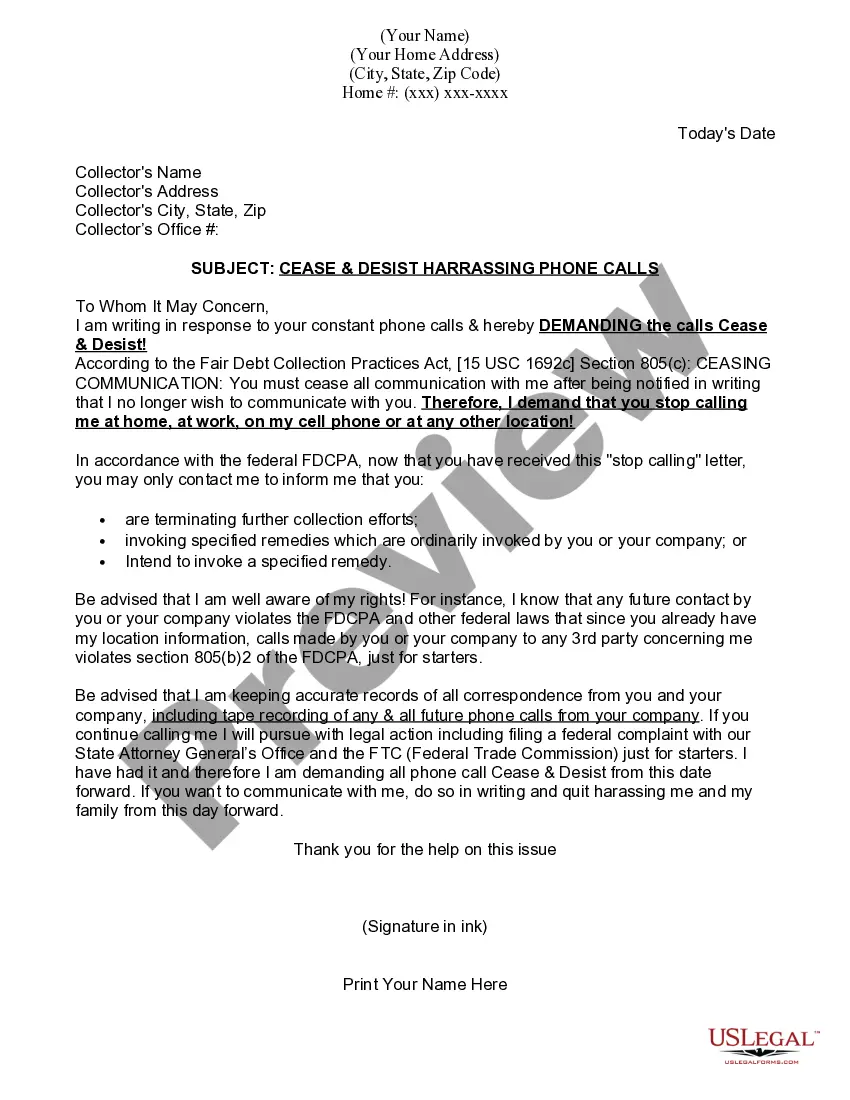
Kansas Cease and Desist for Debt Collectors
Description
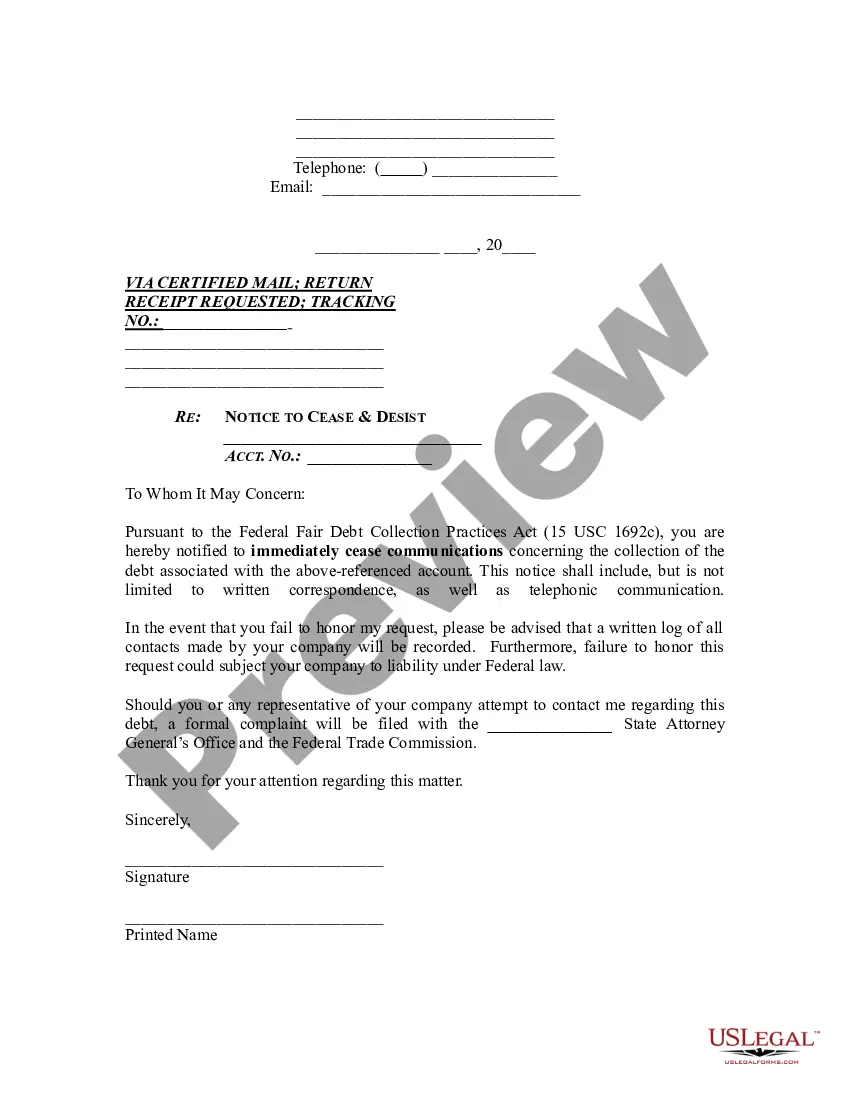
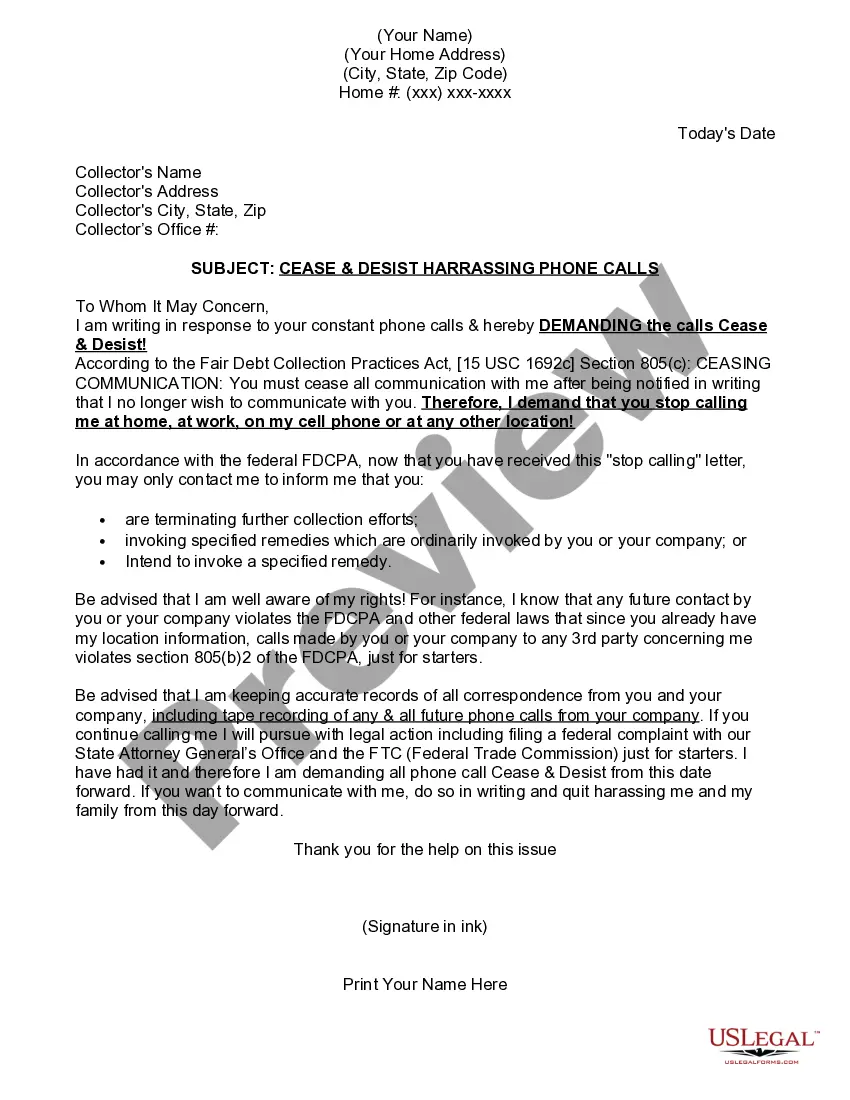
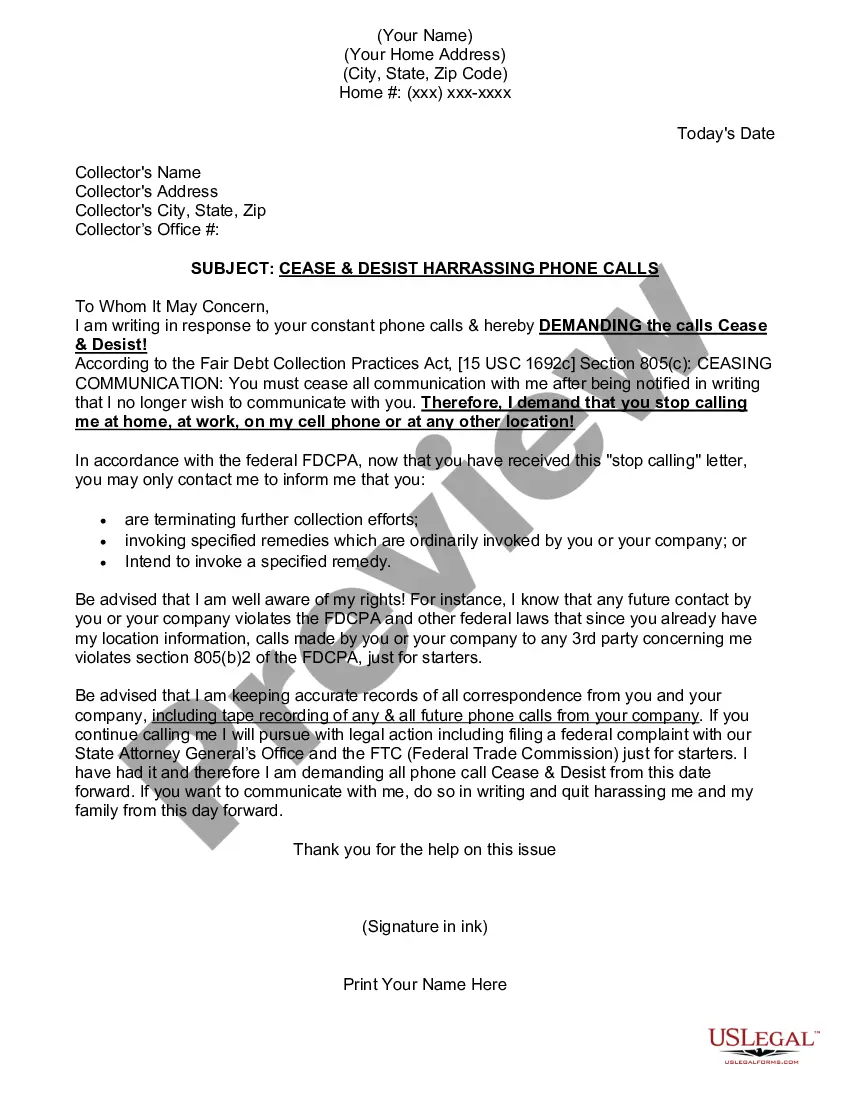
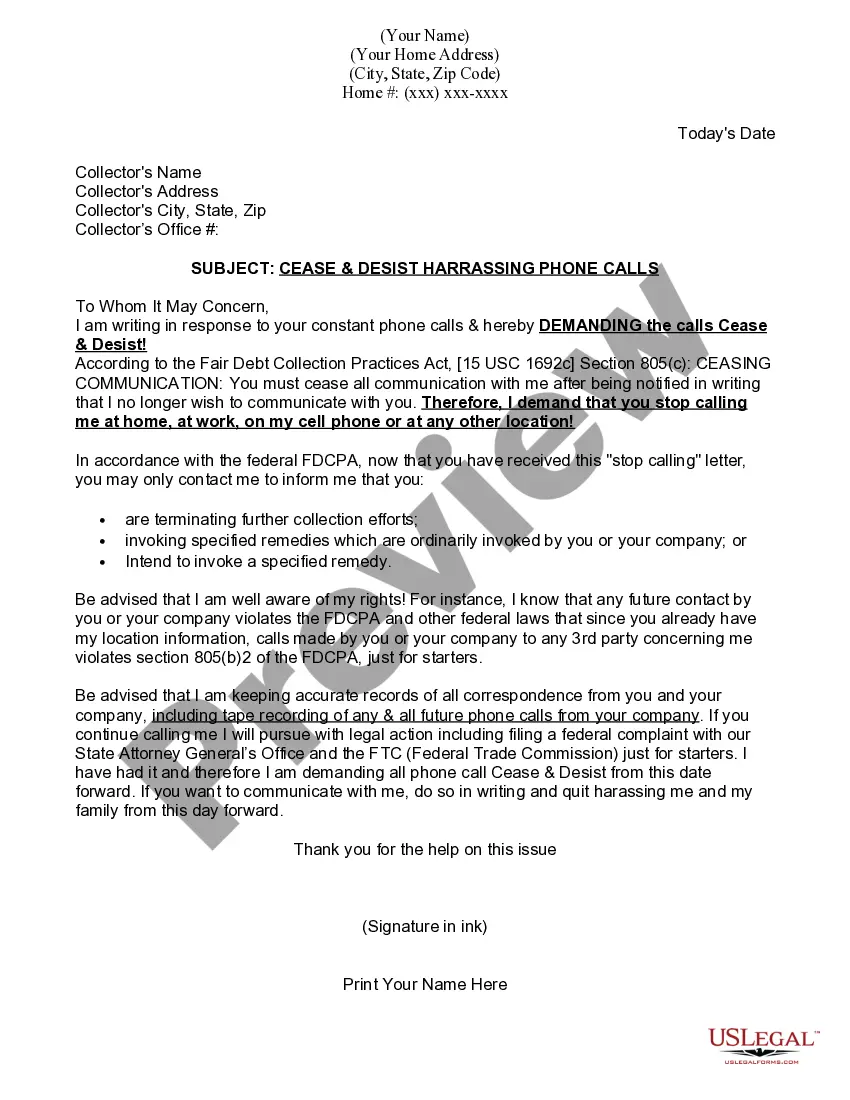


How to fill out Cease And Desist For Debt Collectors?
Are you in a situation where you require documents for potentially business or personal purposes nearly every day? There are numerous legal document templates accessible online, but finding templates you can trust isn't simple. US Legal Forms offers thousands of form templates, including the Kansas Cease and Desist for Debt Collectors, designed to meet federal and state requirements.
If you are already familiar with the US Legal Forms website and possess an account, simply Log In. Afterward, you can download the Kansas Cease and Desist for Debt Collectors template.
If you do not have an account and wish to start using US Legal Forms, follow these steps: Find the form you need and ensure it is for your correct area/region. Utilize the Review button to examine the form. Check the summary to confirm you have selected the right form. If the form isn't what you are looking for, use the Search field to locate the form that meets your needs and requirements. Once you locate the correct form, click Purchase now. Select the pricing plan you prefer, fill out the necessary details to create your account, and complete the transaction using your PayPal or credit card. Choose a convenient document format and download your copy.
- Access all of the document templates you have purchased in the My documents section. You can obtain another copy of the Kansas Cease and Desist for Debt Collectors anytime, if needed. Simply click on the required form to download or print the template.
- Utilize US Legal Forms, the most comprehensive collection of legal templates, to save time and avoid mistakes. The service provides professionally crafted legal document templates that you can use for a variety of purposes.
- Create an account on US Legal Forms and begin simplifying your life.
Form popularity
FAQ
The 777 rule refers to a guideline related to debt collection practices, emphasizing that a collector should not contact you more than seven times in a seven-day period. This rule aims to protect consumers from harassment. If a collector exceeds this limit, you can utilize a Kansas Cease and Desist for Debt Collectors letter to stop further communication and assert your rights.
In Kansas, a debt collector can legally pursue old debt for up to three years. This time frame is based on the statute of limitations for most types of debt. If a debt collector attempts to collect after this period, you can use a Kansas Cease and Desist for Debt Collectors to assert your rights and halt further collection efforts.
Yes, you have the right to tell a debt collector to cease and desist. When you submit a Kansas Cease and Desist for Debt Collectors letter, you inform them to stop contacting you. This action can limit their ability to pursue collection efforts, allowing you to address your financial matters without constant pressure.
Yes, you can send a cease and desist letter to a debt collector. By doing so, you formally request that the collector stop all communication regarding the debt. It's a vital step in asserting your rights under the Fair Debt Collection Practices Act, and utilizing the Kansas Cease and Desist for Debt Collectors can help you effectively handle unwanted collection efforts.
The effective 11 word phrase to stop debt collectors is, 'I request that you cease all communication with me immediately.' This Kansas Cease and Desist for Debt Collectors statement clearly instructs collectors to stop contacting you. Using this phrase can provide you with peace of mind and help you regain control over your financial situation.
The 777 rule refers to specific regulations that debt collectors must adhere to when communicating with consumers. This rule emphasizes the importance of transparency and fairness in debt collection processes. If you feel overwhelmed by debt collectors, issuing a Kansas Cease and Desist for Debt Collectors can halt their communications. US Legal Forms provides templates and guidance to help you implement this rule and protect your rights.
The Kansas Debt Collection Practices Act is a law designed to protect consumers from abusive debt collection practices. This legislation sets forth clear guidelines that debt collectors must follow when attempting to collect debts. When you receive a Kansas Cease and Desist for Debt Collectors notice, you can assert your rights under this act. Utilizing resources like US Legal Forms can help you understand and navigate these regulations effectively.
When you send a cease and desist letter to a debt collector, they are legally required to stop contacting you regarding the debt. This means they must cease all communication, including phone calls and letters, once they receive your request. However, it's important to note that sending this letter does not erase the debt; it simply halts any further attempts to collect it. If you need assistance drafting this letter, US Legal Forms can help you create a compliant and effective cease and desist letter.
To send a cease and desist letter, you do not necessarily need extensive proof, but having documentation can be beneficial. You should gather any records that support your case, such as payment receipts or correspondence with the debt collector. This information can help clarify your position and add credibility to your request. US Legal Forms offers templates that guide you through what information to include in your letter, ensuring you have everything you need.
You can send a cease and desist letter for various reasons, including harassment or if you believe the debt is not valid. This letter serves as a formal request to stop any further communication, especially if the debt collector is violating the Fair Debt Collection Practices Act. It's essential to outline your specific grounds in the letter to strengthen your position. Utilizing US Legal Forms can help you articulate these grounds clearly and effectively.