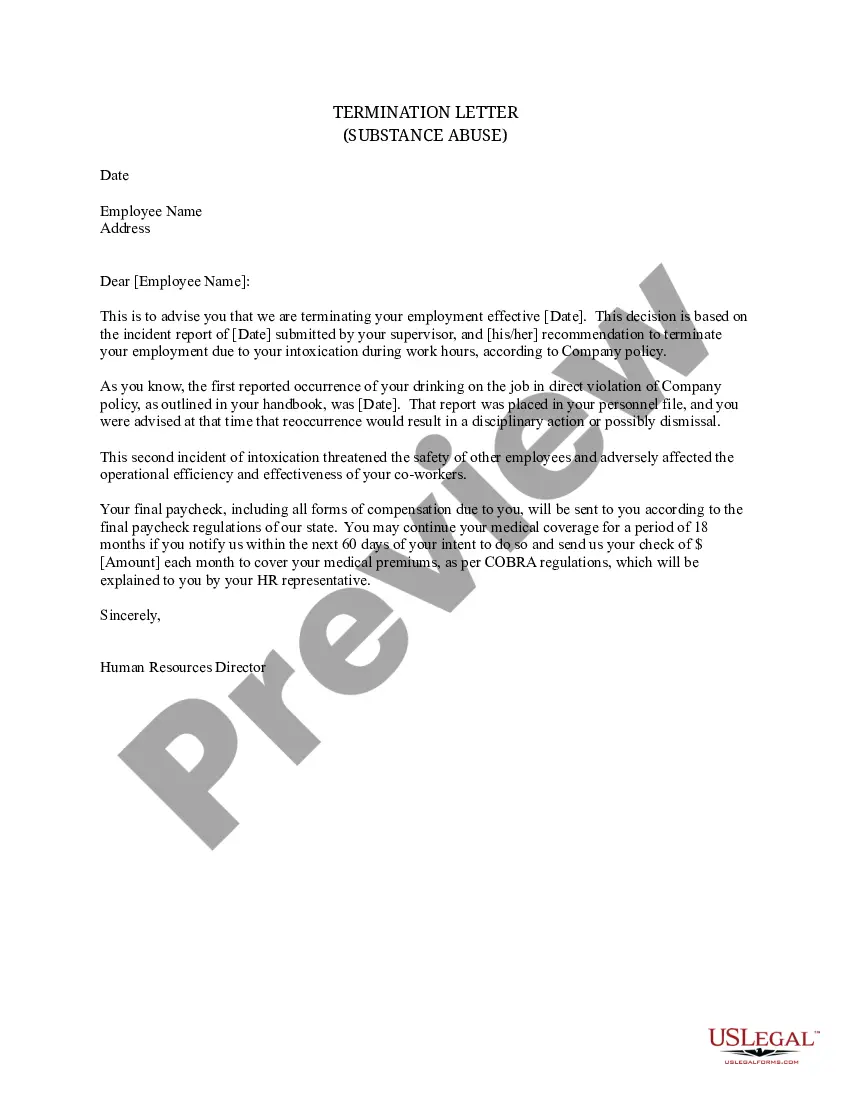
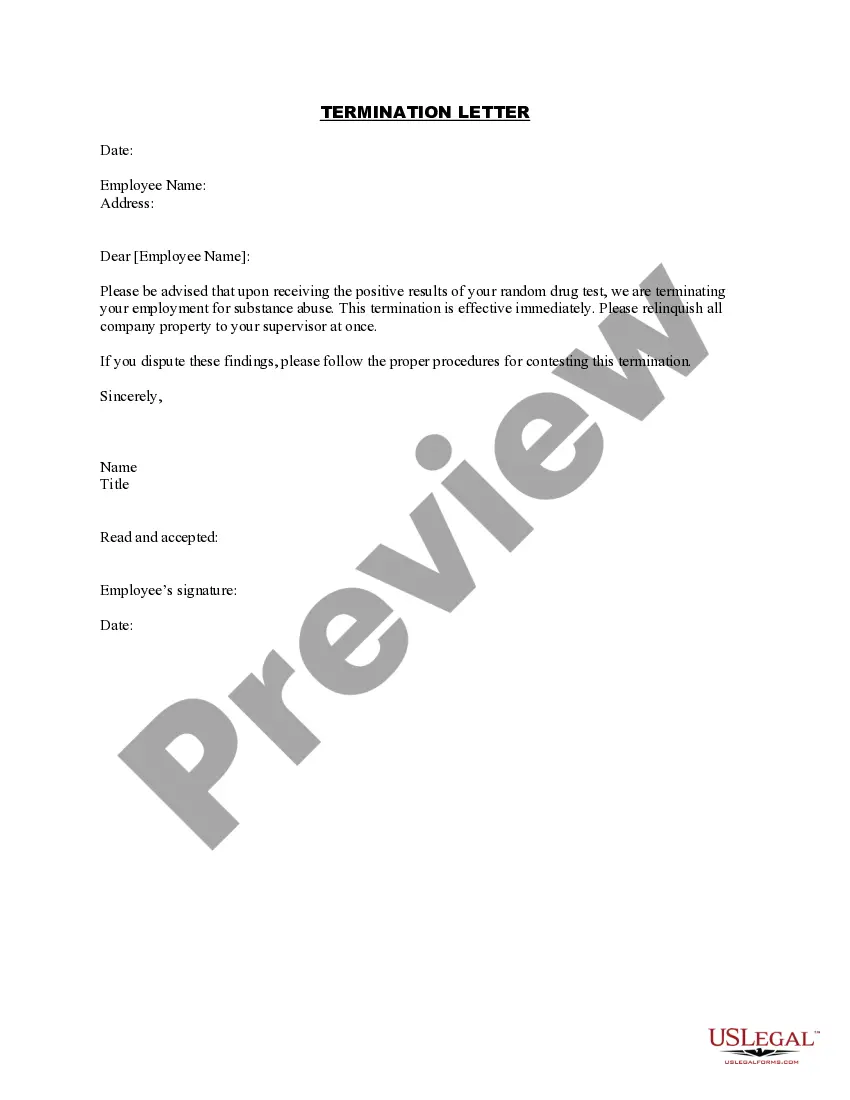
Kansas Termination Letter (Substance Abuse)
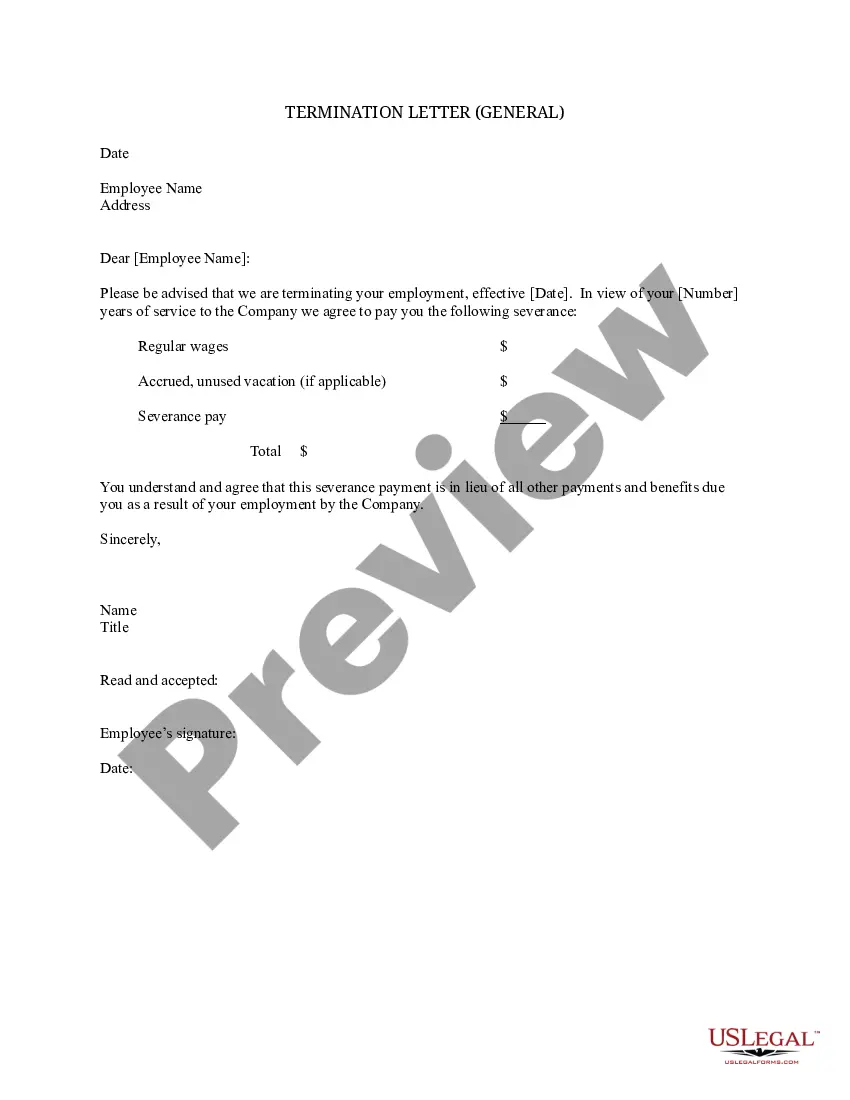
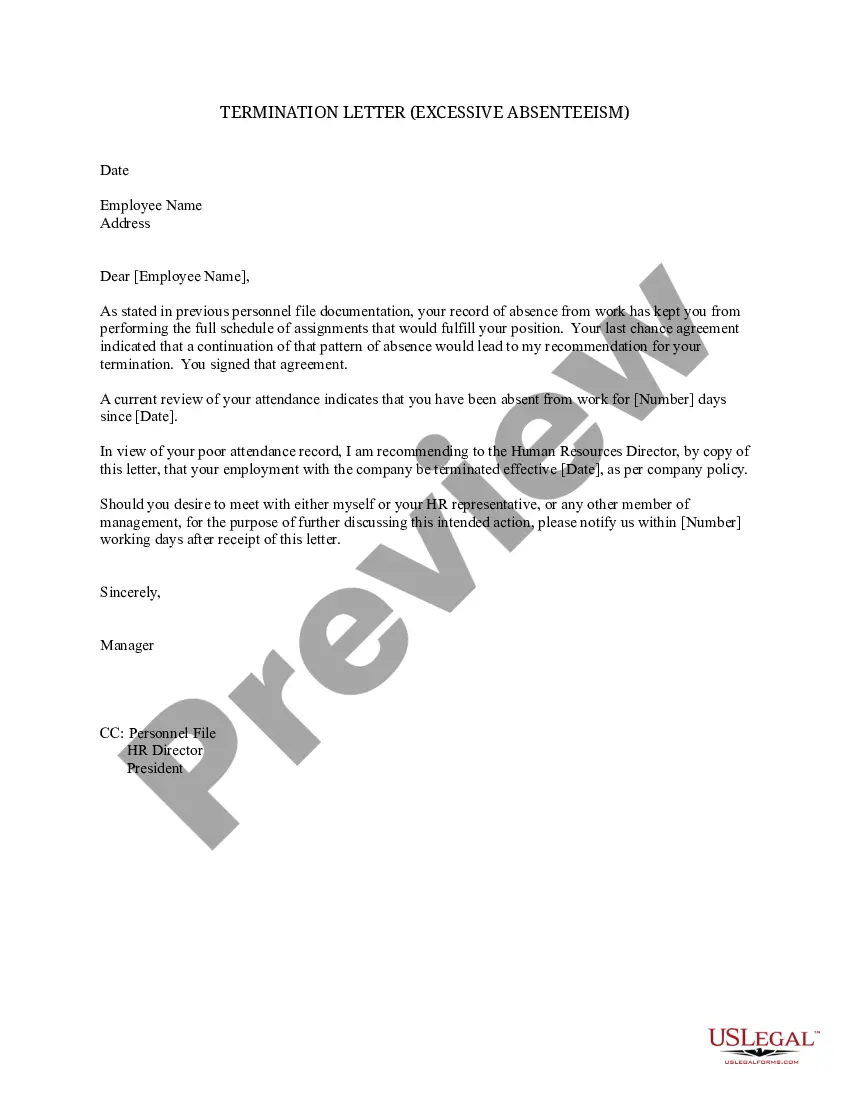
Description
Get your form ready online
Our built-in tools help you complete, sign, share, and store your documents in one place.
Make edits, fill in missing information, and update formatting in US Legal Forms—just like you would in MS Word.
Download a copy, print it, send it by email, or mail it via USPS—whatever works best for your next step.
Sign and collect signatures with our SignNow integration. Send to multiple recipients, set reminders, and more. Go Premium to unlock E-Sign.
If this form requires notarization, complete it online through a secure video call—no need to meet a notary in person or wait for an appointment.
We protect your documents and personal data by following strict security and privacy standards.

Make edits, fill in missing information, and update formatting in US Legal Forms—just like you would in MS Word.

Download a copy, print it, send it by email, or mail it via USPS—whatever works best for your next step.

Sign and collect signatures with our SignNow integration. Send to multiple recipients, set reminders, and more. Go Premium to unlock E-Sign.

If this form requires notarization, complete it online through a secure video call—no need to meet a notary in person or wait for an appointment.

We protect your documents and personal data by following strict security and privacy standards.
Looking for another form?

How to fill out Termination Letter (Substance Abuse)?
Selecting the appropriate legal document format may pose challenges.
It goes without saying, there are numerous templates available online, but how can you find the legal document you require.
Utilize the US Legal Forms website. The platform offers a vast array of templates, including the Kansas Termination Letter (Substance Abuse), suitable for both business and personal purposes.
You can review the document using the Preview button and read the document details to confirm it's the right one for you.
- All forms are reviewed by experts and comply with state and federal regulations.
- If you are currently logged in, Log In to your account and click on the Download button to obtain the Kansas Termination Letter (Substance Abuse).
- Use your account to browse the legal documents you have previously acquired.
- Navigate to the My documents section of your account and retrieve another copy of the document you need.
- If you are a new user of US Legal Forms, here are simple instructions for you to follow.
- Firstly, ensure you have chosen the correct form for your city/state.
Form popularity
FAQ
Kansas is an employment at will state which means your employer can fire you for any non-discriminatory and/or non-retaliatory reason.
Kansas is an employment-at-will state. This means that either the employer or the employee may end the employment relationship at any time, for any reason, or for no reason, unless an agreement exists to the contrary. There are, however, limitations to the at-will doctrine.
No. Because Kansas is an employment at will state, an employee can quit his/her job without any notice.
Wrongful Termination - Violation of Public Policy in Kansas City. Wrongful termination has occurred when an employee is fired for any reason other than those such as poor work performance, misconduct, or because the employer cannot afford to keep him or her on.
Wrongful termination is when an employee is fired illegally. This occurs when an employee is terminated because of discriminatory practices in the workplace, when a company violates public policy in the process of terminating the employee, or when a company's own guidelines for termination were not followed.
Kansas is an At-Will Employment State As explained by the Kansas Department of Labor, this doctrine generally means that an employer can fire a worker for any non-discriminatory and/or non-retaliatory reason; with at-will employment, an employer does not need good cause or a justified reason to terminate an employee.
Fair Reasons for Dismissal However, the Fair Work Commission has determined that you should not dismiss any employee without a valid, sound, and defensible reason given the circumstances, and a fair dismissal process, in order to minimise the risks of a subsequent unfair dismissal claim.
Those laws make it illegal to terminate or discriminate against an employee on the basis of race, color, ancestry, national origin, sex, religion, disability, pregnancy, citizenship status, age, or genetic information.
While Kansas is an at-will employment state, an employer cannot terminate an employee for reasons related to discrimination, retaliation, or for any reason protected by public policy.