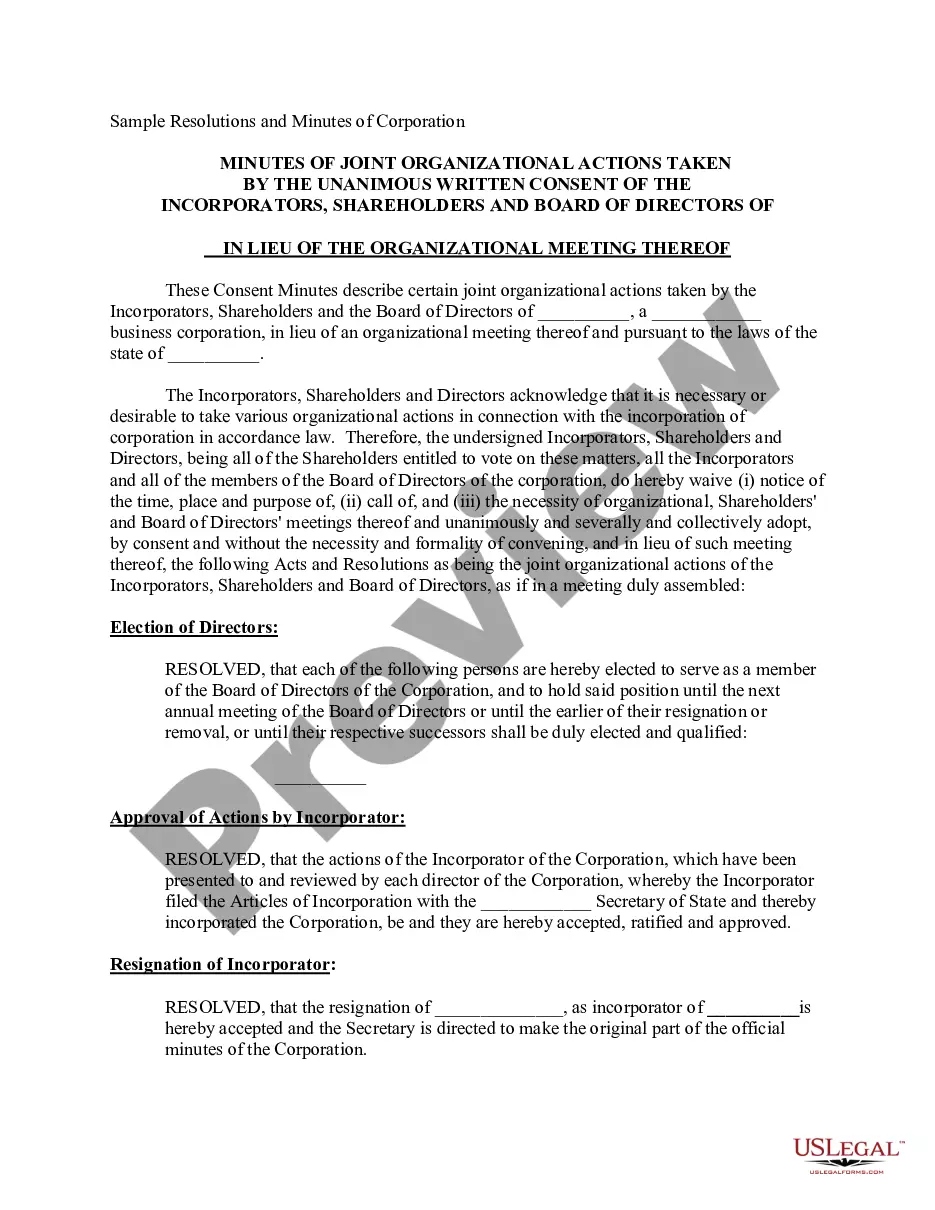
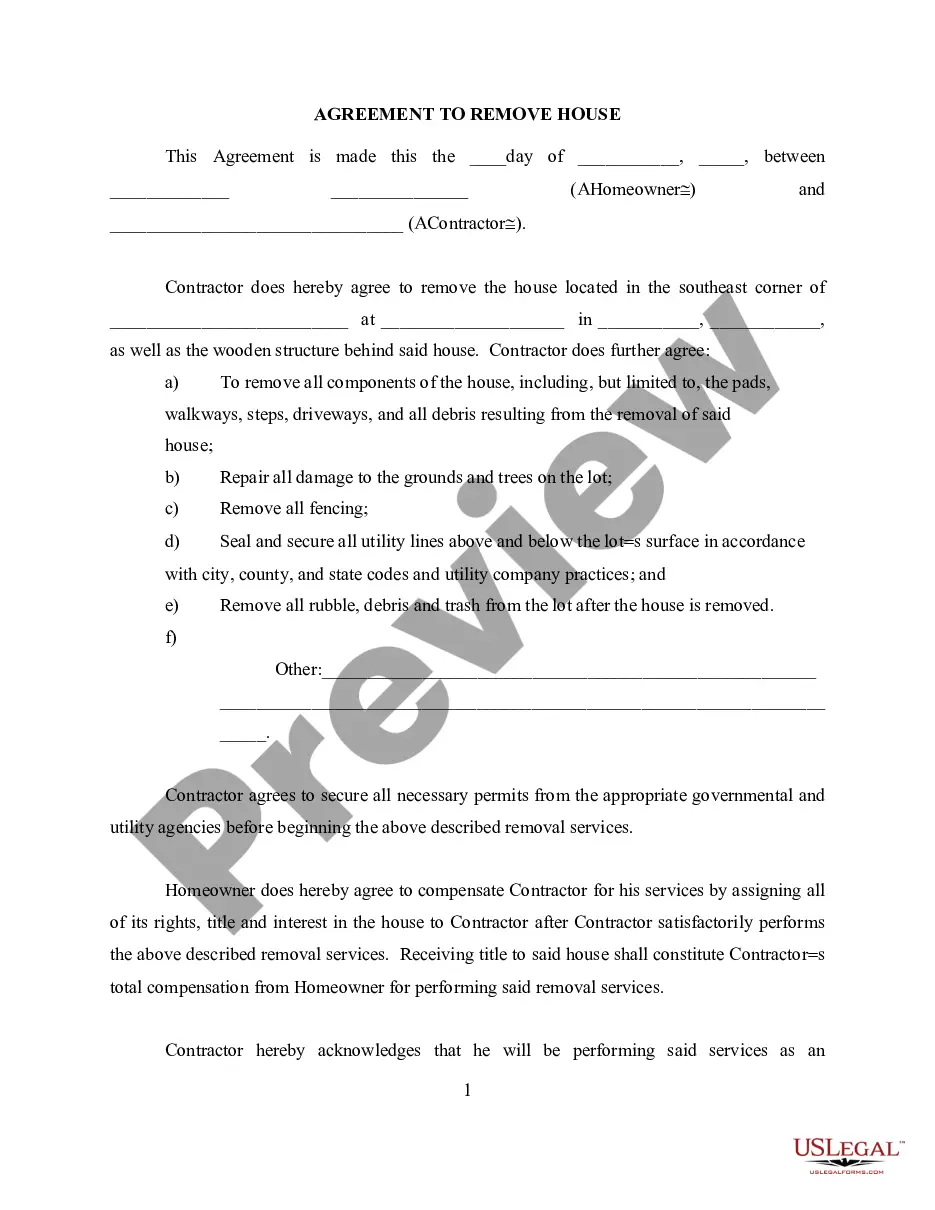
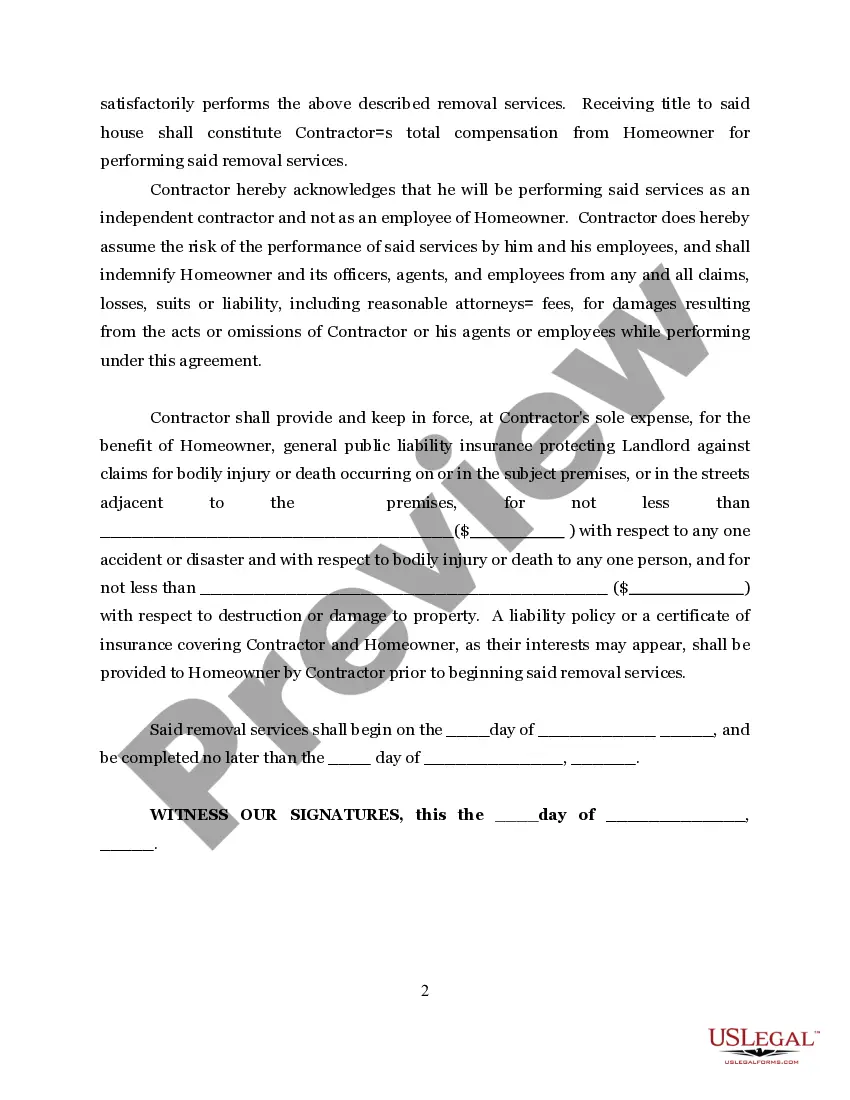
Kansas Agreement to Remove House
Description

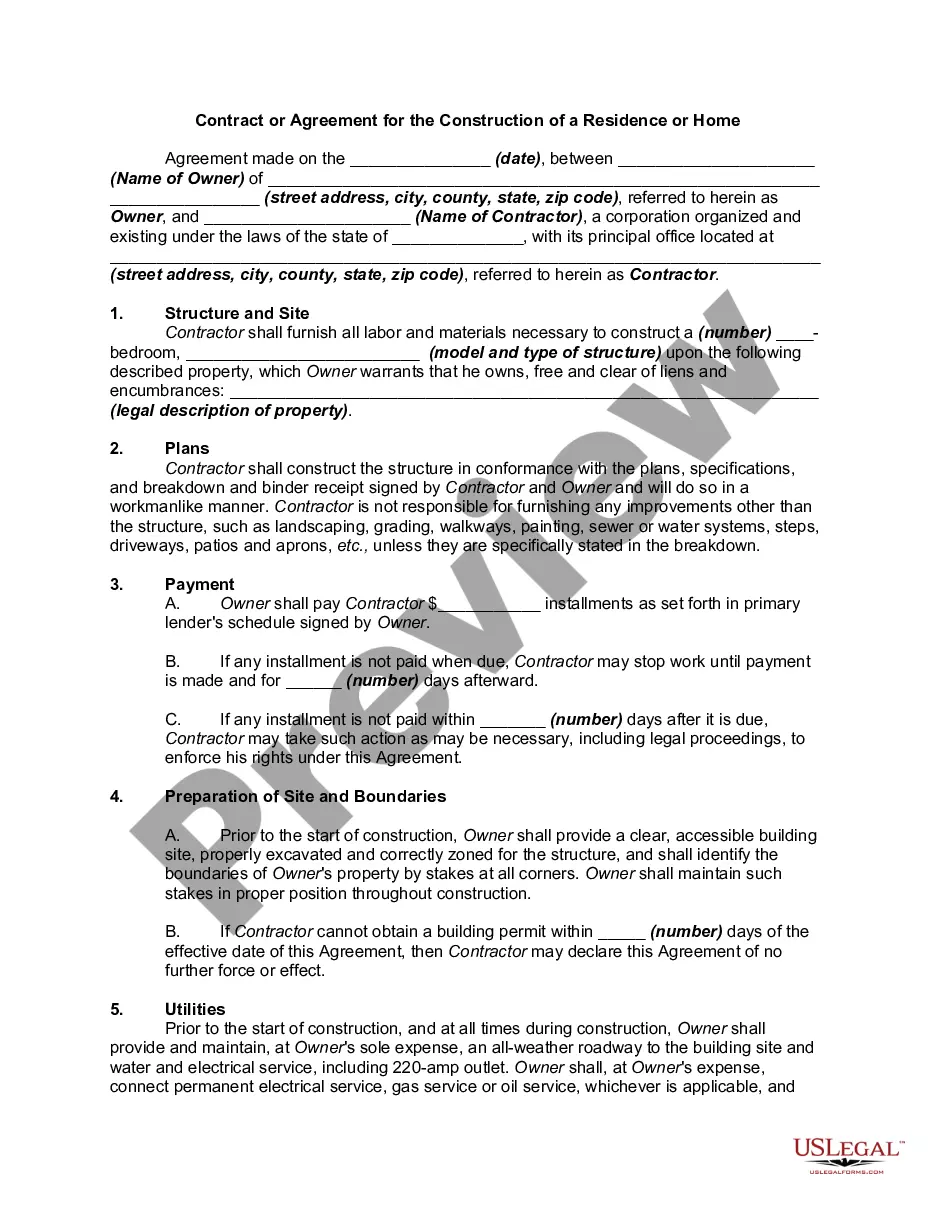
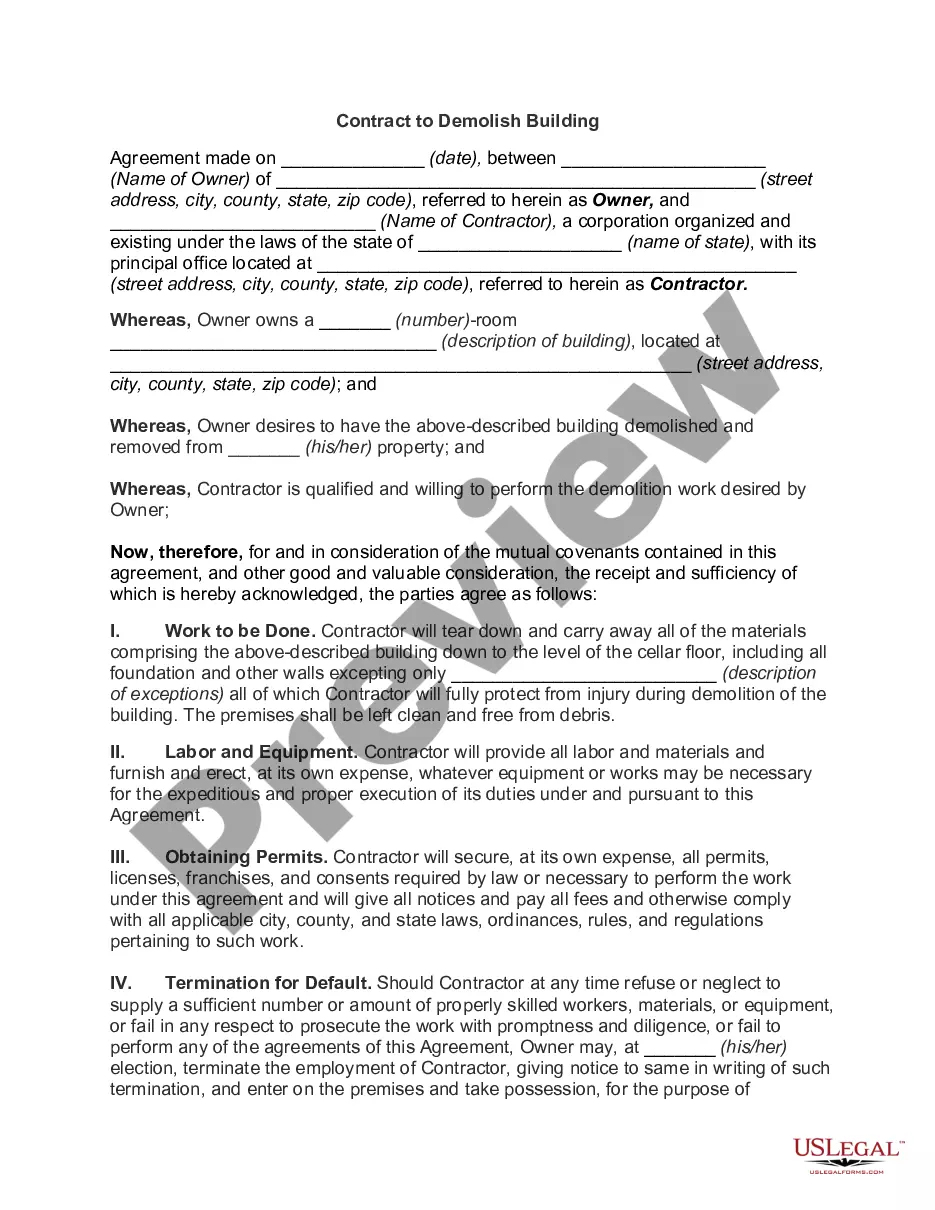
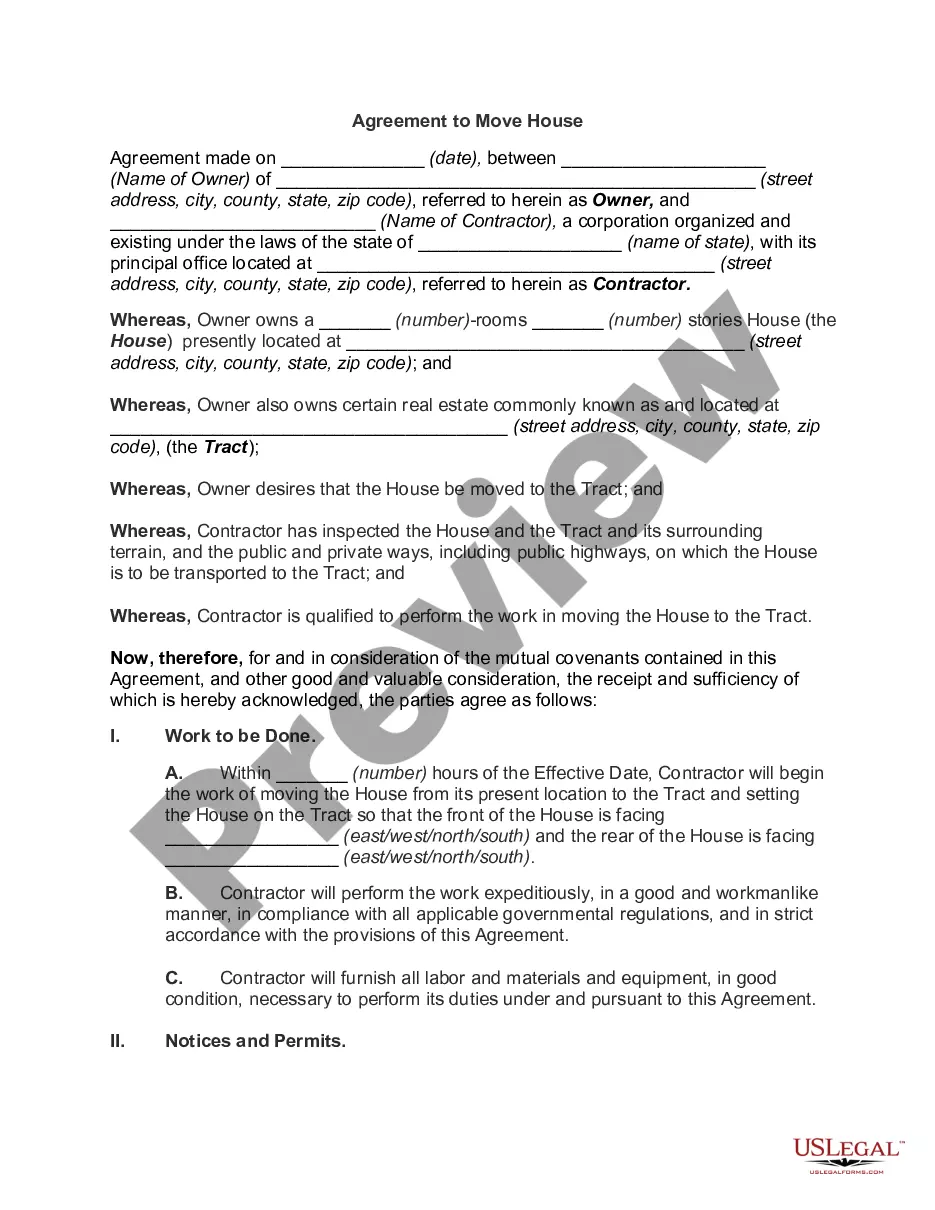
Get your form ready online
Our built-in tools help you complete, sign, share, and store your documents in one place.
Make edits, fill in missing information, and update formatting in US Legal Forms—just like you would in MS Word.
Download a copy, print it, send it by email, or mail it via USPS—whatever works best for your next step.
Sign and collect signatures with our SignNow integration. Send to multiple recipients, set reminders, and more. Go Premium to unlock E-Sign.
If this form requires notarization, complete it online through a secure video call—no need to meet a notary in person or wait for an appointment.
We protect your documents and personal data by following strict security and privacy standards.

Make edits, fill in missing information, and update formatting in US Legal Forms—just like you would in MS Word.

Download a copy, print it, send it by email, or mail it via USPS—whatever works best for your next step.

Sign and collect signatures with our SignNow integration. Send to multiple recipients, set reminders, and more. Go Premium to unlock E-Sign.

If this form requires notarization, complete it online through a secure video call—no need to meet a notary in person or wait for an appointment.

We protect your documents and personal data by following strict security and privacy standards.
Looking for another form?
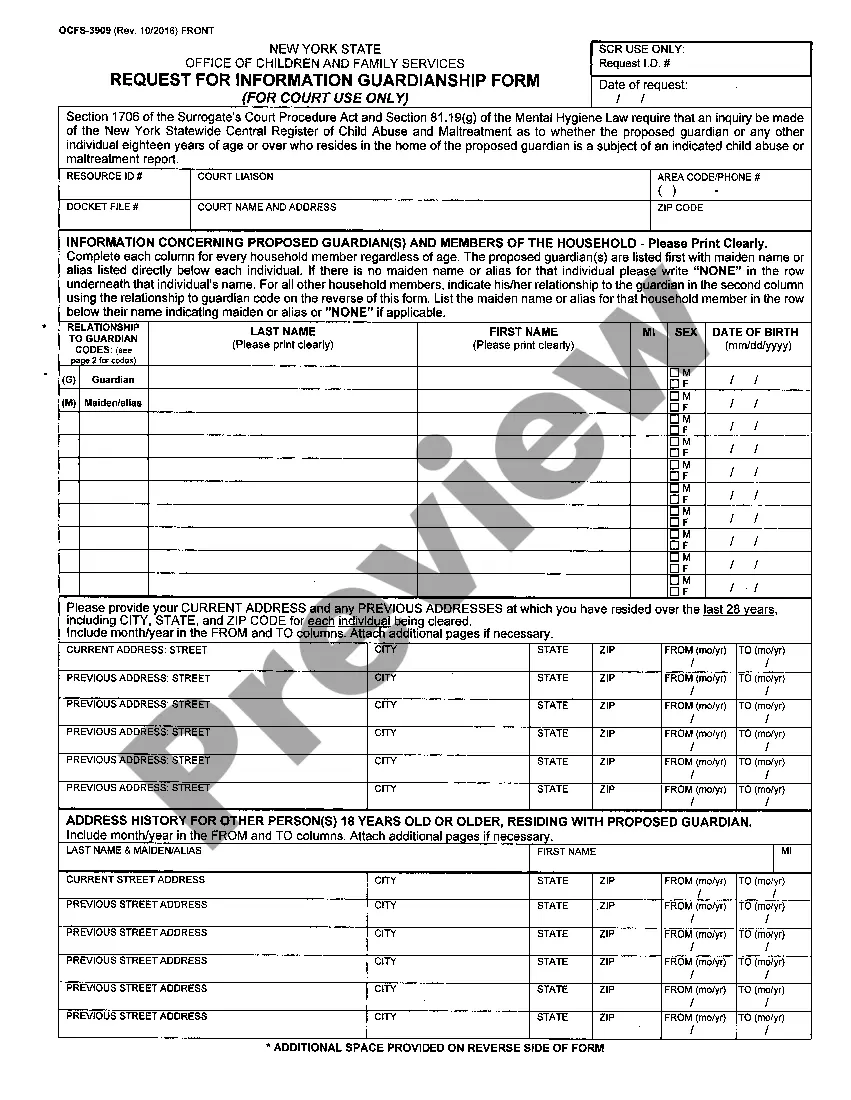
How to fill out Agreement To Remove House?
You can spend your time on the web trying to locate the legal document template that meets the state and federal standards you require.
US Legal Forms offers a vast selection of legal templates that are evaluated by specialists.
You can download or print the Kansas Agreement to Remove House from my assistance.
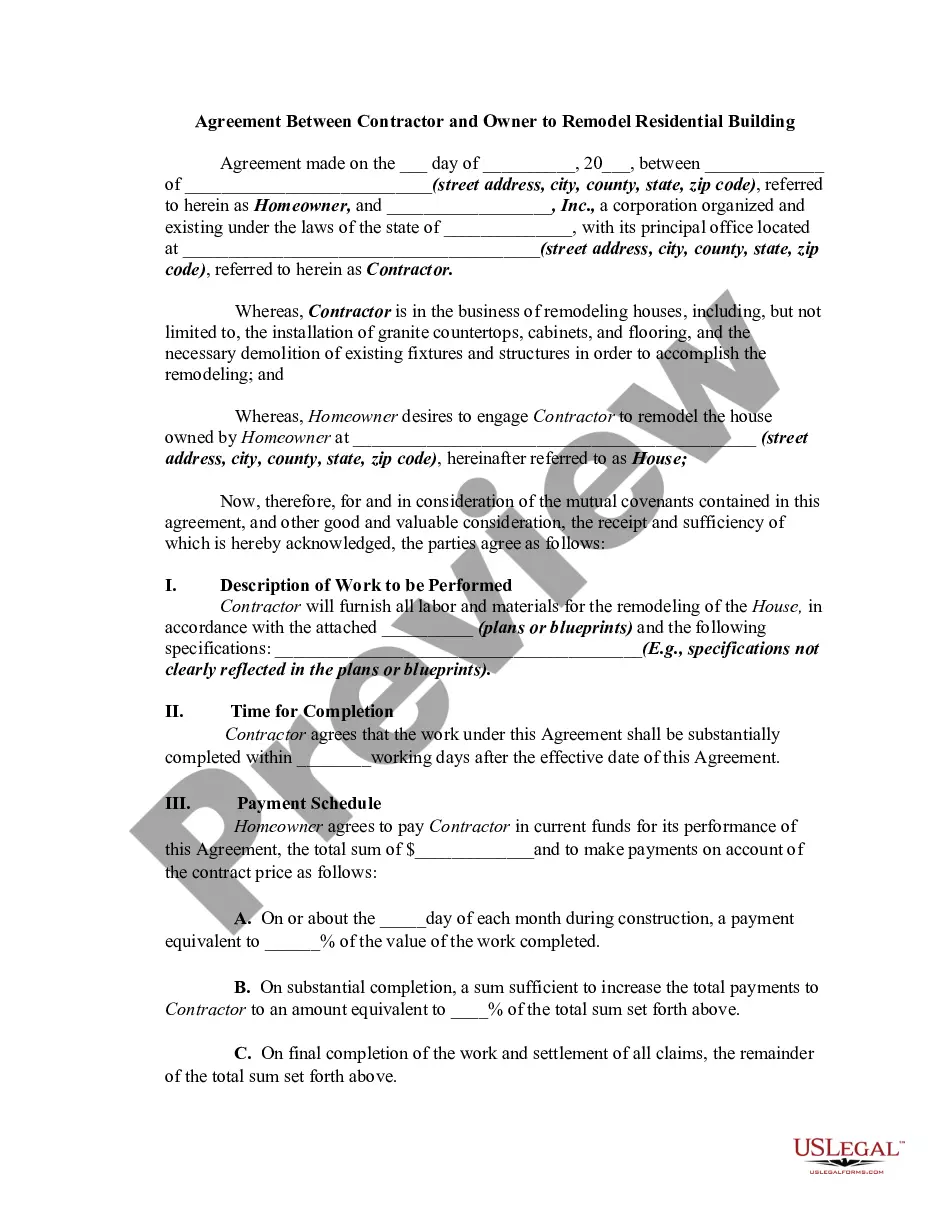
If available, utilize the Review button to take a look at the document template as well.
- If you already have a US Legal Forms account, you can Log In and click on the Obtain button.
- After that, you can fill out, amend, print, or sign the Kansas Agreement to Remove House.
- Every legal document template you purchase is yours for life.
- To acquire another copy of the purchased document, go to the My documents tab and click on the appropriate button.
- If you are using the US Legal Forms website for the first time, follow the simple instructions provided below.
- First, ensure that you have selected the correct document template for the state/city of your choice.
- Check the document details to verify that you have chosen the correct template.
Form popularity
FAQ
To evict you, the landlord must provide a notice to you that you have 14 days to correct the problem, otherwise you will have to vacate 30 days after you get the notice. In other words, the lease will terminate 30 days after the notice date, unless you can correct the problem in 14 days.
Evicting a tenant in Kansas can take around three weeks to three months, depending on the eviction type, and whether a follow-up hearing is held (read more). Introduction. In Kansas, in order for a landlord to have a valid eviction, there are rules and regulations they must follow.
In Kansas a property can be considered abandoned if after 10 days of rent being unpaid the tenant has removed a substantial amount of their personal belongings.
To evict you, the landlord must provide a notice to you that you have 14 days to correct the problem, otherwise you will have to vacate 30 days after you get the notice. In other words, the lease will terminate 30 days after the notice date, unless you can correct the problem in 14 days.
Abandoned Property is a post-independence problem affecting landed and industrial properties abandoned by many during and after the War of Liberation.
The Kansas Governor Laura Kelly has ordered that renters cannot be evicted for reasons related to COVID-19 hardships. This order began on August 17, 2020 and is set to expire on .
As a landlord, if you think the property has been abandoned, you should first attempt to contact the tenant. Ask the tenant for written confirmation that they're returning possession of the property to you, and to return the keys. Once you received this confirmation you can go into the property immediately.
The landlord can evict the tenant for a lease violation in Kansas. Even if the tenant has just violated one term, they can still be evicted. The landlord must give the tenant a Kansas eviction notice called a 30-Day Notice to Comply, which provides the tenant with 14 days to fix the issue.
In Kansas, you may not sell, give away, or throw out abandoned belongings until at least 30 days from the date you reclaim possession of your rental property.
If your landlord wants to end your periodic tenancy, they usually have to give you 90 days' notice. In some cases, your landlord only has to give you 42 days' notice. They will need to tell you the reason why they're giving you less notice though.