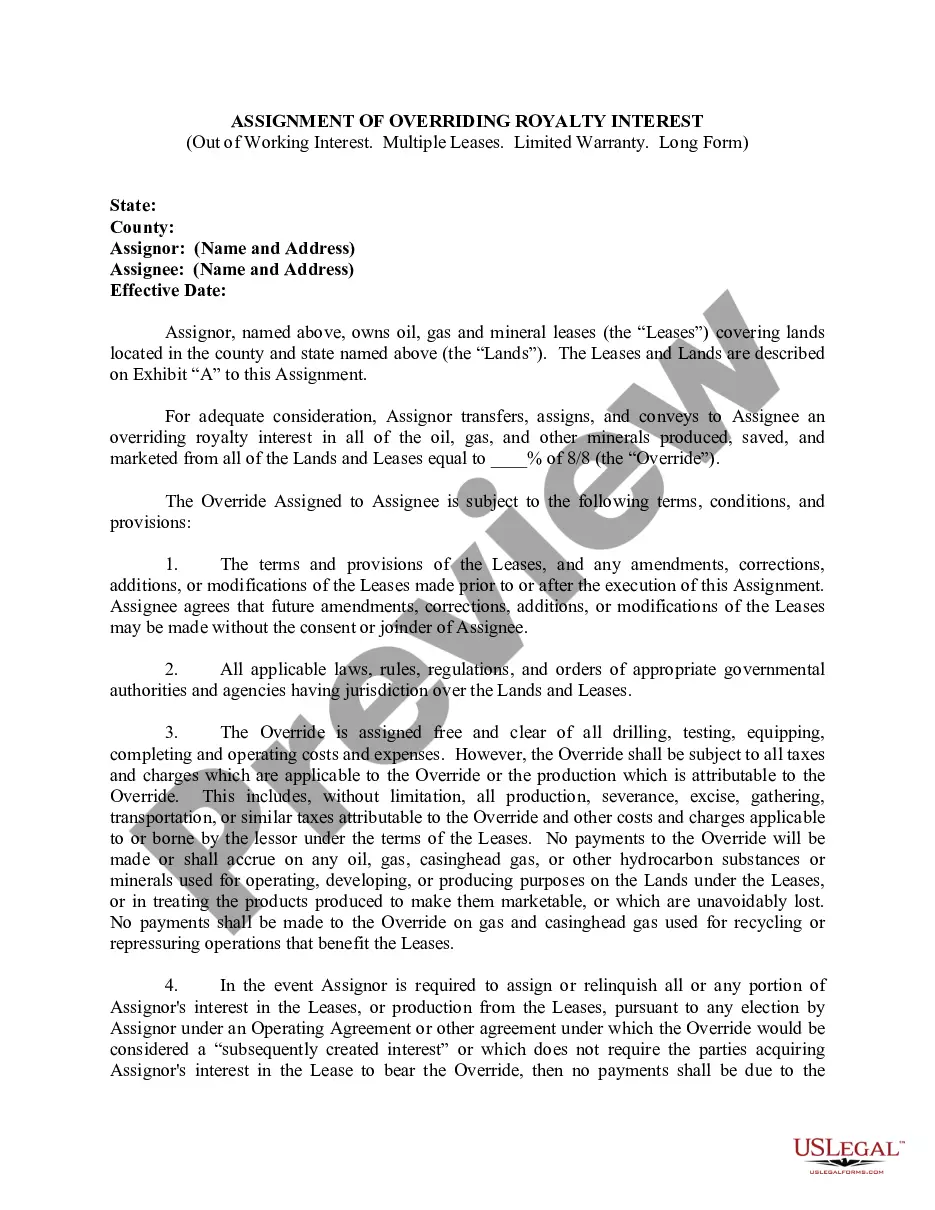
Kansas Valet Parking Agreement
Description
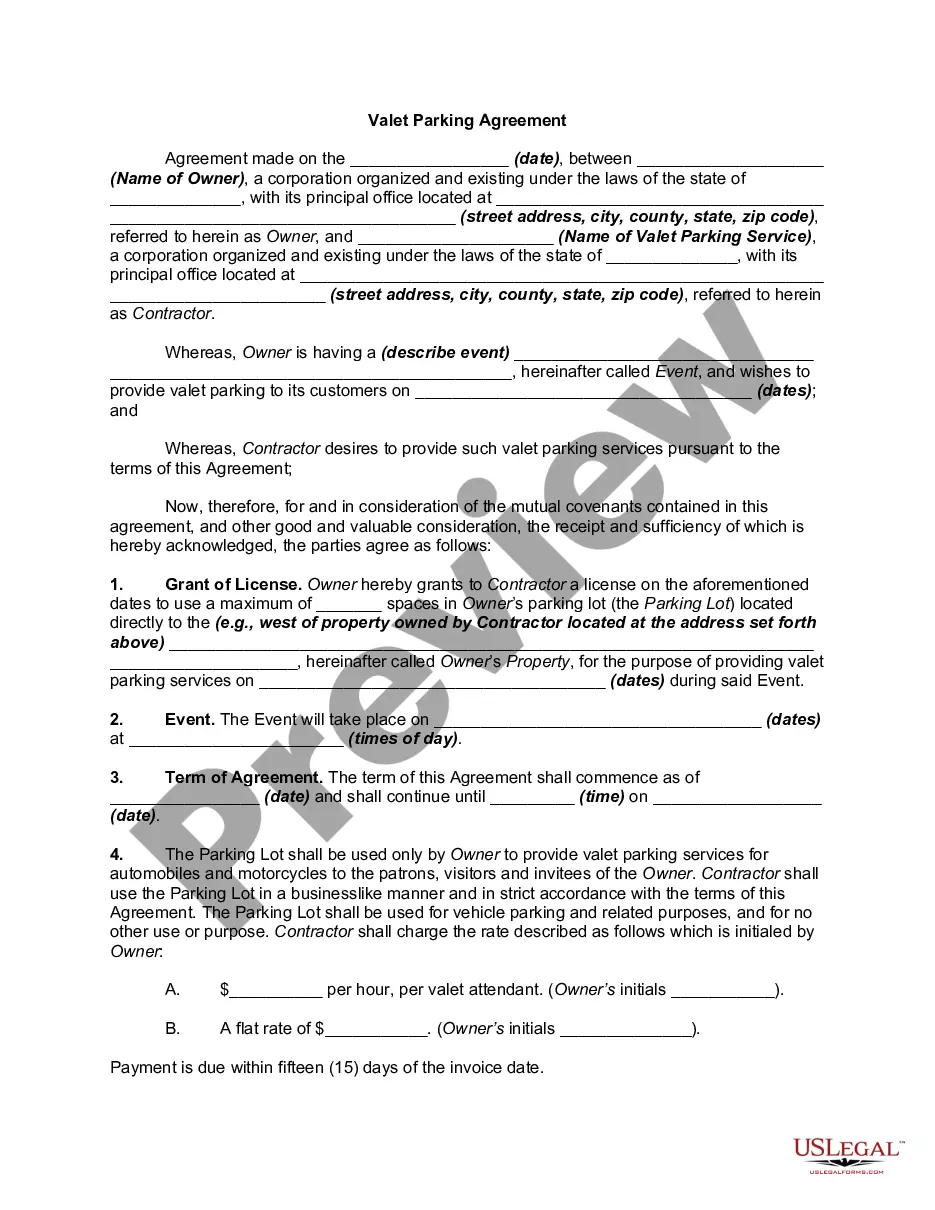
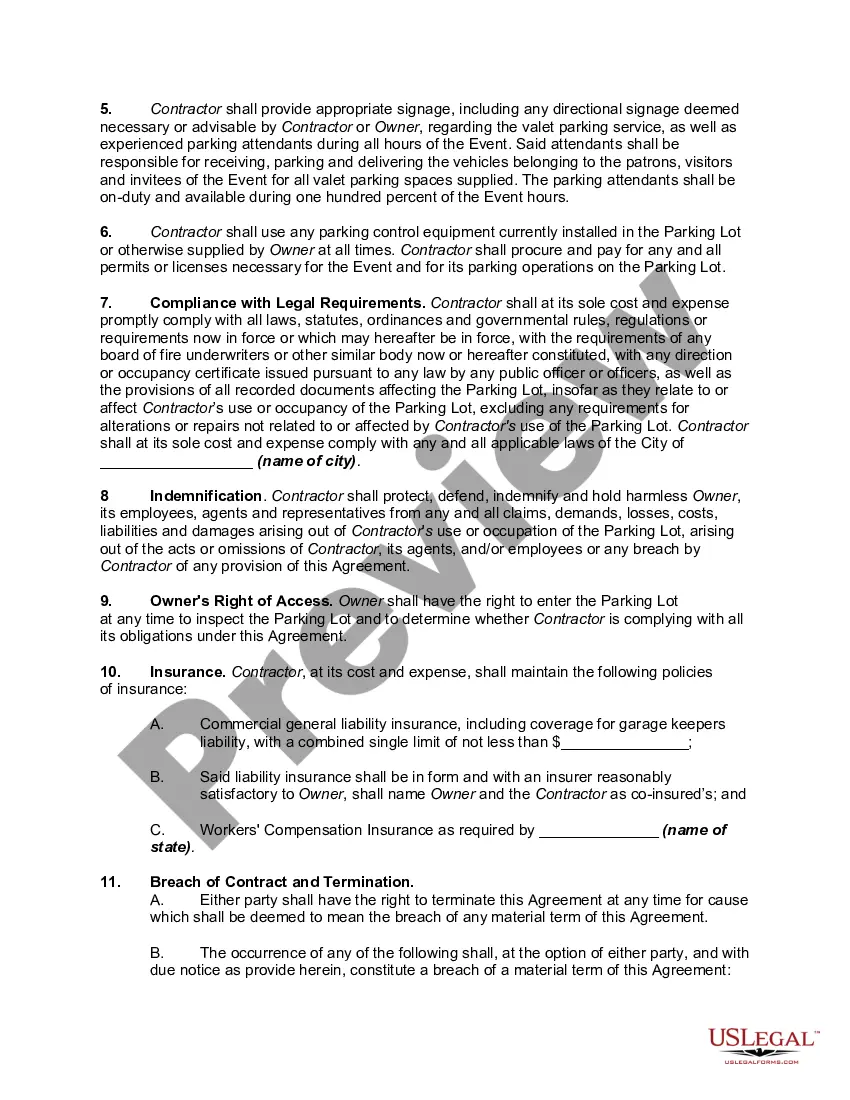
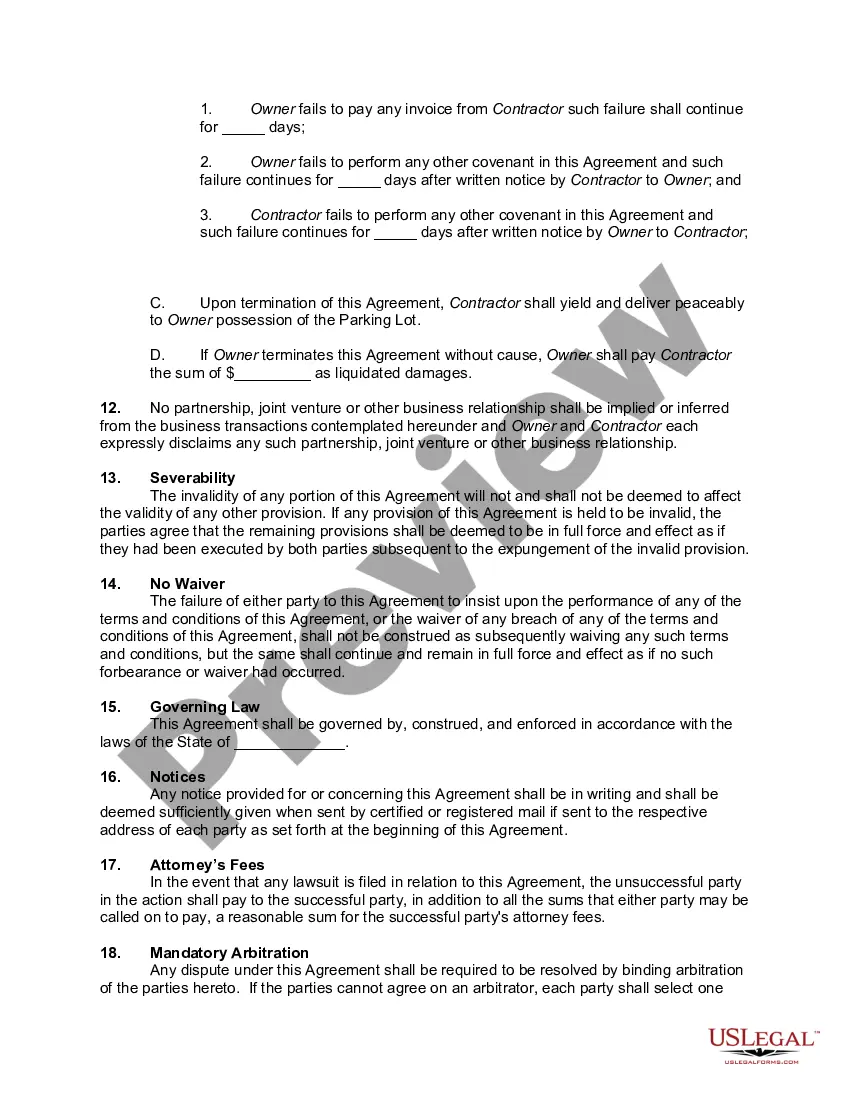
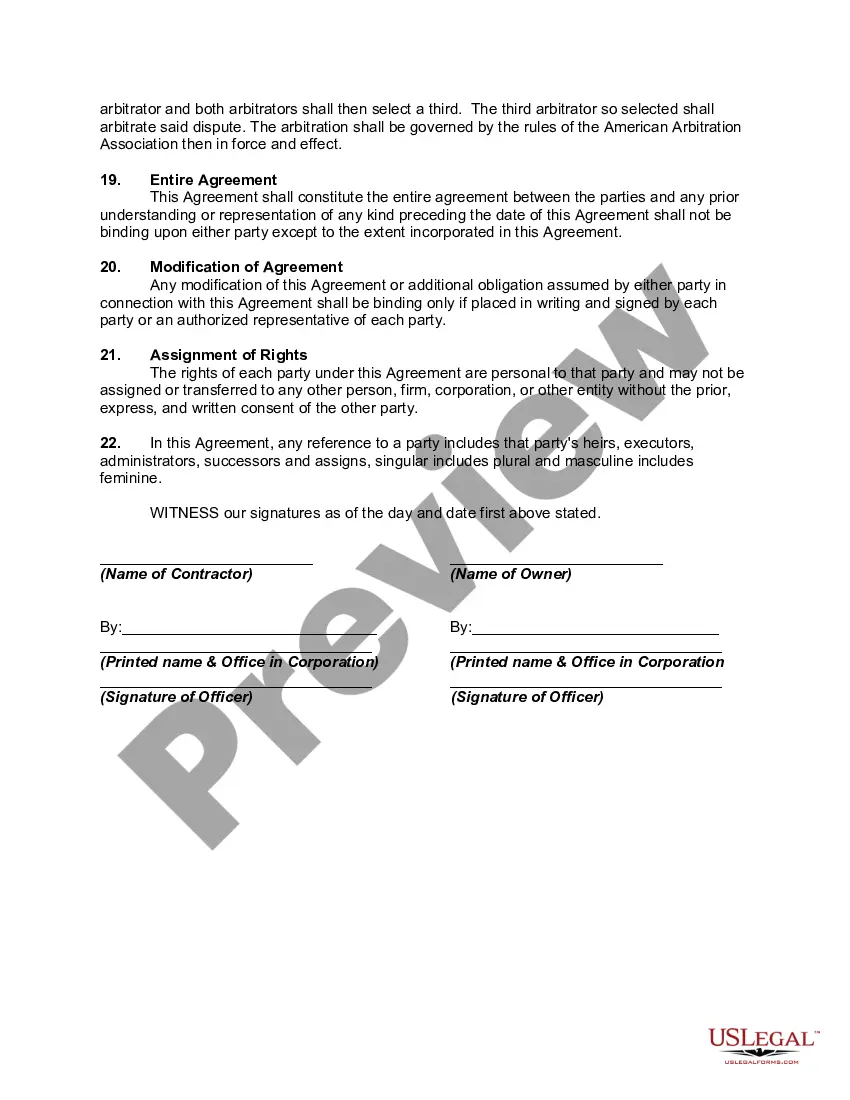
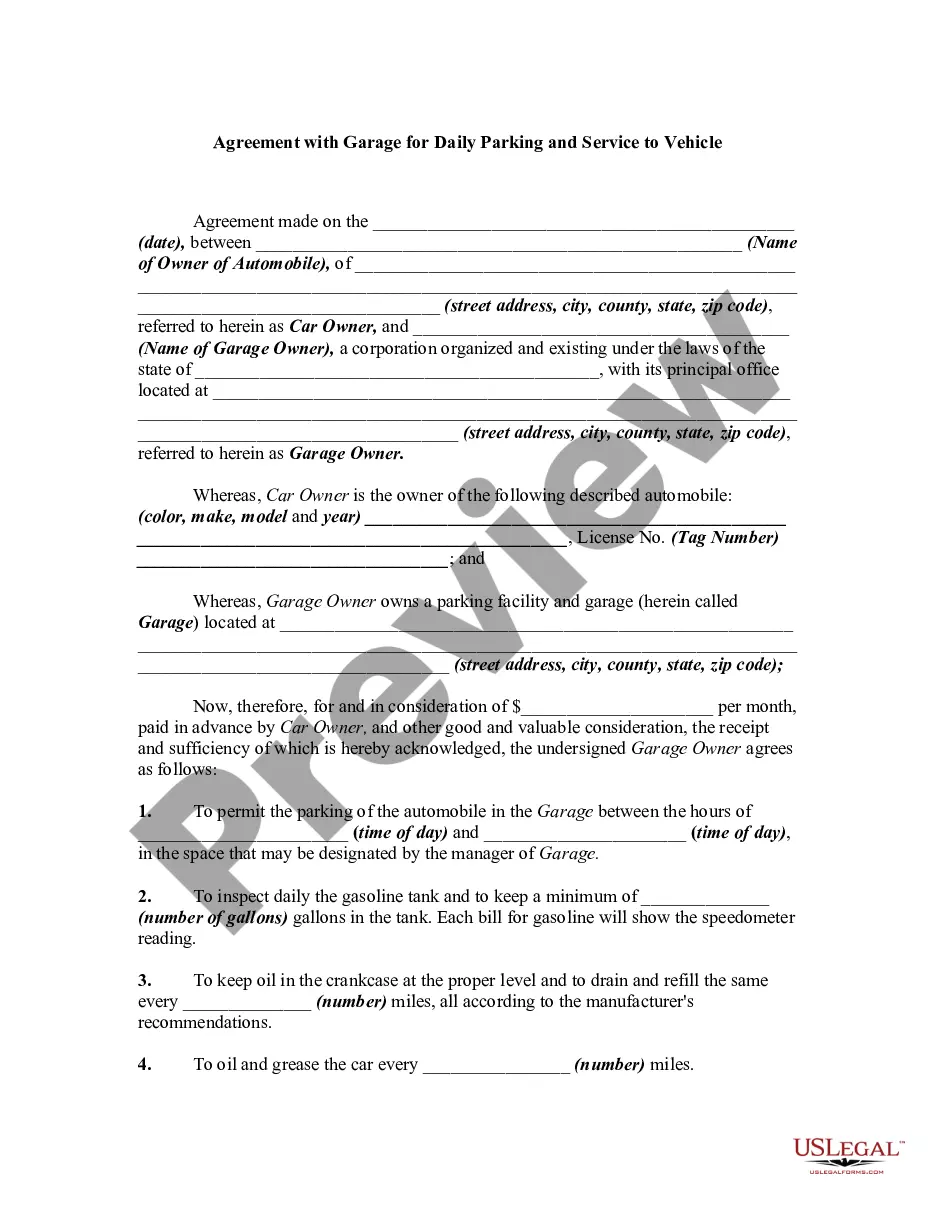
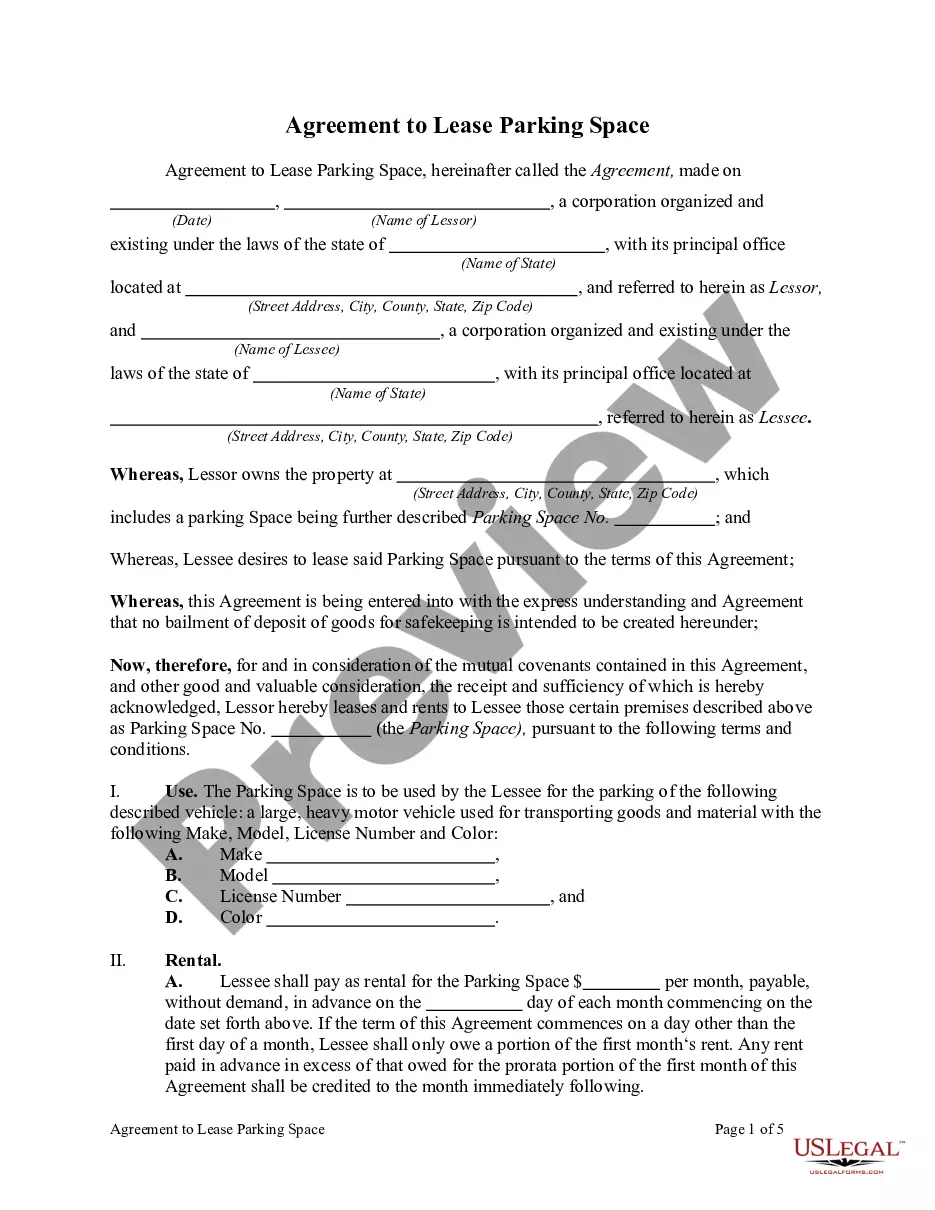
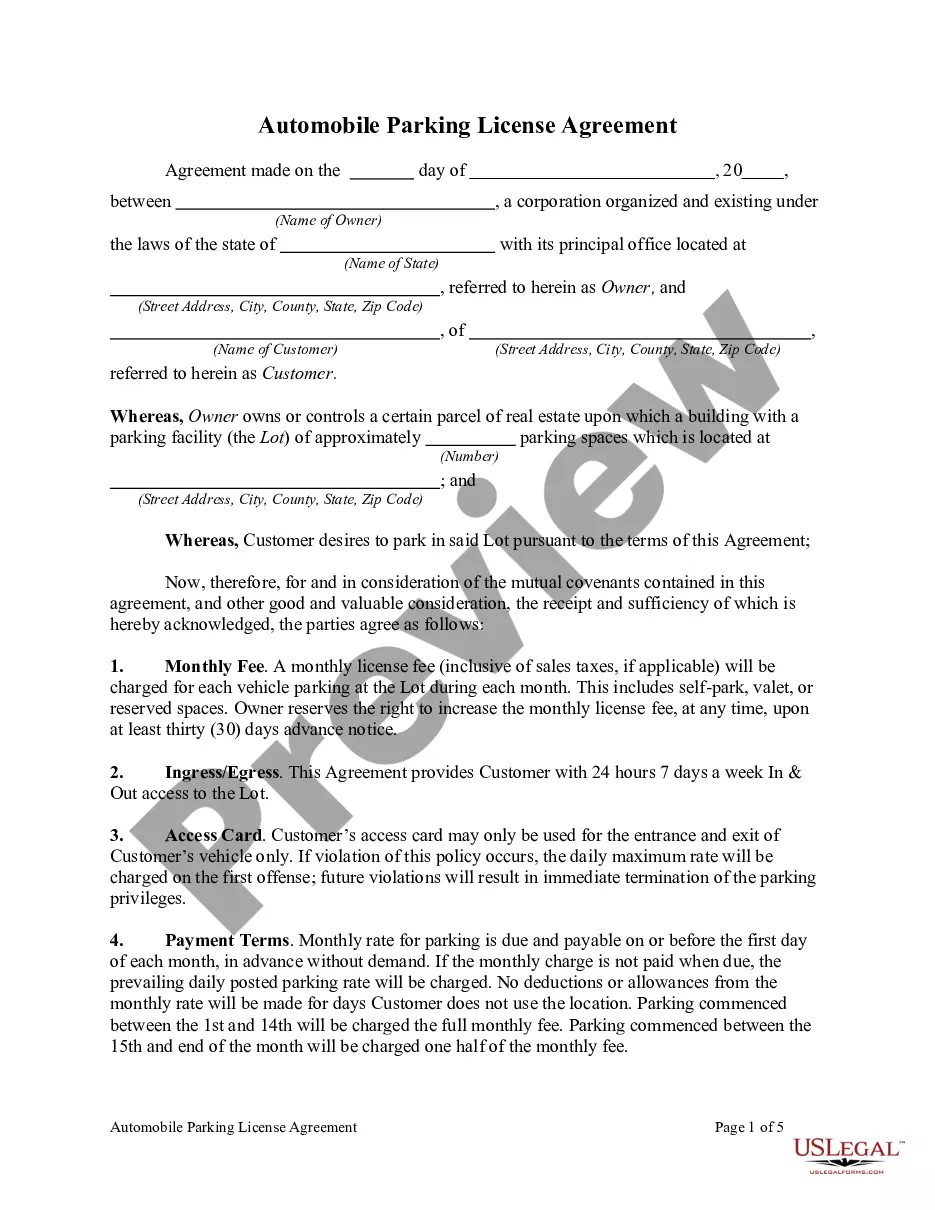
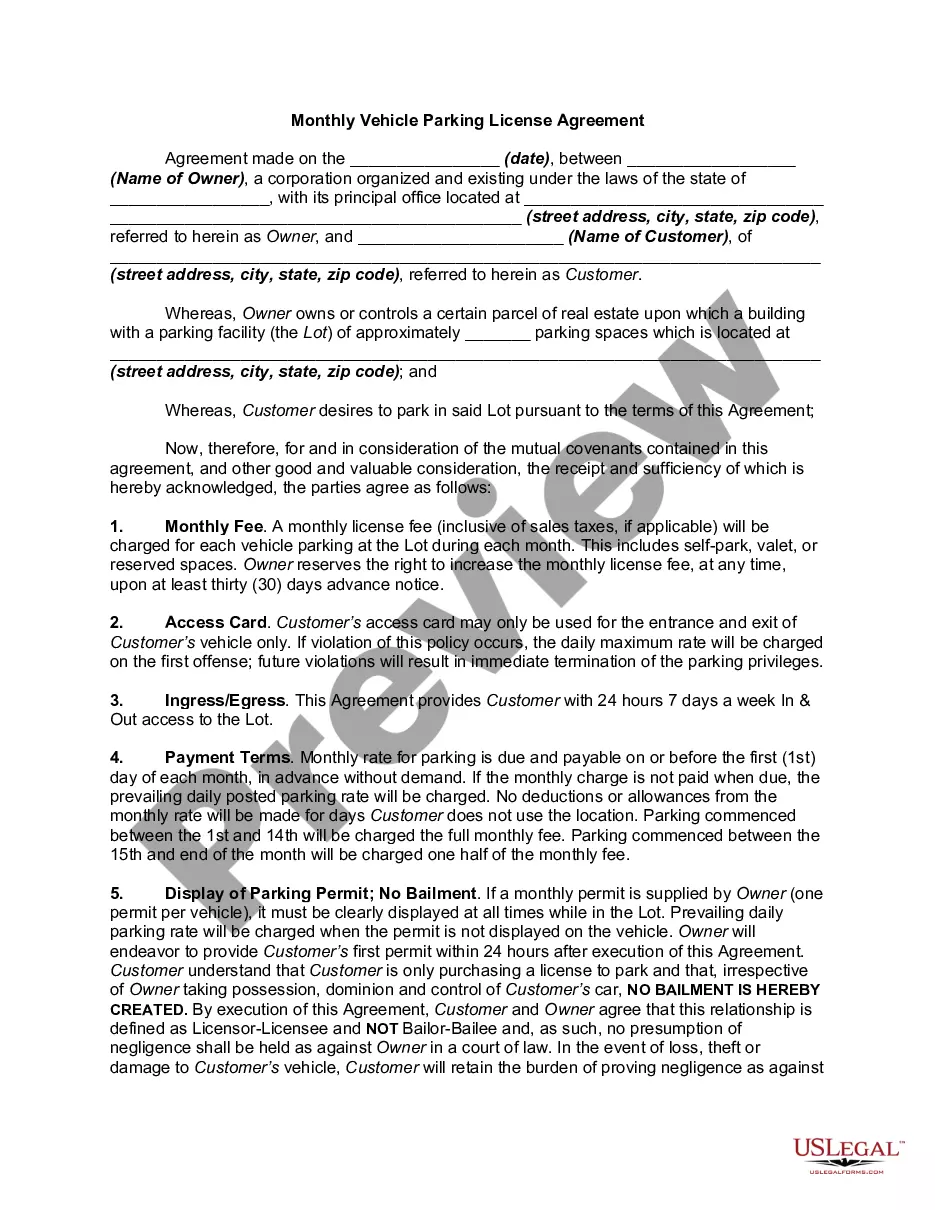
How to fill out Valet Parking Agreement?
You can spend numerous hours online searching for the legal document template that fulfills the federal and state regulations you need.
US Legal Forms provides thousands of legal documents that are reviewed by professionals.
It is easy to obtain or create the Kansas Valet Parking Agreement from their services.
Once you have found the template you desire, click Acquire now to proceed. Select the pricing plan you prefer, enter your credentials, and register for your account on US Legal Forms. Complete the transaction. You may use your Visa or Mastercard or PayPal account to purchase the legal document. Choose the format of your document and download it to your device. Make adjustments to the document if necessary. You can complete, edit, and sign and print the Kansas Valet Parking Agreement. Download and print thousands of document templates using the US Legal Forms website, which offers the largest collection of legal forms. Utilize professional and state-specific templates to address your business or personal needs.
- If you already have a US Legal Forms account, you may Log In and click the Download button.
- After that, you can complete, edit, create, or sign the Kansas Valet Parking Agreement.
- Every legal document template you obtain belongs to you permanently.
- To get another copy of a purchased form, go to the My documents tab and click the appropriate button.
- If you are using the US Legal Forms website for the first time, follow the simple instructions below.
- First, ensure you have selected the correct document template for your preferred area/city.
- Read the form description to confirm you have chosen the proper document.
- If available, use the Preview button to view the document template as well.
- If you wish to find another version of your document, use the Search field to locate the template that meets your needs and requirements.
Form popularity
FAQ
Proper etiquette for valet parking includes tipping the valet attendant when you receive your keys and being courteous during the process. Additionally, having a Kansas Valet Parking Agreement can help clarify the mutual respect expected between you and the service provider, enhancing the overall experience.
Starting a valet parking business requires careful planning and compliance with local regulations. Begin by drafting your Kansas Valet Parking Agreement to establish clear terms with clients. Additionally, research potential clients, hire qualified staff, and secure the necessary permits to operate legally and efficiently.
Valet parking protocols generally include presenting your vehicle, handing over your keys, and providing any special instructions regarding your vehicle. It's essential to have a Kansas Valet Parking Agreement that details the rules and expectations to ensure a smooth experience for both you and the valet service.
To give your car to a valet, simply drive to the designated valet area. Upon arrival, you will hand your keys to the valet attendant. Remember to verify that your Kansas Valet Parking Agreement is in place to protect your vehicle and clarify terms of service.
The process of valet parking typically starts when you arrive at a parking area that offers this service. A valet attendant will greet you, take your keys, and park your car on your behalf. To ensure clarity and accountability, having a Kansas Valet Parking Agreement can outline the procedures and responsibilities of both parties involved.
Dealing with valet parking is quite straightforward. First, you give your keys to the valet, who takes care of parking your vehicle safely. When you're ready to leave, a simple request retrieves your car quickly. Using a Kansas Valet Parking Agreement can streamline this process and protect both the valet service and the vehicle owner, ensuring a smooth experience.
No, valet parking is not the same as self-parking. With valet parking, you hand your keys to a valet attendant who parks your car for you, enhancing convenience. Self-parking requires you to find a spot and park your vehicle yourself, which can be time-consuming. When creating a Kansas Valet Parking Agreement, it’s important to understand these distinctions to clarify the responsibilities of both parties.
The primary form associated with a Kansas S Corporation is the Kansas Corporate Income Tax Return (K-120 or K-121). You’ll also need to submit Form 2553 to elect S corp status. Having all your forms in order ensures a solid foundation for agreements like the Kansas Valet Parking Agreement, benefiting your corporate structure and tax obligations.
To file a Kansas City tax return, you'll need to gather your income information, complete the appropriate form, and submit it to the city for assessment. It's essential to check for any local requirements that may differ from state obligations. If your business operates under a Kansas Valet Parking Agreement, you must ensure tax compliance to avoid penalties.
Yes, Kansas does collect sales tax on certain out-of-state purchases, primarily when sales are made through retailers with a physical presence in the state. Understanding this tax obligation can be essential for businesses, especially when negotiating agreements like a Kansas Valet Parking Agreement. Being informed about such tax implications aids in financial planning and contract stipulations.