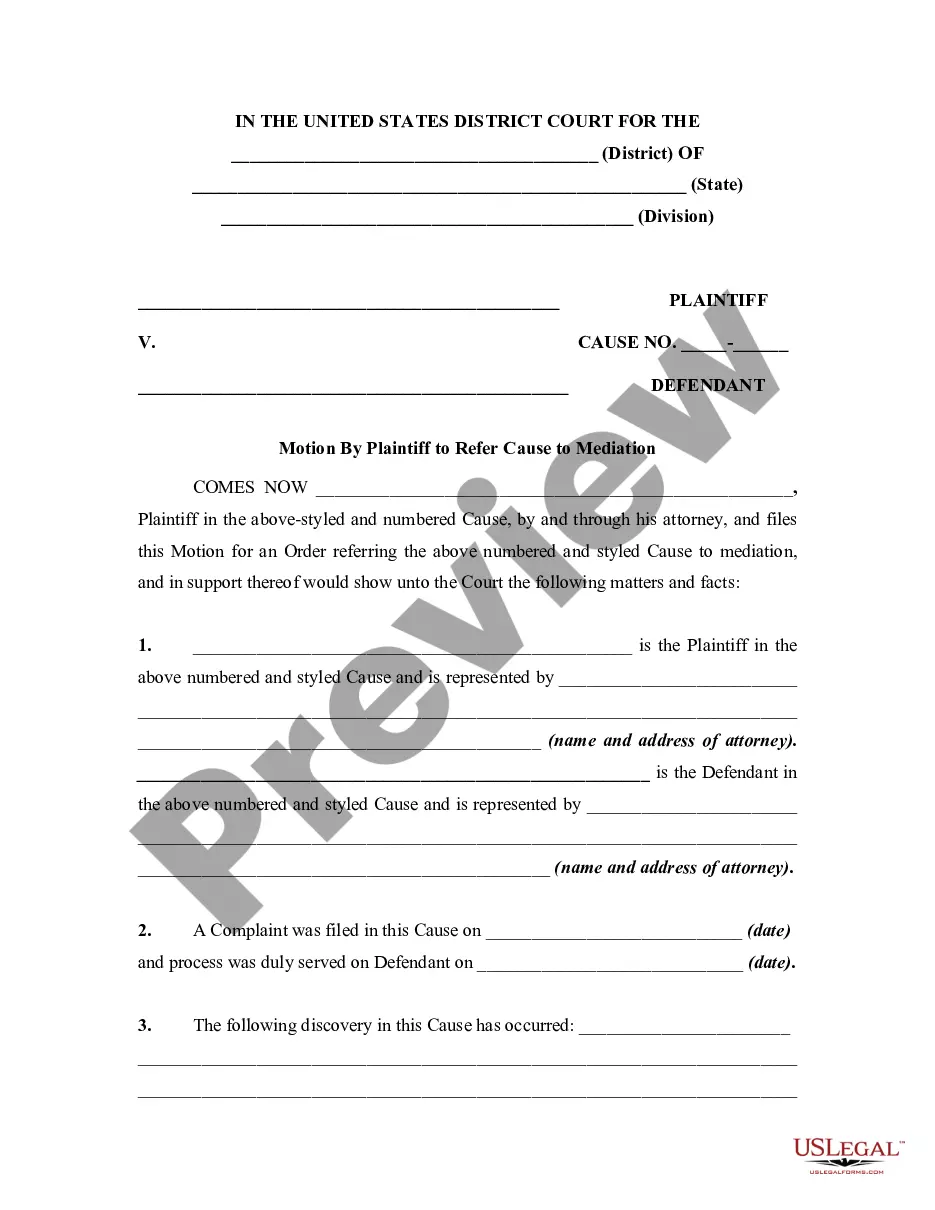
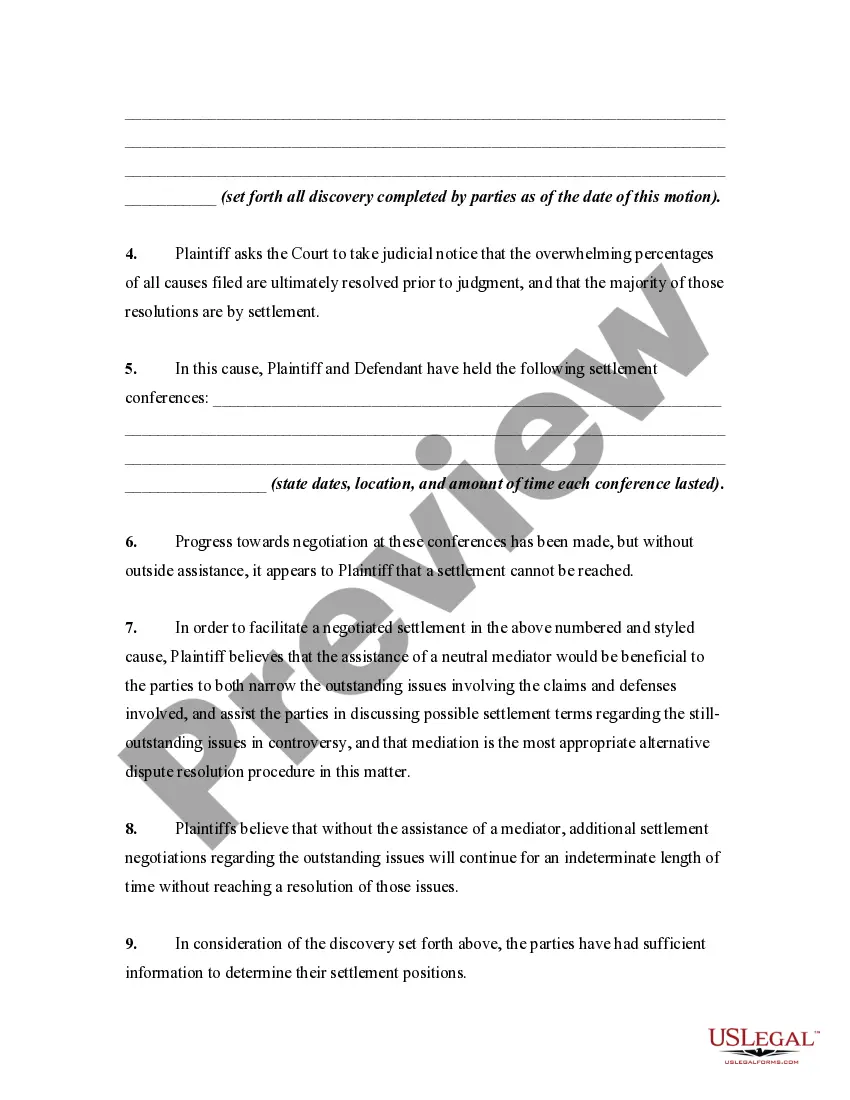
Mediation is nothing more than a process by which parties in a dispute negotiate a settlement of their claims against each other through the assistance of a trained, neutral mediator. It is a non-adversarial process. Mediation is entirely voluntary and non-binding. The mediator has no power to render a decision nor force the parties to accept a settlement. The mediator generally does not give an opinion or render an award. Because it is voluntary and non-binding, it is attractive to parties who do not want to litigate, yet who cannot negotiate directly. It is considered to be non-threatening.
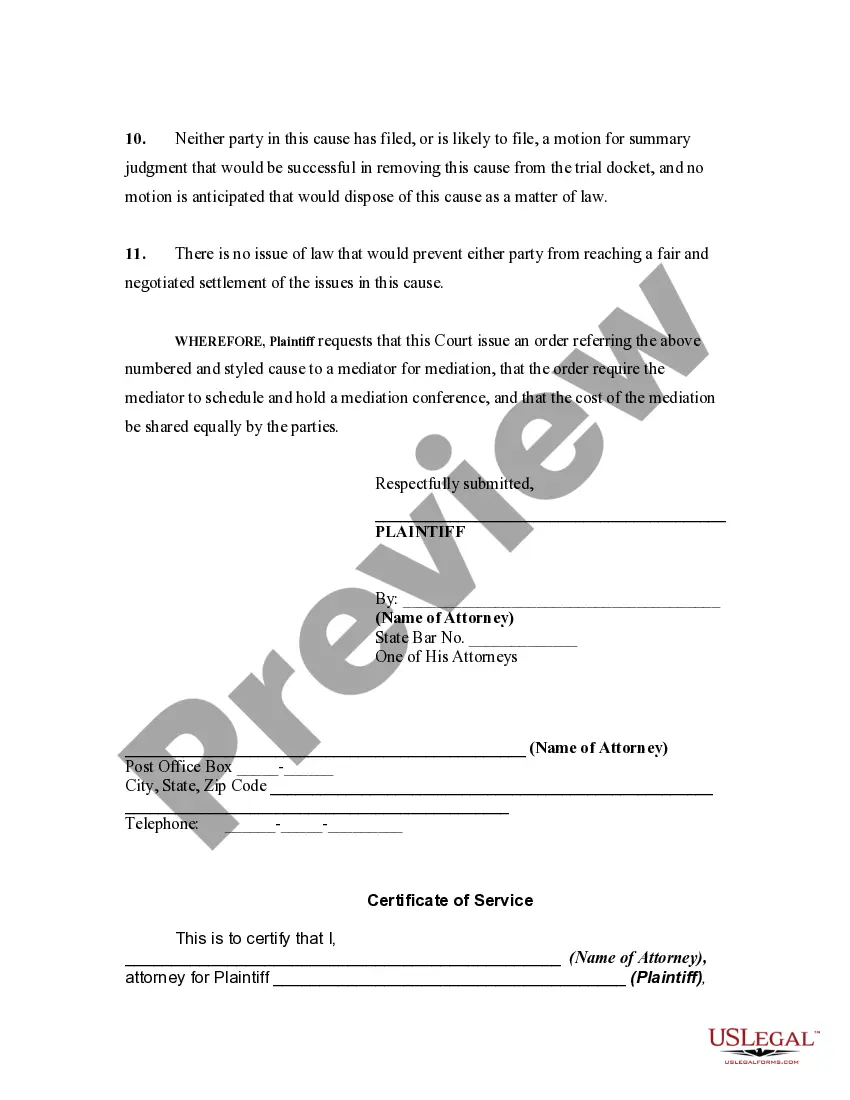
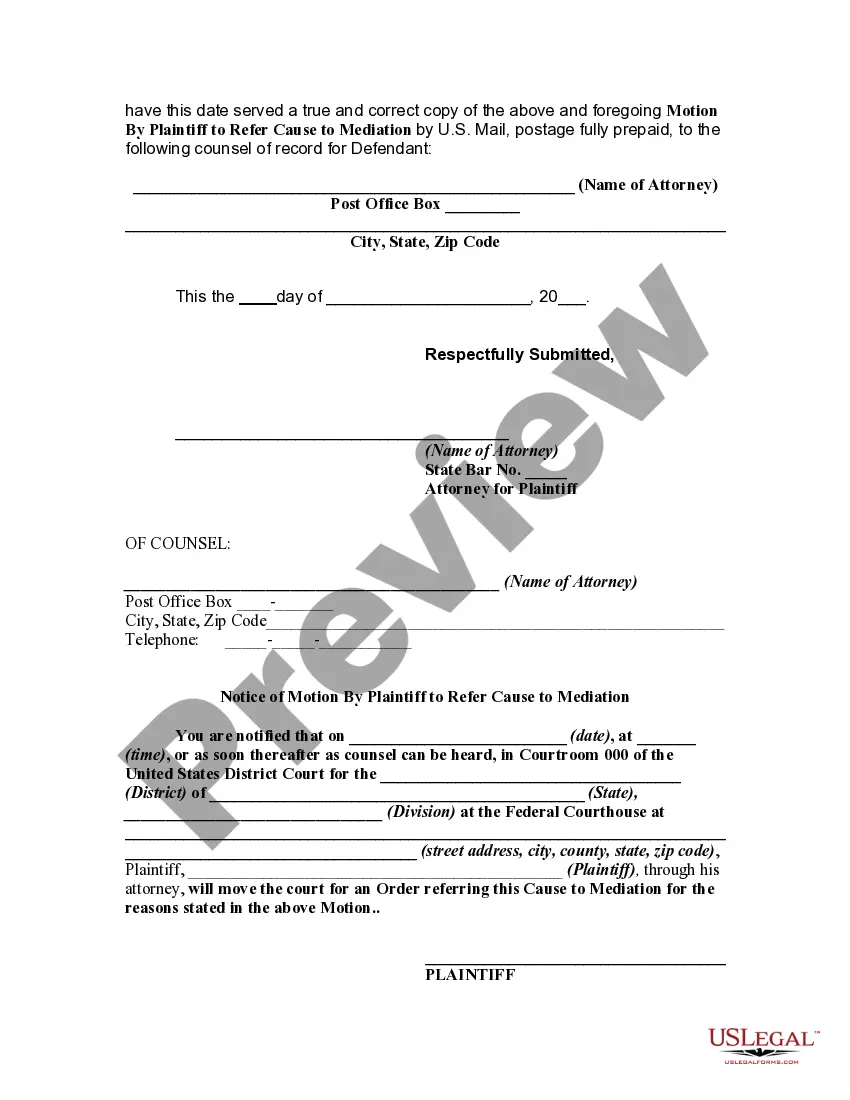
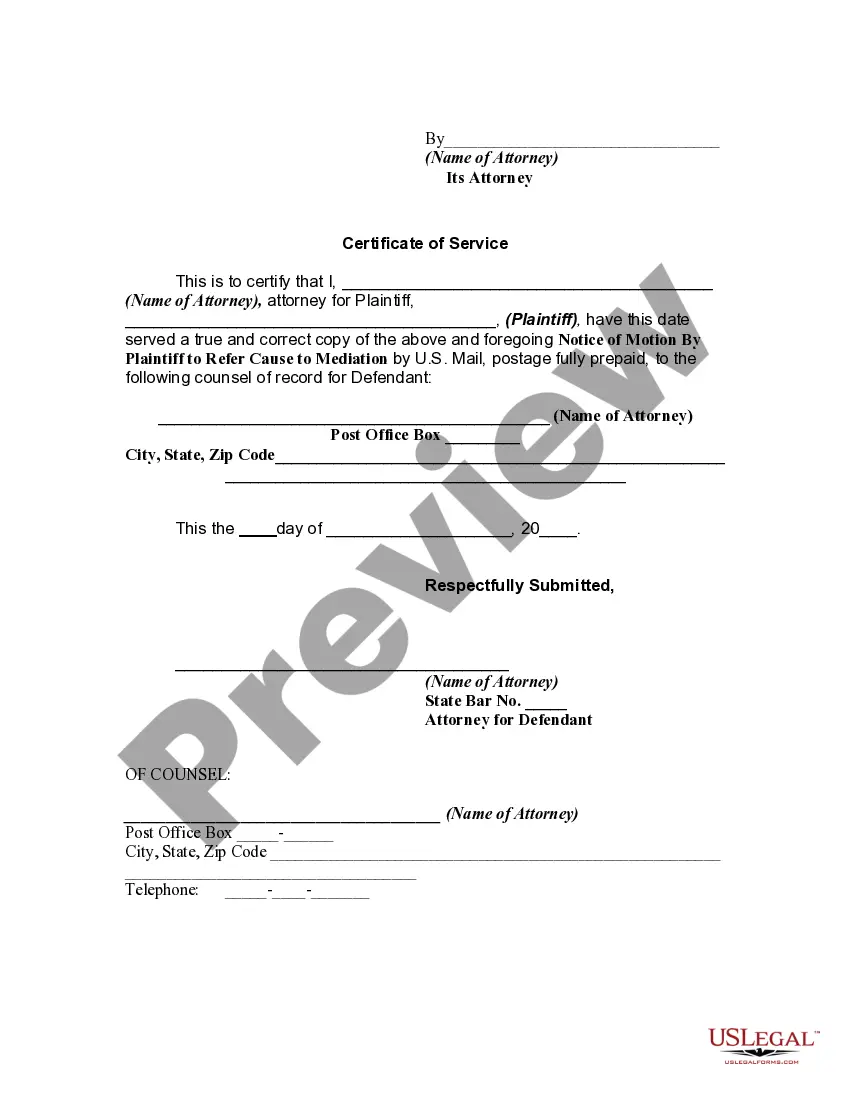
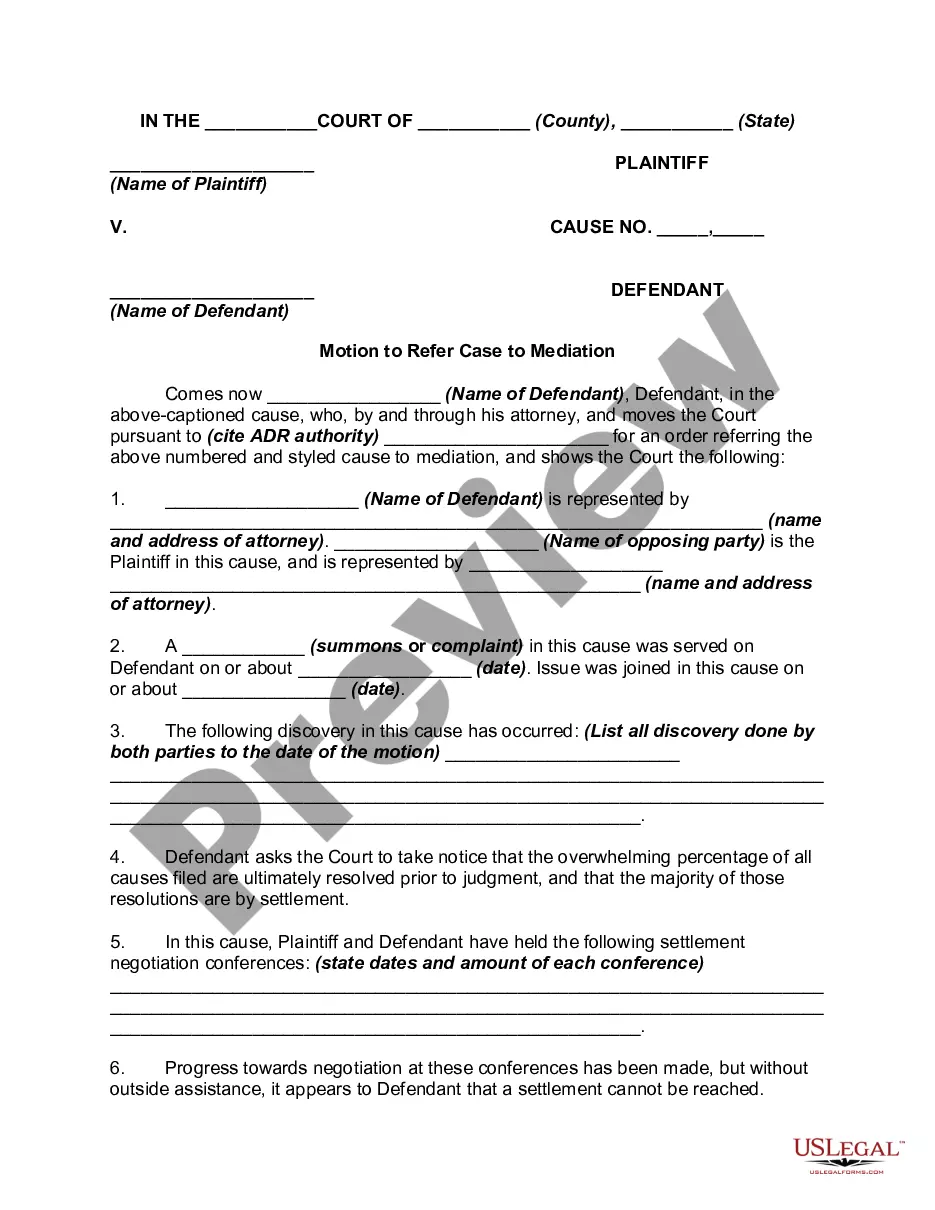
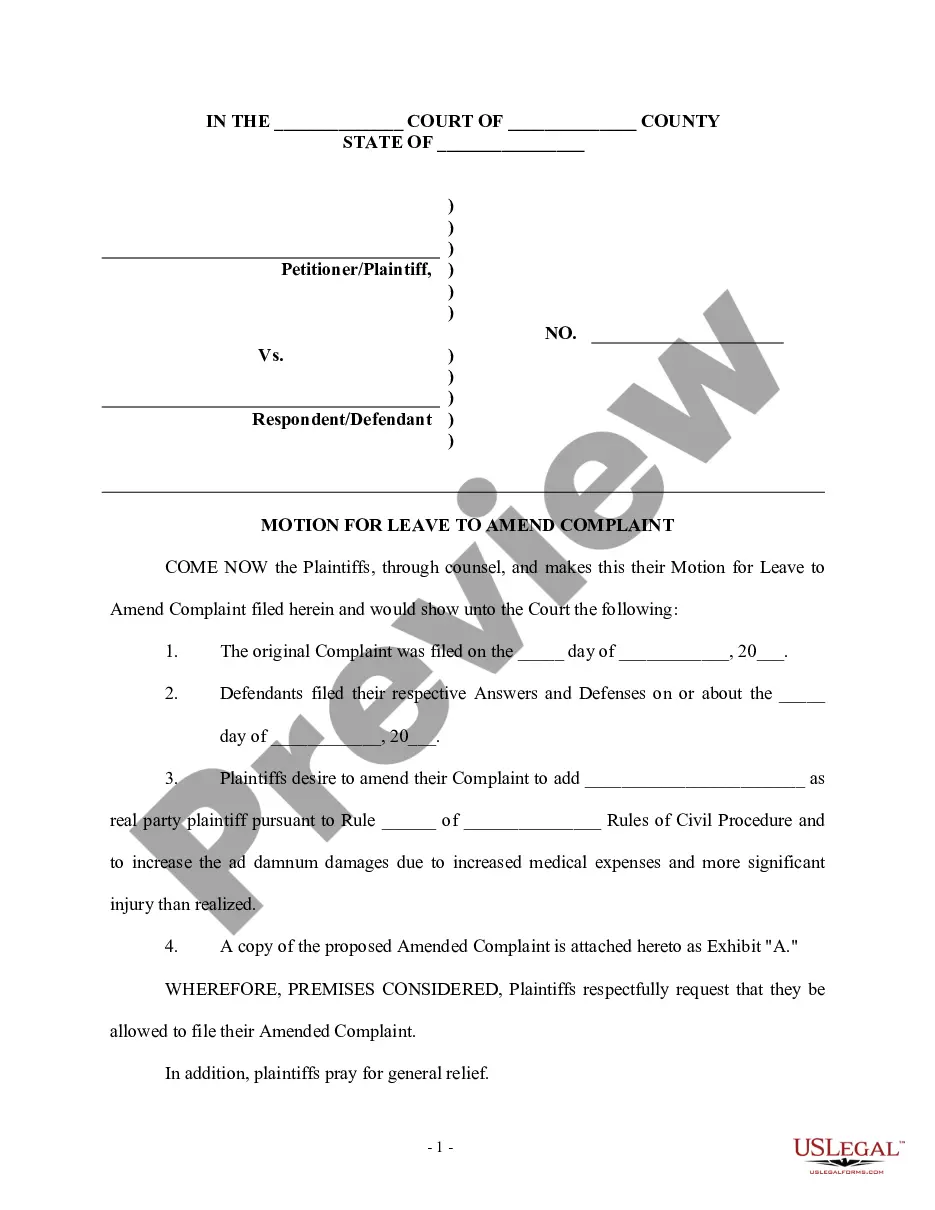
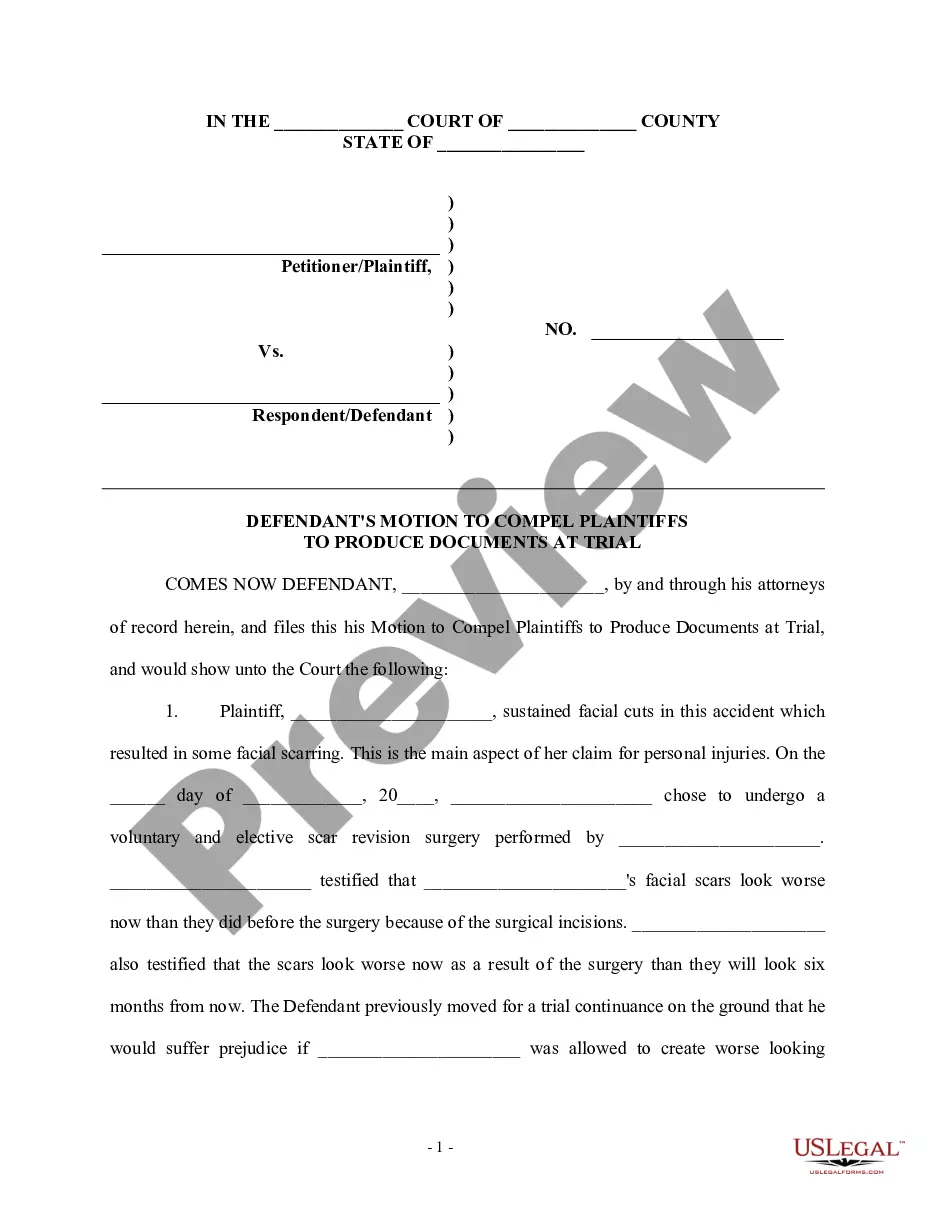
Kansas Motion By Plaintiff to Refer Cause to Mediation
State:
Multi-State
Category:
Control #:
US-01006BG
Format:
Word;
Rich Text
117 downloads
Description
Free preview
Get your form ready online
Our built-in tools help you complete, sign, share, and store your documents in one place.
Built-in online Word editor
Make edits, fill in missing information, and update formatting in US Legal Forms—just like you would in MS Word.
Export easily
Download a copy, print it, send it by email, or mail it via USPS—whatever works best for your next step.
E-sign your document
Sign and collect signatures with our SignNow integration. Send to multiple recipients, set reminders, and more. Go Premium to unlock E-Sign.
Notarize online 24/7
If this form requires notarization, complete it online through a secure video call—no need to meet a notary in person or wait for an appointment.
Store your document securely
We protect your documents and personal data by following strict security and privacy standards.

Make edits, fill in missing information, and update formatting in US Legal Forms—just like you would in MS Word.

Download a copy, print it, send it by email, or mail it via USPS—whatever works best for your next step.

Sign and collect signatures with our SignNow integration. Send to multiple recipients, set reminders, and more. Go Premium to unlock E-Sign.

If this form requires notarization, complete it online through a secure video call—no need to meet a notary in person or wait for an appointment.

We protect your documents and personal data by following strict security and privacy standards.
Looking for another form?
How to fill out Motion By Plaintiff To Refer Cause To Mediation?
You can spend hours online trying to locate the legal document template that fulfills the state and federal requirements you have. US Legal Forms offers a vast array of legal forms that have been evaluated by experts.
It is easy to download or print the Kansas Motion By Plaintiff to Refer Cause to Mediation from the service. If you possess a US Legal Forms account, you can Log In and click on the Download button.
Subsequently, you can complete, modify, print, or sign the Kansas Motion By Plaintiff to Refer Cause to Mediation. Each legal document template you purchase is yours permanently. To obtain another copy of a purchased document, visit the My documents tab and click on the corresponding button.
Complete the transaction. You can use your credit card or PayPal account to pay for the legal document. Choose the format of the document and download it to your device. Make edits to your document if possible. You can complete, modify, sign, and print the Kansas Motion By Plaintiff to Refer Cause to Mediation. Download and print numerous document templates using the US Legal Forms Website, which provides the largest collection of legal forms. Utilize professional and state-specific templates to address your business or personal needs.
- If you are using the US Legal Forms website for the first time, follow these simple instructions.
- Firstly, ensure you have selected the correct document template for the county/region of your choice.
- Review the document outline to confirm you have chosen the right form.
- If available, utilize the Preview button to examine the document template as well.
- If you wish to find another version of the form, use the Search field to locate the template that suits your needs and requirements.
- Once you have located the template you desire, click on Acquire now to proceed.
- Select the pricing plan you want, enter your details, and register for your account on US Legal Forms.
Form popularity
FAQ
Mediation can be helpful in resolving legal disputes. It is not legally binding unless the parties enter a settlement agreement, also sometimes referred to as a mediation agreement. Mediation can also be legally binding if it is court-ordered. However, that is rare in personal injury cases.
The agreements of the parties in mediation are always made final only after each side sees his or her lawyer for legal advice. Once that happens, they can agree that either the lawyers or the mediator will draft the contract that the parties sign to end their dispute.
Mediators are individuals trained in negotiations, who bring opposing parties together and attempt to work out a settlement or agreement that both parties accept or reject. Mediation is not binding.
Mediation is the facilitation of a negotiated agreement by a neutral third party who has no decision-making power. Mediation is now recognised as one of the quickest and most cost-effective ways of resolving a dispute and is the most common form of ADR.
Mediation is generally voluntary, confidential and unbiased. Where a voluntary settlement is achieved, it only becomes binding when the parties sign a formal settlement agreement. Parties in mediation may still seek independent legal advice (in legal cases the parties are encouraged to do so).
Mediators do not make decisions or rulings. Rather, they help the parties create their own voluntary agreement in a confidential setting. The agreement, when signed by each party, is a binding contract.
In mediation, the goal is not to determine who is right and who is wrong, but rather to explore solutions in which both can gain. The parties, not the mediator, make the final decision. If they cannot come to an agreement, they may go back to court.
The mediator has no authority to decide the settlement or even compel the parties to settle. Mediation is non-binding, until parties agree on a resolution. If the matter does not settle, the claimant has preserved the right to pursue arbitration.