Kansas Agreement for the Partition and Division of Real Property
Description

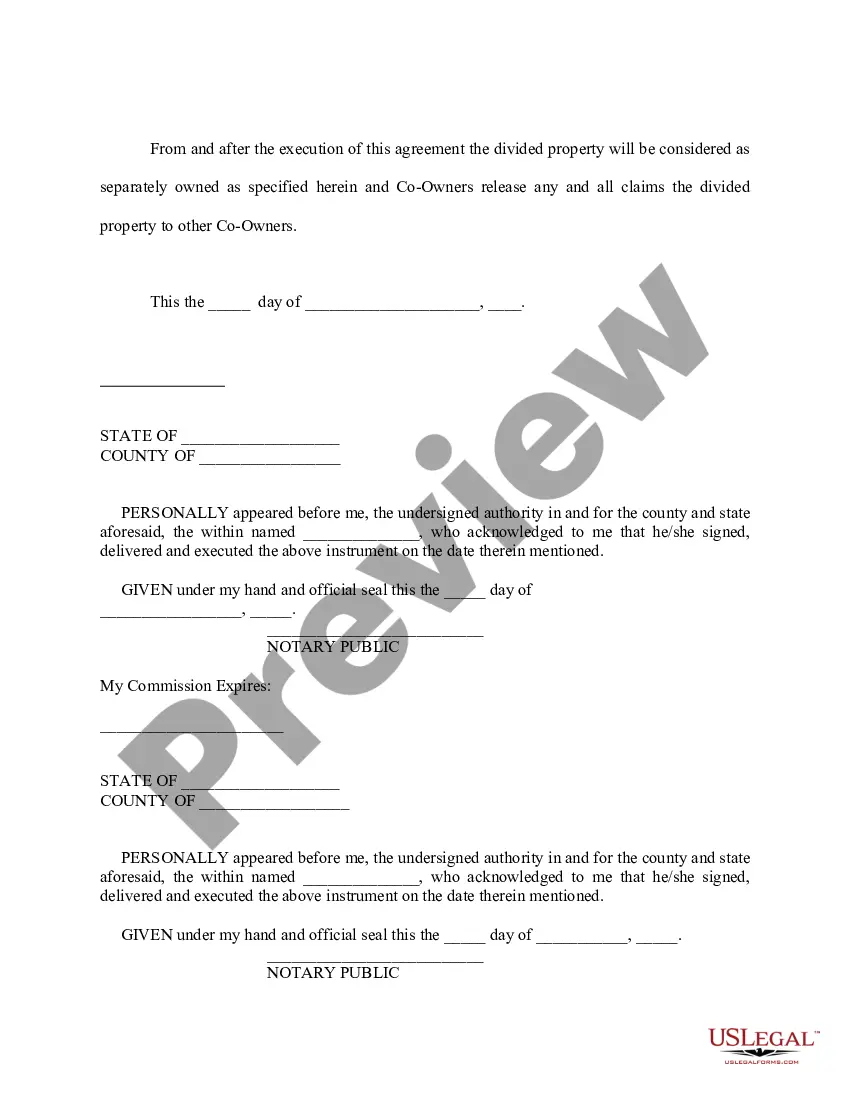
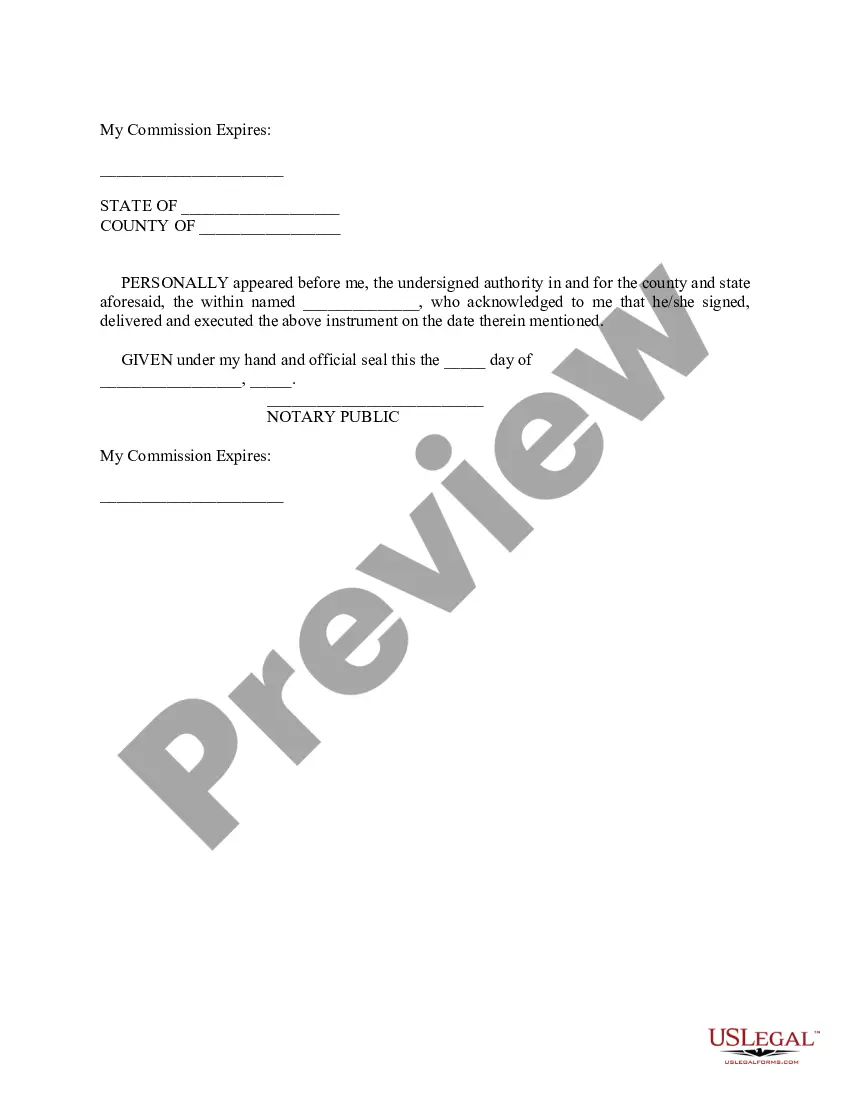
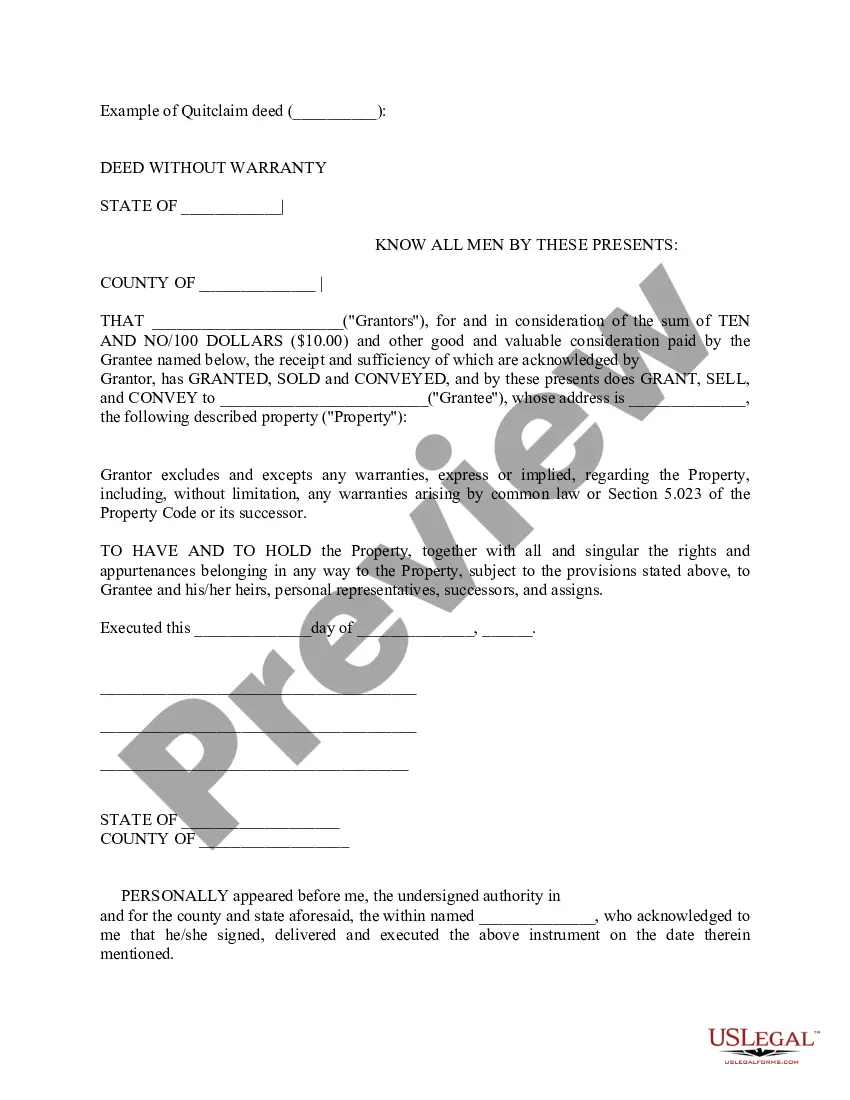
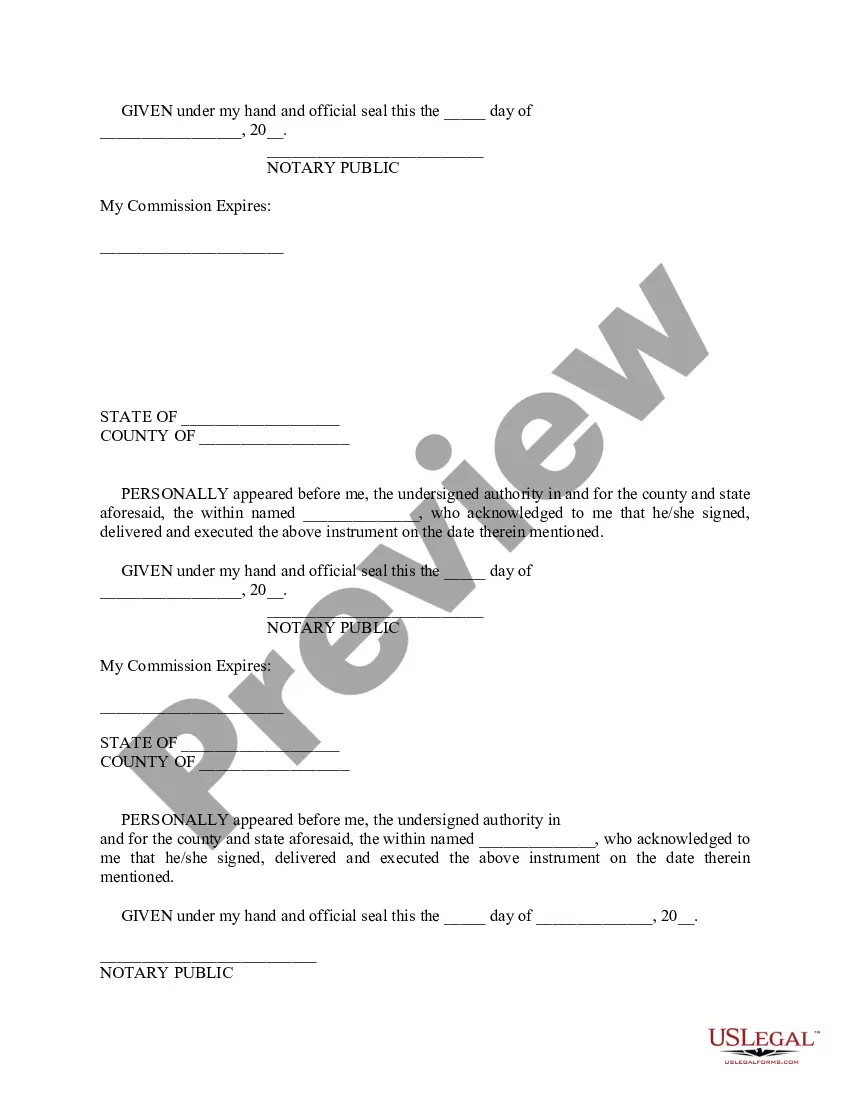

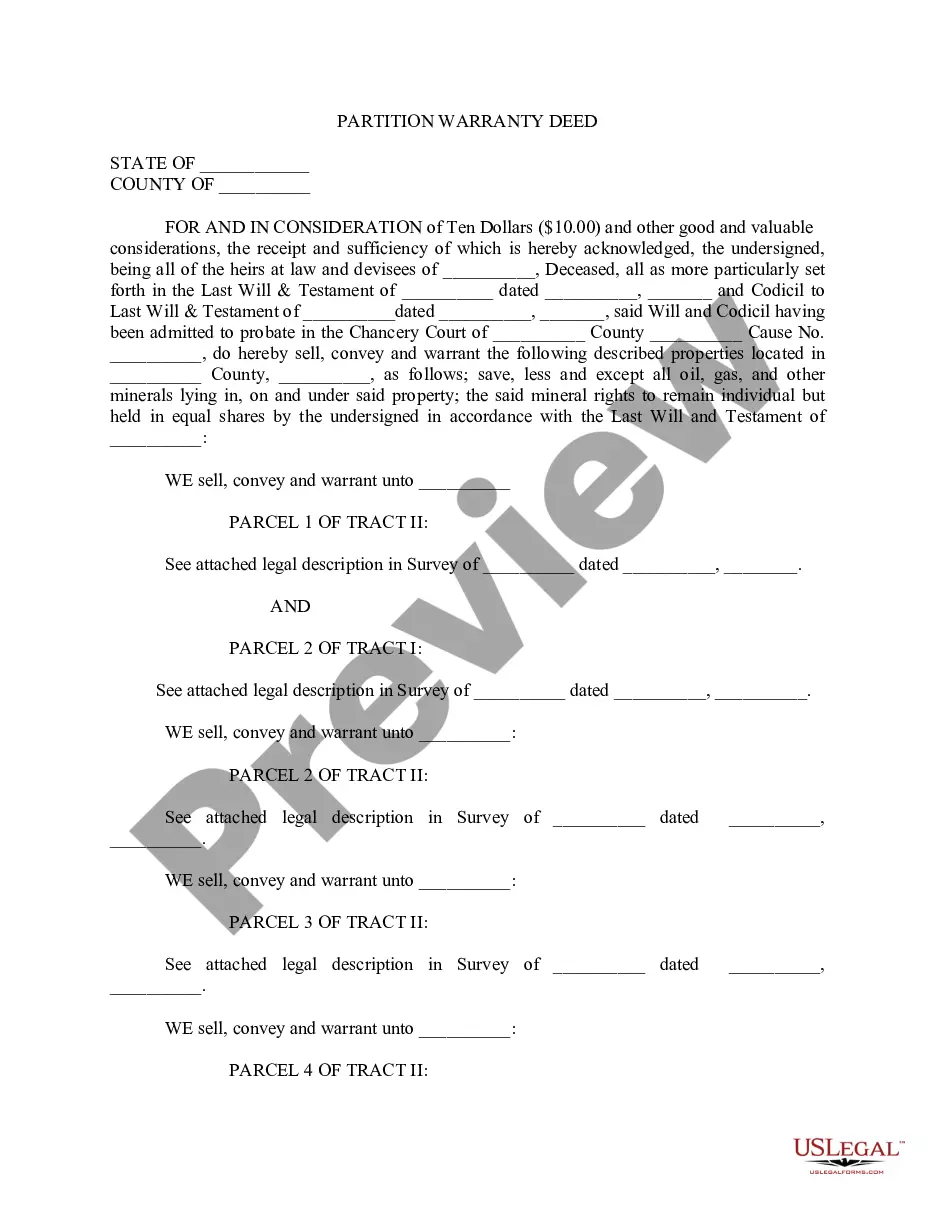
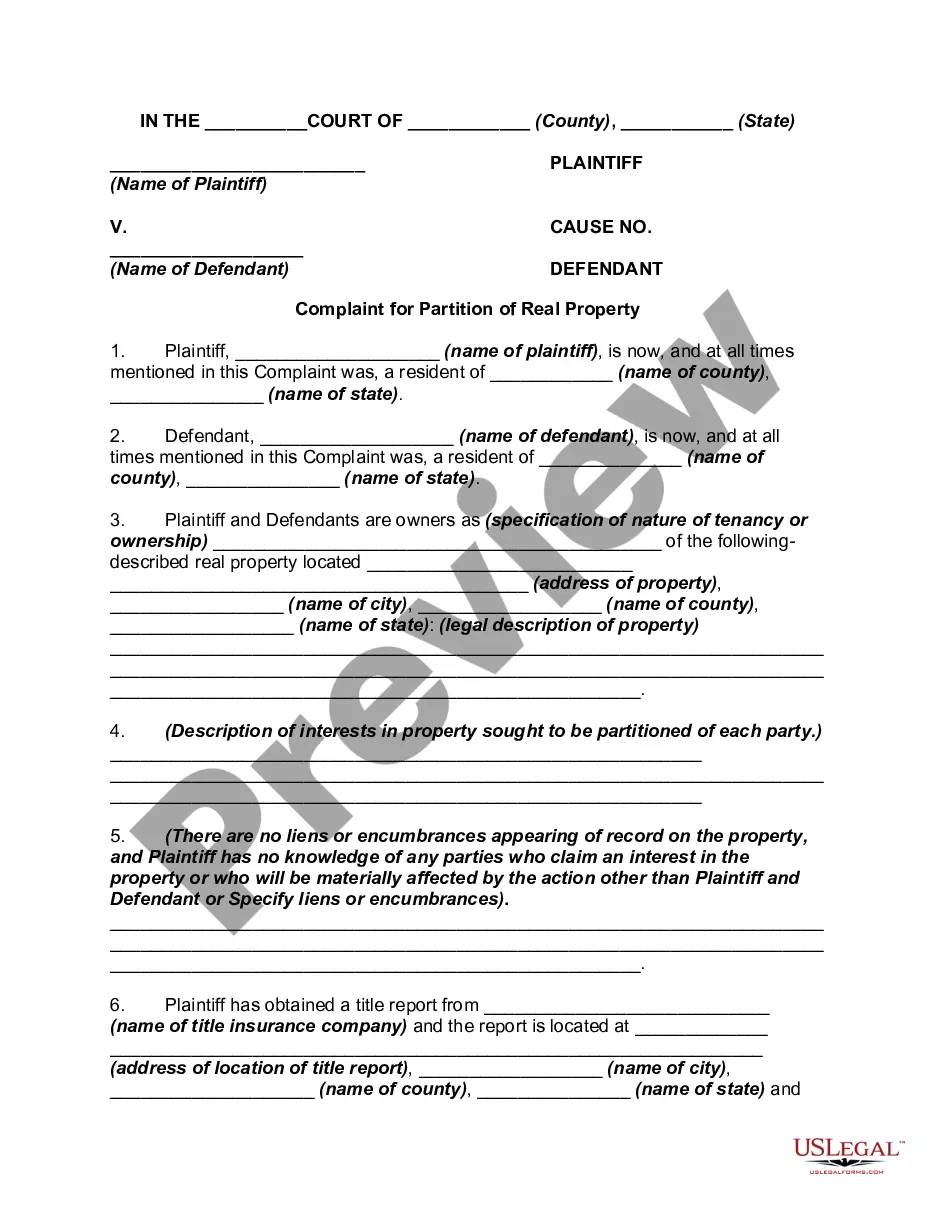
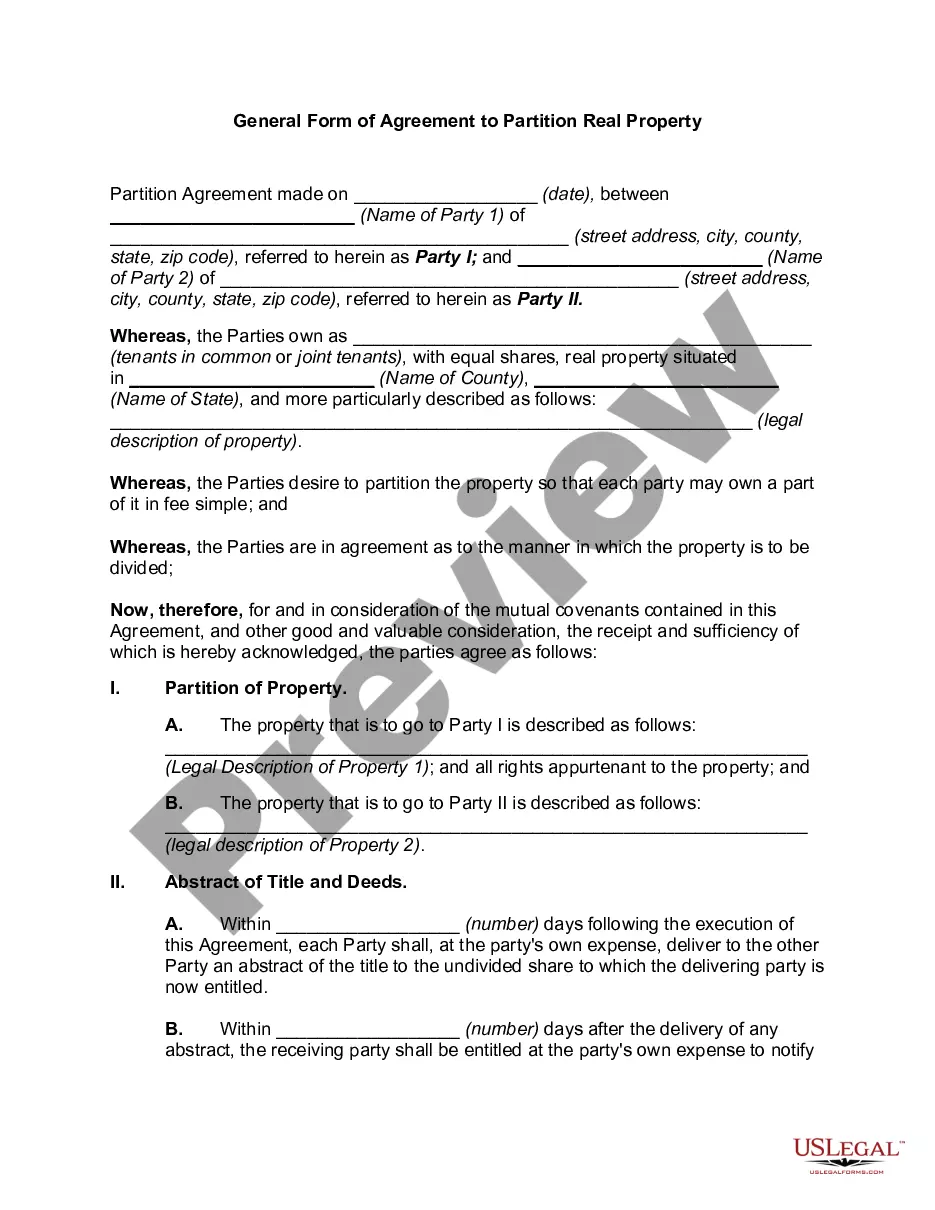
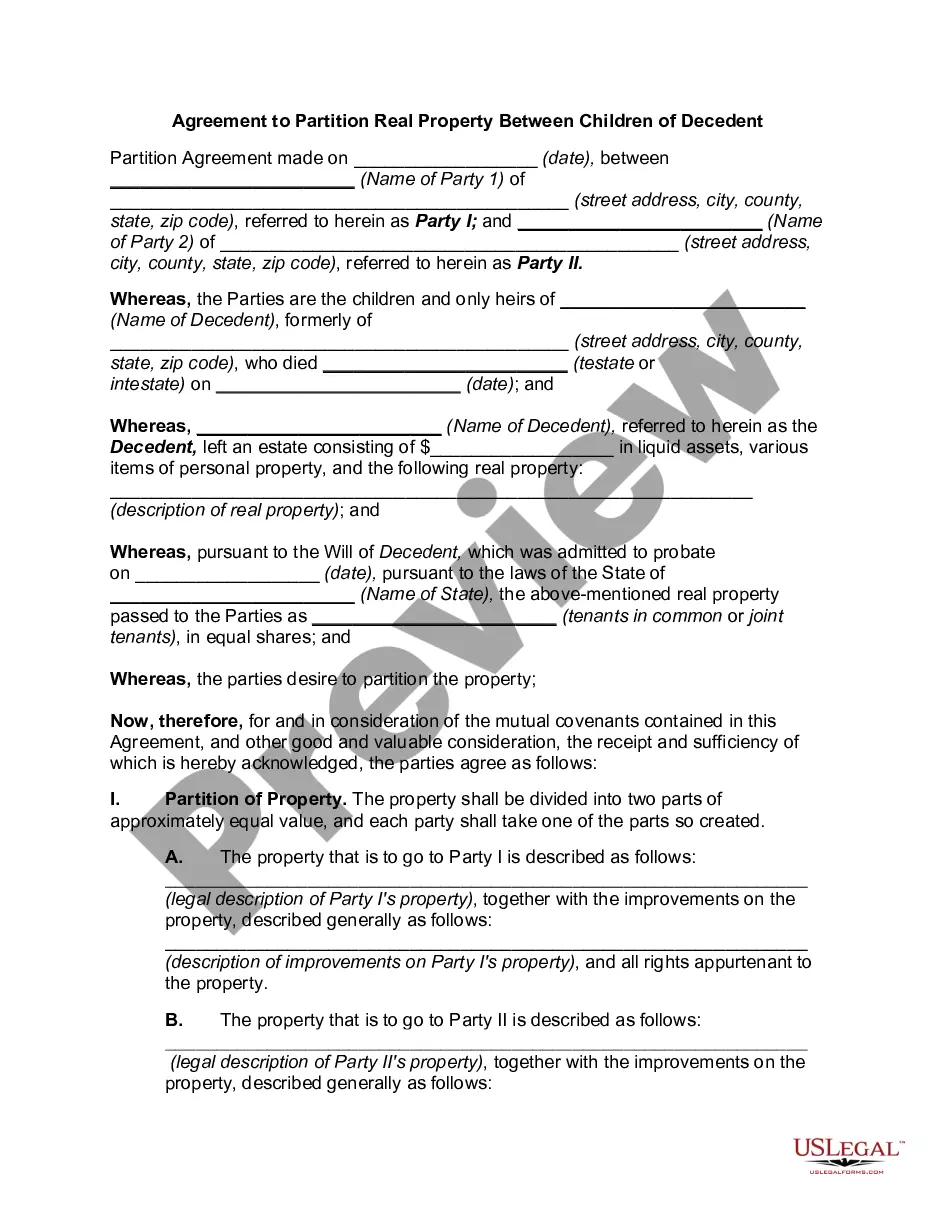
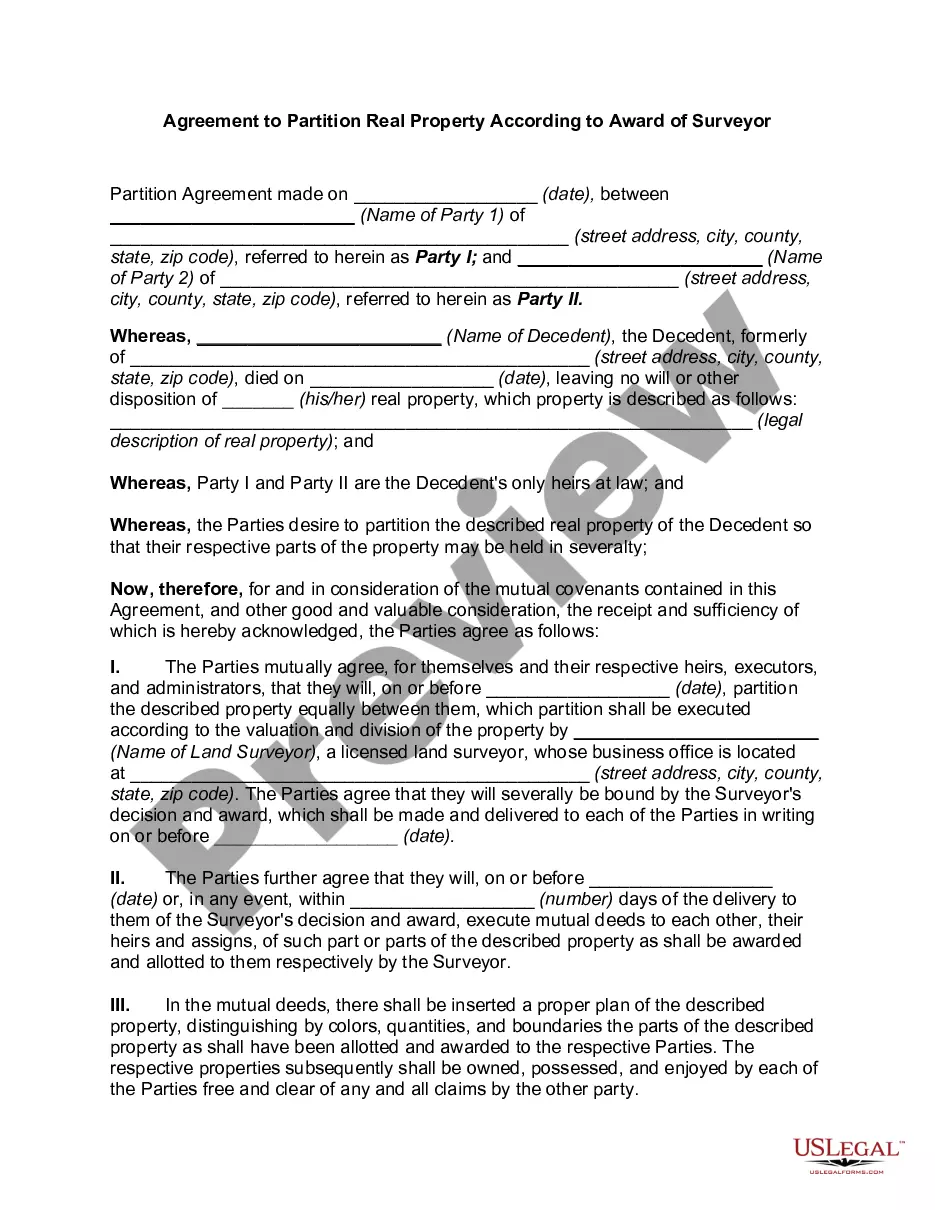


How to fill out Agreement For The Partition And Division Of Real Property?
Selecting the ideal legal document web template can be quite challenging. Of course, there are numerous templates available online, but how do you locate the legal type you need.
Use the US Legal Forms website. The platform provides thousands of templates, including the Kansas Agreement for the Partition and Division of Real Property, which you can utilize for both business and personal needs. All of the forms are reviewed by professionals and comply with state and federal regulations.
If you are already registered, Log In to your account and click the Acquire button to download the Kansas Agreement for the Partition and Division of Real Property. Use your account to search for the legal documents you have previously purchased. Navigate to the My documents section of your account and retrieve another copy of the document you need.
Fill out, modify, print, and sign the downloaded Kansas Agreement for the Partition and Division of Real Property. US Legal Forms is the premier collection of legal documents where you can find various document templates. Utilize the service to download professionally-crafted paperwork that complies with state regulations.
- If you are a new user of US Legal Forms, here are simple instructions for you to follow.
- First, ensure you have selected the correct form for your city/region. You can review the form using the Preview option and read the form details to confirm it is suitable for you.
- If the form does not meet your requirements, take advantage of the Search bar to find the right form.
- Once you are confident that the form is appropriate, proceed through the Buy now option to acquire the form.
- Choose the payment plan you prefer and enter the required information. Create your account and pay for the order using your PayPal account or credit card.
- Select the document format and download the legal document template to your device.
Form popularity
FAQ
The agreement for the division of property is a legal document that specifies how real estate and other assets will be divided between parties. In Kansas, a Kansas Agreement for the Partition and Division of Real Property plays a crucial role in clarifying ownership and preventing disputes. By establishing clear terms, this agreement helps both parties understand their rights and responsibilities regarding the property. Utilizing a platform like US Legal Forms can simplify the process of drafting this agreement, ensuring it meets all legal requirements.
In Kansas, marital property is divided equitably during a divorce. This means that the court considers various factors, such as the length of the marriage and the contributions of each spouse, to determine a fair distribution. To facilitate this process, many couples opt for a Kansas Agreement for the Partition and Division of Real Property, which outlines how assets will be divided. This agreement can help avoid lengthy court battles and ensure both parties are satisfied with the outcome.
The partition process for co-owned property involves filing a petition in court to divide the property among owners. The court will review the petition and may appoint a referee to oversee the division. Utilizing the Kansas Agreement for the Partition and Division of Real Property can streamline this process by clearly defining each owner's share and intentions. Collaborating with legal professionals can ensure a fair and efficient partition.
Winning a partition action typically involves demonstrating your legal interest in the property and the need for division. Proper documentation, such as the Kansas Agreement for the Partition and Division of Real Property, can support your case by outlining ownership rights and intentions for division. Engaging a lawyer experienced in partition cases can enhance your chances of a favorable outcome. Clear communication among co-owners can also facilitate a smoother resolution.
In Kansas, an executor generally has around nine months to settle an estate, although this period can vary based on the complexity of the estate. During this time, the executor must manage debts, distribute assets, and finalize the estate. Understanding the nuances of the Kansas Agreement for the Partition and Division of Real Property can aid executors in effectively handling real estate within the estate. Seeking professional guidance can help ensure compliance with all legal requirements.
The statute of partition in Kansas allows co-owners of property to request a court-ordered division of the property. This process ensures that all parties receive their fair share and can move forward with their individual interests. Utilizing the Kansas Agreement for the Partition and Division of Real Property can simplify this legal process, making it clearer for all involved. Engaging with the legal framework can facilitate a smoother partition.
Statute 21 6203 in Kansas pertains to the laws governing the use of force in self-defense and defense of property. This statute outlines the circumstances under which an individual may justifiably use force to protect themselves or their property. If you require clarity on how this statute interacts with property rights, consulting the Kansas Agreement for the Partition and Division of Real Property can provide essential guidance. Legal counsel can also offer tailored advice.
Partition in property law refers to the division of co-owned property among its owners. It allows co-owners to separate their interests and take ownership of specific portions of the property. The Kansas Agreement for the Partition and Division of Real Property can be a valuable tool in this process, helping to detail how the division is to occur. If you are co-owning property, understanding partition can help you avoid disputes.
The castle law in Kansas allows individuals to use reasonable force, including deadly force, to protect their home against intruders. This law emphasizes the right to defend one's property without a duty to retreat. If you face a legal issue related to property defense, the Kansas Agreement for the Partition and Division of Real Property might assist in clarifying ownership rights. Consulting with a legal expert can provide more insights.
In Kansas, property is divided based on the principle of equitable distribution. This means that the court will divide marital property fairly, but not necessarily equally. The Kansas Agreement for the Partition and Division of Real Property can help parties outline their property rights, ensuring a smoother division process. Understanding your rights and options can lead to a more favorable outcome.