Kansas Summary Administration Package for Small Estates
Understanding this form
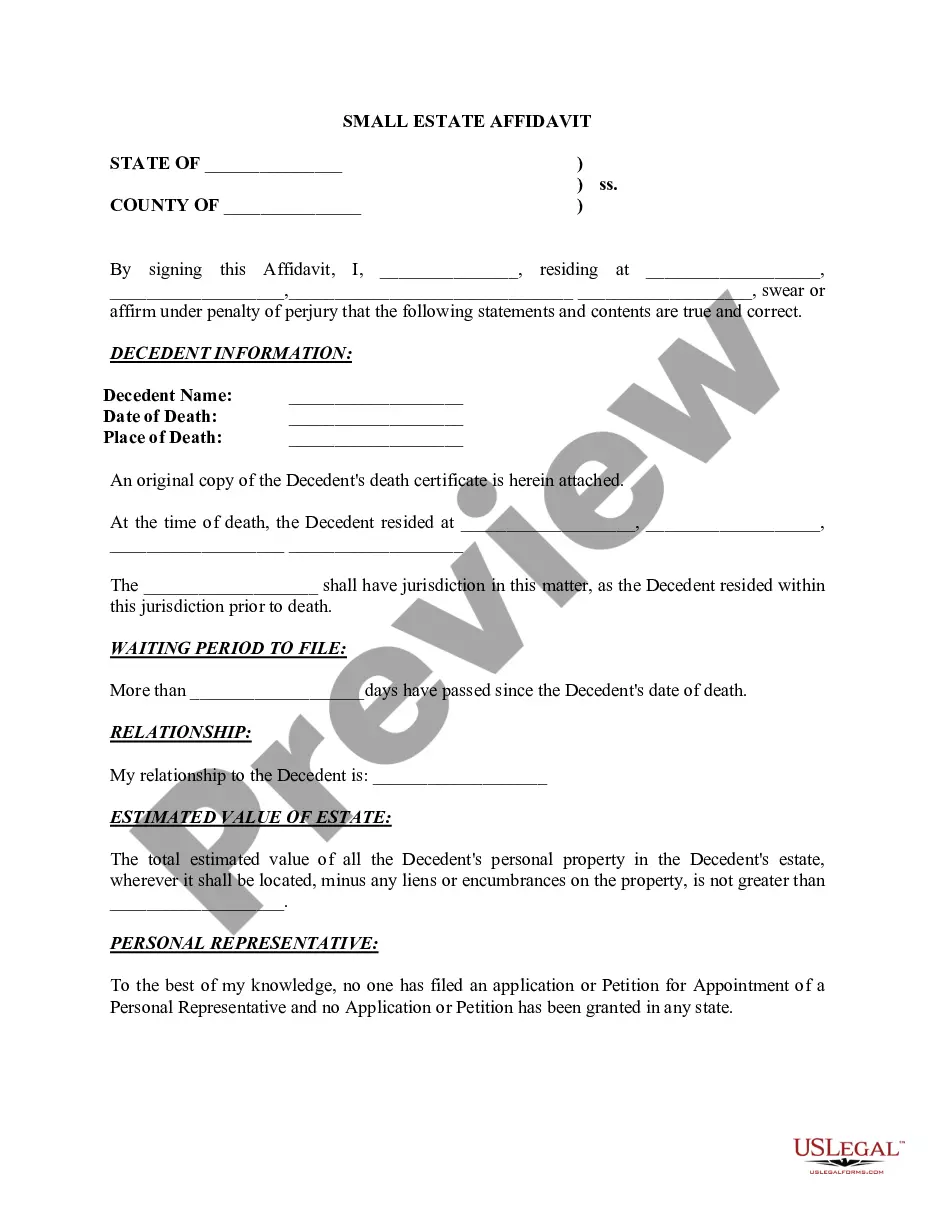
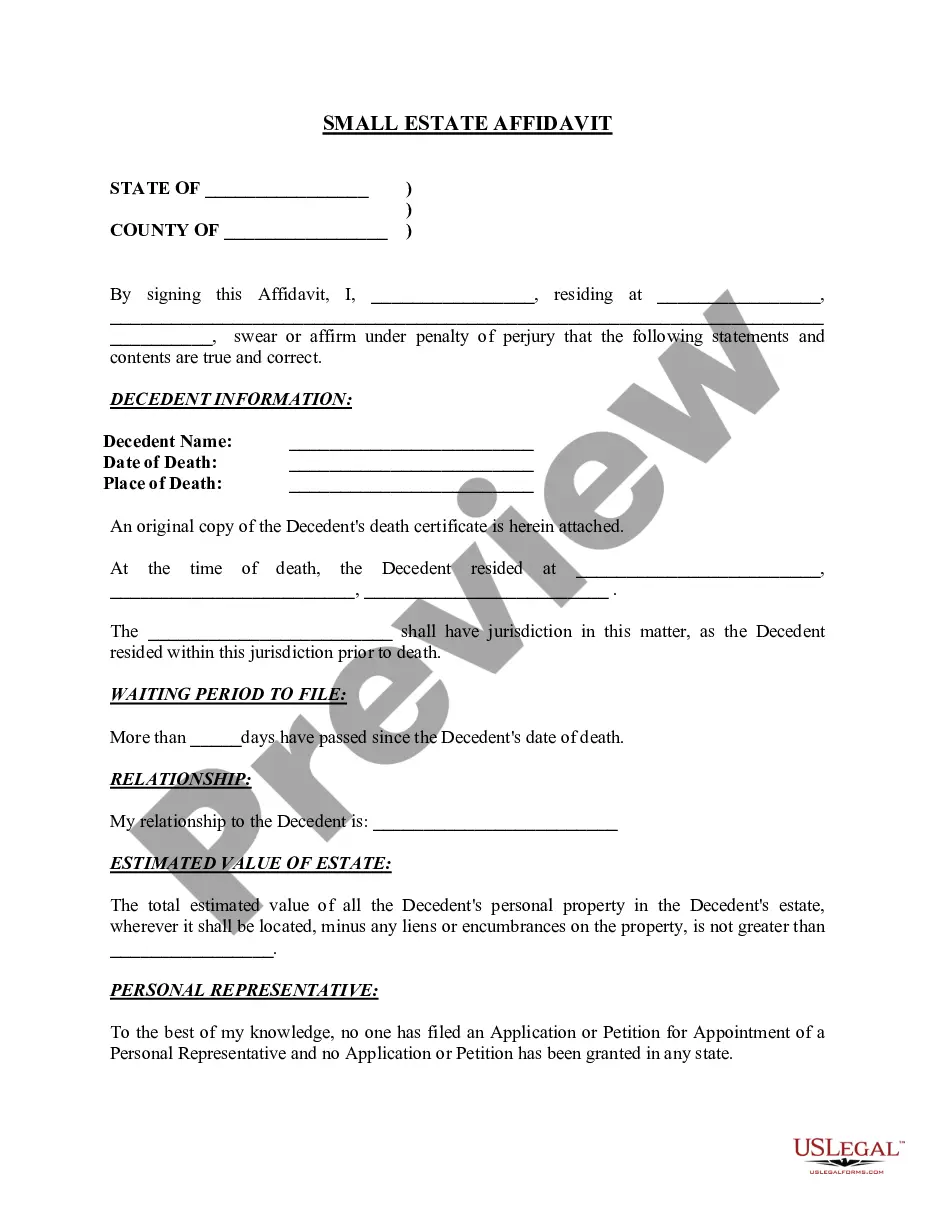
The Summary Administration Package for Small Estates is a legal document used in Kansas that simplifies the probate process for smaller estates, as defined by Kansas statute §59-1507. This form allows the personal representative to pay the decedent's debts and settle the estate without the need for a formal administration, provided the estate meets certain criteria. It streamlines the estate settlement process, distinguishing it from more complicated probate procedures typically required for larger estates.
What’s included in this form
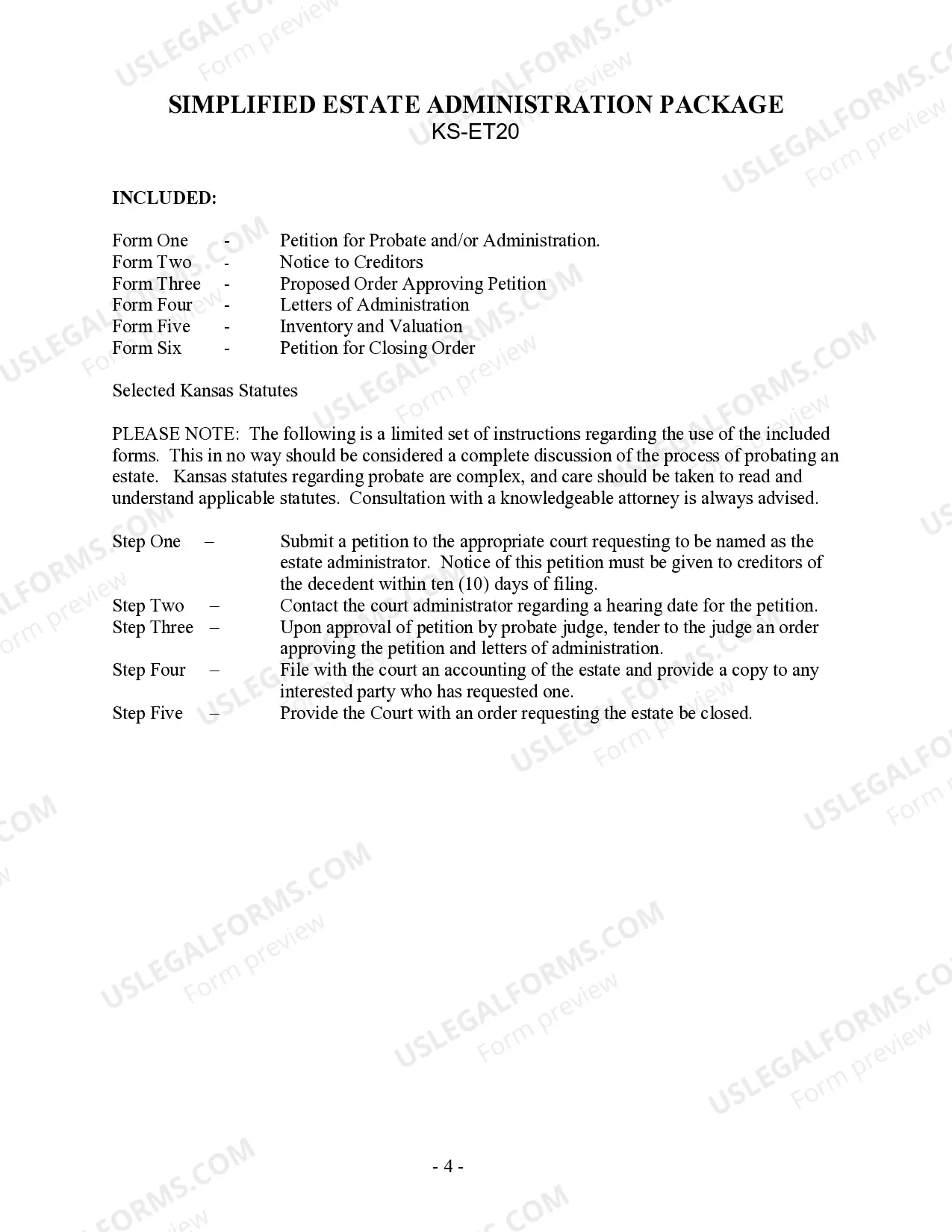
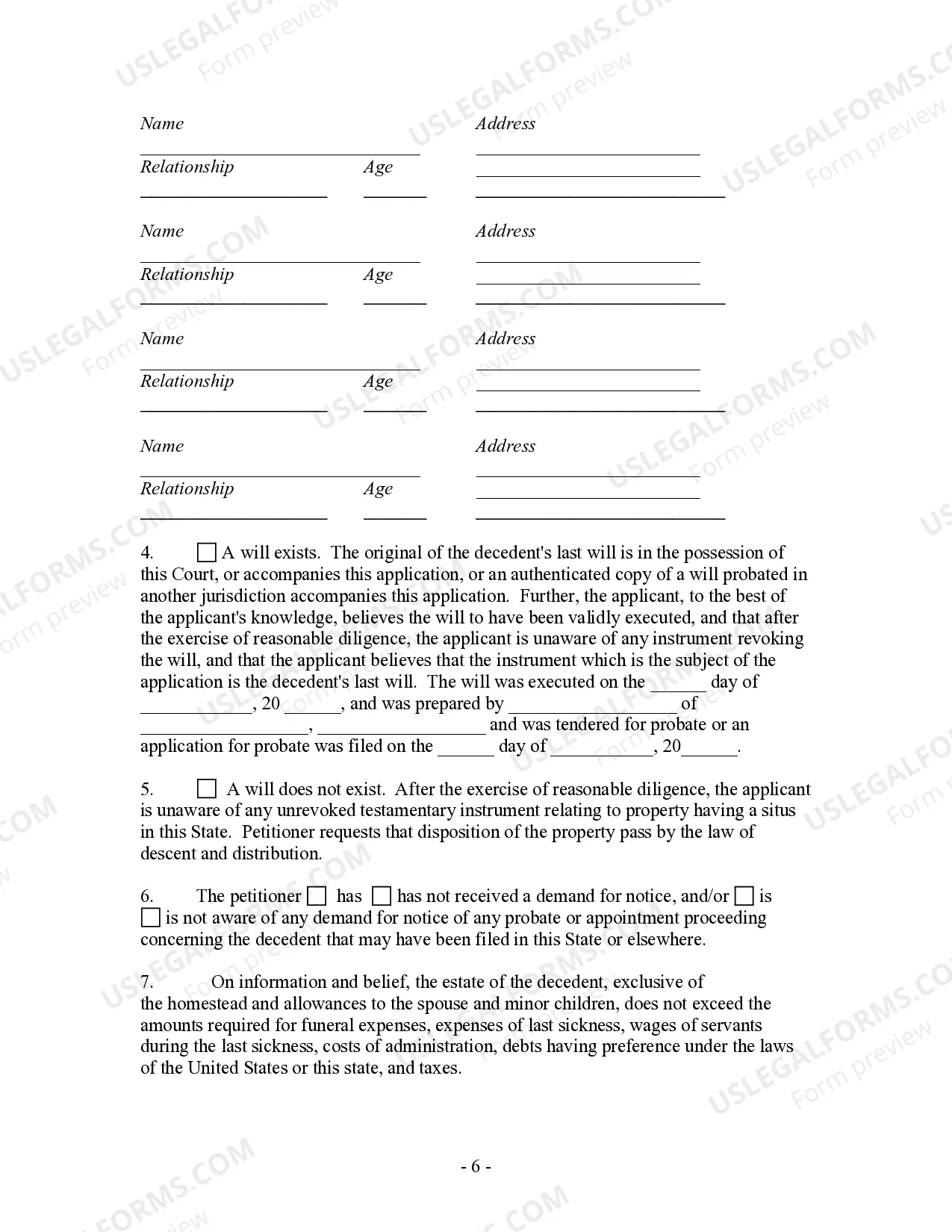
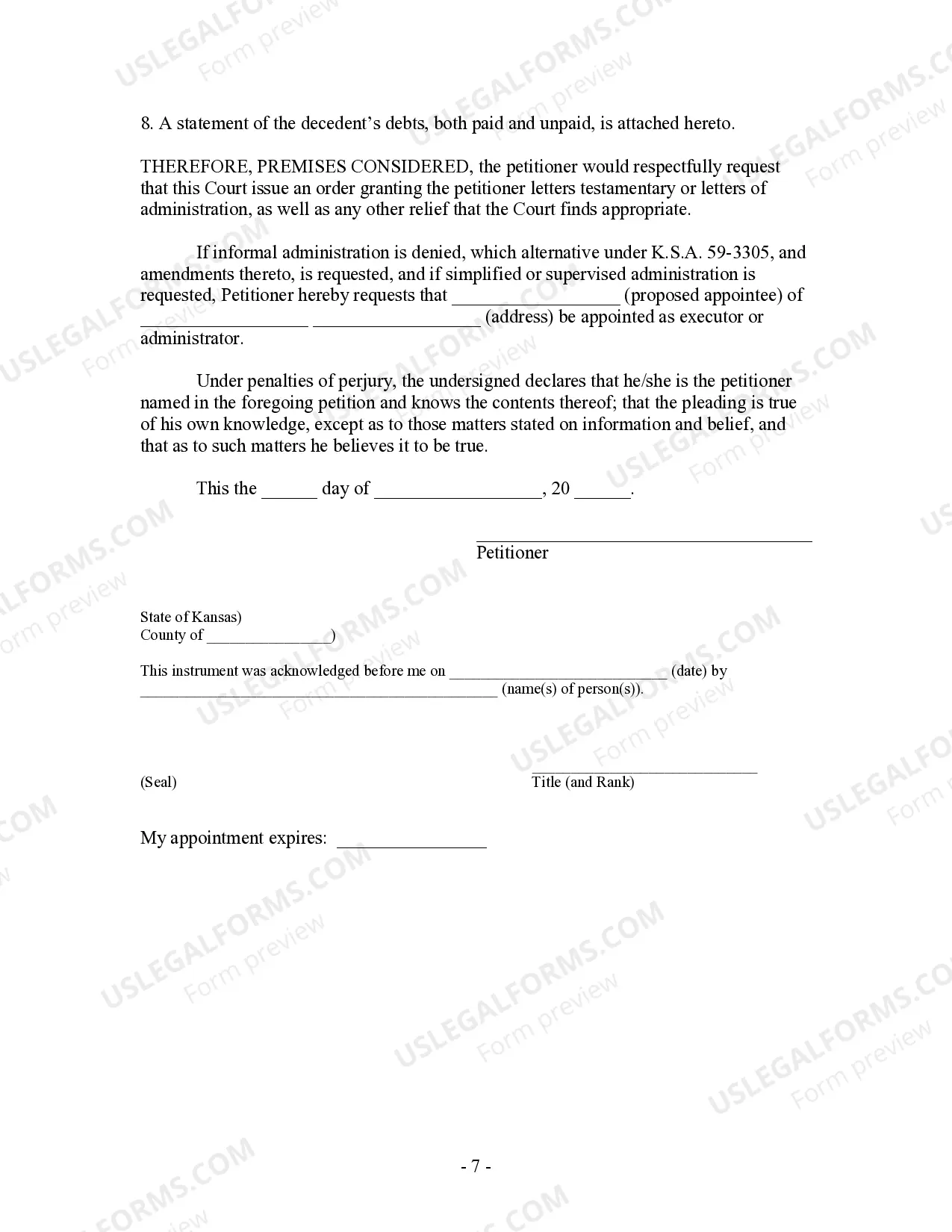
- Petition for Probate and/or Administration: Requests court approval to act as the estate administrator.
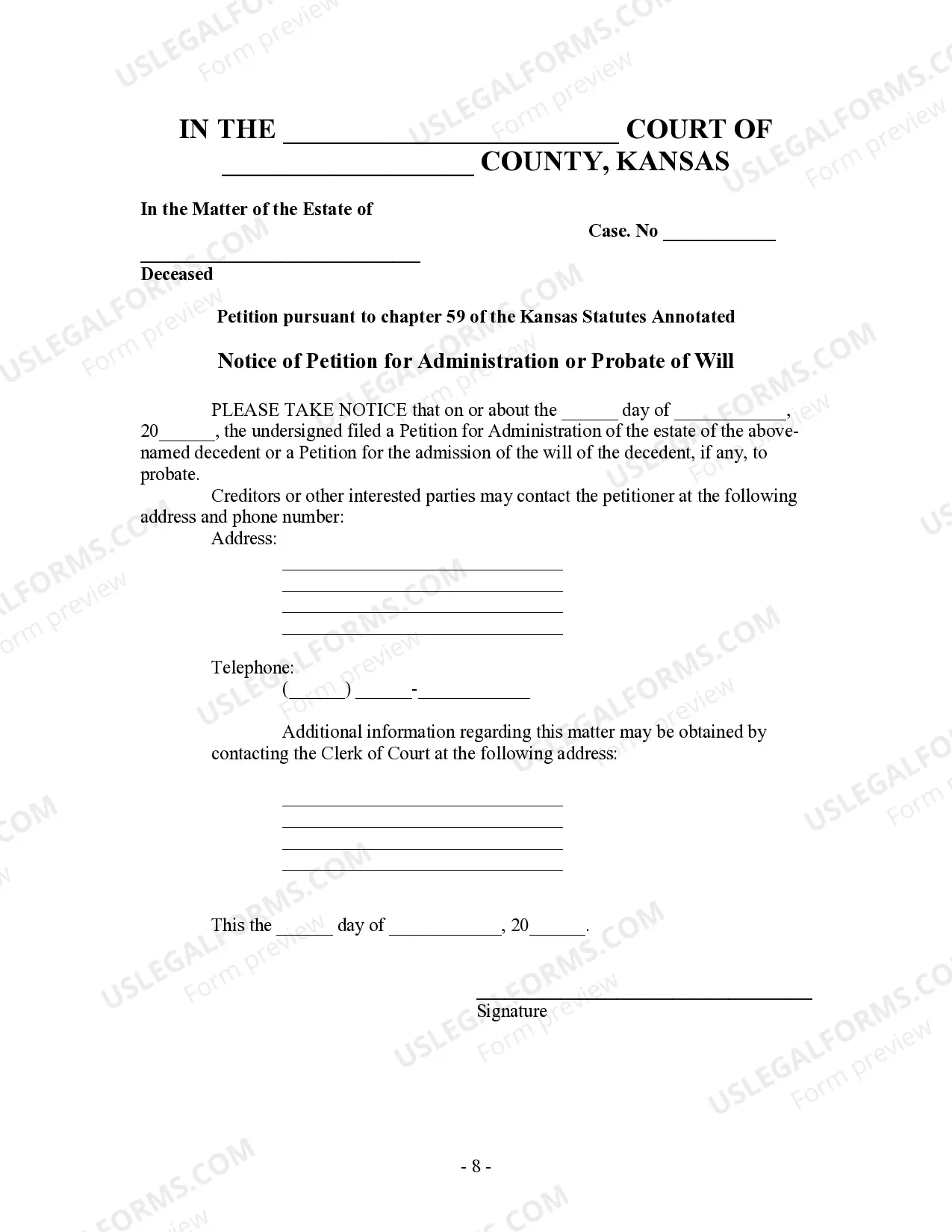
- Notice to Creditors: Notifies creditors of the estate to submit claims.
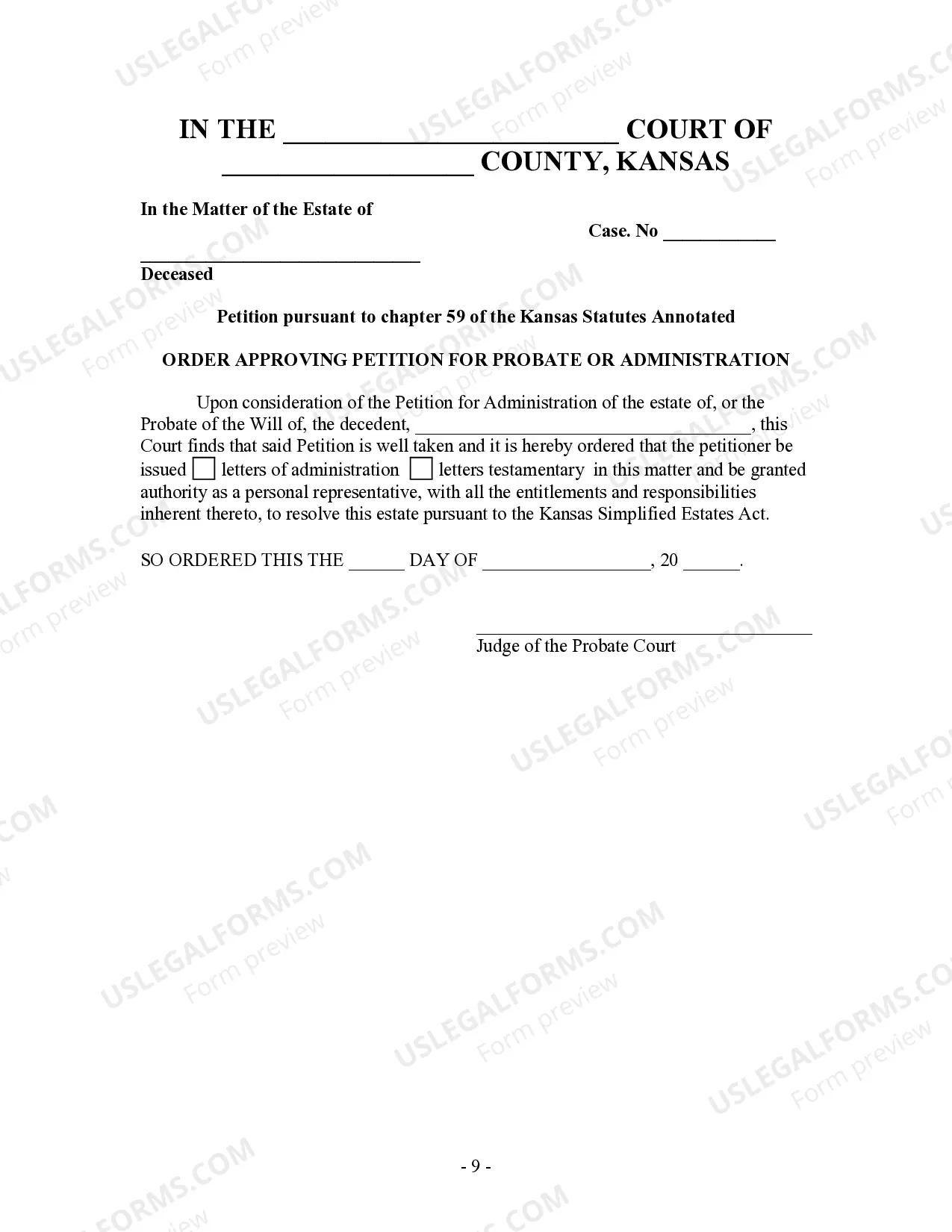
- Proposed Order Approving Petition: Document for the judge to approve the petition for administration.
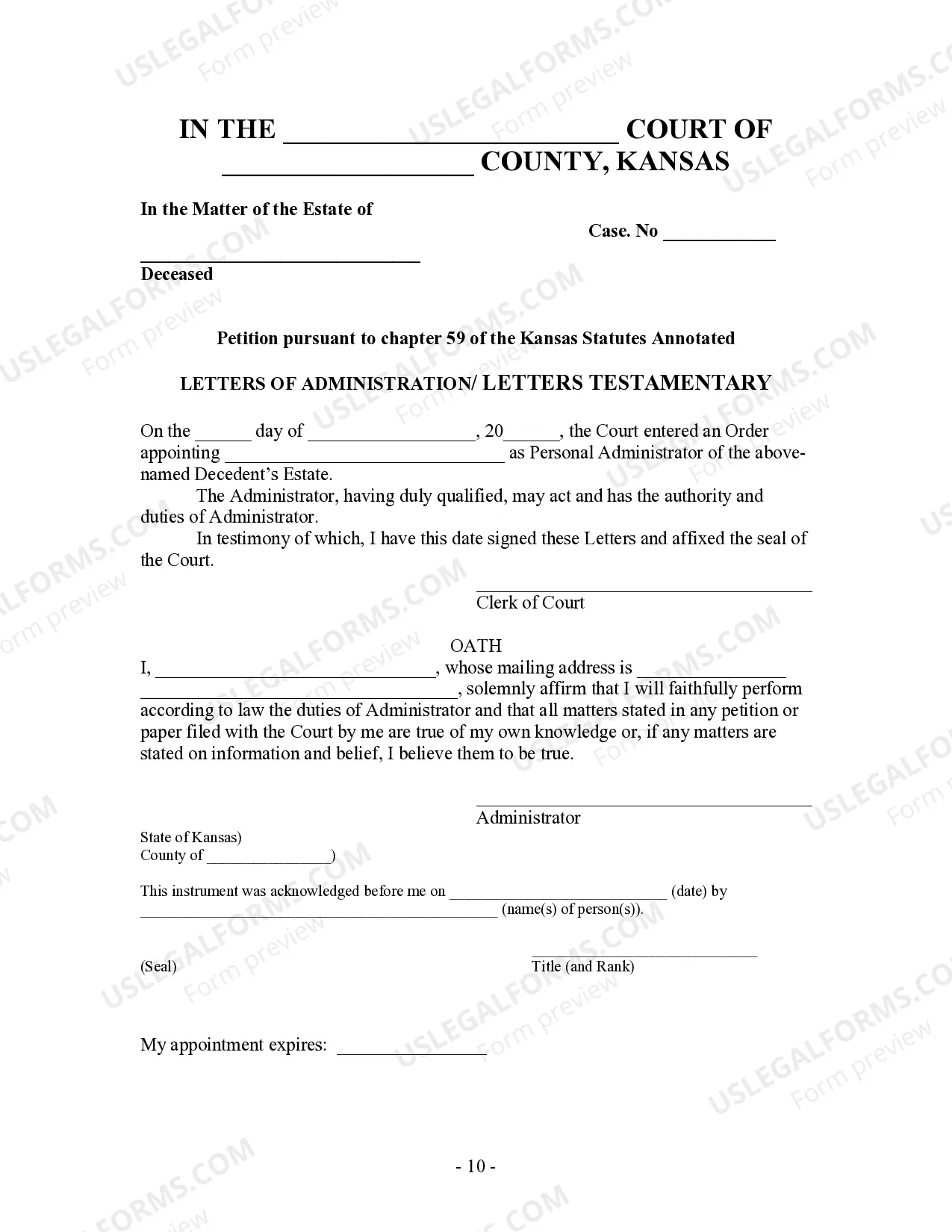
- Letters of Administration: Grants the administrator legal authority to manage the estate.
- Inventory and Valuation: Lists and assesses the estate's assets.
- Petition for Closing Order: Requests court approval to close the estate after all obligations are met.



When to use this document
This form is used when the estate of a deceased person in Kansas is small enough that it qualifies for summary administration. You may need this package if you are the personal representative of an estate, if the total value of the estate does not exceed the amount defined by K.S.A §59-1507, and if you wish to expedite the process of settling debts and distributing assets.
Intended users of this form
The following individuals are eligible to use this form:
- The personal representative of a decedentâs estate in Kansas.
- Heirs or beneficiaries of an estate that does not exceed the defined asset limit.
- Individuals seeking a simplified process for estate administration without the need for extensive court oversight.
How to prepare this document
- Identify the parties involved: Fill in the names and addresses of the decedent and the personal representative.
- State the relationship: Clearly indicate the relationship of the petitioner to the decedent.
- List the decedentâs assets: Document all relevant assets and their valuations in the inventory section.
- File notice to creditors: Ensure proper notice is given to all known creditors as required.
- Seek court approval: Submit the petition to the appropriate court along with any required accompanying documents.
Notarization requirements for this form
No, this form typically does not require notarization unless specified by local law. However, some documents submitted within the package may need to be notarized during the process as a best practice. Ensure to check specific requirements for each component of your filings.
Get your form ready online
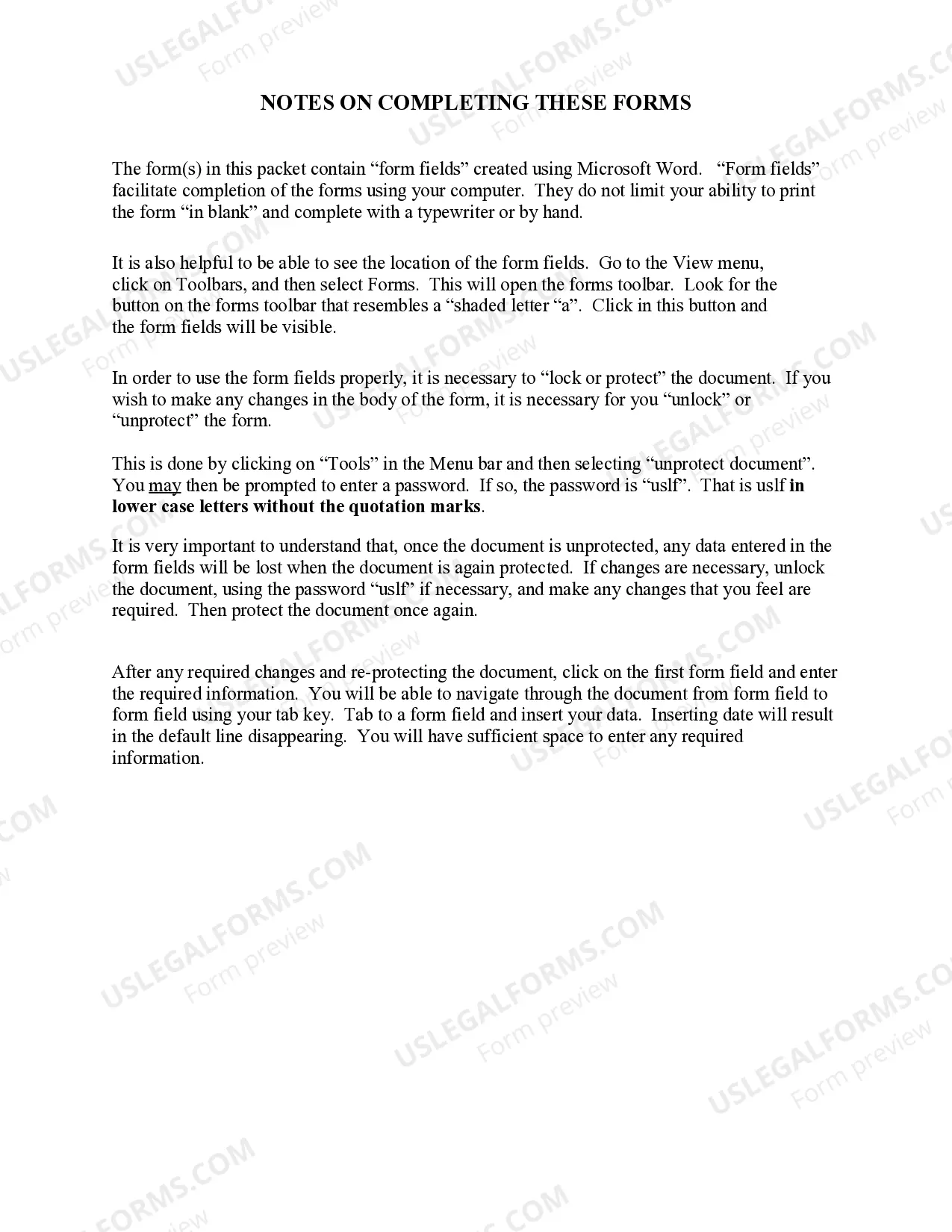
Our built-in tools help you complete, sign, share, and store your documents in one place.
Make edits, fill in missing information, and update formatting in US Legal Forms—just like you would in MS Word.
Download a copy, print it, send it by email, or mail it via USPS—whatever works best for your next step.
Sign and collect signatures with our SignNow integration. Send to multiple recipients, set reminders, and more. Go Premium to unlock E-Sign.
If this form requires notarization, complete it online through a secure video call—no need to meet a notary in person or wait for an appointment.
We protect your documents and personal data by following strict security and privacy standards.

Make edits, fill in missing information, and update formatting in US Legal Forms—just like you would in MS Word.

Download a copy, print it, send it by email, or mail it via USPS—whatever works best for your next step.

Sign and collect signatures with our SignNow integration. Send to multiple recipients, set reminders, and more. Go Premium to unlock E-Sign.

If this form requires notarization, complete it online through a secure video call—no need to meet a notary in person or wait for an appointment.

We protect your documents and personal data by following strict security and privacy standards.
Avoid these common issues
- Failing to provide complete information about the decedentâs assets.
- Not notifying all creditors within the appropriate time frame.
- Incomplete or incorrect filing of forms with the court.
- Not following the required procedure for closing the estate.
Why use this form online
- Convenience: Download the form anytime, eliminating the need to visit an attorneyâs office.
- Editability: Easily fill out the form on your computer or print it for handwritten completion.
- Cost-effective: Access affordable legal forms drafted by licensed attorneys without high legal fees.
- Comprehensive: All necessary components for summary administration are included in one package.
Legal use & context
- This form is designed to comply with the simplified probate process in Kansas for small estates.
- It provides a legal framework for the personal representative to follow when administering the estate.
- The use of this form can minimize the time and expense associated with estate settlement.
What to keep in mind
- The Summary Administration Package for Small Estates provides a simplified approach to estate management in Kansas.
- Using this form helps ensure compliance with state laws while expediting the probate process.
- Careful completion and submission of the forms can prevent common legal pitfalls.
Looking for another form?


Form popularity
FAQ
The Kansas Summary Administration Package for Small Estates is a Kansas probate kit that simplifies settling small estates that qualify for summary administration. It lets the personal representative pay debts and distribute assets without a formal administration when criteria are met. The package includes: Petition for Probate and/or Administration, Notice to Creditors, Proposed Order Approving Petition, Letters of Administration, Inventory and Valuation, and Petition for Closing Order.
If the estate qualifies under Kansas summary administration, you may not need a full probate process. This package is designed for that scenario: the personal representative can seek court approval to act, notify creditors, and later close the estate without a formal administration when debts are paid and assets are distributed, provided the asset and value criteria are met.
Small estate affidavits are another Kansas probate option for tiny estates, often used to avoid formal probate. This package, however, provides a structured set of forms to pursue summary administration when the estate meets Kansas’ defined criteria, including notices, filings, and a closing order to finalize the estate without full administration.
The small estate limit in Kansas is the value threshold set by law for summary administration. If the decedent’s estate does not exceed this limit, a personal representative may use the Kansas Summary Administration Package for Small Estates to settle debts and distribute assets without a full probate. The package guides filing and closing steps under that limit.
Summary administration is a streamlined probate process for small estates. This Kansas package is designed to enable a personal representative to pay debts, assemble an inventory and valuation, obtain Letters of Administration, and, after claims are resolved, request a closing order without the need for a formal, lengthy administration, if the estate meets the limit.
It differs from full probate by enabling summary administration for small estates that meet the asset limit, avoiding the formal administration and oversight. The package provides a fixed set of forms (Petition for Probate and/or Administration, Notice to Creditors, Proposed Order, Letters, Inventory and Valuation, Closing Order) to expedite the process.