Indiana Residential Rental Lease Agreement

About this form
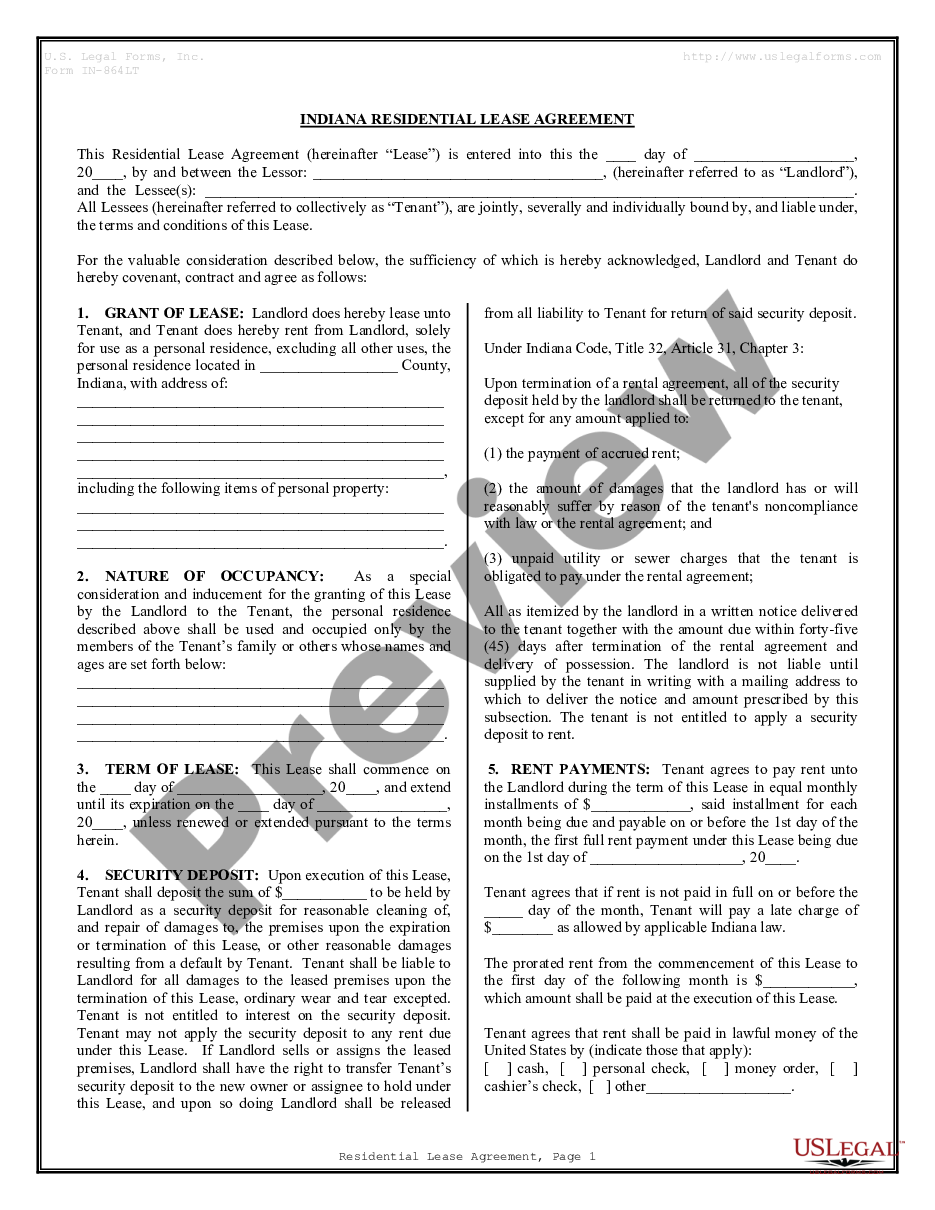
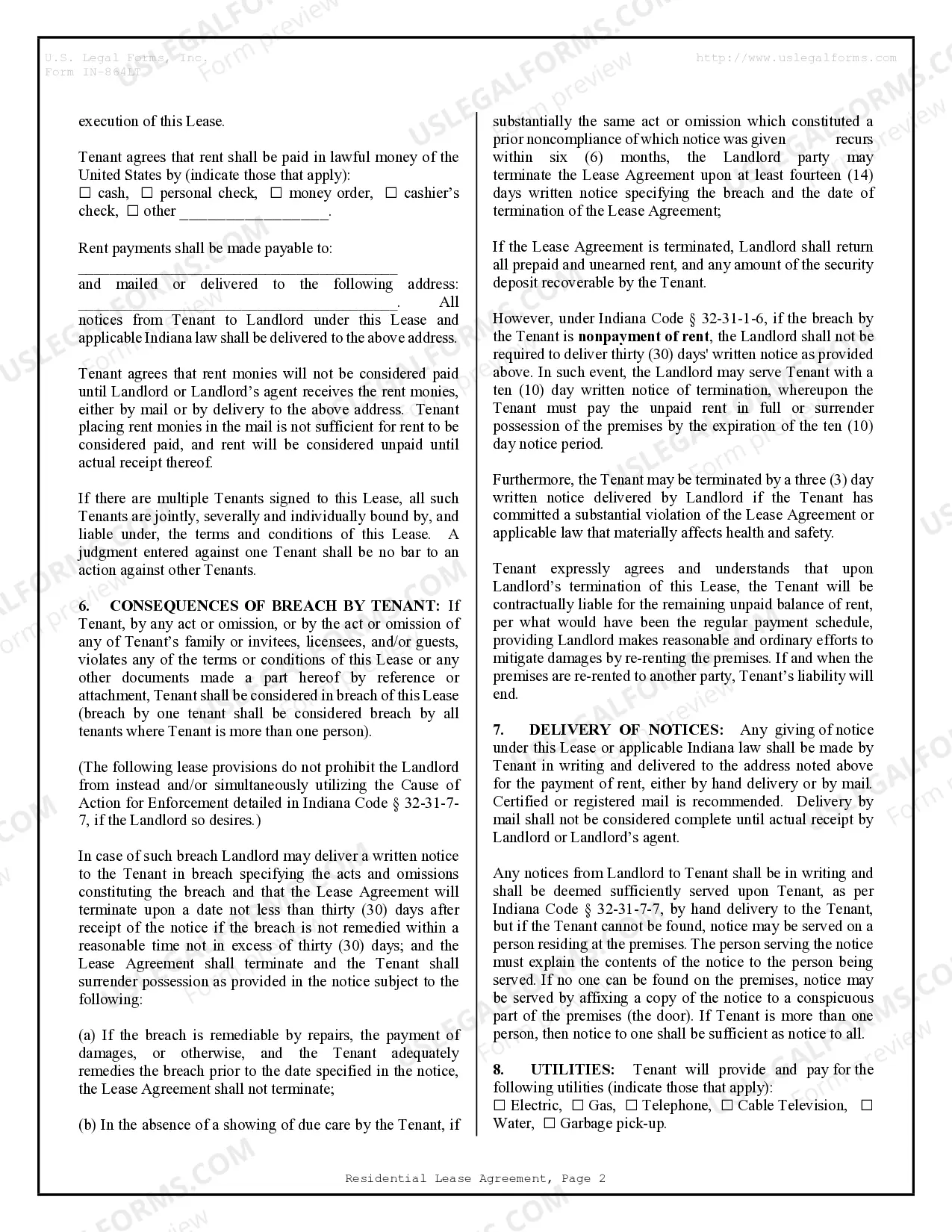
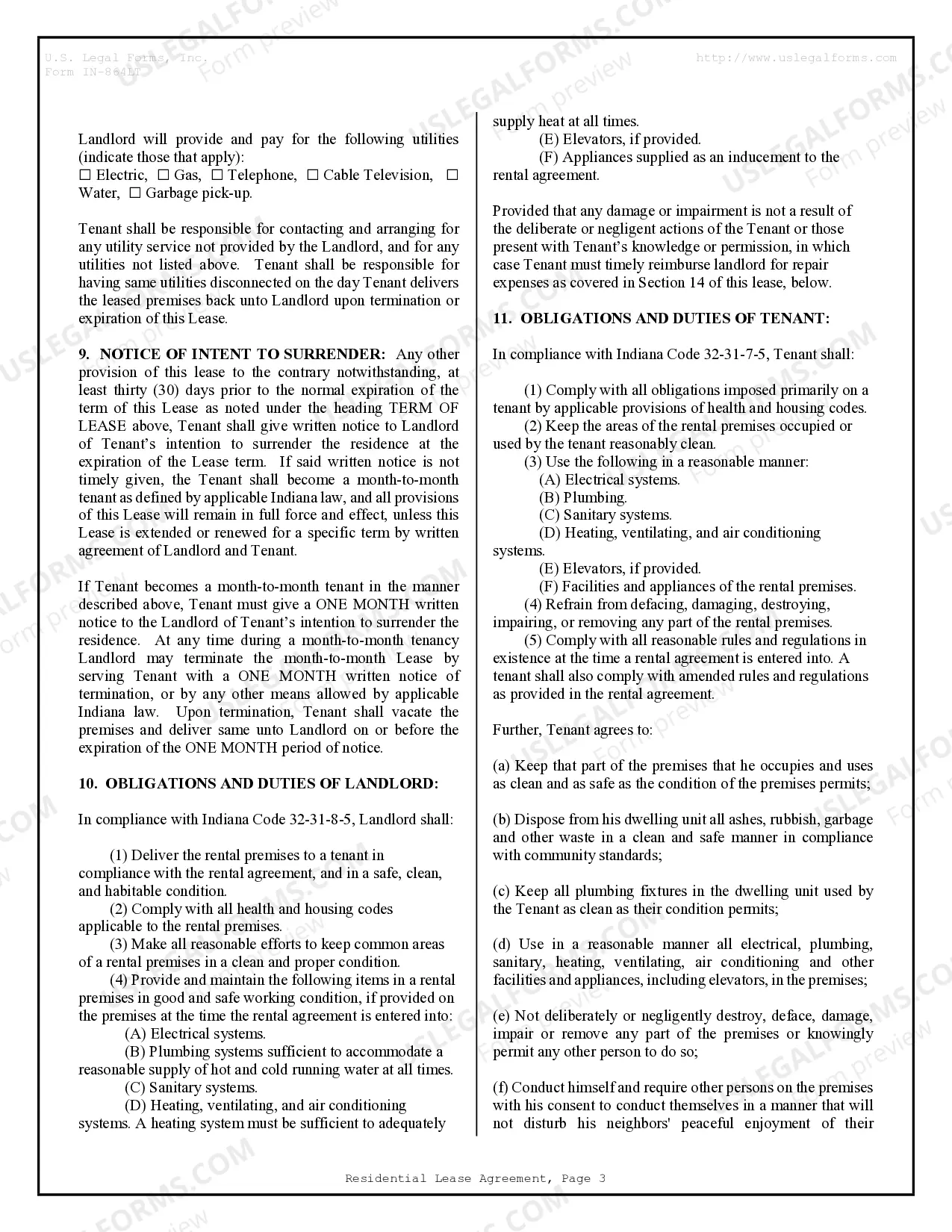
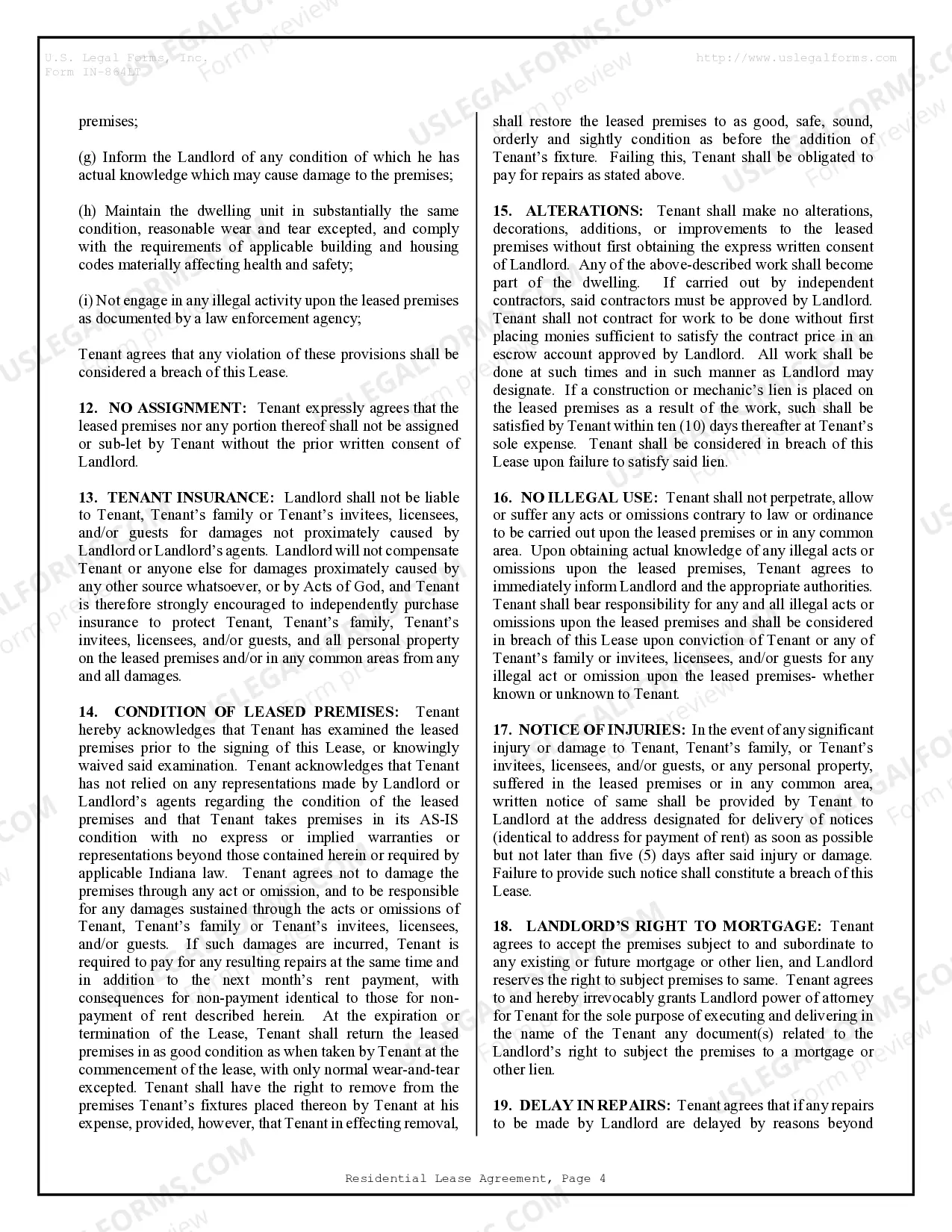
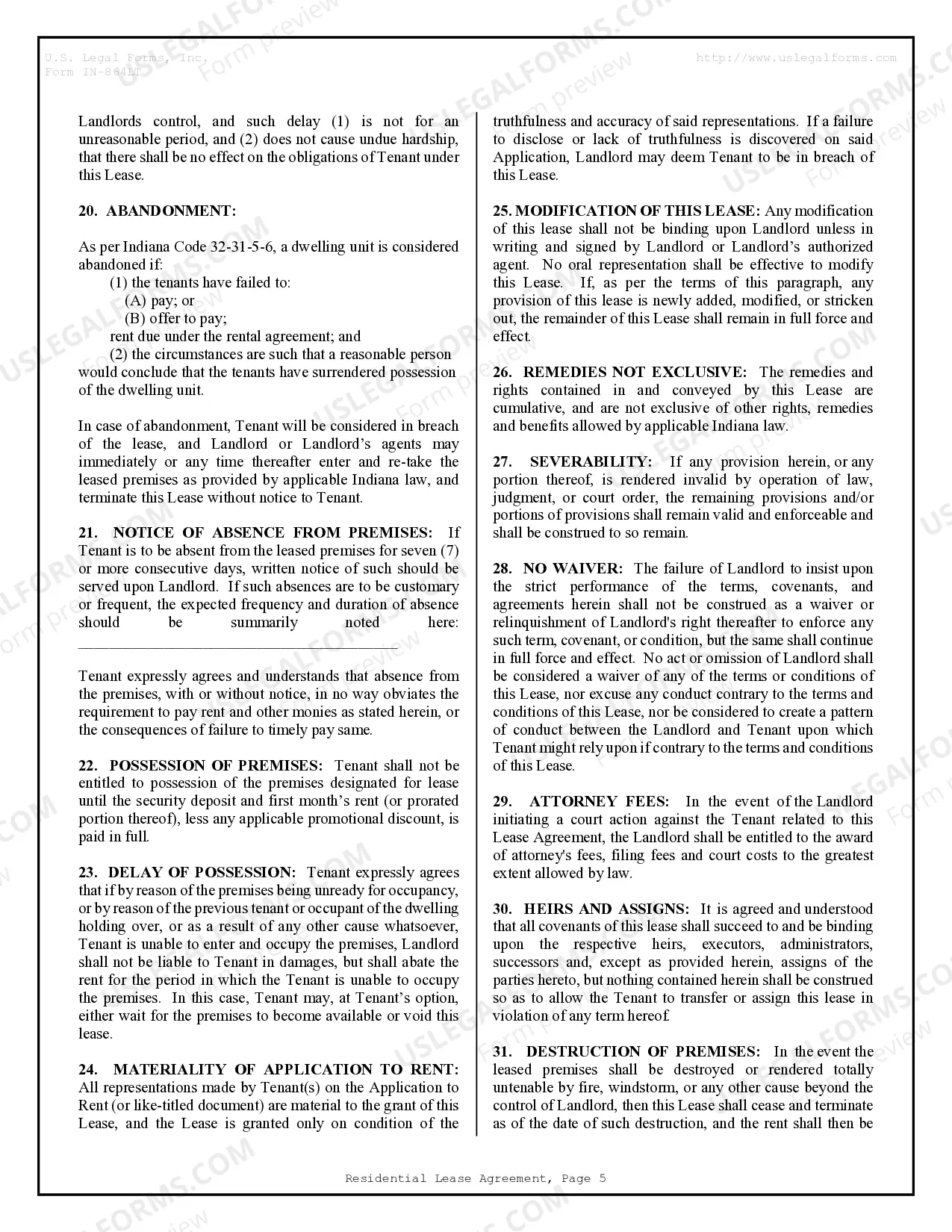
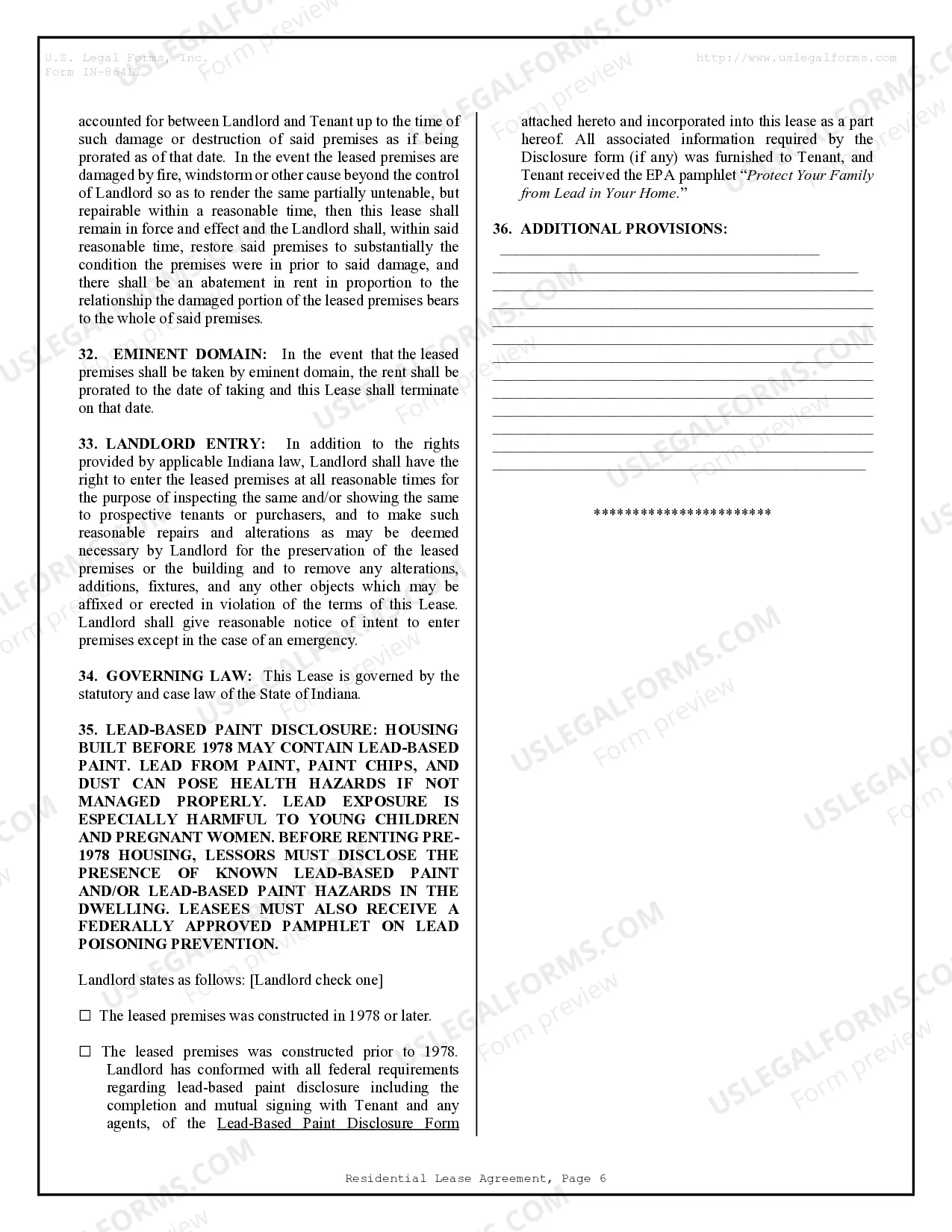
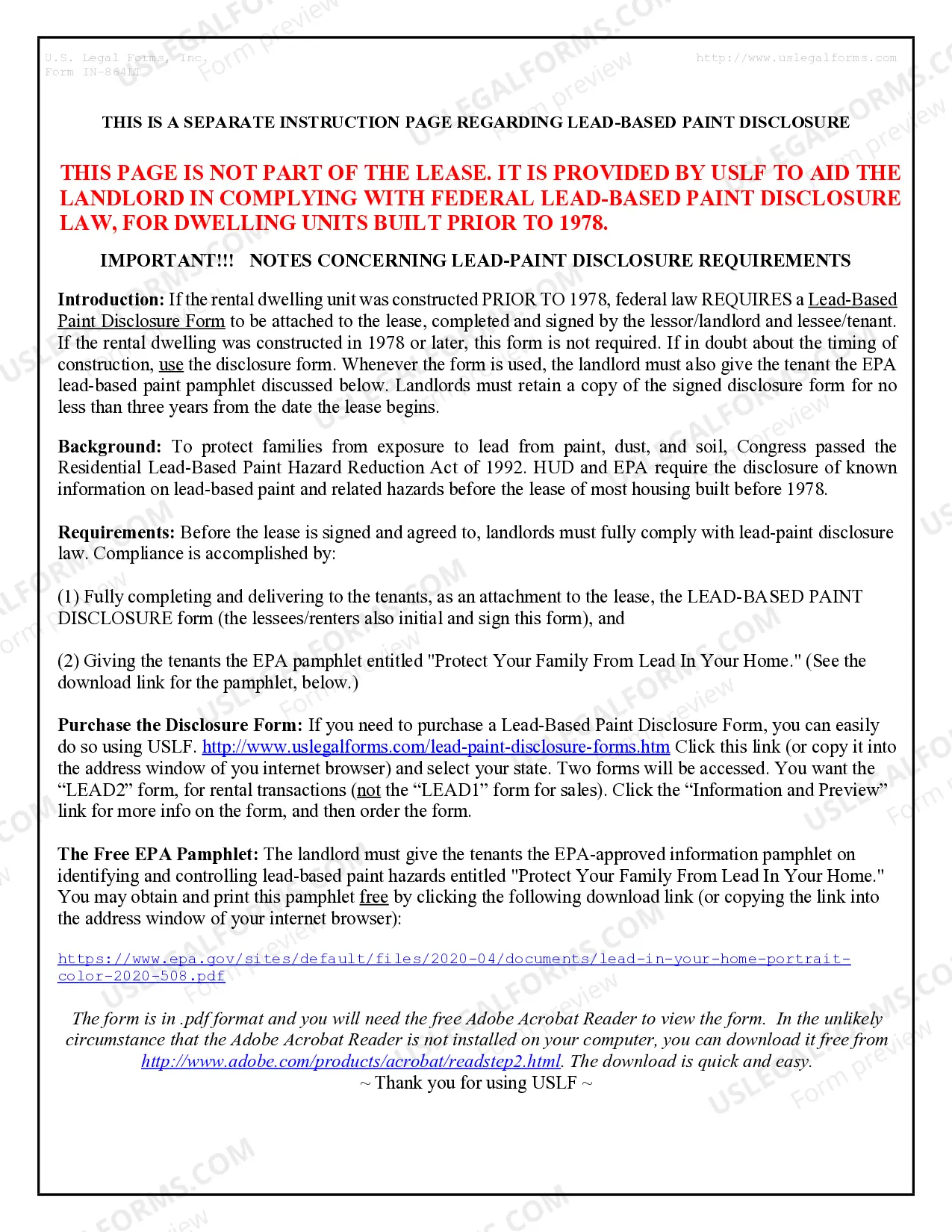
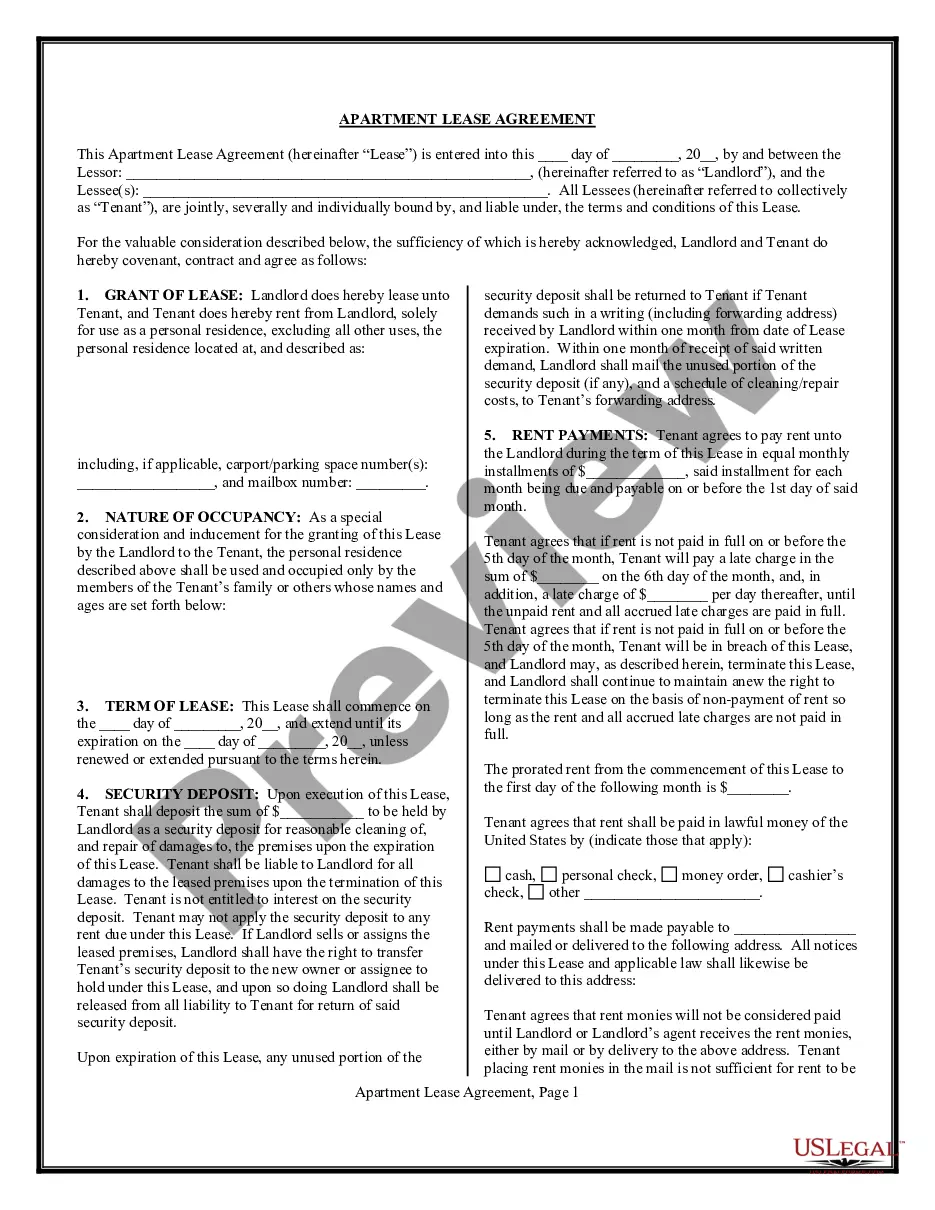
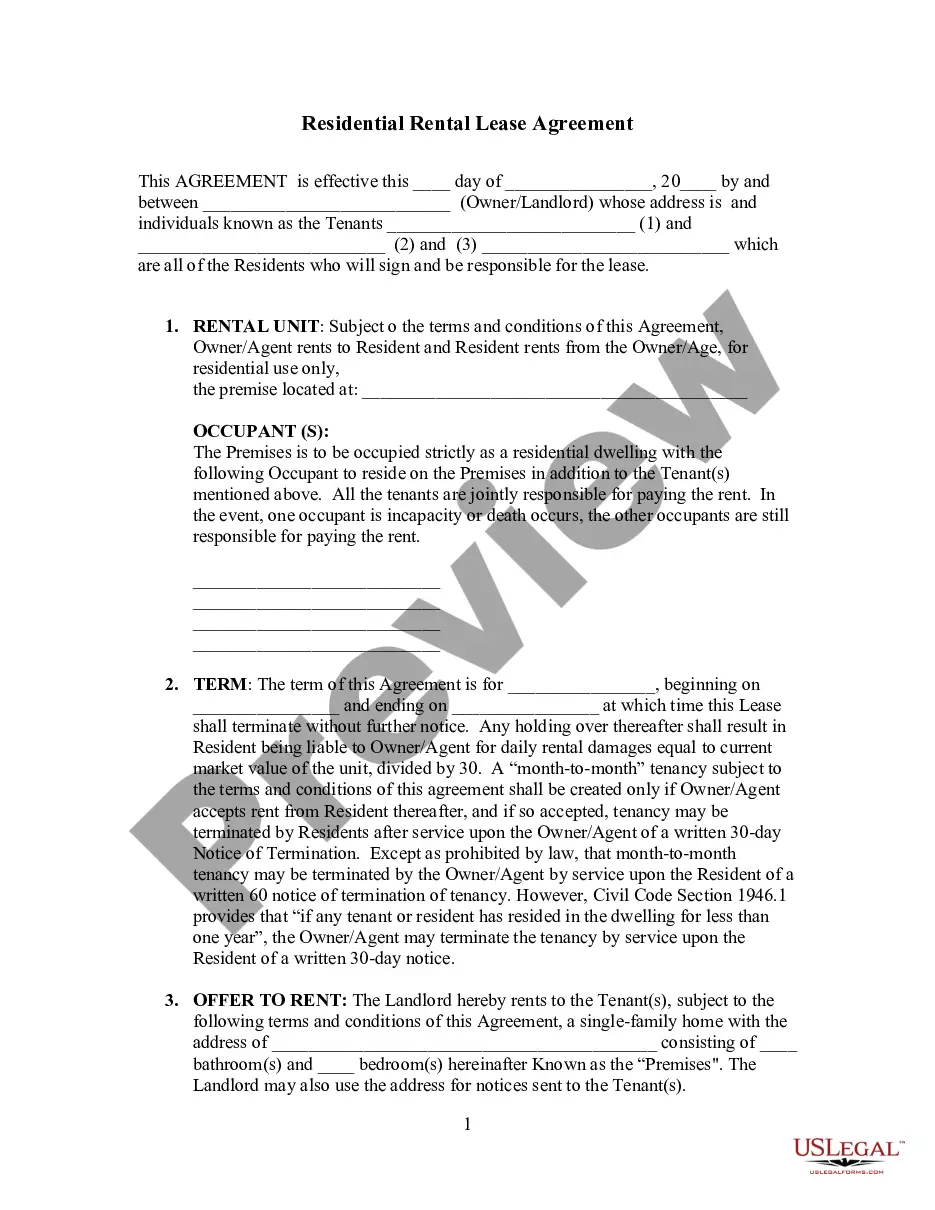
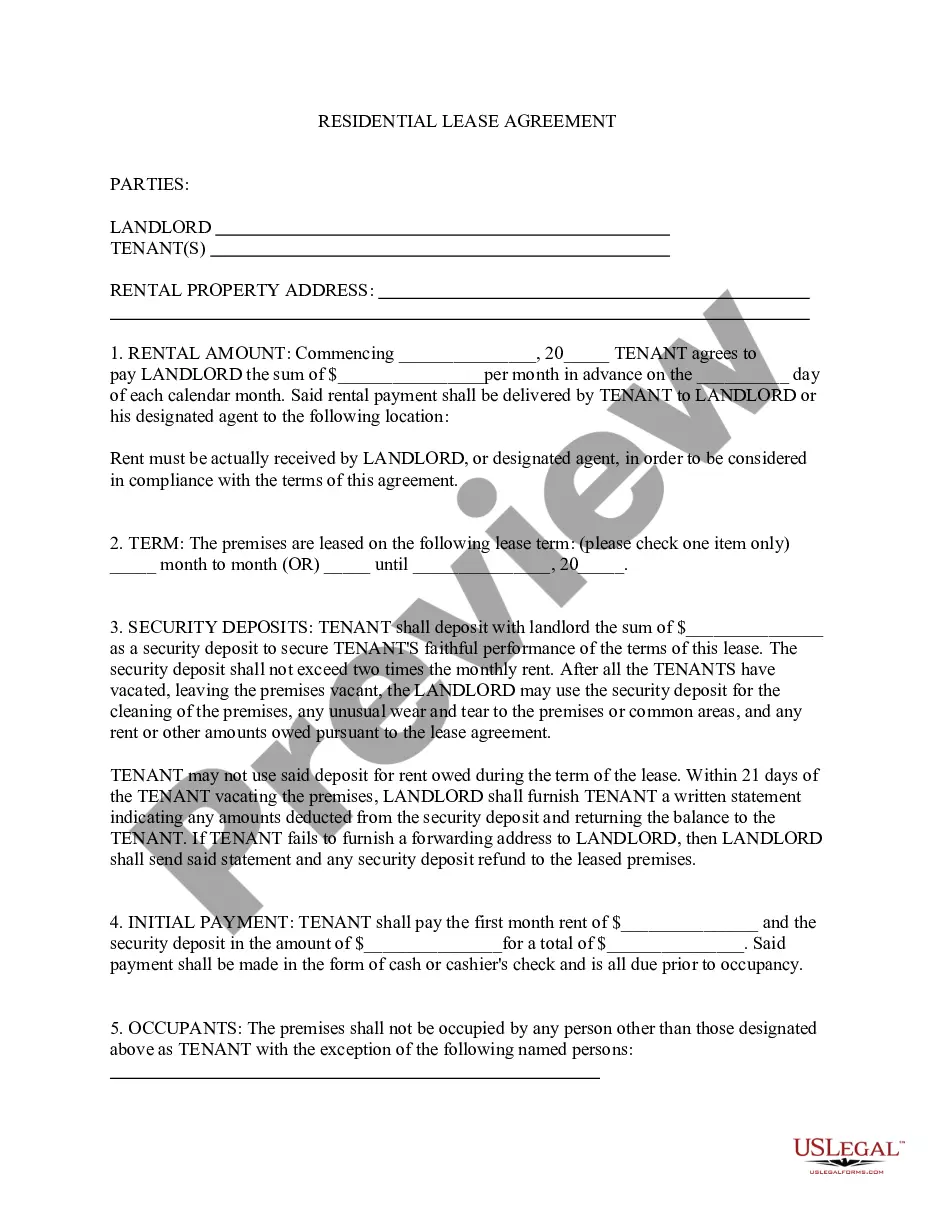
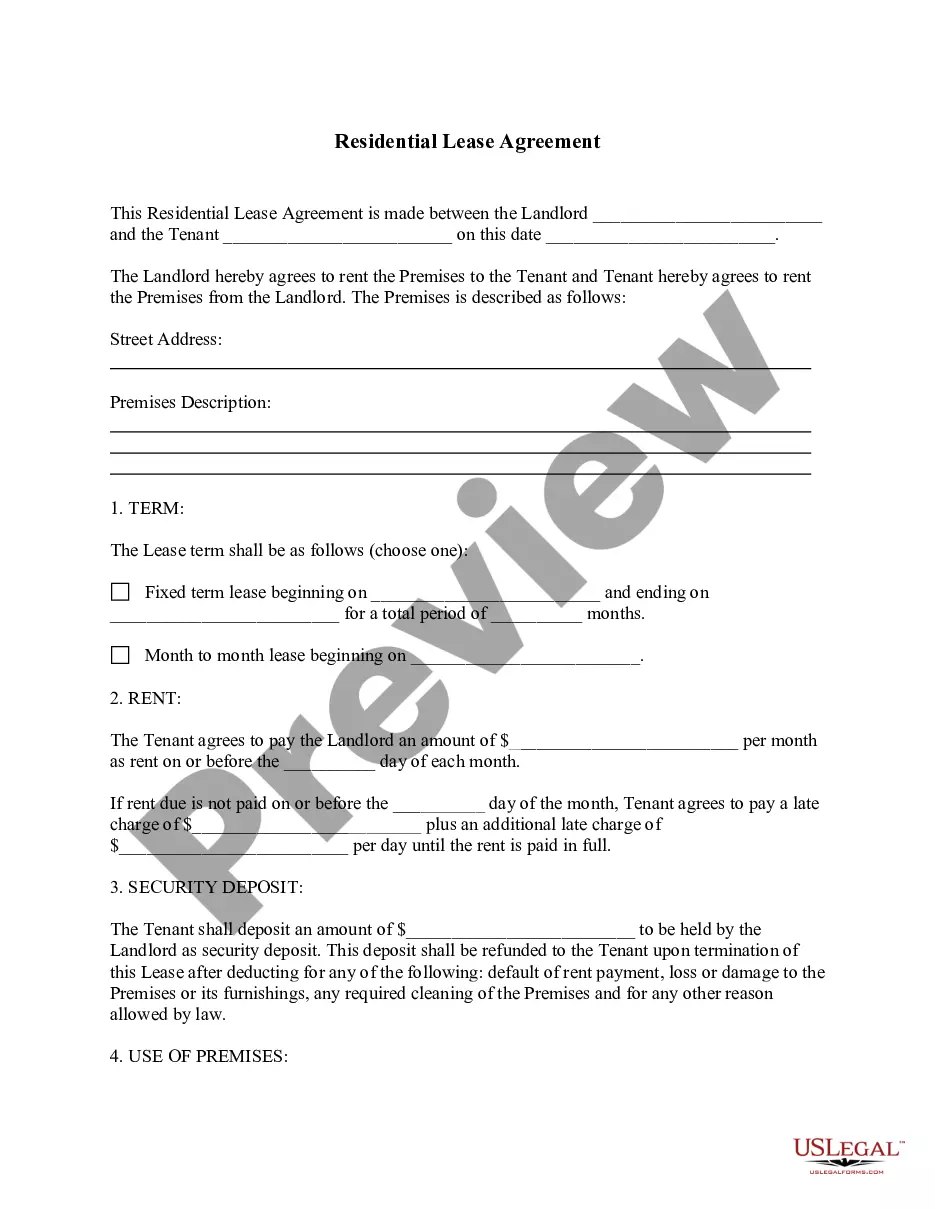
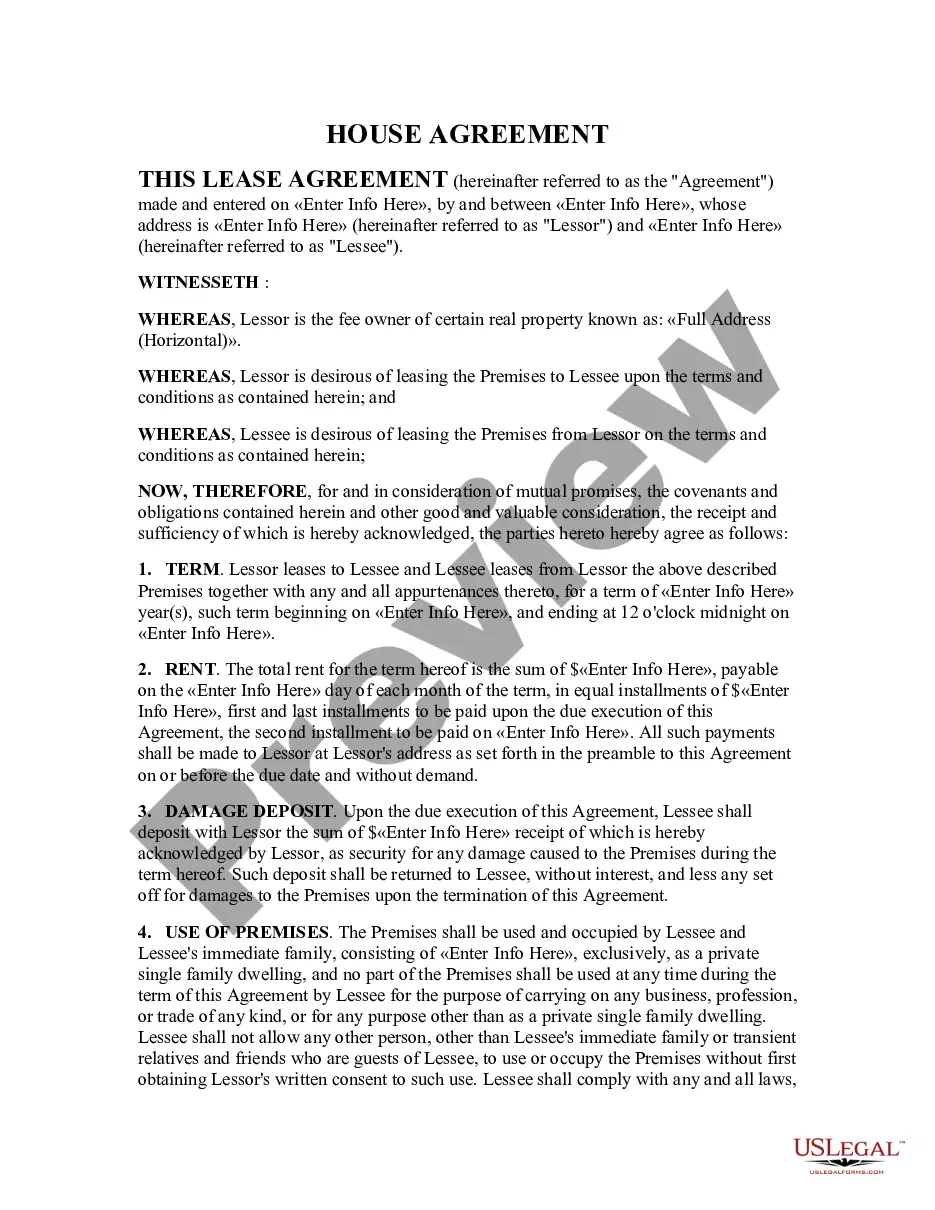
The Residential Rental Lease Agreement is a legal document that outlines the terms and conditions between a landlord and tenant regarding the rental of a residential property. This form is specifically designed for use in your state and provides clear guidelines for both parties, helping to prevent disputes and ensuring compliance with local laws. Unlike other rental agreements that may be more generic, this lease covers crucial details such as lease duration, rent amount, security deposit, and tenant responsibilities, making it essential for both landlords and tenants to understand their rights and obligations.
Form components explained
- Identification of the landlord and tenant.
- Details on the leased property, including address and description.
- Duration of the lease and terms for renewal.
- Security deposit requirements and procedures for its return.
- Payment structure for rent and any late fees applicable.
- Conditions for breach of lease and consequences for the tenant.
When to use this document
This Residential Rental Lease Agreement should be used whenever a landlord rents out a residential property to a tenant for a fixed term, such as one year or six months. It is suitable for new rental agreements and for renewals of existing leases. Use this form to clearly establish rights and responsibilities, especially if modifications or special agreements have been made between the landlord and tenant.
Who needs this form
This form is intended for:
- Landlords who wish to formalize a rental agreement with tenants.
- Tenants who want to understand their rights and obligations before entering into a lease.
- Property managers handling rental agreements on behalf of landlords.
How to complete this form
- Identify the parties involved by entering the landlord's and tenant's names and addresses.
- Specify the property address and any included items or amenities.
- Enter lease commencement and expiration dates, ensuring clarity on the term length.
- Detail the security deposit amount and terms for its return at the end of the lease.
- Outline the rent amount, payment frequency, and any applicable late fees.
Notarization requirements for this form
This form does not typically require notarization unless specified by local law. It is advisable to check specific requirements depending on your jurisdiction and circumstances.
Get your form ready online
Our built-in tools help you complete, sign, share, and store your documents in one place.
Make edits, fill in missing information, and update formatting in US Legal Forms—just like you would in MS Word.
Download a copy, print it, send it by email, or mail it via USPS—whatever works best for your next step.
Sign and collect signatures with our SignNow integration. Send to multiple recipients, set reminders, and more. Go Premium to unlock E-Sign.
If this form requires notarization, complete it online through a secure video call—no need to meet a notary in person or wait for an appointment.
We protect your documents and personal data by following strict security and privacy standards.

Make edits, fill in missing information, and update formatting in US Legal Forms—just like you would in MS Word.

Download a copy, print it, send it by email, or mail it via USPS—whatever works best for your next step.

Sign and collect signatures with our SignNow integration. Send to multiple recipients, set reminders, and more. Go Premium to unlock E-Sign.

If this form requires notarization, complete it online through a secure video call—no need to meet a notary in person or wait for an appointment.

We protect your documents and personal data by following strict security and privacy standards.
Mistakes to watch out for
- Failing to include all tenantsâ names, which can complicate liability issues.
- Not specifying the security deposit amount or the conditions under which it may be withheld.
- Leaving out crucial information about utilities, leading to disputes over payment responsibility.
- Neglecting to clearly define the term of the lease and renewal conditions.
Benefits of completing this form online
- Convenient access to legal documents from anywhere.
- Easy customization to fit specific rental arrangements and needs.
- Reliable templates drafted by licensed attorneys to ensure legal compliance.
- Time-saving features allowing instant downloads and edits.
Main things to remember
- The Residential Rental Lease Agreement ensures clarity and legal protection for both landlords and tenants.
- It is essential to accurately complete the lease to avoid future disputes.
- Understanding the state-specific requirements is crucial for compliance.
- This form is versatile and can be modified to suit specific rental arrangements.
Looking for another form?
Form popularity
FAQ
Renters in Indiana have rights that include accessing safe living conditions, privacy, and the return of security deposits per state regulations. Understanding these rights is crucial for both tenants and landlords. An Indiana Residential Rental Lease Agreement can further define expectations and protect these rights.
As long as the contract spells out specific details and both parties have signed that they agree to the contract's terms, a handwritten contract is legally binding and enforceable in court.
The Lease Must be in Writing It does not matter if the lease is handwritten or typed.
Collect each party's information. Include specifics about your property. Consider all of the property's utilities and services. Know the terms of your lease. Set the monthly rent amount and due date. Calculate any additional fees. Determine a payment method. Consider your rights and obligations.
Breaking Lease in Indiana If you break a lease in Indiana, the landlord can require that you pay rent for the remainder of the term. However, due to the state's requirement that landlords mitigate damages, your landlord is expected to try to find a replacement as soon as possible to let you off the hook.
A lease can be written or verbal, but a verbal lease can be very difficult to enforce.Most leases are fairly standard and cover basic components such as rent amount, duration of lease term, resposiblities of each party and penalties for not following the terms.
You can legally move out without penalties. Just include your landlord in every step toward opting out of the lease. Go over the sections pertaining to breaking the lease. Look for an opt-out clause.
A written agreement can act as a roadmap for the landlord-tenant relationship, especially if a dispute arises. Also, real estate (land) leases for more than one year must be in writing. If a lease for over one year is not in writing, it will generally not be enforceable in court.
In Indiana, tenants have the right to put rent money towards repairs in the event a landlord hasn't made repairs within a reasonable time. Tenants also have the right to terminate a lease agreement when premises become uninhabitable.
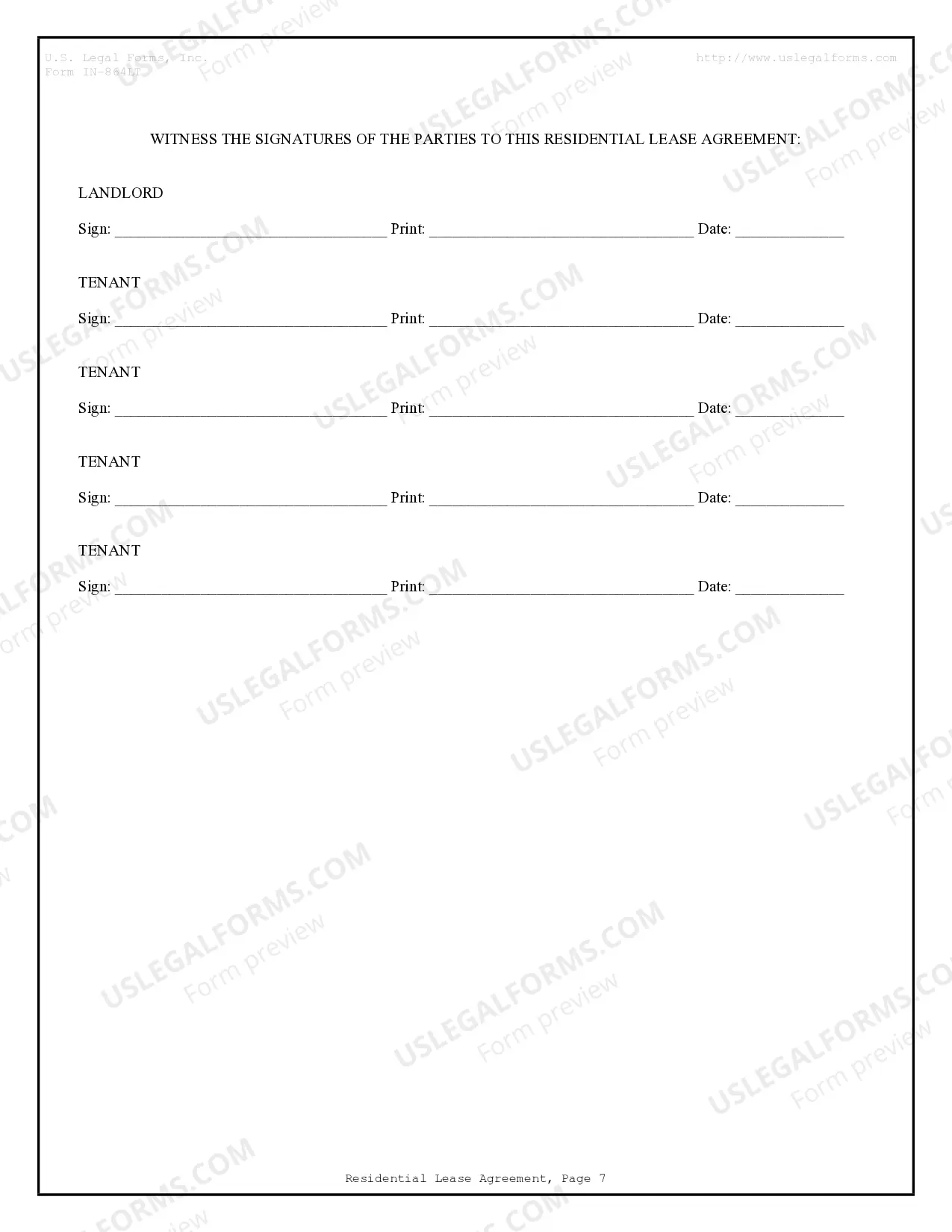
The lease becomes legally binding when all parties have signed: the landlord and all tenants living in the unit who are 18 and older. If you're worried about situations where a lease needs to end early, learn about breaking a lease and grounds for eviction.