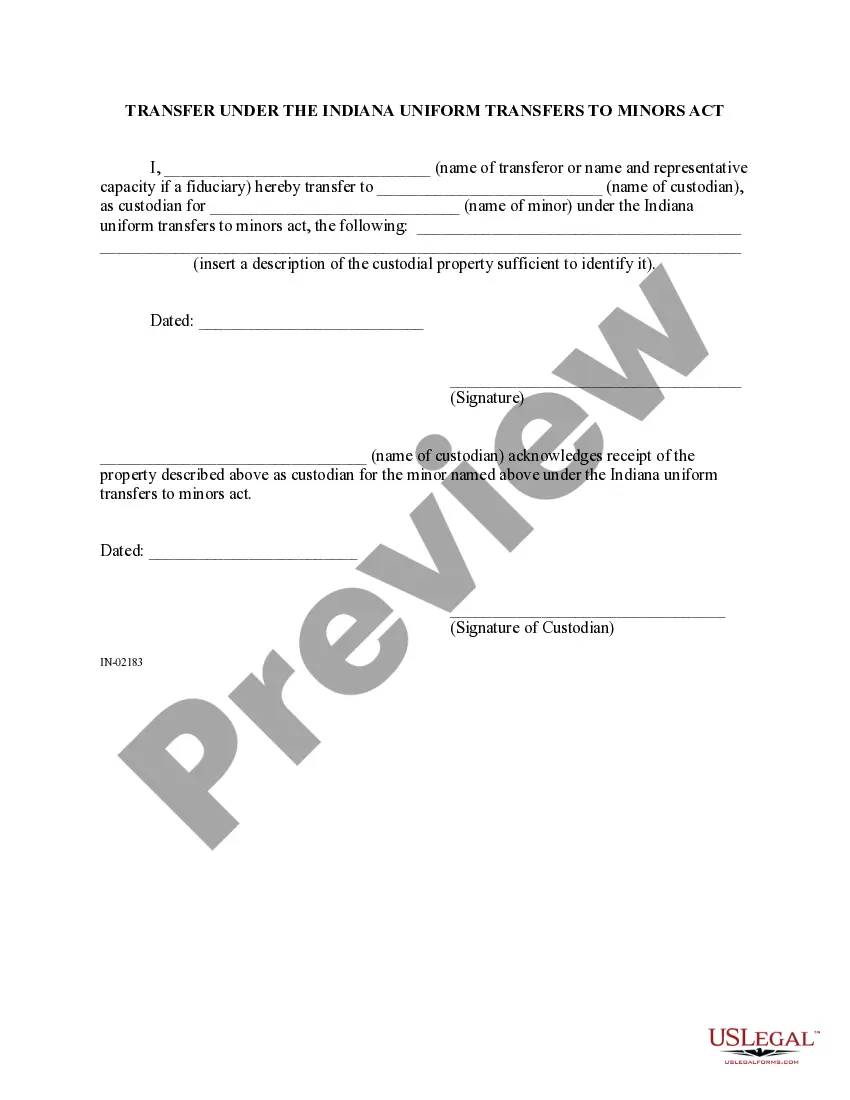
Transfer under the Indiana Uniform Transfers to Minors Act
What this document covers
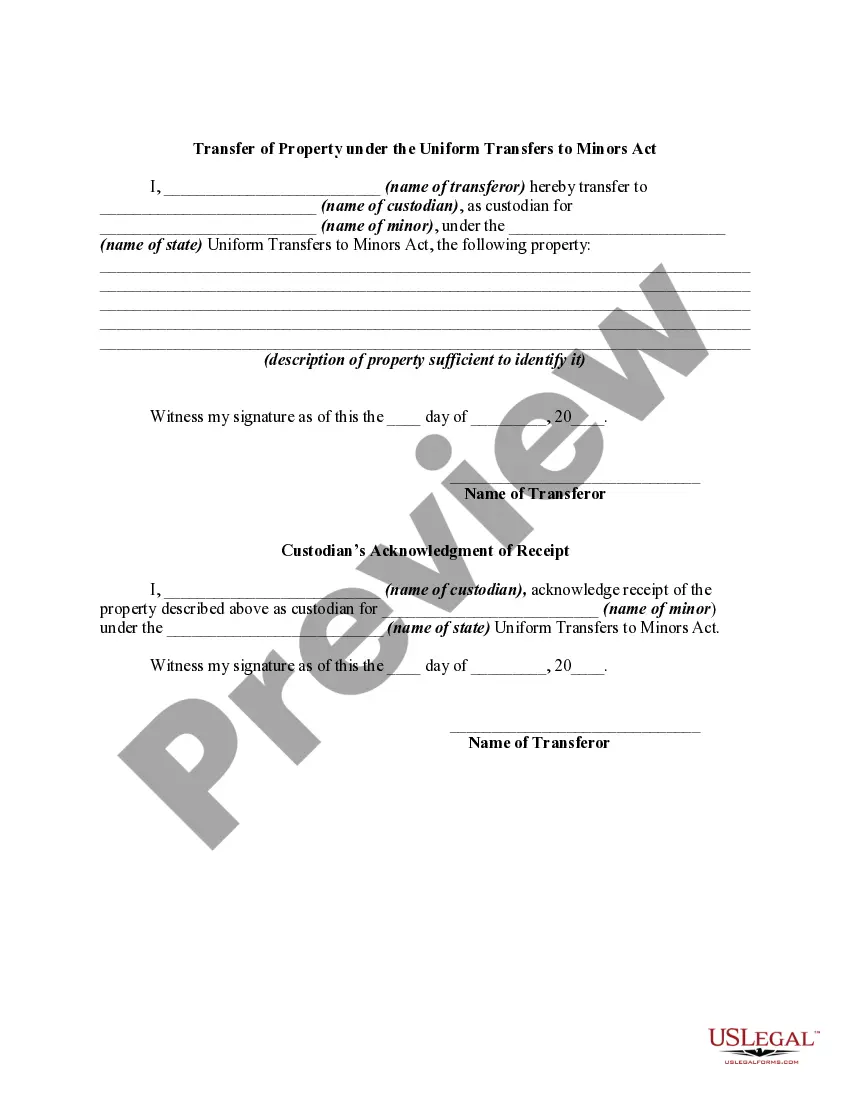
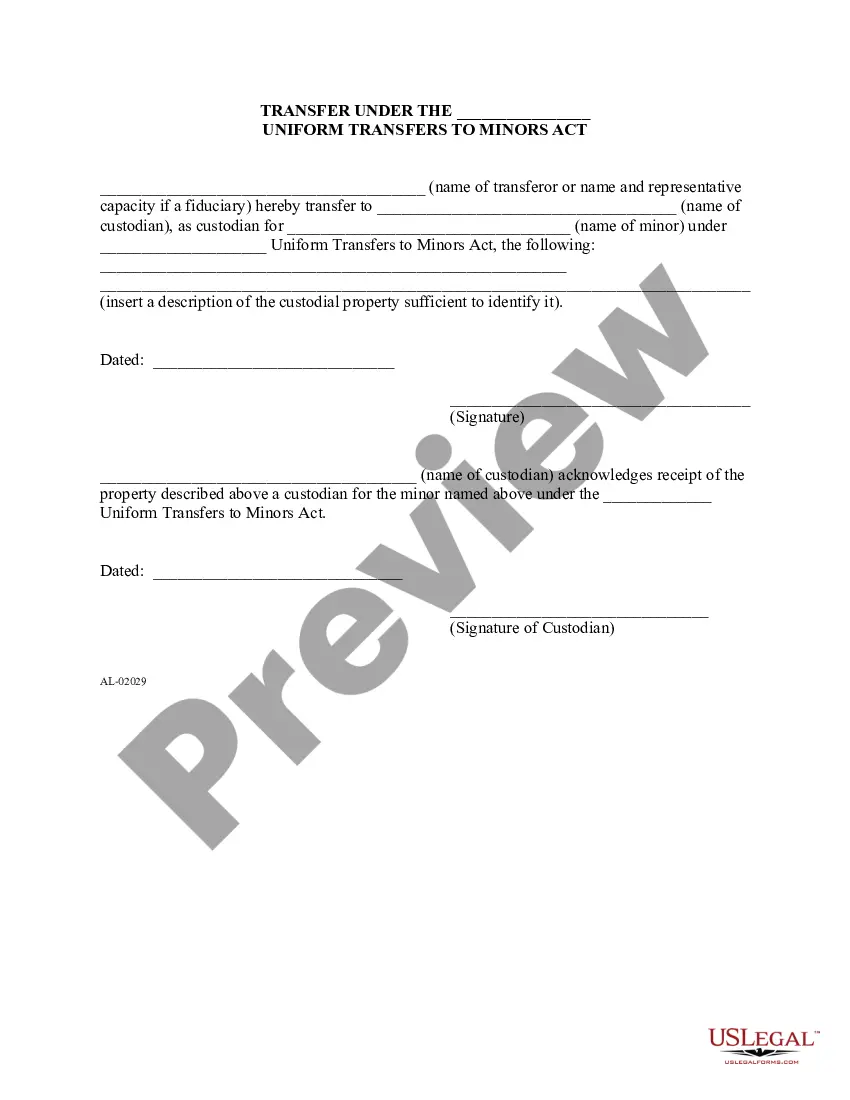
The Transfer under the Indiana Uniform Transfers to Minors Act is a legal document used to transfer property to a minor with a designated custodian. It ensures that the property is managed in compliance with Indiana law until the minor reaches adulthood. This form is distinct because it specifically addresses transfers of property for minors, a consideration not typically covered by standard transfer forms.
What’s included in this form
- Name of the transferor or fiduciary's representative capacity.
- Name of the custodian receiving the property.
- Name of the minor who is the recipient of the property.
- Description of the property being transferred.
When to use this form
This form is necessary when an individual wishes to legally transfer any type of property to a minor, while appointing a custodian to manage it. Situations may include gifting money, real estate, or personal property to a child for their benefit, ensuring the minor's financial security until they reach age 18.
Who needs this form
- Parents or guardians transferring property to their minor children.
- Grandparents or relatives who wish to provide financial support to a minor.
- Trustees acting on behalf of a minor as part of a trust agreement.
Instructions for completing this form
- Identify and enter the full name of the transferor (the person transferring the property).
- Provide the name of the custodian who will manage the property.
- Specify the minor's name for whom the property is being transferred.
- Detail the custodial property to clearly identify what is being transferred.
- Sign and date the form to finalize the transfer and the custodian's acknowledgment.
Does this document require notarization?
This form does not typically require notarization unless specified by local law. However, ensuring a witness signature can add an extra layer of legitimacy to the transfer.
Get your form ready online
Our built-in tools help you complete, sign, share, and store your documents in one place.
Make edits, fill in missing information, and update formatting in US Legal Forms—just like you would in MS Word.
Download a copy, print it, send it by email, or mail it via USPS—whatever works best for your next step.
Sign and collect signatures with our SignNow integration. Send to multiple recipients, set reminders, and more. Go Premium to unlock E-Sign.
If this form requires notarization, complete it online through a secure video call—no need to meet a notary in person or wait for an appointment.
We protect your documents and personal data by following strict security and privacy standards.

Make edits, fill in missing information, and update formatting in US Legal Forms—just like you would in MS Word.

Download a copy, print it, send it by email, or mail it via USPS—whatever works best for your next step.

Sign and collect signatures with our SignNow integration. Send to multiple recipients, set reminders, and more. Go Premium to unlock E-Sign.

If this form requires notarization, complete it online through a secure video call—no need to meet a notary in person or wait for an appointment.

We protect your documents and personal data by following strict security and privacy standards.
Common mistakes
- Failing to provide a complete description of the property.
- Not including both dates for the transfer and acknowledgment of receipt.
- Forgetting to have the custodian sign the form.
Benefits of using this form online
- Convenient access to ready-made templates that save time.
- Edit and customize forms easily to meet specific needs.
- Reliable legal language reviewed by licensed attorneys.
What to keep in mind
- The form is essential for transferring property to minors legally in Indiana.
- Always describe the transferred property in detail.
- Both the transferor and custodian must sign and date the form for it to be effective.
Looking for another form?
Form popularity
FAQ
The Uniform Transfers to Minors Act (UTMA) allows a minor to receive gifts without the aid of a guardian or trustee.The donor can name a custodian who has the fiduciary duty to manage and invest the property on behalf of the minor until the minor becomes of legal age.
UGMA and UTMA accounts allow parents to save money and invest, maintain full control until their child is an adult. UTMA stands for Uniform Transfers to Minors Act, and UGMA stands for Universal Gifts to Minors Act. Both accounts allow you to transfer financial assets to a minor without establishing a trust.
You can move money from a custodial account, such as a UGMA (Uniform Gifts to Minors Act) or a UTMA (Uniform Transfers to Minors Act), to a 529 plan.
While you can technically withdraw money from a custodial account before your child reaches the age of majority, you can only do so for the direct benefit of the child.Keep in mind that any funds you take out may also create taxable gains for your child, and that withdrawn money won't have as much time to grow.
You can close a custodial account and suffer no repercussions if you give the funds to the child or transfer them into another account for the child's benefit.You can close the custodial account and establish a regular account at your bank or brokerage firm with the child as the sole beneficiary.
As the custodian of a UTMA/UGMA account, a parent can withdraw money whenever needed to benefit the child.
These deposits are irrevocablethey become permanent transfers to the minor and the minor's account. Typically, UGMA assets are used to fund a child's education, but the donor can make withdrawals for just about any expenses that benefit the minor. There are no withdrawal penalties.
The Uniform Gifts to Minors Act (UGMA) provides a way to transfer financial assets to a minor without the time-consuming and expensive establishment of a formal trust. A UGMA account is managed by an adult custodian until the minor beneficiary comes of age, at which point he assumes control of the account.
In California, the age of majority is 18 while the age of trust termination is 21. As a result, custodians can establish UTMA accounts for a minor and specify that they wait until age 21 to gain control of the funds. Once the account is funded, it is common to invest the funds in stocks, bonds, mutual funds etc.