Indiana Beneficiary Transfer on Death Quitclaim Deed from Individual to Individual

What is this form?
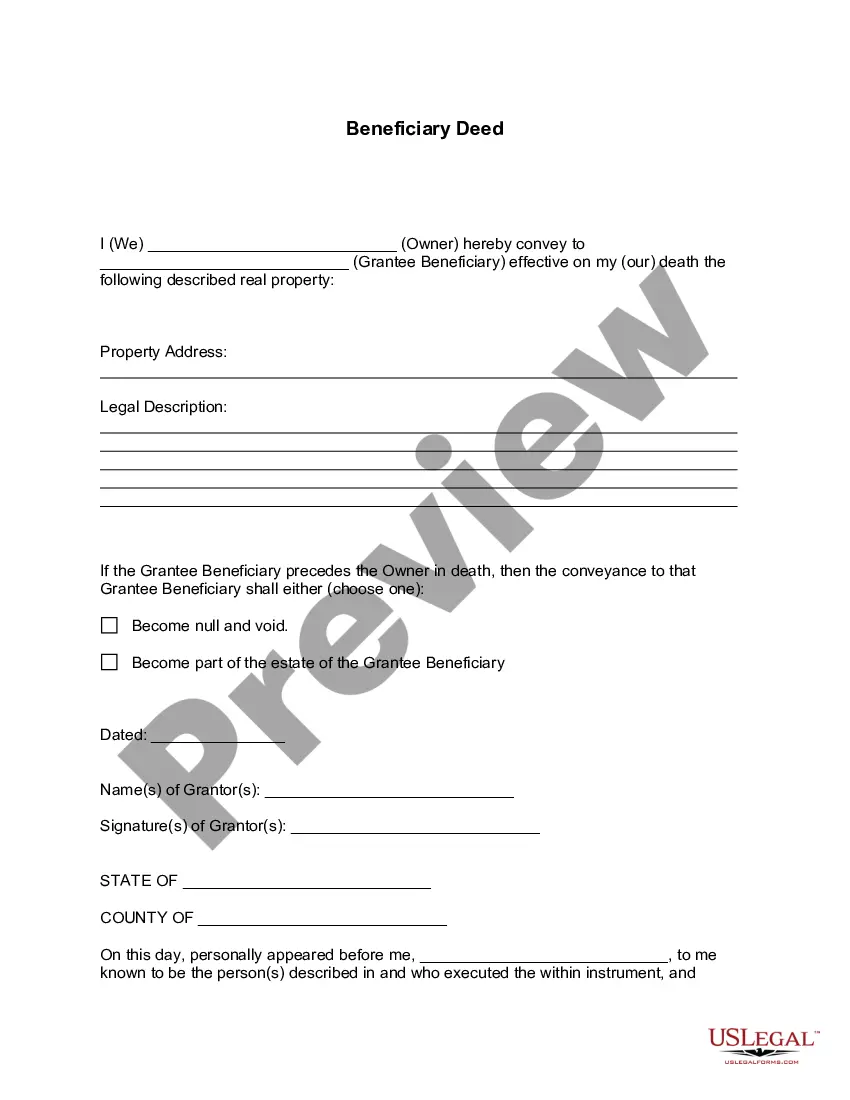
The Beneficiary Transfer on Death Quitclaim Deed from Individual to Individual is a legal document used to transfer ownership of property upon the death of the Grantor. This form allows the Grantor to designate an individual as a beneficiary, ensuring that the property is transferred to the beneficiary without going through probate. Unlike traditional deeds, this transfer is revocable until the Grantor's death, providing flexibility and control to the Grantor.
Key components of this form
- Grantor and Grantee Information: Includes details about the individual transferring the property and the individual receiving it.
- Property Description: Specifies the property being transferred, including legal descriptions as required by state law.
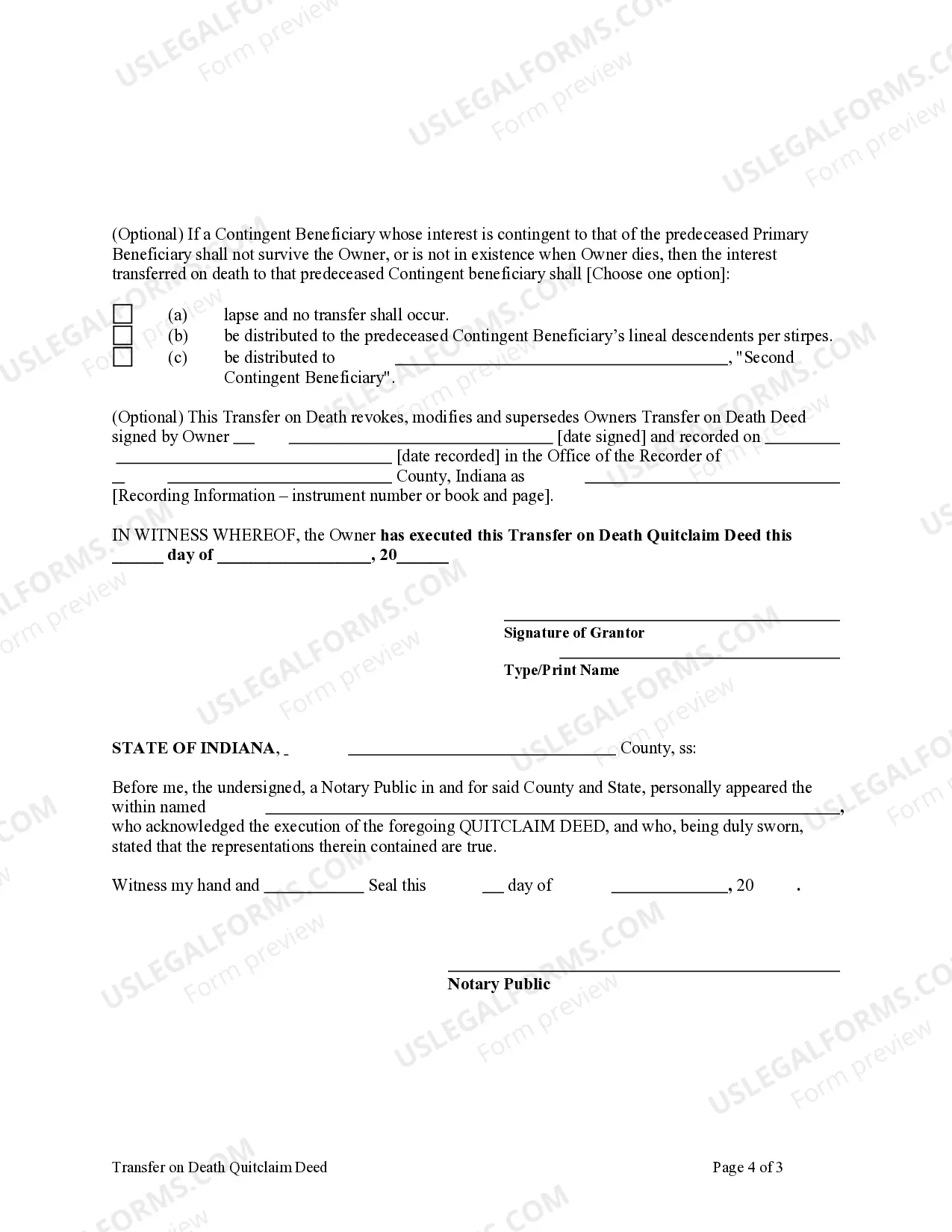
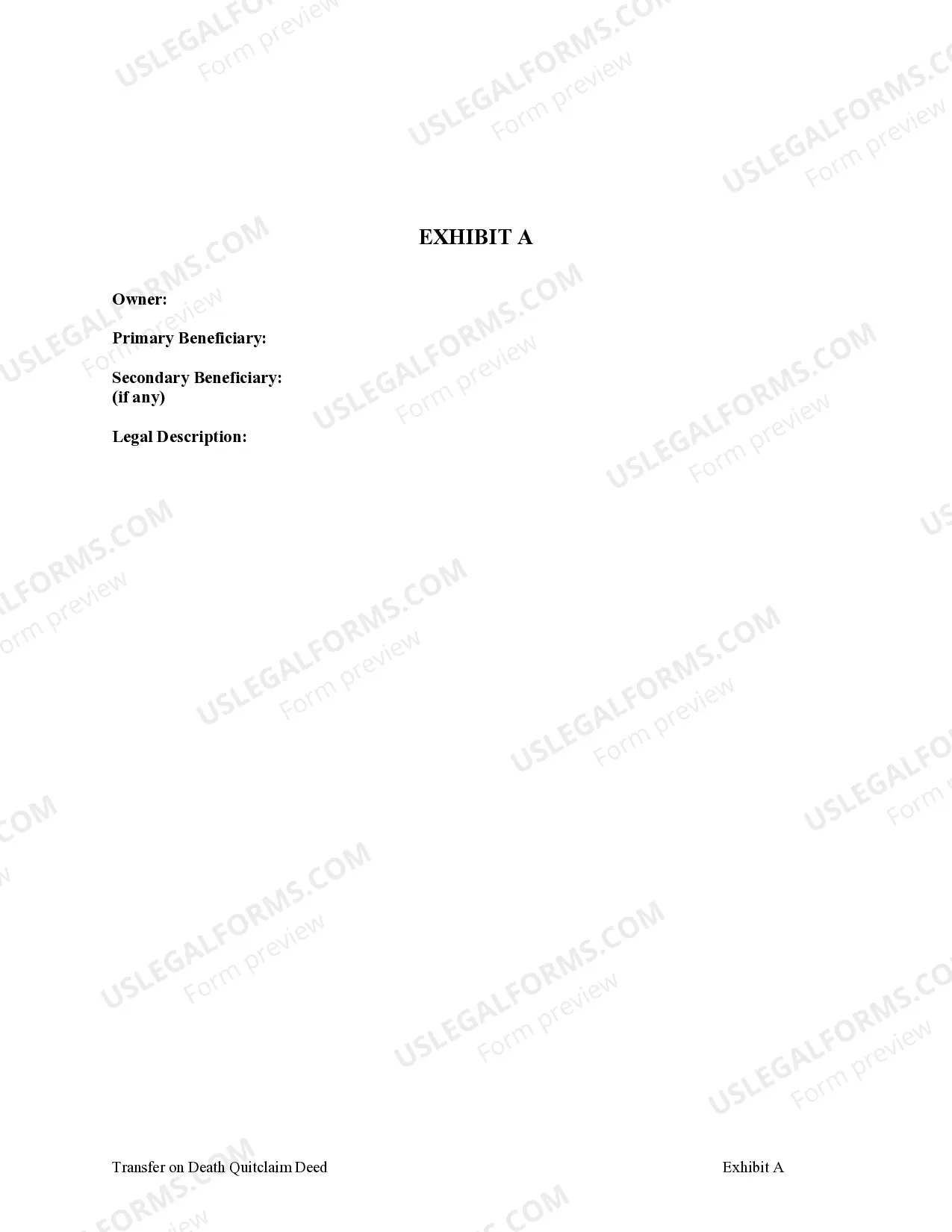
- Beneficiary Designation: Designates the primary beneficiary and can include contingent and secondary contingent beneficiaries.
- Revocability Clause: States that the Grantor can revoke the deed until their death.
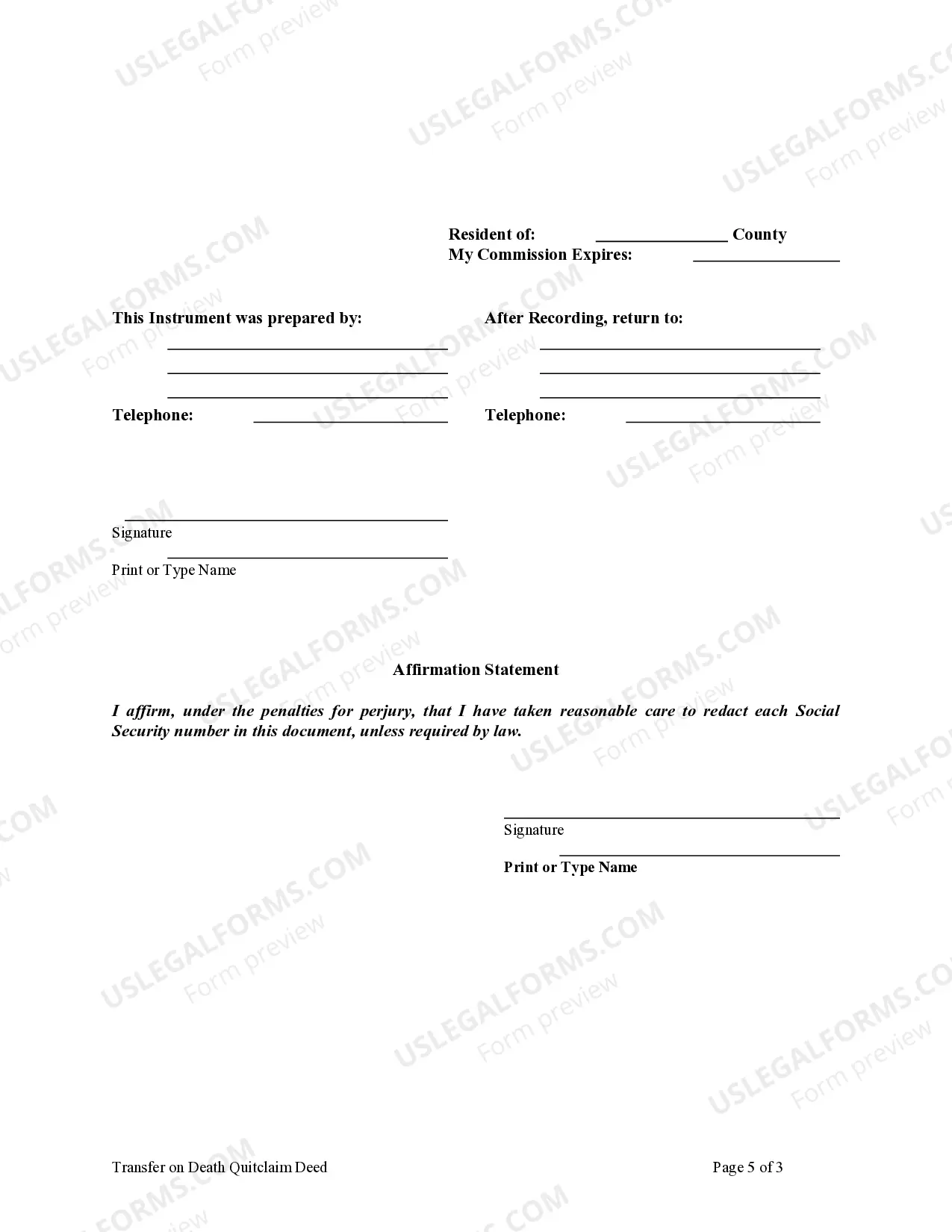
- Signatures: Requires signatures from the Grantor and potentially witnesses or a notary, depending on jurisdiction requirements.




Situations where this form applies
This form should be used when an individual (the Grantor) wants to ensure that their property automatically transfers to another individual (the Grantee) upon their death. It is particularly useful for estate planning purposes, allowing individuals to designate who will inherit their property without the need for probate proceedings. Situations may include transferring a family home to a child or ensuring a partner inherits certain property upon death.
Who can use this document
Individuals who should consider using the Beneficiary Transfer on Death Quitclaim Deed include:
- Homeowners wanting to pass on their property to a specific individual.
- Those engaged in estate planning who wish to avoid probate for their assets.
- Individuals looking to designate a primary beneficiary and additional contingent beneficiaries.
- Anyone wishing to maintain control of their property until death while planning for its future transfer.
Instructions for completing this form
- Identify the parties: Enter the names and contact details of the Grantor and Grantee.
- Specify the property: Provide a detailed description of the property being transferred.
- Designate beneficiaries: Clearly state the primary and contingent beneficiaries in the designated fields.
- Add the date: Include the date of execution to validate the deed's effective date.
- Sign the document: Ensure the Grantor signs the deed; witness and notary signatures may be required based on local laws.
Is notarization required?
This form does not typically require notarization unless specified by local law. However, having the deed notarized can provide additional legal authentication, making the transfer more secure.
Get your form ready online
Our built-in tools help you complete, sign, share, and store your documents in one place.
Make edits, fill in missing information, and update formatting in US Legal Forms—just like you would in MS Word.
Download a copy, print it, send it by email, or mail it via USPS—whatever works best for your next step.
Sign and collect signatures with our SignNow integration. Send to multiple recipients, set reminders, and more. Go Premium to unlock E-Sign.
If this form requires notarization, complete it online through a secure video call—no need to meet a notary in person or wait for an appointment.
We protect your documents and personal data by following strict security and privacy standards.

Make edits, fill in missing information, and update formatting in US Legal Forms—just like you would in MS Word.

Download a copy, print it, send it by email, or mail it via USPS—whatever works best for your next step.

Sign and collect signatures with our SignNow integration. Send to multiple recipients, set reminders, and more. Go Premium to unlock E-Sign.

If this form requires notarization, complete it online through a secure video call—no need to meet a notary in person or wait for an appointment.

We protect your documents and personal data by following strict security and privacy standards.
Common mistakes
- Failing to provide a clear legal description of the property.
- Not signing the deed, which may invalidate the transfer.
- Omitting to designate contingent beneficiaries, leading to potential disputes.
- Using incorrect or outdated forms that do not meet state requirements.
Advantages of online completion
- Immediate access to professionally drafted templates that comply with state laws.
- Ability to complete the form digitally for convenience and accuracy.
- Instant downloads save time compared to traditional methods of obtaining legal documents.
- Easy customization allows for personal needs without legal jargon.
Key takeaways
- The Beneficiary Transfer on Death Quitclaim Deed allows for property transfer upon death without probate.
- It is a revocable deed, giving the Grantor control until their passing.
- Proper completion and understanding of state-specific requirements are essential for validity.
Looking for another form?


Form popularity
FAQ
If the deceased was sole owner, or co-owned the property without right of survivorship, title passes according to his will. Whoever the will names as the beneficiary to the house inherits it, which requires filing a new deed confirming her title. If the deceased died intestate -- without a will -- state law takes over.
So long as the quitclaim deed is valid (properly notarized, etc.) it can be recorded even after the grantor's death, so property owned by the deceased which has been deeded in that quitclaim deed should not need to pass through probate.
If it was inherited, succession law comes into play. Once the beneficiaries and their shares, rights and liabilities are decided, the property has to be transferred in their names. For this you need to apply for property transfer at the sub-registrar's office.
POST DATE: 8.9. 19. A transfer on death deed can be a very helpful planning tool when designing an estate plan. Indiana is one of many states that allows the transfer of real property by a transfer on death deed.
The Quit Claim Deed form uses the terms of Grantor (Seller or Owner of said property) and Grantee (Buyer of said property) for the two parties involved. First, the parties must fill in the date. Then, write in the name of the county and state in which the property is located.
Step 1: Find your IN quitclaim deed form. Step 2: Gather the information you need. Step 3: Enter the information about the parties. Step 4: Enter the legal description of the property. Step 5: Have the grantor sign the document in the presence of a Notary Public.
File a petition in probate court. The first step to transferring the property to the rightful new owners is to open up a case in probate court. Petition the court for sale and convey the property to the purchaser. Next, you must petition the court to sell the property.
If the property is to be transferred to a beneficiary the Executor or Administrator will need to submit a document called an 'Assent' to the Land Registry, with a copy of the Grant of Representation. The Land Registry will then transfer the property into the name of the new owner.
A quitclaim deed is sometimes used to avoid probate court by transferring an interest in real property before someone's death. The property is transferred by deed during their life, instead of being transferred by a will after the grantor's death.