Illinois Small Estate affidavit
About this form
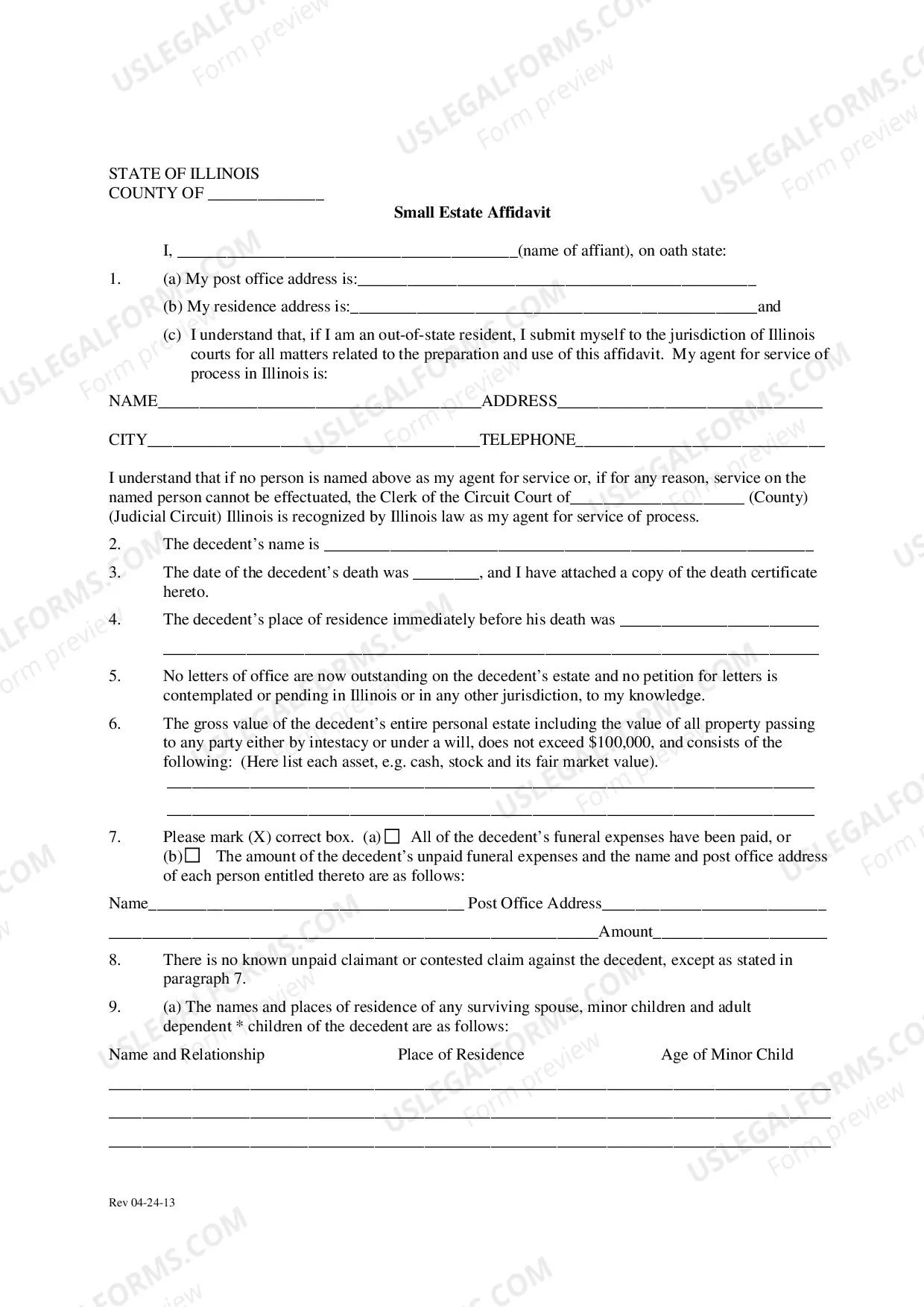
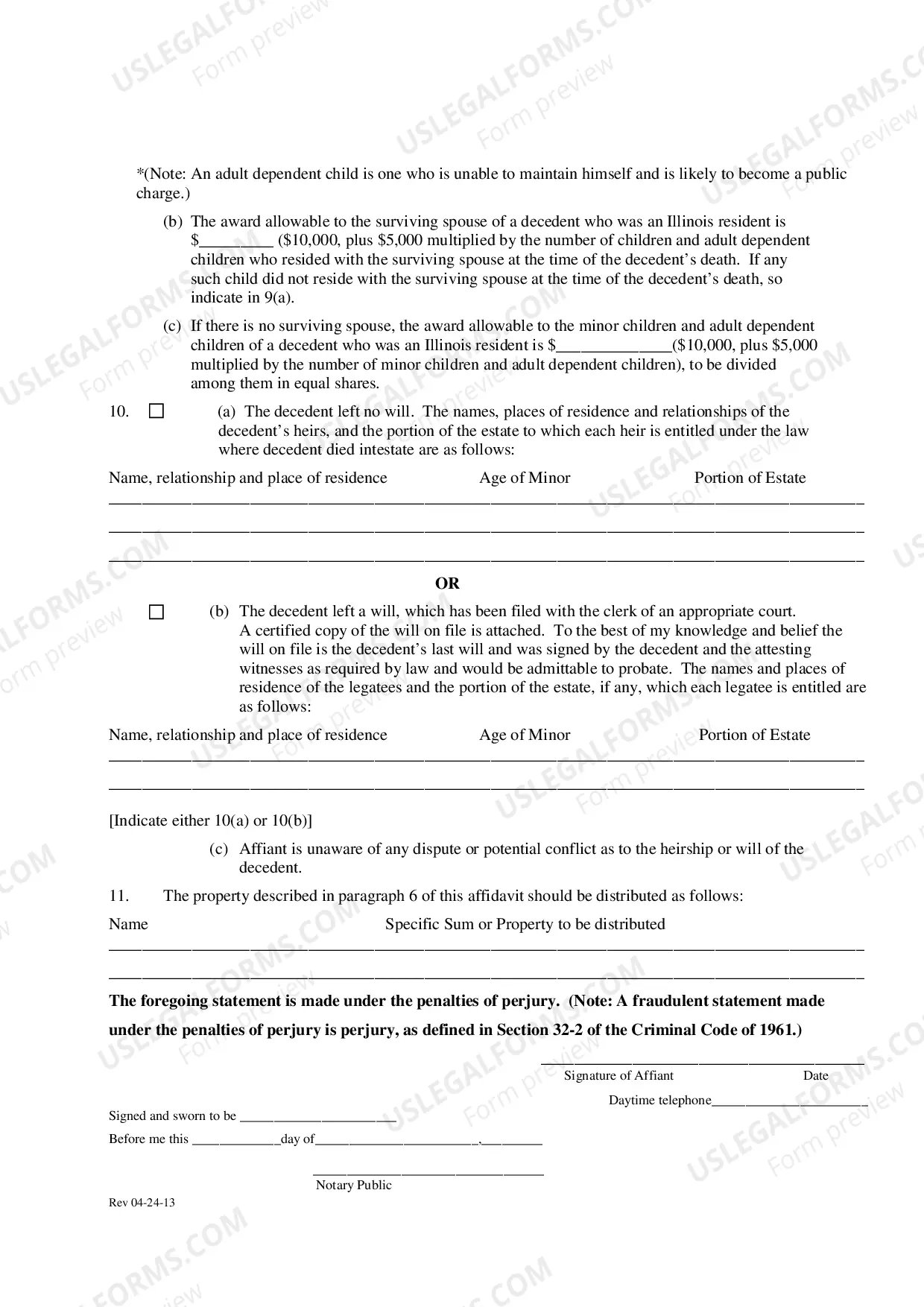
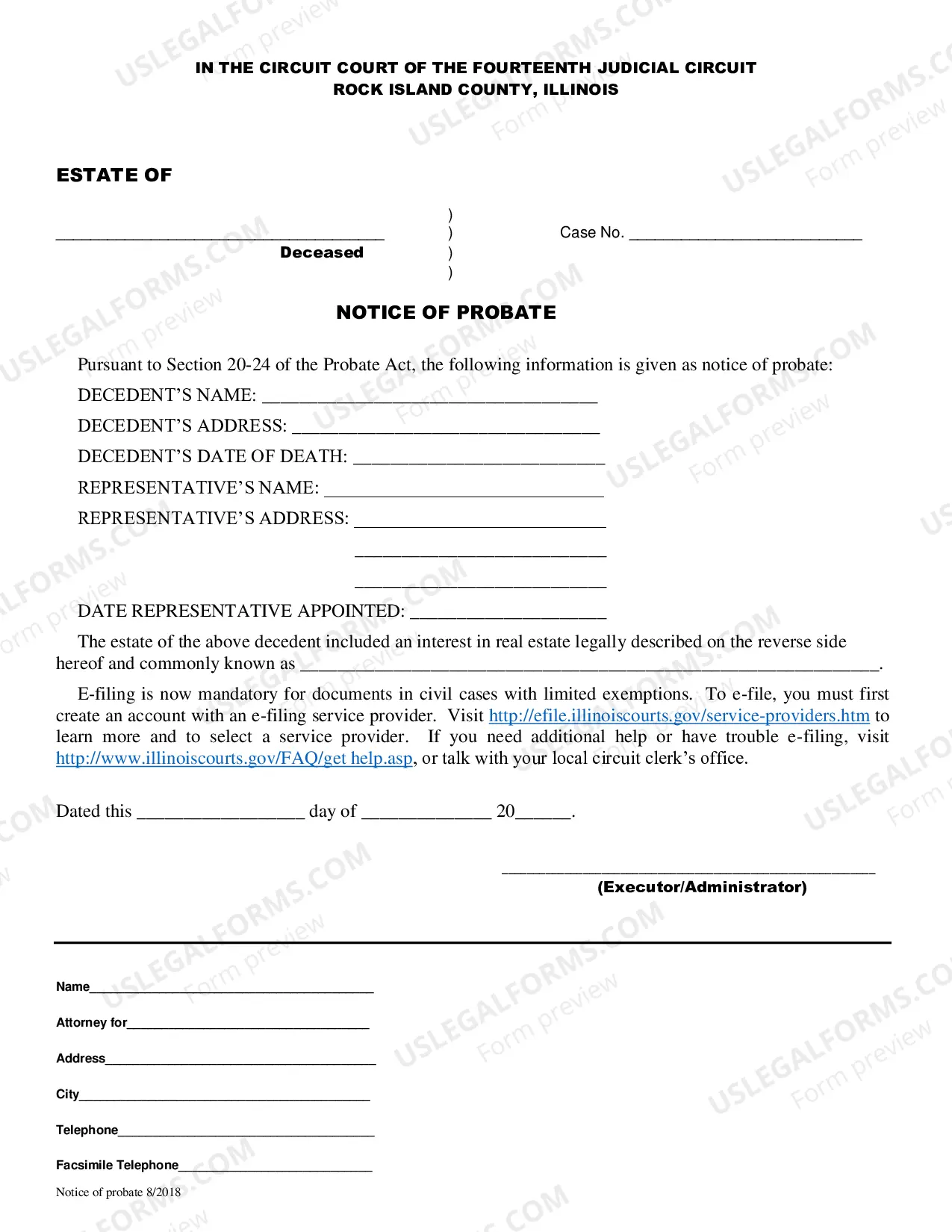
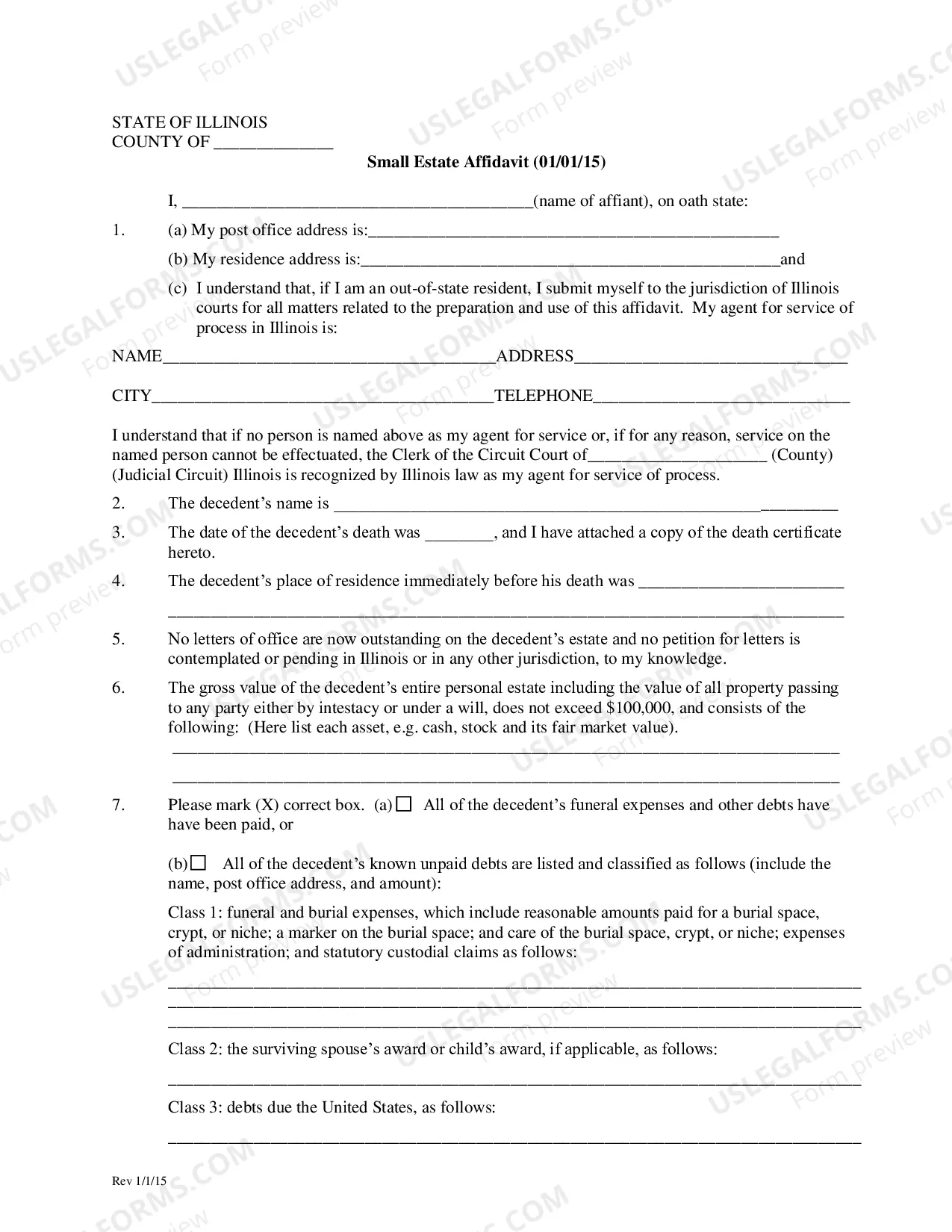
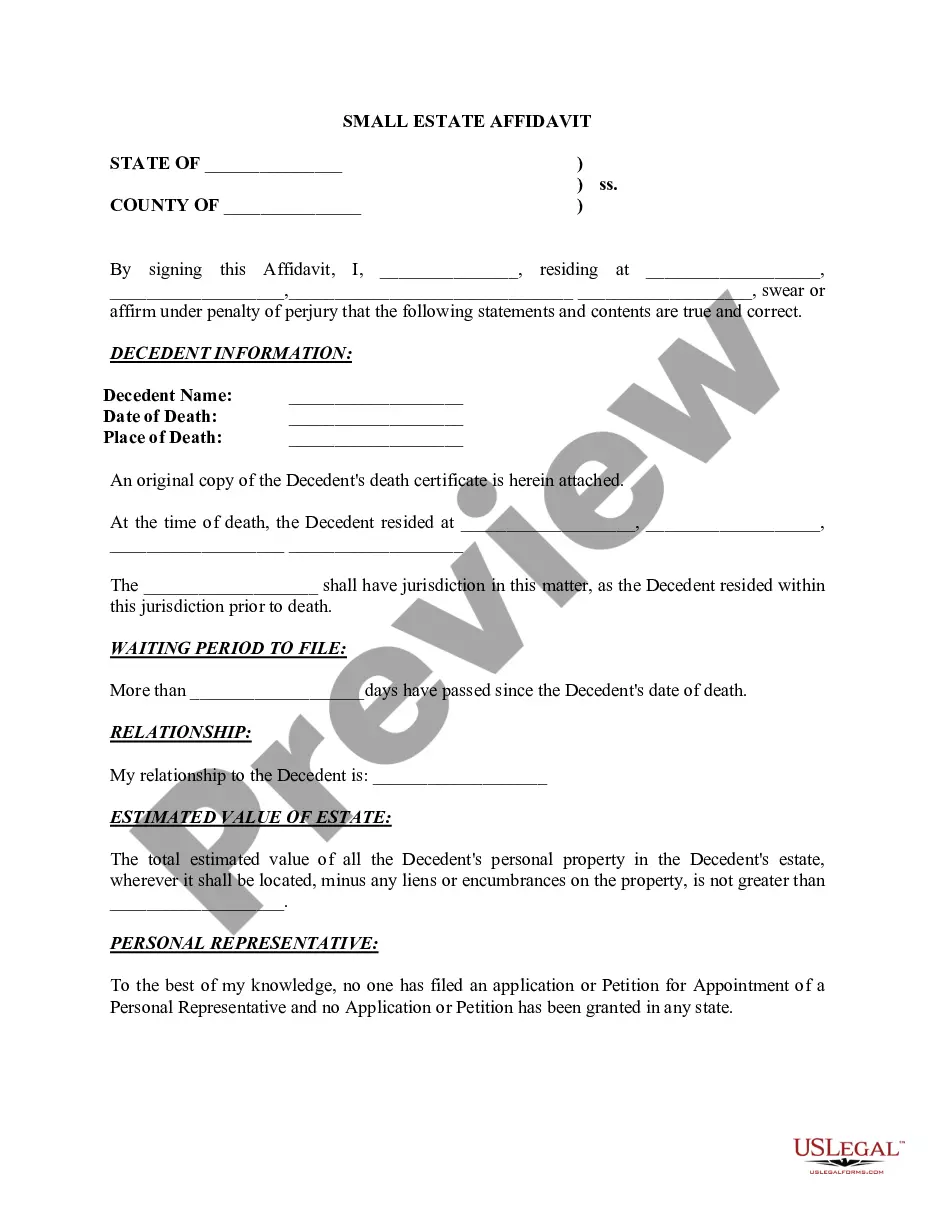
The Small Estate Affidavit is a legal document used to simplify the probate process for estates with a total value not exceeding $100,000. It allows the affiant, usually a close relative or dependents of the deceased, to collect the decedent's assets without the need for formal probate. This form is beneficial when the decedent did not leave behind a complex estate or where the estate's value is low, making traditional probate procedures unnecessary.
Main sections of this form
- Affiant's name and addresses, including a service of process agent if applicable.
- Decedent's name, date of death, and residence before death.
- Gross value of the decedent's estate and a list of assets.
- Confirmation of unpaid funeral expenses and any claimant details.
- Information on surviving spouse and heirs, including their relationships and portions of the estate.
- Distribution instructions for the estate's assets.

When to use this form
This form should be used when an individual passes away in Illinois and their estate is small enough to avoid formal probate, specifically when the total value of their personal property is $100,000 or less. It is often utilized when the decedent has settled funeral expenses or when there are no other outstanding claims against the estate. Use this affidavit to facilitate the transfer of assets to heirs swiftly and without significant legal proceedings.
Who needs this form
- Family members of the deceased who are seeking to collect assets owed to them.
- Individuals appointed to handle the estate of a decedent with minimal assets.
- Surviving spouses or dependents entitled to inherit under Illinois intestacy laws.
How to complete this form
- Provide the affiant's full name and both mailing and residence addresses.
- Enter the decedent's name, date of death, and their last known residence.
- List the gross value of the estate and detail each asset included.
- Confirm any funeral expenses and provide information about any claimants if applicable.
- Detail the names and relationships of surviving family members and how assets should be distributed.
- Sign the affidavit in the presence of a notary public where required, ensuring all statements are accurate.
Notarization requirements for this form
Yes, this form must be notarized to be legally valid. Notarization helps verify the identity of the affiant and the legitimacy of the signatures. US Legal Forms provides integrated online notarization options, allowing you to complete this step securely and conveniently from anywhere.
Get your form ready online
Our built-in tools help you complete, sign, share, and store your documents in one place.
Make edits, fill in missing information, and update formatting in US Legal Forms—just like you would in MS Word.
Download a copy, print it, send it by email, or mail it via USPS—whatever works best for your next step.
Sign and collect signatures with our SignNow integration. Send to multiple recipients, set reminders, and more. Go Premium to unlock E-Sign.
If this form requires notarization, complete it online through a secure video call—no need to meet a notary in person or wait for an appointment.
We protect your documents and personal data by following strict security and privacy standards.

Make edits, fill in missing information, and update formatting in US Legal Forms—just like you would in MS Word.

Download a copy, print it, send it by email, or mail it via USPS—whatever works best for your next step.

Sign and collect signatures with our SignNow integration. Send to multiple recipients, set reminders, and more. Go Premium to unlock E-Sign.

If this form requires notarization, complete it online through a secure video call—no need to meet a notary in person or wait for an appointment.

We protect your documents and personal data by following strict security and privacy standards.
Typical mistakes to avoid
- Leaving out required addresses for the affiant or service agent.
- Failing to attach a copy of the decedent's death certificate.
- Incorrectly calculating the total value of the estate.
- Not providing complete or accurate information about surviving heirs or their entitlements.
- Neglecting to properly sign and notarize the affidavit.
Benefits of using this form online
- Immediate access to downloadable forms, providing convenience and efficiency.
- Easy-to-edit templates that ensure accuracy and compliance with Illinois law.
- Offering updates as laws change, ensuring you have the most current legal information.
Looking for another form?

Form popularity
FAQ
No, all Wills do not automatically go through the Probate Court system in Illinois after the death of the Testator (the maker of the Will). To the contrary, a majority of estates in Illinois never need a Probate proceeding to be properly administered.
Things that aren't part of the deceased person's estate don't have to be handled in settling their estate. Probate is just one way to settle an estate when someone dies. And it's not always required. Illinois law allows a different and simplified procedure for handling small estates.
The form must be notarized, so make sure you don't sign it until you can do so in the presence of a notary public. You'll also need to attach a copy of the death certificate and a certified copy of the will if there is one.
Every estate does not have to go through probate. Probate is the legal process to make sure that a deceased person's debts and taxes are paid. In Illinois, a lawyer is required for probate unless the estate is valued at or less than $100,000 and does not have real estate.
A small estate affidavit is a sworn legal document a person can use to assert a claim to assets from the estate of someone who has died. In Illinois, the affidavit is not filed with the court but can be presented to a person, bank, brokerage or other holder of an asset from the estate.
Probate is typically necessary in Illinois when the decedent owns any real estate or more than $100,000.00 of non-real-estate assets outside of a trust.
To use a small estate affidavit, all of the following must be true: The total amount of property in the estate is worth $100,000 or less; The person who died did not own any real estate, or they owned real estate that went to someone else when they died.
This statement of the decedent's intent is commonly known as that person's "Will." Under Illinois law, it is required that any person who possesses the Will of a decedent file it with the Clerk of the Circuit Court of the county in which that individual resided within 30 days after the death of the testator is known to