Illinois Acknowledgment for Verification upon Oath or Affirmation by Representative
What is this form?
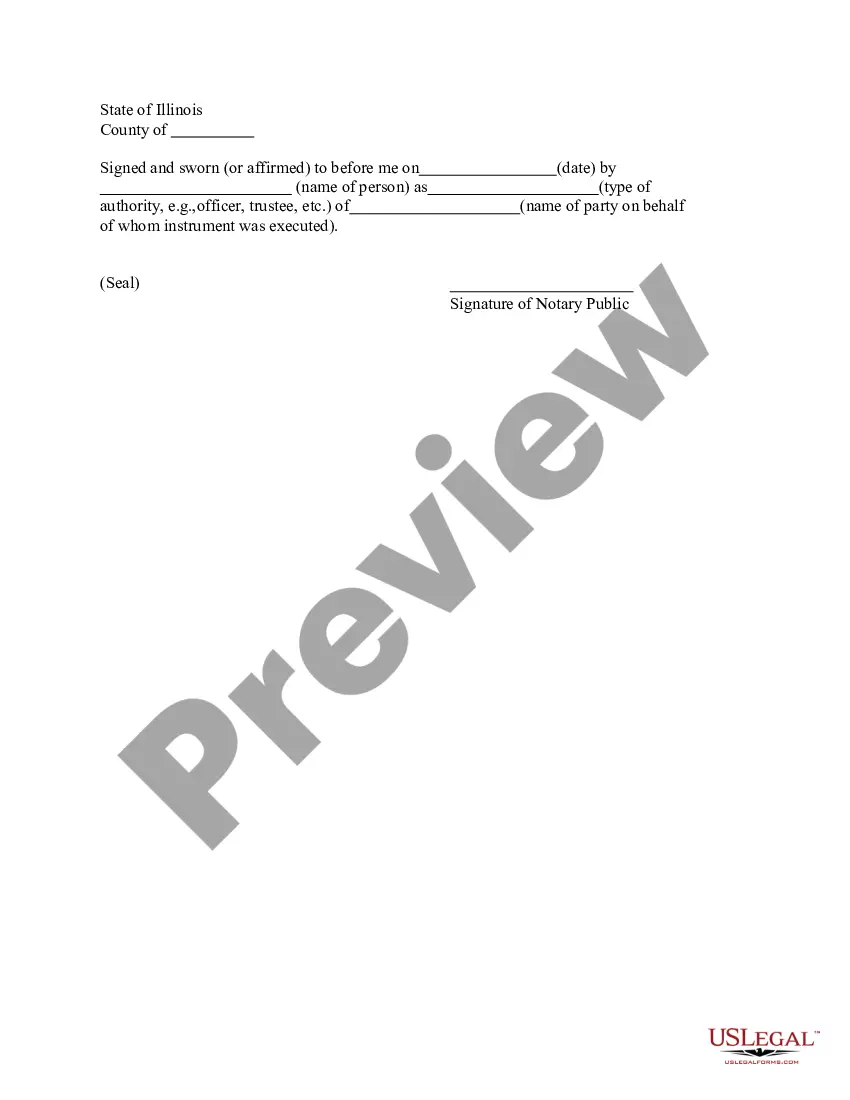
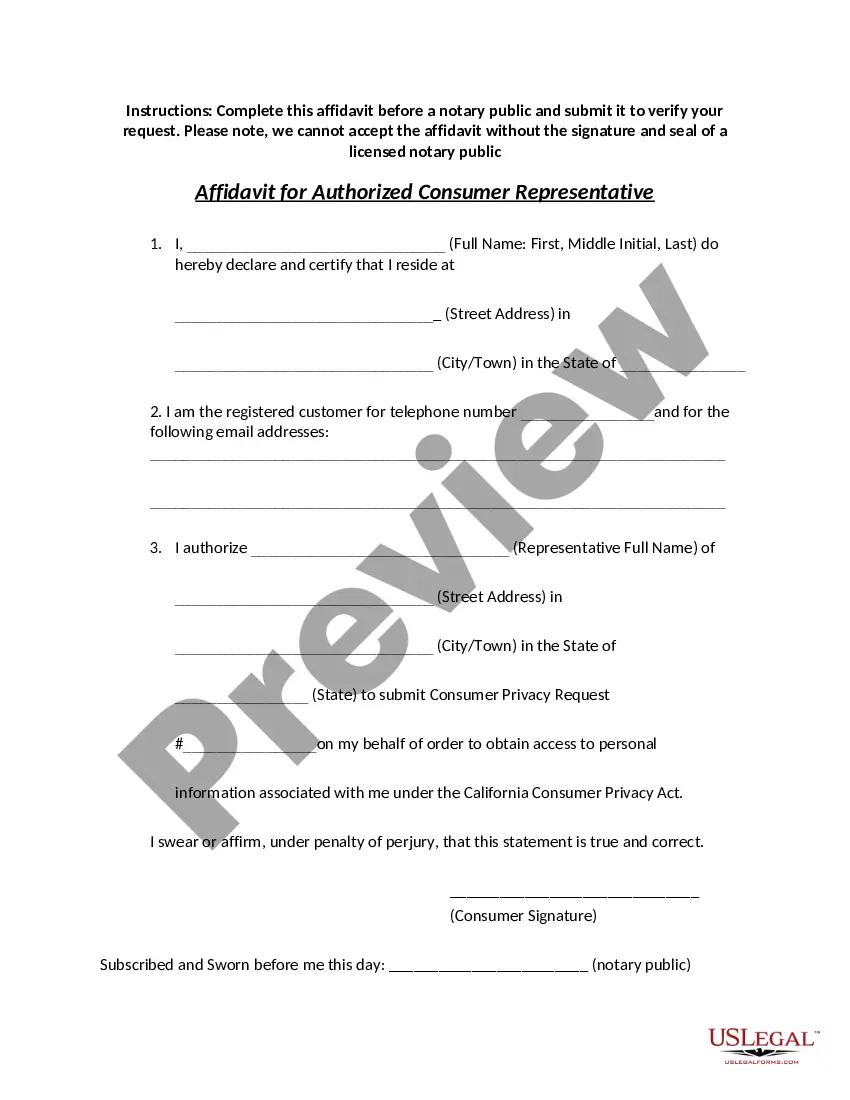
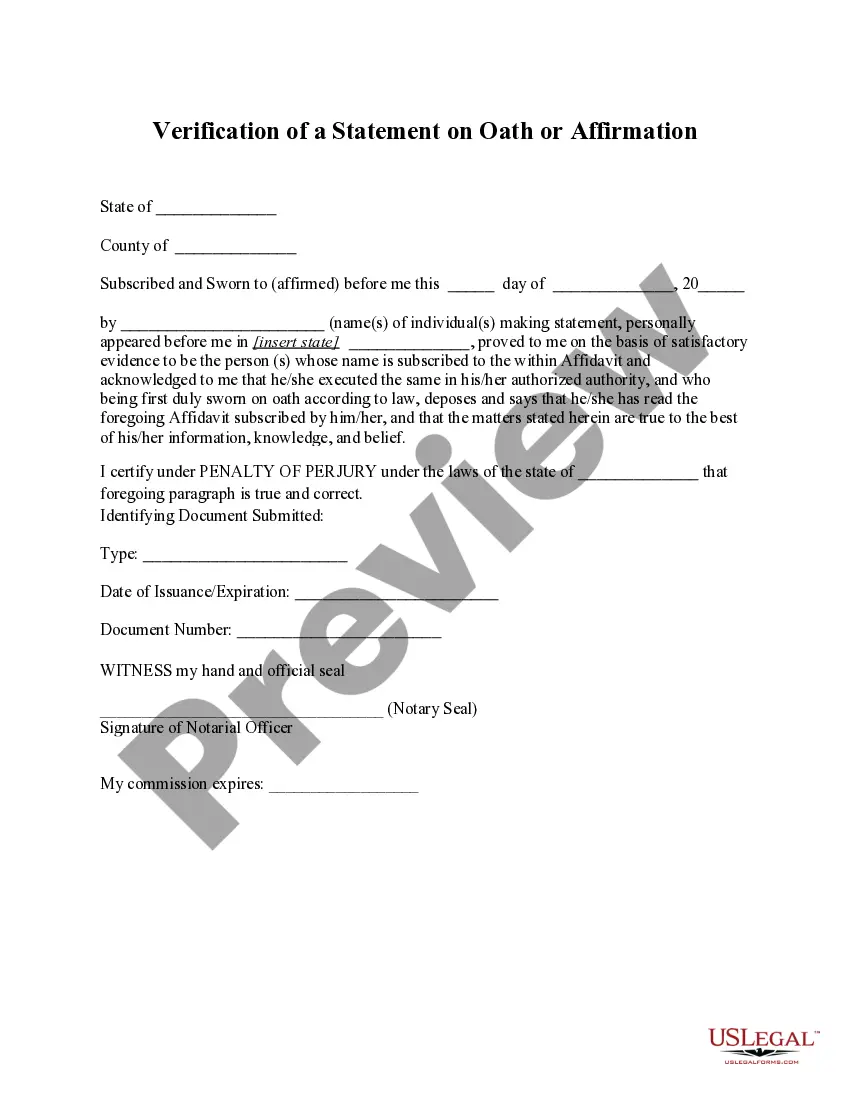
The Acknowledgment for Verification upon Oath or Affirmation by Representative is a legal document used to formally acknowledge and verify information provided by a representative. It serves to confirm that the representative is authorized to act on behalf of another party and is typically used in legal, financial, or contractual situations where an oath or affirmation is required. This form differs from other legal acknowledgment forms by specifically focusing on verification when a representative is involved in the oath-taking process.
Main sections of this form
- Identification of the representative giving the verification.
- Details about the party on behalf of whom the representative is acting.
- Space for the date of the oath or affirmation.
- Signature line for the notary public to confirm the acknowledgment.
- Location information where the verification takes place.

Situations where this form applies
This form is used when a representative needs to verify information or documents on behalf of another person or entity. It is commonly required when submitting forms to government agencies, financial institutions, or during legal proceedings where an affirmation must be made by someone authorized to act for another party. For example, if a trustee needs to verify documents for estate management, this form would be appropriate.
Who can use this document
- Representatives acting on behalf of another individual or organization.
- Individuals involved in legal, financial, or contractual agreements requiring verification.
- Trustees, officers, or authorized agents needing to make formal affirmations.
How to prepare this document
- Begin by filling in the name of the representative verifying the information.
- Enter the name of the person or party on whose behalf the representative is acting.
- Provide the date when the verification is being made.
- Specify the type of authority the representative holds, such as trustee or officer.
- Sign and date the form in the presence of a notary public for legal validation.
Notarization guidance
Yes, this form must be notarized to be legally valid. Completing this step ensures that the signatures are verified and the document holds up in a legal context. US Legal Forms offers integrated online notarization services, allowing for secure video calls with a notary public at your convenience, ensuring a streamlined and efficient process.
Get your form ready online
Our built-in tools help you complete, sign, share, and store your documents in one place.
Make edits, fill in missing information, and update formatting in US Legal Forms—just like you would in MS Word.
Download a copy, print it, send it by email, or mail it via USPS—whatever works best for your next step.
Sign and collect signatures with our SignNow integration. Send to multiple recipients, set reminders, and more. Go Premium to unlock E-Sign.
If this form requires notarization, complete it online through a secure video call—no need to meet a notary in person or wait for an appointment.
We protect your documents and personal data by following strict security and privacy standards.

Make edits, fill in missing information, and update formatting in US Legal Forms—just like you would in MS Word.

Download a copy, print it, send it by email, or mail it via USPS—whatever works best for your next step.

Sign and collect signatures with our SignNow integration. Send to multiple recipients, set reminders, and more. Go Premium to unlock E-Sign.

If this form requires notarization, complete it online through a secure video call—no need to meet a notary in person or wait for an appointment.

We protect your documents and personal data by following strict security and privacy standards.
Typical mistakes to avoid
- Failing to provide the full name of the representative.
- Not specifying the type of authority held by the representative.
- Omitting the date of the oath or affirmation.
- Signing without the presence of a notary public.
Benefits of using this form online
- Easy access to legally vetted templates for accuracy and compliance.
- Ability to edit and customize the form to meet specific needs.
- Instant downloads allow for immediate use without delays.
Key takeaways
- The Acknowledgment for Verification is essential when a representative must verify information on behalf of another.
- Notarization is required to ensure legal validity.
- Accurate completion of the form is crucial to avoid common mistakes.
- This form is specific to the state of Illinois, reflecting local legal requirements.
Looking for another form?
Form popularity
FAQ
A notary acknowledgment in Illinois serves as a formal declaration confirming that a signer voluntarily executed a document. It includes the notary's signature, seal, and a statement verifying the identity of the signer. This process is important for establishing the legitimacy of documents used in legal contexts, such as Illinois Acknowledgment for Verification upon Oath or Affirmation by Representative.
They key difference is that for a signature witnessing, the signer must always sign the document in the Notary's presence.An acknowledgment, on the other hand, does not require the Notary to witness the signature in most states (one exception is Maryland).
There is no requirement in Illinois that a notary public keep a log book or journal. However, a notary may keep a journal for his or her own record keeping.
Step 1: Require Personal Appearance. Step 2: Check Over The Document. Step 3: Carefully Identify The Signer. Step 4: Record Your Journal Entry. Step 5: Complete The Notarial Certificate. A Last Note: Never Give Advice.
The certificate of a notary public, justice of the peace, or other authorized officer, attached to a deed, mortgage, or other instrument, setting forth that the parties thereto personally appeared before him on such a date and acknowledged the instrument to be their free and voluntary act and deed. Read v.
When you see (here insert the name and character of the officer) next to a blank as shown below, it means you should insert Your name, Notary Public in the blank.
Yes. The State of Illinois has enacted the Uniform Real Property Electronic Recording Act (765 ILCS 33/1 through 33/7), which authorizes a notary public to obtain an electronic signature and electronic seal to notarize electronic documents in the physical presence of the individual seeking the notarization.
For an acknowledgment, the signer must always: Be positively identified by the Notary. The Notary must always identify the signer for an acknowledgement; whether the signer personally knows the Notary, presents an ID document, or is identified by a credible witness depends on the circumstances.
A notary acknowledgement ensures that the signer of the document is indeed the person named in the document. The function of the notary in this case is to verify the identity of the signer. On the other hand, a notary is asked to perform a Jurat, when the signer takes an oath or makes an affirmation.
Bring the unsigned document and your photo identification to the notary. Sign the document in the notary's presence. Show the notary your photo identification. Pay the notary fee (usually $1) The notary signs and stamps your document.