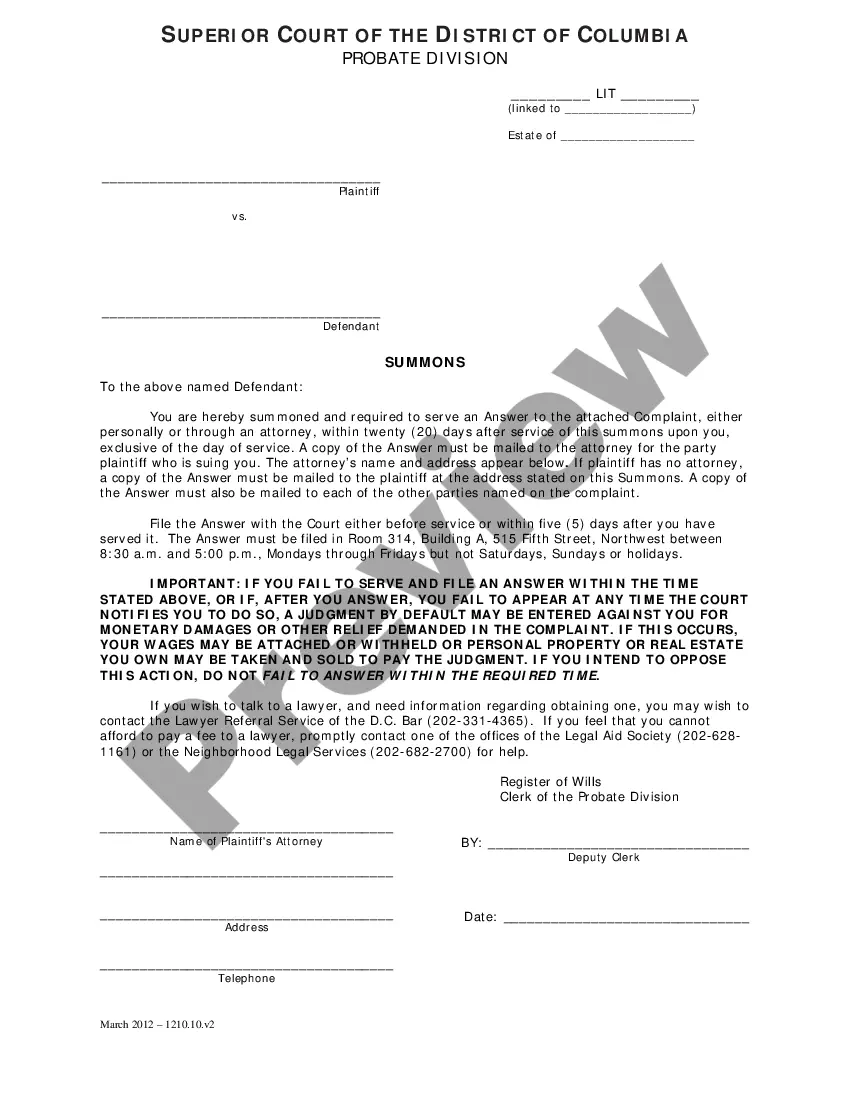
Illinois Small Estate affidavit
Overview of this form
The Small Estate Affidavit is a legal document that allows individuals to claim assets from a deceased person's estate without the need for formal probate proceedings. This form is specifically designed for estates where the total value of personal property does not exceed $100,000. It is a simplified process for transferring property to heirs or beneficiaries, making it easier for individuals to manage the deceased personâs estate in a timely fashion.
What’s included in this form
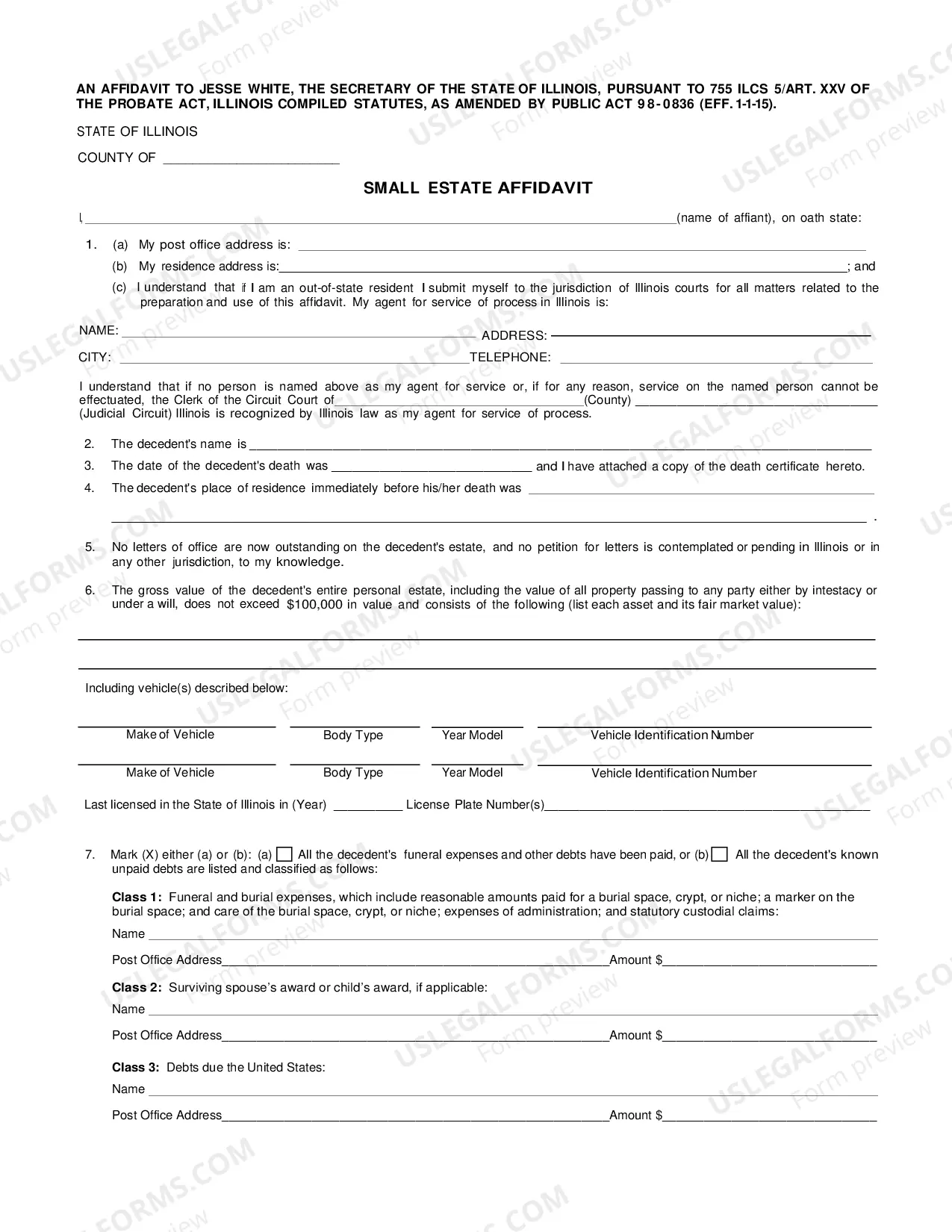
- Affiantâs identification: The form requires the name and address of the person making the affidavit.
- Decedentâs information: Includes the decedentâs name, date of death, and residence prior to death.
- Asset valuation: Details the gross value of the decedent's personal estate and lists individual assets.
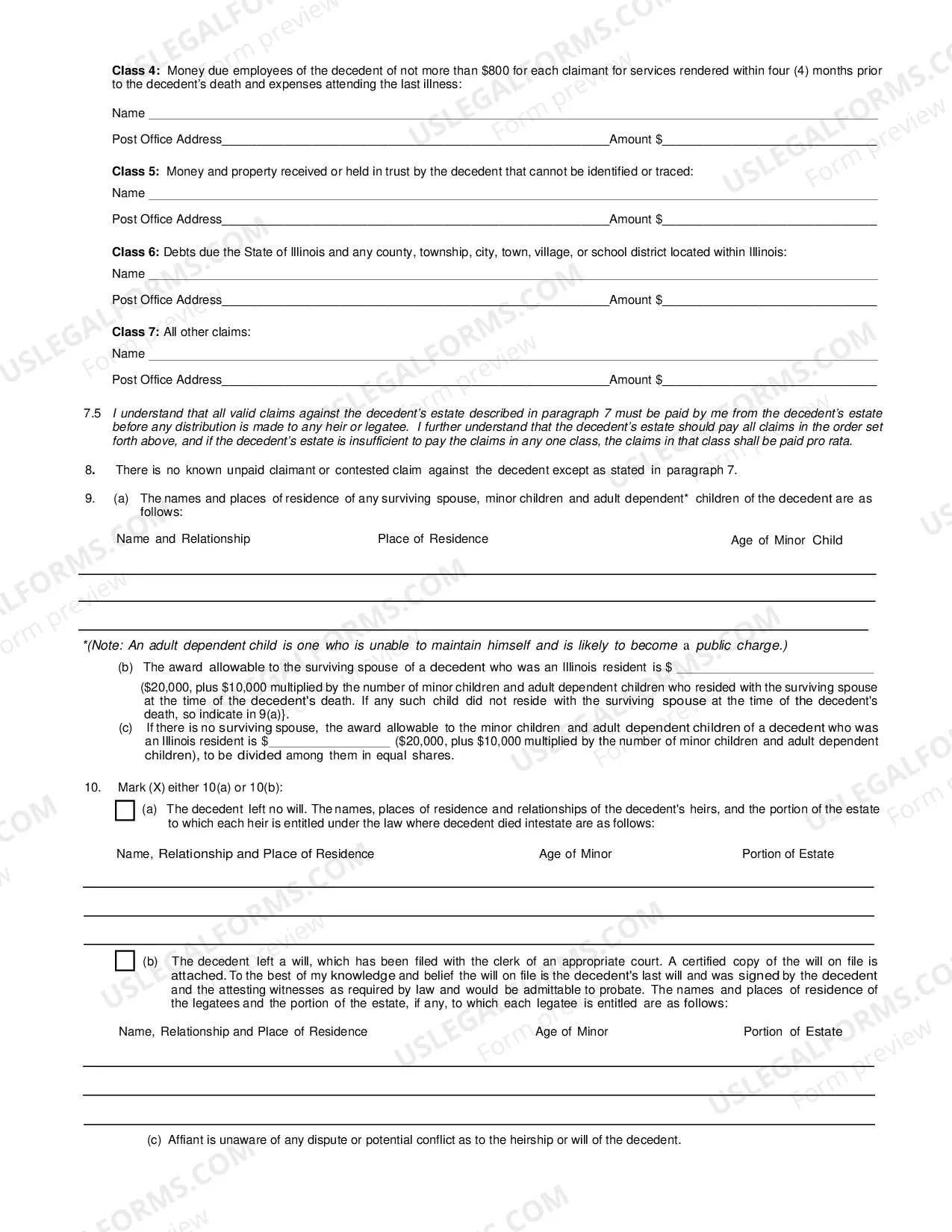
- Claim classification: Requires listing funeral expenses and other debts against the estate.
- Heirs and legatees information: Identifies individuals entitled to the estate and their relationship to the decedent.
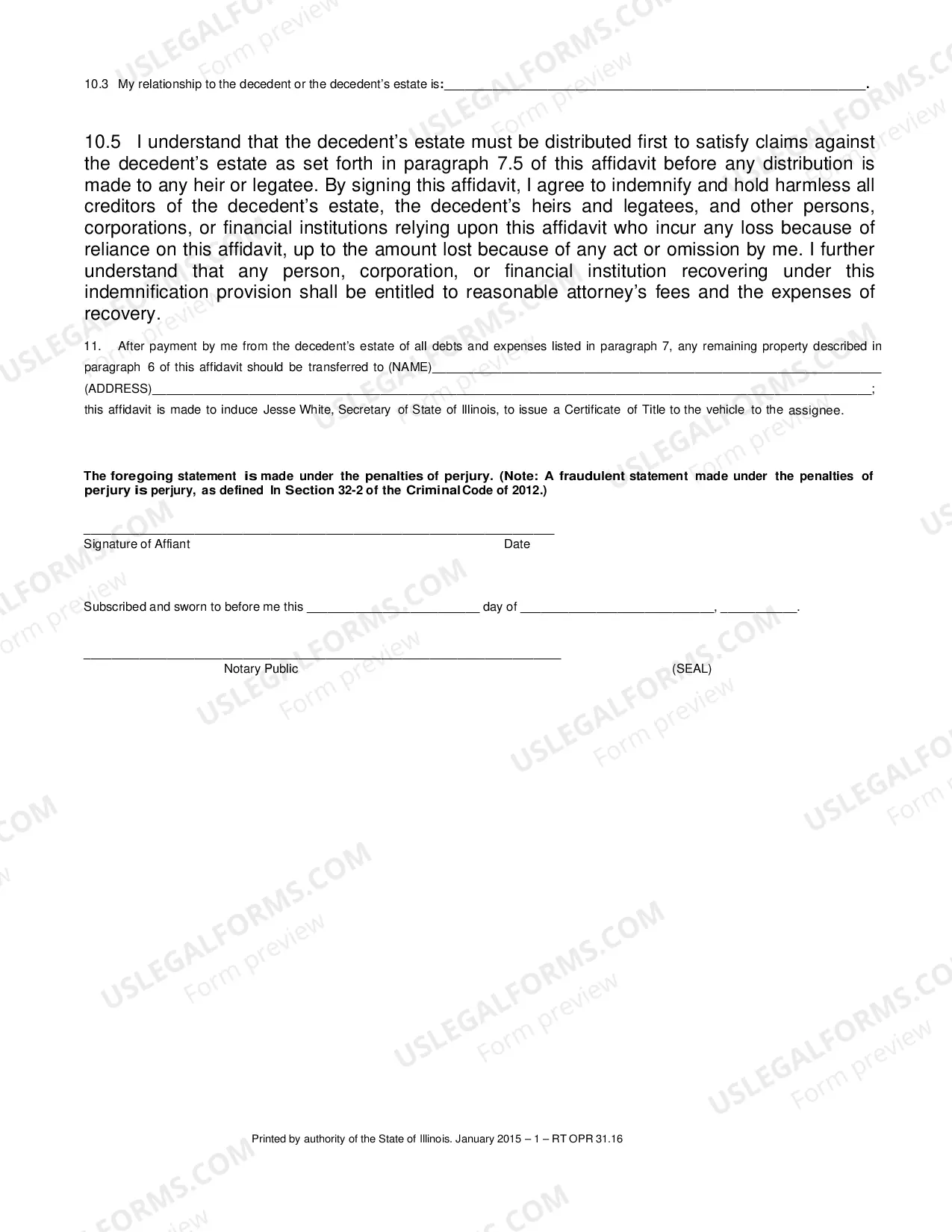
- Signature and notarization: The form must be signed by the affiant and typically needs notarization.
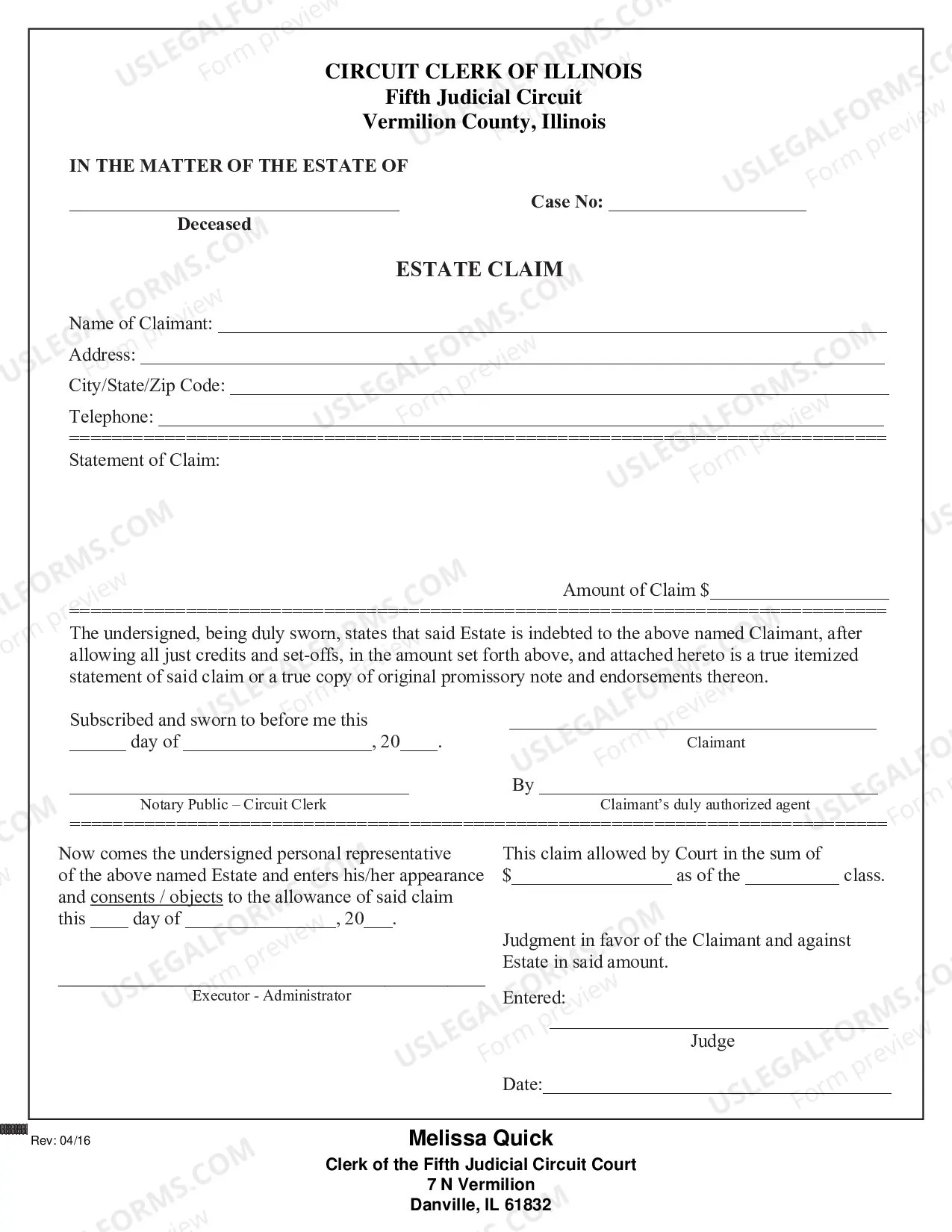

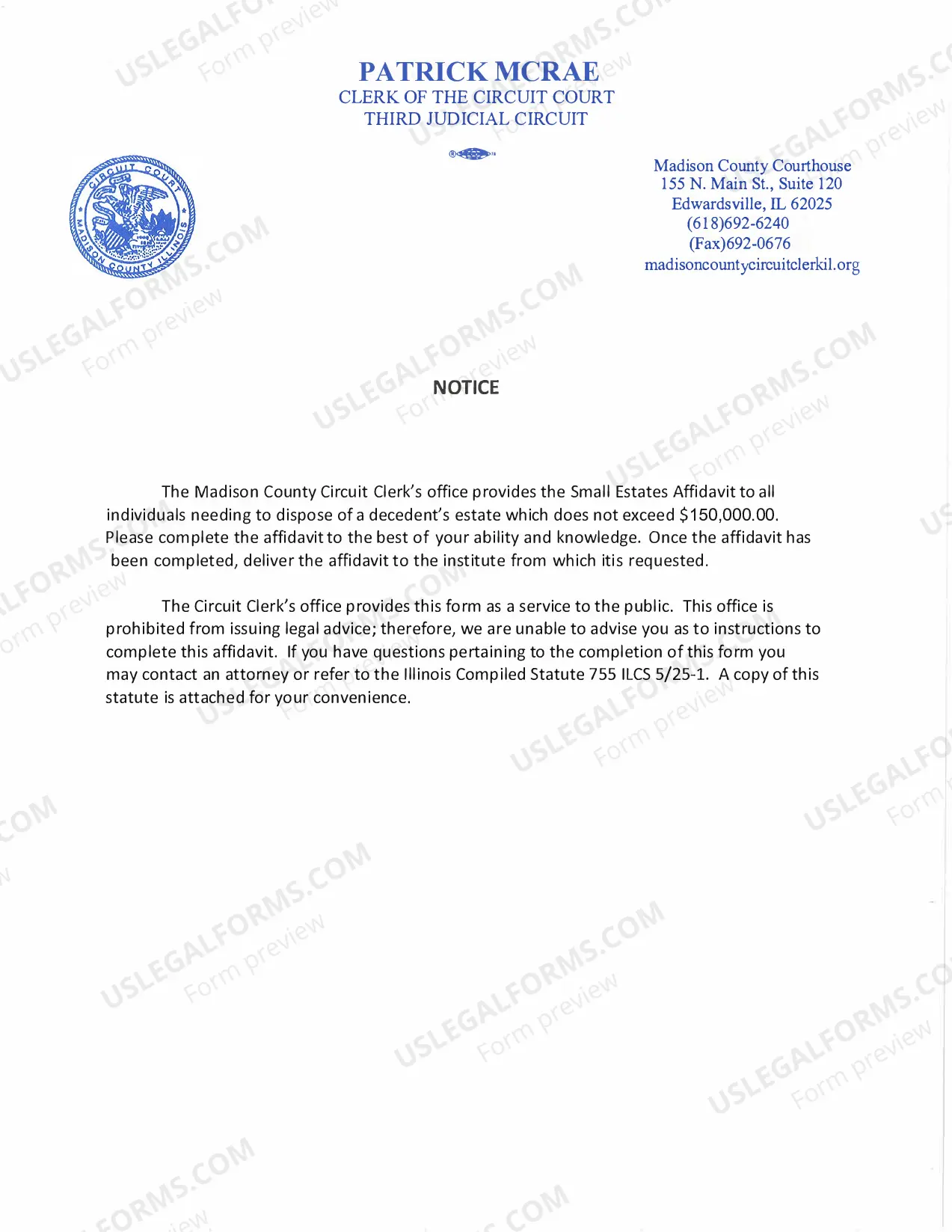
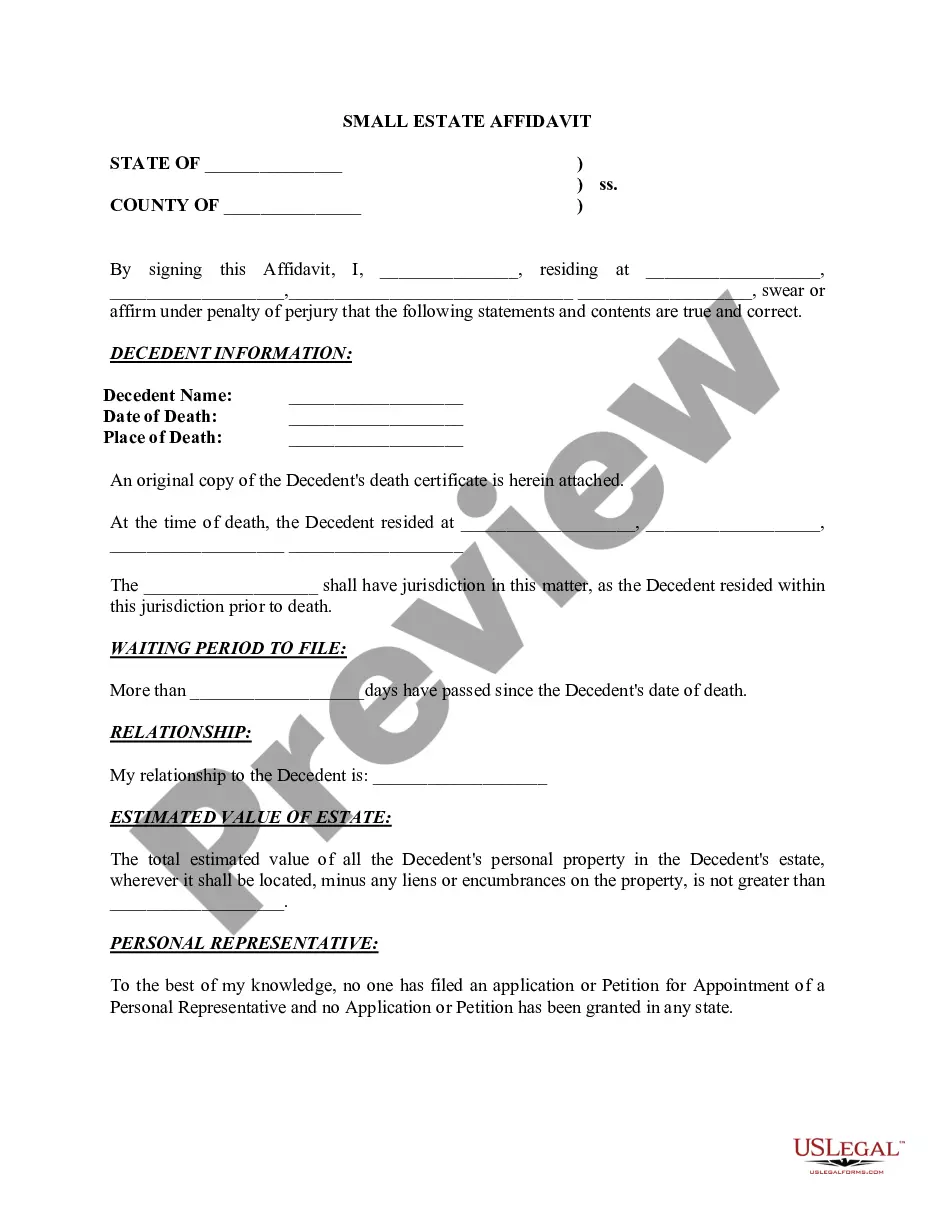
Situations where this form applies
This form is typically used when a person passes away and their assets fall below the specified threshold of $100,000. It is especially useful in situations where the estate does not require formal probate, allowing for a quicker resolution in transferring assets to beneficiaries. Common scenarios include small estates where the decedent owned a modest amount of personal property or a vehicle that needs to be retitled.
Intended users of this form
- Individuals who are heirs or beneficiaries of a deceased personâs estate.
- Family members or friends who are tasked with handling the deceasedâs affairs.
- Residents of Illinois who need to transfer property from a small estate without going through probate.
- Those who have a copy of the death certificate and can compile information about the estate's assets and outstanding debts.
How to prepare this document
- Identify the affiant by entering the name and addresses as required.
- Provide the decedentâs name, date of death, and place of residence.
- Detail the total value of the estate and list its assets and their fair market values.
- Specify any debts or claims against the estate to be satisfied prior to distribution.
- Collect signatures and ensure the affidavit is notarized as required.
Does this form need to be notarized?
Yes, this form must be notarized to be legally valid. Notarization helps verify the identity of the affiant and adds an extra layer of authenticity to the affidavit. US Legal Forms offers integrated online notarization, providing a secure and convenient option for users to complete this process via video call without the need to travel.
Get your form ready online
Our built-in tools help you complete, sign, share, and store your documents in one place.
Make edits, fill in missing information, and update formatting in US Legal Forms—just like you would in MS Word.
Download a copy, print it, send it by email, or mail it via USPS—whatever works best for your next step.
Sign and collect signatures with our SignNow integration. Send to multiple recipients, set reminders, and more. Go Premium to unlock E-Sign.
If this form requires notarization, complete it online through a secure video call—no need to meet a notary in person or wait for an appointment.
We protect your documents and personal data by following strict security and privacy standards.

Make edits, fill in missing information, and update formatting in US Legal Forms—just like you would in MS Word.

Download a copy, print it, send it by email, or mail it via USPS—whatever works best for your next step.

Sign and collect signatures with our SignNow integration. Send to multiple recipients, set reminders, and more. Go Premium to unlock E-Sign.

If this form requires notarization, complete it online through a secure video call—no need to meet a notary in person or wait for an appointment.

We protect your documents and personal data by following strict security and privacy standards.
Common mistakes
- Failing to list all assets or debts accurately, which can delay the process.
- Not obtaining the necessary signatures or failing to notarize the document.
- Omitting the required details about the decedentâs heirs or beneficiaries.
- Incorrectly assessing the value of the personal estate.
Why complete this form online
- Convenience of downloading and filling out the form at your own pace.
- Access to attorney-drafted templates that ensure legal compliance.
- Editability allows for quick updates and changes as needed.
- Secure storage options to keep your legal documents safe and accessible.
Looking for another form?

Form popularity
FAQ
This statement of the decedent's intent is commonly known as that person's "Will." Under Illinois law, it is required that any person who possesses the Will of a decedent file it with the Clerk of the Circuit Court of the county in which that individual resided within 30 days after the death of the testator is known to
In Illinois, a will must be filed within thirty (30) days of a person's death. Failure to file a will in your possession is a felony under Illinois law.
The form must be notarized, so make sure you don't sign it until you can do so in the presence of a notary public. You'll also need to attach a copy of the death certificate and a certified copy of the will if there is one.
Probate is typically necessary in Illinois when the decedent owns any real estate or more than $100,000.00 of non-real-estate assets outside of a trust.
To use a small estate affidavit, all of the following must be true: The total amount of property in the estate is worth $100,000 or less; The person who died did not own any real estate, or they owned real estate that went to someone else when they died.
You can only use a small estate affidavit if the estate has no more than $100,000 in it. You cannot use a small estate affidavit to transfer real property, such as a house. However, the decedent's real property may have already been transferred to someone else.
A small estate affidavit is a sworn legal document a person can use to assert a claim to assets from the estate of someone who has died. In Illinois, the affidavit is not filed with the court but can be presented to a person, bank, brokerage or other holder of an asset from the estate.