Illinois License Agreement
What is this form?
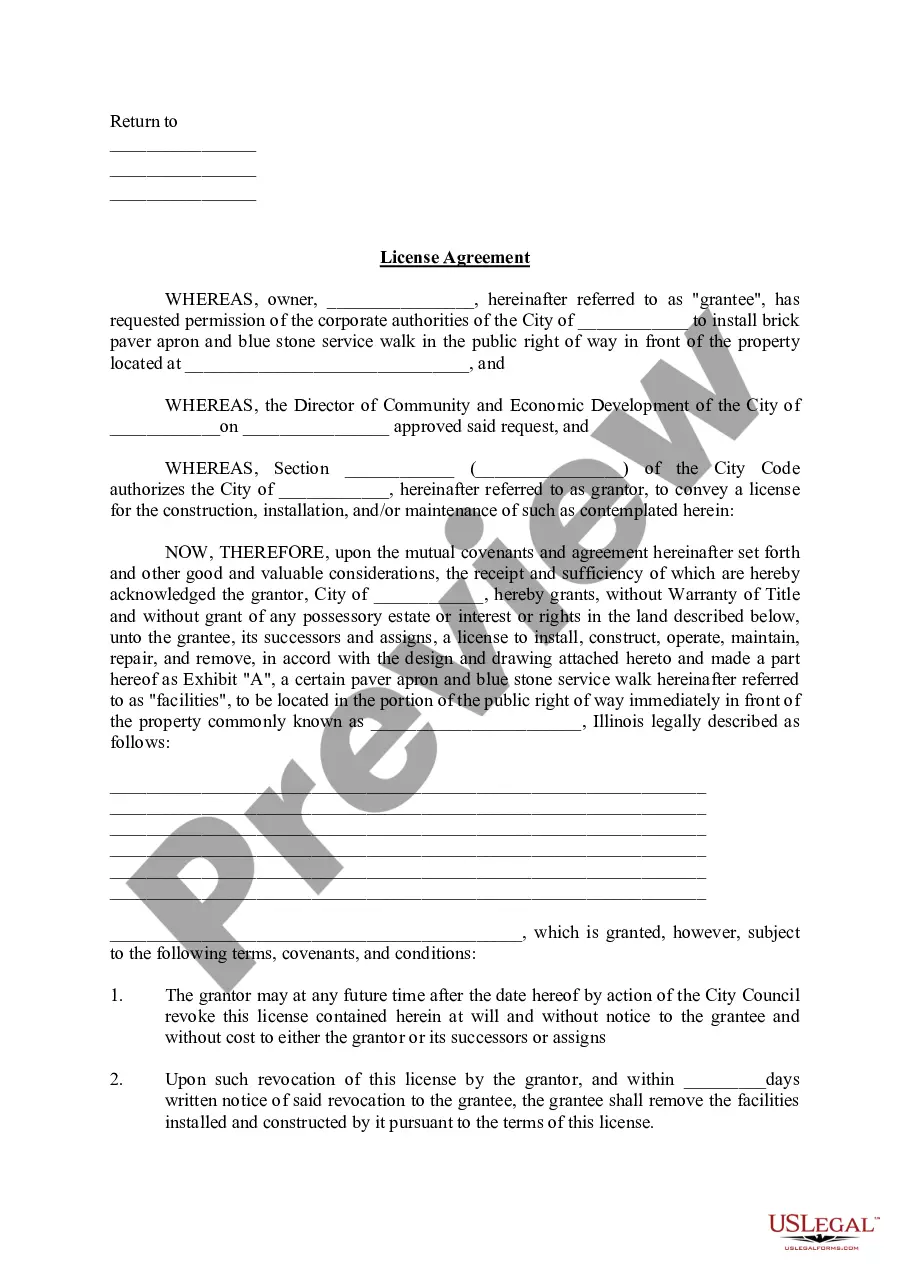
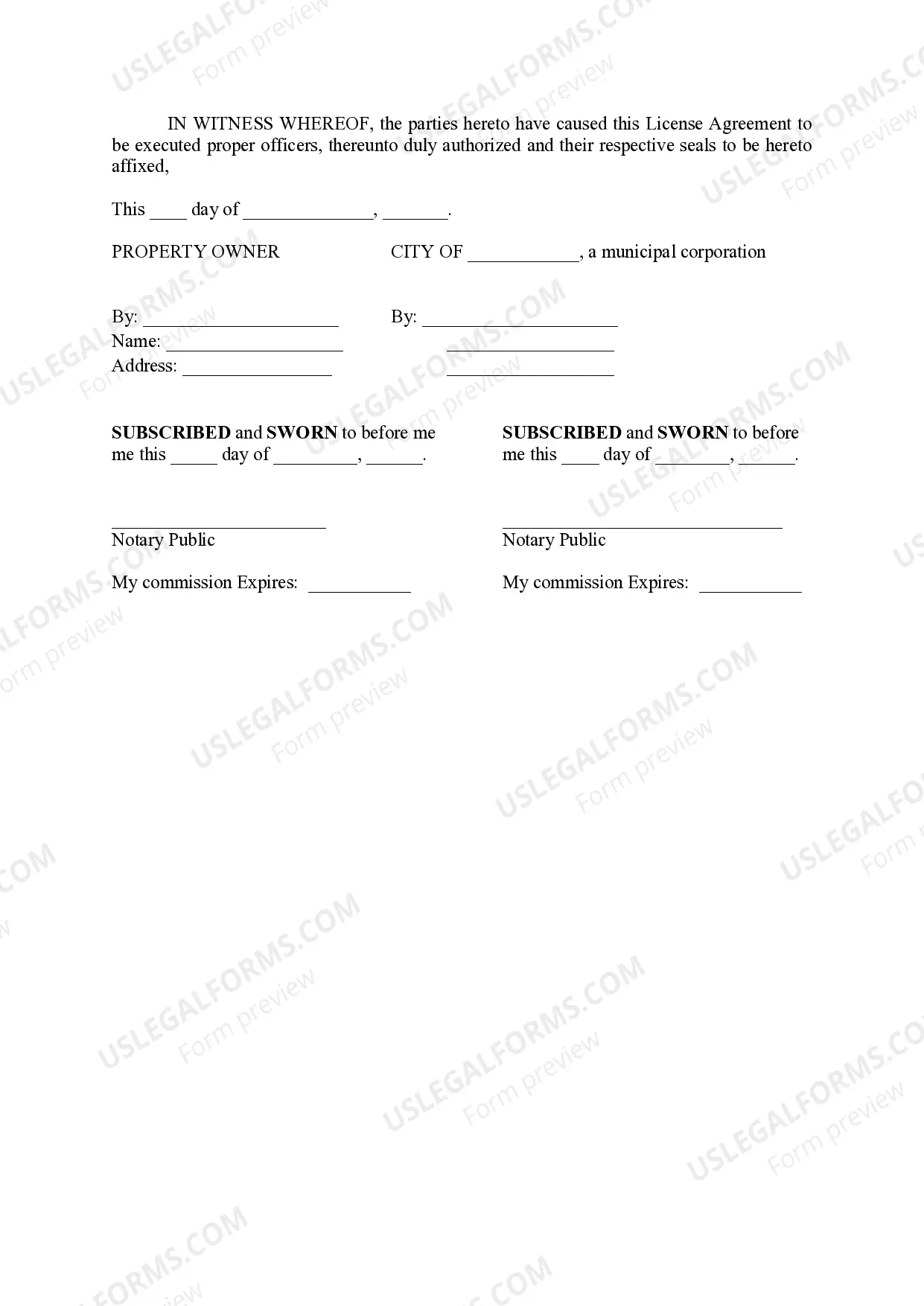
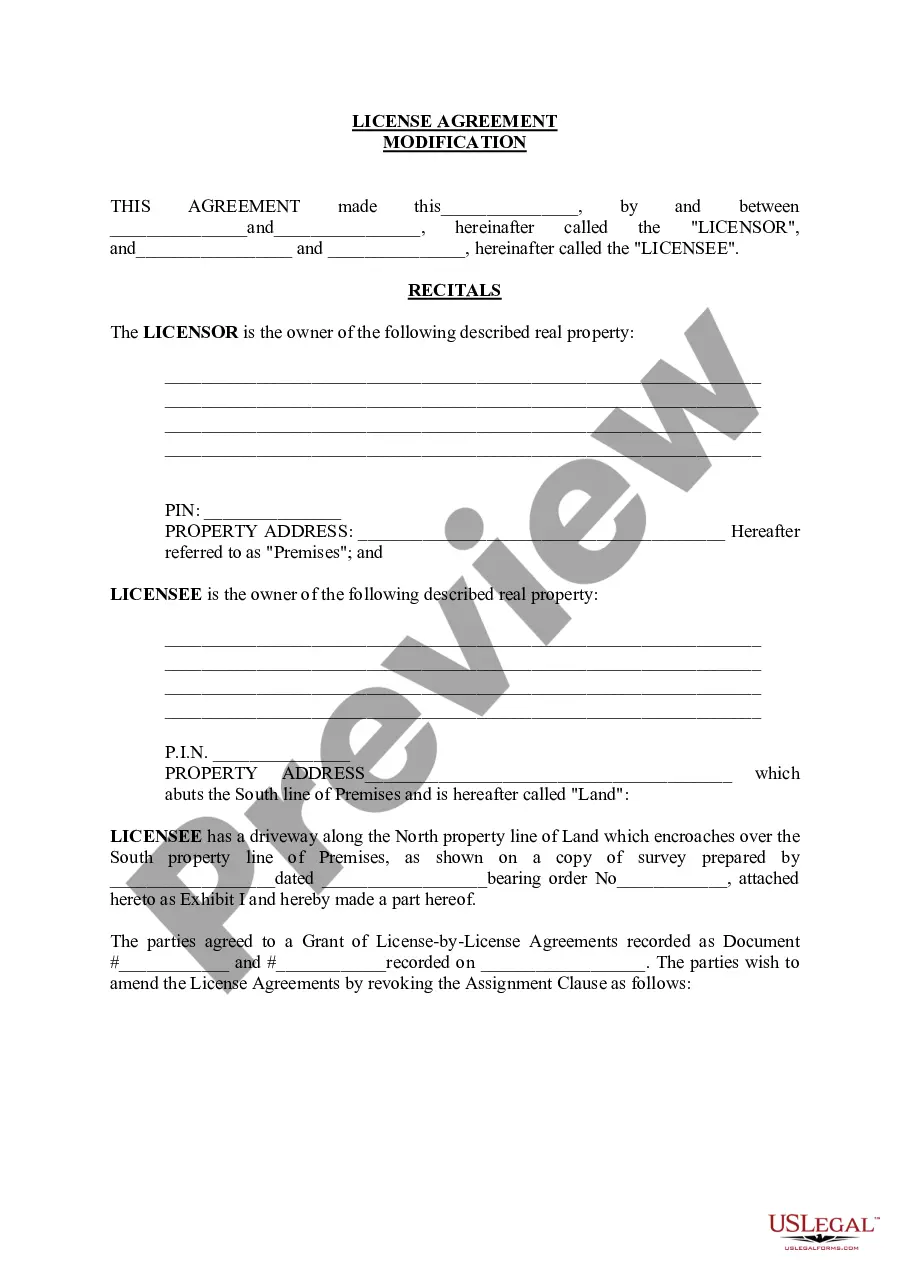
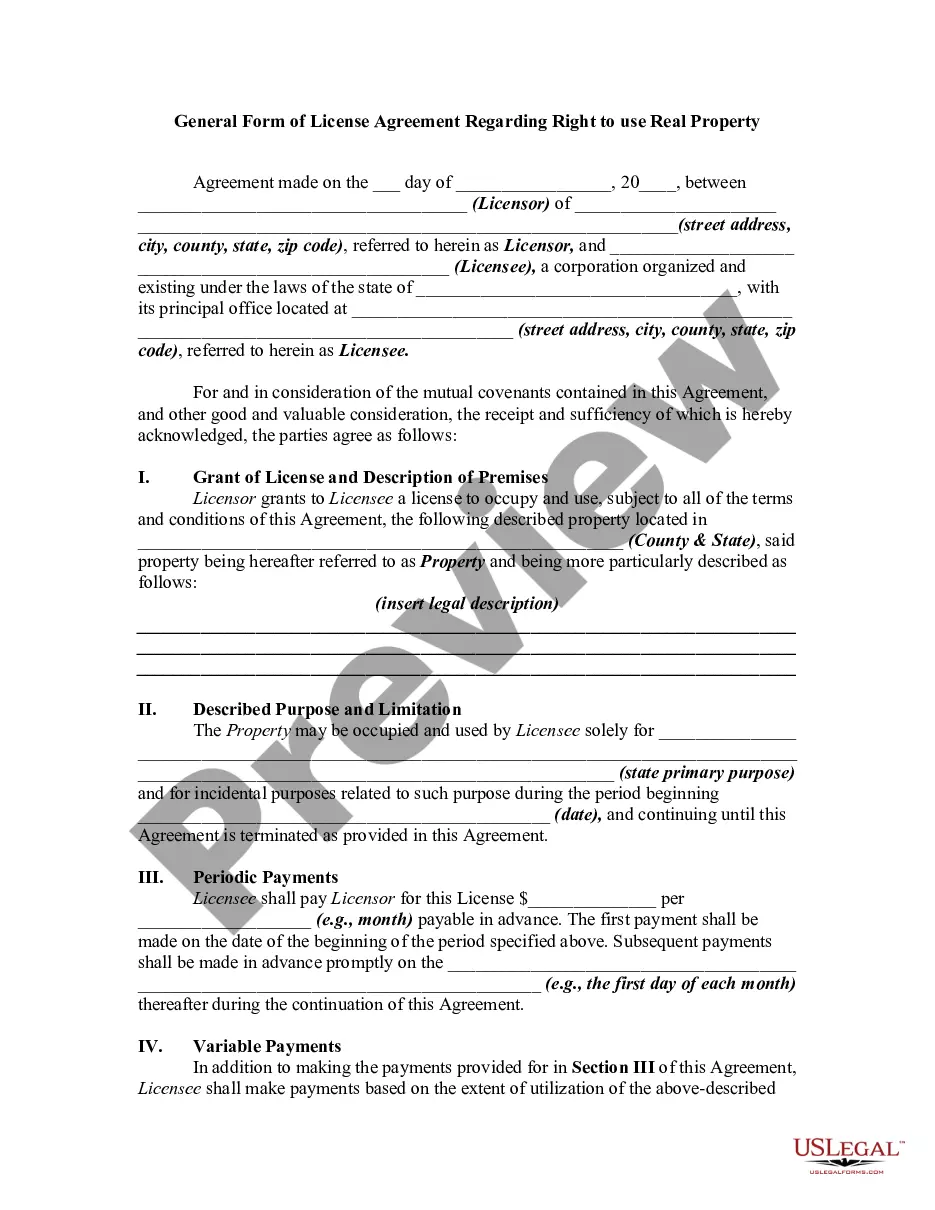
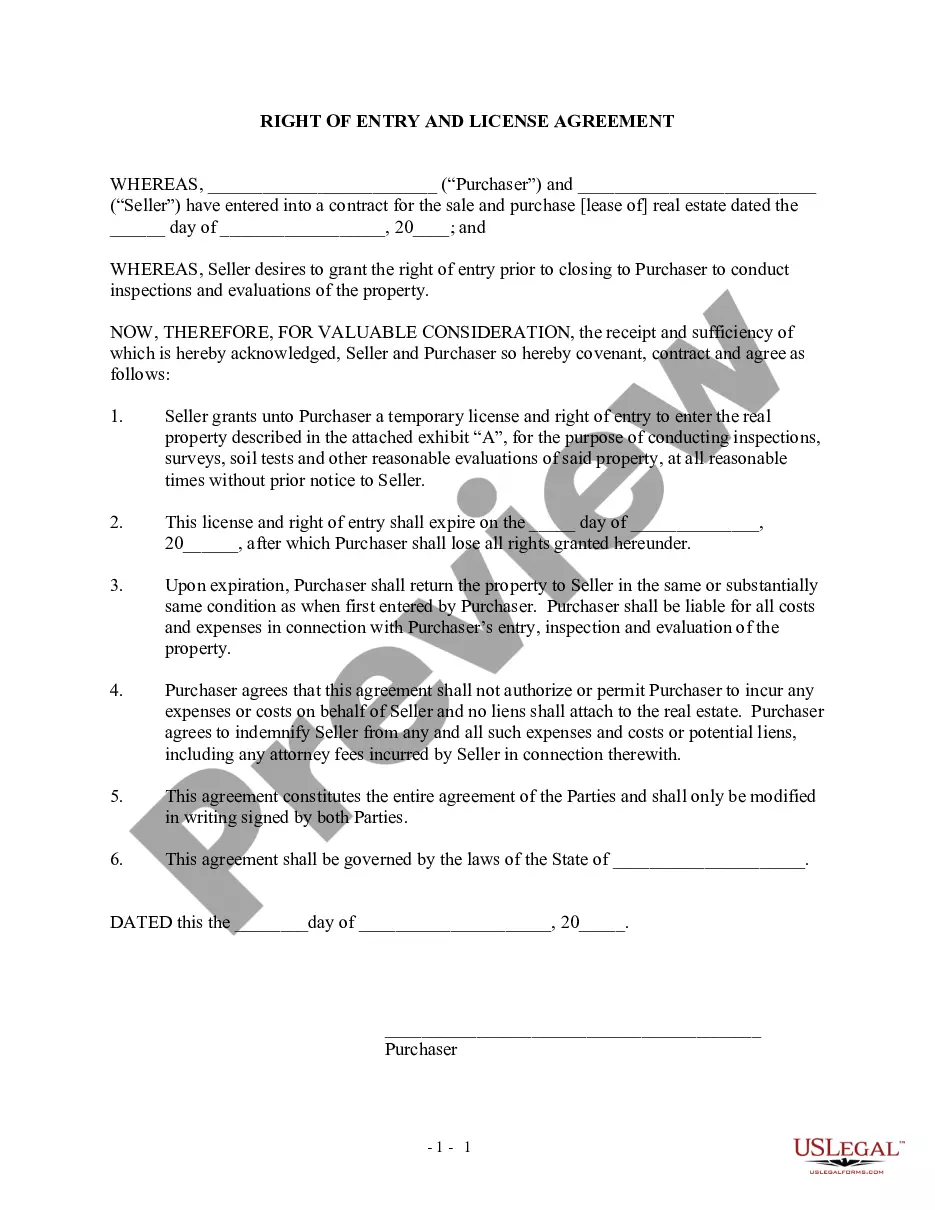
The License Agreement is a legal document that grants permission from a city to a property owner to install improvements, such as brick pavers, in the public right of way adjacent to their property. This form outlines the responsibilities and rights of both the grantor (the city) and the grantee (the property owner), differentiating it from other property agreements by focusing specifically on public space usage.
What’s included in this form
- Parties involved: Identifies the grantor (the city) and the grantee (the property owner).
- Property description: Details the location where the improvements will be made.
- Scope of work: Specifies the types of improvements permitted, such as brick paver aprons and service walks.
- Revocation clause: Outlines the conditions under which the city can revoke the license.
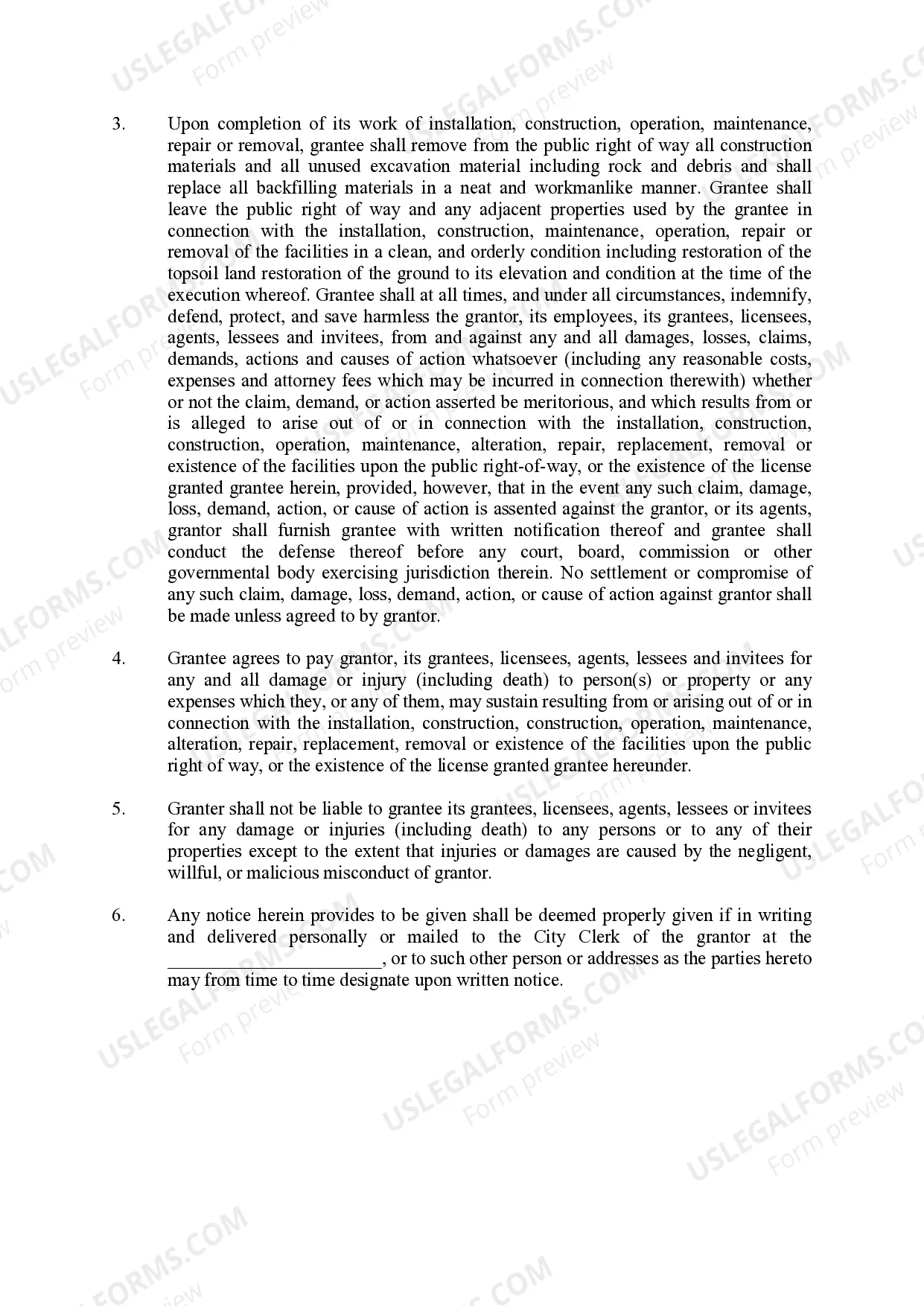
- Indemnification: Addresses liability and the responsibilities of the grantee regarding damages or injuries.
- Notice requirements: Details how parties should communicate regarding the agreement.
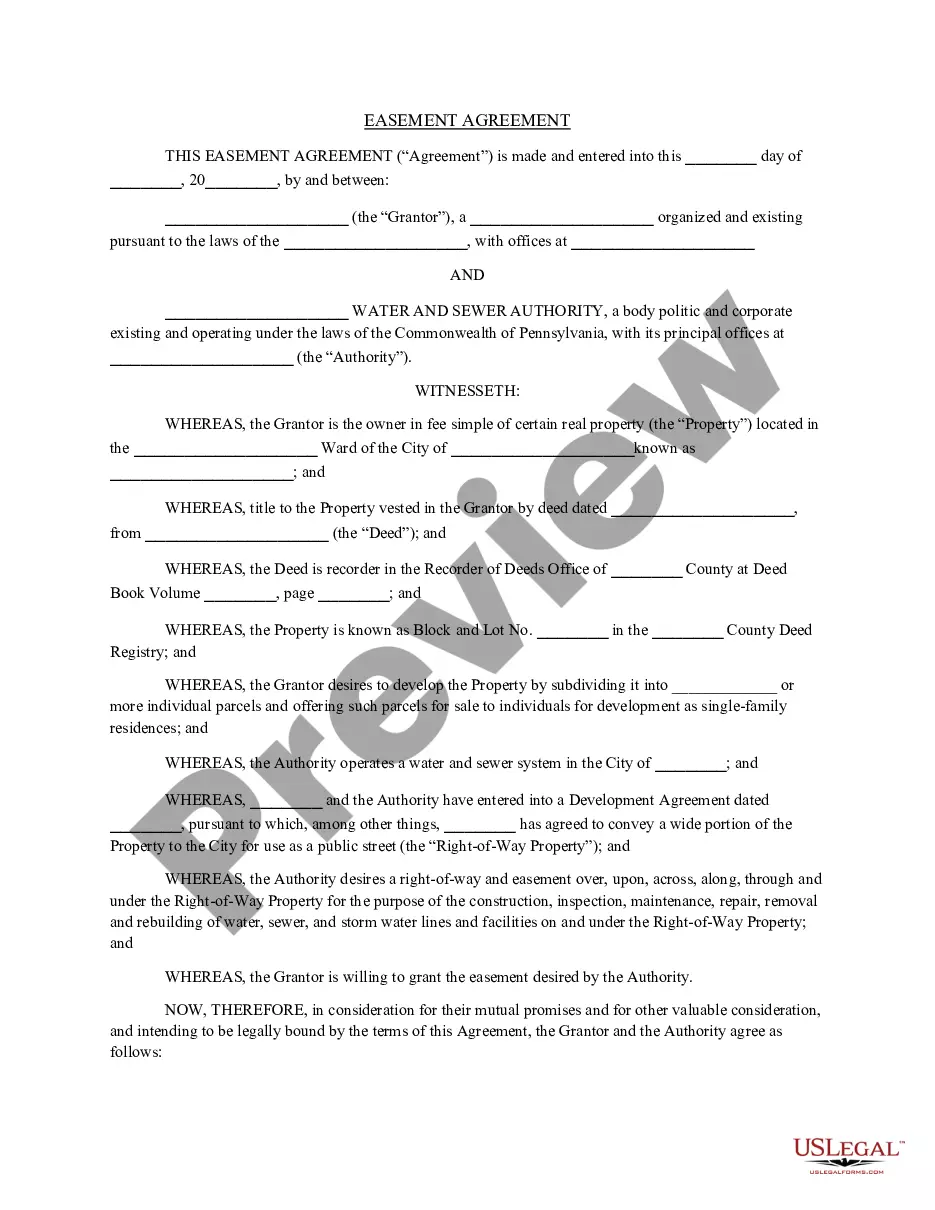
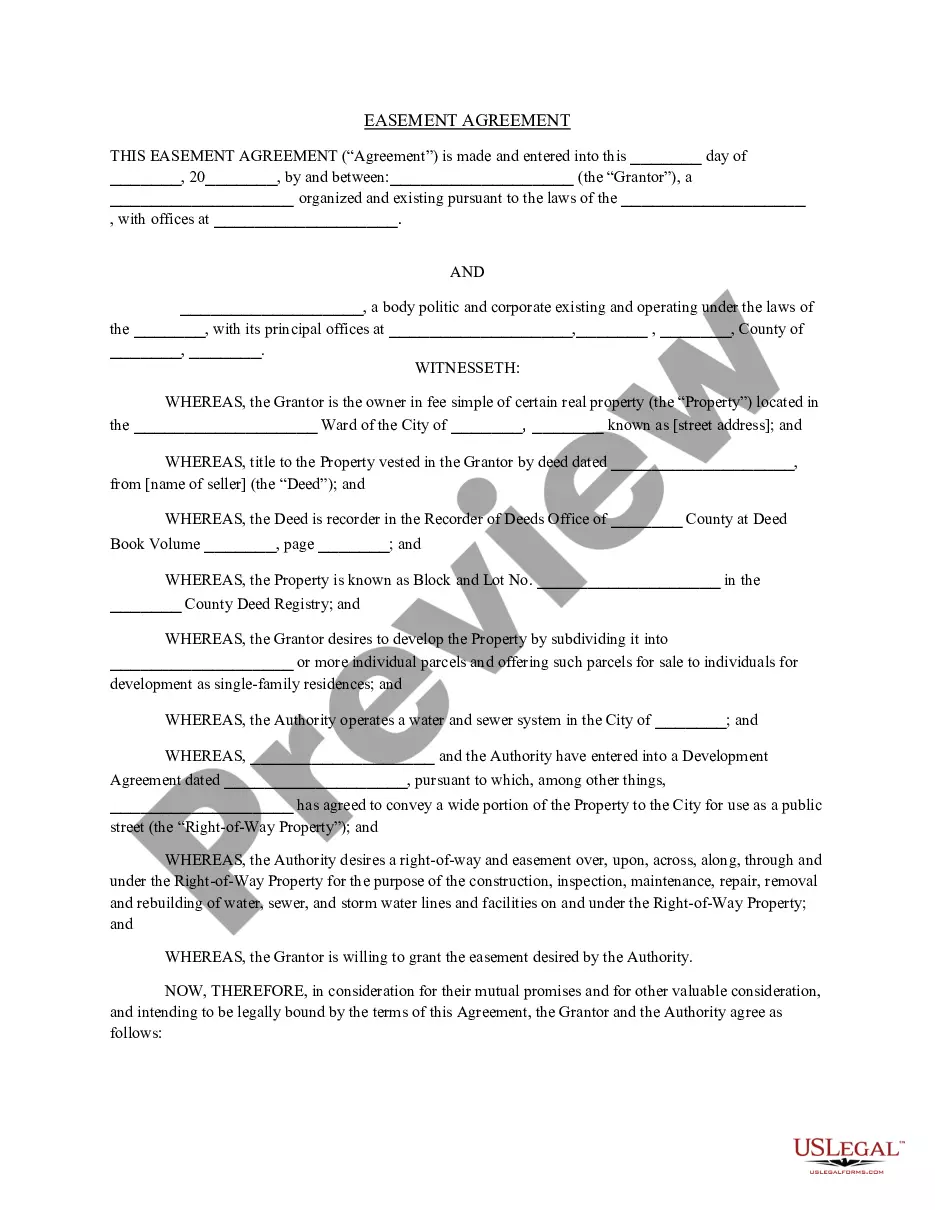
When to use this form
This License Agreement should be used when a property owner seeks to install permanent improvements in the public right of way, such as paving or landscaping. Common scenarios include significant renovations that affect access or aesthetics of public spaces directly adjacent to private property. This form helps ensure compliance with municipal regulations.
Who needs this form
- Property owners planning to make improvements in front of their property.
- Cities and municipalities granting licenses for public space usage.
- Contractors or representatives acting on behalf of property owners seeking to install improvements.
Instructions for completing this form
- Identify the parties: Fill in the names of the property owner and the city.
- Describe the property: Provide the full address and legal description of the property affected.
- Specify the improvements: Clearly outline the nature of the improvements to be installed.
- Enter dates: Complete the date fields throughout the agreement as necessary.
- Sign and notarize: Ensure both parties sign the agreement and, if required, have it notarized.
Notarization guidance
This form does not typically require notarization unless specified by local law. However, it is advisable to verify any specific local requirements to ensure the agreement is legally binding.
Get your form ready online
Our built-in tools help you complete, sign, share, and store your documents in one place.
Make edits, fill in missing information, and update formatting in US Legal Forms—just like you would in MS Word.
Download a copy, print it, send it by email, or mail it via USPS—whatever works best for your next step.
Sign and collect signatures with our SignNow integration. Send to multiple recipients, set reminders, and more. Go Premium to unlock E-Sign.
If this form requires notarization, complete it online through a secure video call—no need to meet a notary in person or wait for an appointment.
We protect your documents and personal data by following strict security and privacy standards.

Make edits, fill in missing information, and update formatting in US Legal Forms—just like you would in MS Word.

Download a copy, print it, send it by email, or mail it via USPS—whatever works best for your next step.

Sign and collect signatures with our SignNow integration. Send to multiple recipients, set reminders, and more. Go Premium to unlock E-Sign.

If this form requires notarization, complete it online through a secure video call—no need to meet a notary in person or wait for an appointment.

We protect your documents and personal data by following strict security and privacy standards.
Common mistakes
- Failing to include the complete legal description of the property.
- Leaving out the specific improvements being permitted.
- Not providing the appropriate signatures from both parties.
- Overlooking the indemnification clauses, which can lead to liability issues.
- Not updating the form if the city code changes.
Advantages of online completion
- Convenient access: Download the form anytime without waiting.
- Editable format: Easily fill in specific information and customize as needed.
- Legal reliability: Forms are drafted by licensed attorneys, ensuring compliance with legal standards.
Summary of main points
- The License Agreement allows property owners to make improvements in the public right of way.
- It outlines responsibilities, conditions, and liabilities for both parties involved.
- Proper completion and notarization of the agreement are essential for legality.
Looking for another form?
Form popularity
FAQ
By agreeing to an end user license agreement, you become legally bound by its terms. This includes any restrictions, usage rights, and obligations specified in the Illinois License Agreement. It is important to adhere to these provisions, as failing to do so may lead to penalties or termination of your license. Understanding the consequences can help you navigate your legal responsibilities more effectively.
In Illinois, individuals can apply for a driver's license without a Social Security Number (SSN) using the Temporary Visitor's Driver's License (TVDL) program. However, applicants must provide alternative forms of identification and residency proof. This approach allows many individuals to obtain driving privileges legally.
The data license must also establish who is permitted to use the licensed data. For example, the license agreement may identify the people who are permitted to use the data or the devices on which the data may be used or may specify the maximum number of such users or devices.
A licence grants a personal right to use the property or part of the property in a certain way. A lease, on the other hand, is the grant of a right to the exclusive possession of land for a determinable period of time. It is important for both parties to understand the type of agreement into which they are entering.
What is a Licensing Agreement? A licensing agreement is a contract between two parties (the licensor and licensee) in which the licensor grants the licensee the right to use the brand name, trademark, patented technology, or ability to produce and sell goods owned by the licensor.
A lease is a transfer of an interest in a specific immovable property, while licence is a bare permission, without any transfer of an interest.A lease creates an interest in favour of the leassee with respect of the property, but a licence does not create such an interest.
A lease is the grant of legal interest in land which gives exclusive possession for a fixed period of time. A licence is merely a personal permission granting licence to occupy or do something on someone else's property.
A lease is a contract between a tenant and a landlord that provides the tenant with exclusive interest in the property. A license, on the other hand, is when the owner gives permission to a licensee to conduct an action on the owner's property.
The most important point of distinction between a lease and a leave and license is the transfer of interest in the property.The parties to a lease are the lessor and lessee. Lessor is the person who grants the lease and lessee is the person who accepts the lease. The parties to a license are licensor and licensee.
Exclusive or non-exclusive. In an exclusive license, the intellectual property holder is licensing the work only to one person, for that particular use/territory. Territory. Use. Attribution. Derivative works. Confidentiality. Time frame. Termination.