Illinois Termination Letter - Withdrawal - with Payment Demand
About this form
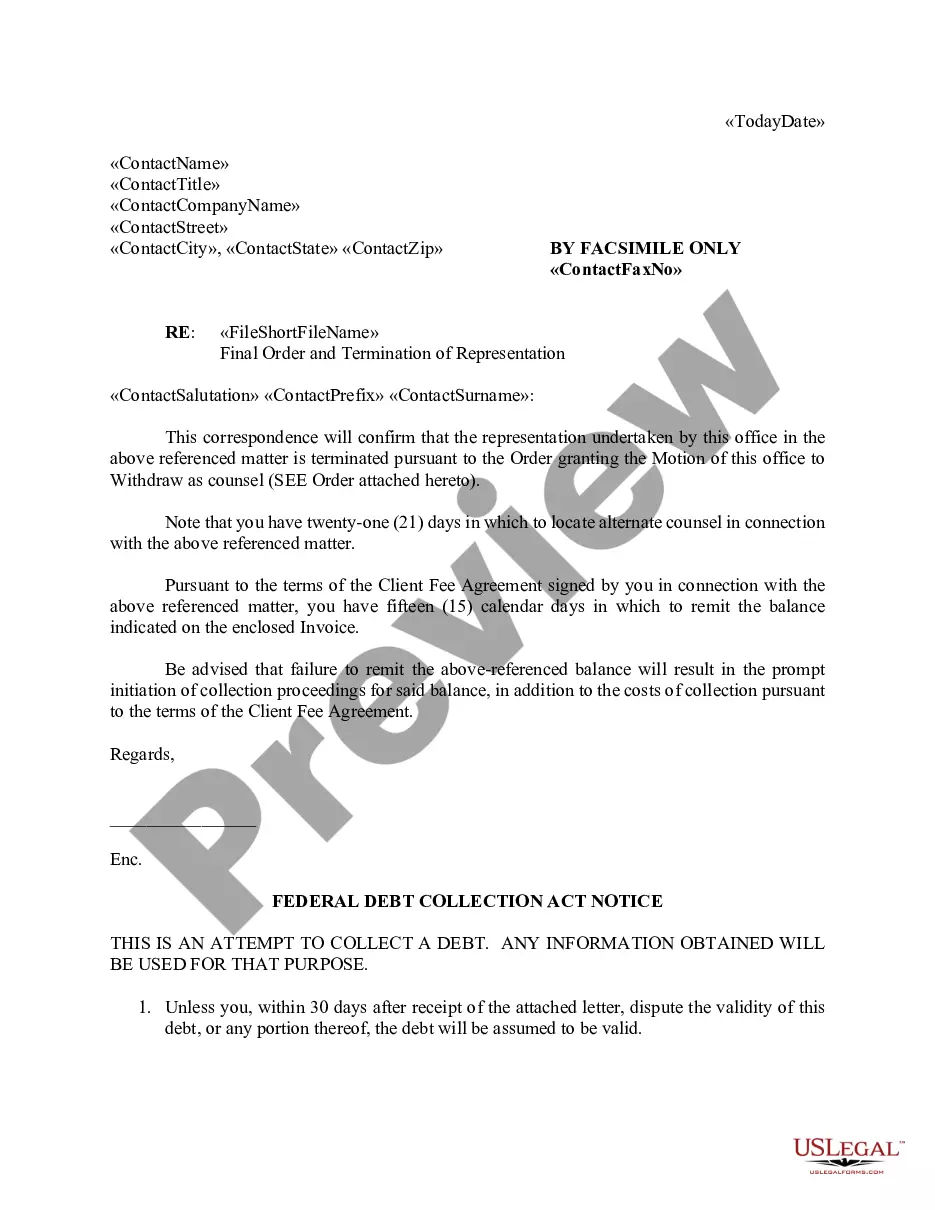
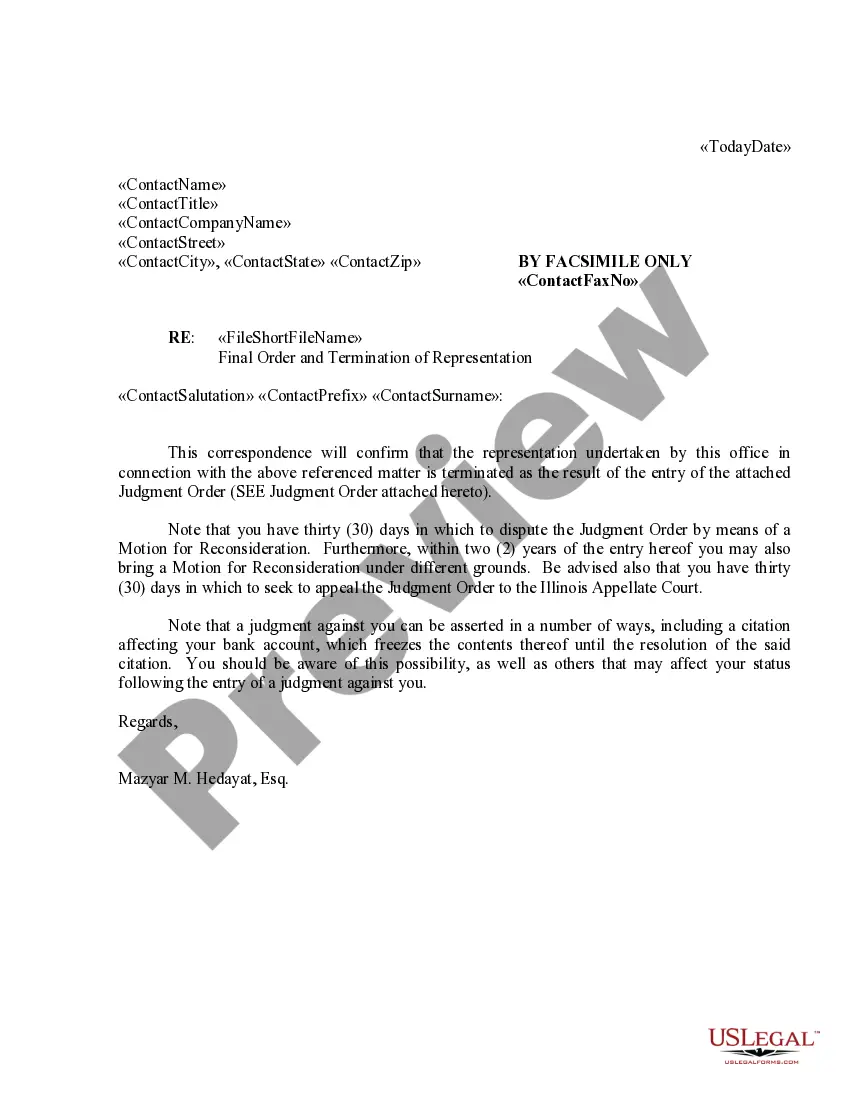
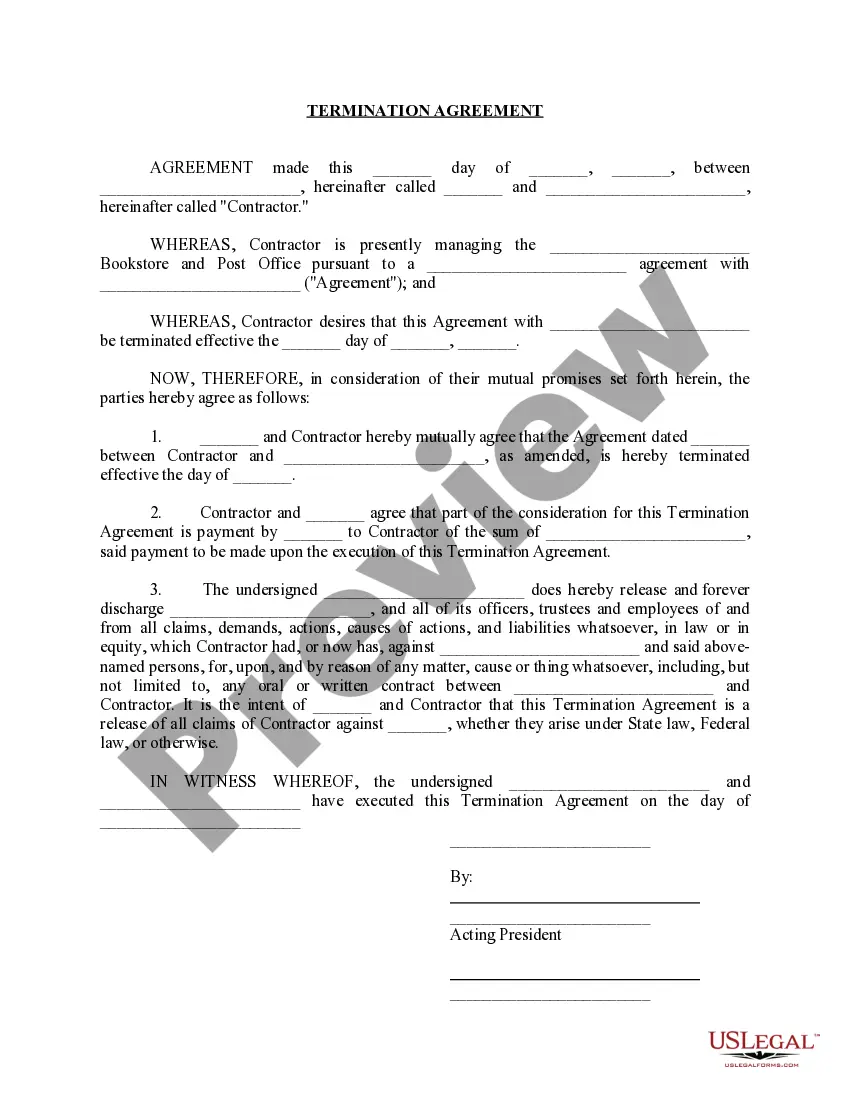
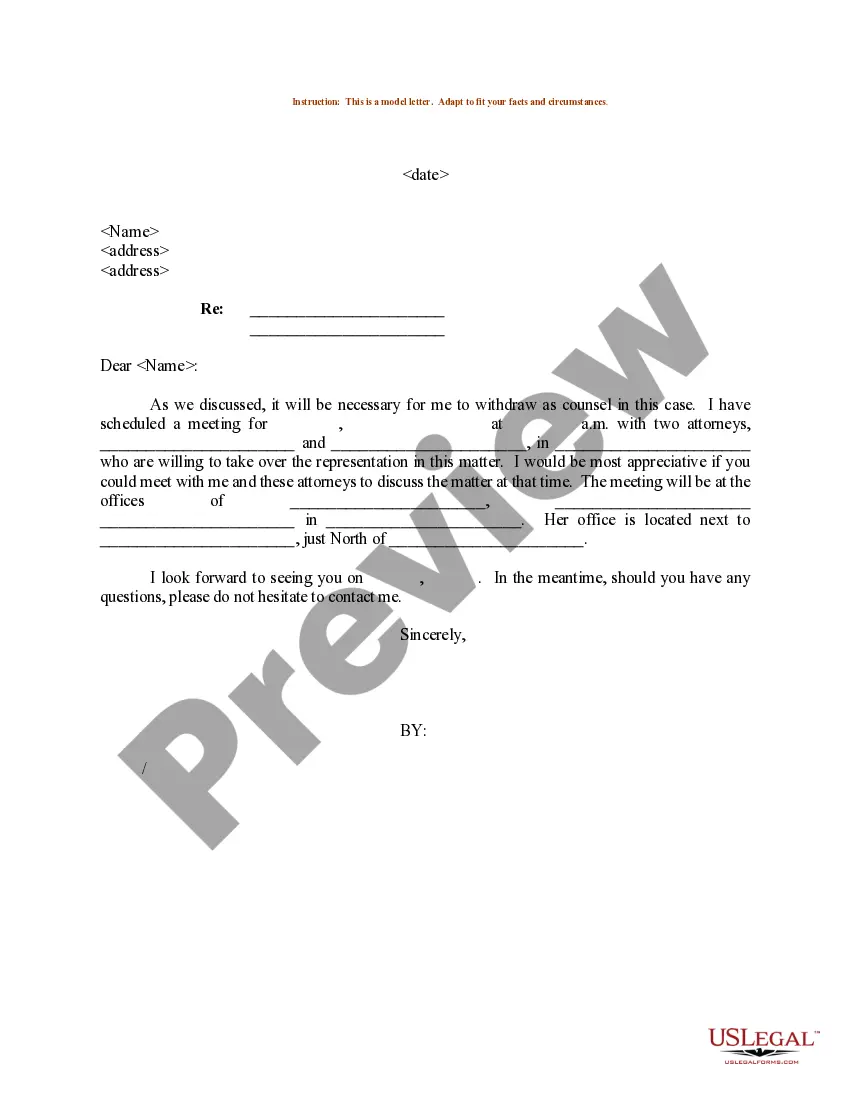
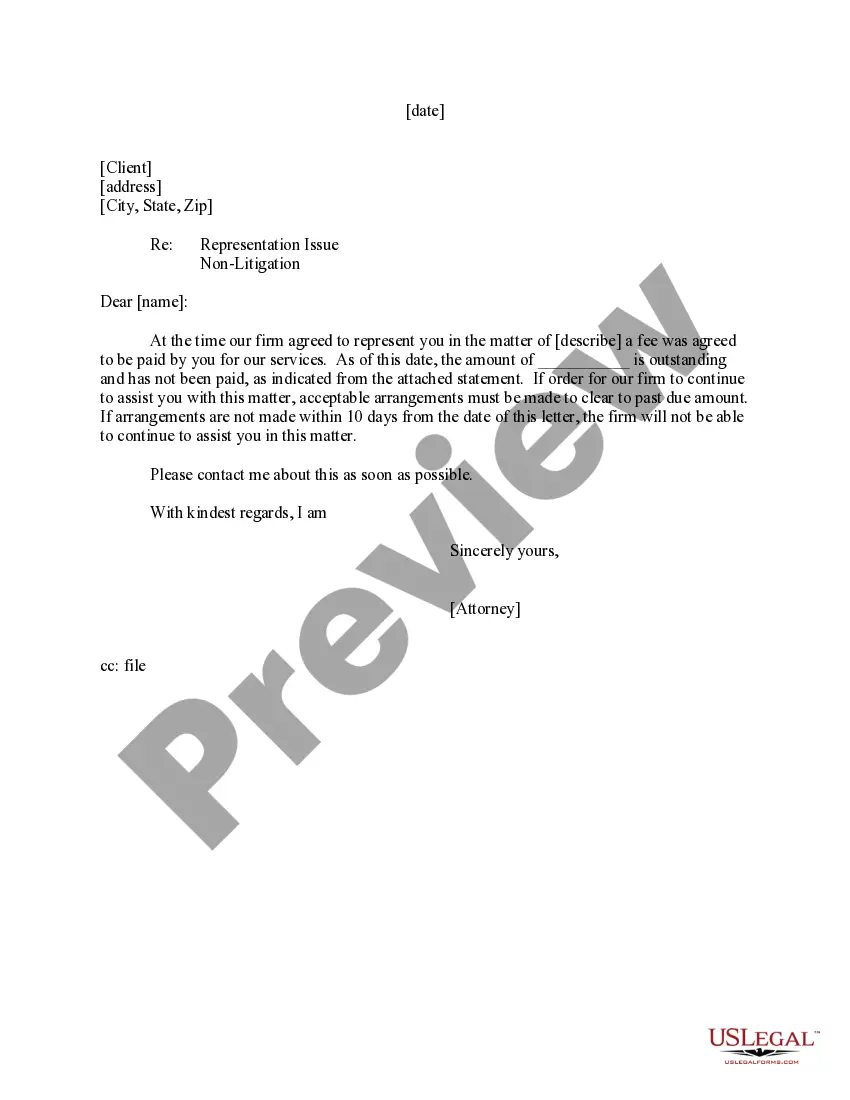
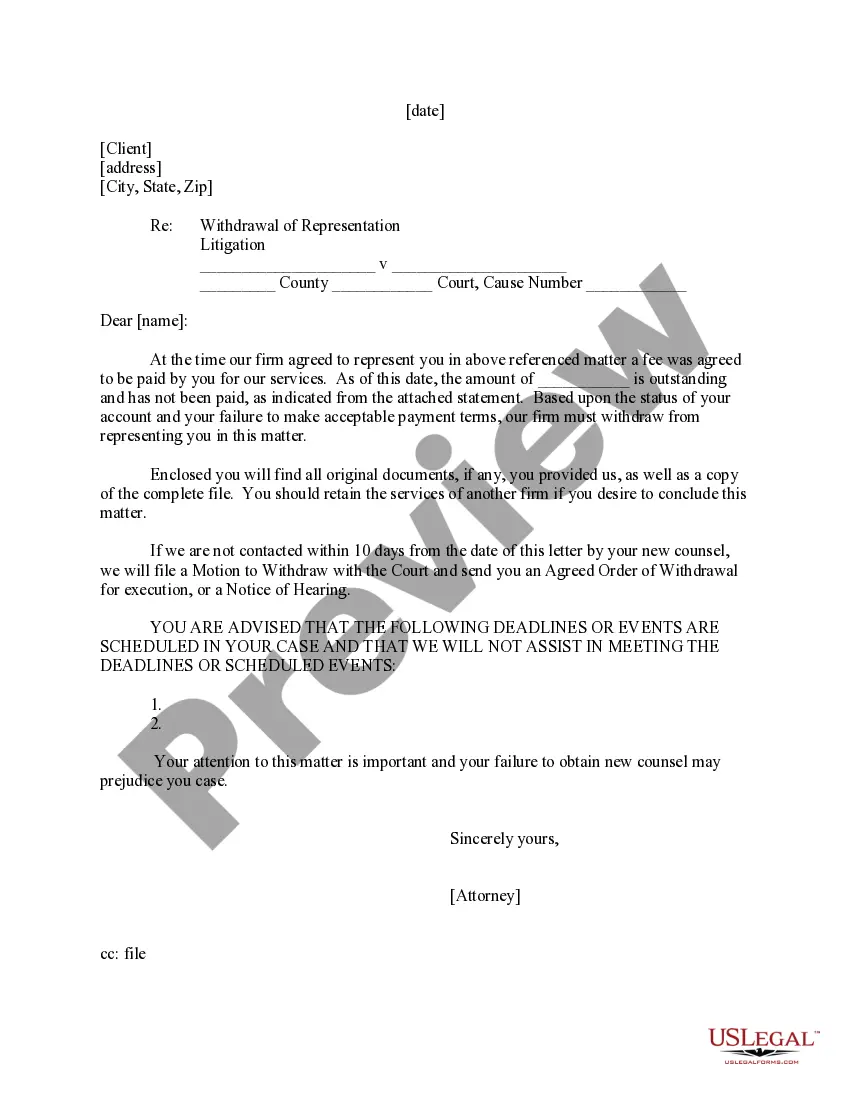
The termination letter for withdrawal with payment demand is a formal document used by an attorney to notify a client that the attorney is ending their professional relationship. This letter clarifies that the attorney's representation is terminated effective immediately, and it also demands payment for services rendered but not yet compensated. This form is essential for ensuring that both parties understand the conclusion of their relationship and the financial obligations involved.
Key components of this form
- Contact details of the attorney and client, including addresses and phone numbers.
- Formal declaration of termination of representation.
- Notice for the client to find alternate counsel within twenty-one days.
- Request for payment of outstanding invoices within fifteen days.
- Information regarding potential collection proceedings for unpaid debts.
- Federal Debt Collection Act notice to clarify rights and obligations related to the debt.

Common use cases
This form is typically used when an attorney needs to sever ties with a client due to various reasons such as non-payment, conflicts of interest, or other professional issues. It is particularly important to issue such a termination letter to formalize the end of representation and to seek payment for any outstanding fees, ensuring legal protection for the attorney.
Who needs this form
- Attorneys who need to terminate their representation of a client.
- Legal professionals seeking to formally document the end of a client relationship.
- Attorneys needing to request payment for services rendered.
Completing this form step by step
- Fill in the contact details for both the attorney and the client.
- Clearly state the intention to terminate representation and include the effective date.
- Attach any relevant documents, such as the order to withdraw as counsel.
- List the payment amount due and specify the deadline for payment.
- Include a notice regarding the consequences of non-payment.
Does this document require notarization?
In most cases, this form does not require notarization. However, some jurisdictions or signing circumstances might. US Legal Forms offers online notarization powered by Notarize, accessible 24/7 for a quick, remote process.
Get your form ready online
Our built-in tools help you complete, sign, share, and store your documents in one place.
Make edits, fill in missing information, and update formatting in US Legal Forms—just like you would in MS Word.
Download a copy, print it, send it by email, or mail it via USPS—whatever works best for your next step.
Sign and collect signatures with our SignNow integration. Send to multiple recipients, set reminders, and more. Go Premium to unlock E-Sign.
If this form requires notarization, complete it online through a secure video call—no need to meet a notary in person or wait for an appointment.
We protect your documents and personal data by following strict security and privacy standards.

Make edits, fill in missing information, and update formatting in US Legal Forms—just like you would in MS Word.

Download a copy, print it, send it by email, or mail it via USPS—whatever works best for your next step.

Sign and collect signatures with our SignNow integration. Send to multiple recipients, set reminders, and more. Go Premium to unlock E-Sign.

If this form requires notarization, complete it online through a secure video call—no need to meet a notary in person or wait for an appointment.

We protect your documents and personal data by following strict security and privacy standards.
Mistakes to watch out for
- Failing to include complete and accurate contact information.
- Not specifying the effective date of termination clearly.
- Neglecting to attach relevant documentation that justifies the withdrawal.
- Overlooking the payment details, including amounts owed and deadlines.
- Failing to communicate potential collection actions clearly.
Why use this form online
- Convenient access and immediate download for quick use.
- Editable fields allow for customization to suit specific situations.
- Drafted by licensed attorneys to ensure legal accuracy and compliance.
- Time-saving format provided in Word and Rich Text for easy completion.
Looking for another form?
Form popularity
FAQ
The following states require that employers provide written notice of separation (discharge, layoff, voluntary resignation) to a departing employee: Arizona, California, Connecticut, Georgia, Illinois, Louisiana, Massachusetts, Michigan, New Jersey, New York, and Tennessee.
In Illinois, you are not required to provide a terminated employee, whether the employee quit or was fired, with a termination letter. The only item you must give an employee at the time of an involuntary termination is a pamphlet from the Illinois Department of Employment Security called What Every Worker
Federally, and in most states, a termination letter is not legally required. In some states, currently including Arizona, California, Illinois and New Jersey, written termination notices are required by law.Even if your state doesn't require a termination letter, they can be valuable to the business and the employee.
To end an employee's employment (also known as firing or terminating employment), an employer has to give them written notice of their last day of employment (some exceptions apply). An employer can give notice to the employee by: delivering it personally. leaving it at the employee's last known address, or.
Are you required to provide a termination letter? Federally, and in most states, a termination letter is not legally required.Some of these states have specific templates employers must use for the letter. Even if your state doesn't require a termination letter, they can be valuable to the business and the employee.
No notice at all is required. No reason of any kind must be given. No severance must be given. Earned but unused vacation must be paid out. No deductions may be made from final paycheck except where there is a voluntary written agreement on the part of the employee.
If you refuse to sign the termination letter, the employer would be violating the law. Final pay, by law, must be paid in the same manner as other pay. That being the case, you could report this to your State's Department of Labor.
California is an at-will employment state. At-will employment means that an employer can fire an employee for any reason or at any time. They do not need to have a reason or justification for terminating an at-will employee.The employer does not want to have as many employees as it has anymore.
Proving wrongful termination in Illinois will take demonstrating that your employer breached a contract, broke a law, or otherwise fired you based on illegal reasons. You will need sufficient evidence to support your claim, such as witness testimonies or documentation of your experience.