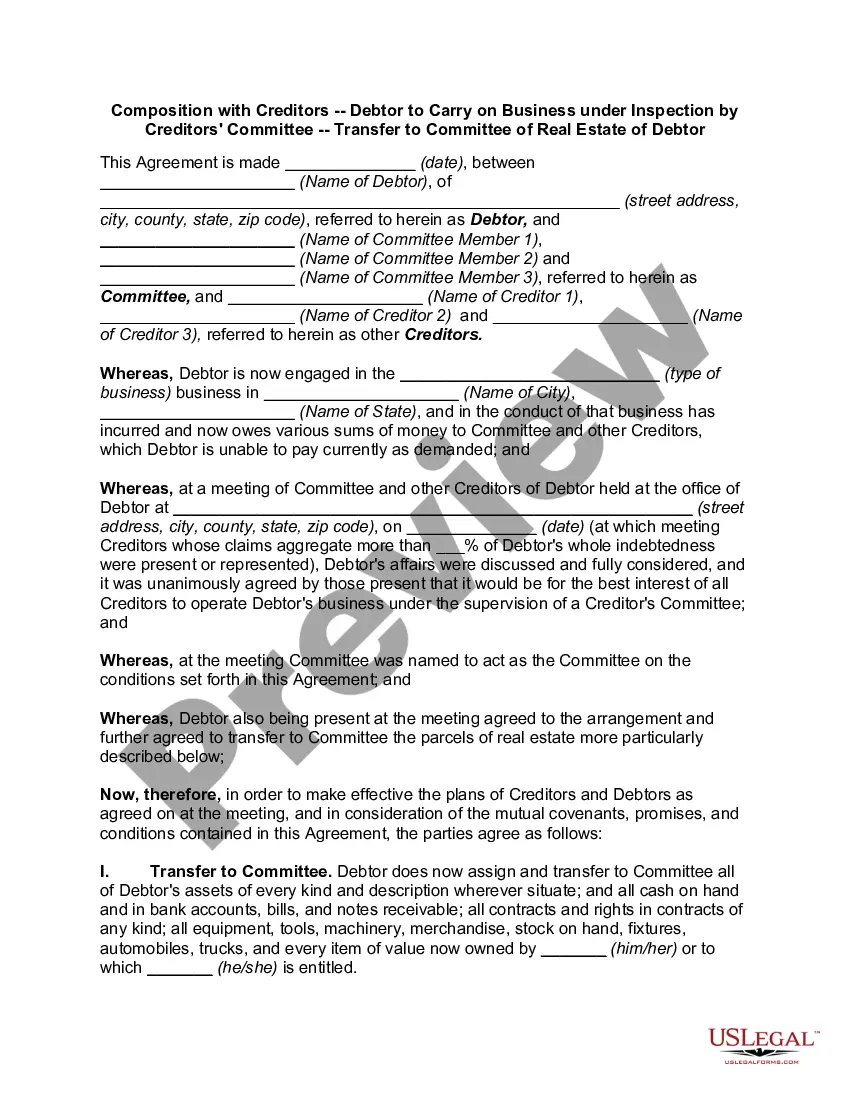
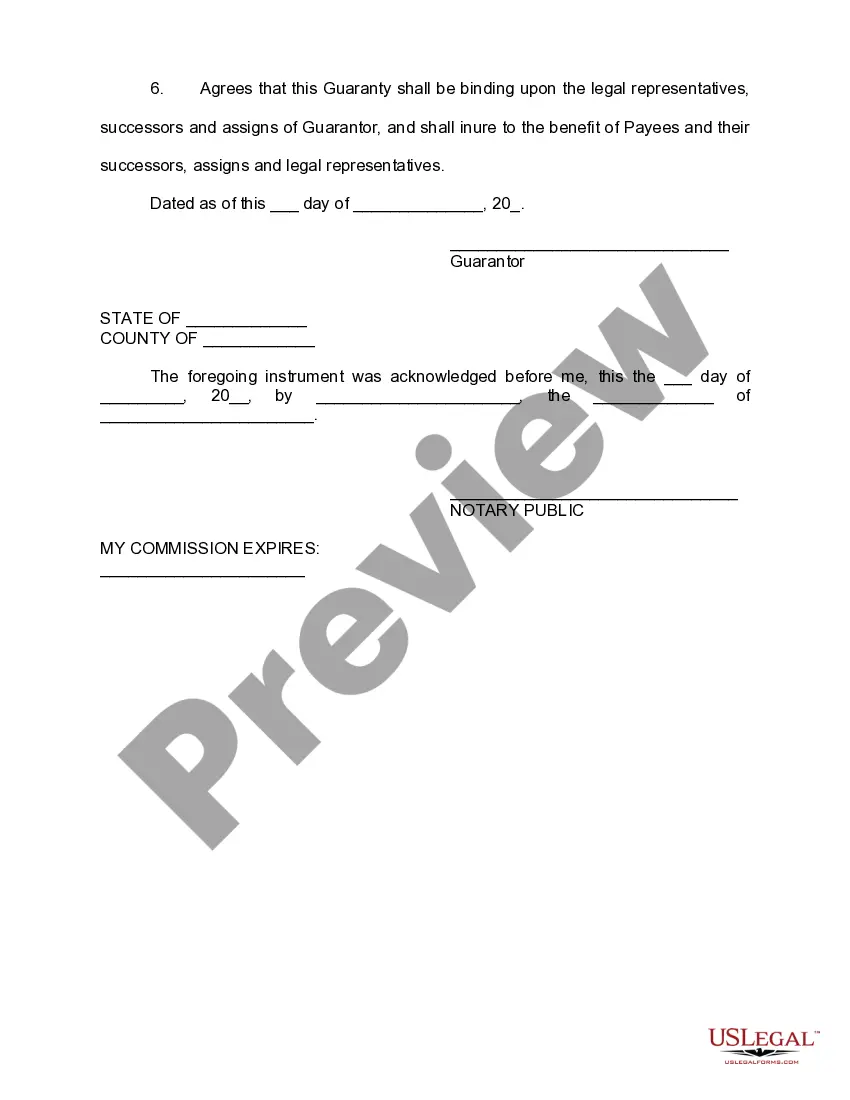
This form states that the guarantor unconditionally and absolutely guarantees to payee(s), jointly and severally, the full and prompt payment and performance of any and all account receivable charges by the customer incurred to the payee, including collections fees and reasonable attorneys' fees, up to a certain maximum amount.
Idaho Accounts Receivable - Guaranty
Category:
State:
Multi-State
Control #:
US-00401
Format:
Word;
Rich Text
Instant download
Description
Free preview


Get your form ready online
Our built-in tools help you complete, sign, share, and store your documents in one place.
Built-in online Word editor
Make edits, fill in missing information, and update formatting in US Legal Forms—just like you would in MS Word.
Export easily
Download a copy, print it, send it by email, or mail it via USPS—whatever works best for your next step.
E-sign your document
Sign and collect signatures with our SignNow integration. Send to multiple recipients, set reminders, and more. Go Premium to unlock E-Sign.
Notarize online 24/7
If this form requires notarization, complete it online through a secure video call—no need to meet a notary in person or wait for an appointment.
Store your document securely
We protect your documents and personal data by following strict security and privacy standards.

Make edits, fill in missing information, and update formatting in US Legal Forms—just like you would in MS Word.

Download a copy, print it, send it by email, or mail it via USPS—whatever works best for your next step.

Sign and collect signatures with our SignNow integration. Send to multiple recipients, set reminders, and more. Go Premium to unlock E-Sign.

If this form requires notarization, complete it online through a secure video call—no need to meet a notary in person or wait for an appointment.

We protect your documents and personal data by following strict security and privacy standards.
Looking for another form?


How to fill out Accounts Receivable - Guaranty?
Are you currently in a situation where you require documents for both business or personal purposes nearly every day.
There are numerous legal document templates available online, but locating reliable ones isn't simple.
US Legal Forms provides thousands of form templates, including the Idaho Accounts Receivable - Guaranty, which is designed to meet state and federal regulations.
- If you are already familiar with the US Legal Forms website and have an account, simply Log In.
- Then, you can download the Idaho Accounts Receivable - Guaranty template.
- If you do not have an account and wish to start using US Legal Forms, follow these steps.
- Locate the form you need and ensure it is for the correct city/region.
- Use the Preview feature to review the form.
- Read the details to ensure you have selected the correct form.
- If the form isn’t what you are looking for, utilize the Search field to find the form that fits your needs and requirements.
- Once you find the right form, click Purchase now.
- Choose the pricing plan you want, fill out the required information to create your account, and pay for the transaction using your PayPal or credit card.
- Select a convenient file format and download your copy.
- Access all the document templates you have purchased in the My documents section. You can obtain another copy of the Idaho Accounts Receivable - Guaranty at any time, if needed. Just click on the desired form to download or print the document template.
- Utilize US Legal Forms, the most extensive collection of legal forms, to save time and prevent mistakes. The service offers well-crafted legal document templates for a variety of purposes. Create an account on US Legal Forms and begin simplifying your life.
Form popularity
FAQ
The statute of limitations on debt collection in Idaho is generally six years for most types of debt. This means creditors have six years from the date of your last payment to file a lawsuit against you. Knowing this can empower you to manage your financial obligations. For more information and assistance, resources like Idaho Accounts Receivable - Guaranty can provide valuable support.
Generally, in Idaho, you cannot be pursued for a debt after ten years. This aligns with the statute of limitations that applies to most debts in the state. After this period, if a debt collector attempts to collect, you can challenge their actions. For clarity on your situation, consider consulting services like Idaho Accounts Receivable - Guaranty.
In Idaho, debt collectors can pursue you for a limited time. Typically, this period is six years for most debts. After this time frame, you may have legal grounds to dispute the debt. It is important to understand your rights, and utilizing resources like Idaho Accounts Receivable - Guaranty can help you navigate these situations effectively.
The Idaho Collection Agency Act regulates the practices of debt collection agencies operating within the state. This law ensures that agencies follow fair and ethical practices when collecting debts, including those related to Idaho Accounts Receivable - Guaranty. Understanding this act can help you know your rights and responsibilities when dealing with debt collectors. For comprehensive resources and forms related to this topic, you can explore US Legal Forms, which offers tailored solutions for your needs.
A durable power of attorney for finances in Idaho allows you to appoint someone to manage your financial matters if you become unable to do so yourself. This legal document remains effective even if you lose mental capacity, ensuring that your financial interests are protected. By utilizing this tool, you can maintain control over your Idaho Accounts Receivable - Guaranty, allowing a trusted individual to handle your debts and obligations. Consider using US Legal Forms to create a durable power of attorney that meets Idaho's specific requirements.
The 49 807 law in Idaho addresses the rights of creditors regarding accounts receivable. Specifically, it outlines the process and requirements for a creditor to obtain a guaranty on unpaid accounts. This law aims to streamline the recovery of debts, making it easier for businesses to manage their accounts receivable. Understanding the 49 807 law is essential for those involved in Idaho Accounts Receivable - Guaranty, as it provides a clear framework for enforcing collection.
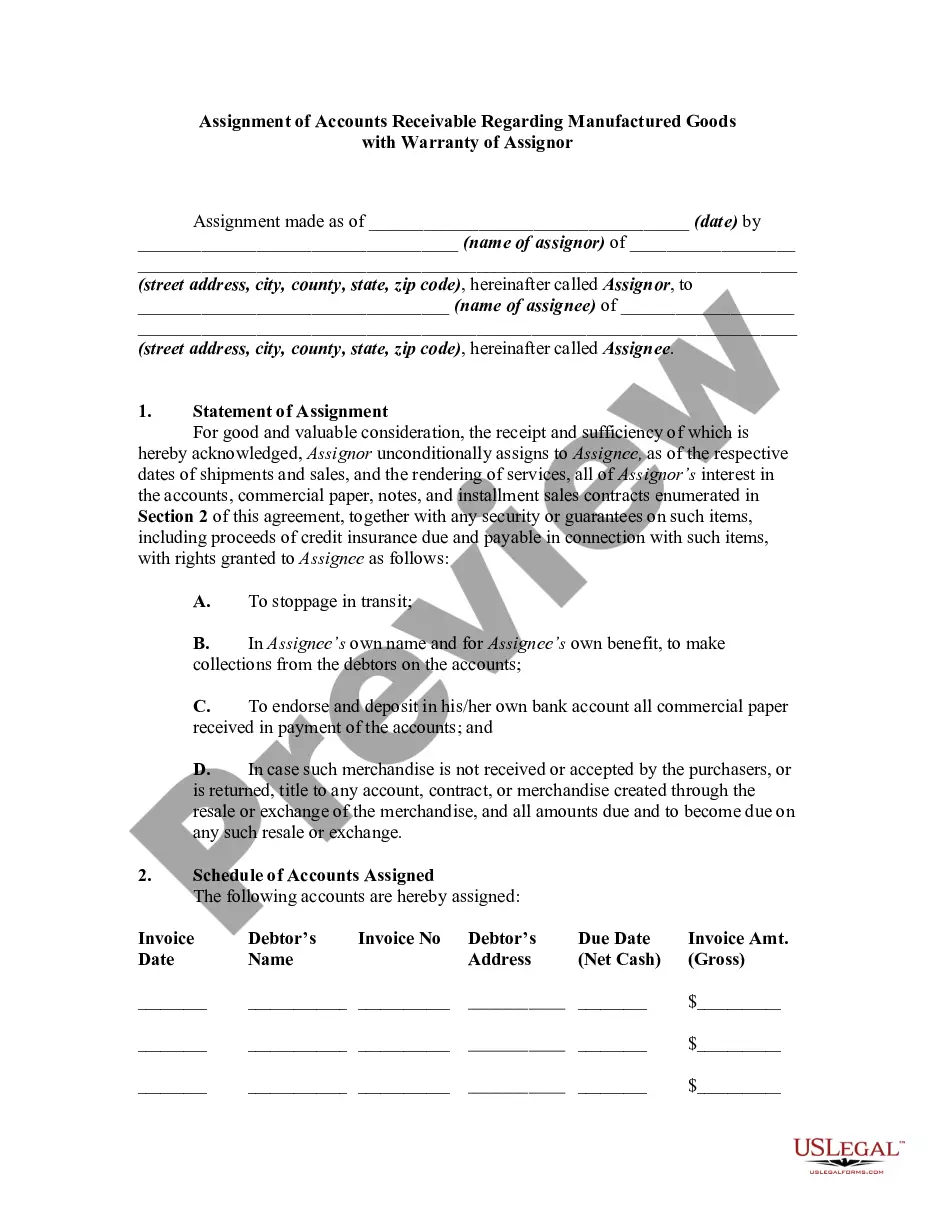
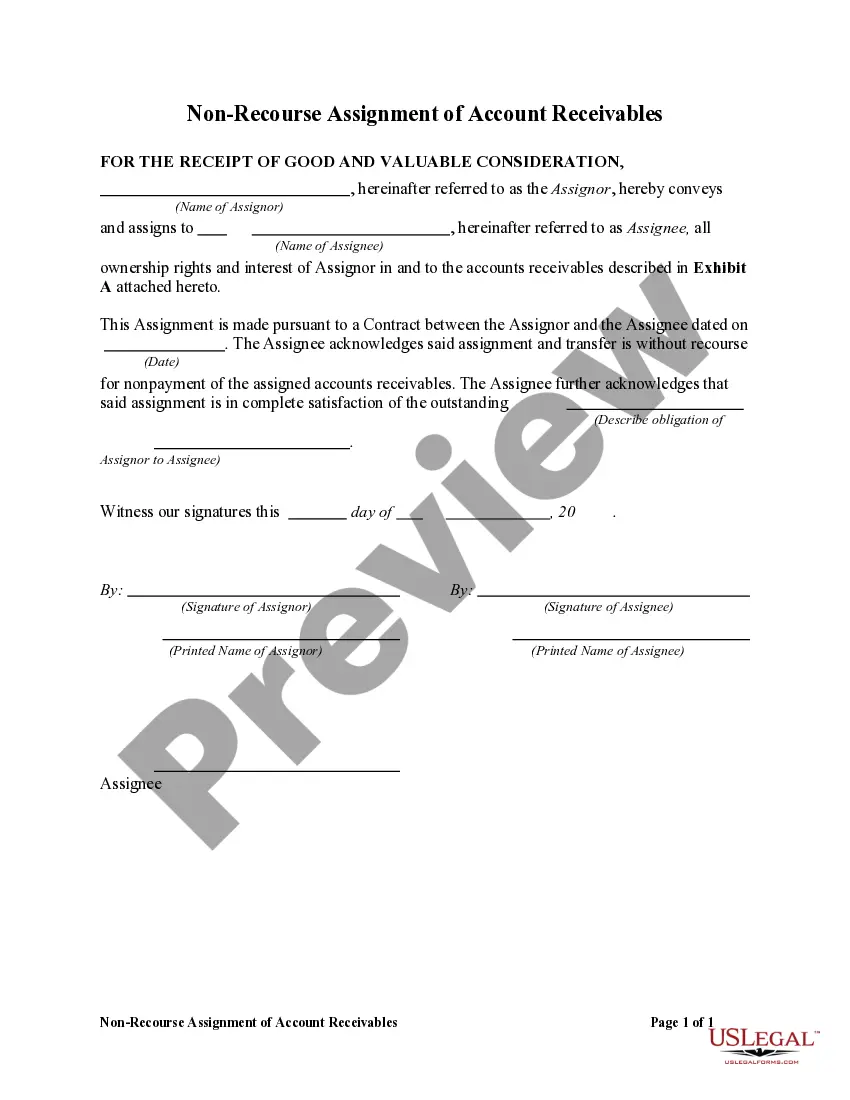
In the accounts receivable assignment process, a company assigns receivables to a lending institution to borrow money. The borrower pays interest plus additional fees. The borrowing company retains ownership of the accounts receivable and collects payment from its customers.
Accounts receivable: asset, liability, or equity? Accounts receivable are an asset, not a liability. In short, liabilities are something that you owe somebody else, while assets are things that you own. Equity is the difference between the two, so once again, accounts receivable is not considered to be equity.
Ing to US GAAP, the company's accounts receivable balance must be stated at ?net realizable value?. In basic terms, this just means that the accounts receivable balance presented in the company's financial statements must be equal to the amount of cash they expect to collect from customers.
Treatment of accounts receivables in financial statement As you know, accounts receivable is the amount that is yet to be received from your customers within a defined period, usually a short period, thus it is treated as current assets.