Informed Consent for Mental Health Treatment with Terms of Service - Idaho
What is this form?
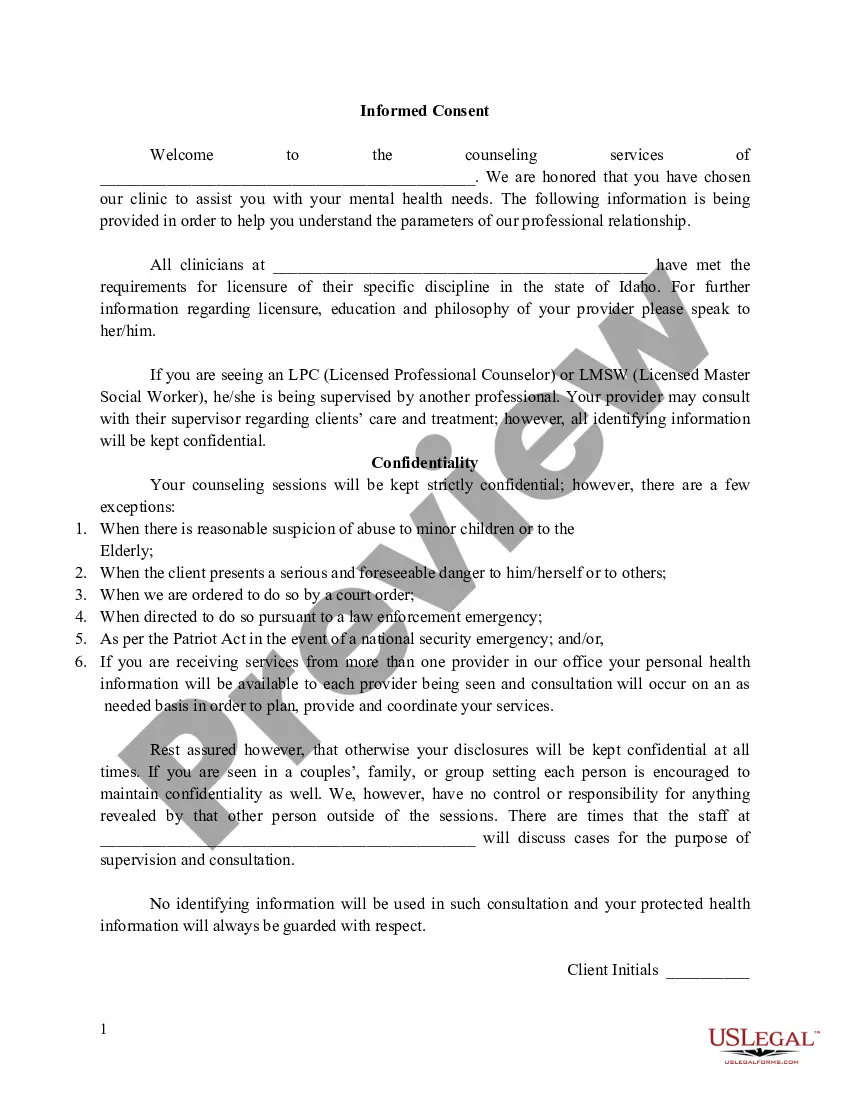
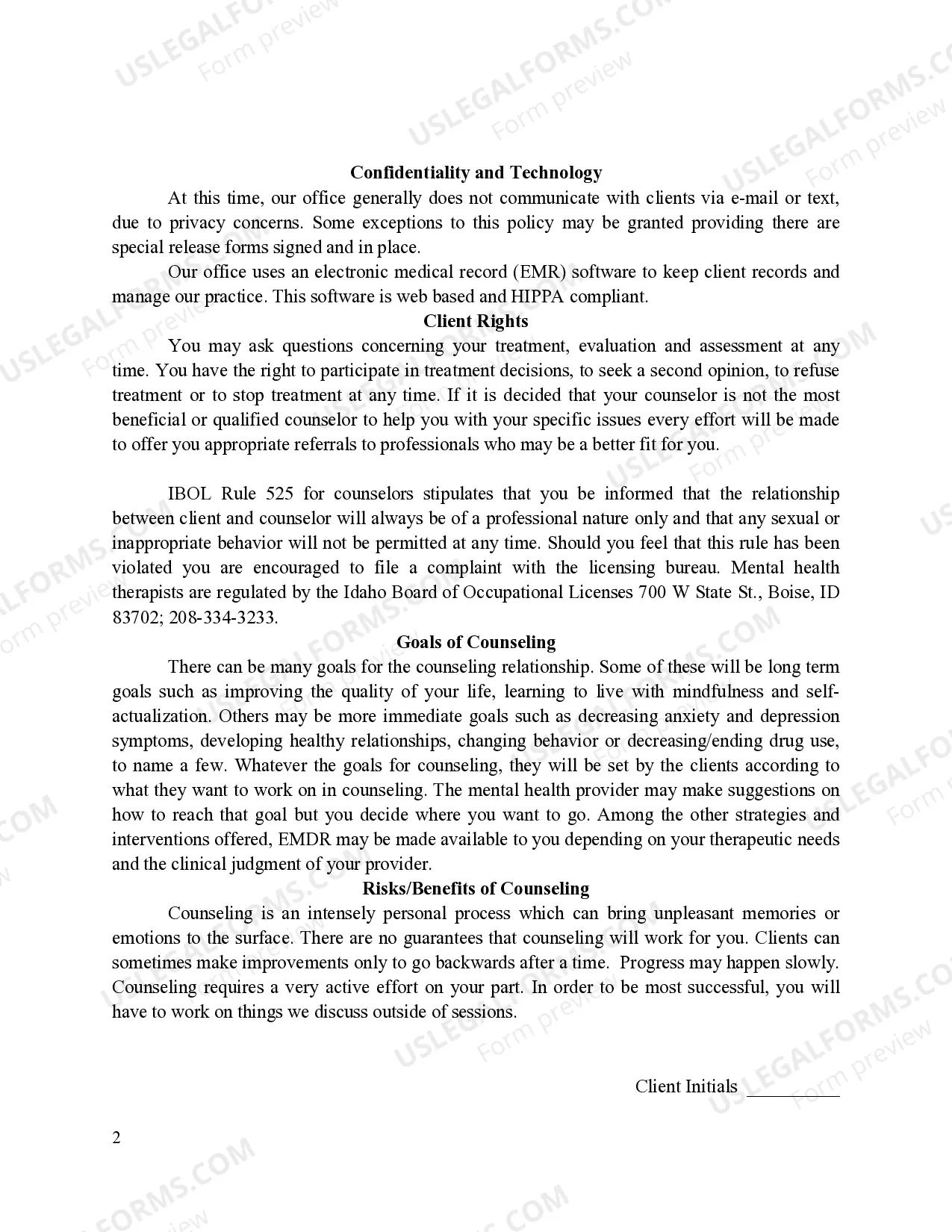
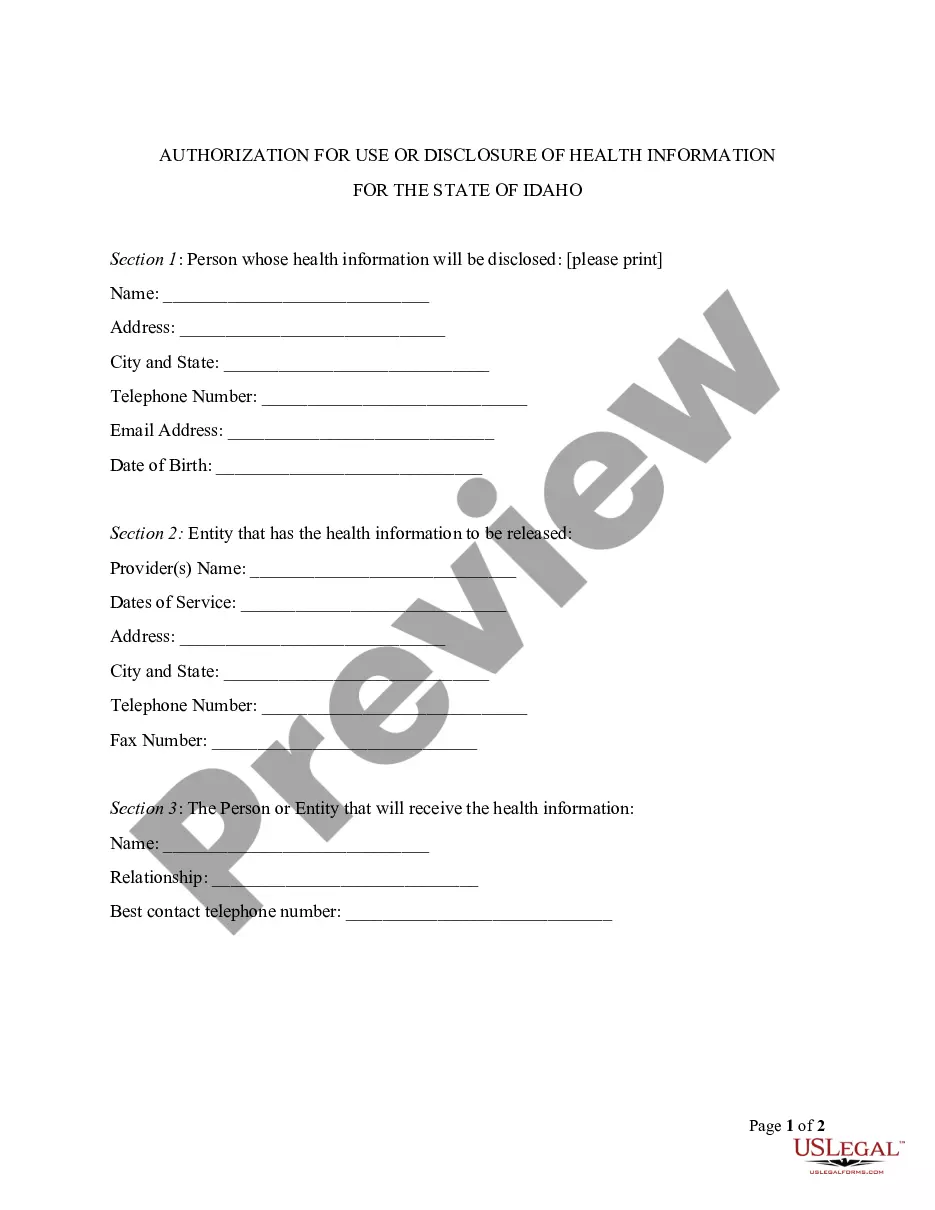
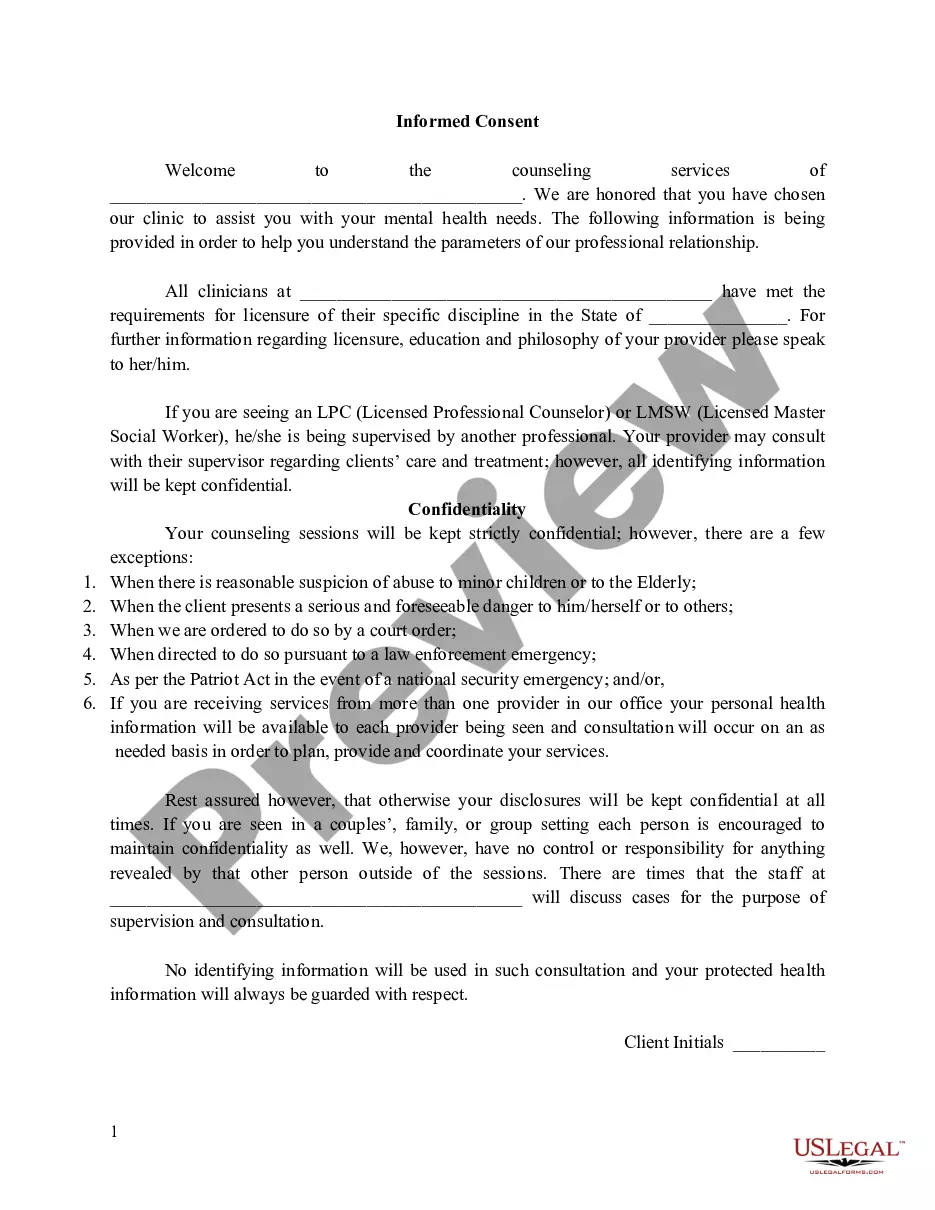
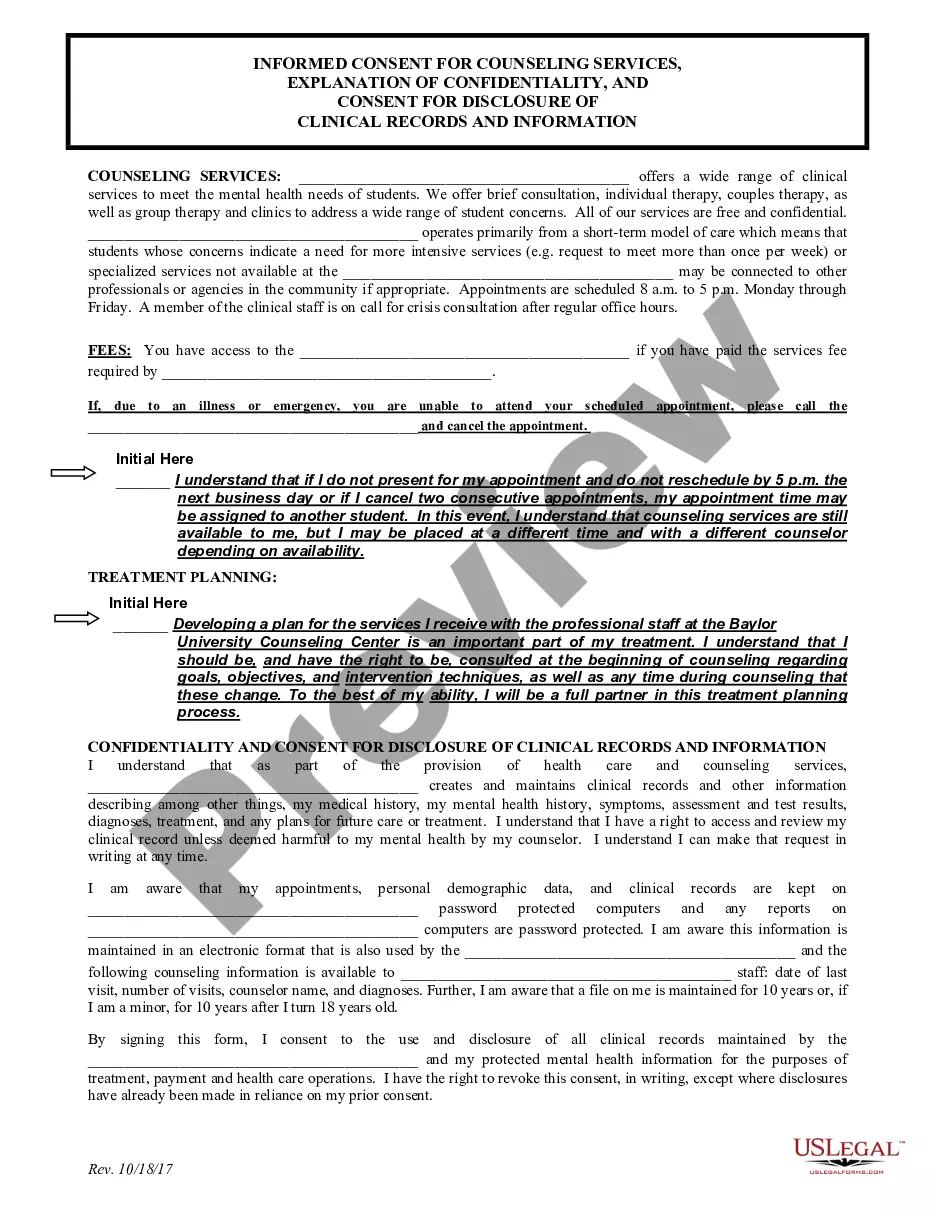
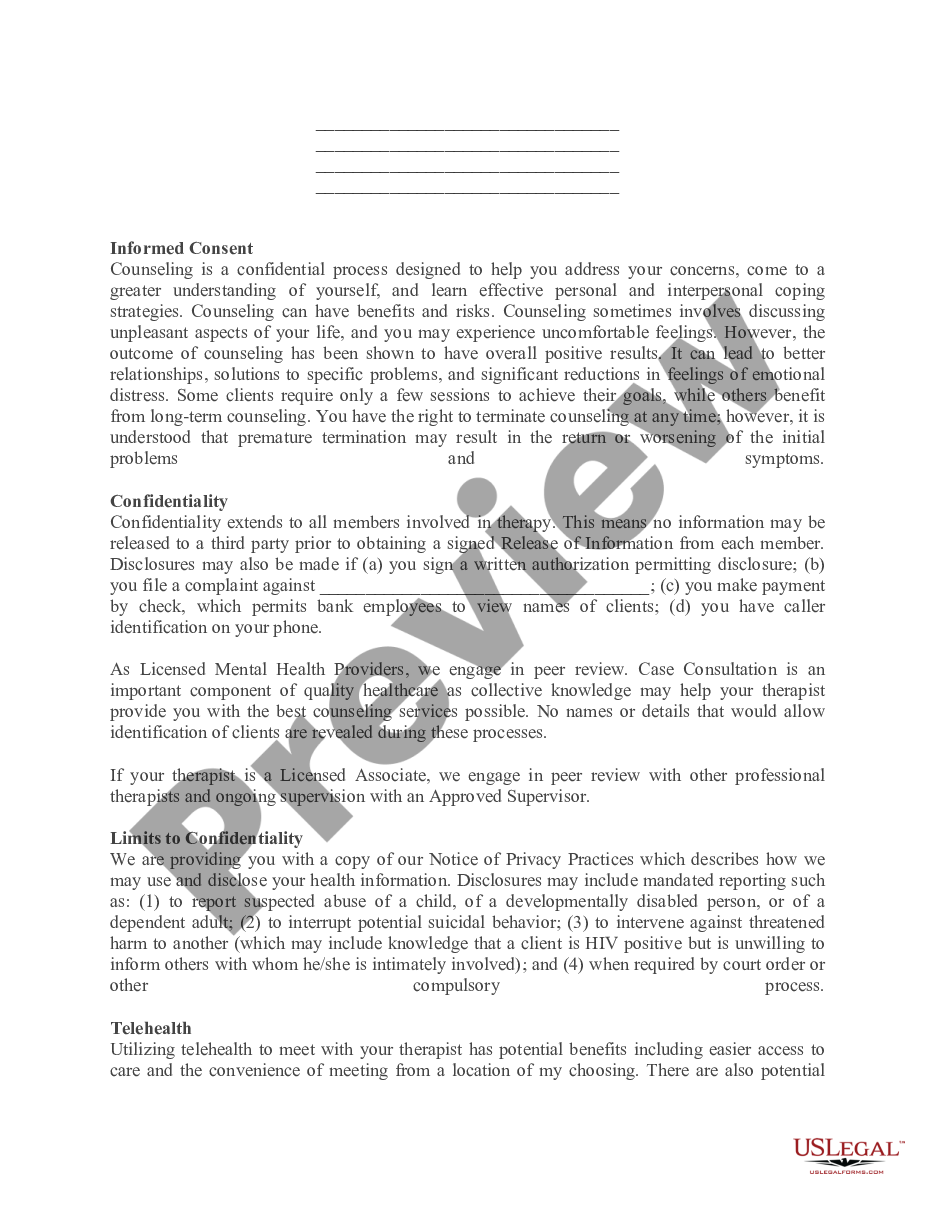
The Informed Consent for Mental Health Treatment with Terms of Service - Idaho is a legal document that outlines the professional relationship between a counselor and a client. This form ensures that clients are fully aware of their rights, the confidentiality of their sessions, and the various aspects of treatment they may receive. Unlike other consent forms, this document incorporates terms of service specifically relevant to mental health treatment in Idaho, helping to establish clear expectations and responsibilities for both parties.
What’s included in this form
- Introduction and welcome message from the mental health provider.
- Confidentiality clauses outlining the limits of confidentiality.
- Client rights regarding treatment and decision-making.
- Goals of counseling to be determined by the client.
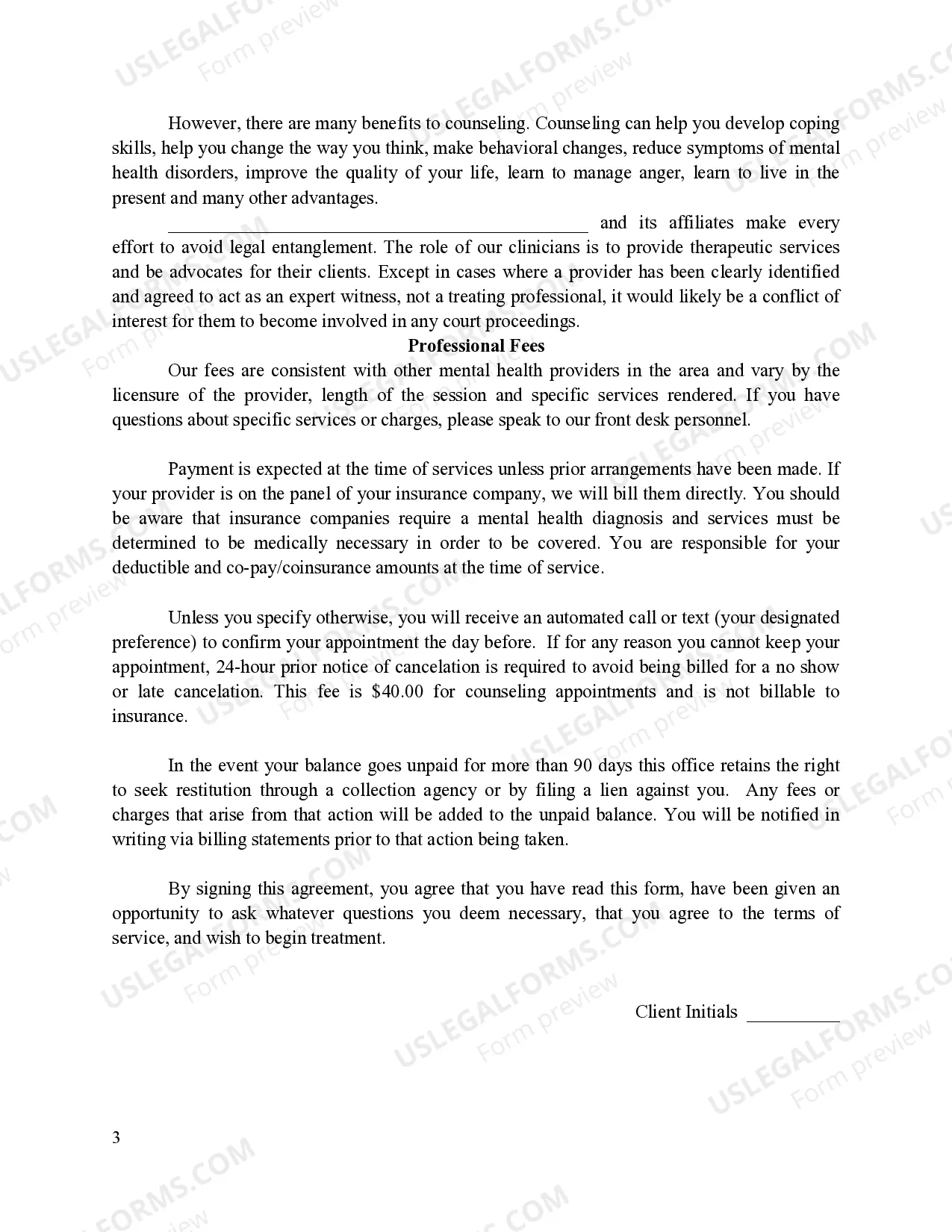
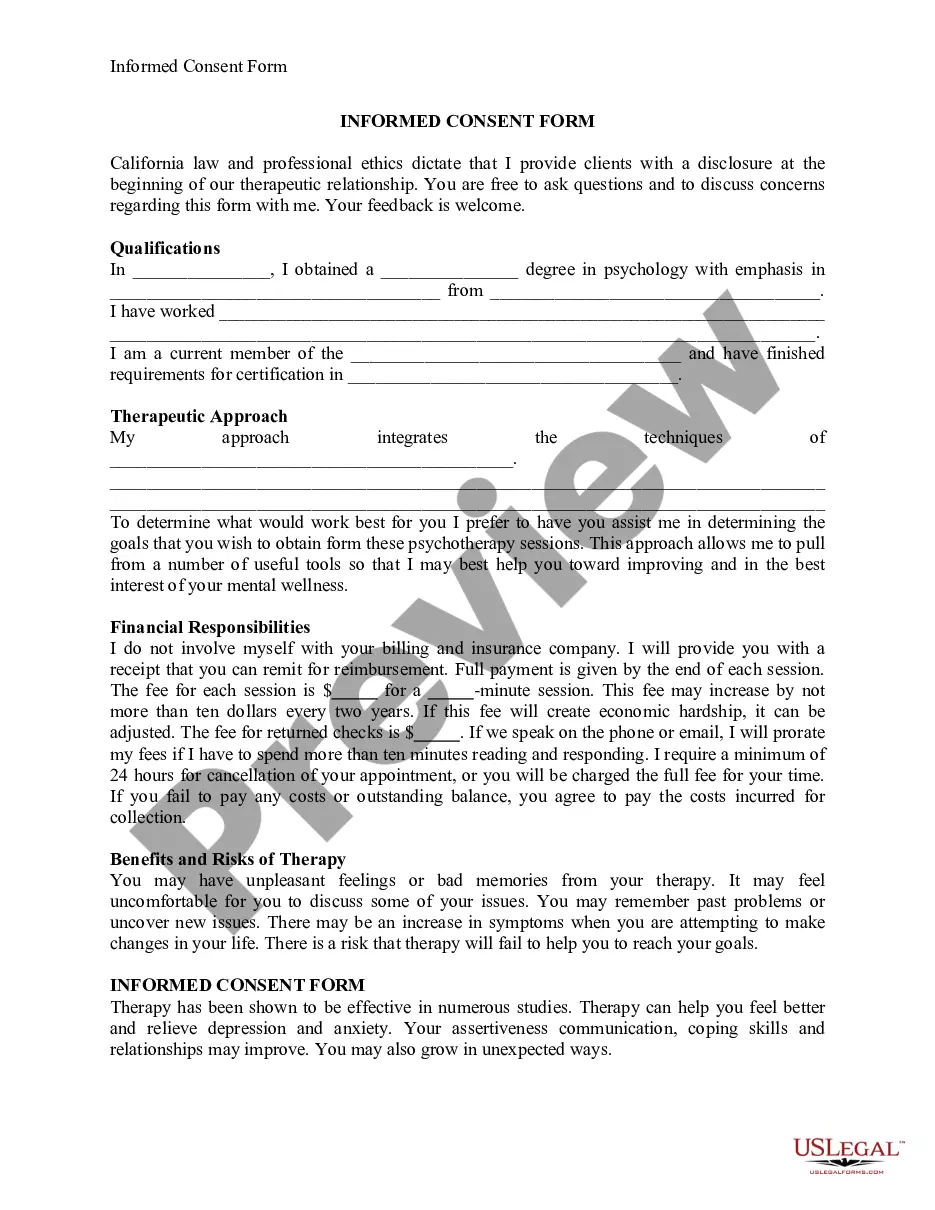
- Explanation of risks and benefits associated with counseling.
- Details on professional fees and payment expectations.
Common use cases
This form should be used when a client begins mental health counseling services with a provider in Idaho. It is essential for establishing an informed foundation for treatment and ensuring that clients understand their rights and responsibilities in the therapeutic relationship. This form can be utilized for individual, couples, family, or group counseling settings.
Who this form is for
This form is intended for:
- Individuals seeking mental health treatment in Idaho.
- Parents or guardians signing on behalf of minor clients.
- Couples or families engaging in joint counseling sessions.
Completing this form step by step
- Fill in the name of the counseling clinic at the top of the form.
- Initial where indicated to acknowledge understanding of confidentiality terms.
- Review and confirm your rights and responsibilities as outlined.
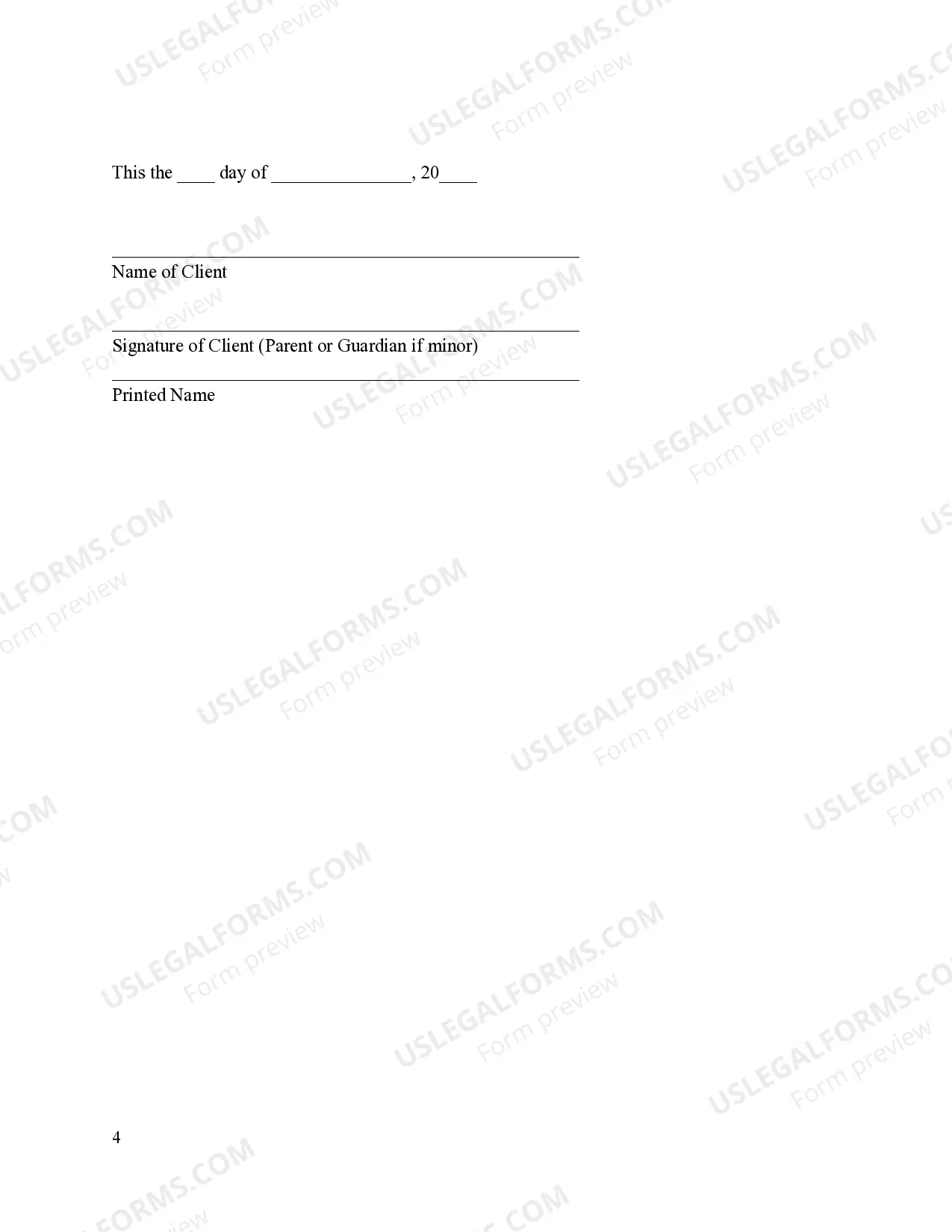
- Sign and date the form to indicate consent to treatment.
- If applicable, a parent or guardian should sign for minor clients.
Notarization guidance
This form does not typically require notarization unless specified by local law. Clients can securely execute the form in their counseling session without the need for a notary, streamlining the process of beginning treatment.
Get your form ready online
Our built-in tools help you complete, sign, share, and store your documents in one place.
Make edits, fill in missing information, and update formatting in US Legal Forms—just like you would in MS Word.
Download a copy, print it, send it by email, or mail it via USPS—whatever works best for your next step.
Sign and collect signatures with our SignNow integration. Send to multiple recipients, set reminders, and more. Go Premium to unlock E-Sign.
If this form requires notarization, complete it online through a secure video call—no need to meet a notary in person or wait for an appointment.
We protect your documents and personal data by following strict security and privacy standards.

Make edits, fill in missing information, and update formatting in US Legal Forms—just like you would in MS Word.

Download a copy, print it, send it by email, or mail it via USPS—whatever works best for your next step.

Sign and collect signatures with our SignNow integration. Send to multiple recipients, set reminders, and more. Go Premium to unlock E-Sign.

If this form requires notarization, complete it online through a secure video call—no need to meet a notary in person or wait for an appointment.

We protect your documents and personal data by following strict security and privacy standards.
Mistakes to watch out for
- Failing to read the confidentiality clauses thoroughly before signing.
- Not asking questions about terms that are unclear.
- Overlooking the section on client rights and responsibilities.
Advantages of online completion
- Easy access to forms anytime, allowing for convenient completion.
- Secure and reliable electronic storage of sensitive information.
- The ability to edit and personalize the form to fit specific needs.
Looking for another form?


Form popularity
FAQ
Consent, or refusal to consent, for the furnishing of health care, treatment or procedures shall be valid in all respects if the person giving or refusing the consent is sufficiently aware of pertinent facts respecting the need for, the nature of, and the significant risks ordinarily attendant upon such a person
(I.C. § 39-3801). Minors age 14 may consent to their own hospitalization or treatment at mental health centers for mental illness.
Idaho Statutes 39-3801. Infectious, contagious, or communicable disease ? Medical treatment of minor 14 years of age or older ? Consent of parents or guardian unnecessary.
(1) A facility may not administer any treatments or medications to a child admitted to the facility as a voluntary patient under section 16-2407, Idaho Code, unless the parent, guardian or custodian of the child has given informed consent to the treatment, except that emergency or medically necessary treatments may be
18-8602. definitions. (ii) The recruitment, harboring, transportation, provision, or obtaining of a person for labor or services, through the use of force, fraud, or coercion, for the purpose of subjection to involuntary servitude, peonage, debt bondage, or slavery.
39-4504. PERSONS WHO MAY GIVE CONSENT TO CARE FOR OTHERS.
Idaho Statutes 18-6710. Use of telephone to annoy, terrify, threaten, intimidate, harass or offend by lewd or profane language, requests, suggestions or proposals ? Threats of physical harm ? Disturbing the peace by repeated calls ? Penalties.
Kidnapping in the second degree is punishable by imprisonment in the state prison not less than one (1) nor more than twenty-five (25) years. History: 18-4504, added 1972, ch. 336, sec.


