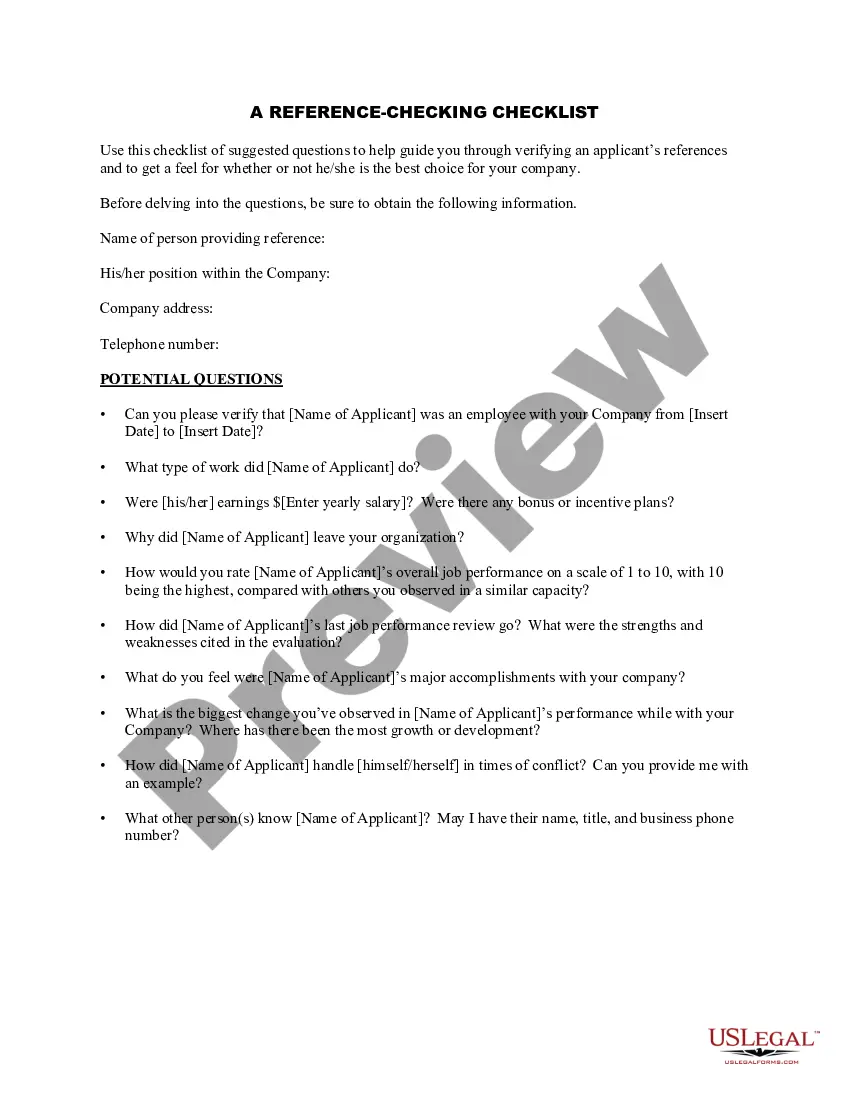
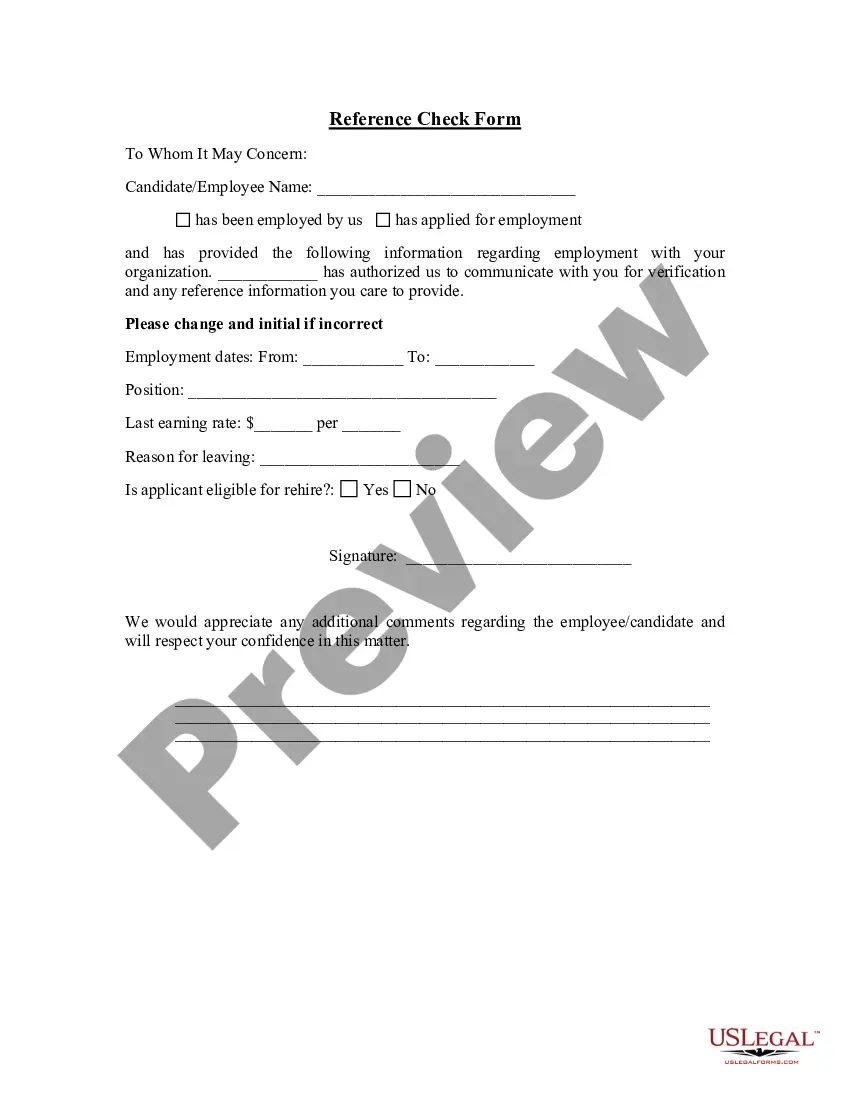
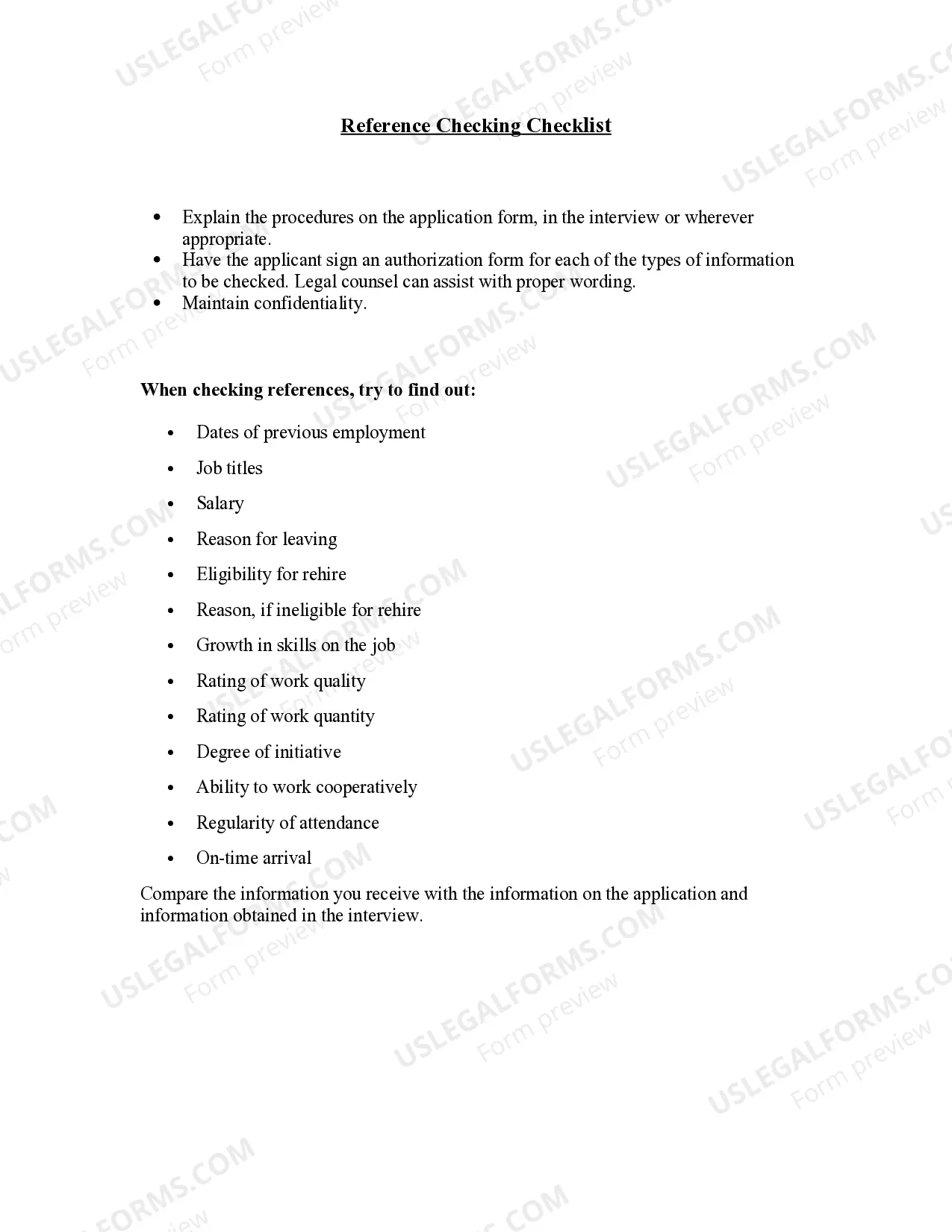
Iowa A Reference Checking Checklist
Description

Get your form ready online
Our built-in tools help you complete, sign, share, and store your documents in one place.
Make edits, fill in missing information, and update formatting in US Legal Forms—just like you would in MS Word.
Download a copy, print it, send it by email, or mail it via USPS—whatever works best for your next step.
Sign and collect signatures with our SignNow integration. Send to multiple recipients, set reminders, and more. Go Premium to unlock E-Sign.
If this form requires notarization, complete it online through a secure video call—no need to meet a notary in person or wait for an appointment.
We protect your documents and personal data by following strict security and privacy standards.

Make edits, fill in missing information, and update formatting in US Legal Forms—just like you would in MS Word.

Download a copy, print it, send it by email, or mail it via USPS—whatever works best for your next step.

Sign and collect signatures with our SignNow integration. Send to multiple recipients, set reminders, and more. Go Premium to unlock E-Sign.

If this form requires notarization, complete it online through a secure video call—no need to meet a notary in person or wait for an appointment.

We protect your documents and personal data by following strict security and privacy standards.
Looking for another form?
How to fill out A Reference Checking Checklist?
Have you found yourself in a situation where you require documents for both business or personal uses almost every day.
There are numerous legal document templates available online, but locating reliable ones can be challenging.
US Legal Forms offers a vast array of form templates, including the Iowa A Reference Checking Checklist, designed to meet state and federal requirements.
Once you find the correct template, click Buy now.
Select your desired pricing plan, fill in the necessary information to create your account, and process the payment using your PayPal or Visa or Mastercard.
- If you are already familiar with the US Legal Forms website and have an account, simply Log In.
- You can then download the Iowa A Reference Checking Checklist template.
- If you don't have an account and want to start using US Legal Forms, follow these steps.
- Find the template you need and confirm it is for your specific city/county.
- Use the Review button to evaluate the document.
- Check the description to ensure you have selected the right template.
- If the template isn’t what you’re looking for, use the Lookup field to find a document that meets your needs.
Form popularity
FAQ
Don't ask about a candidate's sexuality, age, religion or similar matters. Anything related to personal health. Don't ask about a candidate's medical history or the existence of disabilities. You can ask whether the candidate is capable of performing the tasks that the job requires.
Don't ask about a candidate's sexuality, age, religion or similar matters. Anything related to personal health. Don't ask about a candidate's medical history or the existence of disabilities. You can ask whether the candidate is capable of performing the tasks that the job requires.
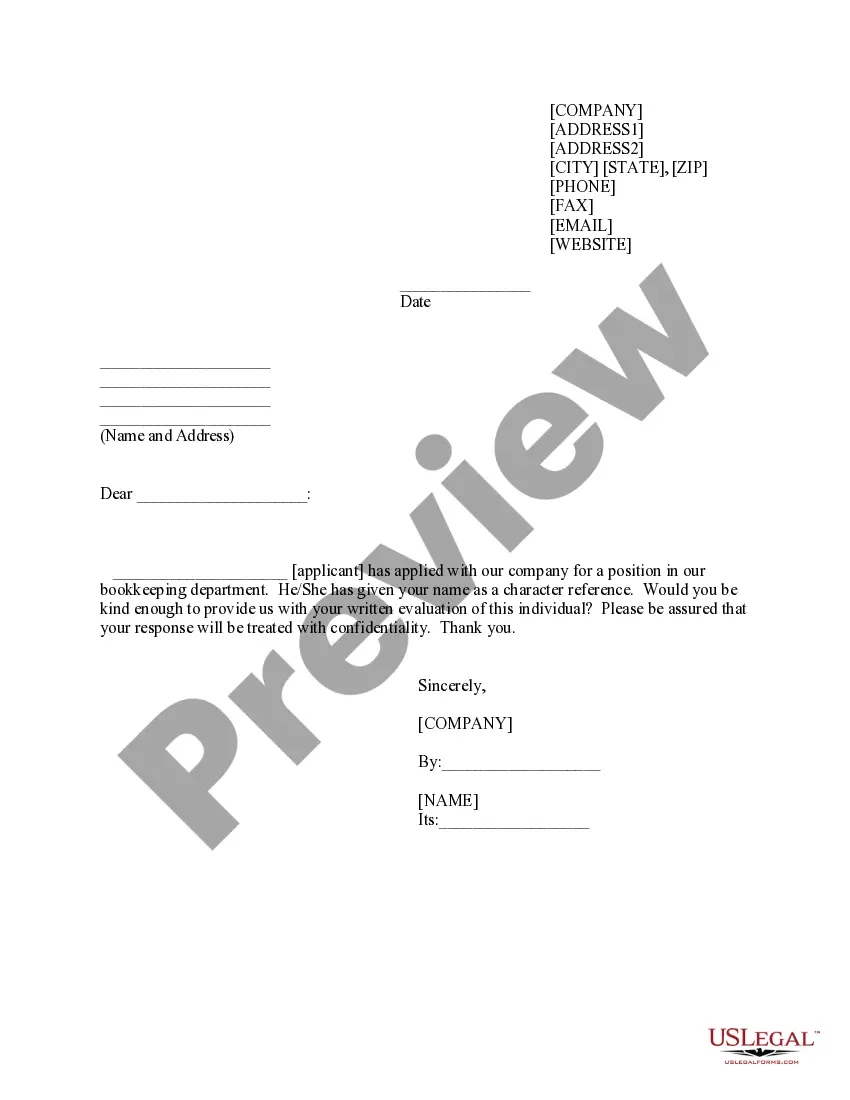
A reference check is when an employer contacts people who can verify a job candidate's skills, experience, education and work history.
Can you get a bad reference from an employer? Getting a bad reference from an employer is rare, but it's not illegal to give a poor review. Most employers and colleagues are unlikely to give a poor reference.
What a detailed reference saysanswers to questions from the employer requesting the reference.details about your skills, ability and experience.details about your character, strengths and weaknesses relating to your suitability for the new role.how often you were off work.disciplinary details.More items...
What can you ask during a reference check?How did this person manage a team?What are some examples of this individual acting as a team player?What was it like to supervise this former employee?How effective was this person with completing the work given to them?More items...?
Many employers check references as part of the hiring process. A reference check is when an employer contacts a job applicant's previous employers, schools, colleges, and other sources to learn more about his or her employment history, educational background, and qualifications for a job.
During a job reference check call, typically the recruiter asks questions related to productivity, communication and listening skills, successes, failures, attendance, culture fit, strengths, and weaknesses.
Reference check stepsVerify the candidate's name.Confirm how they know the candidate.Ask what makes the candidate a good fit.Have the reference rank the candidate.Find out the candidate's strengths and weaknesses.Ask about the candidate's behavior.
Don't ask about a candidate's sexuality, age, religion or similar matters. Anything related to personal health. Don't ask about a candidate's medical history or the existence of disabilities. You can ask whether the candidate is capable of performing the tasks that the job requires.