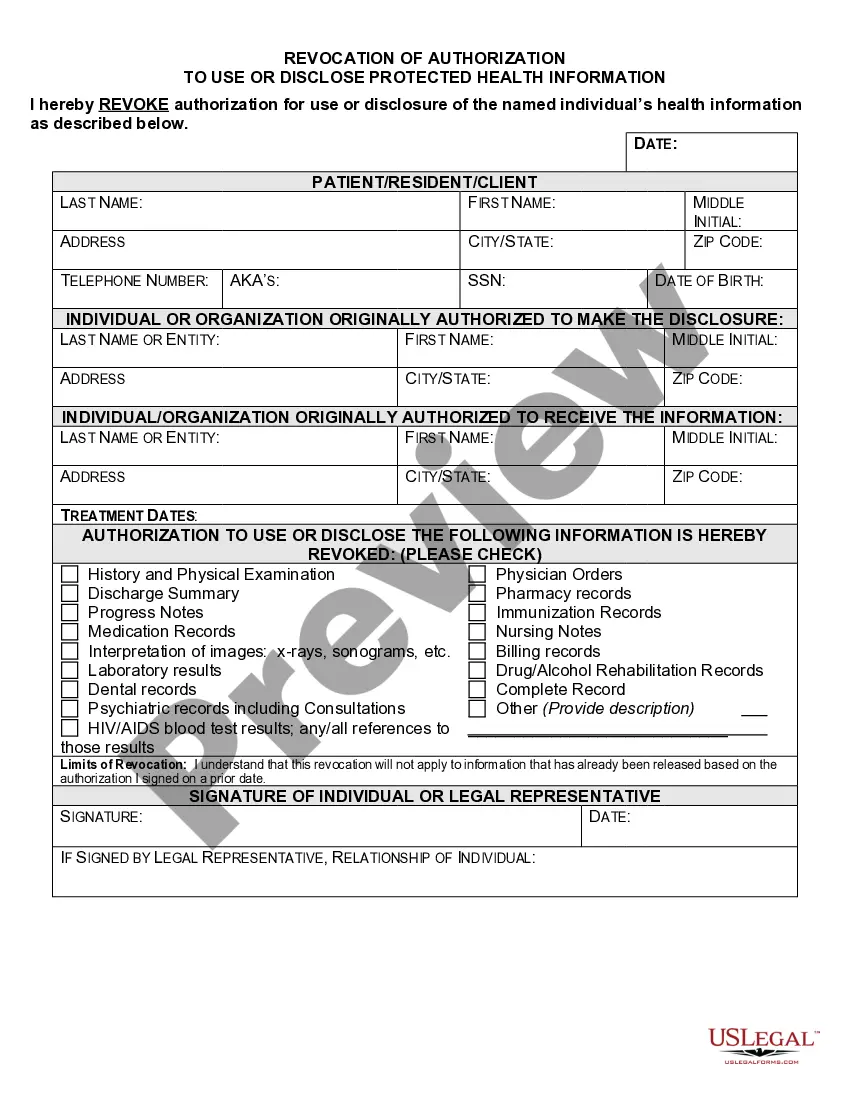
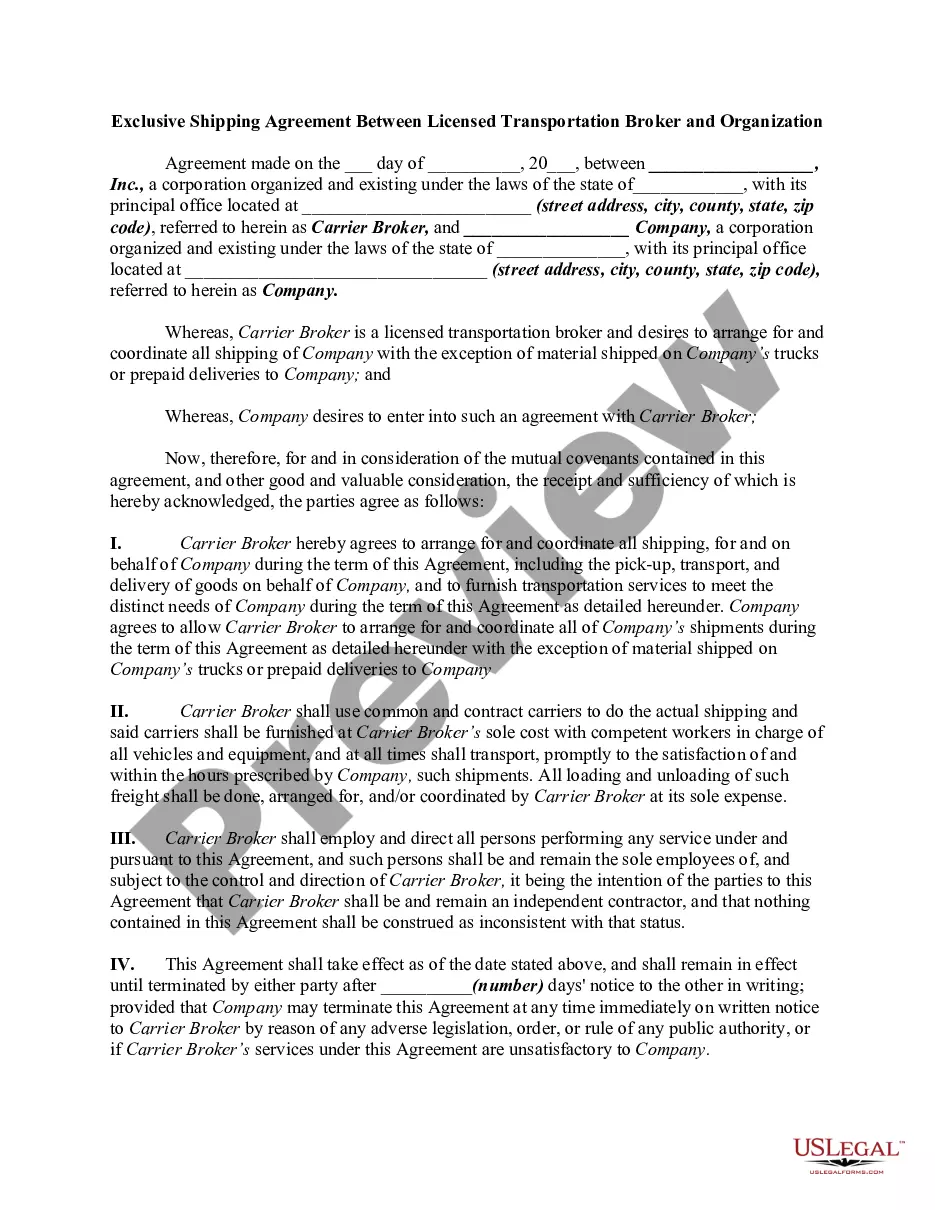
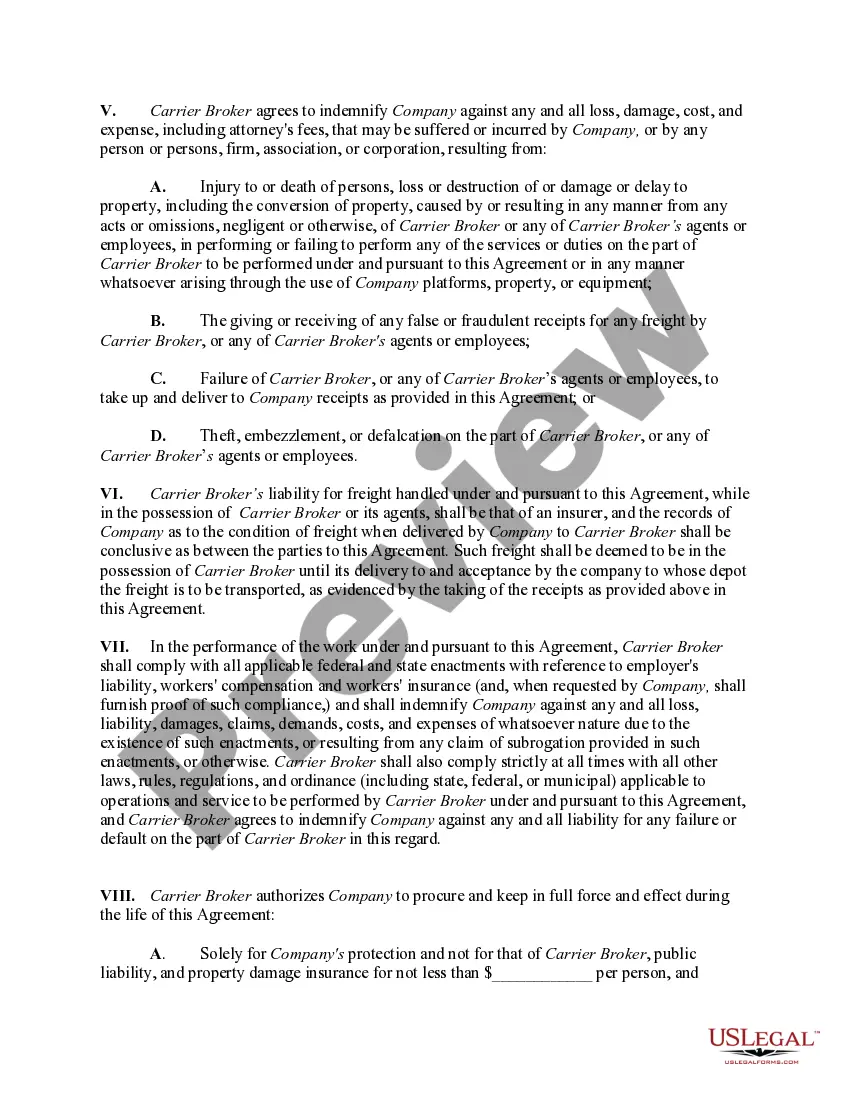
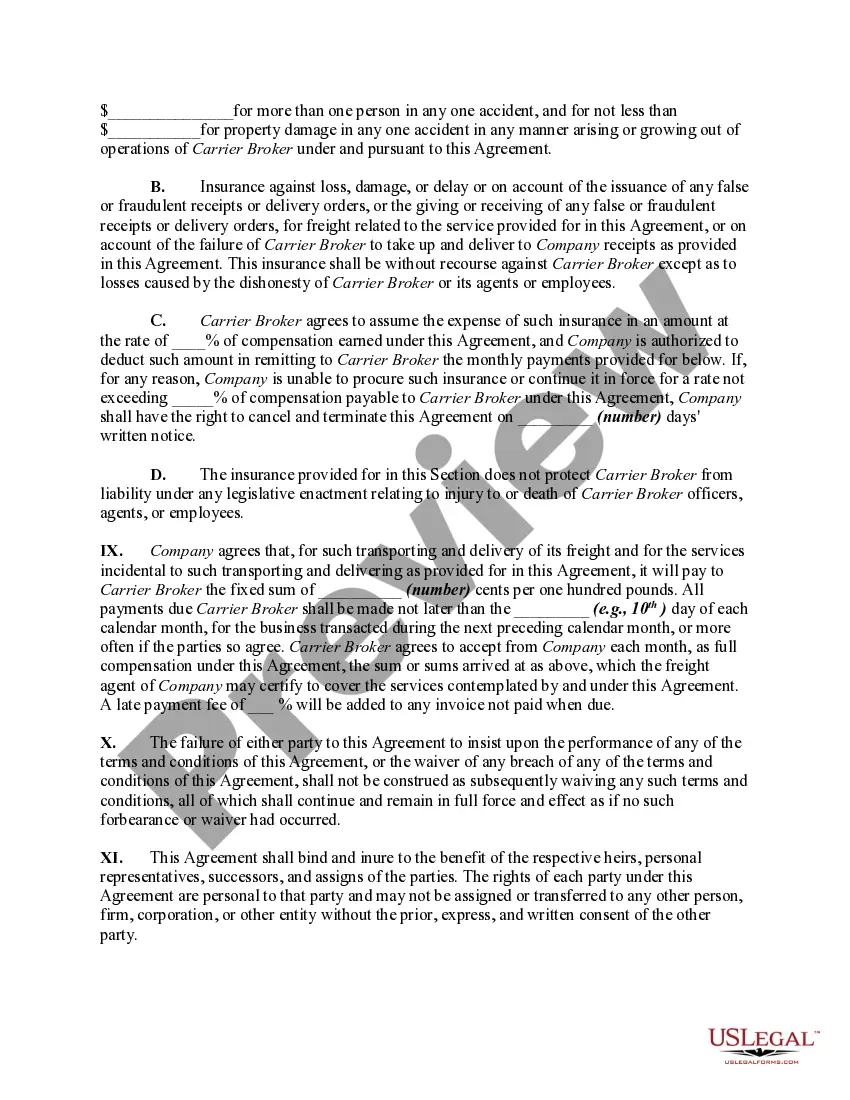
Iowa Exclusive Shipping Agreement Between Licensed Transportation Broker and Organization
Description
Get your form ready online
Our built-in tools help you complete, sign, share, and store your documents in one place.
Make edits, fill in missing information, and update formatting in US Legal Forms—just like you would in MS Word.
Download a copy, print it, send it by email, or mail it via USPS—whatever works best for your next step.
Sign and collect signatures with our SignNow integration. Send to multiple recipients, set reminders, and more. Go Premium to unlock E-Sign.
If this form requires notarization, complete it online through a secure video call—no need to meet a notary in person or wait for an appointment.
We protect your documents and personal data by following strict security and privacy standards.

Make edits, fill in missing information, and update formatting in US Legal Forms—just like you would in MS Word.

Download a copy, print it, send it by email, or mail it via USPS—whatever works best for your next step.

Sign and collect signatures with our SignNow integration. Send to multiple recipients, set reminders, and more. Go Premium to unlock E-Sign.

If this form requires notarization, complete it online through a secure video call—no need to meet a notary in person or wait for an appointment.

We protect your documents and personal data by following strict security and privacy standards.
Looking for another form?



How to fill out Exclusive Shipping Agreement Between Licensed Transportation Broker And Organization?
Finding the appropriate valid document template can be challenging.
Undoubtedly, there are numerous templates accessible online, but how can you find the correct one you need.
Utilize the US Legal Forms website.
First, ensure you have selected the correct form for your city/state. You can view the form by clicking the Review button and examining the form description to make sure it meets your needs.
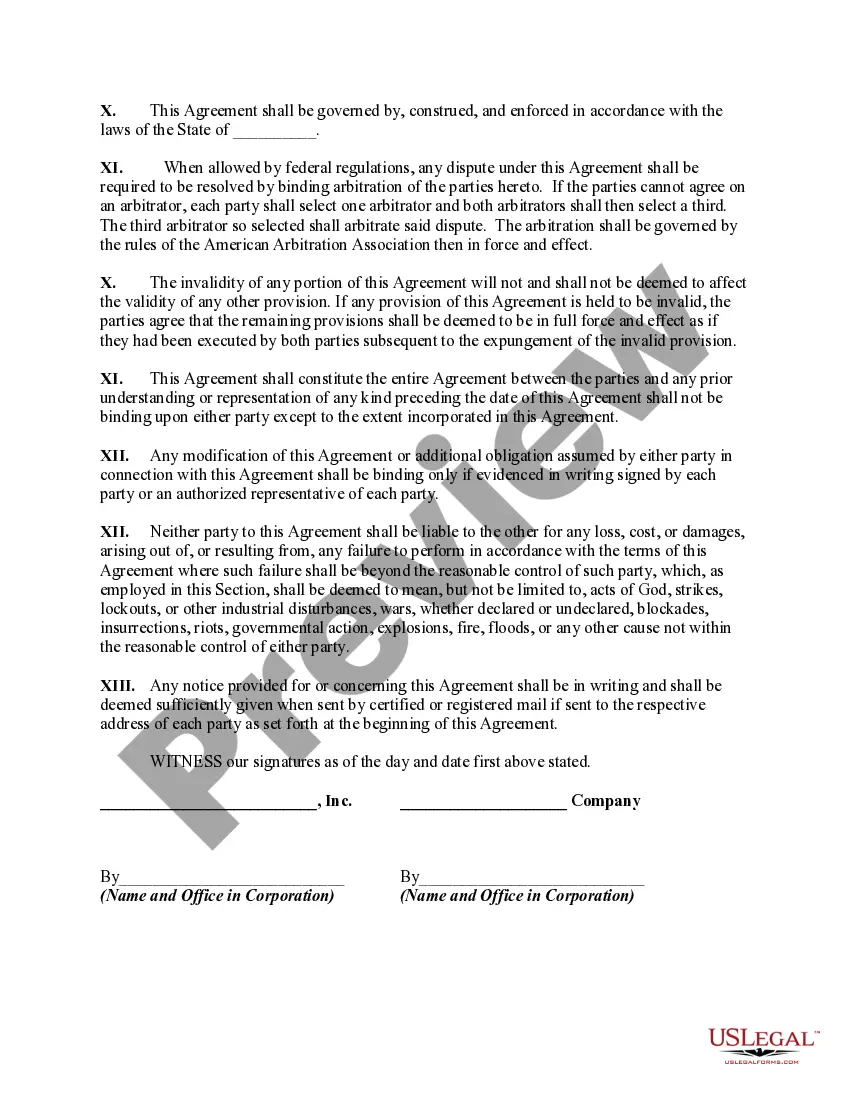
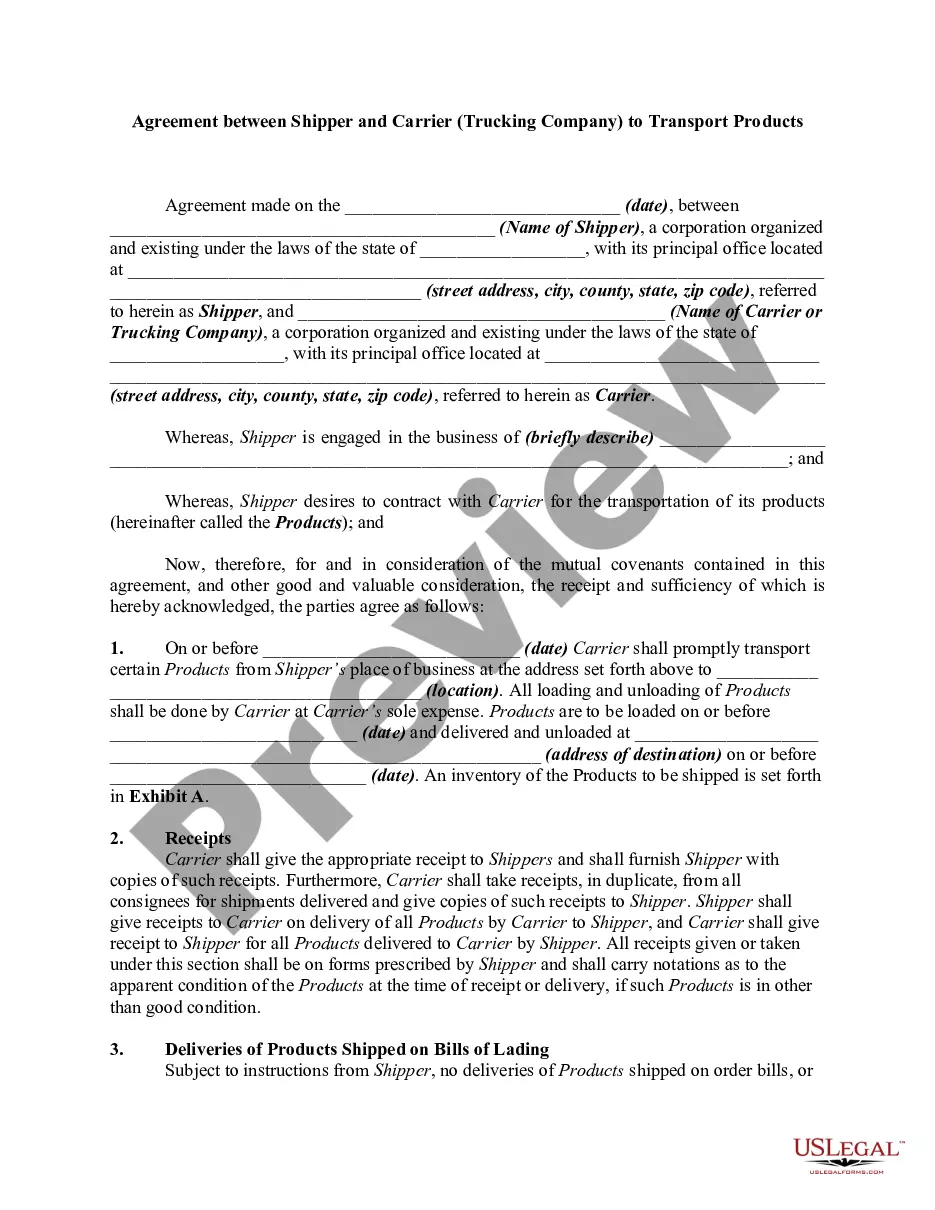
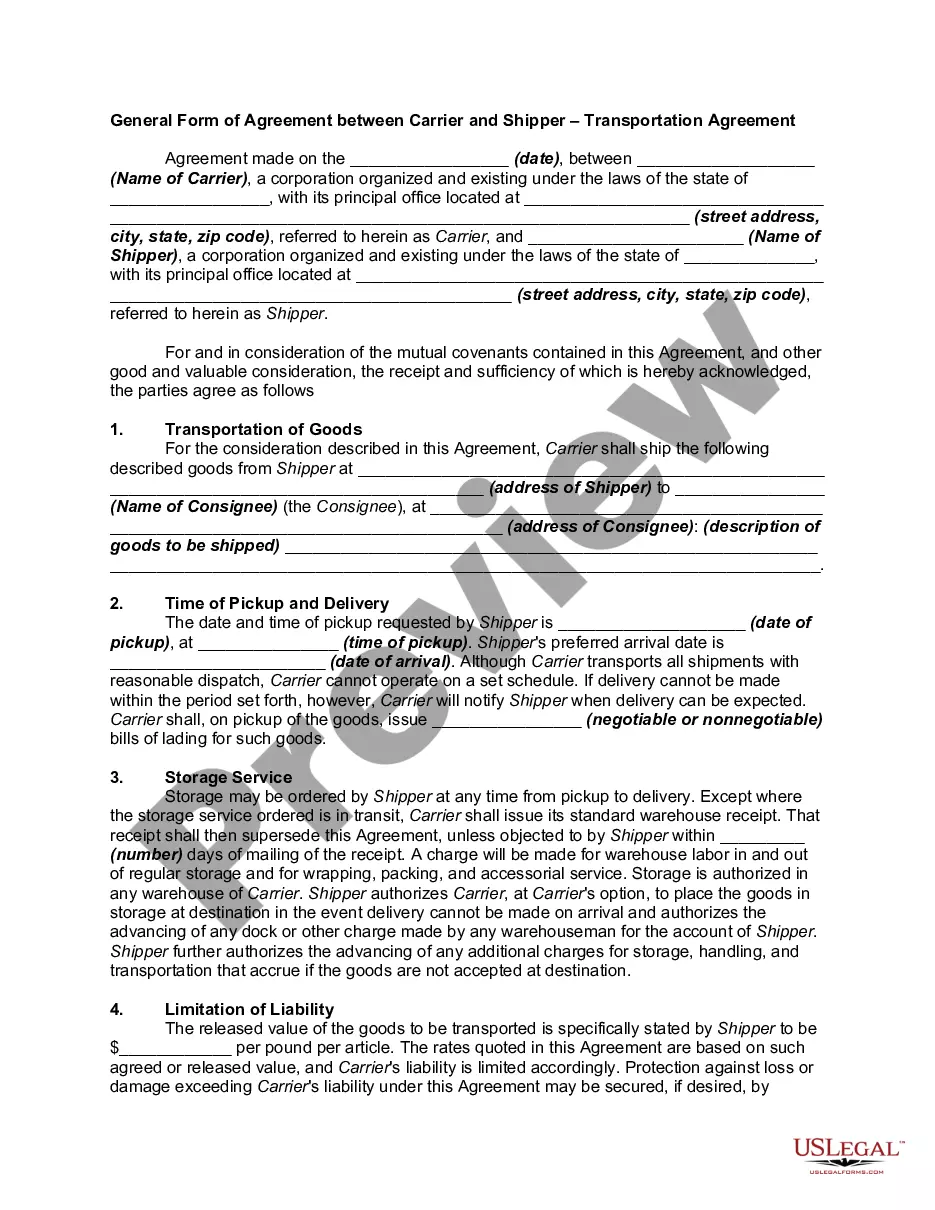
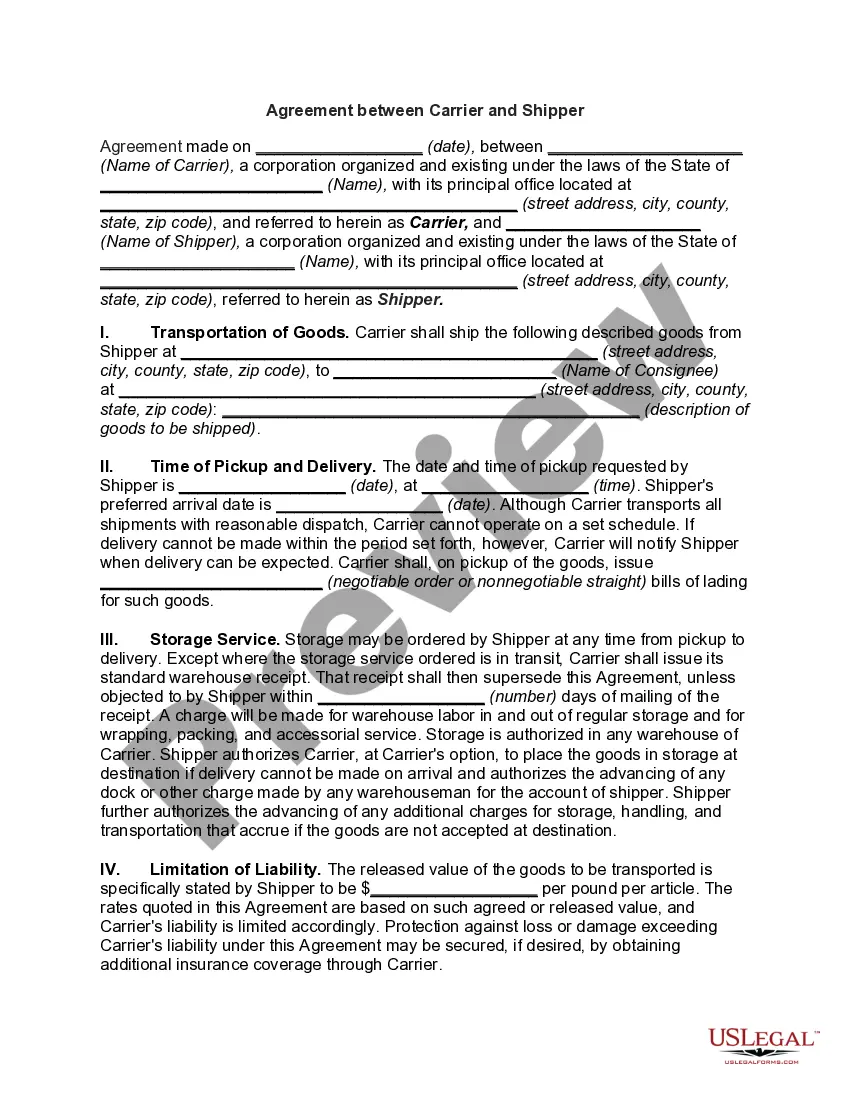
- This service offers thousands of templates, including the Iowa Exclusive Shipping Agreement Between Licensed Transportation Broker and Company, which can be utilized for business and personal purposes.
- All forms are reviewed by professionals and comply with state and federal regulations.
- If you are already registered, Log In to your account and click the Download button to retrieve the Iowa Exclusive Shipping Agreement Between Licensed Transportation Broker and Company.
- Use your account to check the valid forms you have previously purchased.
- Visit the My documents tab in your account to download another copy of the document you need.
- If you are a new user of US Legal Forms, here are simple steps to follow.
Form popularity
FAQ
Carriers are organizations or individuals responsible for physically transporting goods, while shippers are those who send goods from one location to another. The relationship between carriers and shippers is essential for streamlined logistics. When you utilize an Iowa Exclusive Shipping Agreement Between Licensed Transportation Broker and Organization, you can create a more effective collaboration, thereby improving overall shipping efficiency.
The primary difference is that a shipper needs to move goods, while a broker connects shippers with carriers. Shippers focus on the logistics of their shipments, whereas brokers manage the overall shipping process to find the best carrier options available. In your Iowa Exclusive Shipping Agreement Between Licensed Transportation Broker and Organization, understanding these roles ensures a smoother operation and clearer expectations.
Freight brokers often acquire contracts through networking, showcasing their reliability, and demonstrating their ability to negotiate favorable terms. They might establish relationships with companies in need of transportation services, ensuring a steady flow of contracts. Engaging with an Iowa Exclusive Shipping Agreement Between Licensed Transportation Broker and Organization can enhance a broker’s credibility and streamline contract acquisition processes.
A carrier shipper owns the vehicles that transport goods, while a broker serves as an intermediary between shippers and carriers. Brokers do not physically transport goods but facilitate the logistics and negotiate rates. This distinction is significant in the context of an Iowa Exclusive Shipping Agreement Between Licensed Transportation Broker and Organization, as it outlines how each role collaborates to ensure efficient shipping.
A shipper is an individual or business that needs to send goods from one location to another. In contrast, a courier is a service provider that specializes in the direct transport of those goods. When entering an Iowa Exclusive Shipping Agreement Between Licensed Transportation Broker and Organization, it is crucial to understand these roles. This agreement helps clarify the responsibilities each party holds in the shipping process.
A ship agent manages the port operations and responsibilities for a ship, while a ship broker facilitates the buying, selling, or chartering of ships. Recognizing these roles can greatly enhance your navigation of maritime agreements, including an Iowa Exclusive Shipping Agreement Between Licensed Transportation Broker and Organization, allowing for clearer collaboration.
A shipping agent takes care of the operational aspects of shipping, while a broker focuses on negotiating rates and contracts between shippers and carriers. Understanding this difference is essential for organizations to effectively manage logistics and form an Iowa Exclusive Shipping Agreement Between Licensed Transportation Broker and Organization that aligns with their objectives.
A shipping agent represents a shipping line or carrier, handling various tasks, such as coordinating loading and unloading operations, and managing documentation. When entering an Iowa Exclusive Shipping Agreement Between Licensed Transportation Broker and Organization, you may encounter shipping agents working with brokers to ensure smooth transportation processes.
A freight broker primarily focuses on arranging transportation for goods, while a logistics broker offers a broader range of services including supply chain management and freight forwarding. Understanding these roles is crucial when forming an Iowa Exclusive Shipping Agreement Between Licensed Transportation Broker and Organization, ensuring you select a broker that meets your specific needs.
A broker connects shippers with carriers to arrange transportation services, while an agent acts on behalf of either a broker or a carrier, typically representing their interests. Knowing this can make a significant difference when engaging in an Iowa Exclusive Shipping Agreement Between Licensed Transportation Broker and Organization, as it helps clarify roles and responsibilities.