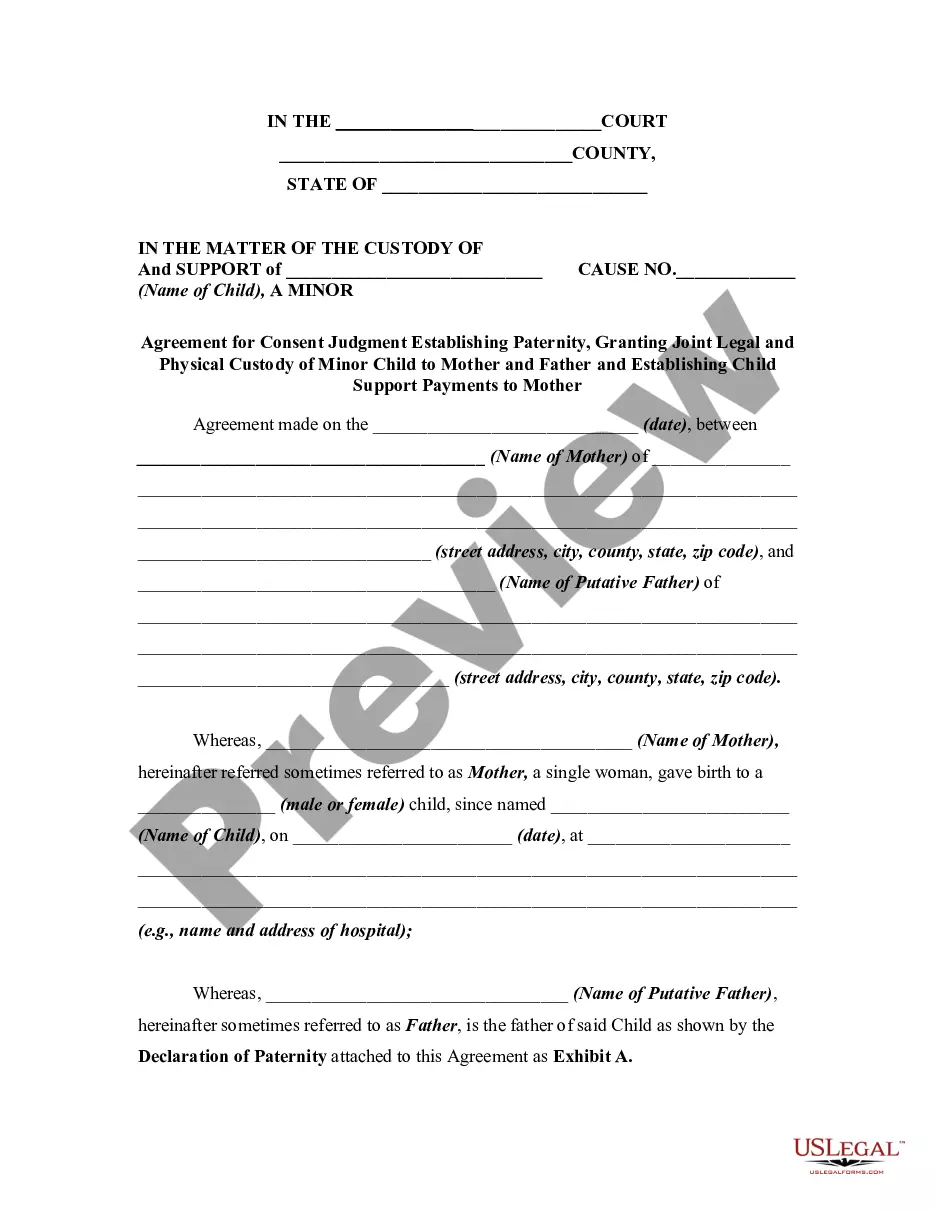
A written agreement regarding child custody and support entered into by unmarried parents at time of their breakup is generally enforceable unless the parties abandon the agreement, or the agreement is unconscionable.
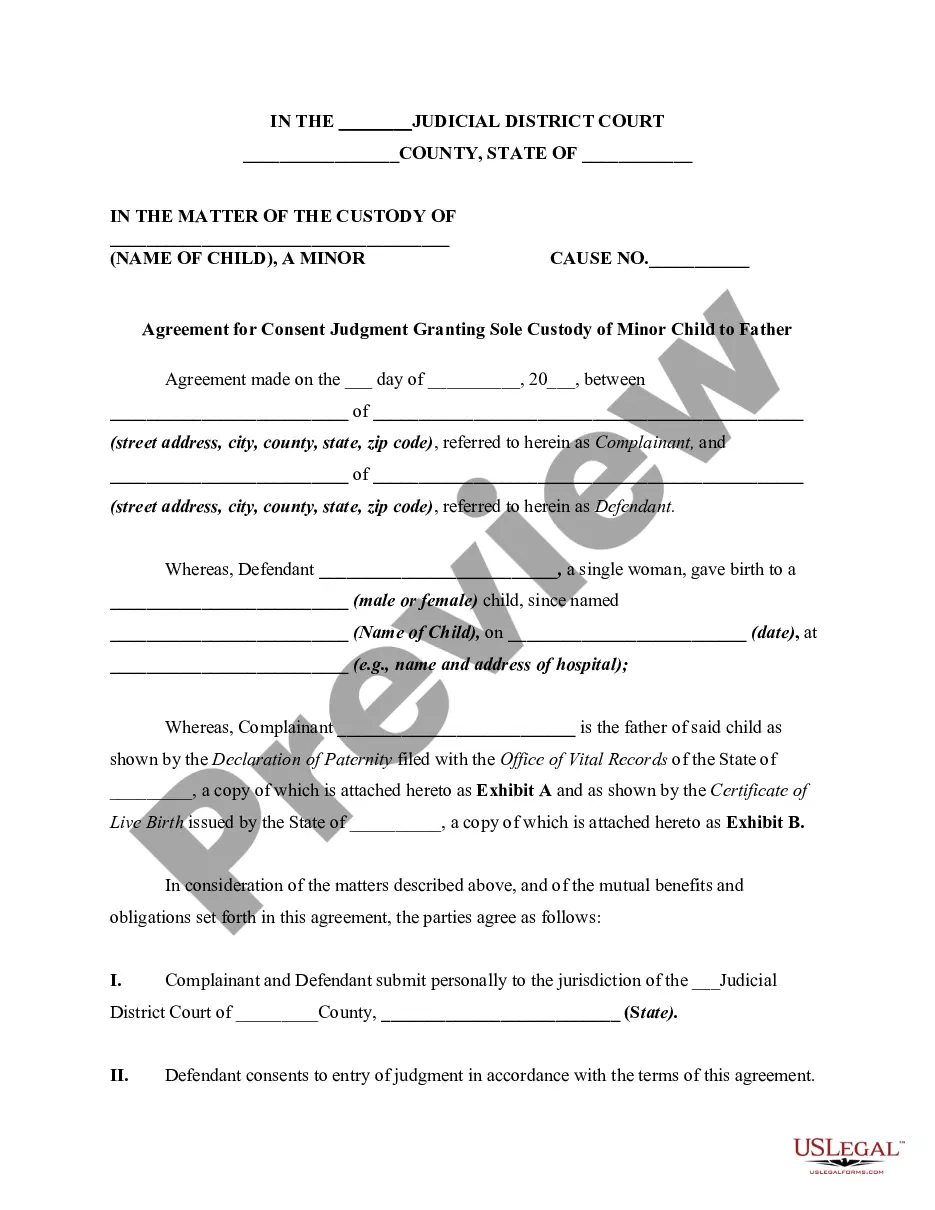
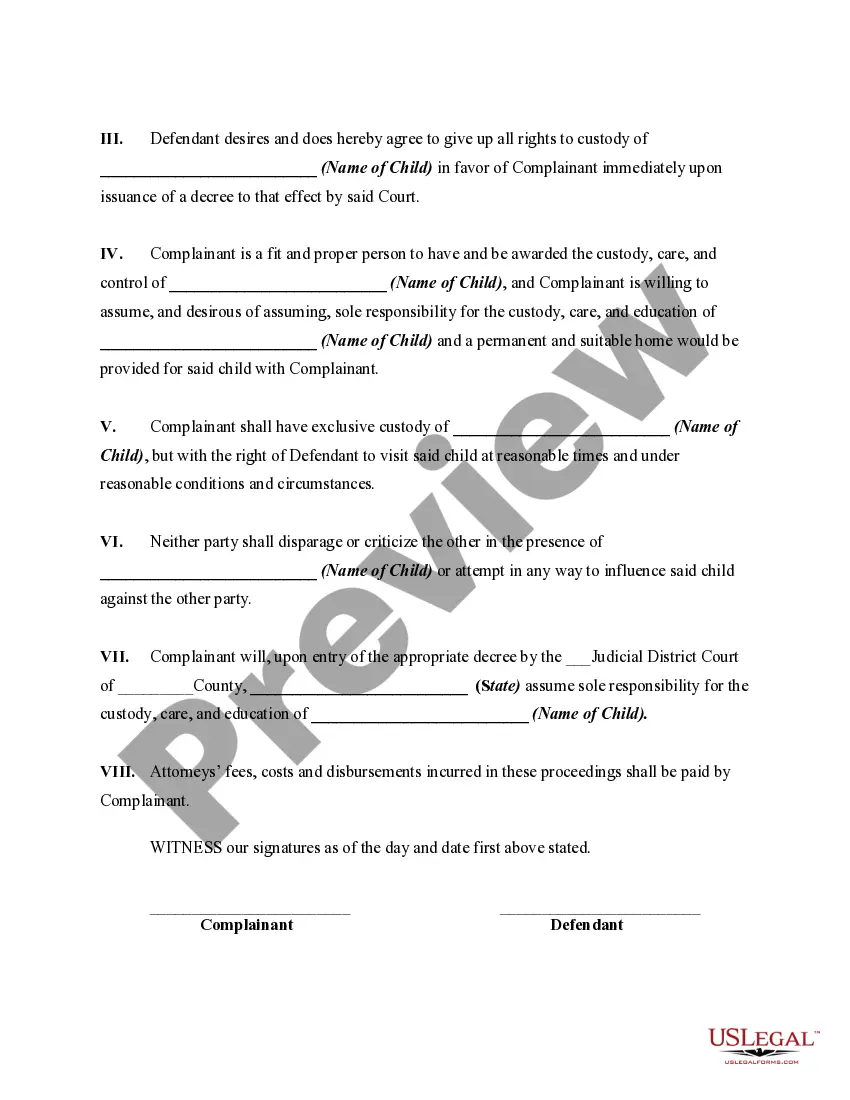
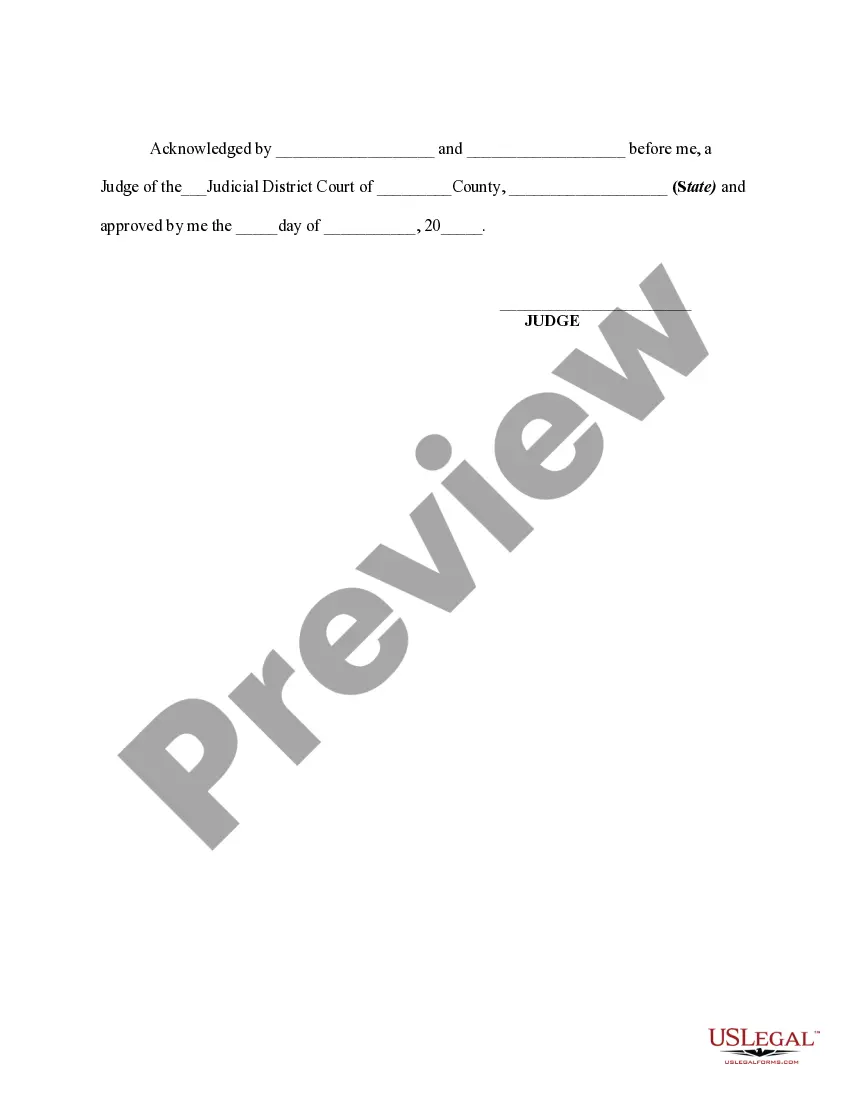
The following form is a sample of an agreement for a consent judgment granting sole custody of a minor child to the father.
Iowa Agreement for Consent Judgment Granting Sole Custody of Minor Child to Father
State:
Multi-State
Control #:
US-00774BG
Format:
Word;
Rich Text
Instant download
Description
Free preview
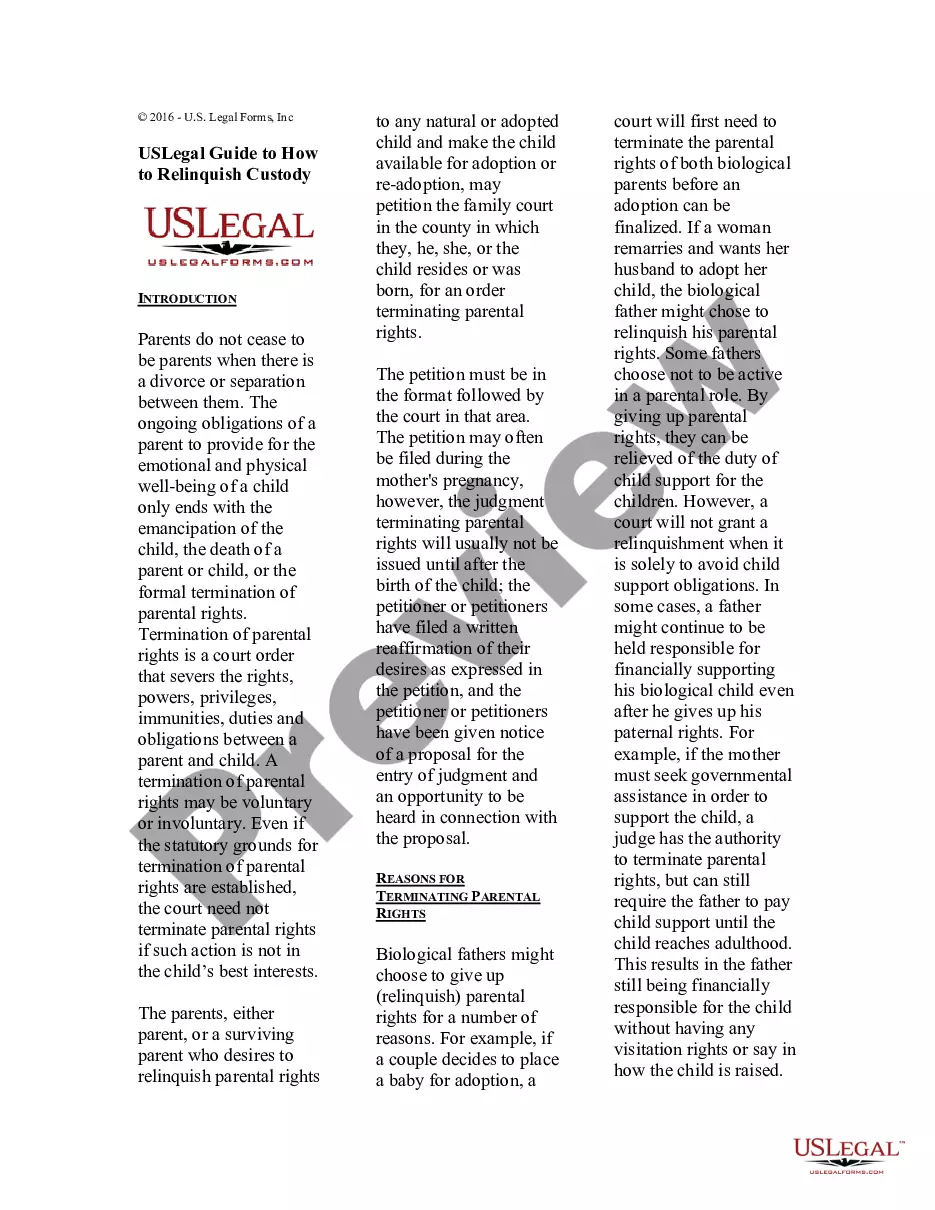
Get your form ready online
Our built-in tools help you complete, sign, share, and store your documents in one place.
Built-in online Word editor
Make edits, fill in missing information, and update formatting in US Legal Forms—just like you would in MS Word.
Export easily
Download a copy, print it, send it by email, or mail it via USPS—whatever works best for your next step.
E-sign your document
Sign and collect signatures with our SignNow integration. Send to multiple recipients, set reminders, and more. Go Premium to unlock E-Sign.
Notarize online 24/7
If this form requires notarization, complete it online through a secure video call—no need to meet a notary in person or wait for an appointment.
Store your document securely
We protect your documents and personal data by following strict security and privacy standards.

Make edits, fill in missing information, and update formatting in US Legal Forms—just like you would in MS Word.

Download a copy, print it, send it by email, or mail it via USPS—whatever works best for your next step.

Sign and collect signatures with our SignNow integration. Send to multiple recipients, set reminders, and more. Go Premium to unlock E-Sign.

If this form requires notarization, complete it online through a secure video call—no need to meet a notary in person or wait for an appointment.

We protect your documents and personal data by following strict security and privacy standards.
Looking for another form?



How to fill out Agreement For Consent Judgment Granting Sole Custody Of Minor Child To Father?
You can spend hours online searching for the legal document template that meets the state and federal requirements you need. US Legal Forms offers a vast array of legal forms that are reviewed by experts. It is easy to download or print the Iowa Agreement for Consent Judgment Granting Sole Custody of Minor Child to Father from my service.
If you already have a US Legal Forms account, you can Log In and click on the Acquire button. After that, you can fill out, modify, print, or sign the Iowa Agreement for Consent Judgment Granting Sole Custody of Minor Child to Father. Every legal document template you purchase is yours permanently. To obtain another copy of a purchased form, go to the My documents tab and click on the corresponding button.
If you are using the US Legal Forms site for the first time, follow the simple instructions below: First, make sure you have selected the correct document template for the state/city that you choose. Review the form details to ensure you have selected the appropriate form. If available, use the Preview button to look through the document template as well. To get another version of the form, use the Search field to find the template that suits you and your needs. Once you have located the template you require, click on Get now to proceed. Choose the pricing plan you want, enter your credentials, and sign up for an account on US Legal Forms. Complete the transaction. You can use your credit card or PayPal account to pay for the legal form. Choose the format of the document and download it to your device. Make modifications to your document if needed. You can fill out, edit, sign, and print the Iowa Agreement for Consent Judgment Granting Sole Custody of Minor Child to Father. Obtain and print a multitude of document templates using the US Legal Forms website, which offers the largest selection of legal forms. Utilize professional and state-specific templates to address your business or personal needs.
Form popularity
FAQ
A common question that is also asked is if a mother can keep a father from the child in Iowa. The short answer is yes, and a mother can keep a child from the father in Iowa if she can show the court that contact with the father is not in the child's best interests, just as a father could do to a mother.
See Iowa Code section 598.1(3). Sole legal custody means that only one parent has the legal responsibility of a minor child. Sole legal custody is granted if a court determines that it would be better for just one parent to make the decisions for the child.
Fathers' Rights in Iowa Fathers have just as many rights as mothers do under Iowa laws. As a father, you have the following rights: The right to parent your child with appropriate visitation or custody. The right to make decisions concerning your child's overall welfare, medical needs, education, and religion.
The mother usually has custody of her child if she is not married when the child is born. The mother can make decisions for the child and has the right to take care of the child. The father can "acknowledge" paternity. This means he says he is the father.
If a child displays a mature demeanor, a judge may consider their opinion when deciding on child custody rulings. There is no set age for when a judge will take a child's preference into account.
Contrary to popular belief, mothers are not automatically given primary custody in Iowa. The Iowa courts recognize that fathers play just as important a role in their children's lives as mothers do. In fact, ing to Iowa law, fathers have the same parental rights as mothers.
When Can a Custodial Parent in Iowa Relocate the Children out of State? An Iowa divorce decree sets specific parameters for custody and visitation. A custodial parent cannot move the child to a distance that would cause hardship for the noncustodial parent without first getting a new custody order.
A court of this state has temporary emergency jurisdiction if the child is present in this state and the child has been abandoned or it is necessary in an emergency to protect the child because the child, or a sibling or parent of the child, is subjected to or threatened with mistreatment or abuse.