Iowa Apartment Rules and Regulations
What is this form?
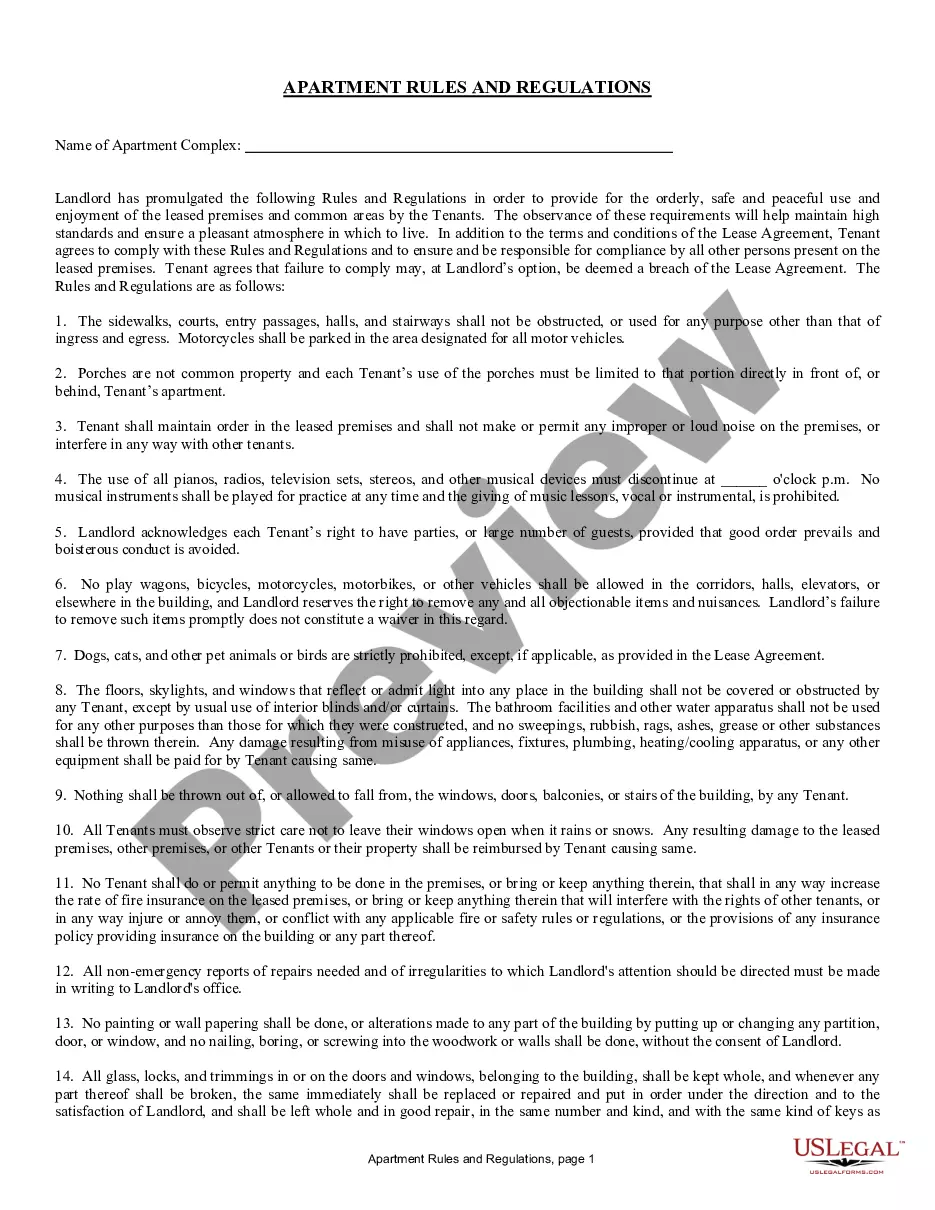
The Apartment Rules and Regulations form outlines the specific rules and responsibilities that tenants must adhere to in an apartment complex. This form is essential for maintaining a harmonious living environment and complements the Apartment Lease Agreement. While the lease covers terms of rental and occupancy, this form addresses day-to-day conduct and community standards within the property.
Form components explained
- Name of the apartment complex
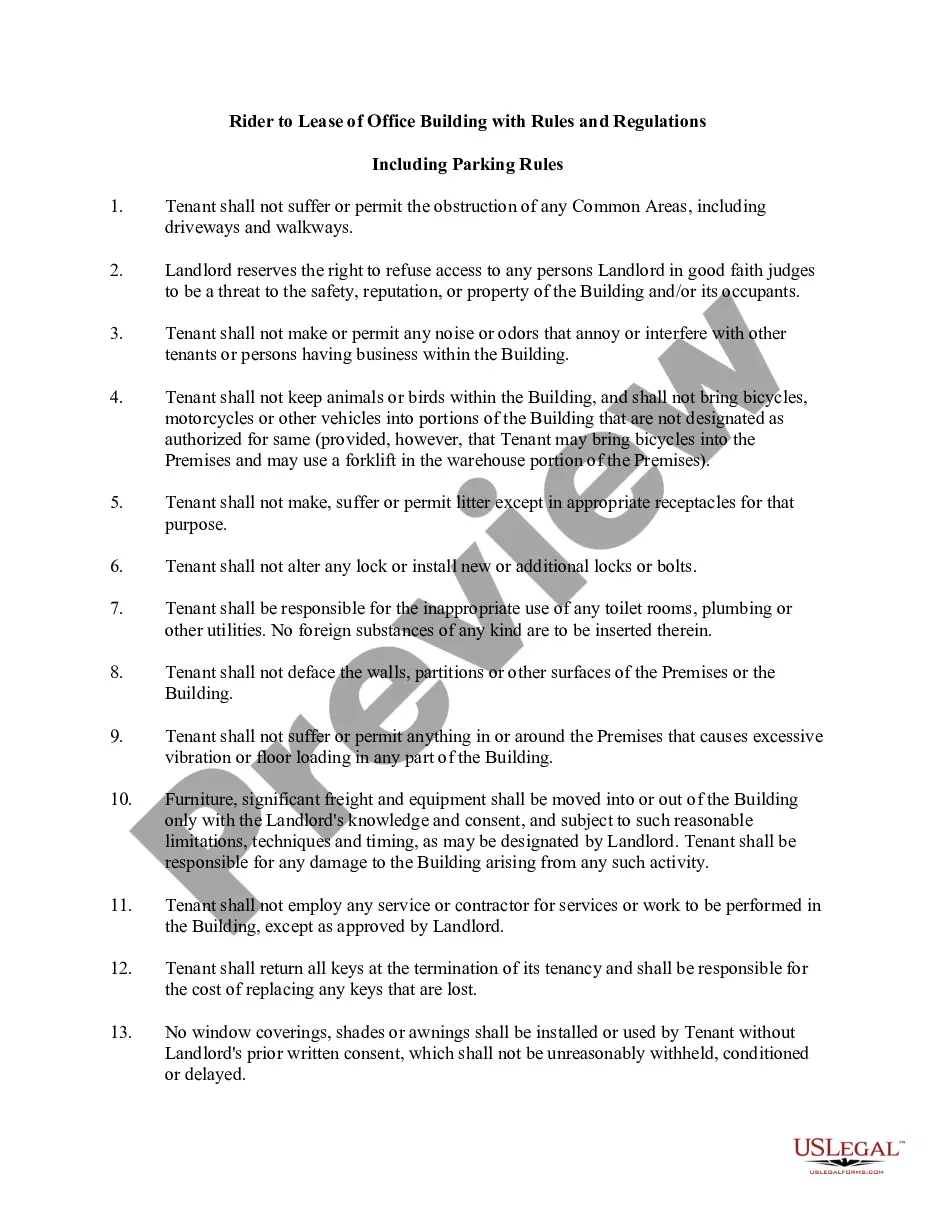
- Overview of general rules regarding noise, guests, and common areas
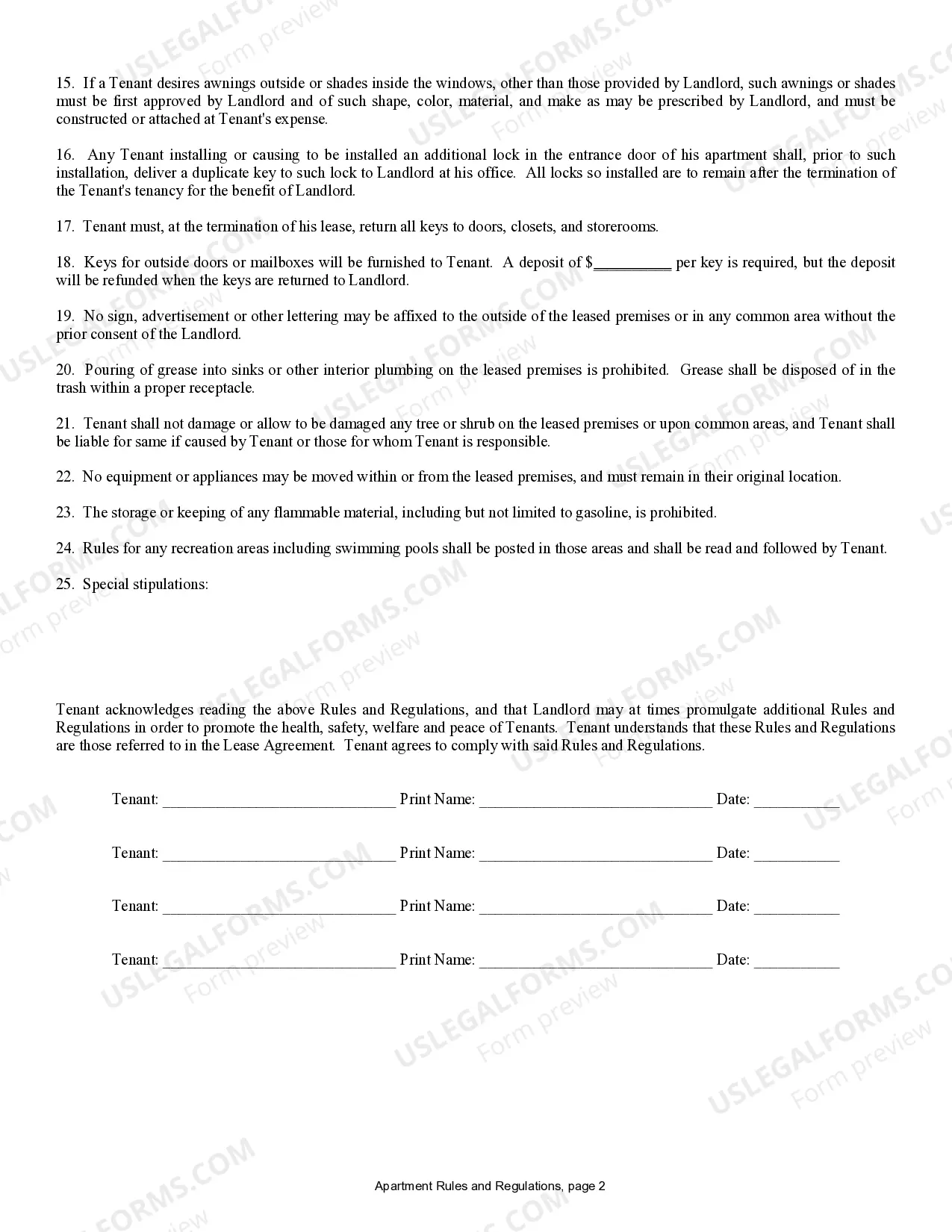
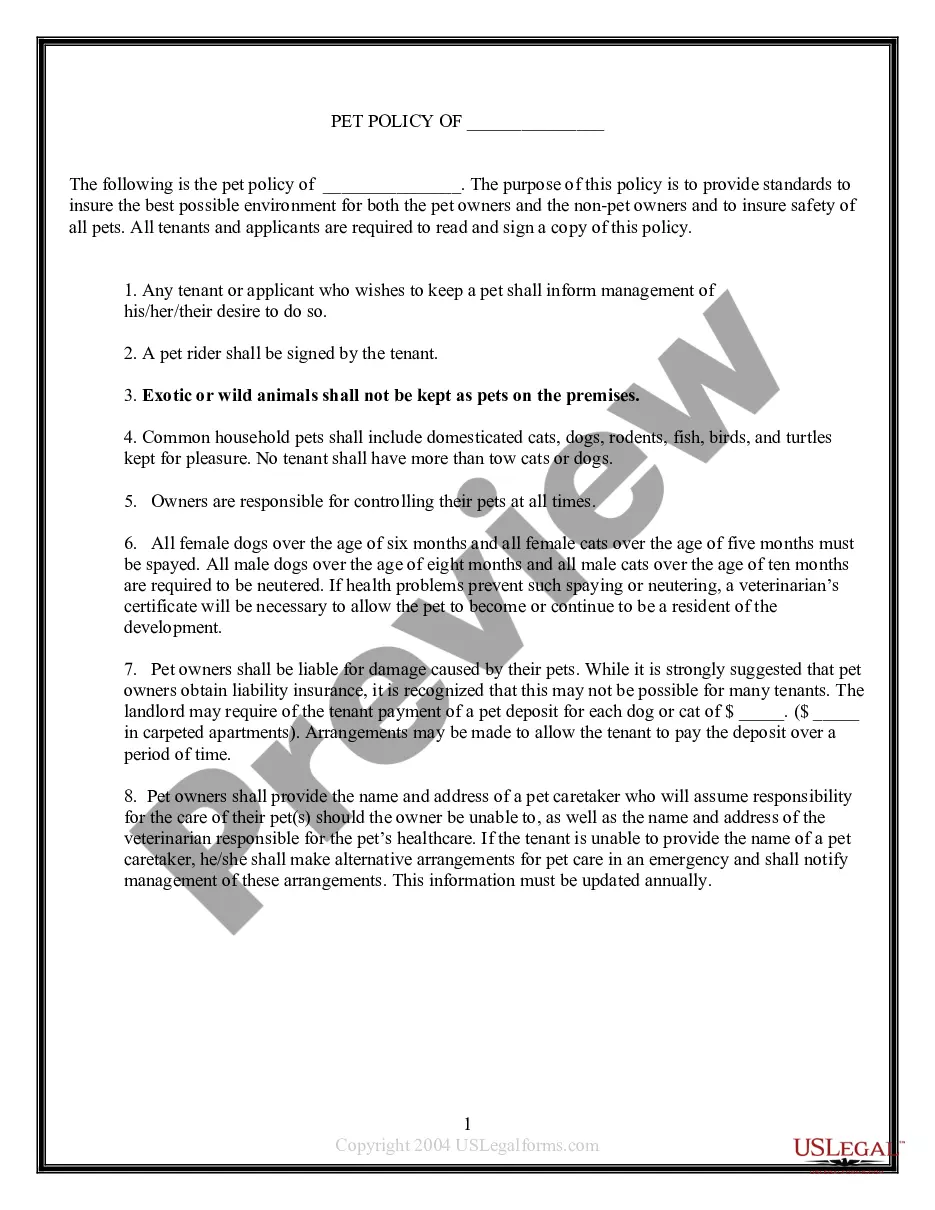
- Guidelines for maintaining the property, including pets, trash, and personal alterations
- Responsibilities for damage and maintenance requests
- Procedures for installing locks and returning keys upon lease termination
Situations where this form applies
This form should be used when drafting an agreement for tenants in an apartment complex. It is applicable in situations where landlords wish to enforce specific standards and guidelines that extend beyond the basic lease. Use this form whenever a new tenant moves in or when updating existing rules to ensure that all tenants are aware of their responsibilities and community standards.
Intended users of this form
- Landlords and property managers who manage residential apartments
- Tenants preparing to sign a lease agreement
- Property management companies looking to maintain clear regulations
- Real estate professionals assisting clients with rental properties
How to prepare this document
- Identify the name of the apartment complex and enter it at the top of the form.
- Review and ensure that all tenants are aware of the listed rules and regulations.
- Specify any unique rules or agreements that may need to be added in the "Special stipulations" section.
- Have all tenants sign and date the form to acknowledge their understanding and agreement.
- Distribute a copy of the signed form to each tenant for their records.
Is notarization required?
This form usually doesn’t need to be notarized. However, local laws or specific transactions may require it. Our online notarization service, powered by Notarize, lets you complete it remotely through a secure video session, available 24/7.
Get your form ready online
Our built-in tools help you complete, sign, share, and store your documents in one place.
Make edits, fill in missing information, and update formatting in US Legal Forms—just like you would in MS Word.
Download a copy, print it, send it by email, or mail it via USPS—whatever works best for your next step.
Sign and collect signatures with our SignNow integration. Send to multiple recipients, set reminders, and more. Go Premium to unlock E-Sign.
If this form requires notarization, complete it online through a secure video call—no need to meet a notary in person or wait for an appointment.
We protect your documents and personal data by following strict security and privacy standards.

Make edits, fill in missing information, and update formatting in US Legal Forms—just like you would in MS Word.

Download a copy, print it, send it by email, or mail it via USPS—whatever works best for your next step.

Sign and collect signatures with our SignNow integration. Send to multiple recipients, set reminders, and more. Go Premium to unlock E-Sign.

If this form requires notarization, complete it online through a secure video call—no need to meet a notary in person or wait for an appointment.

We protect your documents and personal data by following strict security and privacy standards.
Typical mistakes to avoid
- Not including the specific name of the apartment complex, which can lead to confusion.
- Failing to gather signatures from all tenants, making the rules unenforceable.
- Overlooking state-specific rental laws that might impact certain rules listed in the form.
- Not clearly communicating the rules to all tenants prior to signing.
Why use this form online
- Easy access to downloadable templates created by licensed attorneys.
- Convenient editing options to customize the rules as needed for your specific apartment complex.
- Reliable legal language that ensures compliance with relevant tenant and landlord laws.
Legal use & context
- This form provides a comprehensive overview of tenant responsibilities, reducing ambiguity in expectations.
- Rules and regulations outlined in the form can be enforced as part of the lease agreement, providing legal standing in the case of disputes.
Looking for another form?
Form popularity
FAQ
When interacting with your landlord, avoid making negative or accusatory statements that could escalate tension. Stay factual and courteous, even if issues arise in your rental agreement. Discussing your understanding of Iowa Apartment Rules and Regulations can also demonstrate your awareness and help facilitate more productive communication.
Occupancy laws in Iowa govern how many individuals can legally reside in a rental unit. Under Iowa Apartment Rules and Regulations, these laws often consider factors like unit size and local zoning ordinances. It is crucial for both tenants and landlords to be aware of these laws to ensure fair and legal occupancy practices.
The duration before a guest is considered a tenant in Iowa can vary, but it typically falls under local definitions of tenancy. According to Iowa Apartment Rules and Regulations, if a guest stays beyond the established timeframe determined in your lease agreement, they may obtain tenant rights. It’s best to clarify this with your landlord to avoid complications.
If you want to file a complaint against a landlord in Iowa, you should start by contacting your local housing authority. They can provide guidance on the appropriate steps to take based on Iowa Apartment Rules and Regulations. Document any issues and communicate formally with your landlord before escalating the matter, as many disputes can be resolved directly.
In Iowa, guests can stay in a rental without being on the lease, but there are limitations. Generally, if a guest stays for an extended period, they may be considered a tenant under Iowa Apartment Rules and Regulations. It's advisable to discuss any long-term guests with your landlord to avoid potential lease violations.
Yes, as a landlord in Iowa, you can limit the number of occupants in your rental property. Iowa Apartment Rules and Regulations allow landlords to set occupancy limits based on factors such as the size of the unit. However, any limit must comply with local housing codes and cannot discriminate against families or individuals.
Iowa's occupancy laws outline how many individuals can reside in a rental unit, often based on the number of bedrooms available. Apartment rules and regulations also stress the importance of local and state safety codes, which dictate occupancy limits to prevent overcrowding. It’s beneficial for both tenants and landlords to understand these rules to ensure compliance.
In Iowa, owners and renters have distinct rights under the state's legal framework. While landlords have the right to manage their property, renters possess rights intended to protect them from unfair treatment. Both parties are encouraged to understand their respective rights to foster a respectful landlord-tenant relationship.
Iowa does not have comprehensive rent control laws across the state. Instead, Iowa Apartment Rules and Regulations allow landlords to set and increase rent as they see fit, provided they comply with notice requirements. However, some local jurisdictions may establish specific rent control measures, so checking local ordinances is vital.
Renters in Iowa enjoy various rights under the state's apartment rules and regulations. These rights include the right to a habitable environment, the right to privacy, and protection against unlawful eviction. Tenants can also report housing violations to local authorities, ensuring their living conditions are up to standard.