Iowa Mutual Wills or Last Will and Testaments for Man and Woman living together, not Married with Minor Children
Understanding this form
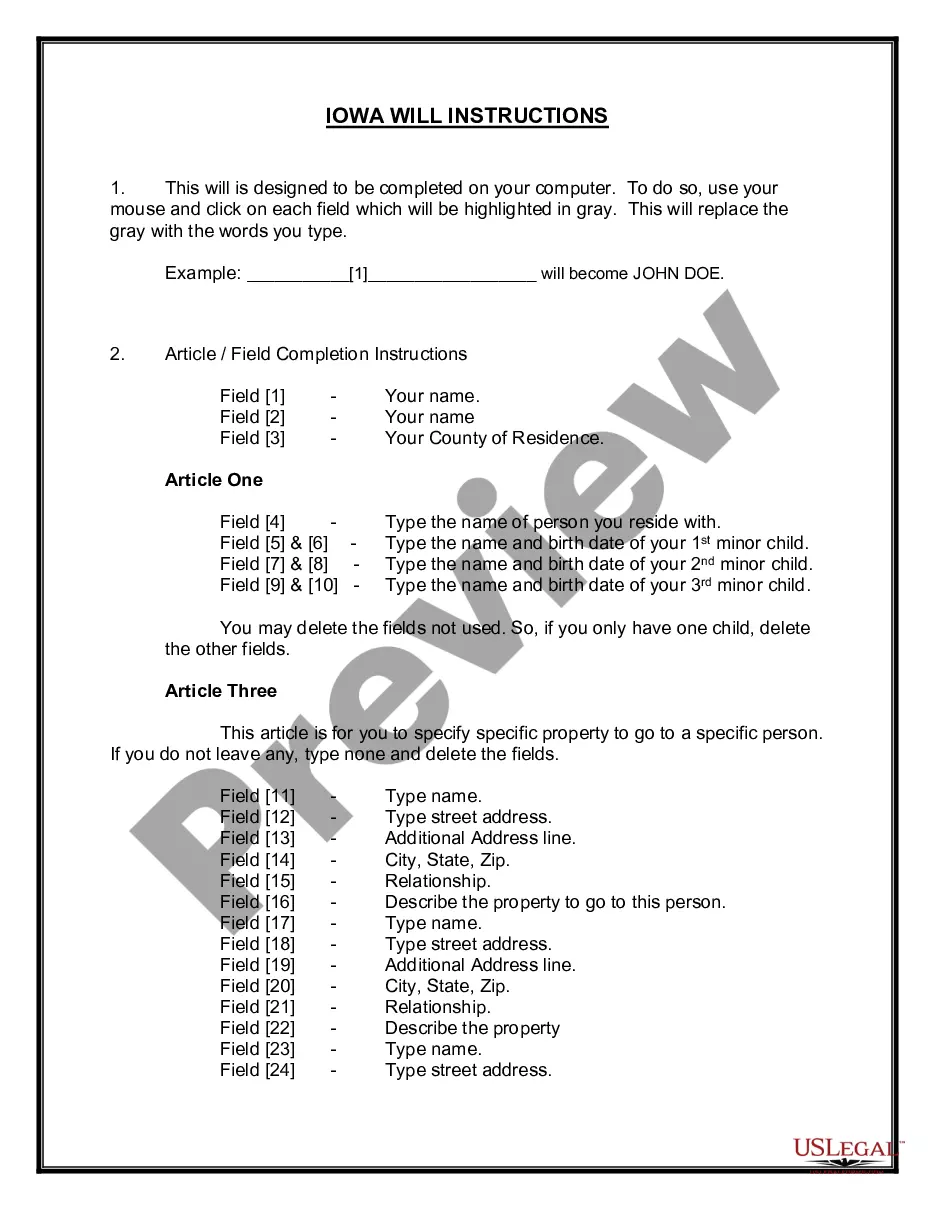
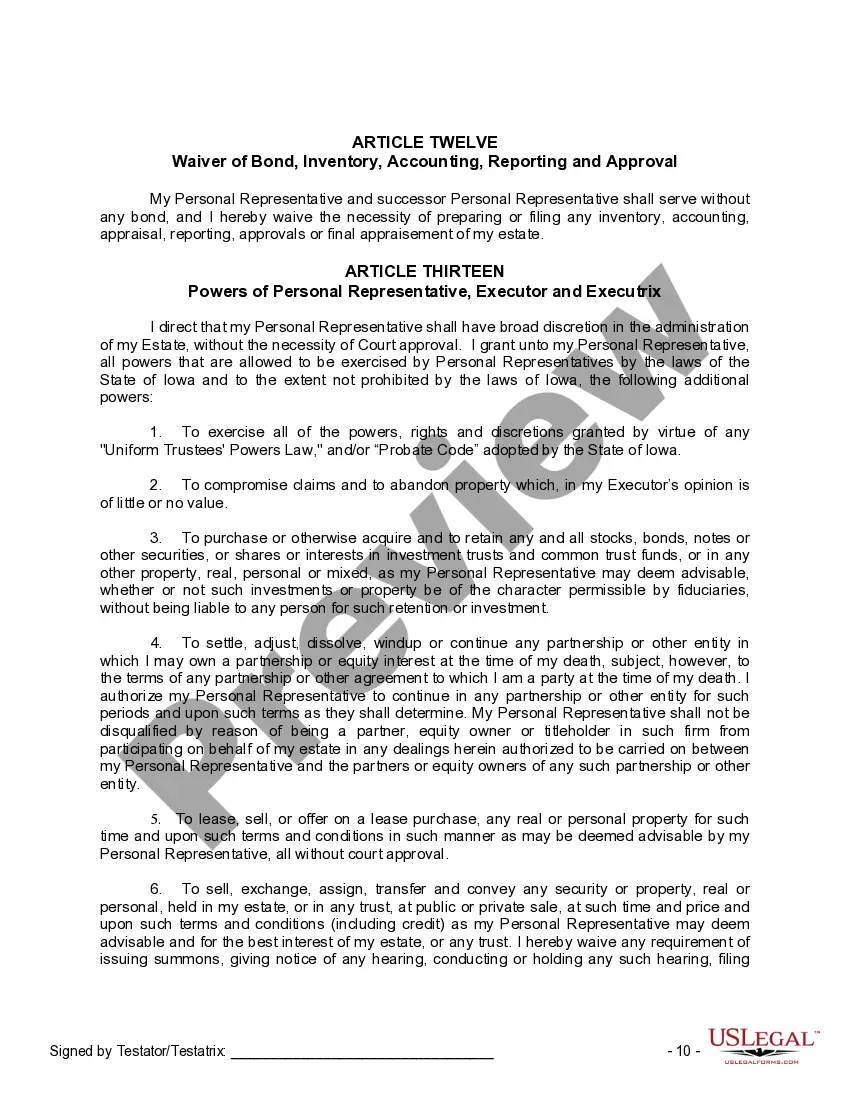
This form is a set of mutual wills crafted for a man and a woman who are living together but are not married, and who have minor children. It facilitates the arrangement of their estate, allowing each partner to leave property to the other and ensure their children are taken care of in the event of their death. Unlike separate wills, mutual wills are intended to reflect a shared intent between the parties regarding their estates.
Form components explained
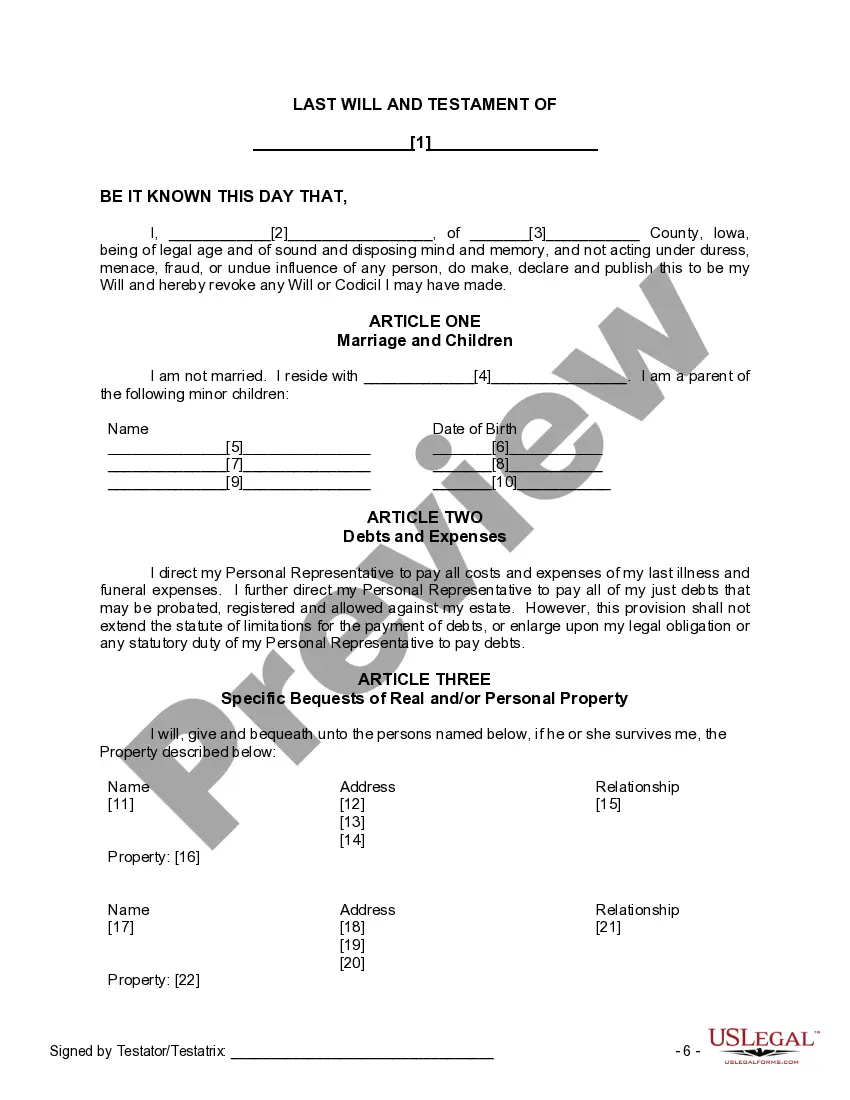
- Article One - Personal information and declaration of living situation and children.
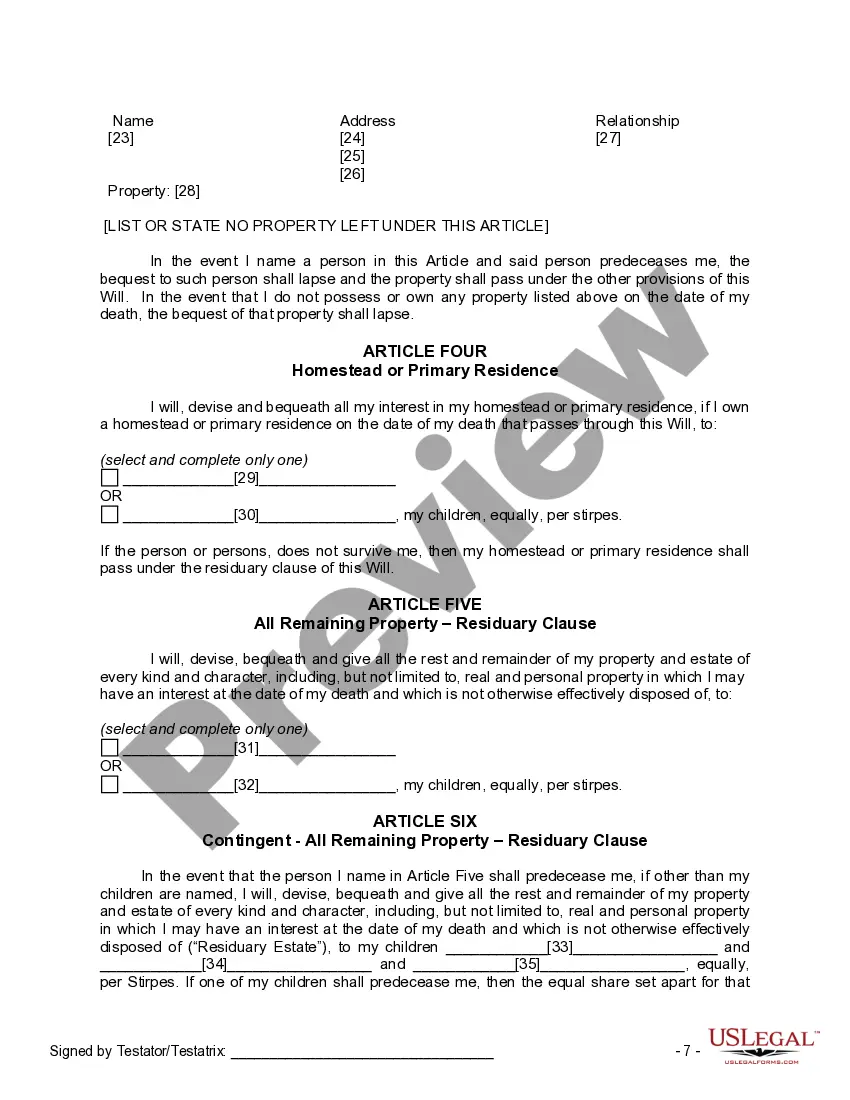
- Article Three - Specific bequests of property to named individuals.
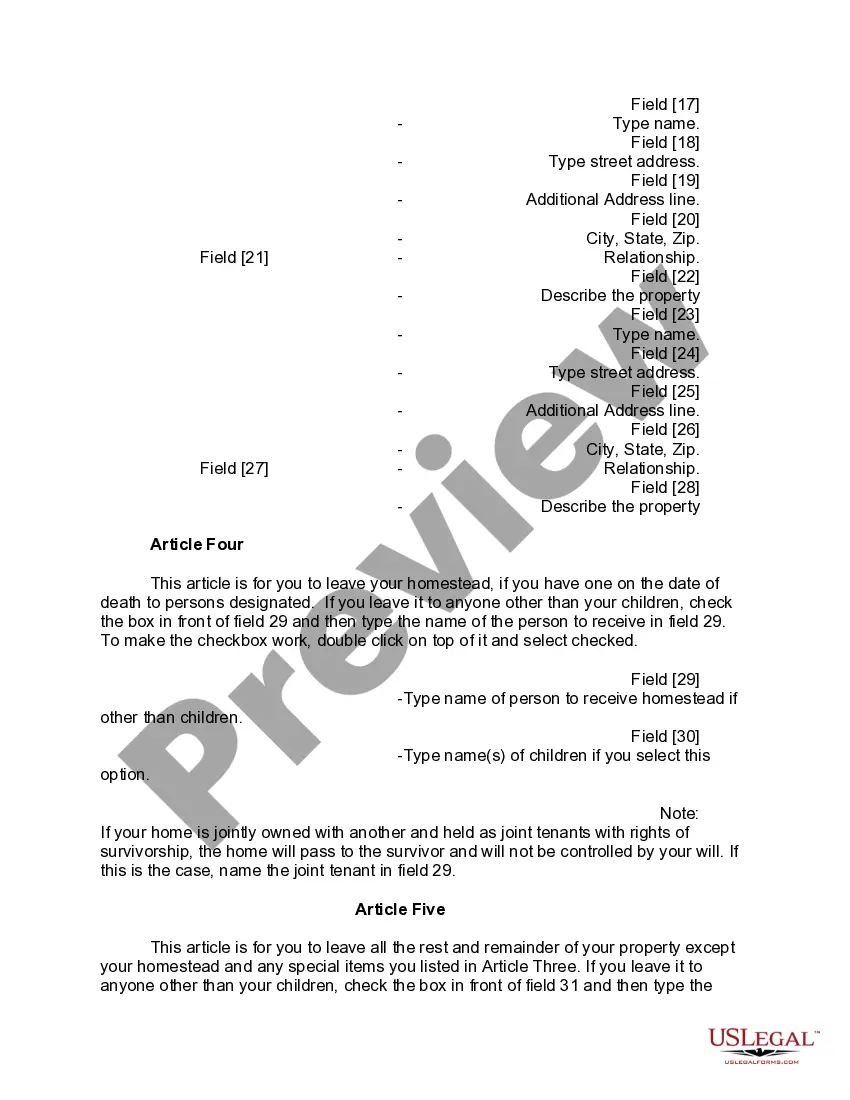
- Article Four - Distribution of the family homestead.
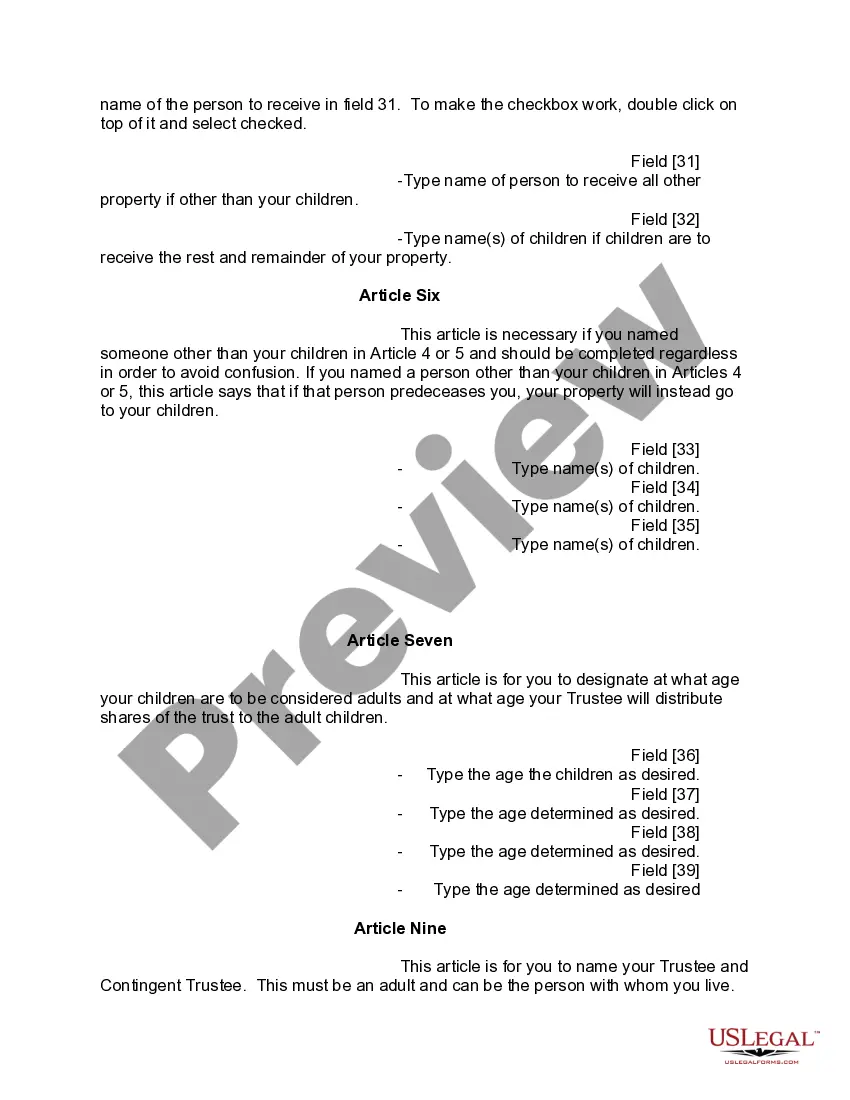
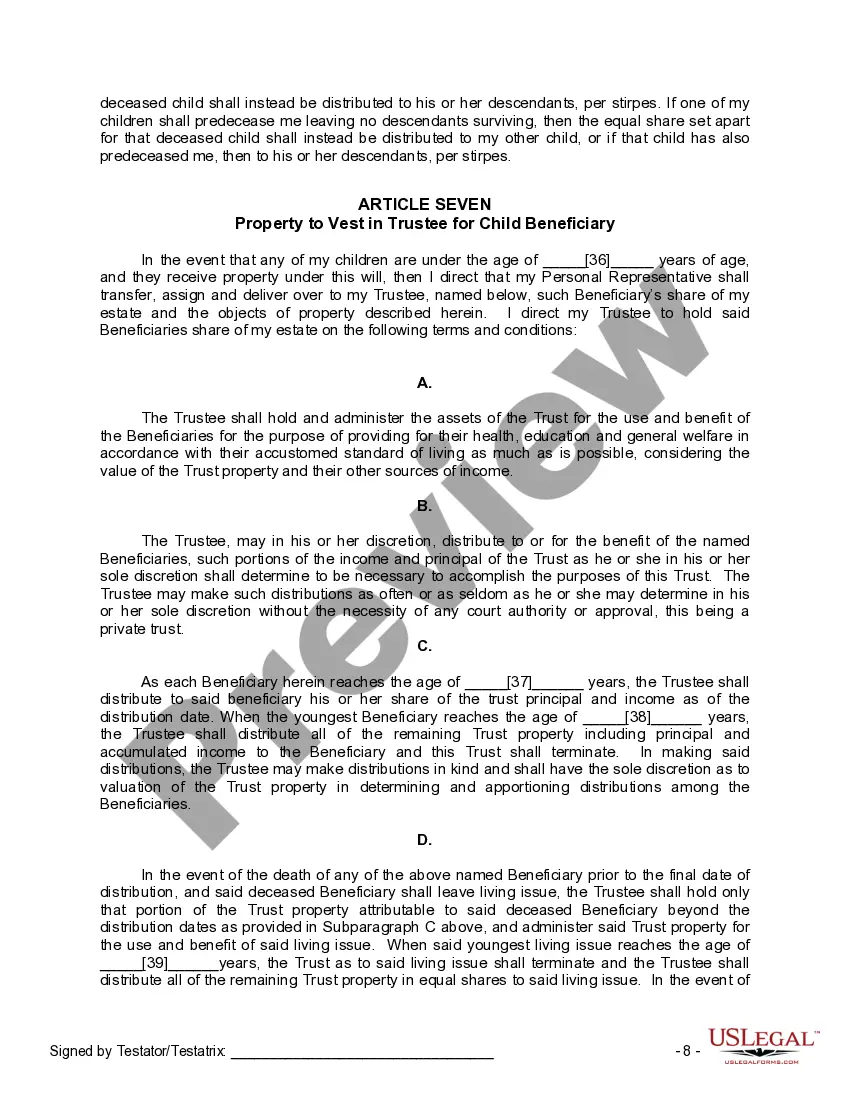
- Article Five - Residuary clause for distributing remaining property.
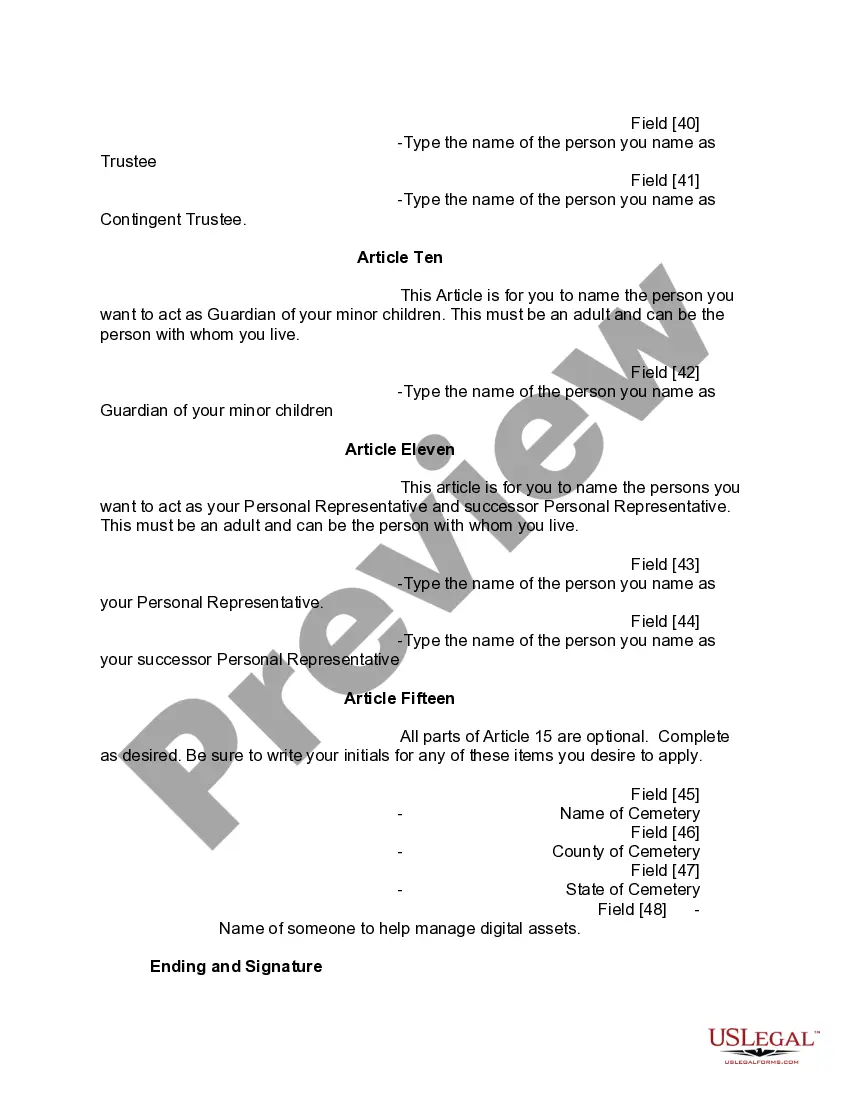
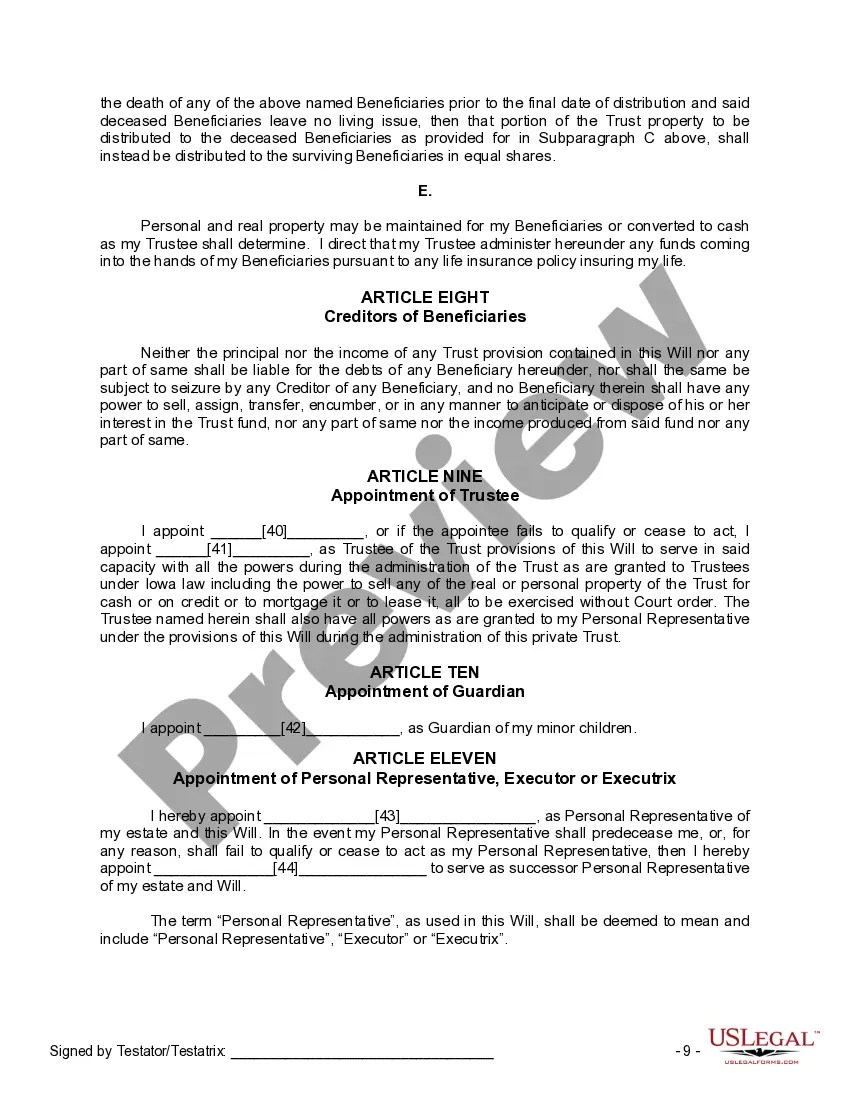
- Article Ten - Guardian appointment for minor children.
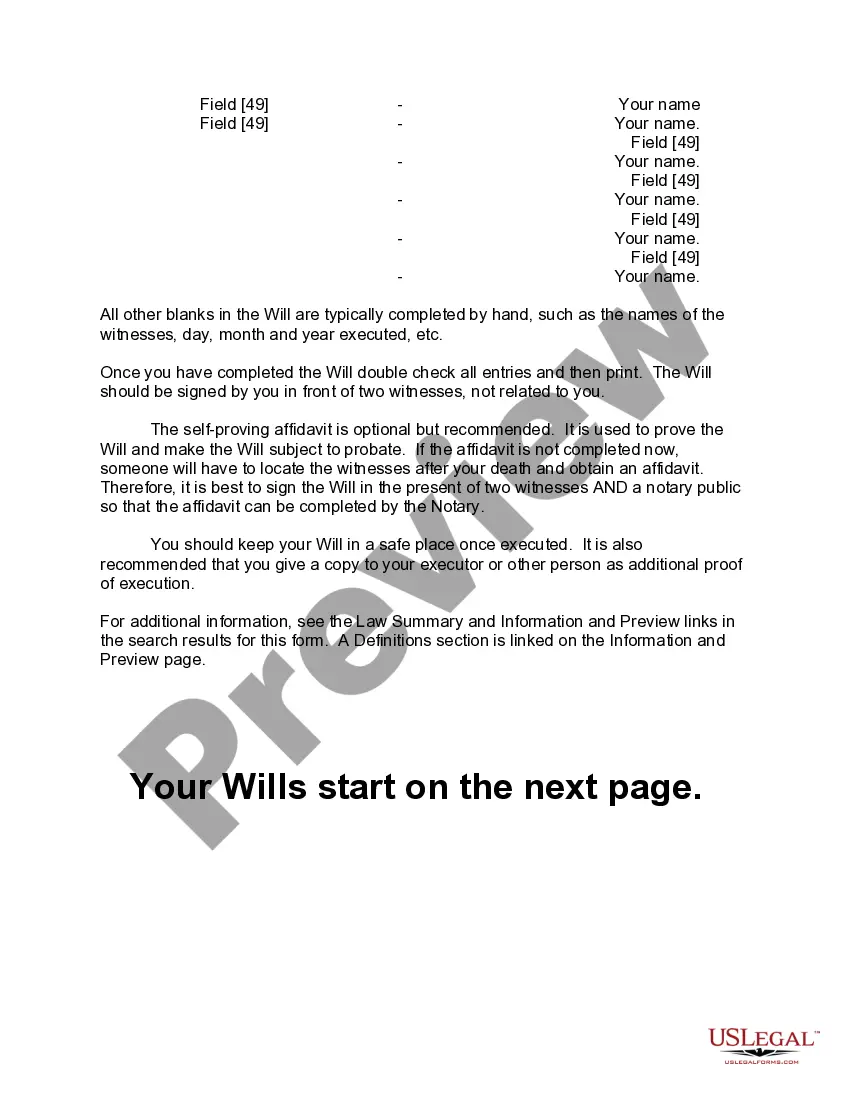
- Signature and witness requirements to validate the will.



Situations where this form applies
You should use this form when you want to establish a clear and legally binding arrangement for the distribution of your estate between you and your partner while also ensuring the protection and care of your minor children. This is particularly relevant for unmarried couples who wish to provide mutual support and responsibility in their wills.
Who this form is for
- Unmarried couples living together with minor children.
- Couples who wish to leave mutual property bequests to each other.
- Individuals looking to clarify the distribution of their estate to avoid future disputes.
Steps to complete this form
- Begin by entering your name and your partner's name, along with your county of residence.
- List your minor children with their names and dates of birth.
- Specify any specific property you wish to bequeath to individuals, including their relationship to you.
- Designate your homestead and how you want it divided among heirs.
- Fill out the section naming the guardian for your minor children.
- Ensure the will is signed in the presence of two witnesses and notarized if required under your state laws.
Is notarization required?
Yes, this form must be notarized to be legally valid. Notarization helps affirm the authenticity of the signatures and may simplify the probate process. US Legal Forms provides a secure online notarization service, available 24/7, to streamline this part of your estate planning.
Get your form ready online
Our built-in tools help you complete, sign, share, and store your documents in one place.
Make edits, fill in missing information, and update formatting in US Legal Forms—just like you would in MS Word.
Download a copy, print it, send it by email, or mail it via USPS—whatever works best for your next step.
Sign and collect signatures with our SignNow integration. Send to multiple recipients, set reminders, and more. Go Premium to unlock E-Sign.
If this form requires notarization, complete it online through a secure video call—no need to meet a notary in person or wait for an appointment.
We protect your documents and personal data by following strict security and privacy standards.

Make edits, fill in missing information, and update formatting in US Legal Forms—just like you would in MS Word.

Download a copy, print it, send it by email, or mail it via USPS—whatever works best for your next step.

Sign and collect signatures with our SignNow integration. Send to multiple recipients, set reminders, and more. Go Premium to unlock E-Sign.

If this form requires notarization, complete it online through a secure video call—no need to meet a notary in person or wait for an appointment.

We protect your documents and personal data by following strict security and privacy standards.
Avoid these common issues
- Not having the will signed by two disinterested witnesses as required.
- Failing to update the will when there are changes in living circumstances or family status.
- Overlooking the need for notarization if required by state law.
- Not clearly specifying bequests or guardianship provisions.
Advantages of online completion
- Convenient access to legal forms available for immediate download.
- Edit and personalize the form easily to suit your needs.
- Reputable templates drafted by experienced attorneys ensuring legal reliability.
Main things to remember
- This form is designed for unmarried couples with minor children, allowing mutual estate planning.
- Ensuring accurate execution and notarization of the form is crucial for legality.
- Clearly outline bequests and guardianship to avoid confusion and disputes among heirs.
Looking for another form?
Form popularity
FAQ
The best will for a married couple depends on their unique circumstances and wishes. A joint will may simplify the process, but separate wills can cater to individual desires. Couples not married but living together should consider Iowa Mutual Wills, which address the complexities of sharing property and caring for minor children. This ensures that all aspects of the family situation are covered.
Wills for married couples typically designate how assets will transfer upon death, protecting the interests of both partners. If one spouse passes away, the surviving spouse often inherits the estate. For couples not legally married but living together, Iowa Mutual Wills provide necessary clarity for guardianship and asset distribution, ensuring that children's needs are met.
Married couples do not always need separate wills, but having them can be beneficial. Separate wills allow individuals to express personal wishes regarding their assets while coordinating with shared interests. For couples living together who are not married, utilizing Iowa Mutual Wills for a comprehensive plan is advisable, especially when minor children are involved.
When you are married, a will outlines how your assets will be distributed after your passing. This document can specify individual and shared assets, ensuring your partner is taken care of. For those living together but not married, Iowa Mutual Wills help clarify intentions for minor children and shared property. It’s vital to ensure that your will aligns with your family's needs.
Yes, married couples should consider creating individual wills. Each person has unique assets, preferences, and responsibilities, especially when children are involved. A Last Will and Testament guarantees that your wishes are clear. With Iowa Mutual Wills, you can create a cohesive estate plan that reflects both partners' wishes.
Yes, a living spouse can change a will in Iowa, provided they have the legal authority to do so. This commonly involves creating a new will or amending the existing one through a codicil. If you are considering changes to your Iowa Mutual Wills or Last Will and Testaments for Man and Woman living together, not Married with Minor Children, you should document any changes clearly to avoid confusion later. Uslegalforms provides helpful templates for making these adjustments smoothly.
A will becomes legal in Iowa based on specific criteria: it must be in writing, signed by the testator, and witnessed correctly. This process ensures that the document captures the true intentions of the individual creating it. To craft a robust Iowa Mutual Wills or Last Will and Testaments for Man and Woman living together, not Married with Minor Children, you can consult legal resources like uslegalforms that simplify the legal language for you.
The three basic requirements of a valid will in Iowa include the testator's intent to create the will, the testator's signature, and the signatures of two witnesses. Each element serves to confirm the will reflects the true wishes of the testator. When drafting your Iowa Mutual Wills or Last Will and Testaments for Man and Woman living together, not Married with Minor Children, ensuring these elements are met solidifies its validity. You can find templates that fulfill these requirements through uslegalforms.
For a will to be valid in Iowa, it must be in writing, signed by the testator, and witnessed by two individuals who are present at the same time. These witnesses cannot be beneficiaries of the will. Ensuring your Iowa Mutual Wills or Last Will and Testaments for Man and Woman living together, not Married with Minor Children, meets these criteria helps protect your family's future. Uslegalforms can guide you through this process.
In Iowa, a will does not require notarization to be valid. However, having your Iowa Mutual Wills or Last Will and Testaments for Man and Woman living together, not Married with Minor Children, notarized can add an extra layer of legality. It helps in proving the authenticity of the document in court. Consider using platforms like uslegalforms to ensure your will meets all necessary requirements.